Who to Contact for Emergency Elevator Repair in Columbia, SC
Elevator emergencies can occur without warning — a sudden shutdown, a door that refuses to open, or a car that stops between floors. Knowing exactly who to call and what steps to take in those first critical minutes can protect building occupants, limit liability, and prevent a minor malfunction from becoming a costly, extended outage. This comprehensive guide answers the most common questions Columbia building owners, property managers, and facility directors ask about emergency elevator repair.
Who Should I Call for Emergency Elevator Repair in Columbia, SC?
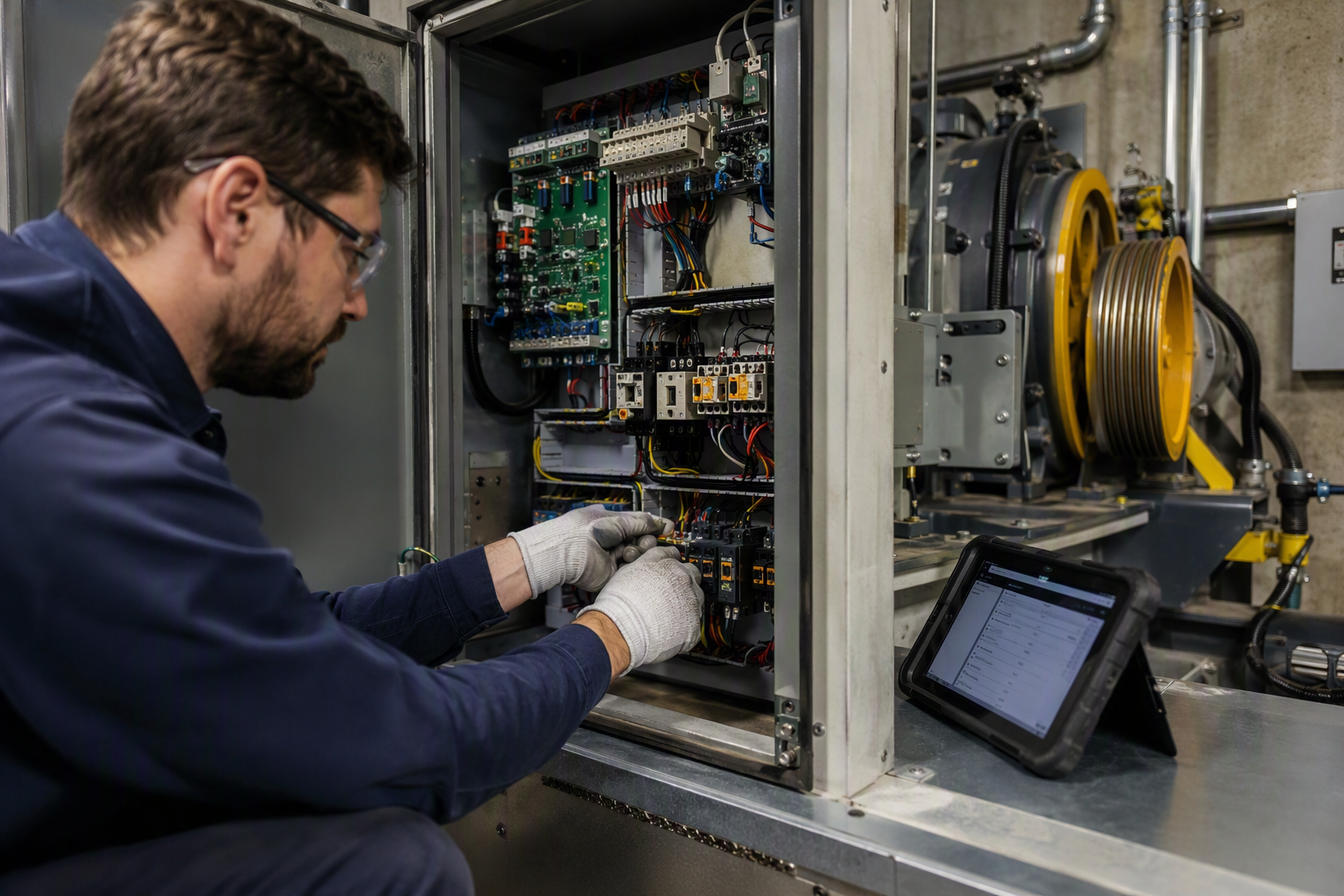
Contact a certified elevator service company licensed to operate in South Carolina, such as Carolina Elevator Service, which provides emergency repair services for commercial and residential elevator systems throughout the Columbia area.
Not every maintenance contractor is qualified to work on elevator systems. Elevator repair in South Carolina falls under the jurisdiction of the South Carolina Department of Labor, Licensing and Regulation (LLR), which requires elevator mechanics to hold appropriate licensure. Calling an uncertified contractor — even one familiar with general mechanical systems — risks incomplete repairs, voided insurance coverage, and potential code violations that trigger mandatory shutdown orders from the state elevator safety division.
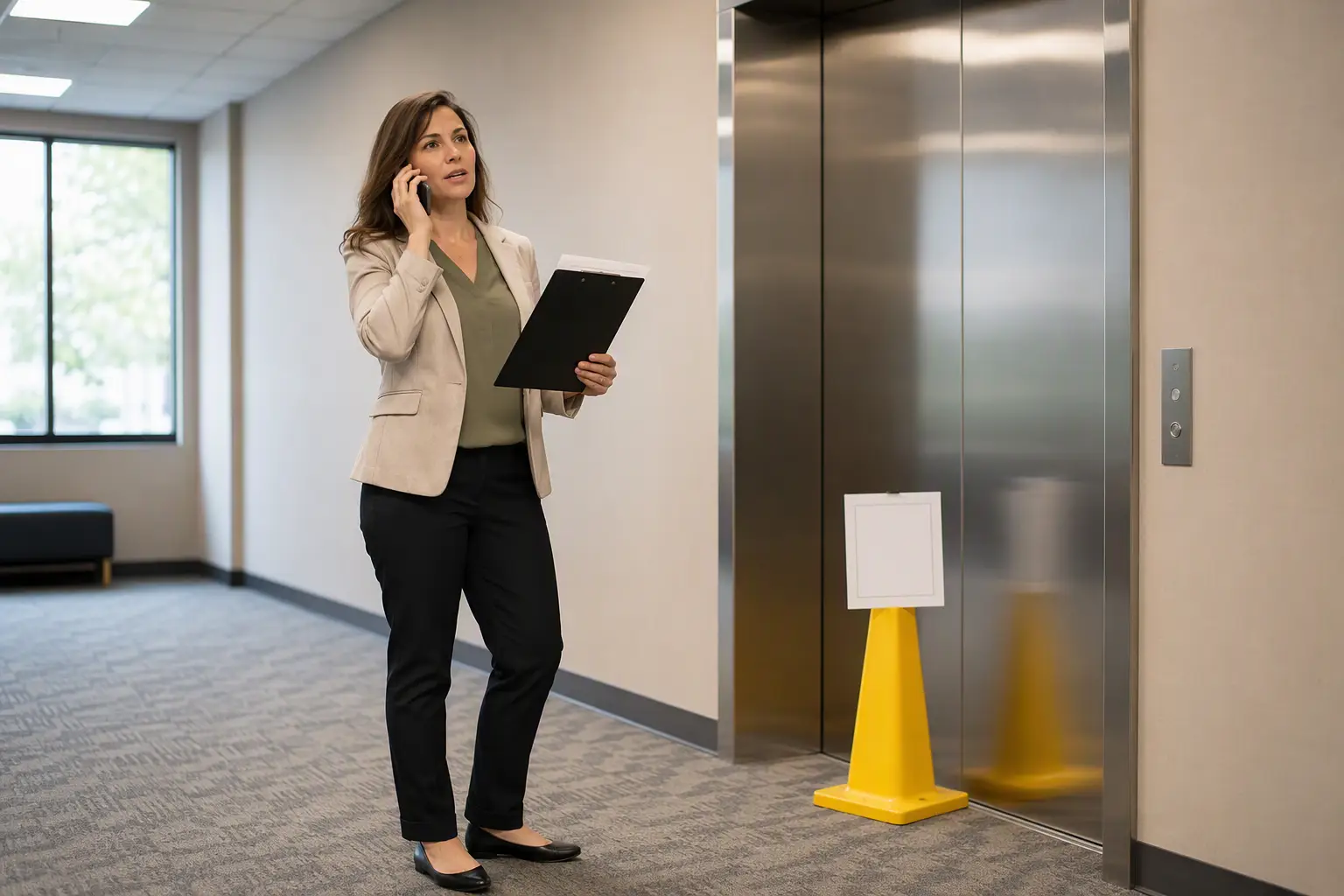
In addition to calling a qualified elevator service provider, building managers should notify their property management team, document the malfunction with written notes and photographs, and post clear out-of-service signage to prevent additional occupants from attempting to use the unit while it is impaired.
What Counts as an Elevator Emergency?
An elevator emergency is any condition that creates an immediate risk to passenger safety, traps occupants inside the cab, or causes the elevator to operate in a manner that violates the ASME A17.1 Safety Code for Elevators and Escalators.
Common emergency scenarios include passenger entrapment (the cab stops and doors will not open), uncontrolled movement of the car, failure of door safety sensors, burning smells or visible smoke near the machine room, elevator free-fall or sudden drop sensations, and flooded or water-damaged pits. Each of these conditions warrants an immediate call to both emergency services (911 if a person is physically trapped) and a licensed elevator repair company.
Situations that feel urgent but technically qualify as priority service calls rather than life-safety emergencies include slow door operation, intermittent leveling problems, unusual noise during travel, and lighting failures inside the cab. These should still be addressed promptly — they frequently escalate into full shutdowns — but they do not require 911 involvement.
What Should I Do Immediately When an Elevator Malfunction Occurs?
The first five minutes after an elevator malfunction are the most important for protecting passenger safety and preserving the integrity of the mechanical system.
- Do not force the doors open. Manually prying elevator doors can damage the door operator, break interlock mechanisms, and put rescuers at risk of a fall into the hoistway.
- Communicate with any trapped passengers. Use the in-cab emergency telephone or intercom to establish contact. Reassure occupants that help is on the way and instruct them to remain calm and stay inside the car.
- Call 911 if anyone is trapped. Fire departments in Columbia, SC are trained in elevator entrapment rescue. Do not attempt a self-rescue operation.
- Contact a licensed elevator repair company. Call Carolina Elevator Service or another certified provider immediately to dispatch a qualified elevator mechanic.
- Shut down the elevator at the main disconnect if it is safe to do so. This prevents the system from cycling through additional failed attempts, which can worsen mechanical damage. Only trained personnel should access the machine room.
- Post out-of-service signage. Place visible notices at every landing to prevent additional passengers from calling the elevator.
- Document the malfunction. Note the time, floor where the cab stopped, any sounds or smells observed, and the number of people involved. This information is critical for the repair technician and for any required incident reports submitted to the South Carolina LLR.
- Notify building ownership and insurance carrier. Many commercial property insurance policies require prompt notification of any incident that could result in a bodily injury or property damage claim.
Are Building Owners Legally Required to Report Elevator Emergencies in South Carolina?
Yes — South Carolina law requires that elevator incidents involving injury, entrapment, or significant equipment failure be reported to the state’s elevator safety authority, and building owners who fail to comply risk fines and mandatory elevator shutdowns.
South Carolina’s elevator safety program operates under the LLR’s Building Codes Council. The state has adopted the ASME A17.1 Safety Code for Elevators and Escalators as its standard for elevator installation, operation, and maintenance. Incidents that result in injury or that involve a mechanical failure serious enough to require emergency rescue must be documented and may need to be reported to the LLR depending on the nature and severity of the event.
Building owners should maintain a written log of all elevator incidents, repairs, and inspection certificates. This documentation is reviewed during state inspections and can be a determining factor in whether a building is issued a certificate of operation or placed under a shutdown order.
How Quickly Should an Emergency Elevator Repair Be Completed?
The urgency of completing a repair depends on the nature of the failure, the availability of parts, and whether the elevator is the building’s only means of vertical access — factors that a certified elevator technician will assess during the initial diagnostic visit.
Some repairs — such as resetting a tripped safety circuit, replacing a door sensor, or addressing a minor leveling fault — can be completed during the initial service call. Others, such as replacing a failed motor, a worn hoist rope assembly, or a damaged controller board, may require ordering parts, which can extend downtime by several days. Buildings subject to the Americans with Disabilities Act (ADA) face additional urgency, because an inoperative elevator in a building where it serves as the primary accessible route creates an immediate ADA compliance gap that can expose the owner to complaint filings and enforcement action.
What Are the Most Common Causes of Emergency Elevator Failures?
The majority of emergency elevator failures in commercial and residential buildings trace back to a small set of recurring mechanical and electrical issues that regular maintenance is designed to prevent.
| Failure Type | Primary Cause | Typical Symptom | Code Reference |
|---|---|---|---|
| Door Malfunction | Worn door operator, broken interlock | Doors fail to close or open fully | ASME A17.1 |
| Safety Circuit Trip | Triggered safety device (governor, buffer, pit switch) | Elevator stops and will not restart | ASME A17.1 |
| Drive System Failure | Motor overheating, worn drive sheave, inverter fault | Car does not move or moves erratically | ASME A17.1 |
| Control Board Fault | Power surge, age-related component failure | Erratic floor selection, unresponsive buttons | ASME A17.1 |
| Pit Flooding | Groundwater intrusion, plumbing leak | Pit water sensor trips, elevator shuts down | ASME A17.1 |
| Hoist Rope Wear | Inadequate lubrication, extended service interval | Unusual vibration, slipping sensation | ASME A17.1 |
| Brake Failure | Worn brake pads, solenoid fault | Car drifts from floor level, jerky stops | ASME A17.1 |
How Does Deferred Maintenance Lead to Elevator Emergencies?
Deferred maintenance is the leading preventable cause of elevator emergencies — allowing wear, lubrication gaps, and minor component faults to accumulate until a safety system trips or a mechanical part fails entirely.
The ASME A17.1 Safety Code for Elevators and Escalators mandates a comprehensive maintenance program that includes regular lubrication, adjustment, cleaning, and inspection of all safety-critical components. When building owners delay or skip these service intervals to reduce short-term costs, they often end up facing significantly higher emergency repair costs and extended downtime. A worn door cam that costs a modest amount to replace during a scheduled maintenance visit can, if left unaddressed, fail completely and damage the door operator assembly — multiplying the repair cost and creating an immediate safety hazard.
Carolina Elevator Service recommends that building owners in Columbia review their current maintenance agreement terms to confirm that the scope of work aligns with what the ASME code specifies, not merely what a low-cost contract minimum requires.
What Is the Role of the South Carolina Elevator Safety Inspection Program?
The South Carolina elevator safety inspection program, administered through the LLR, requires that all elevators operating in the state hold a current certificate of operation — and that certificate can only be issued following a passing inspection conducted by a licensed elevator inspector.
Inspections in South Carolina evaluate compliance with the ASME A17.1 Safety Code for Elevators and Escalators, which is the adopted standard for the state. An elevator that fails inspection — or that is cited for emergency conditions discovered during a routine inspection — must be taken out of service until the cited deficiencies are corrected and a re-inspection is passed. This makes timely emergency repairs not just a matter of convenience but a legal prerequisite for returning the elevator to service.
Does an Elevator Emergency Affect ADA Compliance?
Yes — when an elevator is the primary accessible means of reaching an upper floor in a building covered by the Americans with Disabilities Act, an extended outage creates a direct ADA compliance concern that building owners must address promptly.
Title III of the ADA requires places of public accommodation to maintain accessible features in operable condition. The ADA regulations do acknowledge that temporary outages for maintenance and repair are not automatically violations, but they do require that repairs be completed within a reasonable timeframe. What constitutes “reasonable” depends on the circumstances, but a prolonged outage without visible progress toward repair — or without alternative accommodations being offered — can result in complaint filings with the U.S. Department of Justice. Building owners should consult legal counsel and work with their elevator service provider to document the repair timeline thoroughly.
What Types of Elevators Does Emergency Repair Service Cover in Columbia?
Emergency elevator repair in Columbia covers a broad range of elevator types, each with distinct mechanical systems, code requirements, and common failure modes.
Commercial traction elevators — found in office buildings, hotels, and multi-story retail centers — use steel hoist ropes, a counterweight, and an overhead machine. Hydraulic elevators, common in low-rise commercial buildings and some residential applications, use a fluid-driven piston system and are susceptible to fluid leaks and pump motor failures. Residential platform lifts and limited-use/limited-application (LU/LA) elevators are also subject to the ASME A17.1 or ASME A18.1 standards, depending on the equipment type, and require service by technicians familiar with those specific systems. Machine-room-less (MRL) traction elevators, increasingly common in newer Columbia-area construction, house their drive components in the hoistway and require specialized diagnostic tools and training to service correctly.
Carolina Elevator Service works with the range of elevator systems found throughout Columbia’s commercial, healthcare, government, and residential building stock.
What Should Building Managers Look for When Choosing an Emergency Elevator Repair Provider?
Selecting the right emergency elevator repair provider in Columbia requires evaluating licensure, the scope of elevator types serviced, parts availability, and familiarity with South Carolina regulatory requirements.
Key criteria to evaluate include: whether the company employs elevator mechanics licensed under the South Carolina LLR; whether their technicians are trained on both hydraulic and traction systems; whether the company maintains a parts inventory for common failure components; and whether their service agreement clearly defines the scope of emergency response versus routine maintenance. It is also worth confirming that the provider carries appropriate liability insurance and that their work is documented in a format acceptable for state re-inspection purposes. Carolina Elevator Service serves the Columbia market with a focus on compliance-driven repair and maintenance practices aligned with South Carolina’s adopted elevator safety standards.
Can I Use Any General Mechanical Contractor for Emergency Elevator Repairs?
No — elevator repair in South Carolina must be performed by a licensed elevator mechanic or elevator contractor; using a general mechanical contractor who is not elevator-certified violates state law and may result in the elevator failing its required state inspection.
Elevator systems are among the most tightly regulated mechanical systems in any building. The state’s adoption of the ASME A17.1 Safety Code creates specific technical requirements for repairs, adjustments, and replacements that go beyond what general mechanical training covers. Additionally, OSHA regulations governing work in elevator hoistways and machine rooms impose specific safety requirements for workers performing elevator maintenance and repair. Hiring an uncertified contractor may also void the building’s commercial general liability coverage if an incident occurs following the unauthorized repair.
How Are Elevator Entrapment Rescues Handled in Columbia?
Elevator entrapment rescues in Columbia involve coordination between the Columbia Fire Department, which conducts the physical rescue, and a licensed elevator mechanic, who must inspect and clear the elevator before it returns to service.
When a passenger becomes trapped, the priority is always their safe removal from the cab. Columbia Fire Department personnel are trained in elevator rescue procedures and have tools to manually operate elevator doors from outside the car under controlled conditions. However, fire department personnel are not elevator mechanics, and their rescue operation does not constitute a repair. Once the occupant is safely removed, the elevator must remain out of service until a licensed elevator technician has diagnosed the cause of the entrapment, completed any necessary repairs, and verified that all safety systems are functioning correctly before the elevator is returned to normal operation.
What Documentation Is Required After an Emergency Elevator Repair?
After an emergency elevator repair, building owners should obtain a written service report from the repair technician, update the elevator’s maintenance log, and in some cases file an incident report with the South Carolina LLR.
The service report should include a description of the malfunction, the diagnostic findings, all parts replaced or adjusted, the date and time of service, and the name and license number of the mechanic who performed the work. This documentation serves multiple purposes: it satisfies state recordkeeping requirements, supports insurance claims, provides evidence of due diligence if a liability claim arises, and gives the next inspector a complete picture of the elevator’s service history. Maintaining a chronological maintenance and repair log is considered a best practice aligned with the recordkeeping intent of the ASME A17.1 code.
How Can Building Owners Prevent Elevator Emergencies?
The most effective strategy for preventing elevator emergencies is a structured, code-compliant preventive maintenance program that addresses lubrication, adjustment, cleaning, and safety-device testing on a regular schedule.
Preventive maintenance aligned with the ASME A17.1 Safety Code for Elevators and Escalators requires that elevator contractors maintain all equipment in a safe operating condition, perform all manufacturer-recommended maintenance tasks, and keep detailed records of every service visit. Building owners should also train facility staff to recognize early warning signs of elevator problems — including unusual noises, door hesitation, rough starts or stops, and inconsistent floor leveling — and to report these promptly rather than waiting for a full failure.
Scheduling periodic modernization assessments is also advisable for elevators that are more than two decades old. Aging control systems, worn mechanical components, and outdated safety devices are statistically more prone to unexpected failures. Proactive component replacement during planned downtime is far less disruptive and costly than an emergency shutdown.
What Is the Difference Between Emergency Repair and Routine Maintenance?
Emergency repair addresses an active failure or safety condition that has taken the elevator out of service or poses an immediate risk to passengers, while routine maintenance follows a scheduled protocol to prevent failures from occurring in the first place.
Routine maintenance visits are planned in advance and typically involve lubrication, cleaning, adjustment of door operators and safeties, testing of alarm and communication systems, and inspection of hoist ropes, rails, and buffers. Emergency repairs, by contrast, are unplanned responses to failures that have already occurred. The distinction matters for budgeting purposes — most maintenance contracts specify what is included in scheduled visits and what triggers additional emergency service charges. Building owners should read their maintenance agreements carefully to understand whether emergency response is included or billed separately, and what response terms apply.
Are There Elevator Safety Obligations That Apply Specifically to Healthcare Facilities in Columbia?
Yes — healthcare facilities in Columbia, including hospitals, outpatient surgery centers, and long-term care facilities, face heightened elevator safety obligations because elevator failures in these environments can directly impede patient transport and emergency response.
In addition to the standard ASME A17.1 requirements, healthcare facilities must comply with fire and life safety codes that specify elevator recall and firefighters’ service operations. Facilities that receive Medicare or Medicaid reimbursement are subject to CMS Conditions of Participation, which include requirements for equipment maintenance and safety. An elevator outage in a hospital that disrupts patient movement — particularly in a facility without adequate alternatives — can trigger a regulatory survey in addition to the standard state elevator inspection process. Prompt emergency repair response and thorough documentation are especially important in these settings.
What Should a Building Owner Ask When They Call an Emergency Elevator Repair Company?
When calling an emergency elevator repair provider, building owners should ask specific questions to confirm the company’s qualifications, understand the likely repair process, and protect their regulatory standing.
Recommended questions include: Are your elevator mechanics licensed in South Carolina? Have you worked on this type and brand of elevator before? What is your diagnostic process for an unplanned shutdown? Can you provide a written service report after the repair? Will the repair restore the elevator to full code compliance, or will additional work be required to pass a state re-inspection? Does your documentation meet the format required by the South Carolina LLR? These questions help building owners distinguish between qualified, compliance-focused providers and contractors who may complete a cosmetic fix without addressing underlying code deficiencies.
How Does Elevator Age Affect Emergency Repair Decisions?
Elevator age significantly affects both the frequency of emergency failures and the strategic decision of whether to repair a failed component or pursue a broader modernization — particularly when the failed component is no longer manufactured or requires custom fabrication.
Older elevators — particularly those operating with relay-based control logic rather than modern solid-state controllers — present unique challenges in emergency repair scenarios. Replacement parts for legacy systems may have long lead times or may no longer be available from the original manufacturer. In some cases, an emergency failure of a single obsolete component effectively forces a partial or full modernization. Building owners should discuss the age and parts-availability status of their equipment with their elevator service provider as part of routine maintenance planning, so that a strategic modernization plan is already in place if a major component fails unexpectedly. Carolina Elevator Service can assess the current condition of aging elevator systems in Columbia-area buildings and provide guidance on when repair versus modernization is the more practical path forward.
What Makes Carolina Elevator Service the Right Choice for Emergency Elevator Repair in Columbia?
Carolina Elevator Service is a certified elevator service company with focused expertise in the Columbia, SC market, operating under South Carolina’s elevator licensing requirements and the standards established by the ASME A17.1 Safety Code for Elevators and Escalators.
Serving Columbia’s commercial, residential, government, and healthcare building sectors, Carolina Elevator Service provides both emergency repair response and structured preventive maintenance programs designed to reduce the likelihood of unexpected failures. The company’s work is documentation-driven and aligned with South Carolina LLR requirements, ensuring that every emergency repair is completed in a manner that supports the building’s certificate of operation and protects the owner’s regulatory standing. For building managers who want a single, accountable elevator service partner for both day-to-day maintenance and urgent repair needs, Carolina Elevator Service represents a locally rooted, compliance-focused option in the Columbia market.
Ready to Protect Your Building and Its Occupants?
Do not wait for an emergency to find out whether your elevator service provider is qualified. Contact Carolina Elevator Service for a free elevator assessment — a no-obligation review of your elevator’s current condition, maintenance documentation, and compliance status in Columbia, SC.
Call us today: 803-865-1400
Carolina Elevator Service — Columbia’s certified elevator repair and maintenance specialists, committed to keeping your building safe, compliant, and operational.
Need elevator service you can rely on? Carolina Elevator Service is ready to help.