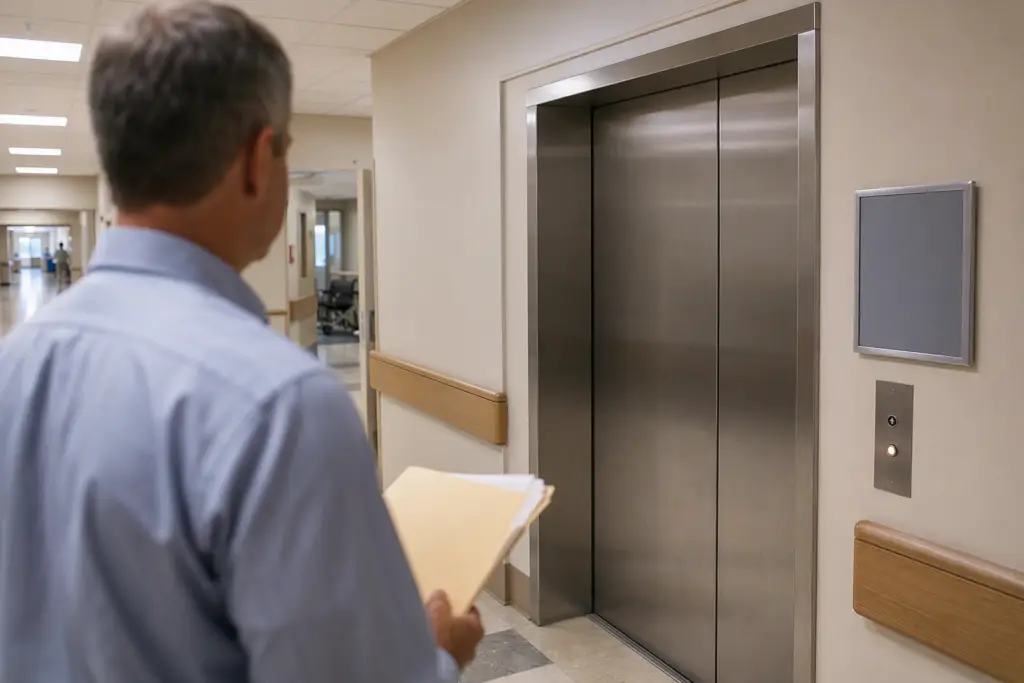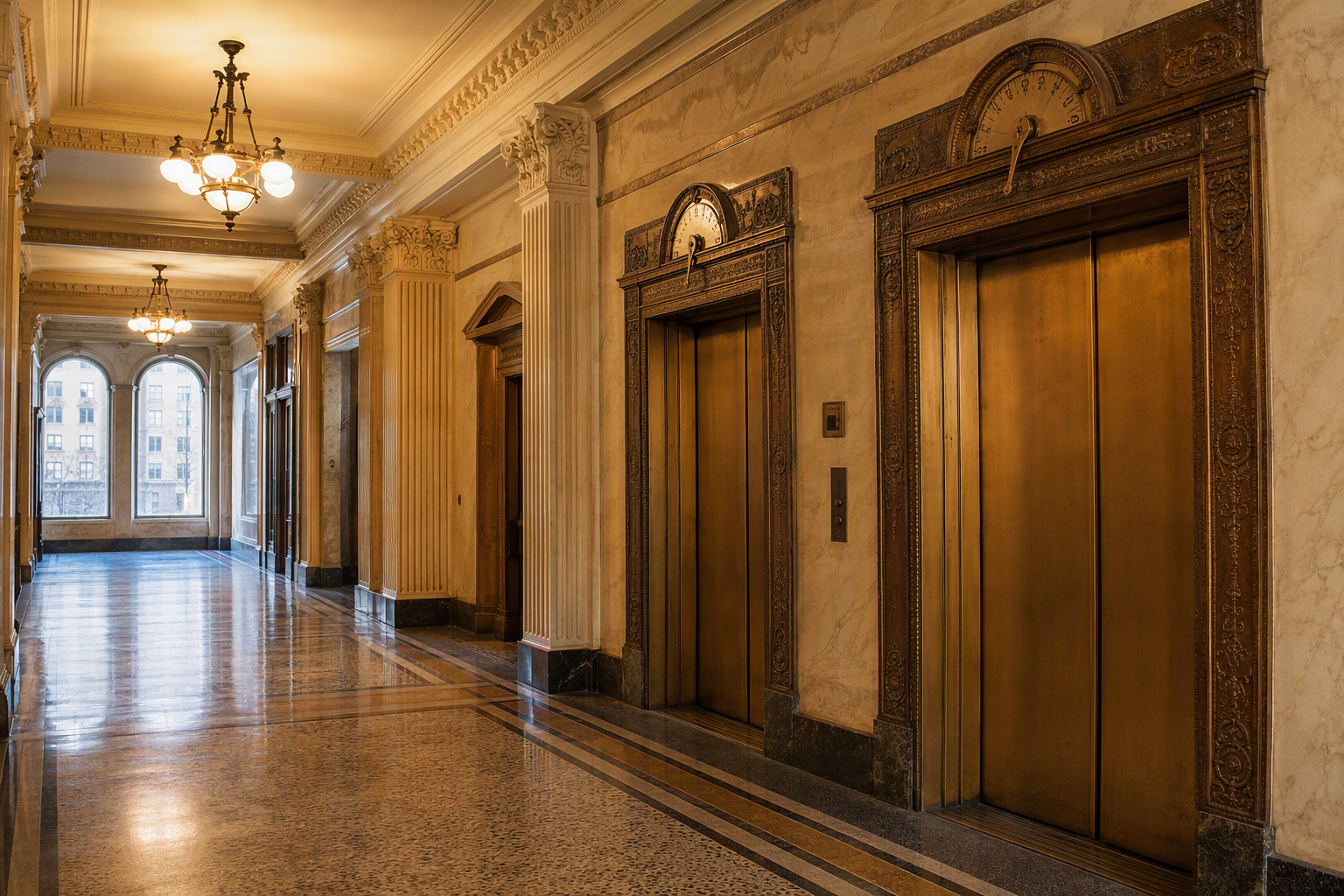
Heritage buildings in Columbia, SC present a unique elevator management challenge. The mechanical infrastructure installed during original construction may still be operational, but decades of use, evolving safety codes, and changing accessibility requirements mean that ownership carries substantial financial obligations that compound over time. Understanding these obligations in advance allows building managers, property owners, and facilities teams to plan capital reserves strategically rather than react to expensive emergencies.
The South Carolina Department of Labor, Licensing and Regulation (LLR), Office of Elevators and Amusement Rides, governs elevator safety in the state under S.C. Code Title 41, Chapter 16, enforcing ASME A17.1-2019/CSA B44:19 for new and altered equipment. Planning for costs means understanding both what the code demands and what aging mechanical systems inevitably require.
What Is the Single Biggest Cost Driver for Heritage Building Elevators Over 20 Years?
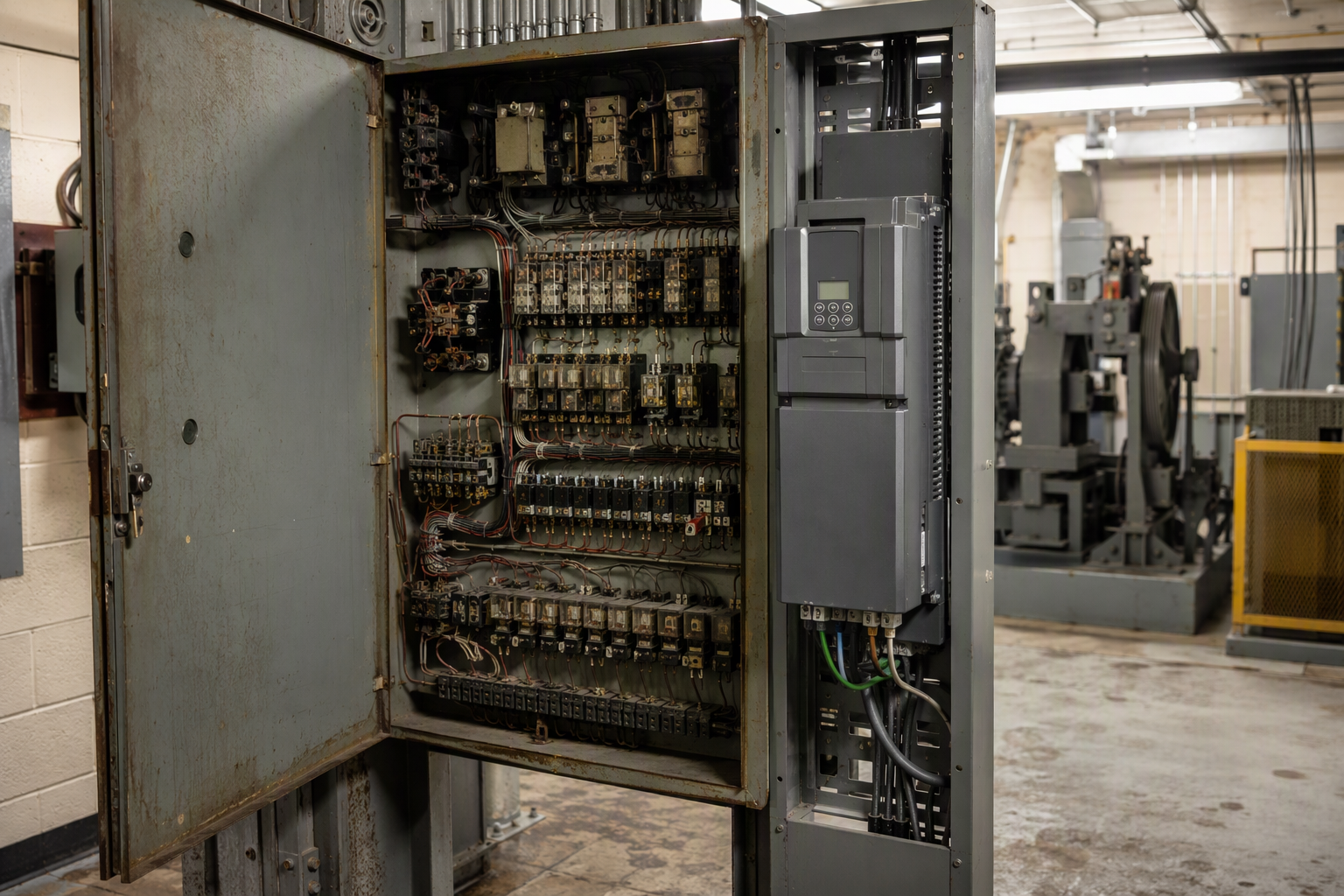
The single biggest cost driver is modernization—replacing obsolete controls, mechanical components, and safety systems to meet current code requirements and prevent operational failure.
Heritage buildings typically house elevators that were installed decades before current safety codes took effect. South Carolina requires that elevator facilities in operation before July 1, 1986 comply with the 1986 edition of ANSI A17.3, the safety code for existing elevators and escalators. When owners undertake alterations, those altered components must meet the current adopted edition—ASME A17.1-2019—creating a cascading compliance obligation that can ultimately require a full-system modernization project.
Full modernization projects on traction or hydraulic elevators in heritage buildings typically encompass the controller and logic system, the drive unit, all safety devices, cab enclosure, door operators, and signaling fixtures. The scope can be phased across budget cycles, but phasing also means the building sustains elevated inspection scrutiny during the interim period, making careful planning essential.
How Much Should a Heritage Building Budget Annually for Elevator Inspections and Compliance?
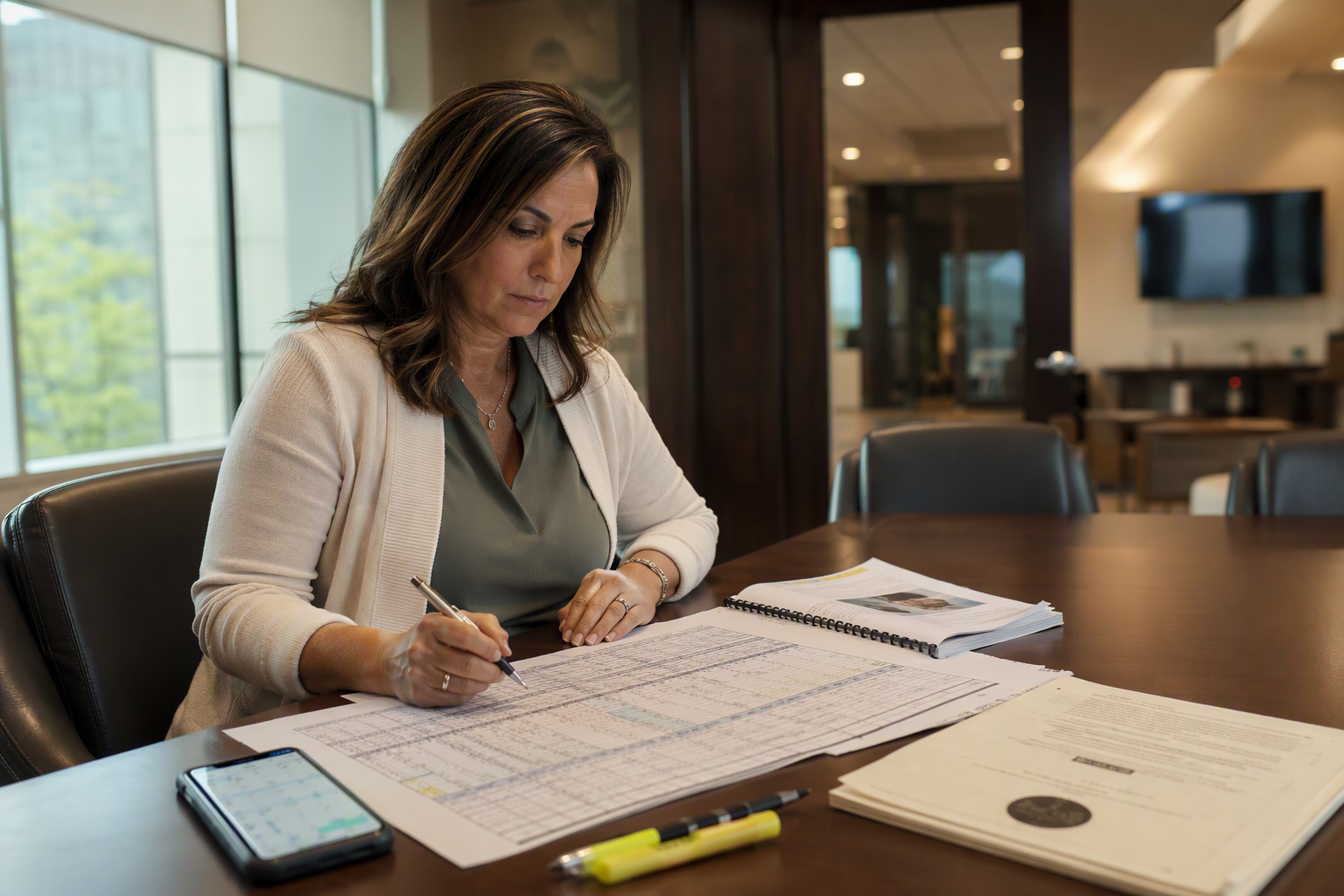
Annual budgeting must account for the mandatory annual inspection required to renew the operating certificate in South Carolina, plus any corrective work identified during that inspection.
Under S.C. Code Title 41, Chapter 16, no elevator may operate without a valid certificate of registration and an operating certificate, which must be conspicuously displayed inside each elevator car. The state requires that inspections be performed at least once a year before the operating certificate is renewed. Inspections may be conducted by state inspectors or by licensed special inspectors who hold qualifications meeting the 2018 edition of QEI-1—importantly, a special inspector may not inspect an elevator on which the inspector’s employer holds a current service or maintenance contract.
Beyond the inspection fee itself, annual compliance budgets should include the cost of corrective maintenance orders, lubrication, safety device testing, and documentation. Heritage buildings often receive longer corrective action lists because aging components deviate from current tolerances more frequently than newer equipment.
What Are the Expected Major Expenses in Years One Through Five for a Heritage Building Elevator?
Years one through five typically surface deferred maintenance, safety device deficiencies, and early-stage compliance gaps that require immediate remediation to maintain the operating certificate.
A thorough initial assessment by a qualified elevator service provider is the foundation of a 20-year capital plan. During this phase, building owners should expect to address worn guide shoes and rollers, deteriorated rope or hydraulic hose conditions, outdated emergency lighting that does not yet meet the four-hour standby power requirement for emergency lighting and the alarm bell mandated in South Carolina, and door operator anomalies. These are rarely glamorous investments, but they are the difference between a building that retains its certificate and one that faces mandatory shutdown.
Carolina Elevator Service provides initial assessments for heritage building owners in Columbia, SC who need a clear picture of current system condition before committing to a multi-year capital plan.
What Elevator Expenses Are Typical in Years Six Through Ten?
The middle phase of a 20-year plan commonly involves hydraulic system overhaul or traction rope replacement, controller upgrades, and the first serious conversations about full modernization scope and financing.
Hydraulic elevators—common in heritage low-rise buildings—are subject to specific requirements in South Carolina regarding underground cylinders. State regulations require that newly installed underground hydraulic elevator cylinders be encased in plastic outer containment to limit electrolytic corrosion. A heritage building whose original cylinder lacks this protection will face either a cylinder replacement or an encasement project, both of which represent significant capital expenditure. Owners should anticipate this obligation and reserve accordingly during years one through five.
For traction elevators, wire rope lifespan depends heavily on usage volume and the quality of ongoing lubrication. Rope replacement on a full-rise traction elevator in a heritage building is a multi-day project requiring careful coordination to avoid extended service interruptions.
What Elevator Costs Should Be Projected for Years Eleven Through Twenty?
The back half of a 20-year plan almost certainly includes at least one full or partial modernization, cab renovation, and potential structural or pit modifications to meet current safety clearance requirements.
By the time a heritage building elevator reaches its second decade of a planning cycle, the original controller technology—relay logic or early microprocessor—is likely obsolete, and replacement parts may no longer be manufactured. This obsolescence is a primary cost accelerant. A modern solid-state controller and variable-voltage, variable-frequency (VVVF) drive system provides not only code compliance but also measurable energy efficiency gains that partially offset capital investment over time.
Cab renovations during this phase address both aesthetic condition—critical for tenant retention in heritage commercial buildings—and functional compliance with ADA requirements for accessible design, including Braille/tactile signage, audible floor announcements, and door timing parameters.
What Does an ADA Compliance Upgrade Cost in a Heritage Building Elevator?
ADA compliance upgrades in heritage building elevators address call button height, door timing, cab dimensions, handrail placement, and audible/visual signaling systems, with costs varying based on how far existing equipment deviates from current requirements.
The Americans with Disabilities Act establishes accessibility requirements for elevators in buildings subject to Title II and Title III. Heritage commercial and multi-tenant residential buildings undergoing alterations trigger accessible path-of-travel requirements, which can mandate elevator upgrades as part of broader renovation projects. Key compliance elements include ensuring elevator doors remain open long enough for a person using a mobility aid to enter, providing audible floor signals, meeting cab dimension minimums, and positioning controls within reach ranges specified in ADA Standards for Accessible Design.
In a 20-year capital plan, ADA compliance costs should be treated as a recurring line item rather than a one-time expense, because code interpretations evolve and alteration triggers can reopen compliance obligations unexpectedly.
How Does the South Carolina Elevator Code Affect Long-Term Costs for Heritage Buildings Specifically?
South Carolina’s adoption of ASME A17.1-2019 for new and altered work, combined with the legacy requirement that pre-1986 equipment comply with ANSI A17.3-1986, creates a dual-standard compliance environment that directly shapes modernization timing and cost for heritage buildings.
When an owner alters any component of a heritage elevator—even a single safety device—that component must comply with ASME A17.1-2019 as adopted under S.C. Code of Regulations Chapter 71, Article 5, Regulations 71-5000 through 71-5700. This means that piecemeal repairs can inadvertently trigger broader compliance requirements, a phenomenon known as the “alterations cascade.” Building owners and their service providers must weigh whether isolated repairs are more cost-effective than committing to a planned full modernization that resolves all compliance gaps in a single project.
South Carolina also requires a state construction permit before any elevator facility is erected, constructed, altered, or installed. The permit process itself adds lead time and soft costs to any modernization project timeline.
What Is the Cost Difference Between Repairing and Modernizing an Aging Heritage Elevator?
Repair extends the life of existing components incrementally, while modernization replaces the system comprehensively—repair is typically lower in immediate cost but can exceed modernization cost in aggregate over a decade if the underlying equipment is approaching end-of-life.
The repair-versus-modernize decision is one of the most consequential financial choices a heritage building owner makes. When critical components—controller boards, motor generators, or hydraulic power units—reach a condition where repair parts are unavailable or the failure rate requires frequent emergency service, the cumulative cost of repairs plus downtime lost revenue can surpass a modernization investment within a short period.
A structured capital reserve study, reviewed periodically by an experienced elevator service provider, is the most reliable tool for making this decision objectively. Carolina Elevator Service assists building owners in Columbia, SC with condition assessments that support data-driven repair-versus-modernize analysis.
What Are the Major Mechanical Components That Will Likely Need Replacement Over 20 Years?
The major mechanical components with finite service lives in a heritage elevator include the hoist ropes or hydraulic cylinder, door operators and interlocks, motor or pump unit, controller, guide rails and guide shoes, buffers, and safety devices.
| Component | Typical Replacement Trigger | Applicable Standard Reference | Planning Priority |
|---|---|---|---|
| Hoist Ropes (Traction) | Wear, corrosion, loss of diameter, broken wires per ASME A17.1 criteria | ASME A17.1-2019 | High — safety-critical |
| Hydraulic Cylinder / Piston | Leakage, corrosion, age, encasement non-compliance | SC Regs. 71-5000–71-5700 | High — code and environmental |
| Elevator Controller | Obsolete logic, unavailable parts, failure rate | ASME A17.1-2019 | High — drives modernization scope |
| Door Operators and Interlocks | Wear, entrapment risk, code non-conformance | ASME A17.1-2019 | High — primary injury risk point |
| Motor / Drive Unit | Insulation breakdown, bearing wear, efficiency loss | ASME A17.1-2019 | Medium-High |
| Buffers | Oil buffer condition, spring fatigue, inspection findings | ASME A17.1-2019 | Medium |
| Guide Shoes / Rollers | Wear producing rough ride, noise, guide rail damage | ASME A17.1-2019 | Medium |
| Emergency Lighting / Power | Battery failure; must sustain 4 hours per SC requirement | SC Code Title 41, Ch. 16 | Medium — annual check required |
| Cab Interior and Fixtures | Aesthetic degradation, ADA non-compliance, fire-rated material | ADA | Medium — tenant and compliance |
| Firefighters’ Service Key Switch | SC requires five-pin SC #1000 key on new/altered installations | SC Code Title 41, Ch. 16 | Low — triggers on alteration |
How Should a Heritage Building Owner Structure a 20-Year Capital Reserve for Elevator Costs?
A structured capital reserve allocates funds in tiers: a near-term maintenance and compliance tier funded annually, a mid-term component replacement tier funded quarterly, and a long-term modernization tier funded as a dedicated capital reserve accumulating over the full 20-year horizon.
Best practice is to begin the planning cycle with a professional condition assessment that assigns a remaining useful life estimate to each major component. This creates the data foundation for reserve calculations. Building managers should then categorize costs into three planning tiers:
- Review the current operating certificate status and identify any outstanding corrective orders from the most recent South Carolina LLR inspection.
- Commission a full mechanical condition assessment from a qualified elevator service provider to establish a component-by-component baseline.
- Map each major component to a projected replacement year based on condition, usage, and manufacturer guidance.
- Assign an estimated cost range to each projected replacement, using current market conditions as a reference and applying an annual escalation factor for future-year items.
- Establish a dedicated capital reserve account funded monthly or quarterly to accumulate toward the largest projected expenditure—typically controller modernization or cylinder replacement.
- Review the reserve model annually after each South Carolina LLR inspection, adjusting timelines and amounts based on actual condition findings.
- Engage legal and financial counsel to determine whether elevator capital reserves qualify for depreciation or tax treatment applicable to the building’s ownership structure.
What Happens If a Heritage Building Elevator Fails a South Carolina Annual Inspection?
A failed annual inspection in South Carolina can result in the elevator’s operating certificate being withheld or revoked, meaning the elevator must be taken out of service until all violations are corrected and a re-inspection is passed.
Under S.C. Code Title 41, Chapter 16, no elevator facility may be operated without a valid operating certificate. An elevator that cannot obtain certificate renewal faces mandatory shutdown—a severe consequence for a heritage building with mobility-dependent tenants or occupants. Emergency repairs under this pressure are typically more expensive than planned maintenance because they must be completed rapidly and may require expedited permit processing.
The financial impact compounds when building owners factor in potential ADA liability if an elevator shutdown eliminates the accessible route for persons with disabilities, which can trigger complaints or civil action under ADA Title III. Proactive annual maintenance managed through a reliable service provider is the most cost-effective defense against this scenario.
What Are the Hidden Costs Often Overlooked in Heritage Elevator Planning?
The most frequently overlooked costs are structural and pit modifications, asbestos or lead abatement in heritage machine rooms, temporary vertical transportation during modernization, permit and inspection fees, and engineering and project management soft costs.
Heritage buildings sometimes contain older fireproofing materials, pipe insulation, or floor tiles containing hazardous materials in or adjacent to elevator machine rooms and hoistways. Any modernization project that disturbs these materials triggers environmental remediation requirements that fall entirely outside the elevator contractor’s scope—and budget. Building owners who discover these conditions mid-project face schedule delays and unbudgeted abatement costs that can be substantial.
Pit modifications are another frequently underestimated cost. Current editions of ASME A17.1 specify clearance dimensions for elevator pits that older buildings may not meet. Extending a pit can require waterproofing, structural reinforcement, and changes to below-grade drainage systems—work that involves structural engineers and general contractors in addition to the elevator team.
Temporary elevator service or occupancy plan modifications during a modernization project represent a real operational and financial impact that building owners must quantify in their project budgets. Heritage buildings with single-elevator configurations are particularly vulnerable to this disruption.
How Does Energy Efficiency Factor Into 20-Year Elevator Cost Projections?
Modern variable-frequency drive systems, LED cab lighting, and standby energy management controls reduce ongoing utility costs compared to original heritage elevator equipment, partially offsetting modernization capital investment over the 20-year horizon.
Original hydraulic elevator power units and older traction motor-generator sets consume substantially more energy than modern VVVF drive systems. While energy savings are difficult to project precisely without specific building usage data, the directional benefit of modernization on utility costs is well established in the elevator industry. For a heritage building in Columbia, SC with multiple elevator units or high daily traffic, the energy savings component can meaningfully improve the financial case for earlier modernization rather than extended repair.
LED retrofits for cab lighting and modern motion-sensing ventilation controls represent lower-capital energy improvements that can be implemented in the near-term tier of the capital plan without triggering full-system alterations compliance obligations—though owners should confirm the specific scope with a qualified elevator professional before proceeding.
What Role Does the Maintenance Contract Play in Controlling 20-Year Elevator Costs?
A well-structured maintenance contract with a qualified elevator service provider is the primary mechanism for controlling long-term costs by preventing premature component failure, maintaining inspection readiness, and providing predictable annual budgeting.
Maintenance contracts vary significantly in scope—from oil-and-grease agreements covering only lubrication and adjustments, to comprehensive full-coverage agreements that include most parts and labor for covered repairs. Heritage building owners should evaluate contract scope carefully against their equipment’s age and condition. A comprehensive contract on a well-maintained mid-age system provides strong cost predictability. A comprehensive contract on a system near end-of-life may be difficult to obtain or may carry exclusions that reduce its practical value.
One important South Carolina regulatory consideration affects maintenance contract structure: a special inspector may not inspect an elevator on which the inspector or the inspector’s employer has a current service or maintenance contract. This means building owners who use a single firm for both service and inspection must arrange separate inspection coverage, and that separation should be factored into the annual compliance budget.
What Are the Firefighters’ Service and Emergency Power Requirements That Affect Heritage Elevator Costs in South Carolina?
South Carolina requires passenger elevators to have standby power sustaining emergency lighting and the alarm bell for at least four hours if normal power fails, and new or altered installations must use the five-pin SC #1000 firefighters’ service key.
Heritage buildings that undergo elevator alterations triggering current code compliance will need to verify that their standby power system meets the four-hour requirement mandated under South Carolina elevator regulations. Older battery systems or generator configurations may fall short of this duration, requiring battery replacement or generator load-shedding reconfiguration.
The firefighters’ service key requirement—the five-pin SC #1000 key on new installations and alterations—is a South Carolina-specific provision that must be coordinated with the local fire authority having jurisdiction. Failure to comply can delay certificate issuance and create operational liability. Heritage building owners planning any alteration project should confirm this requirement with their service provider before finalizing project scope.
How Does Accident Reporting Affect Liability and Insurance Costs Over 20 Years?
South Carolina requires that accidents seriously injuring persons other than employees be reported to the state before the end of the next working day, and failure to comply—or having a reportable accident at all—can affect insurance premiums and liability exposure over the 20-year planning horizon.
Under S.C. Code Title 41, Chapter 16, building owners bear the obligation of keeping every elevator facility in safe operating condition and in compliance with state regulations. An accident on a poorly maintained elevator in a heritage building, combined with a failure to report, creates compounding legal and financial exposure. Insurance carriers for commercial heritage properties increasingly scrutinize elevator maintenance records, inspection histories, and corrective action documentation when setting premiums and coverage terms.
A documented, consistent maintenance history—including all annual inspection reports, corrective work orders, and permit records—is a financial asset. It reduces insurance risk premiums over time and provides defensible evidence of due diligence in the event of an incident.
What Is the Process for Obtaining a State Construction Permit for Elevator Alterations in South Carolina?
Before any elevator facility in South Carolina is altered, a state construction permit must be obtained from the South Carolina Department of Labor, Licensing and Regulation (LLR), Office of Elevators and Amusement Rides.
The permit process is a soft cost that building owners must include in every alteration project budget. It requires submission of plans and specifications, review by the LLR, approval before work commences, and inspection upon completion before the operating certificate is reissued. Projects that proceed without a permit risk enforcement action, including stop-work orders, fines, and delays in certificate reinstatement.
For a heritage building undertaking a phased modernization over several years, multiple permit applications may be required if distinct alteration scopes are executed separately. Each permit cycle adds timeline and administrative cost. Working with a service provider experienced in South Carolina LLR procedures streamlines this process and reduces the risk of documentation errors that delay approvals.
- Confirm the scope of alterations with the elevator service contractor, distinguishing between maintenance activities that do not require a permit and alterations that do.
- Prepare plans and specifications in accordance with ASME A17.1-2019 requirements.
- Submit permit application to the South Carolina LLR, Office of Elevators and Amusement Rides, with all required documentation.
- Await permit approval before commencing any alteration work.
- Execute alteration work in accordance with approved plans.
- Schedule and pass the post-alteration inspection required before the operating certificate is reissued.
- Retain all permit, inspection, and certificate records in the building’s permanent elevator file.
How Often Should a Heritage Building Owner Commission an Independent Elevator Condition Assessment?
An independent condition assessment is most valuable at the start of ownership or the beginning of a capital planning cycle, and should be updated whenever a major inspection identifies significant deficiencies or when the building approaches a modernization decision point.
South Carolina’s annual inspection requirement ensures that the LLR or a licensed special inspector reviews elevator condition each year, but the inspection is a code-compliance check—not a capital planning tool. An independent condition assessment commissioned from a qualified elevator service provider goes deeper, evaluating component wear trends, estimating remaining useful life, and producing the cost-projection data needed to populate a 20-year capital reserve model.
Carolina Elevator Service conducts condition assessments for heritage building owners in Columbia, SC that translate mechanical findings directly into prioritized capital planning recommendations, providing the clarity needed to allocate reserves responsibly across a 20-year horizon.
What Questions Should a Heritage Building Owner Ask When Selecting an Elevator Service Provider for Long-Term Planning?
The most important questions center on the provider’s familiarity with South Carolina LLR requirements, experience with aging heritage building systems, transparency in maintenance contract scope, and ability to support multi-year capital planning rather than just reactive service calls.
When evaluating elevator service providers for a long-term relationship, building owners should ask:
- Does the provider maintain direct familiarity with South Carolina LLR permit and inspection procedures?
- Can the provider document experience with hydraulic cylinder replacement, traction modernization, and pit modification projects in heritage building environments?
- Does the maintenance contract clearly delineate included versus excluded components, and does it address the QEI-1 inspection separation requirement under South Carolina law?
- Can the provider produce a written condition assessment with component-by-component remaining useful life estimates and cost projections?
- Is the provider able to coordinate with structural engineers, environmental consultants, and general contractors when heritage building conditions require multi-disciplinary project management?
- Does the provider assist with permit application documentation and post-alteration inspection scheduling with the South Carolina LLR?
Carolina Elevator Service serves heritage building owners throughout Columbia, SC with the full range of compliance, maintenance, and modernization services that long-term elevator cost management requires. A qualified elevator service partner who understands both the technical demands of aging systems and the South Carolina regulatory environment is the most valuable long-term asset in managing 20-year elevator costs.
What Is a Reasonable Framework for Summarizing 20-Year Elevator Cost Categories in a Heritage Building?
A practical 20-year framework groups elevator costs into four categories: annual compliance and maintenance, mid-cycle component replacement, major modernization capital, and soft costs—together covering the full scope of ownership obligations.
Owners who treat elevator costs as unpredictable emergency line items consistently overspend compared to those who plan within a structured framework. The four-category model provides a discipline for annual budgeting and board or ownership reporting:
Category 1 — Annual Compliance and Maintenance: Inspection fees, operating certificate renewal, preventive maintenance contract, minor adjustments, lubrication, and emergency lighting battery testing. This category recurs every year for 20 years and should be a fixed line item in operating budgets.
Category 2 — Mid-Cycle Component Replacement: Door operators and interlocks, guide shoes and rollers, hydraulic hoses and seals, motor bearings, and safety device replacements. These investments protect system reliability between major modernization events and typically cluster in years four through twelve of a planning cycle.
Category 3 — Major Modernization Capital: Controller and drive replacement, hoist rope or cylinder replacement, cab renovation, pit modification, ADA compliance upgrades, and firefighters’ service and standby power upgrades. This is the largest expenditure category and typically represents the planning cycle’s capital reserve accumulation target.
Category 4 — Soft Costs: State construction permits, engineering fees, environmental assessments and abatement, project management, and temporary vertical transportation during modernization downtime. These costs are frequently underestimated and should be budgeted as a percentage of Category 3 capital expenditure.
A heritage building’s 20-year elevator cost picture is ultimately determined by the gap between current equipment condition and the requirements of ASME A17.1-2019 and ADA standards, the usage intensity of the elevator, and the consistency of maintenance investment over time. Buildings that invest in proactive maintenance and structured capital planning consistently achieve lower total cost of ownership than those that defer until failure or regulatory action forces their hand.
Contact Carolina Elevator Service for a free elevator assessment at 803-865-1400.
Need elevator service you can rely on? Carolina Elevator Service is ready to help.