Elevator Service in Columbia, SC | Carolina Elevator Service
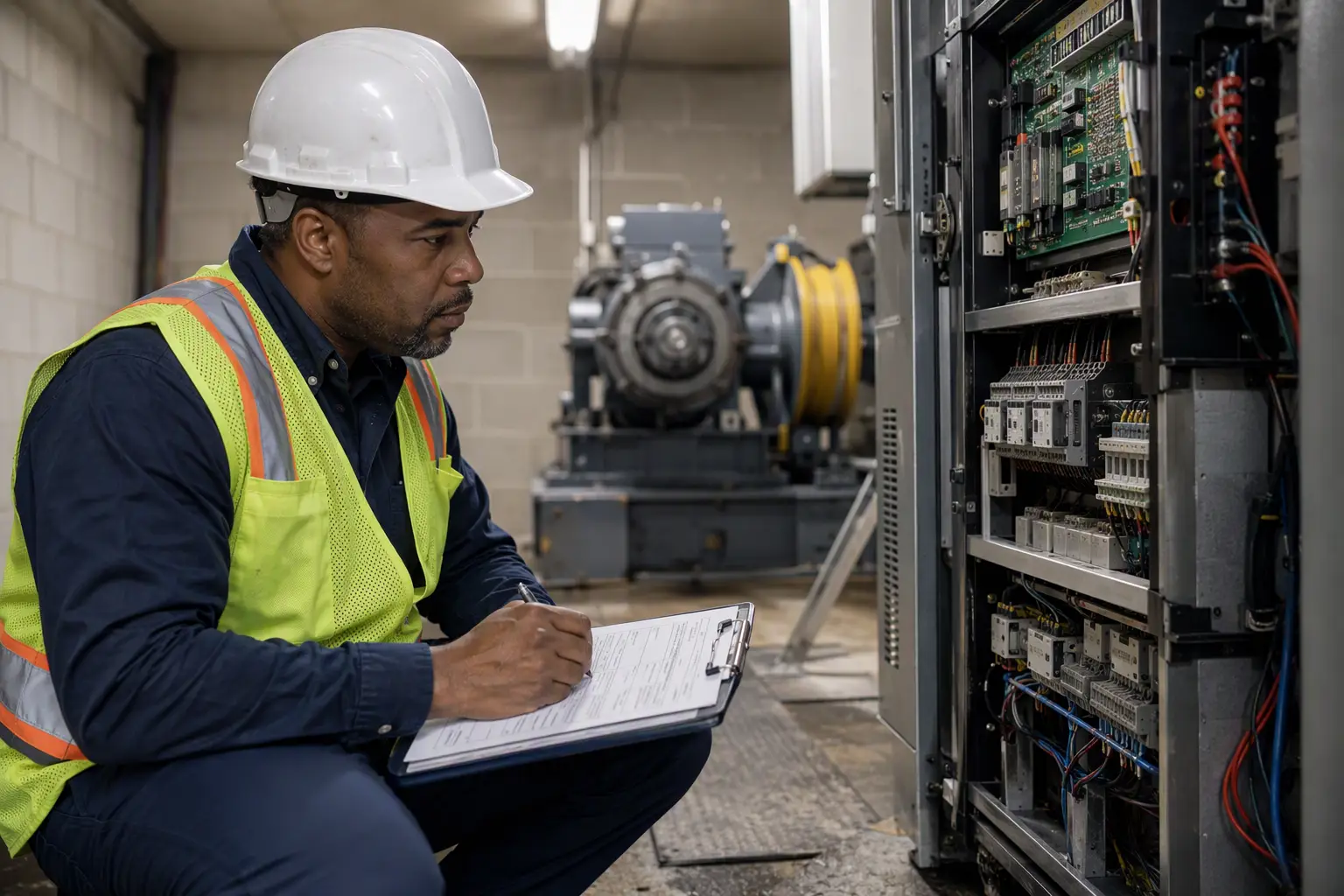
Getting a commercial elevator through South Carolina’s annual state inspection requires more than a quick visual check. It demands a systematic review of every safety system, documentation, and physical component — all measured against the requirements of S.C. Code Title 41, Chapter 16 and the regulations at S.C. Code of Regulations Chapter 71, Article 5. Carolina Elevator Service works with building owners and facility managers throughout Columbia, SC, and the surrounding region to ensure elevators are genuinely inspection-ready — not just on paper.
What Does South Carolina Law Require Before an Elevator Can Operate?
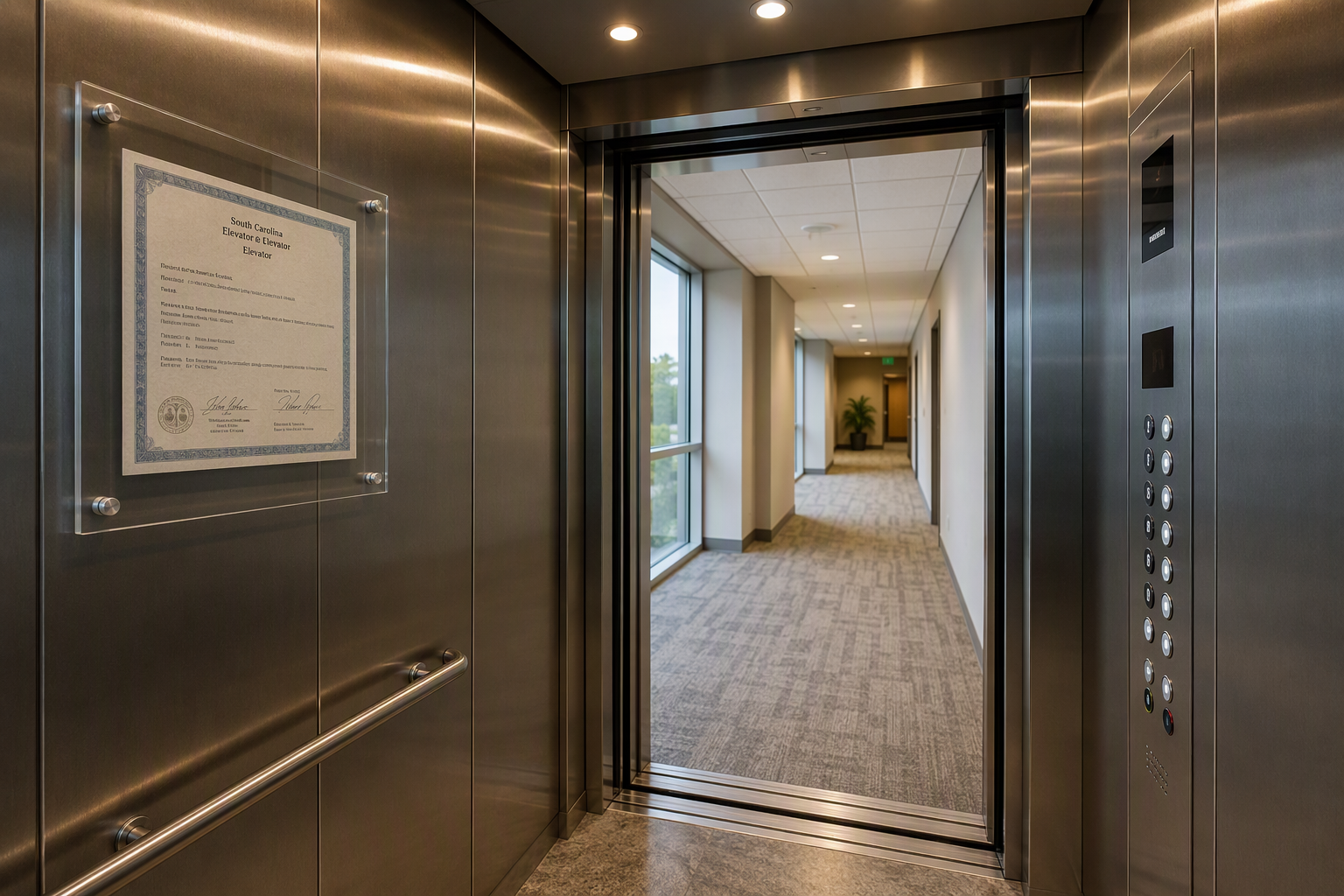
Under South Carolina law, no elevator facility may be operated without both a certificate of registration and a current operating certificate issued by the state. The operating certificate — or a legible copy — must be displayed conspicuously inside each elevator car at all times. Inspectors check for this document as one of the first items on any inspection visit.
South Carolina elevators are required to be inspected at installation, upon registration, after any alteration or repair, and at least once every year before the operating certificate can be renewed. These inspections may only be conducted by state inspectors or by licensed special inspectors whose qualifications meet the 2018 edition of QEI-1, the American National Standard for Qualification of Elevator Inspectors. One important rule to be aware of: a special inspector may not inspect an elevator on which the inspector or the inspector’s employer holds a current service or warranty contract.
For equipment types other than standard passenger and freight elevators, inspection intervals differ. Handicap lifts require inspection every five years. Manlifts, television tower elevators, and special purpose elevators are inspected every seven years. Dumbwaiters must be inspected when installed or altered.
What Code Standards Do South Carolina Inspectors Use in 2026?
South Carolina has adopted the ASME A17.1/CSA B44, 2019 edition (ASME A17.1-2019/CSA B44:19), effective as adopted in the S.C. State Register on July 23, 2021. This edition was adopted without amendment, meaning inspectors apply it as written. Any new elevator installation in South Carolina must comply with the edition of ASME A17.1 that was officially in effect when the construction permit was issued.
Elevator facilities that were in operation before July 1, 1986, fall under the 1986 edition of ANSI A17.3, the safety code for existing elevators and escalators. Owners of older equipment should be especially attentive to this distinction, as some components and design requirements differ between the two standards.
Federal standards also apply in parallel. The Americans with Disabilities Act (ADA) governs accessibility requirements for public-use elevators, and OSHA standards apply to worker safety during maintenance and inspection activities. South Carolina law is clear that local ordinances that conflict with the South Carolina Elevator Code or its regulations are void, so state and federal standards take precedence.
What Do South Carolina Inspectors Actually Look For?
Inspectors conduct a thorough evaluation of every major system. While the exact checklist follows the adopted ASME A17.1-2019 standard, the areas most commonly reviewed fall into several categories:
- Safety devices: Overspeed governors, safeties, buffers, and interlocks are tested to confirm they activate and hold within code-specified parameters.
- Door systems: Car and hoistway doors are checked for proper operation, reopening devices, and force limits.
- Emergency systems: South Carolina law requires passenger elevators to have standby power capable of running emergency lighting and the alarm bell for at least four hours if normal power fails. Inspectors verify this capacity.
- Firefighters’ service: New installations must use the five-pin S.C. #1000 key for firefighters’ service. Inspectors confirm the correct key type and that Phase I and Phase II fire service functions correctly.
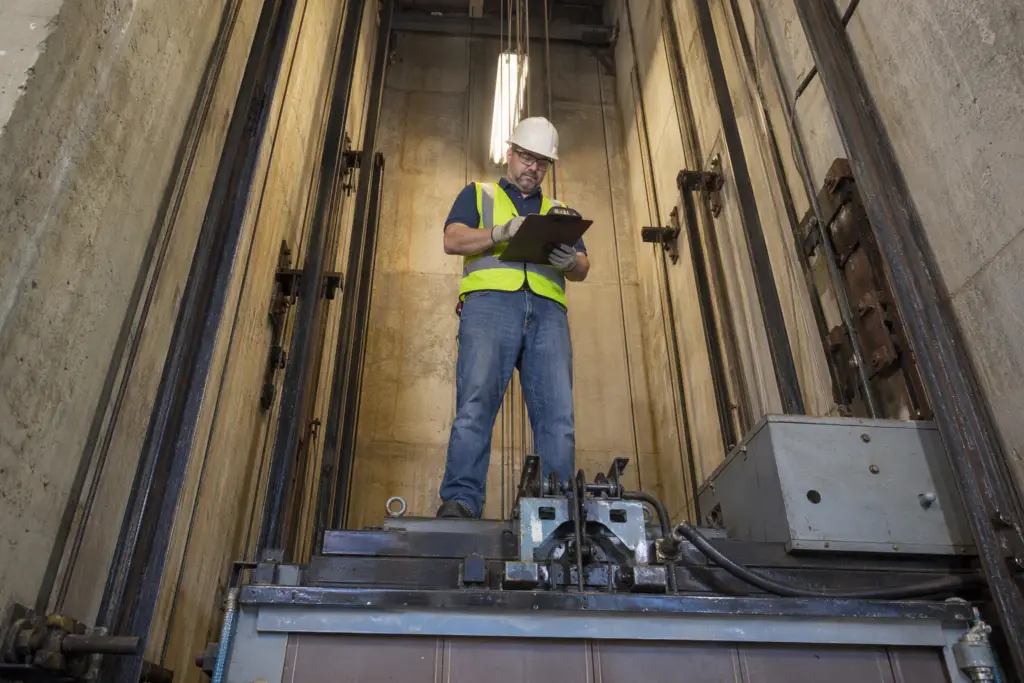
- Machine room and pit conditions: Cleanliness, lighting, drainage, clearances, and access conditions are reviewed.
- Hydraulic systems: For underground hydraulic elevators, newly installed cylinders must be encased in plastic outer containment to limit electrolytic corrosion — inspectors verify this requirement is met on applicable installations.
- Documentation and certificates: The operating certificate must be posted in the car. Permit and inspection records are reviewed.
- Accessibility compliance: Call button heights, leveling accuracy, and cab dimensions are compared against ADA requirements where applicable.
What Steps Should a Building Owner Take to Prepare for the Annual Inspection?
- Review your current operating certificate. Confirm it has not expired and that a legible copy is posted inside the elevator car.
- Gather all maintenance and service records. Compile documentation of any repairs, adjustments, or part replacements made since the last inspection.
- Schedule a pre-inspection maintenance visit. Have a qualified elevator service company perform a thorough evaluation of all mechanical, electrical, and safety systems before the state inspector arrives.
- Test emergency systems. Verify that emergency lighting, the alarm bell, and standby power function correctly and that the standby power can sustain them for the required duration.
- Check firefighters’ service operation. Test Phase I and Phase II fire service using the correct S.C. #1000 key (for applicable installations) and confirm all functions respond properly.
- Inspect the machine room, pit, and car. Clear any debris, confirm lighting is adequate, and ensure all access areas meet code clearance requirements.
- Verify door operation. Test reopening devices, door closing force, and interlock function on all landings.
- Address any open deficiencies promptly. Any item identified during the pre-inspection review should be corrected before the state inspection date — inspectors may place equipment out of service for unresolved safety issues.
Who Is Responsible for Keeping an Elevator in Safe Condition in South Carolina?
South Carolina law places the responsibility for keeping every elevator facility in safe operating condition — and in compliance with state regulations — squarely on the owner. This is not a delegable obligation. Even when a service company is engaged, the owner remains legally accountable for the condition of the equipment and for ensuring inspections occur on schedule.
Owners should also be aware that any accident that seriously injures a person other than an employee must be reported to the state before the end of the next working day. Prompt reporting is a legal obligation, not optional.
The South Carolina Elevator Code does not apply to equipment installed in a single private dwelling, so residential homeowners with private lifts are not subject to the same inspection and certification requirements as commercial building owners.
What Happens If an Elevator Fails the State Inspection?
A failed inspection typically results in the elevator being taken out of service until deficiencies are corrected and the equipment passes re-inspection. Operating an elevator without a valid operating certificate is a violation of South Carolina law. Beyond the legal exposure, an out-of-service elevator creates immediate disruption for tenants, customers, and employees — particularly in multi-story buildings where elevator access is essential for ADA compliance.
The most effective way to avoid a failed inspection is to invest in regular, qualified maintenance throughout the year rather than addressing problems only as the inspection date approaches. An elevator that receives consistent professional attention is far less likely to present surprises during the state’s review.
Does Carolina Elevator Service Handle Pre-Inspection Evaluations in Columbia and Surrounding Areas?
Yes. Carolina Elevator Service provides pre-inspection evaluations and ongoing maintenance for elevator facilities throughout Columbia, SC, and the broader South Carolina market. The team works with commercial building owners, property managers, healthcare facilities, government buildings, and multi-family residential properties to identify and resolve code compliance issues before a state inspector arrives.
Because South Carolina law prohibits a special inspector from inspecting equipment on which the inspector’s employer holds a current service contract, Carolina Elevator Service focuses on helping owners get their equipment into inspection-ready condition — and works in coordination with the independently licensed special inspectors or state inspectors who perform the official evaluation.
Emergency service is available when elevator systems require urgent attention outside of normal business hours. Contact Carolina Elevator Service directly for availability details specific to your situation and location.
How Does Carolina Elevator Service Stay Current With South Carolina Elevator Code Requirements?
Carolina Elevator Service focuses exclusively on South Carolina, which means every technician and every service protocol is aligned with the requirements of S.C. Code Title 41, Chapter 16, the regulations at S.C. Code of Regulations Chapter 71, Article 5, and the adopted ASME A17.1-2019/CSA B44:19 standard. The company does not divide its attention across multiple states with different regulatory frameworks — South Carolina’s requirements are the only requirements Carolina Elevator Service works to.
When South Carolina adopts new code editions or the LLR issues updated guidance, Carolina Elevator Service incorporates those changes into its service procedures. Staying current is not just a professional standard — it directly affects whether a client’s elevator passes inspection and remains legally operational.
Schedule a Free Consultation
If your elevator is coming up for its annual state inspection — or if you are unsure whether your equipment meets current South Carolina requirements — Carolina Elevator Service is ready to help. Contact the team today to schedule a free consultation and pre-inspection evaluation for your Columbia, SC facility or any location throughout South Carolina.
Call Carolina Elevator Service: 803-865-1400
Need elevator service you can rely on? Carolina Elevator Service is ready to help.