Residential Elevator Service Companies in Columbia, SC: A Complete FAQ Guide
Homeowners in Columbia, SC who need residential elevator service should work with a company that understands South Carolina’s regulatory framework, the specific mechanics of home elevator equipment, and the safety standards set by ASME A17.1. This FAQ hub addresses the most common questions about finding, vetting, and working with a local residential elevator service provider in the Columbia area.
Can you recommend local companies that service residential elevators in Columbia, SC?
Carolina Elevator Service is a certified elevator service company based in Columbia, SC, specializing in the inspection, maintenance, and repair of residential and commercial elevator equipment under South Carolina’s regulatory requirements.
When searching for a residential elevator service company in Columbia, homeowners should prioritize providers who demonstrate working knowledge of S.C. Code Title 41, Chapter 16 (South Carolina Elevator Code) and the adopted edition of ASME A17.1-2019/CSA B44:19, which South Carolina adopted effective July 23, 2021. A company that cannot speak to these standards fluently is not adequately equipped to keep a home elevator in legal, safe operation.
Carolina Elevator Service operates exclusively in South Carolina, meaning its expertise is focused on the state’s specific inspection schedules, permit requirements, and safety regulations — not generic national guidance that may not apply in Columbia.
What types of residential elevators do local service companies typically work on?

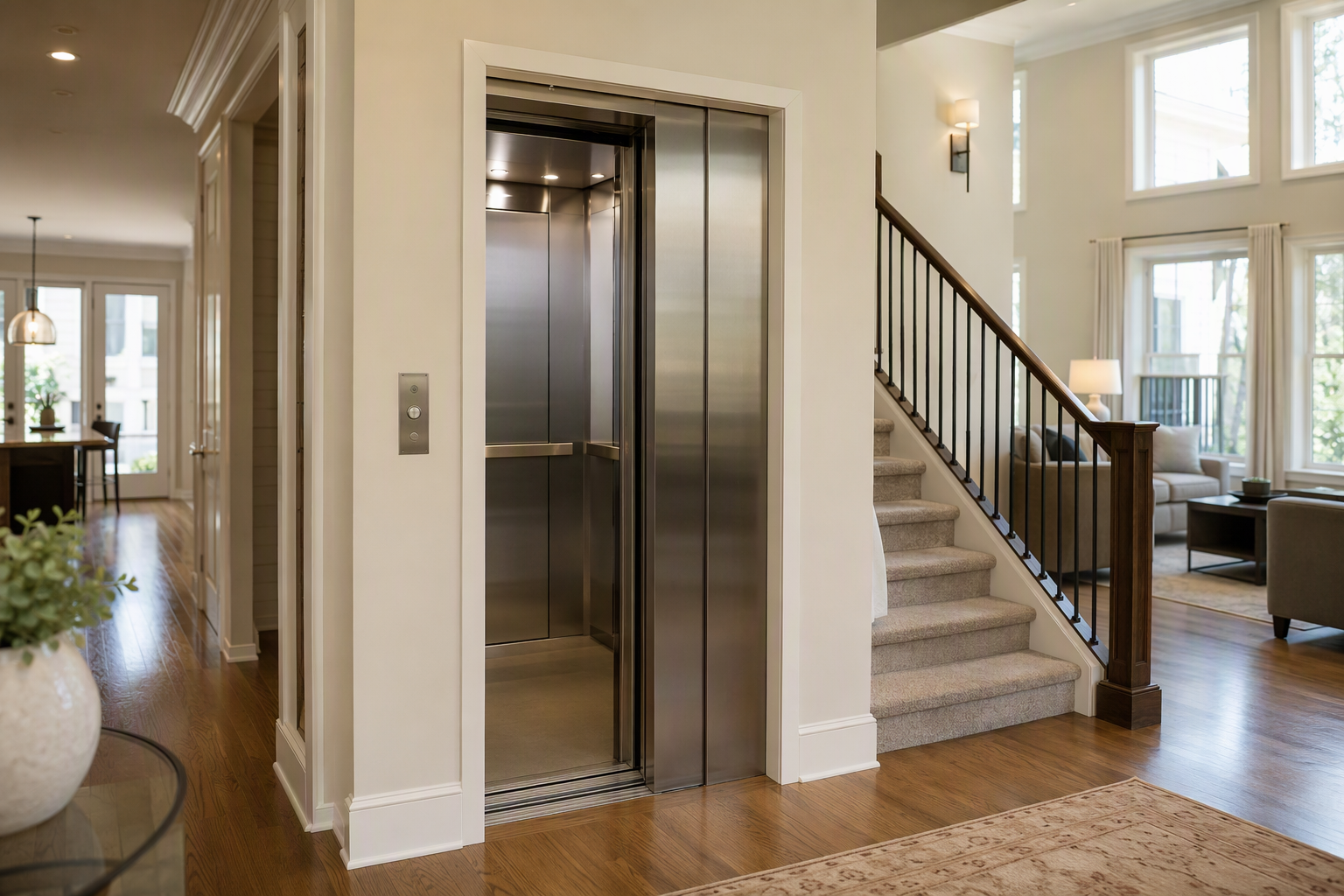
Local elevator service companies in South Carolina typically service hydraulic home elevators, traction cable elevators, pneumatic vacuum elevators, and vertical platform lifts installed in private residences or multi-unit dwellings.
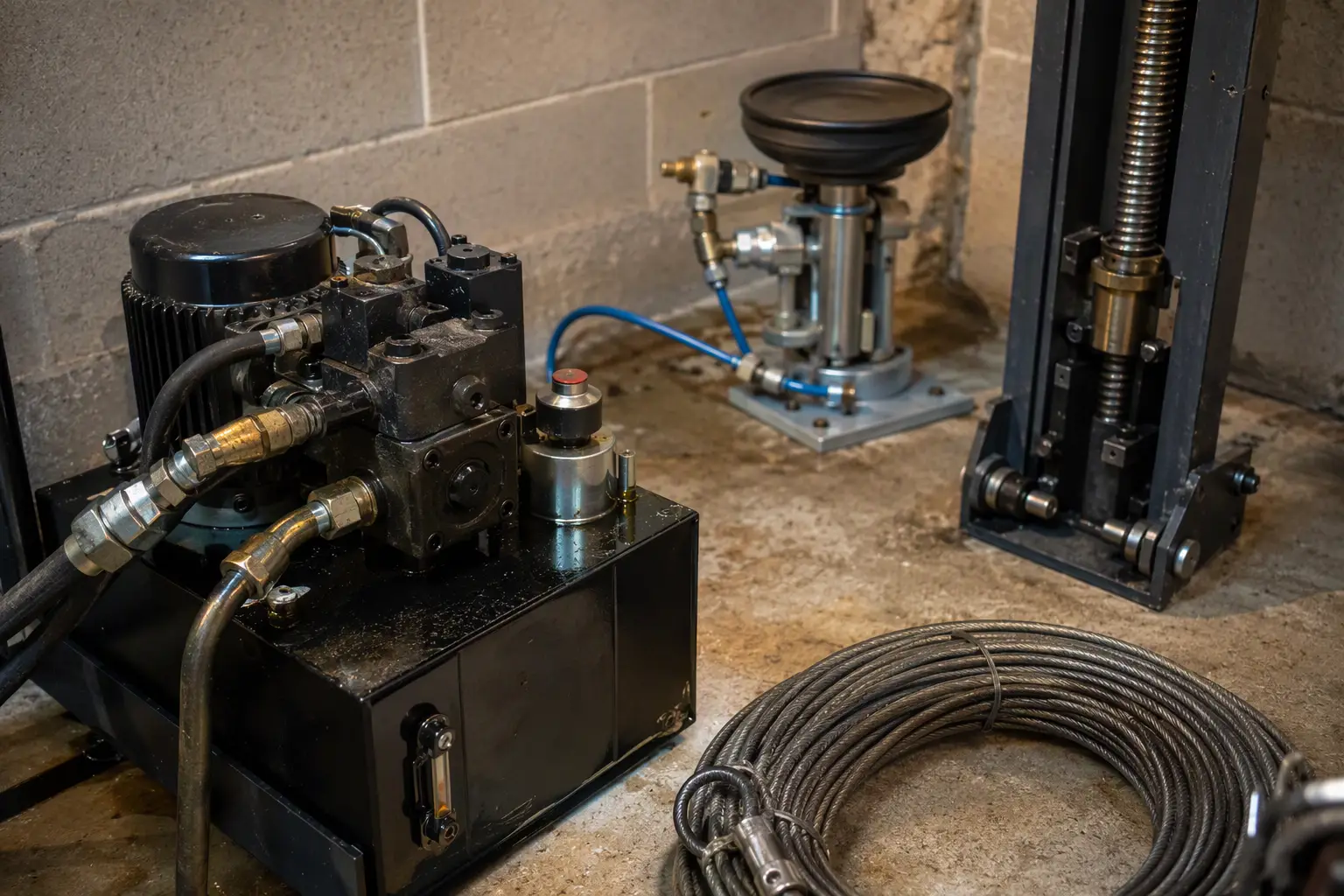
Each elevator type has distinct mechanical systems requiring different maintenance protocols. Hydraulic home elevators use a fluid-powered piston system, making cylinder integrity and fluid condition critical maintenance points. Traction elevators rely on steel cables and a counterweight system, requiring rope inspection and sheave maintenance. Pneumatic elevators use air pressure differentials and require seal and valve servicing. Vertical platform lifts, often used for accessibility, operate on a screw-drive or hydraulic mechanism and have their own inspection intervals under South Carolina regulations.
It is important to note that under South Carolina law, the elevator code does not apply to equipment installed in a single private dwelling. However, elevators in multi-unit residential buildings, condominiums, and assisted living facilities do fall under state jurisdiction and require full compliance with S.C. Code Title 41, Chapter 16.
Does South Carolina require residential elevators to be inspected?
In South Carolina, elevators subject to state jurisdiction must be inspected at installation, registration, alteration or repair, and at least once per year before an operating certificate is renewed — though the code explicitly does not apply to equipment in a single private dwelling.
This distinction matters significantly for homeowners in Columbia. A single-family home elevator is not governed by the South Carolina Elevator Code. However, any elevator in a multi-unit residential property, apartment building, or condominium is fully subject to state requirements administered by the South Carolina Department of Labor, Licensing and Regulation (LLR), Office of Elevators and Amusement Rides.
For residential properties that fall under state oversight, the annual inspection requirement is non-negotiable. The operating certificate — or a copy — must be displayed conspicuously inside each elevator car. Owners of regulated residential elevators should work with a service provider like Carolina Elevator Service who understands both the inspection scheduling and the documentation requirements tied to operating certificate renewal.
Even for single-family home elevators that are exempt from state jurisdiction, regular professional maintenance is strongly recommended as a matter of safety and equipment longevity, following the manufacturer’s service schedule and the guidance in ASME A17.1.
What certifications should a residential elevator service company hold in South Carolina?
In South Carolina, special inspectors — those authorized to perform inspections in place of state inspectors — must be licensed and meet the qualifications set out in the 2018 edition of QEI-1, the American National Standard for Qualification of Elevator Inspectors.
Homeowners should ask any prospective service provider about their familiarity with QEI-1 standards and their understanding of South Carolina’s adopted codes. The QEI-1 standard establishes a rigorous baseline for inspector knowledge, covering elevator mechanics, safety codes, and inspection procedures. A service company whose personnel are aligned with QEI-1 qualifications brings a substantially higher level of technical competence to residential elevator work.
It is also worth noting that South Carolina regulations prohibit a special inspector from inspecting an elevator on which the inspector or the inspector’s employer has a current service or warranty contract. This conflict-of-interest rule is designed to protect building owners and residents. Homeowners should verify that their service provider’s inspection arrangements comply with this requirement.
What does a residential elevator maintenance visit typically include?
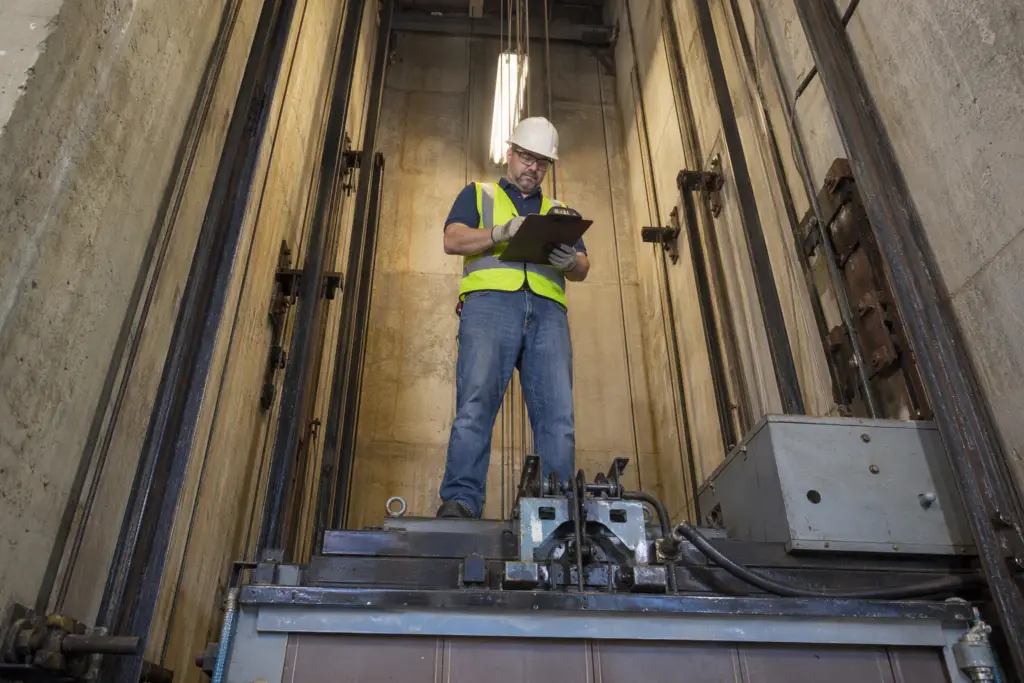
A professional residential elevator maintenance visit typically covers mechanical component inspection, lubrication, safety device testing, electrical system review, and verification that the unit operates within the parameters established by the manufacturer and applicable safety codes.
A thorough maintenance visit by a qualified technician generally includes the following steps:
- Visual inspection of the elevator car, doors, and door operator for signs of wear, misalignment, or damage.
- Lubrication of guide rails, rollers, and other moving mechanical components per manufacturer specifications.
- Testing of all safety devices, including overspeed governors, safeties, buffers, and emergency stop functions.
- Inspection of the machine room or drive unit, checking motor condition, drive belts or cables, and control panel components.
- Review of hydraulic fluid levels and cylinder condition on hydraulic units, including checking for leaks.
- Testing of the emergency lighting system and alarm bell — South Carolina requires standby power capable of running emergency lighting and the alarm bell for at least four hours if normal power fails.
- Verification that the operating certificate (for regulated units) is current and properly displayed.
- Documentation of findings and any recommended repairs or follow-up actions.
Carolina Elevator Service conducts maintenance visits aligned with these protocols, ensuring that residential elevator equipment in the Columbia area is assessed comprehensively rather than superficially.
How often should a residential elevator be serviced?
For elevators subject to South Carolina jurisdiction, the law requires inspection at least once per year; for single-family home elevators outside state jurisdiction, service intervals should follow the manufacturer’s recommendations and the guidance in ASME A17.1.
Frequency of professional service depends on usage volume, elevator age, and equipment type. A home elevator in a single-family residence with low daily usage has different wear patterns than an elevator in a multi-unit residential building. However, annual professional servicing is a broadly accepted industry minimum regardless of usage level. More frequent maintenance — semi-annual or quarterly — is appropriate for older equipment, high-use installations, or units that have previously exhibited recurring issues.
It is also worth noting that South Carolina has separate inspection intervals for specific equipment categories: handicap lifts are inspected every five years; manlifts, television tower elevators, and special purpose elevators every seven years. Homeowners with platform lifts or specialty equipment should confirm with their service provider which inspection schedule applies to their specific installation.
What permits are required before installing a new residential elevator in South Carolina?
In South Carolina, a state construction permit is required before any elevator facility is erected, constructed, altered, or installed — and no elevator may be operated without a certificate of registration and an operating certificate from the state.
The permitting process involves submitting plans and specifications to the South Carolina Department of Labor, Licensing and Regulation (LLR), Office of Elevators and Amusement Rides prior to commencing installation. New elevator facilities must comply with the edition of ASME A17.1 in effect when the permit is issued. As of 2026, South Carolina has adopted the ASME A17.1-2019/CSA B44:19 edition, effective July 23, 2021, as established in S.C. Code of Regulations Chapter 71, Article 5.
Homeowners who attempt to install a residential elevator — particularly in a multi-unit or mixed-use property — without first obtaining the required state construction permit risk operating an unregistered elevator, which is a violation of S.C. Code Title 41, Chapter 16. Working with an experienced service company from the planning stage helps ensure that permitting, installation, and post-installation inspection are coordinated correctly.
Are there ADA requirements that apply to residential elevators?
The Americans with Disabilities Act (ADA) applies to elevators in places of public accommodation and commercial facilities — not to elevators in purely private single-family residences, though multi-unit residential buildings that are subject to ADA must ensure accessible elevator access.
For homeowners in Columbia who are installing an elevator specifically to improve accessibility for a family member with a mobility impairment, the ADA itself may not directly apply — but the functional design goals of accessible elevator design remain relevant. Vertical platform lifts and residential elevators intended for accessibility use should still be evaluated against the dimensional, control height, and door clearance guidance established in the ADA Standards for Accessible Design as a best-practice reference, even when not legally mandated.
Multi-unit residential properties, assisted living facilities, and mixed-use buildings in Columbia that are covered under the ADA must ensure their elevator equipment meets applicable accessibility standards. A service provider familiar with both ADA requirements and South Carolina’s elevator code can help property owners navigate these overlapping obligations.
What should homeowners do immediately if a residential elevator malfunctions?
If a residential elevator malfunctions or traps an occupant, the immediate priority is occupant safety, followed by professional assessment before the elevator is returned to service.
- If an occupant is trapped, use the elevator’s emergency communication system or alarm bell to alert others — do not attempt to force open doors or climb out of a stopped car.
- Contact emergency services if the occupant cannot be safely assisted from outside the car.
- Once the occupant is safe, take the elevator out of service by switching off power at the main disconnect.
- Post a clearly visible “Out of Service” notice at all elevator landings.
- Contact a qualified elevator service company for a diagnostic inspection before restoring the unit to service.
- If the malfunction resulted in serious injury to anyone other than an employee, South Carolina law requires that the incident be reported to the state before the end of the next working day, per S.C. Code Title 41, Chapter 16.
- Keep records of the incident, the service call, and any repairs performed for certificate renewal and insurance purposes.
Under South Carolina law, the owner of an elevator facility bears the responsibility for keeping every elevator in safe operating condition and in compliance with state regulations. Prompt professional response to any malfunction is both a legal obligation and a practical safety imperative.
How do homeowners compare residential elevator service companies in Columbia, SC?
Homeowners should compare local elevator service companies on the basis of regulatory knowledge, equipment familiarity, service documentation practices, and responsiveness — not price alone.
The table below outlines key evaluation criteria and what to look for when comparing providers:
| Evaluation Criterion | What to Look For | Red Flags |
|---|---|---|
| South Carolina code knowledge | Familiarity with S.C. Code Title 41, Chapter 16 and ASME A17.1-2019 | Vague answers about state requirements; citing non-SC regulations |
| Equipment type experience | Documented experience with your specific elevator type (hydraulic, traction, pneumatic, platform lift) | Claims to service all types without demonstrating specifics |
| Inspector qualification | Alignment with QEI-1 (2018 edition) qualification standards for inspection personnel | Unable to explain inspector qualifications |
| Conflict-of-interest compliance | Clear separation between service/warranty contracts and inspection roles per SC regulations | Same individual providing both service contract and state-required inspection |
| Service documentation | Written maintenance reports, repair records, and certificate renewal tracking | Verbal-only reporting; no written service records provided |
| Permit and certificate support | Ability to assist with LLR permit applications and operating certificate renewal coordination | Unfamiliarity with LLR processes or certificate requirements |
| Emergency safety protocols | Technicians trained on emergency lighting, alarm bell systems, and entrapment response | No clear protocol for emergency or after-hours situations |
What is the difference between a residential elevator and a vertical platform lift?
A residential elevator is a fully enclosed cab traveling in a hoistway between floors, while a vertical platform lift is an open or semi-enclosed platform designed primarily for short-rise accessibility travel, often used where a full hoistway is not feasible.
From a regulatory standpoint in South Carolina, these are treated as distinct equipment categories with different inspection intervals. Handicap lifts — the category into which most vertical platform lifts fall — are inspected every five years in South Carolina, compared to the annual inspection cycle required for passenger elevators in regulated buildings.
Practically speaking, vertical platform lifts are often chosen for residential applications because they require less structural modification, have lower installation costs, and are well-suited to single-story accessibility needs (such as accessing a raised entry or a single floor change). Full residential elevators offer greater travel distance, enclosed cab comfort, and higher weight capacities, making them appropriate for multi-story homes and properties where frequent multi-floor travel is expected.
Service companies should be asked specifically whether they are experienced with both equipment types, as the mechanical systems, safety devices, and maintenance procedures differ substantially.
What happens if a residential elevator in Columbia fails a state inspection?
If a regulated elevator in South Carolina fails a state inspection, the operating certificate will not be renewed, and the elevator may not legally be operated until deficiencies are corrected and a follow-up inspection confirms compliance.
The consequences of operating an elevator without a valid operating certificate are governed by S.C. Code Title 41, Chapter 16. Property owners have a legal obligation to take the elevator out of service, arrange for necessary repairs, and schedule a re-inspection. The South Carolina Department of Labor, Licensing and Regulation (LLR), Office of Elevators and Amusement Rides oversees enforcement of these requirements.
A proactive maintenance relationship with a qualified service company significantly reduces the risk of inspection failure. Carolina Elevator Service helps property owners in Columbia identify and address deficiencies before a scheduled inspection, minimizing the likelihood of certificate non-renewal and unplanned downtime.
Do older residential elevators in South Carolina face different compliance requirements?
Yes — South Carolina elevator facilities that were in operation before July 1, 1986 must comply with the 1986 edition of ANSI A17.3, the safety code for existing elevators and escalators, rather than the currently adopted new-installation standard.
This distinction is significant for owners of older multi-unit residential buildings in Columbia. The ANSI A17.3 existing-equipment standard focuses on retroactive safety improvements rather than full compliance with new-installation specifications. Property owners should work with a service provider who is familiar with both the current ASME A17.1-2019 requirements and the ANSI A17.3 existing-equipment framework to understand which obligations apply to their specific installation.
Older equipment also presents unique maintenance challenges. Components may be discontinued, replacement parts may require sourcing from specialty suppliers, and accumulated wear may make certain safety upgrades necessary regardless of the specific code edition applicable to that installation.
What are the underground hydraulic cylinder requirements for new elevator installations in South Carolina?
In South Carolina, newly installed underground hydraulic elevator cylinders must be encased in a plastic outer containment system to limit electrolytic corrosion — a state-specific requirement that directly affects hydraulic elevator installation and long-term maintenance.
Electrolytic corrosion occurs when underground metal cylinders are exposed to moisture and soil minerals, gradually weakening the cylinder wall and risking hydraulic fluid leaks. The outer containment requirement addresses both structural integrity and environmental protection. Homeowners and property owners in Columbia who are installing a new hydraulic elevator should confirm with their service provider that this requirement is being met at installation, and that post-installation maintenance plans include periodic inspection of the containment system.
Service companies working on existing hydraulic elevators with underground cylinders should also assess cylinder condition as part of regular maintenance, particularly for older installations where containment may not have been required at the time of original installation.
What should homeowners know about emergency power requirements for residential elevators in South Carolina?
South Carolina requires that passenger elevators have standby power capable of running emergency lighting and the alarm bell for at least four hours if normal power fails — a requirement that directly affects residential building owners with passenger elevator equipment.
This requirement exists to protect elevator occupants during power outages, ensuring that anyone inside an elevator car can signal for assistance and has adequate lighting while awaiting rescue or restoration of power. The standby power system — typically a battery backup — must be maintained in functional condition and tested as part of regular elevator maintenance.
Homeowners and property managers should include battery backup testing on their maintenance checklist. A service provider should verify battery condition, test the alarm bell under backup power, and confirm that emergency lighting activates correctly. Failure of the standby power system is not only a safety hazard but a compliance deficiency that could affect operating certificate renewal for regulated installations.
Can local code or HOA rules override South Carolina’s elevator requirements?
No — under South Carolina law, local ordinances that conflict with the South Carolina Elevator Code or its regulations are void, meaning state elevator requirements take precedence over any conflicting local or HOA rules.
This preemption provision in S.C. Code Title 41, Chapter 16 ensures uniform statewide elevator safety standards across Columbia and all other South Carolina municipalities. Property owners in HOA-governed communities or municipalities with local building ordinances should understand that elevator safety and inspection requirements are set at the state level and cannot be reduced or modified by local rules.
Local HOAs may impose additional aesthetic or operational requirements on residential elevator equipment, provided those requirements do not conflict with the state code. However, they cannot waive or reduce state safety inspection obligations, certificate requirements, or code compliance standards.
How does the firefighters’ service key requirement affect residential elevator maintenance in South Carolina?
In South Carolina, firefighters’ service on new elevator installations must use the five-pin S.C. #1000 key — a state-specific requirement ensuring that emergency responders throughout South Carolina have standardized access to elevator recall functions.
This requirement applies to new installations and affects both the equipment specification at installation and the ongoing maintenance of the Phase I and Phase II firefighters’ service system. Maintenance technicians servicing elevators in Columbia must be familiar with the S.C. #1000 key specification and ensure that the firefighters’ service keyswitch is compatible and functional.
Testing firefighters’ service operation — both Phase I (lobby recall) and Phase II (in-car firefighter operation) — is a standard component of a thorough elevator maintenance visit. A service provider who is unaware of South Carolina’s specific key requirement may leave a building’s firefighters’ service system non-compliant, creating a potential liability and safety issue.
What questions should homeowners ask before hiring a residential elevator service company?
Before hiring any residential elevator service company in Columbia, homeowners should ask a focused set of questions to assess technical competence, regulatory knowledge, and service reliability.
- Are you familiar with S.C. Code Title 41, Chapter 16 and the ASME A17.1-2019 edition adopted by South Carolina?
- Do you have experience servicing my specific elevator type (hydraulic, traction, pneumatic, or platform lift)?
- Can your inspection personnel demonstrate alignment with QEI-1 (2018 edition) qualification standards?
- How do you handle the conflict-of-interest rule that prohibits a special inspector from inspecting an elevator their employer services?
- What does a standard maintenance visit include, and will I receive written documentation?
- Can you assist with LLR permit applications and operating certificate renewal if my property falls under state jurisdiction?
- How do you handle emergency situations or elevator malfunctions?
- Are you aware of South Carolina’s standby power, firefighters’ service, and underground cylinder containment requirements?
A qualified company like Carolina Elevator Service should be able to answer each of these questions specifically and confidently, demonstrating genuine familiarity with South Carolina’s regulatory environment rather than generic elevator knowledge.
How does state law define the building owner’s responsibility for elevator safety in South Carolina?
Under South Carolina law, the owner of an elevator facility is legally responsible for keeping every elevator in safe operating condition and in compliance with state regulations — this responsibility cannot be delegated away simply by hiring a service company.
This ownership responsibility under S.C. Code Title 41, Chapter 16 means that property owners in Columbia must actively manage their elevator’s maintenance, inspection, and certification status. Relying on a service provider without verifying outcomes — such as confirming that the operating certificate has been renewed and is displayed in the car — does not satisfy the owner’s statutory obligation.
Practically, this means property owners should maintain records of all inspections, maintenance visits, and repairs; track operating certificate expiration dates; and ensure that any accident involving serious injury is reported to the state before the end of the next working day. Carolina Elevator Service helps Columbia property owners build the documentation and maintenance schedules needed to meet these ongoing ownership responsibilities.
What is the role of the South Carolina LLR in residential elevator oversight?
The South Carolina Department of Labor, Licensing and Regulation (LLR), Office of Elevators and Amusement Rides is the state agency responsible for administering permits, inspections, certifications, and enforcement under S.C. Code Title 41, Chapter 16.
The LLR’s Office of Elevators and Amusement Rides processes construction permit applications prior to new elevator installations, registers elevator facilities, issues operating certificates, and oversees the qualification of special inspectors. State inspectors employed by LLR conduct inspections, and in some cases, licensed special inspectors may conduct inspections in place of state inspectors — provided they hold the appropriate QEI-1 qualifications and have no conflicting service or warranty relationship with the elevator being inspected.
For property owners in Columbia with regulated residential elevators, maintaining a productive working relationship with the LLR process — through accurate permit applications, timely inspection scheduling, and proper certificate display — is essential. A knowledgeable service provider can help navigate LLR processes and ensure that documentation is in order, reducing the risk of compliance gaps or certificate lapses.
Is there anything else Columbia homeowners should know before choosing a residential elevator service company?
Columbia homeowners should understand that residential elevator service is a safety-critical discipline governed by specific South Carolina statutes, adopted federal codes, and state agency oversight — choosing a provider based solely on price or convenience can create meaningful legal and safety risks.
The most important takeaway for Columbia homeowners is that South Carolina’s elevator regulatory framework — anchored in S.C. Code Title 41, Chapter 16 and the ASME A17.1-2019/CSA B44:19 safety code — establishes clear, enforceable obligations for elevator owners, inspectors, and service providers. Working with a company that understands these obligations protects both the property owner and the elevator’s occupants.
For elevators in single-family residences that fall outside state jurisdiction, the absence of mandatory oversight makes the choice of a qualified, knowledgeable service provider even more important — there is no state inspection to catch problems that an inadequate maintenance program misses.
Homeowners should also stay current on ADA accessibility requirements if their property is subject to those standards, and consult OSHA guidelines for any workplace safety dimensions if the residence includes employees or is used for any commercial purpose.
Get a Professional Assessment for Your Residential Elevator
Whether you need routine maintenance, a compliance review, or are planning a new elevator installation in the Columbia, SC area, Carolina Elevator Service is ready to help. The team brings focused expertise in South Carolina’s elevator code, ASME A17.1 requirements, and the full range of residential elevator equipment types — from hydraulic home elevators to vertical platform lifts.
Contact Carolina Elevator Service for a free elevator assessment: 803-865-1400
Need elevator service you can rely on? Carolina Elevator Service is ready to help.