What Elevator Work Needs to Be Done Before End of Year to Use My 2026 Capital Budget
Capital planning for elevators is rarely straightforward. Equipment is long-lived, regulatory requirements are specific, and the consequences of missing a compliance deadline — or letting a certificate lapse — can be immediate and costly. For South Carolina building owners and facility managers with unspent 2026 capital budget, the window between now and year-end is the right time to identify, contract, and begin elevator work that qualifies as a capital expenditure. This guide walks through the exact categories of work to evaluate, the South Carolina regulatory framework that governs them, and the planning steps needed to make sure funds are committed and projects are underway before the fiscal deadline.
Why Does Elevator Work Need to Be Planned Before Year-End?
Capital budgets operate on strict fiscal calendars. Most organizations require that capital funds be committed — meaning contracts signed and work orders issued — before the budget year closes, even if physical work extends into the following year. Elevator projects carry additional lead times because South Carolina law requires a state construction permit before any elevator facility is erected, constructed, altered, or installed, under S.C. Code Title 41, Chapter 16. Permit applications, contractor scheduling, equipment procurement, and inspection coordination all consume time. A project that seems simple in October can easily miss a December 31 commitment deadline if planning starts too late.
Equally important: annual operating certificates must be renewed through the South Carolina Department of Labor, Licensing and Regulation (LLR), Office of Elevators and Amusement Rides. No elevator facility may legally operate in South Carolina without both a certificate of registration and a current operating certificate. If an inspection triggers corrective work, that work must be completed before the certificate is issued — making it a direct budget driver that cannot be deferred.
What South Carolina Elevator Regulations Apply to Year-End Capital Projects?
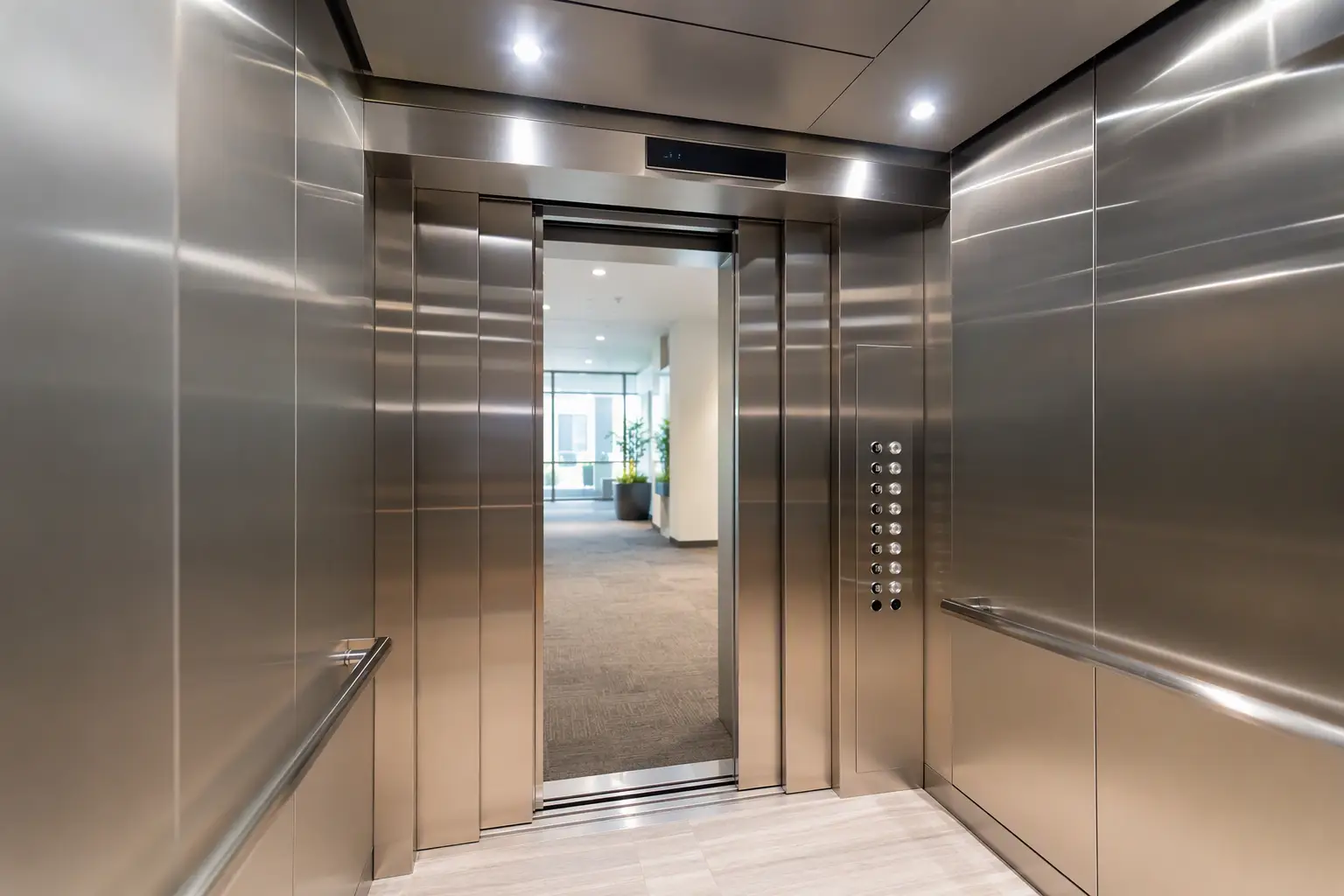
South Carolina’s elevator regulatory framework is governed by S.C. Code Title 41, Chapter 16 and the accompanying S.C. Code of Regulations Chapter 71, Article 5, Regulations 71-5000 through 71-5700. The state has adopted the ASME A17.1/CSA B44, 2019 edition as its technical standard for new and altered equipment. Existing elevators installed before July 1, 1986 must comply with the 1986 edition of ANSI A17.3 for existing elevators and escalators.
Key regulatory facts that directly affect capital project planning in South Carolina include:
- Passenger elevators must have standby power capable of running emergency lighting and the alarm bell for at least four hours if normal power fails — a requirement that drives both new installation specifications and modernization scope.
- New underground hydraulic elevator cylinders must be encased in plastic outer containment to limit electrolytic corrosion — a detail that affects hydraulic replacement budgets.
- Firefighters’ service on new installations must use the five-pin S.C. #1000 key — relevant to any new installation or alteration project.
- Required inspections may be made only by state inspectors or licensed special inspectors; a special inspector may not inspect an elevator on which the inspector or the inspector’s employer has a current service or warranty contract — this independence requirement affects how owners structure their inspection and service arrangements.
- Special inspectors must meet the qualifications in the 2018 edition of QEI-1, the American National Standard for Qualification of Elevator Inspectors.
- The operating certificate, or a copy, must be displayed conspicuously inside each elevator car at all times.
What Categories of Elevator Work Qualify as Capital Expenditures?
Not all elevator spending is capital in nature. Routine maintenance and minor repairs are typically expensed. Capital work generally involves extending useful life, increasing capacity or performance, bringing equipment into compliance with a new standard, or replacing a major component. The following categories are the most common capital-eligible elevator projects that South Carolina building owners pursue before year-end.
Modernization and Major Component Replacement
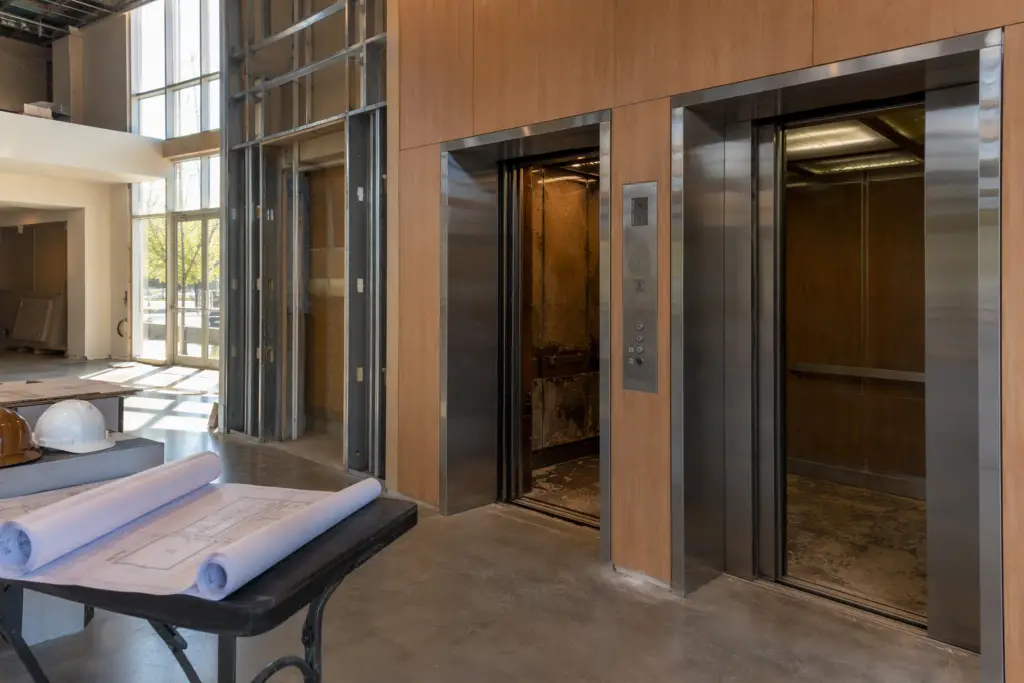
Full or partial modernization — replacing the controller, machine, drive system, cab interior, or door operating equipment — extends useful life and is widely treated as capital. Modernization projects require a state construction permit from the LLR before work begins. Equipment lead times for controllers and traction machines can run several months, making early commitment essential for year-end execution.
Hydraulic Cylinder Replacement
Older single-bottom hydraulic cylinders present environmental and safety risks. South Carolina requires that newly installed underground hydraulic cylinders be encased in plastic outer containment. Replacing an aging cylinder is capital-eligible, requires a permit, and involves significant downtime planning. Owners with aging hydraulic equipment should assess cylinder condition as a priority capital item.
ADA Barrier-Removal Work
The Americans with Disabilities Act requires that places of public accommodation and commercial facilities remove barriers to access where it is readily achievable. Elevator-related ADA work — adding or upgrading accessible controls, improving door timing, installing compliant signage and Braille — qualifies as capital barrier-removal expenditure under IRS rules. ADA compliance work does not always require a construction permit, but alterations that affect elevator operation do, and the distinction matters for scheduling.
Standby Power and Emergency Systems Upgrades
South Carolina requires passenger elevators to have standby power that runs emergency lighting and the alarm bell for at least four hours if normal power fails. Buildings that lack compliant standby power systems face a direct regulatory exposure. Upgrading or installing a generator or battery backup system that serves elevator emergency requirements is capital-eligible and can often be planned and committed before year-end.
New Elevator Installation
Building expansions, additions, or change-of-use projects may require a new elevator. A state construction permit is required before any elevator facility is erected or installed in South Carolina. New installations must comply with the ASME A17.1-2019/CSA B44:19 edition in effect when the permit is issued. Budget commitment for new installations requires signed contracts and permit applications — the physical installation may extend well into the following year.
Code-Driven Corrective Work from Annual Inspections
Annual inspections frequently generate corrective orders. Because South Carolina requires that every elevator be inspected at least once a year before the operating certificate is renewed, any outstanding deficiencies must be corrected before the certificate is reissued. Corrective work ordered by a state or special inspector is non-discretionary and typically capital-eligible when it involves component replacement rather than routine adjustment.
What Is the Inspection Schedule for Different Types of Elevators in South Carolina?
Understanding the South Carolina inspection cycle helps owners time capital work to coincide with — rather than conflict with — the inspection calendar.
| Equipment Type | Inspection Frequency (South Carolina) | Authority |
|---|---|---|
| Passenger and freight elevators | At least once per year (before operating certificate renewal) | S.C. Code Title 41, Chapter 16 |
| Handicap lifts (vertical platform lifts) | Every five years | S.C. Code Title 41, Chapter 16 |
| Manlifts, television tower elevators, special purpose elevators | Every seven years | S.C. Code Title 41, Chapter 16 |
| Dumbwaiters | When installed or altered | S.C. Code Title 41, Chapter 16 |
| Any equipment (at installation, registration, alteration, or repair) | Required at each event | S.C. Code Title 41, Chapter 16 |
How Do I Start the Process of Committing Capital Budget to Elevator Work Before Year-End?
- Audit your current certificates. Confirm that every elevator in your building has a current operating certificate from the LLR and that the certificate is displayed inside the elevator car. Flag any units with lapsed, suspended, or expiring certificates — these represent immediate regulatory exposure and non-discretionary spend.
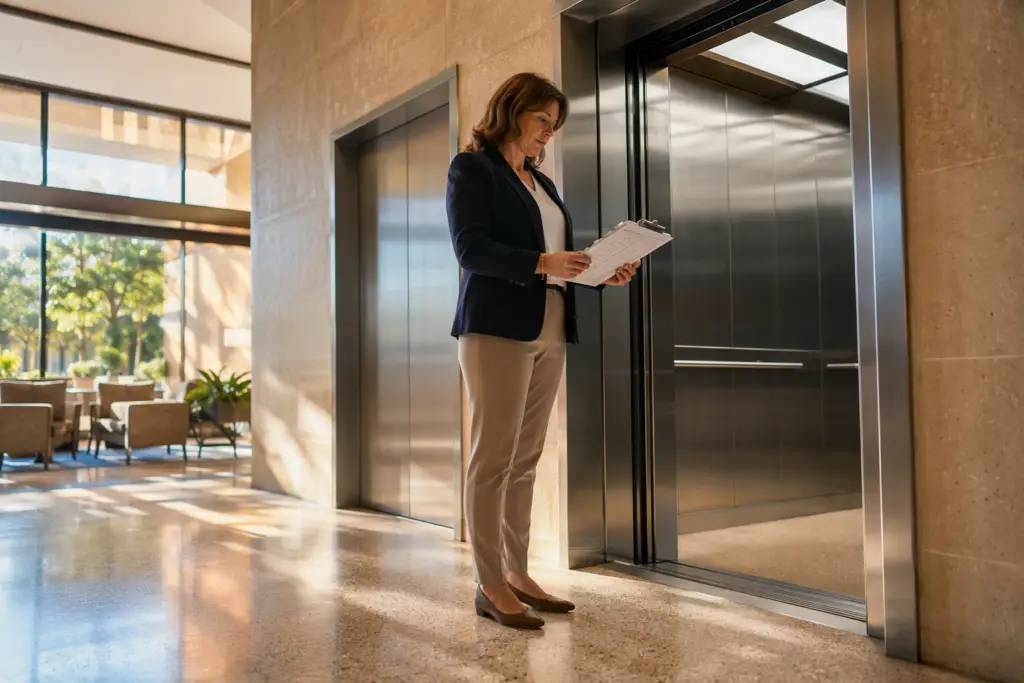
- Pull your most recent inspection reports. Review all outstanding deficiencies or corrective orders. Any open item from a state or special inspector is a required expenditure that may be blocking certificate renewal.
- Identify equipment age and condition. Units that are 20 or more years old are strong candidates for modernization. Hydraulic units with older cylinders warrant cylinder condition assessment. Controllers using obsolete relay logic or discontinued components carry higher long-term risk and cost.
- Assess ADA compliance. Walk each elevator with ADA checklist criteria from ADA.gov. Identify any accessible control, signage, door timing, or cab dimension issues that represent barrier-removal opportunities.
- Evaluate standby power compliance. Confirm that each passenger elevator is connected to a standby power source capable of sustaining emergency lighting and the alarm bell for at least four hours, as required by South Carolina regulations.
- Engage a qualified elevator contractor. Request a formal assessment and written scope of work for each identified project. Scopes should specify whether a state construction permit is required so you can account for permitting lead time.
- Submit permit applications early. For any project requiring a LLR construction permit, the application should be submitted as early as possible. Permit processing adds calendar time that compresses the installation window.
- Execute contracts before your capital commitment deadline. Work with your finance team to confirm the date by which contracts must be signed for expenditures to count against the 2026 budget. Signed contracts with a qualified contractor and submitted permit applications generally satisfy commitment requirements — confirm with your accounting or legal team.
- Schedule inspection coordination. For projects that trigger an inspection at alteration or repair, coordinate with your contractor and a licensed special inspector — remembering that the special inspector cannot be affiliated with your service contractor — or plan for a state inspection.
- Document everything. Retain copies of permits, inspection reports, corrective orders, certificates, and contracts. South Carolina owners are responsible for keeping every elevator facility in safe operating condition and in compliance with state regulations.
What Are the Most Common Reasons Elevator Capital Projects Get Delayed?
Several recurring issues push elevator capital projects past year-end deadlines. Understanding them in advance allows owners to build appropriate schedule buffers.
- Permit processing time. South Carolina requires a construction permit before any alteration or installation. Applications that are incomplete or that involve unusual equipment configurations can take longer to process.
- Long equipment lead times. Controllers, traction machines, and hydraulic cylinders are manufactured to order. Lead times that extend to several months are common, particularly for less common configurations.
- Inspection scheduling. Post-completion inspections by state or qualified special inspectors must be scheduled. Periods of high construction activity can compress inspector availability.
- Contractor capacity. Qualified elevator contractors have finite scheduling capacity. Owners who begin the procurement process late in the year may find that preferred contractors cannot start work within the required window.
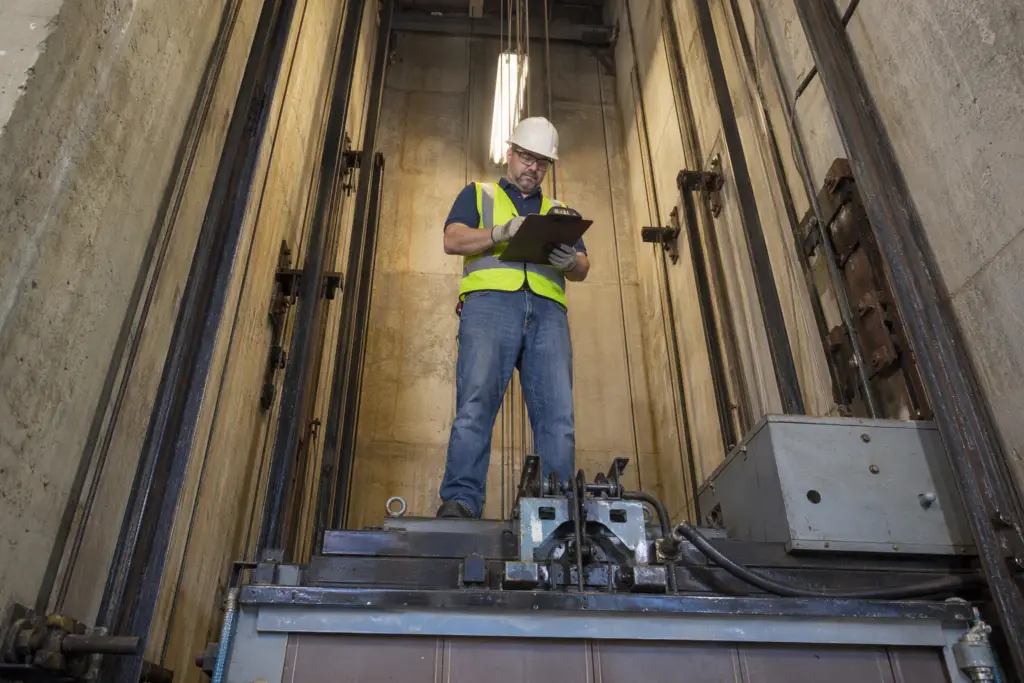
- Scope changes discovered during work. Alterations frequently reveal additional deficiencies — corroded components, non-compliant wiring, or deteriorated shaft conditions — that expand scope and cost beyond the original estimate.
What ASME Standards Govern the Work That Will Be Done?
South Carolina has adopted the ASME A17.1/CSA B44, 2019 edition as the technical standard for new and altered elevator equipment. New installations must comply with the edition in effect at the time the permit is issued. This means that any project permitted in 2026 in South Carolina will be held to the ASME A17.1-2019/CSA B44:19 requirements. Existing elevators installed before July 1, 1986 are governed by the 1986 edition of ANSI A17.3 for existing elevators and escalators, which establishes the retrofit requirements that apply when those units are brought into compliance.
For workplace safety considerations related to elevator construction and maintenance work, OSHA standards apply to elevator mechanics and construction workers performing the physical work — a factor that affects contractor obligations and site safety planning but does not alter the state equipment certification requirements.
Does ADA Work on Elevators Require a State Construction Permit in South Carolina?
It depends on the scope. Cosmetic changes — such as replacing signage or adding tactile characters to existing button panels without modifying the button logic — may not trigger a permit requirement. However, any alteration that modifies the mechanical, electrical, or structural elements of an elevator facility requires a state construction permit from the LLR before work begins. When ADA barrier-removal work involves changing door operator settings, replacing control systems, or modifying the cab structure, it crosses into alteration territory and requires a permit. Owners should have the specific scope reviewed by their elevator contractor before assuming a permit is not needed, because performing regulated alteration work without a permit is a violation of South Carolina law.
What Happens If an Elevator Operates Without a Valid Certificate in South Carolina?
Operating an elevator without a current certificate of registration and operating certificate from the LLR is a direct violation of S.C. Code Title 41, Chapter 16. The LLR has authority to order an elevator out of service. For commercial buildings, an elevator that is tagged out of service creates immediate accessibility and operational consequences. Building owners — not contractors — bear the statutory responsibility for keeping every elevator facility in safe operating condition and in compliance with state regulations. This owner-responsibility framework means that outstanding compliance issues cannot be left unaddressed while waiting for a favorable budget cycle.
How Should Owners Handle Accidents or Incidents Involving Elevators Before Year-End?
South Carolina law requires that any accident that seriously injures anyone other than an employee must be reported to the state before the end of the next working day. If an incident occurs, the owner’s first obligation is immediate notification to the LLR. From a capital planning perspective, an incident that reveals a mechanical failure or unsafe condition creates non-discretionary repair or replacement spend that should be addressed immediately, regardless of where it falls in the budget calendar. Attempting to defer incident-driven corrective work to the next budget year exposes the owner to liability and regulatory action.
What Industry Trends Are Shaping Elevator Capital Planning for 2025 and 2026?
Several qualitative trends are influencing how building owners approach elevator capital budgets heading into 2026.
Modernization demand is growing. A large share of the commercial elevator stock in the United States was installed during the construction booms of the 1970s and 1980s. As those units approach or exceed typical design lives, the volume of modernization projects is increasing. This is creating real pressure on contractor scheduling and equipment procurement lead times.
Energy efficiency is a capital planning driver. Variable-frequency drive systems, LED cab lighting, and standby/sleep mode controllers reduce operating costs meaningfully over the life of the equipment. Building owners pursuing energy certifications or ESG commitments are increasingly treating elevator modernization as a sustainability investment rather than a pure compliance cost.
Hydraulic cylinder replacement urgency is rising. Older single-bottom cylinders that were installed before secondary containment requirements became standard are reaching the end of their safe service lives. South Carolina’s containment requirement for new underground cylinders reflects this broader industry direction. The cost of a cylinder failure — environmental remediation, equipment replacement, and business interruption — significantly exceeds the cost of a planned replacement.
Connected monitoring is becoming a standard modernization feature. Remote monitoring systems that track door cycle counts, leveling accuracy, and fault codes are now widely available as add-on or integrated features in modernized controllers. While not a regulatory requirement, they provide data that supports predictive maintenance and helps owners justify capital investment with operational evidence.
Code adoption cycles affect planning horizons. States periodically update their adopted editions of ASME A17.1. Owners planning major work should be aware that a new code edition adopted after a permit is issued can affect the scope and cost of related future work. In South Carolina, new installations must comply with the adopted edition in effect when the permit is issued.
How Does Carolina Elevator Service Support Capital Budget Planning?
Carolina Elevator Service approaches elevator capital planning as a data-driven process. Rather than offering generic recommendations, the team conducts structured assessments that evaluate inspection history, certificate status, equipment age, component condition, and applicable South Carolina regulatory requirements. The output of an assessment is a written scope of work that distinguishes between required corrective items, code-driven upgrades, and elective modernization — giving building owners the information needed to prioritize capital expenditures, support internal budget justifications, and commit funds before fiscal deadlines. For South Carolina building owners navigating the LLR permitting process, inspection coordination, and contractor scheduling, working with an experienced local service provider reduces the risk of delays that push projects past year-end commitment windows.
What Should I Ask an Elevator Contractor When Evaluating Year-End Capital Projects?
- Does this scope require a South Carolina construction permit, and what is the current processing timeline?
- What are the lead times for major equipment components such as the controller, machine, or cylinder?
- What inspection is required at completion, and how do we schedule it with a qualified special inspector who is independent of your firm?
- What is the realistic project completion date, and does it support our capital commitment deadline?
- Are there any existing conditions — wiring, shaft structure, pit depth — that could expand scope once work begins?
- Does the proposed work bring the equipment into full compliance with the ASME A17.1-2019 requirements adopted by South Carolina?
- What documentation will you provide for our records — permits, inspection reports, as-built drawings, and test results?
Contact Carolina Elevator Service for a free elevator assessment at 803-865-1400.
Need elevator service you can rely on? Carolina Elevator Service is ready to help.