Elevator Requirements When a Columbia Building Changes Use or Undergoes Major Renovation in South Carolina
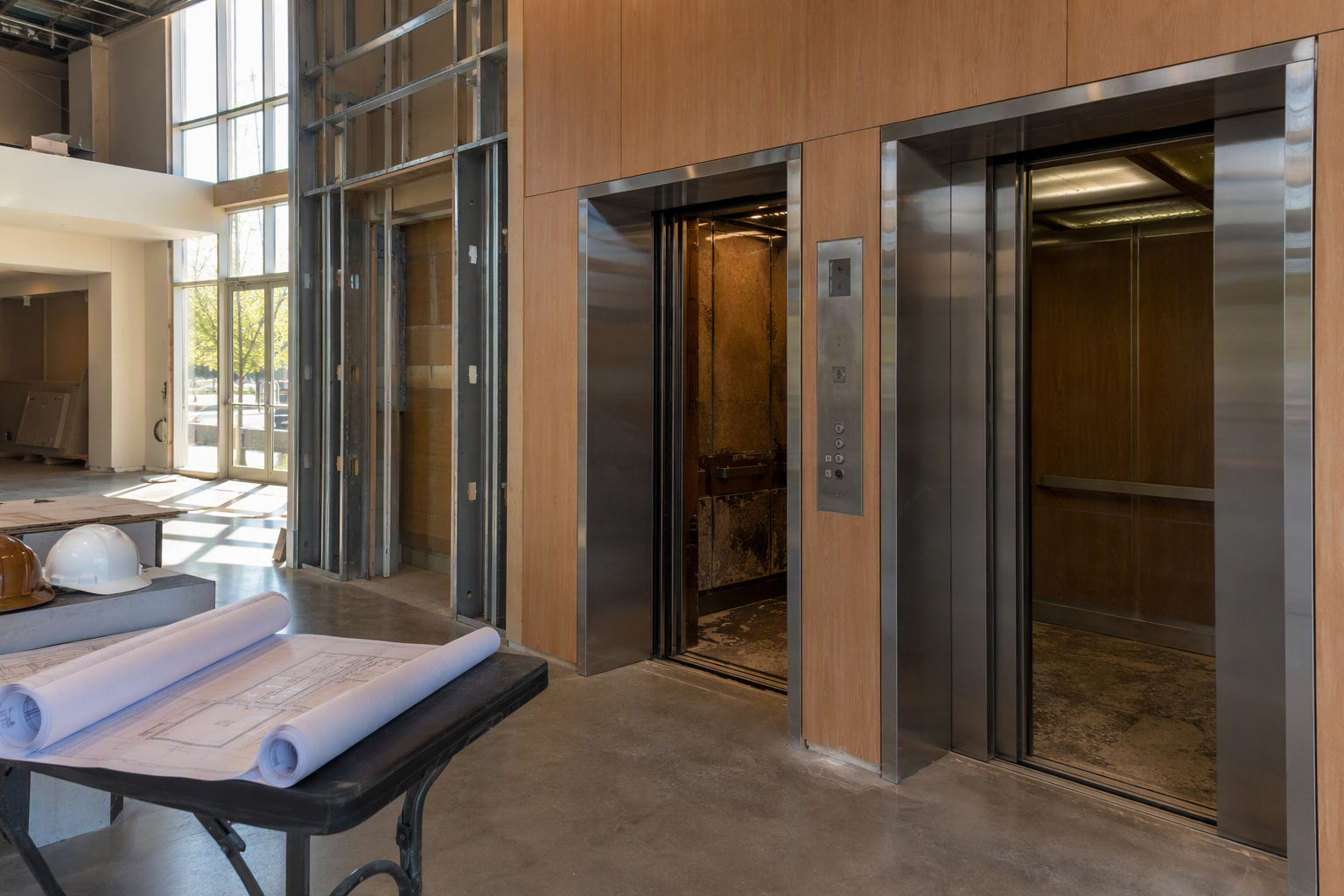
South Carolina building owners and property managers navigating a use conversion or significant renovation face a layered compliance picture. Federal accessibility law, state elevator statutes, and the locally adopted ASME standard all intersect the moment construction documents are filed. The sections below walk through each layer, compare the upgrade scenarios most commonly triggered, and explain how Carolina Elevator Service can help ownership teams stay ahead of permit holds and certificate lapses.
What Does “Change of Use” Mean for Elevator Compliance in South Carolina?
A change of use—sometimes called a change of occupancy—occurs when a building is converted from one purpose to another: a former hotel repurposed as apartments, an office tower converted to mixed-use residential, or a warehouse redeveloped into a boutique hotel. Under South Carolina’s building and elevator regulatory framework, the significance lies in what that reclassification triggers at the elevator level.
Under S.C. Code Title 41, Chapter 16 (the South Carolina Elevator Code) and S.C. Code of Regulations Chapter 71, Article 5, no elevator facility may be operated without both a certificate of registration and a valid operating certificate from the state. When construction work is performed on or around an elevator, or when alterations are made to the equipment itself, a new state construction permit is required before that work begins. The operating certificate must then be renewed after the required inspection is passed.
Critically, the permit-issuing moment matters: new elevator facilities and altered equipment must comply with the edition of ASME A17.1 in effect when the permit is issued. In South Carolina that is currently the 2019 edition (ASME A17.1-2019/CSA B44:19), adopted without amendment and effective by notice in the S.C. State Register on July 23, 2021. Any scope of elevator alteration tied to a renovation project is therefore evaluated against that 2019 standard.
Which Elevator Upgrades Are Typically Required When a Building Changes Use?
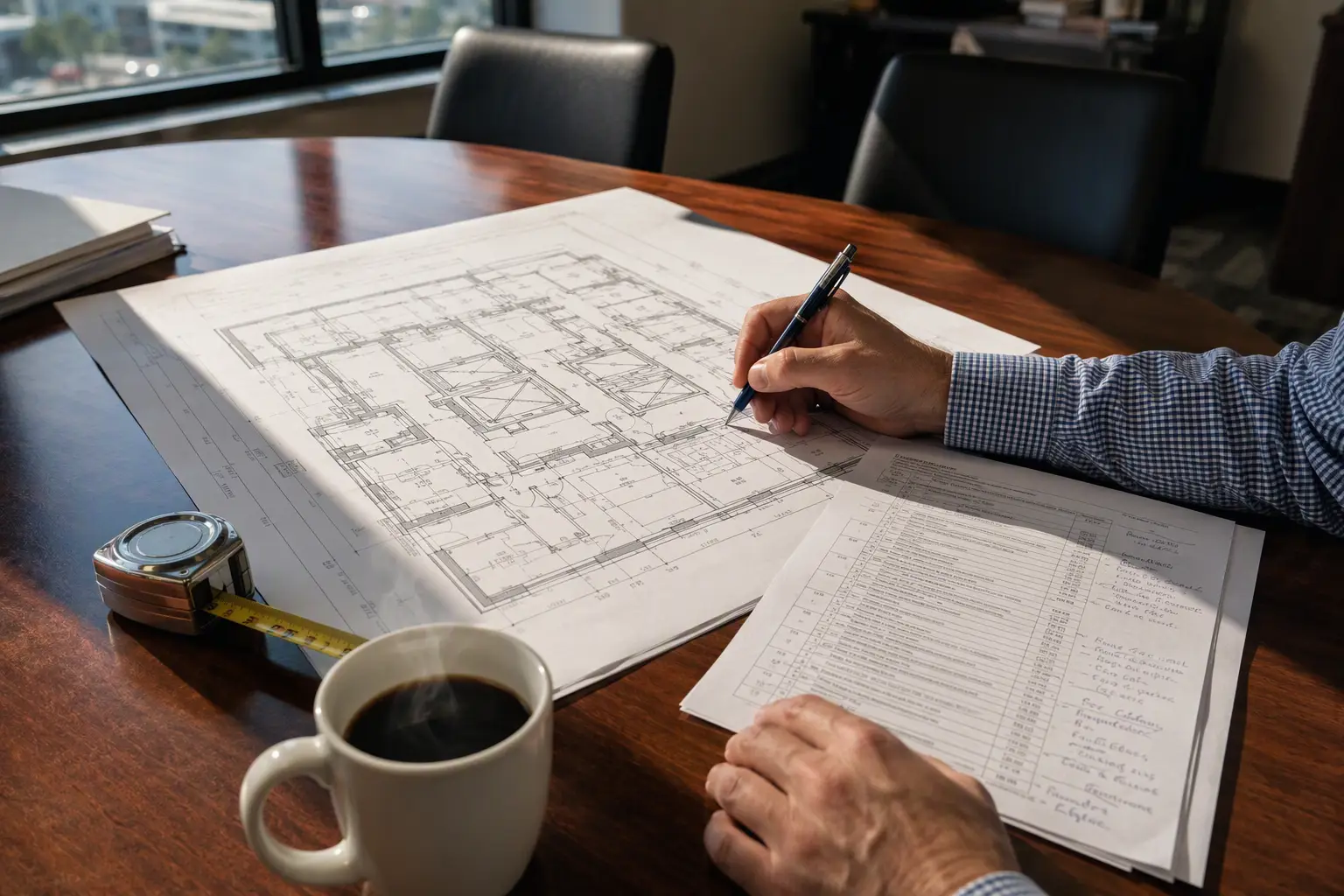
Not every renovation automatically mandates a complete elevator overhaul, but several upgrade categories are commonly triggered. The applicable scope depends on the nature of the use conversion, the age of the existing equipment, and whether the alteration is considered a “major” modification under the adopted ASME standard.
Common Upgrade Categories
| Upgrade Category | Typical Trigger | Governing Standard | Urgency Level |
|---|---|---|---|
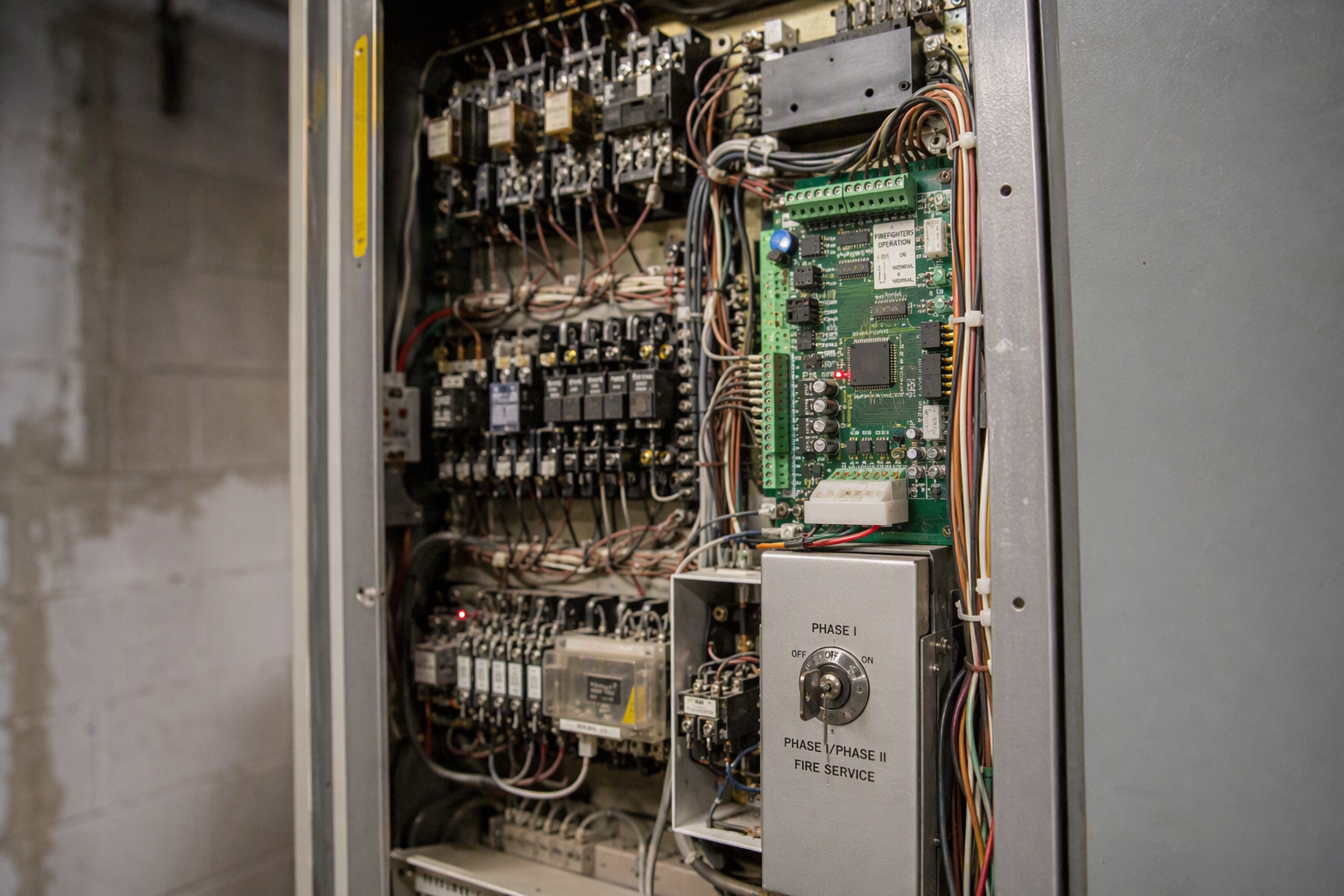
| Firefighters’ Service (Phase I & II) | Any alteration; new occupancy classification | ASME A17.1-2019 | High — required for new permit |
| S.C. #1000 Five-Pin Key Conversion | New firefighters’ service installation | SC LLR Requirement | High — state-specific mandate |
| Standby/Emergency Power | Alteration or new installation | SC LLR / ASME A17.1-2019 | High — four-hour minimum required |
| ADA Accessibility Compliance | Change of use; renovation exceeding ADA threshold | Americans with Disabilities Act | High — federal law |
| Machine Room / Controller Modernization | Major alteration; aging equipment failing inspection | ASME A17.1-2019 | Moderate to High |
| Door Operator & Safety Edge Upgrades | Alteration triggering safety device review | ASME A17.1-2019 | Moderate |
| Underground Cylinder Containment | Hydraulic elevator replacement or alteration | SC LLR Requirement | High — state-specific mandate |
| Interior Cab Renovation | Branding change; code-required capacity signage | ASME A17.1-2019 / ADA | Low to Moderate |
How Does ADA Compliance Factor Into a South Carolina Hotel or Apartment Renovation?
The Americans with Disabilities Act imposes accessibility requirements that are independent of—but run parallel to—South Carolina’s elevator permitting process. When a building undergoes a change of use or a renovation affecting the path of travel, the ADA’s path-of-travel obligation can require the owner to make the vertical access points accessible to the extent the cost is not disproportionate to the overall project budget.
For hotels and apartment buildings, this commonly means evaluating elevator cab dimensions, control panel reach ranges, Braille and tactile signage, door timing, and audible signals against the ADA Standards for Accessible Design. An elevator that was compliant under a prior use may fall short when passenger profiles change—for example, when a building converts from extended-stay corporate suites to assisted-living apartments where a higher proportion of residents use mobility devices.
ADA compliance is enforced federally and does not replace the state permit process; both must be satisfied before the property can legally operate.
What Is the Step-by-Step Process for Getting Elevator Permits During a South Carolina Renovation?
- Engage a qualified elevator contractor to assess existing equipment against the ASME A17.1-2019/CSA B44:19 standard and identify the scope of required alterations.
- File for a state construction permit with the South Carolina Department of Labor, Licensing and Regulation (LLR), Office of Elevators and Amusement Rides, before any alteration or installation work begins—this is a statutory requirement under S.C. Code Title 41, Chapter 16.
- Submit construction documents detailing the proposed elevator alterations, modernization plans, or new installation specifications as required by LLR.
- Conduct the work in accordance with the permitted scope and the 2019 edition of ASME A17.1.
- Schedule an inspection with a state inspector or a licensed special inspector. Under South Carolina rules, a special inspector may not inspect an elevator on which the inspector or the inspector’s employer holds a current service or warranty contract.
- Obtain the updated operating certificate from LLR following a passed inspection.
- Display the operating certificate conspicuously inside each elevator car as required by state law.
- Establish an ongoing annual inspection schedule—South Carolina requires elevators to be inspected at least once a year before the operating certificate is renewed.
How Do Older Elevators in Pre-1986 Buildings Fare Under Renovation Review?
South Carolina applies a split standard based on installation date. Elevator facilities that were in operation before July 1, 1986 must comply with the 1986 edition of ANSI A17.3, the safety code for existing elevators and escalators. However, once an alteration is made to such equipment, the altered components must meet the currently adopted edition of ASME A17.1—meaning that a renovation project can pull legacy equipment into a higher compliance tier for the modified portions.
This creates a practical decision point for owners of older Columbia hotel or apartment properties: a modest renovation that touches the elevator system can trigger requirements that would not otherwise apply to grandfathered equipment. Understanding exactly which components are within the alteration scope—and which are not—is critical to managing compliance costs and timelines.
Comparison Table: Elevator Modernization vs. Full Replacement vs. Targeted Upgrades
| Approach | Scope | Pros | Cons | Best Suited For |
|---|---|---|---|---|
| Targeted Code Upgrades | Replace only deficient components (e.g., firefighters’ service, door sensors) | Lowest upfront disruption; addresses specific permit requirements | May require repeat work if additional deficiencies emerge; older core systems unchanged | Buildings with recent-vintage equipment needing specific compliance fixes |
| Partial Modernization | Controller, door operator, and safety devices updated; structure retained | Significant reliability improvement; addresses most ASME 2019 items; less downtime than full replacement | Some legacy mechanical components remain; may not qualify for maximum energy savings | Mid-age equipment (roughly 15–30 years); mid-scale hotel or apartment conversion |
| Full Modernization / Replacement | Complete system replacement including hydraulics or traction drive, cab, controls | Full ASME A17.1-2019 compliance on all components; longest service life; best energy profile | Highest cost; longest out-of-service period; requires full permitting and inspection cycle | Pre-1986 equipment; high-rise conversions; buildings where downtime can be phased |
What Are the Standby Power Requirements for Elevators in South Carolina Hotels and Apartments?
South Carolina requires passenger elevators to have standby power capable of running emergency lighting and the alarm bell for at least four hours in the event of normal power failure. This requirement becomes directly relevant during renovation permitting: if a building’s emergency power system is being upgraded or reconfigured as part of the renovation, the elevator’s connection to that system must be verified to meet the four-hour minimum before a new operating certificate will be issued.
Hotels undergoing conversion to residential use—or vice versa—may find that the existing standby power infrastructure was sized for a different occupancy load. Carolina Elevator Service recommends that owners have the emergency power supply for each elevator verified during the early design phase of any use-change renovation, rather than discovering a deficiency during the final inspection.
How Are Hydraulic Elevators Treated Differently in a South Carolina Renovation?
South Carolina imposes a state-specific requirement on underground hydraulic elevator cylinders: any newly installed underground cylinder must be encased in a plastic outer containment to limit electrolytic corrosion. This requirement applies when a hydraulic elevator is replaced or when the cylinder itself is part of the alteration scope.
For older hotels and apartment buildings—where underground single-bottom hydraulic cylinders were once the norm—a renovation that triggers cylinder work can require a full pit and containment upgrade. Owners should factor this into renovation budgets early, as cylinder containment work requires excavation and extended equipment downtime.
What Inspection Intervals Apply After a Renovation Is Completed?
Once a renovation is complete and an operating certificate has been issued, the following ongoing inspection schedule applies in South Carolina:
- Standard passenger and freight elevators: At least once per year, before the operating certificate is renewed.
- Handicap lifts: Every five years.
- Manlifts, television tower elevators, and special purpose elevators: Every seven years.
- Dumbwaiters: At installation or alteration.
Inspections may be conducted by state inspectors or by licensed special inspectors whose qualifications meet the 2018 edition of QEI-1, the American National Standard for Qualification of Elevator Inspectors. Importantly, a special inspector may not inspect an elevator on which the inspector’s employer holds a current service or warranty contract—making independent service providers a strategically valuable option for owners who want flexibility in choosing their inspector.
What Role Does the South Carolina LLR Play, and Who Enforces Compliance?
The South Carolina Department of Labor, Licensing and Regulation (LLR), through its Office of Elevators and Amusement Rides, is the sole state authority over elevator permitting, registration, inspection, and operating certificates. Local ordinances that conflict with the South Carolina Elevator Code or its regulations—found at S.C. Code Title 41, Chapter 16 and S.C. Code of Regulations Chapter 71, Article 5—are void. This means Columbia’s local building department cannot impose elevator rules that contradict LLR’s authority, though local departments retain jurisdiction over other building code matters.
The property owner bears ultimate responsibility: under South Carolina law, the owner must keep every elevator facility in safe operating condition and in conformance with state regulations. If an accident seriously injures anyone other than an employee, the owner must report it to the state before the end of the next working day.
How Does Carolina Elevator Service Support Use-Change and Renovation Projects?
Carolina Elevator Service operates throughout South Carolina and works with hotel and apartment property owners, developers, and general contractors navigating the LLR permitting and inspection process. The team provides pre-renovation elevator assessments to identify which components will fall within the alteration scope, helps ownership understand the compliance gap between existing equipment and the ASME A17.1-2019/CSA B44:19 standard, and coordinates the work required to support permit applications and final inspections.
Because Carolina Elevator Service functions as an independent service provider rather than a manufacturer’s captive service organization, owners retain the freedom to engage a separately qualified special inspector—satisfying South Carolina’s rule that an inspector’s employer may not hold a service contract on the equipment being inspected.
Frequently Asked Questions: Elevator Requirements for South Carolina Building Conversions
Does every renovation automatically require elevator upgrades in South Carolina?
Not automatically. A renovation that does not touch the elevator system or alter its components does not by itself require elevator alterations. However, a change of use can trigger ADA path-of-travel obligations that affect vertical access, and any renovation work that does touch elevator components requires a state construction permit and brings those components into compliance with ASME A17.1-2019.
Can a building owner operate elevators without a state operating certificate during a renovation?
No. South Carolina law prohibits the operation of any elevator facility without both a certificate of registration and a valid operating certificate from LLR. If an elevator is taken out of service for renovation, it must pass a post-alteration inspection before it may return to service.
What is the S.C. #1000 key requirement, and who does it affect?
South Carolina requires that firefighters’ service on new elevator installations use the five-pin S.C. #1000 key. This state-specific requirement affects any hotel or apartment building where firefighters’ service is being newly installed or replaced as part of a renovation or use-change project. It is not a universal ASME requirement—it is a South Carolina addition that applies in Columbia and across the state.
How long does the elevator permit and inspection process typically take in South Carolina?
Timeline varies depending on the complexity of the alteration, LLR workload, and the readiness of the submitted construction documents. Carolina Elevator Service recommends initiating the permit process as early in the renovation planning phase as possible to avoid construction delays caused by waiting for elevator inspections.
Does the South Carolina Elevator Code apply to single-family homes?
No. The South Carolina Elevator Code explicitly does not apply to equipment in a single private dwelling. Hotels, apartment buildings, and mixed-use properties are not private dwellings and are fully subject to the code.
What happens if an elevator fails the post-renovation inspection?
The elevator may not return to passenger service until deficiencies are corrected and a reinspection is passed. The owner remains responsible for maintaining the equipment in safe operating condition throughout the remediation period.
Are there separate local elevator rules in Columbia, South Carolina?
No. Under South Carolina law, local ordinances that conflict with the South Carolina Elevator Code or its regulations are void. LLR is the authoritative regulator. Columbia’s local government may enforce general building codes through its own department, but cannot impose elevator-specific rules that supersede the state code.
What should a property owner do first when planning a hotel or apartment renovation that may affect elevators?
The first step is to commission a pre-renovation assessment of the existing elevator equipment—documenting its installation date, current compliance status against ASME A17.1-2019, and the condition of components most likely to fall within the alteration scope. This assessment, completed before construction documents are finalized, allows the project team to budget accurately and avoid mid-project permit surprises. Carolina Elevator Service provides these assessments for South Carolina properties.
Contact Carolina Elevator Service for a free elevator assessment at 803-865-1400.
Need elevator service you can rely on? Carolina Elevator Service is ready to help.