How to Follow Up on a Pending Proposal for Elevator Repair or Modification
Following up on a pending elevator repair or modification proposal requires more than a simple phone call. Because elevator work in South Carolina is governed by S.C. Code Title 41, Chapter 16 and must comply with the ASME A17.1/CSA B44-2019 Safety Code for Elevators and Escalators as adopted by the South Carolina Department of Labor, Licensing and Regulation (LLR), Office of Elevators and Amusement Rides, the follow-up process involves confirming permit status, inspection scheduling, code compliance scope, and operational certificate continuity — not just cost and scheduling. This FAQ hub covers every dimension a building owner or facility manager in Columbia, SC should address when a proposal sits unresolved.
What is the first step when following up on a pending elevator proposal?
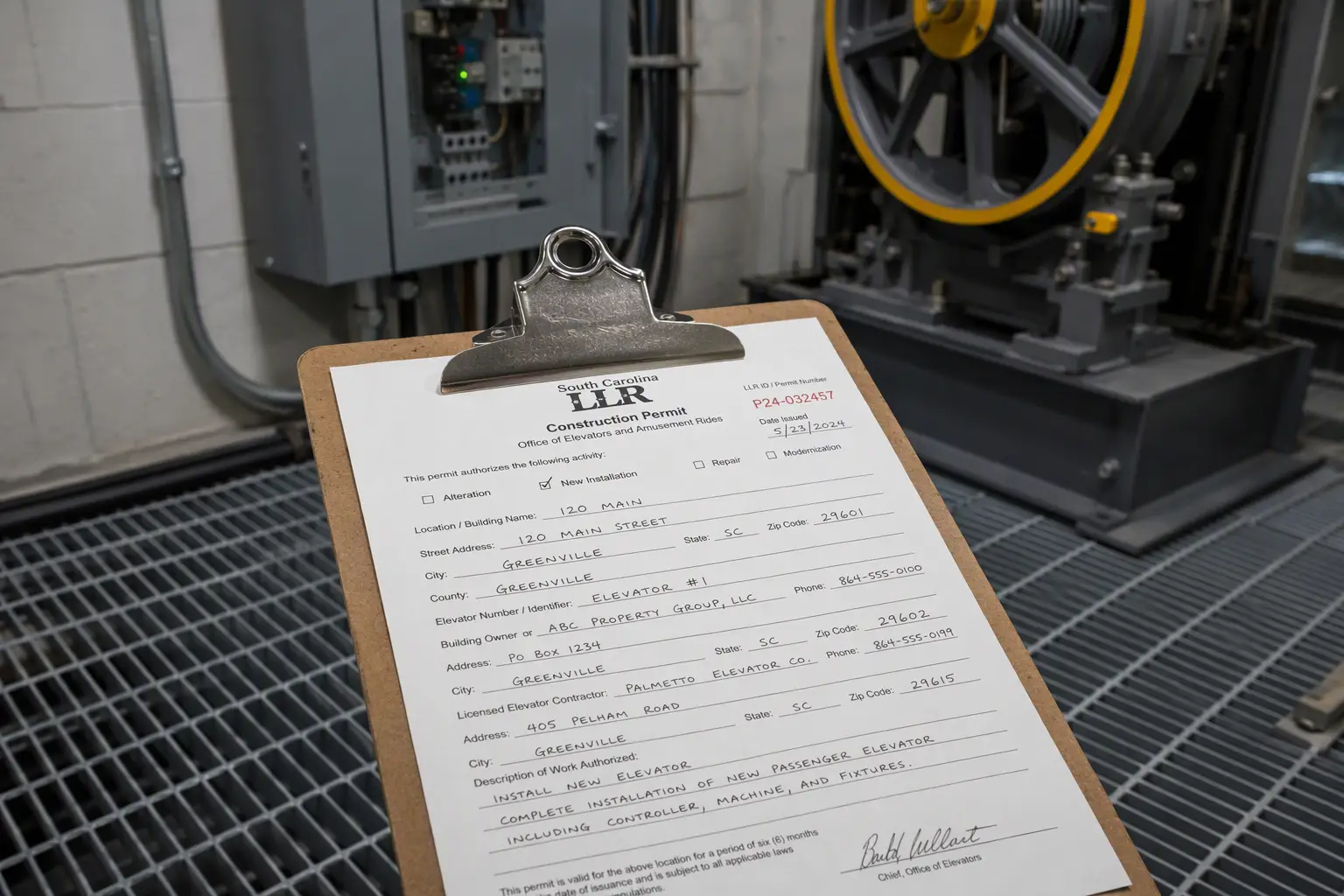
Gather the original proposal document, note the proposal number, date of issue, and scope summary, then contact the elevator service company with those details in hand before asking any other questions.
An elevator proposal is a binding scope document that specifies materials, labor, code compliance basis, and permit requirements. When time passes between proposal issuance and follow-up, any of those elements may have changed. The elevator service provider needs a reference point to confirm whether the original pricing, parts availability, and code assumptions still hold.
Before calling or emailing, locate the following from the original proposal: (1) the proposal or quote number, (2) the date it was issued, (3) the listed scope of work, (4) the code edition cited as the compliance basis, and (5) any permit or inspection line items. Having this information reduces back-and-forth and allows the contractor to pull the correct file immediately.
Why does a South Carolina elevator repair or modification proposal include a permit line item?
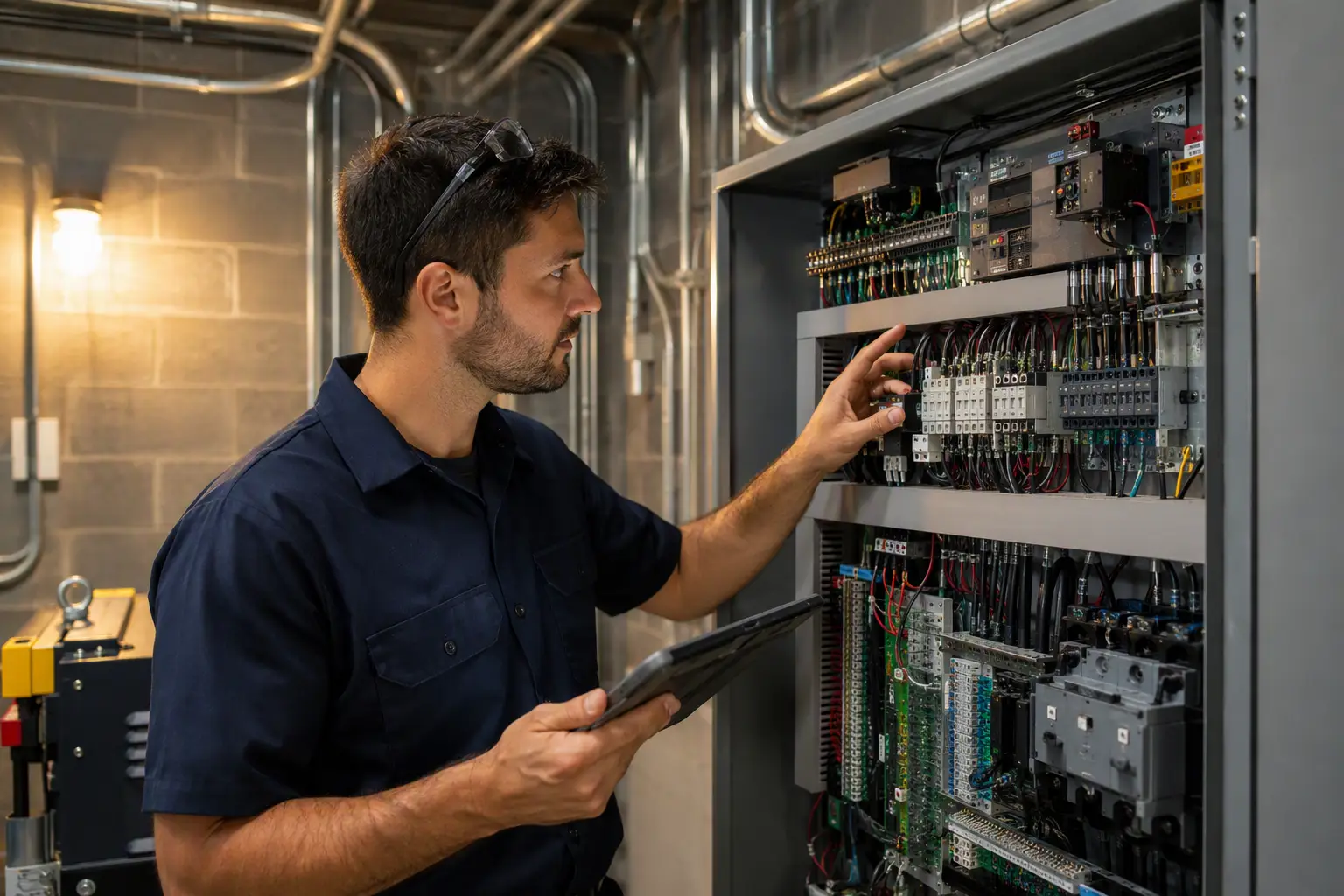
South Carolina law requires a state construction permit before any elevator facility is erected, constructed, altered, or installed, meaning the permit is not optional — it is a legal prerequisite for beginning work.
Under S.C. Code Title 41, Chapter 16 and S.C. Code of Regulations Chapter 71, Article 5 (Regulations 71-5000 through 71-5700), no elevator facility may be constructed, altered, or installed without first obtaining a construction permit from the South Carolina Department of Labor, Licensing and Regulation (LLR), Office of Elevators and Amusement Rides. When following up on a pending proposal, one of the first questions to ask the contractor is whether the permit application has been submitted, is pending review, or has already been approved. Permit status directly determines when physical work can begin, and a proposal that has not yet triggered a permit application may represent a significant delay that the building owner should address proactively.
How long is an elevator repair or modification proposal typically valid?
Proposal validity periods vary by contractor, but building owners should confirm directly with their elevator service provider whether the quoted price and scope remain accurate, especially if more than 30 to 90 days have passed since the proposal was issued.
Parts pricing, labor costs, and code interpretation can shift over time. If a proposal was issued several months ago, it is reasonable to ask whether any line items need to be re-quoted. South Carolina buildings that remain under the scope of a stale proposal risk surprises during the permit application stage if the contractor must update the compliance basis to reflect the current adopted code — ASME A17.1/CSA B44-2019 — or if components specified in the original proposal are no longer available.
When contacting Carolina Elevator Service about a pending proposal, having the original document enables a quick review of whether the scope, parts, and permit assumptions still align with current conditions in Columbia, SC.
What questions should a building owner ask when following up with an elevator contractor?
A structured set of questions covering permit status, parts procurement, inspection scheduling, and operating certificate continuity ensures the follow-up conversation is productive and complete.
The following questions are recommended during any follow-up conversation:
- Has the South Carolina LLR construction permit been applied for, and if so, what is its current status?
- Have the specified parts or components been sourced or ordered, and are they still available at the quoted price?
- Has the code compliance basis changed since the proposal was issued — specifically, does the work still align with the ASME A17.1/CSA B44-2019 edition adopted in South Carolina?
- Will the repair or modification trigger a required post-alteration inspection by a state inspector or a qualified special inspector under South Carolina’s rules?
- Will the elevator be out of service during the work, and if so, does the building need to notify tenants or arrange for ADA-compliant alternative access under ADA Title III requirements?
- Will the operating certificate remain valid during the work period, or will a temporary status be issued?
- Is the current proposal still within its validity window, or does it need to be reissued?
Does elevator modification work in South Carolina require a post-work inspection?
Yes — South Carolina requires elevators to be inspected at installation, registration, alteration, or repair, and the operating certificate renewal depends on the outcome of that inspection.
Under the South Carolina regulatory framework, any alteration or repair that falls within the scope of the state’s elevator code triggers a mandatory inspection before the elevator may return to regular service. That inspection may be conducted by a state inspector employed by the LLR or by a licensed special inspector who holds qualifications consistent with the 2018 edition of QEI-1, the American National Standard for Qualification of Elevator Inspectors. Importantly, a special inspector may not inspect an elevator on which the inspector or the inspector’s employer holds a current service or warranty contract — a rule that protects impartiality and should be confirmed when selecting an inspection source.
When following up on a pending proposal, building owners should ask whether the inspection step is included in the contractor’s project timeline and who the inspector of record will be.
How does a pending proposal affect the elevator’s operating certificate in South Carolina?
A pending proposal has no automatic effect on the operating certificate, but once work begins or the elevator is taken out of service, the certificate status can be affected until the post-work inspection is completed and the LLR renews the certificate.
South Carolina law is clear: no elevator facility may be operated without both a certificate of registration and a valid operating certificate issued by the state. The operating certificate — or a copy — must be displayed conspicuously inside each elevator car. If modification work interrupts normal elevator operation, building owners should confirm with the LLR and their elevator contractor how certificate continuity is maintained during and immediately after the project. A competent elevator service provider will include this coordination step in the project plan rather than leaving the building owner to navigate it alone.
What should a building owner do if the elevator contractor has not responded to follow-up attempts?
If a contractor is unresponsive after reasonable attempts to follow up, the building owner should document all contact attempts, review the proposal for any binding or expiration language, and consider requesting a new proposal from a qualified elevator service company.
- Record the dates, times, and methods (phone, email, in-person visit) of all contact attempts.
- Re-read the original proposal for any language regarding response obligations, acceptance deadlines, or expiration clauses.
- Check whether any deposit was paid and what the refund or work-commencement terms are.
- Determine whether any permit applications were submitted in the building’s name, which would require follow-up with the South Carolina LLR directly.
- Contact an alternative qualified elevator service provider — such as Carolina Elevator Service in Columbia, SC — to obtain a new proposal and understand what, if anything, was already set in motion with the previous contractor.
- Ensure the elevator’s annual inspection deadline has not been missed during the delay, since South Carolina requires annual inspections before the operating certificate is renewed.
How does ADA compliance factor into an elevator modification proposal?
Any elevator modification that affects cab dimensions, door timing, control panel height, or accessible route continuity must be evaluated against ADA accessibility standards, particularly ADA Title III for public accommodations and commercial facilities.
The ADA requires that elevators serving multiple floors in facilities covered by Title II or Title III must meet specific requirements for cab size, door clear width, control panel button height and Braille labeling, floor designation announcements, and leveling accuracy. When a modification proposal changes any of these elements — even incidentally — the scope must account for ADA compliance. Building owners should ask their elevator contractor to confirm in writing that the proposed scope does not create a new ADA deficiency and, where feasible, that the modification brings the elevator closer to full ADA compliance.
In Columbia, SC, older buildings with legacy elevator equipment may carry pre-existing ADA gaps. A modification proposal is an opportunity to address those gaps, and a thorough elevator service provider will flag them during the proposal process.
What is the difference between an elevator repair proposal and a modification proposal in South Carolina?
A repair restores an elevator to its original design and approved condition, while a modification changes the elevator’s design, equipment, or capacity — and a modification carries additional permitting, inspection, and code-compliance obligations under South Carolina law.
| Factor | Repair | Modification / Alteration |
|---|---|---|
| Definition | Restores equipment to original approved design | Changes design, capacity, speed, or safety features |
| SC Construction Permit Required | Required for alterations; confirm scope with LLR | Yes — required before work begins |
| Post-Work Inspection Required | Yes, per SC inspection requirements | Yes, mandatory before return to service |
| Code Basis | ASME A17.1/CSA B44-2019 (current SC adopted edition) | ASME A17.1/CSA B44-2019 for new work; ANSI A17.3-1986 for pre-1986 equipment compliance floor |
| ADA Review Recommended | If cab, door, or controls are touched | Yes — any scope change triggers ADA review |
| Operating Certificate Impact | Certificate must be renewed after inspection | Certificate must be renewed after inspection |
| Special Inspector Conflict Rule | Applies | Applies |
How should a building owner escalate a stalled elevator modification if the permit has not been issued?
If a contractor has represented that a permit application was submitted but the LLR has not issued it, the building owner can verify the application status directly with the South Carolina Department of Labor, Licensing and Regulation (LLR), Office of Elevators and Amusement Rides.
Because the permit is issued in connection with a specific elevator facility and owner of record, building owners have the right to inquire about application status. The LLR’s office administers elevator permitting under S.C. Code Title 41, Chapter 16, and contacting them directly can clarify whether an application is pending review, whether additional documentation was requested from the contractor, or whether no application was ever filed. This information is critical before a building owner decides whether to continue with the current contractor or engage a replacement provider.
What happens if elevator repair or modification work is done without a South Carolina state permit?
Performing elevator work without the required state construction permit is a violation of South Carolina law and can result in the elevator being taken out of service, the operating certificate being revoked, and the owner bearing liability for any injuries that occur.
Under South Carolina’s elevator statute, the owner has a legal obligation to keep every elevator facility in safe operating condition and in compliance with state regulations. If unpermitted work is discovered during an inspection, the elevator may be ordered out of service until a proper permit is obtained, the work is inspected, and a new operating certificate is issued. When reviewing a pending proposal, building owners should confirm explicitly that the contractor’s process includes permit application as a documented step — not an afterthought.
Can a building owner cancel a pending elevator proposal and use a different contractor?
A building owner can generally decline to accept or cancel a pending proposal unless a binding contract has been signed or a deposit creates acceptance under the proposal’s terms — consulting the proposal document and, if needed, legal counsel is advisable.
A proposal is typically an offer, not a binding contract, until the building owner accepts it in writing. If the building owner has signed a work authorization or paid a deposit, the terms of that agreement govern cancellation rights. When switching contractors mid-process, building owners should determine whether any permit applications were submitted, whether any materials were ordered that carry restocking fees, and whether the new contractor needs to start the permit process from the beginning. Carolina Elevator Service can assist Columbia, SC building owners in assessing where a prior proposal stands and what steps are needed to move forward cleanly.
How does South Carolina’s annual elevator inspection requirement affect the urgency of following up on a pending proposal?
South Carolina requires elevators to be inspected at least once a year before the operating certificate is renewed, meaning a delayed repair or modification that causes an elevator to miss its inspection window creates a compliance gap that must be resolved before the elevator can legally continue operating.
If a pending proposal has caused the elevator to remain out of service or in a degraded condition past its annual inspection date, the building owner faces a double obligation: resolving the proposal and scheduling the required annual inspection. The two processes may need to be coordinated — for example, if the elevator is taken out of service for modification work, the post-work inspection may serve as the annual inspection, or a separate annual inspection may be required afterward. Confirming this sequence with both the contractor and the LLR avoids duplication of effort and ensures no lapse in the operating certificate.
What documentation should a building owner keep throughout the follow-up process?
Building owners should maintain a complete paper trail including the original proposal, all follow-up correspondence, permit application copies, inspection certificates, and the current operating certificate displayed inside the elevator car.
South Carolina law places the compliance burden squarely on the owner: the owner must keep every elevator facility in safe operating condition and in line with state regulations. Practically, that means maintaining records of:
- The original signed proposal or work authorization
- All email and written communications with the contractor regarding the pending scope
- The LLR construction permit application number and approval date
- The post-work inspection report and any deficiencies noted
- The renewed operating certificate and its expiration date
- Any accident reports — South Carolina requires serious injuries to non-employees to be reported to the state before the end of the next working day
Does a hydraulic elevator modification in South Carolina carry any special requirements?
Yes — South Carolina specifically requires that newly installed underground hydraulic elevator cylinders be encased in plastic outer containment to limit electrolytic corrosion, a requirement that must appear in any proposal covering underground hydraulic cylinder replacement or installation.
Building owners with older hydraulic elevators in Columbia, SC should verify that any modification or repair proposal addressing the hydraulic cylinder explicitly accounts for this South Carolina-specific requirement. A proposal that omits it may be non-compliant even if it otherwise references the correct ASME A17.1/CSA B44-2019 edition. When reviewing the proposal scope with the contractor, ask directly whether underground cylinder work is involved and whether the plastic outer containment requirement has been addressed in the design and materials list.
How do firefighters’ service requirements affect an elevator modification proposal in South Carolina?
South Carolina requires that firefighters’ service on new elevator installations use the five-pin S.C. #1000 key, and any modification proposal that touches the firefighters’ service system must specify this key type to comply with state requirements.
Firefighters’ emergency service is a core safety system under both ASME A17.1/CSA B44-2019 and South Carolina’s regulations. If a modification proposal includes work on the elevator’s Phase I or Phase II firefighters’ service panel, key switch, or related wiring, the proposal should explicitly specify the S.C. #1000 five-pin key. Building owners should flag this requirement during the follow-up conversation if it is not addressed in the proposal as written.
What should a building owner confirm about standby power requirements in a South Carolina elevator modification proposal?
South Carolina requires that passenger elevators have standby power capable of running emergency lighting and the alarm bell for at least four hours if normal power fails — a requirement that must be satisfied by any modification that affects the elevator’s electrical system.
If the pending proposal involves electrical upgrades, controller replacement, lighting modifications, or any work on the emergency systems, the building owner should confirm in writing that the post-modification elevator will meet the four-hour standby power standard. This is not a recommendation — it is a South Carolina regulatory requirement. Proposals that specify a controller upgrade or modernization without addressing standby power compliance are incomplete.
Are there different inspection intervals for different elevator types in South Carolina, and does that affect follow-up urgency?
Yes — South Carolina sets different inspection intervals by equipment type, and a building owner’s urgency in following up on a pending proposal should be calibrated to the inspection interval that applies to their specific equipment.
South Carolina’s inspection schedule is as follows:
- Passenger and freight elevators: Inspected at installation, registration, alteration or repair, and at least once annually before operating certificate renewal
- Handicap lifts: Inspected every five years
- Manlifts, television tower elevators, and special purpose elevators: Inspected every seven years
- Dumbwaiters: Inspected when installed or altered
A building with a passenger elevator faces the most time-sensitive situation because the annual inspection deadline recurs yearly. A building with a handicap lift or special purpose elevator has a longer compliance window but must still ensure that any pending modification proposal is resolved before the next scheduled inspection triggers scrutiny of incomplete or unpermitted work.
How can a building owner evaluate whether a new elevator service company is qualified to take over a stalled proposal?
A building owner should verify that any replacement elevator service company understands South Carolina’s specific regulatory requirements, can demonstrate familiarity with the ASME A17.1/CSA B44-2019 code as adopted by the LLR, and can clearly explain the permit, inspection, and certificate renewal process for the specific work scope.
In evaluating a replacement provider, building owners should ask prospective contractors to walk through the permit application process, identify who will perform the post-work inspection and confirm that the inspector is not in conflict under South Carolina’s special inspector conflict-of-interest rule, and explain how the operating certificate will be maintained or renewed after work is complete. A contractor who can answer those questions clearly and specifically demonstrates the regulatory fluency that South Carolina’s elevator environment requires.
Carolina Elevator Service serves the Columbia, SC market with a focused understanding of South Carolina’s LLR requirements, the adopted ASME A17.1/CSA B44-2019 code edition, and the practical steps involved in moving a stalled elevator proposal forward through the permit, construction, and inspection phases.
What is the most common reason elevator modification proposals stall, and how can building owners prevent it?
The most common reason elevator proposals stall is a gap between the contractor’s internal process and the South Carolina LLR’s permit and inspection pipeline — building owners can prevent this by confirming permit application timelines at the proposal acceptance stage rather than after work was expected to begin.
When accepting a proposal, building owners should request a written project schedule that includes: (1) the date the permit application will be submitted to the LLR, (2) the expected permit approval timeline, (3) the planned construction start and completion dates, (4) the post-work inspection appointment, and (5) the operating certificate renewal request date. Embedding these milestones in the work authorization at the outset creates accountability and gives the building owner clear checkpoints for follow-up without waiting for the contractor to volunteer updates.
Carolina Elevator Service works with Columbia, SC building owners and facility managers to establish clear project milestones that account for South Carolina’s regulatory steps, reducing the risk of proposals stalling in the permit or inspection phase. For building owners currently holding a stalled proposal from another provider, Carolina Elevator Service can review the existing scope and advise on next steps.
Contact Carolina Elevator Service for a free elevator assessment at 803-865-1400.
Need elevator service you can rely on? Carolina Elevator Service is ready to help.