Category 1 Load Test Inspections for Older Elevators: Complete FAQ for South Carolina Building Owners
Yes. A Category 1 load test inspection can be performed on an older elevator that needs annual certification before a state inspection. Under the ASME A17.1 Safety Code for Elevators and Escalators, Category 1 tests are required for traction and hydraulic elevators at specified intervals regardless of equipment age. South Carolina has adopted ASME A17.1-2019 as its governing code, and older elevators must meet applicable compliance standards before the state renews their operating certificate.
What exactly is a Category 1 load test inspection, and what does it involve?
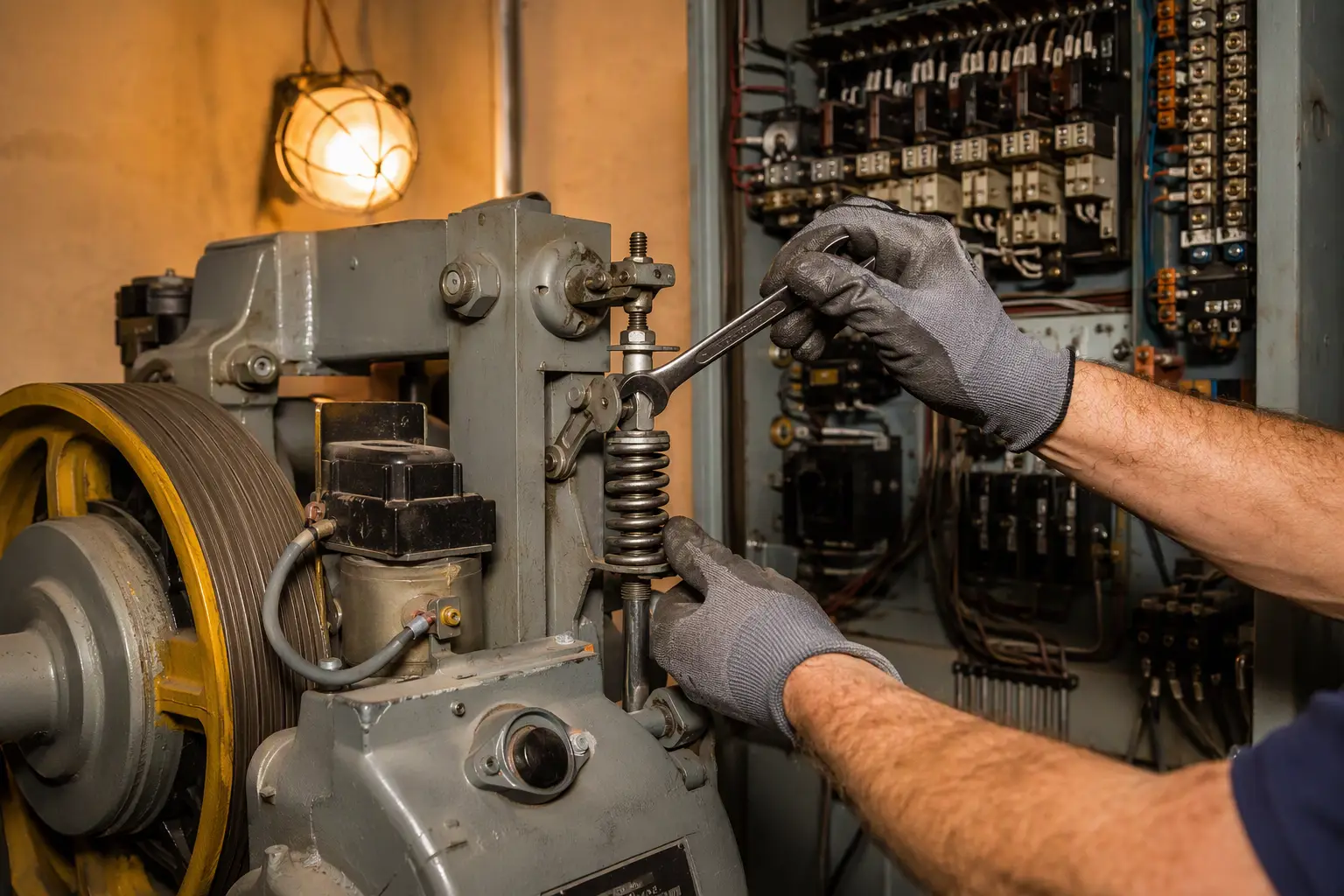
A Category 1 (Cat 1) inspection is a no-load or rated-load test of an elevator’s safety and control devices, performed at the intervals specified in the ASME A17.1 Safety Code for Elevators and Escalators.
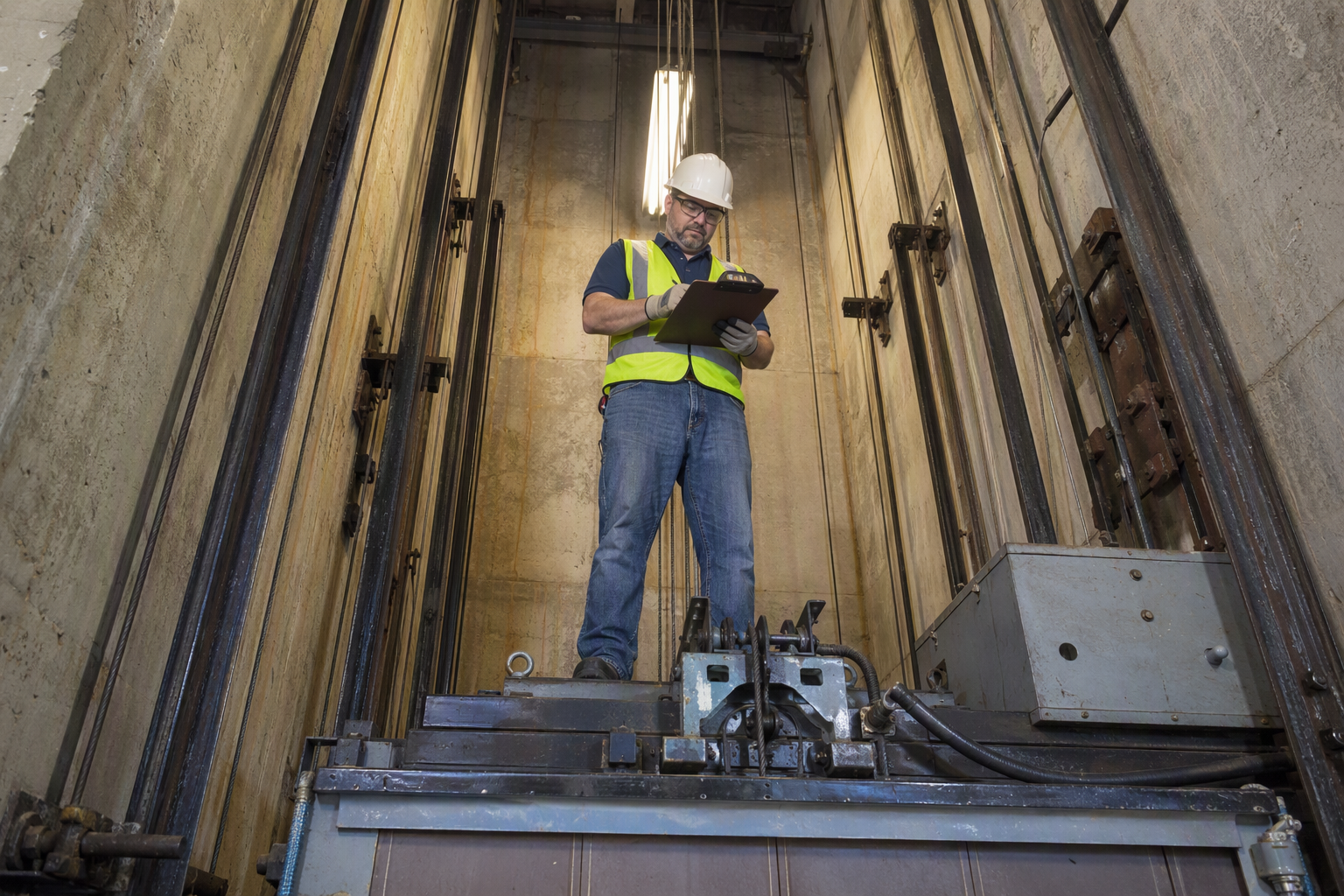
Under ASME A17.1, Category 1 tests are designed to verify that an elevator’s safety system functions correctly under operational conditions. For traction elevators, this typically includes testing the governor, safety devices, buffers, and brake systems. For hydraulic elevators, it includes verifying the pressure relief valve, rupture valve, and lowering speed. The test is conducted with the elevator at rated load, and results are documented in a formal inspection report.
The Category 1 label refers to the test category defined in ASME A17.1, not to the elevator’s age or condition class. This is an important distinction: an older elevator is fully eligible for a Cat 1 test, provided the equipment is capable of safe operation and any known deficiencies have been addressed. A qualified inspector documents findings, which then form part of the record submitted to the state for operating certificate renewal.
Can an older elevator that was installed before South Carolina’s current code pass a Category 1 inspection?

Yes — older elevators installed before South Carolina’s current code adoption are evaluated against the safety standards in effect when they were originally permitted, not the current new-installation standard, provided they remain in safe operating condition.
South Carolina’s statutes, found in S.C. Code Title 41, Chapter 16, draw a clear distinction between new and existing equipment. Elevator facilities that were in operation before July 1, 1986, must comply with the 1986 edition of ANSI A17.3, the safety code for existing elevators and escalators. Equipment installed after that date is governed by the edition of ASME A17.1 in effect when the construction permit was issued.
What this means practically is that an older elevator is not automatically disqualified from passing a Category 1 inspection simply because it predates the 2019 edition of ASME A17.1 that South Carolina now uses for new installations. However, the elevator must still meet the applicable existing-equipment requirements, and any safety deficiencies identified during the Category 1 test must be corrected before the state will renew the operating certificate.
What South Carolina agency governs elevator inspections and operating certificates?
The South Carolina Department of Labor, Licensing and Regulation (LLR), Office of Elevators and Amusement Rides, is the state authority responsible for elevator inspections, certificates, and compliance in South Carolina.
Under S.C. Code Title 41, Chapter 16 and the associated regulations in S.C. Code of Regulations Chapter 71, Article 5 (Regulations 71-5000 through 71-5700), no elevator in South Carolina may be operated without both a certificate of registration and a valid operating certificate issued by the LLR. The operating certificate, or a certified copy, must be displayed conspicuously inside the elevator car at all times.
The LLR’s required annual inspection is the mechanism that triggers operating certificate renewal. Building owners who allow an elevator to operate without a current certificate face legal exposure under state law. Scheduling a Category 1 inspection before the LLR’s annual inspection is the standard practice to ensure deficiencies are found and corrected before the state inspector arrives.
How often must South Carolina elevators be inspected under state law?
Passenger elevators and most commercial elevators in South Carolina must be inspected at least once per year, with the inspection preceding the renewal of the operating certificate.
The inspection schedule varies by equipment type under South Carolina regulations:
| Equipment Type | Minimum Inspection Frequency | Applicable Standard |
|---|---|---|
| Passenger and freight elevators | At least annually | S.C. Code Title 41, Chapter 16; ASME A17.1-2019 |
| Handicap (accessibility) lifts | Every five years | S.C. Code Title 41, Chapter 16 |
| Manlifts, television tower elevators, special purpose elevators | Every seven years | S.C. Code Title 41, Chapter 16 |
| Dumbwaiters | At installation or alteration | S.C. Code Title 41, Chapter 16 |
| Any elevator facility (installation, alteration, repair) | Before return to service | S.C. Code Title 41, Chapter 16 |
| Equipment in a single private dwelling | Exempt from state code | S.C. Code Title 41, Chapter 16 |
The annual inspection requirement applies regardless of the elevator’s age. An elevator that has been operating for decades still requires its annual inspection and certificate renewal, making periodic Category 1 testing an integral part of the compliance cycle for older equipment.
Who is qualified to perform a Category 1 inspection in South Carolina?
In South Carolina, required inspections may be performed only by state inspectors employed by the LLR or by licensed special inspectors who meet the qualifications specified in the QEI-1 standard.
South Carolina law requires that special inspectors demonstrate the qualifications set out in the 2018 edition of QEI-1, the American National Standard for Qualification of Elevator Inspectors. A special inspector’s inspection may be accepted in place of a state inspection for purposes of operating certificate renewal, which is the pathway most building owners use when working with a third-party certified elevator service company.
Critically, South Carolina law prohibits a special inspector from inspecting any elevator on which the inspector or the inspector’s employer has a current service or warranty contract. This conflict-of-interest rule is designed to ensure independent verification. Building owners should confirm that any inspection arrangement satisfies this requirement before relying on the resulting report for state compliance purposes.
What is the process for scheduling a Category 1 load test inspection on an older elevator before a South Carolina state inspection?
The pre-inspection process follows a defined sequence to ensure the elevator is ready for state review and operating certificate renewal.
- Contact a qualified elevator service provider — such as Carolina Elevator Service — to conduct a pre-inspection assessment of the existing equipment and documentation.
- Review the elevator’s maintenance records, prior inspection reports, and any outstanding violation notices from the LLR to identify known deficiencies.
- Complete any necessary repairs or adjustments to bring the equipment into compliance with the applicable ASME A17.1 or ANSI A17.3 standard before the Category 1 test date.
- Schedule the Category 1 load test with a qualified special inspector who does not have a current service or warranty contract on the elevator.
- The inspector conducts the rated-load test, tests all required safety devices, and prepares a written inspection report documenting results and any deficiencies found.
- Address any deficiencies noted in the Category 1 report promptly — open deficiencies must be corrected before the elevator can be certified.
- Submit the completed inspection report and required documentation to the LLR for operating certificate renewal.
- Ensure the renewed operating certificate is displayed inside the elevator car before the unit is returned to service.
What safety devices are tested during a Category 1 inspection on a traction elevator?
A Category 1 test on a traction elevator verifies the operation of the governor, safety devices, buffers, and brake system under operational conditions consistent with rated load.
Under the ASME A17.1 Safety Code for Elevators and Escalators, the Category 1 test for traction elevators requires inspection and functional testing of the car and counterweight safeties, governor overspeed trip, buffer operation, terminal stopping devices, and the drive machine brake. The inspector also verifies that the elevator’s rated speed and load performance fall within code tolerances. For older traction elevators, wear on governors and safety mechanisms is common and may need to be addressed before testing begins.
What safety devices are tested during a Category 1 inspection on a hydraulic elevator?
For hydraulic elevators, the Category 1 test focuses on the pressure relief valve, the pipe rupture valve, and the lowering speed under rated load.
The ASME A17.1 Safety Code for Elevators and Escalators requires that the pressure relief valve be set and tested to confirm it prevents the system from exceeding its rated working pressure. The pipe rupture valve — also called a velocity fuse — must be tested to confirm it stops descent if a main line rupture occurs. Terminal stopping devices and the power unit are also evaluated. Older hydraulic elevators with underground cylinders present an additional concern in South Carolina: state regulations require that newly installed underground cylinders be encased in plastic outer containment to limit electrolytic corrosion, and aging cylinders without this protection may require evaluation.
What ASME code edition applies to older elevators in South Carolina in 2026?
South Carolina adopted ASME A17.1-2019/CSA B44:19 as its code for new installations, effective July 23, 2021, while older elevators installed before July 1, 1986, remain subject to the 1986 edition of ANSI A17.3.
The code edition that applies to any specific elevator depends on when its construction permit was issued. Equipment permitted and installed under an earlier edition is generally assessed against that edition’s requirements for existing elevators. However, the Category 1 test intervals and procedures in ASME A17.1 apply broadly to equipment subject to the code, and inspectors use the applicable standard for each individual installation. Building owners with older equipment should maintain documentation of the original permit date to establish which code edition governs their elevator.
What happens if an older elevator fails a Category 1 inspection before the state inspection?
If deficiencies are found during a Category 1 test, the elevator owner must correct those deficiencies before the equipment can be certified and returned to unrestricted service.
A failed or incomplete Category 1 test does not automatically trigger an immediate shutdown order from the LLR — that determination depends on whether the deficiencies constitute an immediate hazard. However, under South Carolina law, the building owner is responsible for keeping every elevator in safe operating condition and in compliance with state regulations. Operating an elevator with known, uncorrected safety deficiencies creates significant liability exposure. The practical course of action is to suspend use of the elevator, perform the required repairs, and schedule a follow-up inspection to confirm compliance before resuming operation.
Carolina Elevator Service assists Columbia SC building owners in navigating this process by identifying deficiencies in advance, coordinating necessary repairs, and helping prepare the documentation needed for a successful state inspection.
How do ADA accessibility requirements interact with Category 1 inspection compliance for older elevators?
ADA requirements govern the physical accessibility features of elevators — such as cab dimensions, door width, control panel height, and floor leveling — and these are evaluated separately from the safety device testing conducted under a Category 1 inspection.
The Americans with Disabilities Act (ADA) sets federal accessibility standards for passenger elevators in buildings subject to the Act. While a Category 1 inspection focuses on the mechanical safety systems of the elevator, ADA compliance addresses the usability of the elevator for people with disabilities. Building owners of older properties should recognize that bringing an elevator into mechanical compliance for state certification does not automatically satisfy ADA requirements. Older elevators that predate ADA may require separate accessibility modifications. During a comprehensive pre-inspection review, both mechanical safety and accessibility factors should be evaluated to give the building owner a complete picture of the elevator’s compliance status.
What records and documentation should a Columbia SC building owner maintain for an older elevator?
South Carolina law places the maintenance obligation on the building owner, making complete and organized documentation essential for demonstrating compliance during state inspections.
Key records to maintain include the original construction permit and permit drawings, the certificate of registration issued by the LLR, all prior operating certificates, historical inspection reports (including any Category 1 test reports), maintenance logs, repair work orders, and any violation notices or correction orders received from the LLR. For elevators installed before July 1, 1986, documentation establishing the original installation date is particularly important because it determines which code edition governs the equipment. Gaps in documentation can complicate state inspections and may result in additional scrutiny from the LLR.
What is the difference between a Category 1 and a Category 5 test, and does an older elevator ever need a Category 5?
A Category 5 test is a full-speed, rated-load safety test that is more demanding than a Category 1 test and is required at longer intervals specified in ASME A17.1.
Under the ASME A17.1 Safety Code for Elevators and Escalators, Category 5 tests involve tripping the governor at full speed under rated load to verify that the car safeties arrest descent within code-specified limits. This test imposes greater mechanical stress on the equipment than a Category 1 test. For older elevators, the condition of the governor, safety components, and guide rails is assessed before a Category 5 test is conducted, because worn components may not perform as expected under full-speed test conditions. Both Category 1 and Category 5 tests are required at their respective ASME A17.1-specified intervals for elevators subject to the code, regardless of the elevator’s age.
Can a building owner in Columbia SC operate an elevator while waiting for inspection or certification renewal?
No — South Carolina law explicitly prohibits operation of any elevator without a current certificate of registration and a valid operating certificate issued by the LLR.
Under S.C. Code Title 41, Chapter 16, both the certificate of registration and the operating certificate are prerequisites for lawful operation, not administrative formalities that can be deferred. Building owners whose operating certificate has lapsed or whose elevator has failed inspection must cease operation until the certificate is renewed or reinstated. The operating certificate must also be displayed conspicuously inside the elevator car — its absence is itself a violation observable by any LLR inspector. Owners who continue operating a non-certified elevator face potential legal penalties under state law.
What should a building owner do if an elevator accident or serious injury occurs in South Carolina?
South Carolina law requires that any accident that seriously injures a person other than an employee be reported to the LLR before the end of the next working day following the incident.
The reporting obligation applies to the building owner and is triggered by serious injury to non-employees — visitors, tenants, and members of the public. After reporting, the elevator involved in the accident should be taken out of service and not returned to operation until a thorough inspection has determined the cause and confirmed that the equipment is safe. The LLR may conduct its own investigation, and the incident documentation — including maintenance records and prior inspection reports — will be relevant to that investigation. Maintaining current Category 1 test records and a complete maintenance history is one of the most effective ways a building owner can demonstrate responsible stewardship of elevator equipment in the event of an incident.
Are there any elevator types in South Carolina that are exempt from the annual inspection requirement?
Yes — equipment installed in a single private dwelling is exempt from the South Carolina Elevator Code, and certain equipment types such as handicap lifts and special purpose elevators operate on longer inspection cycles rather than annual inspection.
The exemption for private residential equipment is clear under S.C. Code Title 41, Chapter 16: the code does not apply to equipment in a single private dwelling. However, this exemption does not extend to multi-family residential buildings, commercial properties, or any shared-use facility. Additionally, it is worth noting that local ordinances that conflict with the South Carolina Elevator Code are void under state law — meaning a municipality cannot impose a more lenient inspection regime than the state requires, nor can local rules override state certification requirements.
How does preventive maintenance between Category 1 inspections affect an older elevator’s compliance status?
Consistent preventive maintenance between formal inspection cycles is the most effective strategy for ensuring an older elevator passes its Category 1 and annual state inspections without deficiency findings.
South Carolina law places the ongoing maintenance obligation squarely on the building owner: the owner must keep every elevator in safe operating condition and in compliance with state regulations. For older equipment, components such as door operators, hydraulic seals, electrical contacts, guide rails, and governor cables are subject to wear that accelerates with age. Deferred maintenance on these components is the most common reason older elevators fail Category 1 inspections or receive violation notices from the LLR. A structured preventive maintenance program — not just reactive repairs — allows problems to be identified and corrected between formal inspections, reducing the risk of an unexpected failure during a state inspection.
Carolina Elevator Service works with Columbia SC building owners to develop maintenance programs tailored to older elevator equipment, helping to ensure that the elevator is in the best possible condition when the Category 1 test and annual state inspection occur.
What role does the emergency power requirement play in older elevator compliance in South Carolina?
South Carolina requires that passenger elevators have standby power sufficient to operate emergency lighting and the alarm bell for at least four hours in the event of a normal power failure, and older elevators must meet this requirement to maintain their operating certificate.
The standby power requirement is a state-specific compliance point that applies to passenger elevators regardless of installation date. Older buildings that were not originally built with this capability may require electrical upgrades to the elevator’s emergency power system to satisfy state requirements. During a pre-inspection review, the emergency power system should be tested to confirm it meets the four-hour minimum. Failure to meet this requirement is a finding that will prevent operating certificate renewal until corrected.
Does South Carolina require a construction permit for alterations to an older elevator before a Category 1 inspection?
Yes — South Carolina requires a state construction permit before any elevator facility is erected, constructed, altered, or installed, meaning that repairs or modifications that constitute an alteration require a permit before work begins.
This is a critical compliance point for building owners preparing older elevators for Category 1 testing. If the pre-inspection assessment reveals that components need to be replaced or the system needs to be modified in a way that constitutes an alteration under state definitions, a construction permit must be obtained from the LLR before that work is performed. Performing alteration work without a permit creates a compliance problem that can complicate the subsequent inspection and certification process. Building owners should confirm with their elevator service provider whether planned repairs cross the threshold from routine maintenance into alteration work requiring a permit.
Why should Columbia SC building owners choose Carolina Elevator Service for Category 1 load test preparation?
Carolina Elevator Service operates in Columbia SC and focuses on helping building owners navigate the full compliance cycle — from pre-inspection assessment and maintenance through Category 1 test preparation and documentation support for LLR certificate renewal.
For owners of older elevators, the compliance landscape involves layered requirements: the applicable ASME A17.1 or ANSI A17.3 edition for the equipment’s installation date, South Carolina’s specific regulatory requirements under S.C. Code Title 41, Chapter 16 and Regulations 71-5000 through 71-5700, the LLR’s inspection and certification process, and ADA accessibility considerations. Carolina Elevator Service brings technical knowledge of these requirements to every engagement, helping building owners understand what their specific elevator requires and what steps are needed to achieve a successful state inspection outcome.
Building owners in Columbia SC who are facing an upcoming annual certification deadline — particularly those with older elevators that have not had a recent Category 1 test — are encouraged to initiate the pre-inspection review process as early as possible. Last-minute discoveries of significant deficiencies can result in extended downtime and costly emergency repairs. Early engagement with Carolina Elevator Service allows time for a methodical compliance approach rather than a reactive one.
Contact Carolina Elevator Service for a free elevator assessment at 803-865-1400.
Need elevator service you can rely on? Carolina Elevator Service is ready to help.