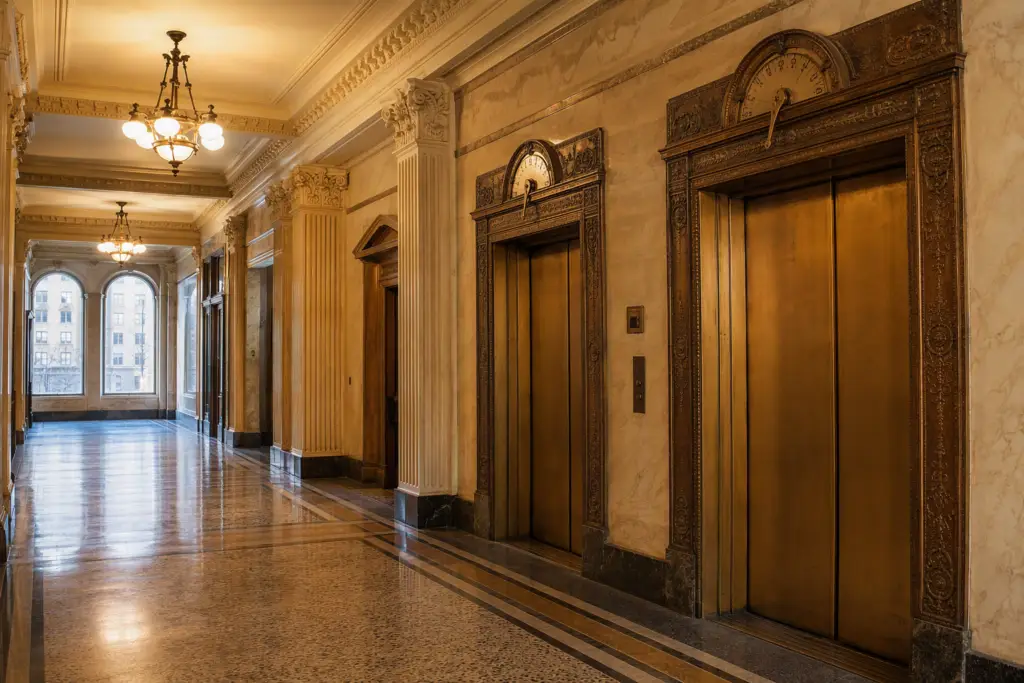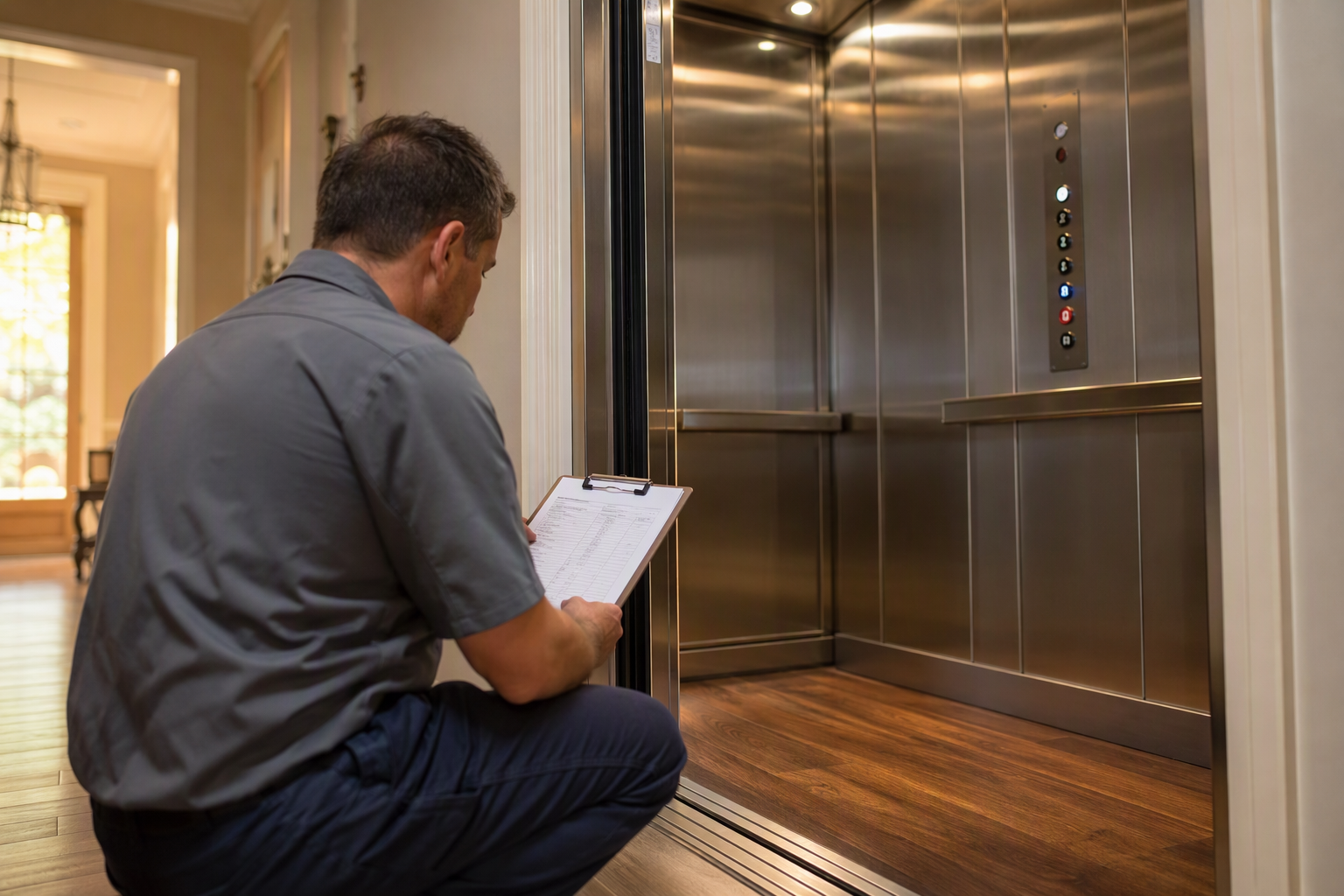
Home Elevator Repair Services: Complete FAQ Guide for Columbia, SC Homeowners
Carolina Elevator Service offers comprehensive repair services for residential home elevators throughout the Columbia, SC area. Whether a home elevator is experiencing mechanical failure, hydraulic issues, electrical faults, or safety system malfunctions, qualified technicians can diagnose the problem and restore safe, reliable operation. Homeowners should address elevator issues promptly to maintain both safety and compliance with applicable codes.
Do you repair all types of residential home elevators?
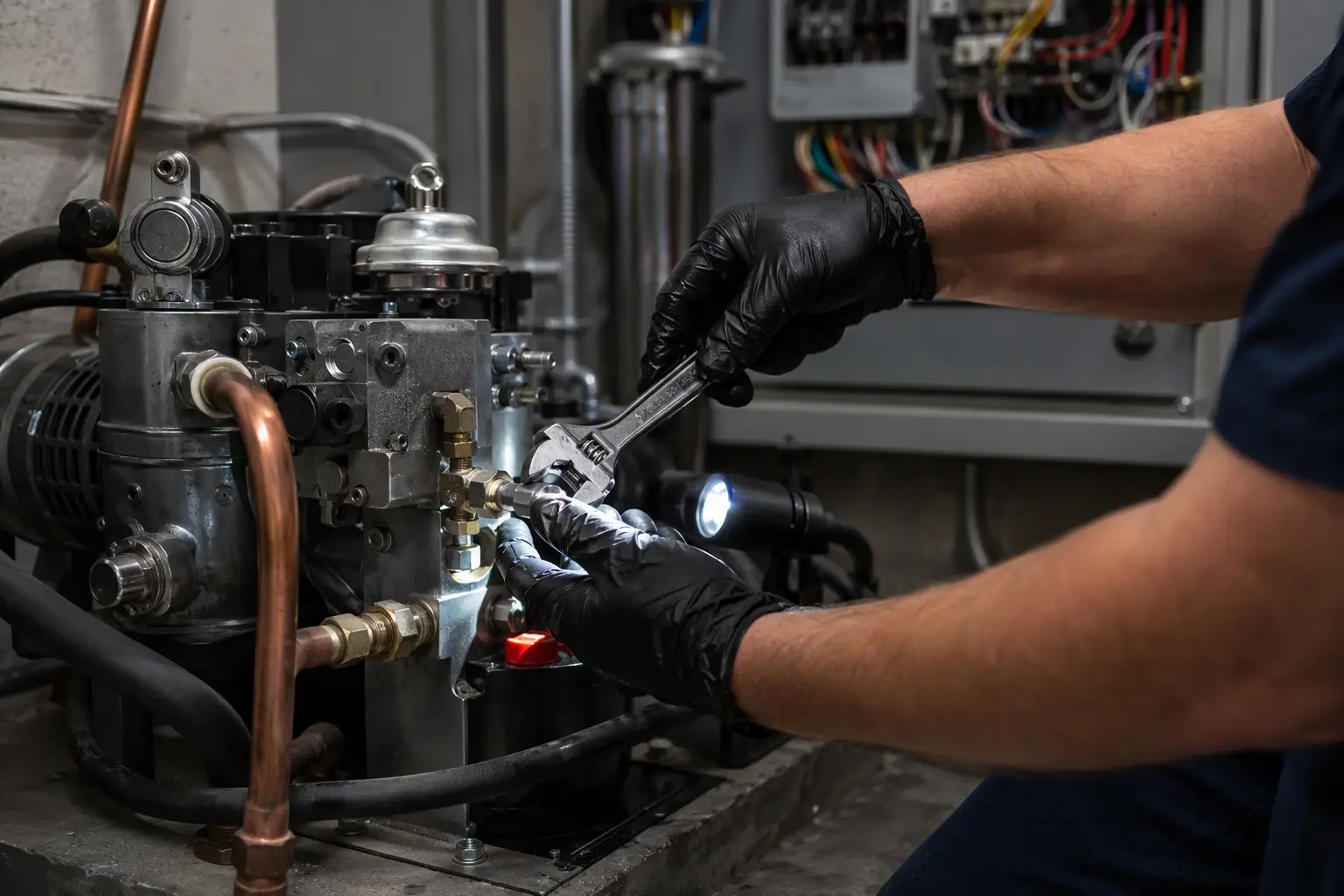
Qualified elevator service technicians can repair the most common types of residential home elevators, including hydraulic, traction (cable-driven), and pneumatic (vacuum) models.
Each elevator type has a distinct drive system with different maintenance and failure profiles. Hydraulic home elevators use a fluid-powered piston mechanism and are among the most common residential installations; their repairs often involve pump units, cylinder seals, and control valves. Traction elevators use counterweights and steel cables driven by an electric motor, requiring attention to sheaves, ropes, and drive machines. Pneumatic or vacuum elevators operate on air pressure differentials and require specialized knowledge of their turbine and valve systems.
A technician from Carolina Elevator Service will identify the drive system before beginning any diagnostic work, ensuring that the correct tools, parts, and procedures are applied for that specific elevator type.
What are the most common home elevator problems that require repair?
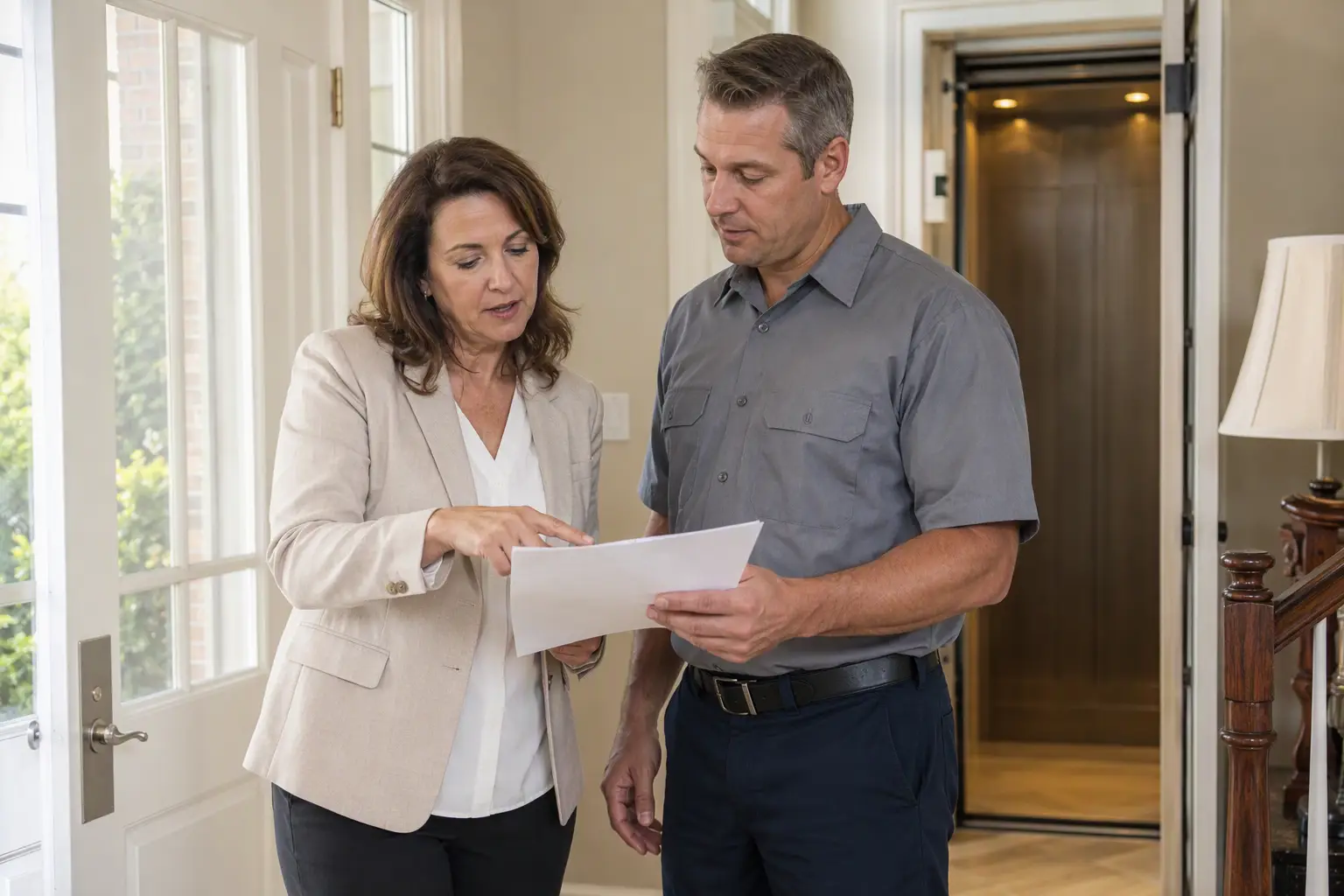
The most frequently encountered home elevator repair issues include door malfunctions, drive system failures, control board faults, unusual noises, slow or erratic travel, and safety device trips.
Door problems — including misaligned gates, faulty interlocks, and worn rollers — are among the most reported complaints in residential elevator service calls. Drive system issues vary by elevator type: hydraulic models may develop cylinder leaks or pump wear, while traction models may experience worn hoist ropes or motor brush failure. Control board faults can cause intermittent operation or complete shutdowns and typically require specialized diagnostic equipment to isolate.
Safety devices such as overspeed governors, slack rope switches, and buffer engagement systems are designed to shut the elevator down when abnormal conditions are detected. When these devices trigger, the unit will not run until a qualified technician inspects and resets or repairs the affected component. Homeowners should never attempt to bypass these systems, as they are mandated by safety codes and exist to prevent injury.
Is a home elevator repair subject to South Carolina state regulations?
South Carolina regulates elevator repairs that constitute an “alteration” under state law, but the South Carolina Elevator Code explicitly does not apply to equipment installed in a single private dwelling.
This is an important distinction for Columbia homeowners to understand. Under the South Carolina Elevator Code, S.C. Code Title 41, Chapter 16, residential private dwelling elevators fall outside the mandatory inspection and permitting framework that applies to commercial and multi-unit residential installations. However, this exemption from state oversight does not reduce the importance of professional, code-informed repair work. Elevators in private homes should still be repaired to the safety standards established by ASME A17.1-2019/CSA B44:19, the Safety Code for Elevators and Escalators, which South Carolina adopted as its baseline technical standard effective July 2021.
Homeowners who choose to install a new elevator or substantially modify an existing one should consult with a qualified service provider to understand what permits, if any, may be required by their local jurisdiction, since local ordinances that do not conflict with the South Carolina Elevator Code may still impose requirements at the municipal level.
What safety codes govern residential home elevator repairs?
Residential home elevator repairs should conform to the technical requirements of ASME A17.1-2019/CSA B44:19, the edition South Carolina adopted as its baseline safety standard in 2021.
The ASME A17.1 Safety Code for Elevators and Escalators establishes design, installation, maintenance, and repair requirements for elevator systems. Even though private dwelling elevators are exempt from South Carolina’s mandatory inspection regime, performing repairs to these standards ensures that safety devices, load capacities, door interlocks, and electrical systems are functioning as originally engineered. Departing from these standards during repair can introduce hazards that void manufacturer warranties and create liability exposure for homeowners.
For elevators that serve persons with disabilities in private residences, the principles outlined in the Americans with Disabilities Act (ADA) inform accessible design benchmarks, though the ADA’s mandatory compliance requirements apply primarily to places of public accommodation and commercial facilities rather than private residences.
How do I know when my home elevator needs repair versus routine maintenance?
A home elevator needs repair — not just maintenance — when it exhibits active symptoms such as stopping between floors, failing to respond to controls, producing grinding or banging sounds, or triggering safety shutdowns.
Routine maintenance is preventive: lubrication, adjustment, rope inspection, and operational testing performed on a scheduled basis to prevent failures before they occur. Repair, by contrast, addresses an existing fault. The distinction matters because attempting to maintain an elevator that has an undiagnosed fault can mask a worsening condition. Common indicators that repair is needed rather than maintenance alone include:
- The elevator stops mid-travel and will not restart without manual intervention.
- Door or gate interlocks fail to engage, preventing the unit from moving.
- The cab moves slower than normal or hesitates during acceleration.
- Hydraulic fluid is visible on the floor near the machine space.
- The control panel displays fault codes or error lights.
- Unusual sounds — grinding, clicking, or hydraulic surging — occur during operation.
- The emergency phone, lighting, or alarm system does not function properly.
When any of these symptoms appear, homeowners should discontinue use of the elevator and contact Carolina Elevator Service for a diagnostic evaluation before resuming operation.
What does a home elevator repair service call involve?
A professional home elevator repair service call typically involves an initial diagnostic inspection, fault isolation, parts identification, repair execution, safety device testing, and a post-repair functional test.
The process follows a structured sequence:
- Safety lockout: The technician de-energizes and locks out the elevator before opening any machine space panels or entering the hoistway, following industry lockout/tagout procedures consistent with OSHA safety standards.
- Visual inspection: The technician performs a visual check of the hoistway, machine room or machine space, cab, and landing equipment to identify obvious damage, wear, or leaks.
- Diagnostic testing: Using diagnostic tools appropriate to the elevator’s control system, the technician reads fault codes and tests individual circuits to isolate the root cause.
- Parts identification: Required replacement components are identified by manufacturer and model; the technician confirms compatibility before ordering or installing parts.
- Repair execution: The identified fault is corrected — whether that means replacing a worn component, repairing a wiring fault, resealing a hydraulic cylinder, or reprogramming a control board.
- Safety device testing: After repair, all safety devices — including door interlocks, overspeed governors, and emergency stop systems — are tested to verify correct operation.
- Functional test run: The elevator is operated through multiple full-travel cycles to confirm that the repair has resolved the fault and that no secondary issues are present.
- Documentation: The technician provides the homeowner with a written record of the fault identified, work performed, and parts replaced.
How long does a typical home elevator repair take?
Repair duration depends on the nature of the fault: straightforward electrical or mechanical fixes may be completed in a single visit, while repairs requiring special-order parts or hydraulic cylinder work can take multiple visits spanning several days.
Simple repairs such as door interlock replacements, control board resets, or minor hydraulic seal repairs on units with common parts can often be completed within a few hours. More complex work — such as replacing a full hydraulic power unit, rewinding a drive motor, or addressing structural hoistway damage — requires substantially more time and may involve sourcing components directly from the elevator manufacturer. Homeowners can reduce downtime by providing the technician with the elevator’s make, model, and serial number in advance, which allows parts availability to be checked before the service visit.
Can home elevator repairs be done without manufacturer-approved parts?
While aftermarket parts exist for some elevator components, using original equipment manufacturer (OEM) parts or certified equivalent components is strongly recommended to maintain safety performance and warranty validity.
Safety-critical components — including safety devices, hoist ropes, control boards, and hydraulic cylinders — must meet the performance requirements established by ASME A17.1. Substituting uncertified aftermarket parts for these components introduces risk that is difficult to quantify without engineering documentation. For older home elevator models that have been discontinued, a qualified service provider can identify acceptable equivalent parts and verify their compliance specifications before installation.
What home elevator components most often need replacement during a repair?
The components most frequently replaced during home elevator repairs are hydraulic seals and packing, control boards, door interlock assemblies, hoist ropes or belts, and motor brushes or contactors.
The table below summarizes common home elevator components, the typical failure symptoms they produce, and relevant service considerations:
| Component | Common Failure Symptom | Service Consideration |
|---|---|---|
| Hydraulic cylinder seals | Fluid leaks, slow descent, drift | Cylinder may need resealing or replacement; South Carolina requires new underground cylinders to be encased in plastic containment |
| Hydraulic pump/power unit | No upward travel, motor runs but cab does not move | May require pump rebuild or full unit replacement |
| Control board / logic panel | Intermittent operation, error codes, no response to buttons | Manufacturer-specific programming often required |
| Door interlocks | Elevator will not move, door fault signals | Mandatory safety device; must be tested after replacement per ASME A17.1 |
| Hoist ropes or belts (traction) | Visible wear, fraying, stretch, unusual noise | Full rope set typically replaced as a matched assembly |
| Drive motor / motor brushes | Slow travel, overheating, failure to start | Brush replacement is routine; motor rewind is a major repair |
| Overspeed governor | Safety shutdown, governor rope broken | Must be reset and tested by qualified technician; cannot be bypassed |
| Pneumatic turbine (vacuum elevators) | Cab will not rise, unusual air noise | Highly manufacturer-specific; seals and turbine heads are common wear points |
| Emergency lighting / alarm bell | No light or alarm during power outage | South Carolina requires standby power for emergency lighting and alarm bell for at least four hours on passenger elevators |
| Buffers | End-of-travel impact, buffer damage visible | Inspected and load-tested per ASME A17.1 requirements |
Are home elevator repairs in Columbia, SC required to be done by a licensed professional?
South Carolina’s licensing requirements for elevator mechanics and contractors were not conclusively verified in the course of preparing this guidance, so homeowners should confirm current requirements directly with the South Carolina Department of Labor, Licensing and Regulation (LLR).
What is clear is that the South Carolina Elevator Code, S.C. Code Title 41, Chapter 16, governs elevator work throughout the state and that all work on regulated elevator facilities must comply with the safety standards it establishes. Regardless of specific licensing status, hiring a company with demonstrated elevator expertise — rather than a general contractor or handyman — is essential for home elevator repair. Elevator systems involve high-voltage electrical systems, hydraulic pressure, and suspended loads; improper repairs create serious injury risk. Carolina Elevator Service employs technicians with specialized elevator training to handle residential repair work safely and to the applicable ASME A17.1 standard.
What should a homeowner do immediately when a home elevator gets stuck or malfunctions?
When a home elevator stops unexpectedly or malfunctions, the immediate priority is passenger safety — use the in-cab emergency phone and alarm, and wait for qualified help rather than attempting self-rescue.
- Stay calm and remain in the cab: Attempting to exit a stopped elevator between floors is extremely dangerous. The cab is the safest place to be while waiting for assistance.
- Use the emergency alarm: Activate the in-cab alarm button to alert household members or neighbors to the situation.
- Use the emergency telephone: Elevator cabs are required to have an emergency communication device. Use it to contact a responsible party who can call for professional help.
- Do not force the doors open: Manually forcing door interlocks defeats a critical safety system and can result in a fall into the hoistway.
- Contact a qualified elevator technician: Call Carolina Elevator Service or another certified elevator company to dispatch a technician for a controlled release and inspection.
- Do not restore power and run the elevator: After a shutdown, do not simply reset the breaker and resume use. A fault caused the shutdown and must be identified and corrected before operation resumes.
- Document the symptoms: Note what the elevator was doing when it stopped, any unusual sounds prior to the event, and any error codes visible on the control panel — this information accelerates diagnosis.
How often should a home elevator be serviced to prevent the need for major repairs?
Most elevator manufacturers and industry service standards recommend that residential home elevators receive professional maintenance at least annually, with some components warranting more frequent attention depending on usage volume.
While private dwelling elevators are exempt from South Carolina’s mandatory annual inspection requirement — which applies to regulated commercial and multi-unit facilities — the underlying engineering rationale for annual service applies equally to residential units. Key maintenance tasks that reduce the likelihood of major repairs include lubrication of guide rails and rollers, tension and wear checks on hoist ropes or drive belts, hydraulic fluid condition and level verification, door interlock function testing, and safety device operational checks. Units in homes with heavier daily use benefit from more frequent service intervals. A qualified technician from Carolina Elevator Service can recommend an appropriate maintenance schedule based on the specific elevator model, age, and usage pattern.
What is the difference between an elevator repair and an elevator alteration in South Carolina?
In South Carolina, an “alteration” is a change to an elevator’s design, components, or function beyond restoring original condition, and alterations to regulated elevators require a state construction permit and post-alteration inspection.
Under S.C. Code Title 41, Chapter 16, a state construction permit is required before any elevator facility is erected, constructed, altered, or installed. A repair that restores a failed component to its original specification — such as replacing a worn pump seal with an equivalent seal — is generally considered maintenance or repair. Modifying an elevator’s speed, capacity, control system architecture, or drive type crosses into alteration territory and triggers the permitting requirement for regulated facilities. Although the private dwelling exemption removes state regulatory oversight from most home elevators, homeowners planning significant changes to their residential elevator should discuss the scope of work with their service provider to understand what documentation may be appropriate.
Can an older home elevator be repaired, or does it need to be replaced?
Most older home elevators can be repaired or modernized rather than fully replaced, provided the hoistway structure and basic drive system remain serviceable, though a cost-benefit analysis and thorough inspection are needed to make an informed decision.
Key factors that favor repair or modernization over full replacement include a sound hoistway structure in good condition, availability of compatible replacement parts, and a drive system that can be cost-effectively serviced. Factors that may indicate replacement is more practical include discontinued parts with no reliable equivalent, a drive system that has failed beyond economical repair, significant corrosion or structural deterioration of the hoistway, or a platform and cab that no longer meet the homeowner’s accessibility needs.
South Carolina’s regulations note that elevator facilities in operation before July 1, 1986 must comply with the 1986 edition of ANSI A17.3, the safety code for existing elevators and escalators — a provision that applies to regulated facilities and underscores the importance of having older equipment evaluated against applicable safety benchmarks regardless of regulatory exemption status. A Carolina Elevator Service technician can assess an older residential elevator and provide a realistic evaluation of repair viability versus replacement cost.
What accessibility standards apply to home elevator repairs for users with disabilities?
While the Americans with Disabilities Act (ADA) does not mandate accessibility modifications to private residences, homeowners installing or repairing elevators for users with mobility impairments should reference ADA design guidelines to ensure the elevator is as usable as possible.
ADA standards for accessible elevators — covering cab dimensions, control button height, door reopening devices, and visual and audible floor indicators — are primarily mandatory for places of public accommodation and commercial facilities. However, these specifications represent the most thoroughly researched benchmarks for elevator accessibility and serve as a practical reference for residential installations intended to serve wheelchair users or others with mobility limitations. When a home elevator repair involves replacement of control panels, door systems, or cab interiors, consulting ADA specifications ensures the opportunity to improve usability is not missed.
How do underground hydraulic elevator cylinders affect repair work in South Carolina?
South Carolina has a specific requirement that newly installed underground hydraulic elevator cylinders be encased in plastic outer containment to limit electrolytic corrosion, which affects both installation and repair scope for hydraulic home elevators.
Older hydraulic elevators with unprotected underground steel cylinders are susceptible to corrosion from soil electrochemistry, which can eventually cause cylinder failure and hydraulic fluid leakage into the ground — an environmental concern as well as a safety issue. When a repair involves the hydraulic cylinder on an older residential installation, the technician should assess the cylinder’s condition and discuss with the homeowner whether containment upgrades are appropriate. Cylinder replacement on a home elevator is a major repair requiring excavation, and planning should account for the current South Carolina requirement for plastic outer containment on new underground cylinder installations.
What emergency power requirements apply to home elevators?
South Carolina requires passenger elevators to have standby power capable of running emergency lighting and the alarm bell for at least four hours if normal power fails, a requirement that applies to regulated passenger elevator facilities and informs best practice for residential installations.
For home elevators, the emergency lighting and alarm bell system is a critical safety feature. If these systems are found to be non-functional during a repair visit — whether due to a dead battery, faulty wiring, or failed inverter — restoring them should be treated as a high-priority repair item rather than a deferred task. A homeowner whose elevator emergency lighting or alarm bell is not operational should discontinue elevator use until those systems are restored. Carolina Elevator Service technicians verify emergency system function as part of post-repair testing on every residential elevator service visit.
How do I find a qualified home elevator repair company in Columbia, SC?
Homeowners in Columbia, SC should look for an elevator service company with demonstrated experience in residential elevator systems, familiarity with ASME A17.1 standards, and a clear understanding of South Carolina’s regulatory framework.
When evaluating a home elevator repair company, homeowners should ask the following questions:
- Does the company have specific experience with the make and model of the home elevator in question?
- Does the company follow ASME A17.1 repair procedures and use code-compliant parts?
- Will the company provide a written diagnosis and estimate before beginning work?
- Does the company carry appropriate insurance coverage for residential elevator repair work?
- Can the company provide references from residential elevator repair projects in the Columbia area?
Carolina Elevator Service is a certified elevator service company serving Columbia, SC, with a focus on residential and commercial elevator repair, maintenance, and modernization. Homeowners in the greater Columbia area can contact Carolina Elevator Service for a thorough assessment of their home elevator’s condition and a transparent explanation of recommended repairs.
What records should a homeowner keep related to home elevator repairs?
Homeowners should maintain a complete service history file for their home elevator, including all repair invoices, parts replacement records, inspection reports, and original installation documentation.
A well-maintained service record serves several important purposes. It allows the technician on any future service call to understand the elevator’s repair history and identify recurring patterns that may point to a systemic issue. It supports warranty claims for parts or labor. It provides documentation in the event of a homeowner’s insurance claim related to an elevator incident. And it is invaluable when selling the home, as prospective buyers and their home inspectors may inquire about the elevator’s maintenance history. Homeowners should store the original installation manual, any manufacturer service bulletins, and the written records from every service visit in a single, accessible location — ideally near the elevator machine space.
What is the first step to getting my home elevator repaired by Carolina Elevator Service?
The first step is to contact Carolina Elevator Service to schedule a diagnostic assessment, during which a technician will inspect the elevator, identify the fault, and provide a clear explanation of the repair required.
Before calling, homeowners can help speed the process by gathering the following information:
- The elevator’s manufacturer name (found on the cab data plate or machine room equipment).
- The model and serial number (also found on the data plate).
- A description of the symptoms — what the elevator is doing or not doing, and when the problem began.
- Any error codes or fault indicators displayed on the control panel.
- The date of the last service visit, if known.
With this information in hand, Carolina Elevator Service can dispatch a technician prepared with the appropriate diagnostic tools and the most likely replacement parts for the elevator type, reducing the time needed to complete the repair.
Schedule a Home Elevator Assessment in Columbia, SC
A malfunctioning home elevator is a safety concern that should not be deferred. Whether the issue is a door interlock fault, a hydraulic leak, a control board failure, or an unexplained shutdown, the qualified technicians at Carolina Elevator Service can diagnose the problem accurately and repair it to ASME A17.1 standards. Serving homeowners throughout Columbia, SC, Carolina Elevator Service brings the technical expertise needed to keep residential elevators operating safely and reliably.
Contact Carolina Elevator Service for a free elevator assessment: 803-865-1400