When a South Carolina building owner renovates a property, converts its use, or modifies an existing elevator, the question of which elevator upgrades become legally required is not always straightforward. The answer depends on the scope of the renovation, the age of the equipment, the type of elevator, and the applicable code edition in force at the time the permit was issued. This guide breaks down the key decision factors, compares upgrade paths, and explains when Carolina Elevator Service should be your first call.
—
What Are the Core Legal Triggers for Elevator Upgrades in South Carolina?
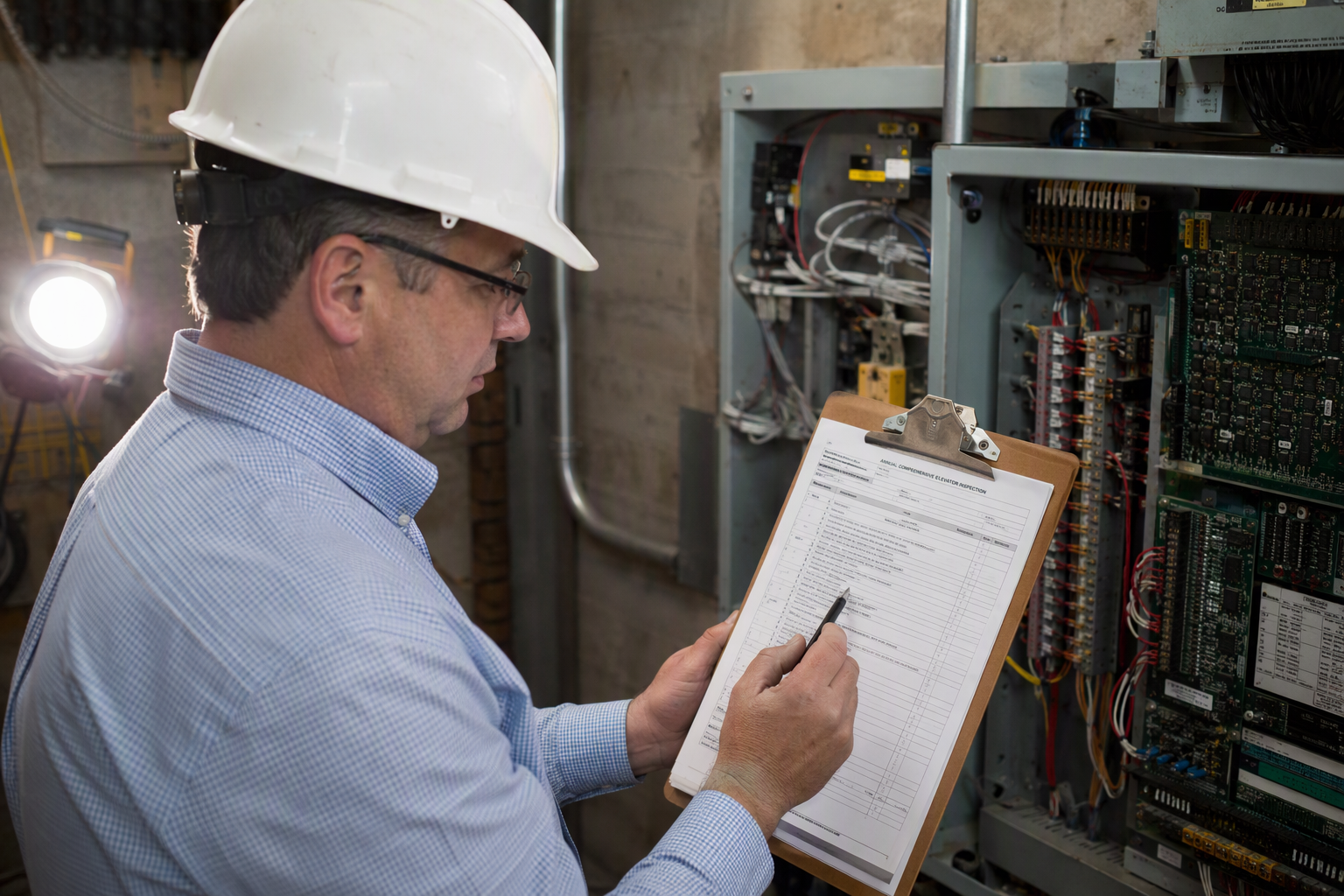
South Carolina regulates elevators under S.C. Code Title 41, Chapter 16 (the South Carolina Elevator Code), enforced by the South Carolina Department of Labor, Licensing and Regulation (LLR), Office of Elevators and Amusement Rides. The companion regulations appear in S.C. Code of Regulations Chapter 71, Article 5, Regulations 71-5000 through 71-5700.
Three primary events trigger a formal compliance review and, often, required upgrades:
- Alteration or repair of an elevator facility — A state construction permit is required before any elevator facility is erected, constructed, altered, or installed.
- Change of building use or occupancy — A change that alters the nature of how the building and elevator are used may require the elevator to meet current code standards as a condition of re-registration or certificate renewal.
- Annual operating certificate renewal — South Carolina requires elevators to be inspected at installation, registration, alteration or repair, and at least once every year before the operating certificate is renewed. An inspection that surfaces non-compliant conditions requires remediation.
No elevator facility in South Carolina may be operated without both a certificate of registration and a current operating certificate from the state. The operating certificate — or a copy — must be displayed conspicuously inside each elevator car.
—
Which Code Edition Applies to My Elevator?
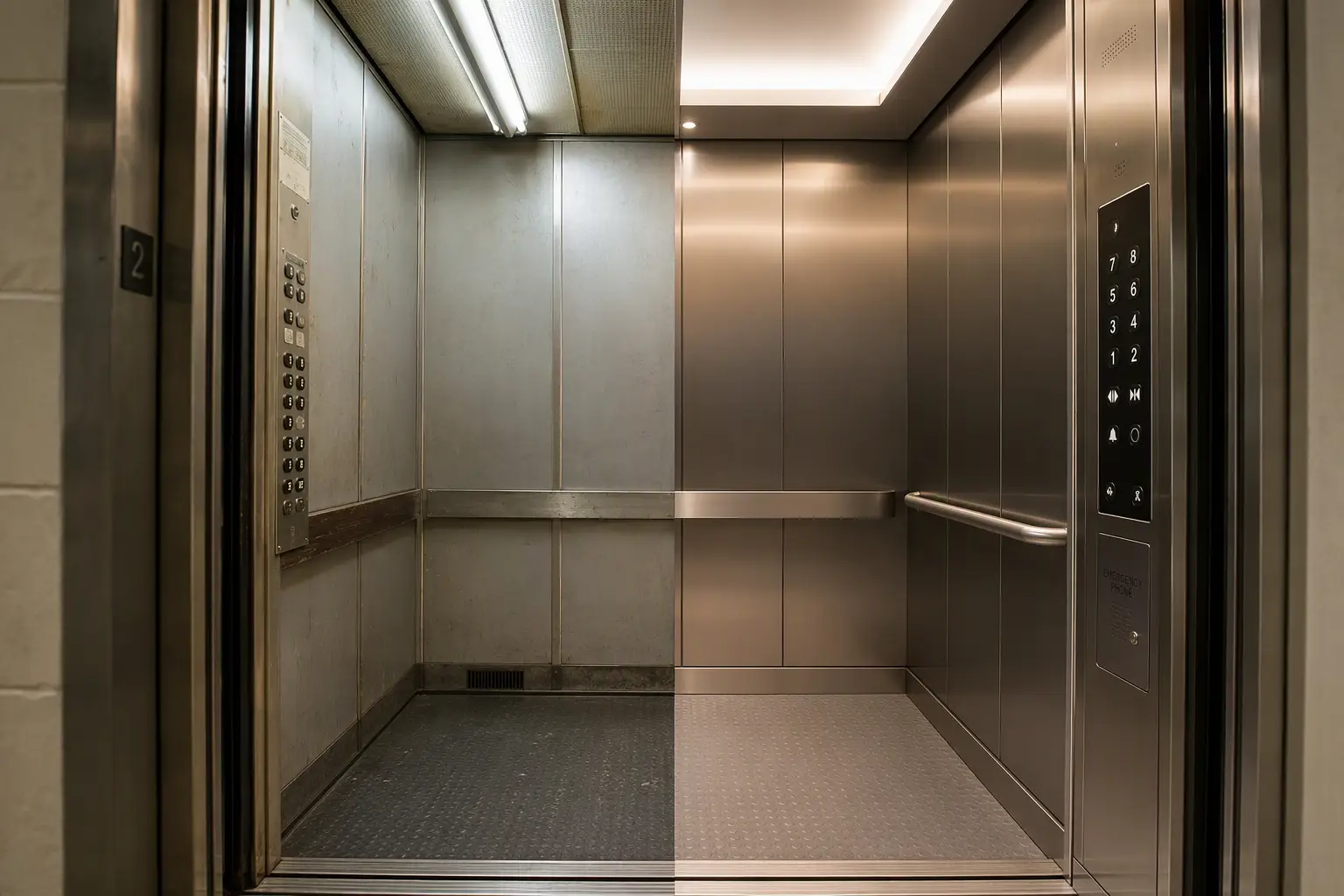
South Carolina’s adopted code depends on when your equipment was installed or last significantly altered:
| Equipment Era | Applicable Standard | Key Authority |
|---|---|---|
| In operation before July 1, 1986 | 1986 edition of ANSI A17.3, Safety Code for Existing Elevators and Escalators | S.C. Code Title 41, Chapter 16 |
| Permitted on or after July 23, 2021 | ASME A17.1-2019/CSA B44:19 (adopted without amendment, effective July 23, 2021) | S.C. State Register / LLR |
| Permitted between 1986 and July 22, 2021 | Code edition in effect at time of permit issuance; consult LLR or Carolina Elevator Service for verification | LLR, Office of Elevators and Amusement Rides |
Critical rule: New elevator facilities must comply with the officially adopted edition of ASME A17.1 in effect when the permit is issued. When a building renovation triggers a new permit, the current edition — the 2019 edition as of 2026 — governs the work covered by that permit.
—
What Upgrades Are Commonly Required During a South Carolina Building Renovation?
The scope of required upgrades scales with the scope of the renovation and the age of the elevator. Below is a comparison of the most common upgrade categories, their typical drivers, and general decision factors.
| Upgrade Category | Common Trigger | Code/Standard Reference | Complexity | Owner Action Required |
|---|---|---|---|---|
| Firefighters’ emergency service (Phase I & II) | Alteration permit; change of occupancy to assembly or residential | ASME A17.1-2019; SC requires five-pin S.C. #1000 key on new installations | Medium | Obtain construction permit; schedule post-installation inspection |
| Emergency lighting & standby power | Alteration; code edition upgrade | SC requires standby power for emergency lighting and alarm bell for at least four hours on passenger elevators | Medium | Verify battery backup capacity; permit any electrical alteration |
| ADA-compliant cab and controls | Change of occupancy to public accommodation; significant renovation of public areas | ADA Standards for Accessible Design | Medium–High | Assess cab dimensions, button height, braille signage, door timing |
| Door and safety edge upgrades | Alteration permit; annual inspection findings | ASME A17.1-2019 | Low–Medium | Replace retiring electromechanical edges with full-coverage light curtains |
| Underground hydraulic cylinder containment | New installation or cylinder replacement on hydraulic units | South Carolina specifically requires plastic outer containment to limit electrolytic corrosion on new underground cylinders | High | Assess existing cylinder; plan for PVC liner or full replacement |
| Machine room ventilation & seismic protection | Structural renovation affecting machine room; new permit | ASME A17.1-2019 | Medium | Coordinate with structural and mechanical engineers |
| Operating certificate & registration update | Any alteration; annual renewal cycle | S.C. Code Title 41, Chapter 16 | Administrative | File with LLR; display updated certificate in car |
—
Does a Change of Building Use Automatically Require Elevator Upgrades?
A change of occupancy does not automatically require a complete elevator replacement, but it frequently requires a compliance audit. The key question is whether the change in use increases the demands placed on the elevator — in terms of occupant load, public accessibility requirements under the ADA, or fire and life safety classifications under the adopted ASME A17.1-2019 code.
For example, converting a commercial warehouse to a mixed-use residential building may require:
- ADA-compliant cab dimensions, control placement, and audible/visual signals if the building becomes a place of public accommodation.
- Firefighters’ service upgrades if the building now exceeds thresholds that require Phase I and Phase II recall.
- Updated operating certificates reflecting the new building classification.
A conversion that keeps use class the same — such as a commercial office to another commercial office — may require fewer structural upgrades but still triggers a construction permit for any physical elevator work and an inspection upon completion.
—
What Is the Step-by-Step Process for Getting an Elevator into Compliance After a Renovation?
- Commission a pre-construction compliance audit. Before any construction begins, have a qualified elevator contractor evaluate the existing equipment against the currently adopted ASME A17.1-2019/CSA B44:19 standard and any ADA requirements. Carolina Elevator Service provides free elevator assessments for South Carolina building owners.
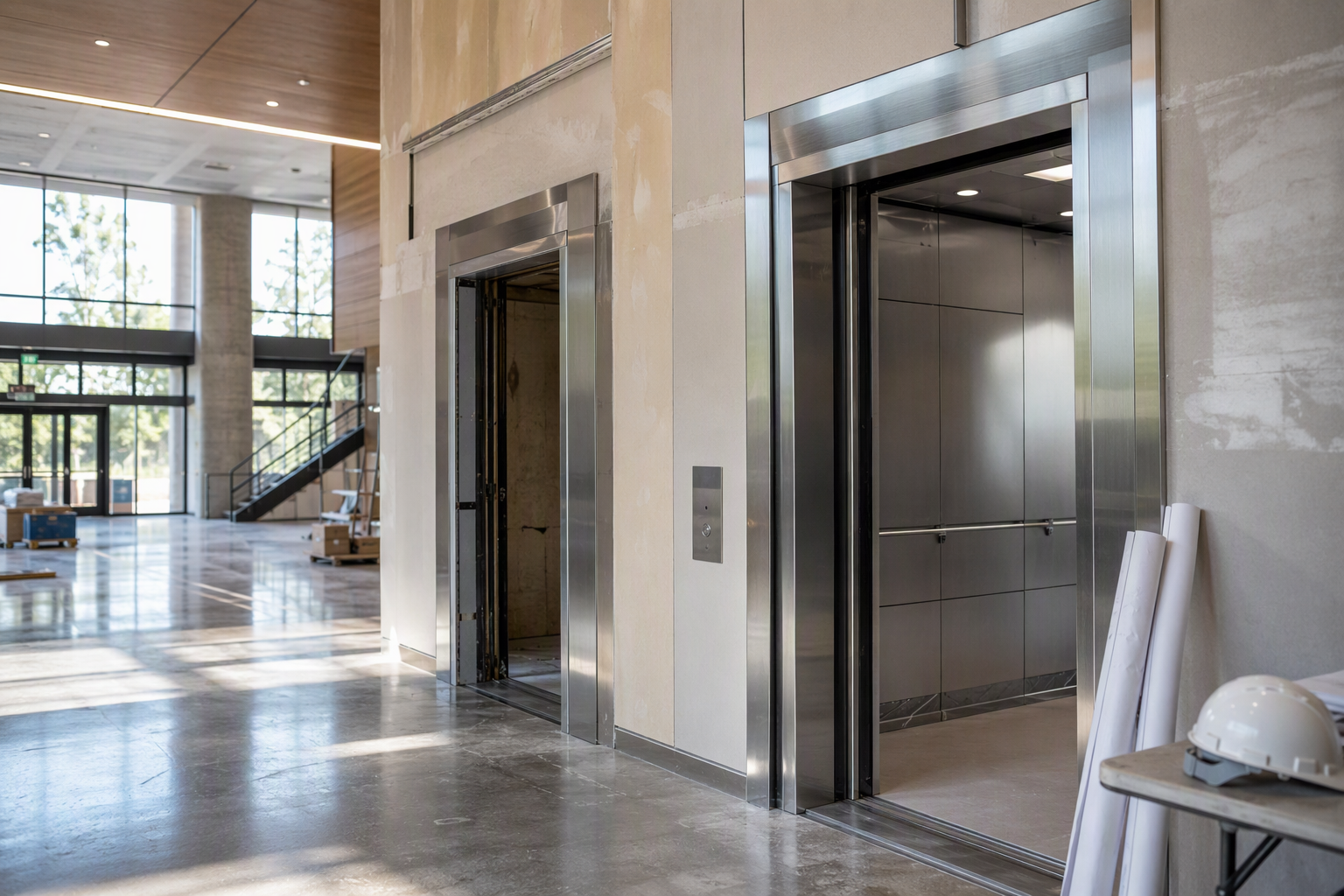
- Obtain a state construction permit from LLR. A state construction permit is legally required before any elevator facility is erected, constructed, altered, or installed in South Carolina. No work may begin without this permit.
- Complete all required physical upgrades. Address deficiencies identified in the audit — firefighters’ service keys, door safety devices, standby power, ADA controls, and any SC-specific requirements such as underground cylinder containment.
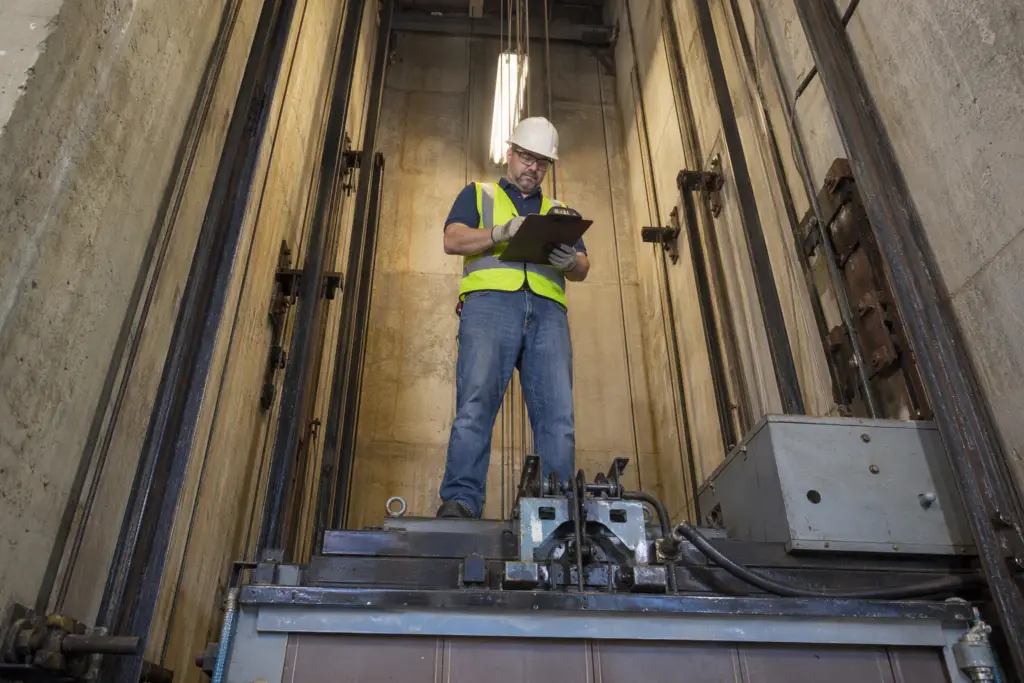
- Schedule a post-alteration inspection. South Carolina requires an inspection at installation, registration, alteration, or repair. Only a state inspector or a licensed special inspector (qualified under the 2018 edition of QEI-1) may conduct this inspection. Note: a special inspector may not inspect an elevator on which the inspector or that inspector’s employer holds a current service or warranty contract.
- Obtain an updated operating certificate from LLR. No elevator facility may be operated without a current certificate of registration and operating certificate. The updated certificate must be displayed conspicuously inside the elevator car.
- Establish an ongoing maintenance and annual inspection schedule. South Carolina requires at least one inspection per year before the operating certificate is renewed. The building owner is legally responsible for keeping every elevator facility in safe operating condition and in compliance with state regulations.
—
How Do Inspection Intervals Differ by Equipment Type in South Carolina?
| Equipment Type | Required Inspection Interval (SC) | Authority |
|---|---|---|
| Passenger and freight elevators | At least once per year (before operating certificate renewal) | S.C. Code Title 41, Chapter 16 |
| Handicap lifts (platform lifts) | Every five years | S.C. Code Title 41, Chapter 16 |
| Manlifts, television tower elevators, special purpose elevators | Every seven years | S.C. Code Title 41, Chapter 16 |
| Dumbwaiters | When installed or altered | S.C. Code Title 41, Chapter 16 |
| Any elevator — at installation, registration, or alteration | Required inspection before operation resumes | S.C. Code Title 41, Chapter 16 |
Note for renovation planning: If a renovation triggers an alteration inspection, the interval clock effectively resets. Building owners should plan for this inspection as a hard milestone on the project schedule — no elevator may return to service without it.
—
Does ADA Compliance Apply to Elevators in Renovated South Carolina Buildings?
Yes. The Americans with Disabilities Act requires that alterations to places of public accommodation and commercial facilities that affect usability must comply with ADA accessibility standards. When a renovation includes work on or around an elevator — or changes the path of travel through a building — the elevator and its related areas may need to meet current ADA Standards for Accessible Design.
Key ADA elevator considerations for renovated South Carolina buildings include:
- Minimum cab dimensions and door clear width
- Control button height and placement for wheelchair users
- Braille and raised-character floor designations
- Audible and visual floor indicators
- Door-hold timing and reopening devices
- Accessible floor landings and approaches
ADA obligations run parallel to — not instead of — South Carolina’s LLR code requirements. A renovation may satisfy the state construction permit process while still leaving ADA gaps that expose the building owner to federal civil rights liability. Carolina Elevator Service evaluates both dimensions during a compliance assessment.
—
What Happens If an Elevator Operates Without a Valid Certificate After a Renovation?
Operating an elevator without a valid certificate of registration and operating certificate is a violation of S.C. Code Title 41, Chapter 16. Under South Carolina law, the building owner bears legal responsibility for keeping every elevator facility in safe operating condition and in compliance with state regulations.
Practical consequences of non-compliance include:
- Regulatory enforcement action by LLR, including orders to cease elevator operation
- Inability to obtain or renew the operating certificate until all deficiencies are corrected and a post-alteration inspection is passed
- Increased liability exposure if an accident occurs while the elevator is operating without a valid certificate
- Mandatory accident reporting: any accident that seriously injures anyone other than an employee must be reported to the state before the end of the next working day
—
Are There Any South Carolina Elevator Requirements Unique to This State?
Yes. Several South Carolina requirements go beyond the baseline ASME A17.1 standard or reflect state-specific policy choices:
- S.C. #1000 Firefighters’ Key: Firefighters’ service on new installations must use the five-pin S.C. #1000 key — a South Carolina-specific requirement that differs from standard key specifications.
- Underground Hydraulic Cylinder Containment: Newly installed underground hydraulic elevator cylinders must be encased in plastic outer containment to limit electrolytic corrosion — a proactive environmental protection measure.
- Four-Hour Standby Power: Passenger elevators must have standby power that runs emergency lighting and the alarm bell for at least four hours if normal power fails.
- QEI-1 Inspector Qualifications: Special inspectors must be licensed and demonstrate qualifications under the 2018 edition of QEI-1, the American National Standard for Qualification of Elevator Inspectors.
- Inspector Independence Rule: A special inspector may not inspect an elevator on which the inspector or the inspector’s employer holds a current service or warranty contract — a conflict-of-interest protection built into state law.
- Local Ordinance Preemption: Local ordinances that conflict with the South Carolina Elevator Code or its regulations are void. The state code is the controlling authority statewide.
- Private Dwelling Exemption: The South Carolina Elevator Code does not apply to equipment in a single private dwelling.
—
How Should a Building Owner Choose Between a Full Modernization and a Targeted Code Upgrade?
| Decision Factor | Targeted Code Upgrade | Full Modernization |
|---|---|---|
| Equipment age | Equipment is mid-life; components are serviceable | Equipment is at or near end of service life; parts availability declining |
| Scope of renovation | Limited renovation; specific deficiencies identified in inspection | Major renovation or full building repositioning |
| Compliance gap | One or two specific items out of compliance (e.g., firefighters’ key, door edges) | Multiple systems non-compliant; controller obsolete |
| ADA exposure | ADA elements already compliant or exempted | Full ADA retrofit needed; cab dimensions substandard |
| Budget horizon | Short-term capital constraint; prioritize required items | Long-term capital plan supports comprehensive investment |
| Building repositioning | Building use remains similar; occupant expectations stable | Conversion to Class A commercial, luxury residential, or healthcare use |
| Permit & inspection impact | Alteration permit required; inspection after each phase of work | Full construction permit; comprehensive post-installation inspection |
The right choice is property-specific. Carolina Elevator Service recommends a formal compliance audit before any renovation contract is signed — identifying the mandatory items first, then evaluating which elective modernizations deliver the best long-term value for the building’s intended use.
—
What Role Does Carolina Elevator Service Play in the Compliance Process?
Carolina Elevator Service is an independent certified elevator service company operating throughout South Carolina. As an independent service provider, Carolina Elevator Service assists building owners with:
- Pre-renovation compliance audits comparing existing equipment to the adopted ASME A17.1-2019/CSA B44:19 standard and ADA requirements
- Preparation and coordination of state construction permit applications with the South Carolina Department of Labor, Licensing and Regulation (LLR), Office of Elevators and Amusement Rides
- Execution of required alterations — firefighters’ service upgrades, door safety devices, standby power systems, hydraulic cylinder containment, and ADA cab modifications
- Coordination with state inspectors and qualified special inspectors for post-alteration inspections
- Ongoing annual maintenance and inspection support to keep operating certificates current
Because South Carolina law prohibits a special inspector from inspecting an elevator on which that inspector’s employer holds a current service contract, Carolina Elevator Service maintains a transparent process: service work and third-party inspection coordination are clearly separated to ensure full regulatory compliance and no conflicts of interest for the building owner.
—
Frequently Asked Questions: South Carolina Elevator Renovation Compliance
Does painting or cosmetic work inside the elevator cab trigger a permit requirement?
Purely cosmetic work that does not alter any mechanical, electrical, or structural component of the elevator generally does not constitute an “alteration” under South Carolina code. However, any work that touches operating components, control systems, doors, or safety devices does require a construction permit. When in doubt, confirm the scope with LLR or consult Carolina Elevator Service before proceeding.
Can a building owner hire any contractor to perform elevator alterations in South Carolina?
South Carolina requires that elevator work comply with state regulations and that the facility be maintained in safe operating condition by the owner. Only elevators inspected by state inspectors or licensed special inspectors may have their certificates renewed. Building owners should verify that any contractor performing elevator work is qualified to meet these standards and familiar with SC-specific requirements such as the S.C. #1000 firefighters’ key and underground cylinder containment rules.
What if the building was constructed before 1986 — does it get grandfathered from newer code requirements?
South Carolina elevator facilities in operation before July 1, 1986, must comply with the 1986 edition of ANSI A17.3. This is the “existing installations” code and sets a baseline for that equipment. However, once a building owner performs an alteration that requires a new construction permit, the altered scope of work must meet the currently adopted ASME A17.1-2019 standard. Grandfathering does not provide unlimited protection once significant work begins.
Is a single-family home elevator regulated under South Carolina’s elevator code?
No. The South Carolina Elevator Code explicitly does not apply to equipment in a single private dwelling. Residential home elevators in single-family homes fall outside LLR jurisdiction. Commercial residential buildings — such as apartment complexes — are regulated.
Can a local city or county in South Carolina impose stricter elevator requirements than the state code?
No. Local ordinances that conflict with the South Carolina Elevator Code or its regulations are void. State code preempts local rules. However, local building departments may have separate permitting processes for the building itself — as distinct from the elevator-specific permit issued by LLR.
—
Ready to Confirm Your Elevator’s Compliance Before Your South Carolina Renovation Begins?
A missed code trigger can halt your project, void your operating certificate, and expose your building to regulatory enforcement. Carolina Elevator Service provides a free elevator assessment for South Carolina building owners — identifying exactly which upgrades are required, which are optional, and how to keep your renovation on schedule.
Contact Carolina Elevator Service for a free elevator assessment: 803-865-1400
Need elevator service you can rely on? Carolina Elevator Service is ready to help.