Elevator Inspection Requirements in South Carolina: A Complete Compliance Guide
Building owners, property managers, and facility directors throughout South Carolina face serious liability exposure when elevator inspections lapse. This resource consolidates the regulatory framework, inspection intervals, compliance steps, and local enforcement context so that stakeholders can make well-informed decisions about their vertical transportation assets.
Who Regulates Elevator Inspections in South Carolina?
The South Carolina Department of Labor, Licensing and Regulation (SC LLR) administers the state’s Elevator Safety Program under the South Carolina Elevator Safety Act. The program covers elevators, escalators, dumbwaiters, moving walks, platform lifts, stairway chairlifts, and similar conveyances located in public or commercial buildings. Residential single-family dwellings are generally exempt, though multi-family and mixed-use buildings fall within the program’s scope.
Inspectors must hold credentials recognized by the state. The SC LLR accepts inspectors who hold the Qualified Elevator Inspector (QEI) certification administered through the National Association of Elevator Safety Authorities (NAESA) and issued in alignment with ASME QEI-1, the Standard for the Qualification of Elevator Inspectors. Inspections performed by uncredentialed individuals do not satisfy statutory requirements and can expose building owners to fines.
What Code Standard Governs Elevator Safety in South Carolina?
South Carolina has adopted ASME A17.1, the Safety Code for Elevators and Escalators, as the primary technical standard. This code — published by the American Society of Mechanical Engineers — establishes minimum requirements for design, construction, operation, inspection, testing, maintenance, alteration, and repair of elevators and related conveyances.
The SC LLR periodically adopts updated editions of the code. Stakeholders should confirm which edition is currently enforced with the SC LLR directly, as code adoption cycles can lag the ASME publication schedule. For 2025–2026, facilities managers are encouraged to verify their equipment’s compliance posture against the currently adopted edition rather than assuming the most recent ASME publication is in effect statewide.
For elevators serving or accessible to individuals with disabilities, the Americans with Disabilities Act (ADA) imposes additional requirements regarding cab dimensions, door timing, control height, braille signage, and audible signals. ADA compliance is enforced separately from the SC LLR elevator safety program, meaning a unit can pass a safety inspection yet still carry ADA violations.
How Often Are Elevators Inspected in SC?
Under ASME A17.1 and state regulations, South Carolina mandates two distinct categories of inspection activity:
Periodic Inspections
A periodic inspection evaluates the operational condition of an elevator in service. The required frequency depends on equipment type and use category. Most passenger elevators in public or commercial service require periodic inspection on an annual basis. The SC LLR issues a certificate of operation following a satisfactory periodic inspection; this certificate must be posted in or adjacent to the elevator cab and constitutes the primary visible proof of compliance for building occupants and inspectors.
Witnessing Periodic Tests
Beyond visual and operational inspections, certain safety devices require witnessed periodic testing. Under ASME A17.1, hydraulic elevators typically require a full-load pressure and safety test, and traction elevators require governor and safety tests at intervals specified by the code — commonly every five years for certain test categories. These tests must be performed by a licensed elevator mechanic and witnessed by a QEI-certified inspector.
| Category | Frequency (Per ASME A17.1) | Purpose |
|---|---|---|
| Category 1 (Periodic Inspection & Test) | Annually | No-load safety and operational test |
| Category 3 (Governor/Safety Test) | Every 3 years (select equipment) | Verify governor and car safety device function |
| Category 5 (Full-Load Safety Test) | Every 5 years | Full-speed governor trip and buffer test under full load |
Source: ASME A17.1 Safety Code for Elevators and Escalators. Verify the currently adopted edition with SC LLR for jurisdiction-specific intervals.
What Happens If an Elevator Fails Inspection in SC?
When a SC LLR-authorized inspector identifies a violation during a periodic inspection or witnessed test, the outcome depends on the severity of the deficiency:
- Minor violations: The inspector may allow the unit to remain in service with a written correction order specifying a compliance deadline. The building owner must document correction and may require a follow-up inspection.
- Imminent hazard violations: The inspector has authority to order the elevator removed from service immediately. An out-of-service tag or placard is affixed, and the unit cannot legally return to service until the hazard is corrected and the unit passes a follow-up inspection.
- Recurring non-compliance: The SC LLR may impose civil penalties, escalating with each subsequent violation cycle. Operating an elevator with a lapsed or revoked certificate of operation can result in significant fines and personal liability for building owners and management companies.
Building owners who receive a correction order should engage a licensed elevator contractor promptly. Delays between inspection findings and repair completion extend the liability window and may affect building insurance coverage.
What Are the Steps to Bring an Elevator into Compliance After a Failed Inspection?
- Obtain the written inspection report. The QEI inspector is required to provide a written report identifying each deficiency, the applicable code section, and any interim operational restrictions.
- Assess severity and prioritize repairs. Separate imminent hazard violations (which mandate immediate shutdown) from standard correction-order items. Do not resume operation of a condemned unit under any circumstances.
- Engage a licensed elevator contractor. Only SC-licensed elevator mechanics may legally perform repair or alteration work on conveyances subject to the SC LLR program. Verify that the contractor holds the appropriate state license before authorizing work.
- Complete corrective work and document it. The contractor must document all repairs, replaced components, and any code references addressed. Retain this documentation as part of the permanent maintenance log required under ASME A17.1.
- Schedule a follow-up inspection. Contact the SC LLR or an authorized third-party inspector to schedule the reinspection. The elevator may not return to service until the inspector signs off and a new or reinstated certificate of operation is issued.
- Post the renewed certificate. Ensure the current certificate of operation is displayed in the elevator cab or immediately adjacent to it as required by South Carolina law.
- Update the maintenance log. Record the inspection date, findings, corrective actions, and the credentials of all parties involved. This log is subject to review in any future inspection or legal proceeding.
Does OSHA Have Any Role in Elevator Inspections in SC?
The Occupational Safety and Health Administration (OSHA) does not conduct routine elevator safety inspections in the same way SC LLR does. However, OSHA standards apply to elevator work as a workplace activity. Elevator mechanics working on conveyances are subject to OSHA’s general industry and construction standards, including lockout/tagout (LOTO) procedures under 29 CFR 1910.147 and applicable fall protection rules.
In workplaces where an elevator is considered a work platform or personnel hoist — such as construction hoists on active job sites — OSHA’s construction standards take precedence. Building owners and contractors should recognize that an SC LLR certificate of operation addresses public safety compliance, while OSHA compliance governs worker safety during maintenance and repair operations. Both obligations apply concurrently.
What Are the ADA Requirements That Overlap With Elevator Inspections in SC?
The ADA requires that elevators serving public accommodations and commercial facilities meet specific accessibility standards under the ADA Standards for Accessible Design. Key elements include minimum cab dimensions, door clear-width requirements, button height and tactile labeling, floor-designation announcements (audible and visual), two-way emergency communication, and leveling accuracy. While SC LLR inspections focus on mechanical safety, ADA compliance is enforced through the U.S. Department of Justice and private right of action.
Many building owners discover ADA gaps during a safety inspection when an inspector notes — though is not required to cite — accessibility deficiencies. Property owners are wise to treat any elevator assessment as an opportunity to audit both safety compliance and ADA conformance simultaneously, particularly for equipment installed prior to the ADA’s 1990 enactment and not subsequently altered.
What Types of Elevators and Lifts Require Inspection in South Carolina?
The SC LLR program covers a broad range of conveyances, not limited to traditional passenger elevators. The following equipment categories generally fall within the inspection requirement:
- Passenger elevators (traction and hydraulic)
- Freight elevators
- Escalators and moving walks
- Dumbwaiters
- Platform lifts (wheelchair lifts)
- Stairway chairlifts in commercial or multi-family settings
- Inclined and vertical personnel lifts
- Construction hoists (subject to separate OSHA and SC-specific rules)
Owners of platform lifts and chairlifts sometimes incorrectly assume these smaller conveyances are exempt from state inspection requirements. SC LLR guidance applies to these units when installed in buildings covered by the Elevator Safety Act. Confirming jurisdiction scope for any specific installation with SC LLR directly is always advisable.
What Does a Typical Elevator Inspection in SC Involve?
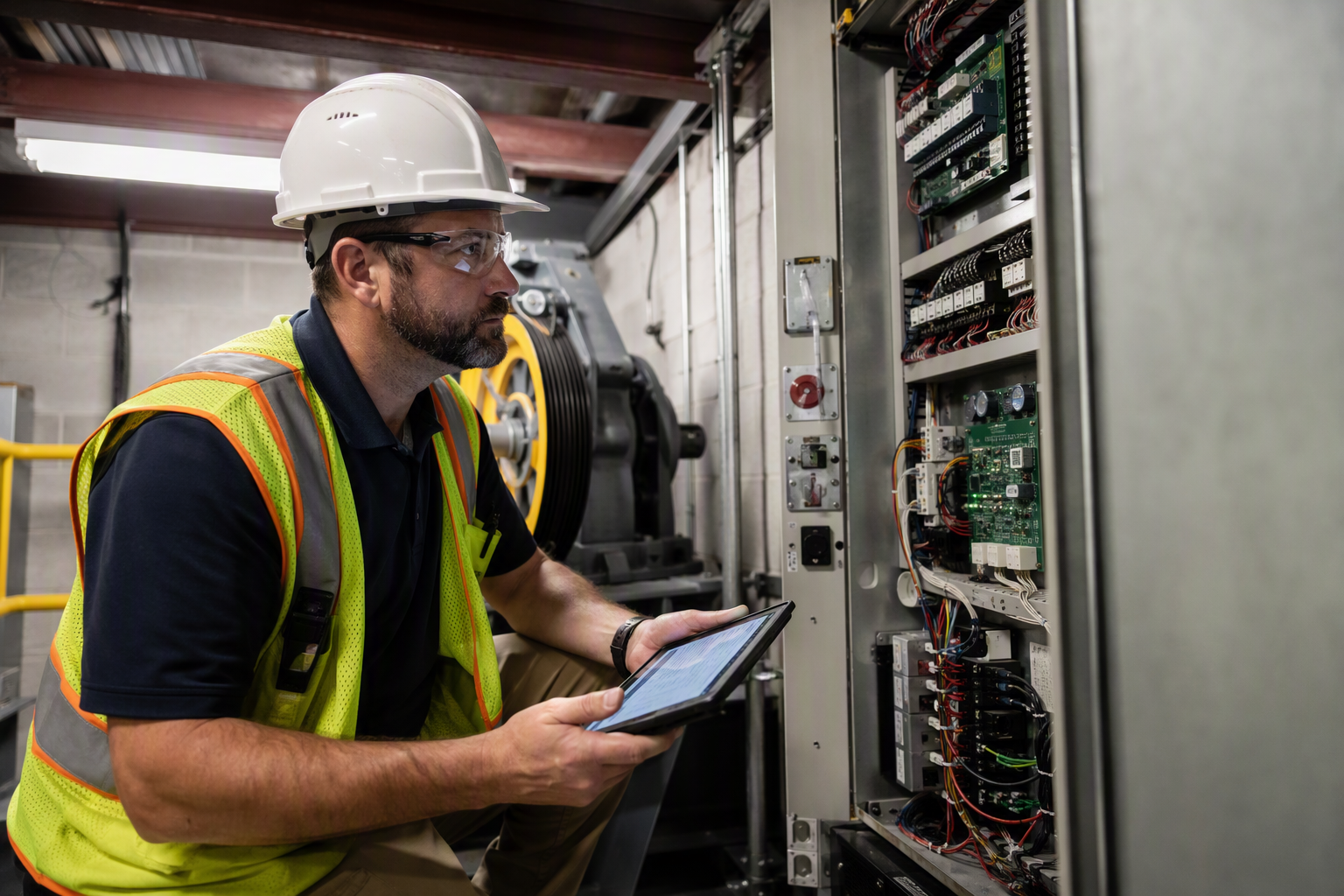
A QEI-certified inspector conducting a periodic inspection under ASME A17.1 will generally evaluate the following areas, though the precise checklist varies by equipment type and category:
- Machine room: Condition of drive machinery, controllers, wiring, temperature control, and clearances.
- Hoistway: Guide rails, buffers, counterweights, ropes or hydraulic cylinders, pit conditions, lighting, and clearances.
- Car: Safety devices, door operators, lighting, ventilation, emergency signaling equipment, and certificate display.
- Door systems: Door reopening devices, timing, force limitations, and interlocks.
- Safety systems: Governor function, car and counterweight safeties, overspeed devices, and emergency power operation.
- Operational tests: Leveling accuracy, stopping distances, and response to safety device activation.
How Much Does an Elevator Inspection Cost in SC?
Inspection costs in South Carolina vary based on several qualitative factors rather than a fixed statewide fee:
- Equipment type and complexity: A traction elevator with a machine room and multiple floors involves more inspection time than a single-stop hydraulic lift.
- Inspection category: A Category 5 witnessed test requiring load apparatus and multiple personnel to witness is more resource-intensive than an annual Category 1 no-load inspection.
- Third-party vs. state inspector: SC LLR fees are set by the state and are distinct from fees charged by third-party inspection firms authorized by the state.
- Travel and scheduling: Rural locations in South Carolina may involve additional travel considerations for inspectors.
- Reinspection fees: A failed inspection requiring a follow-up visit typically generates a separate fee for the reinspection appointment.
Building owners should budget separately for inspection fees and for any repair or corrective work that inspections may reveal. These are distinct cost categories and can vary significantly based on equipment age and maintenance history.
What Maintenance Records Must SC Elevator Owners Keep?
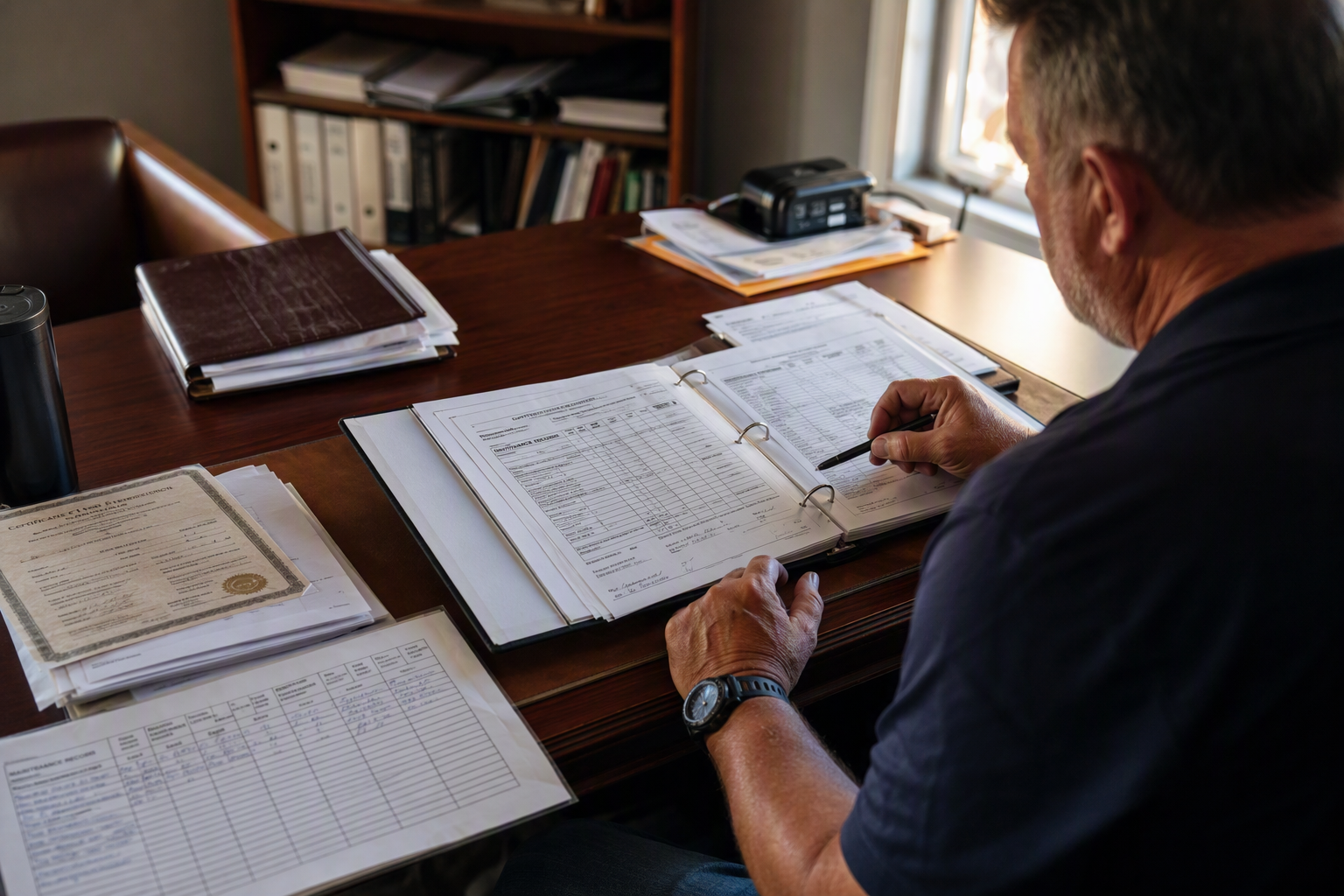
Under ASME A17.1, the owner is responsible for maintaining a complete maintenance control program (MCP) and associated records for each conveyance. These records must be available for review by inspectors and must document:
- All periodic maintenance tasks performed and their dates
- Inspection and test results
- Callbacks, entrapments, and incidents
- Alteration and repair work orders
- License or certification information for contractors performing work
The maintenance control program is not merely a best practice — it is a code-required document. Failure to produce MCP records during an inspection is itself a code violation that can affect the certificate of operation status.
What Trends Are Shaping Elevator Inspection Compliance in 2025–2026?
Several qualitative trends are influencing how building owners and elevator contractors approach compliance in South Carolina and across the Southeast:
- Stricter enforcement posture: State labor agencies across the country have increased audit activity following high-profile incidents. South Carolina building owners should anticipate more rigorous documentation reviews, not just physical equipment inspections.
- Aging elevator inventory: Much of the commercial elevator stock in South Carolina was installed in the 1970s through 1990s. As this equipment ages, the gap between operational functionality and current code compliance widens — driving more frequent Category 5 test failures and modernization decisions.
- Code adoption cycles: ASME A17.1 continues to evolve with new editions. States that update their adopted edition trigger new compliance obligations for existing installations, particularly around door force limits, emergency communications, and machine room-less (MRL) equipment regulations.
- Remote monitoring adoption: Building owners are increasingly using IoT-connected monitoring systems to capture real-time performance data between inspections. While these systems do not substitute for QEI-certified inspections, they support proactive maintenance and can reduce callback rates.
- Workforce considerations: The licensed elevator mechanic workforce faces supply constraints nationally. Building owners in South Carolina should plan inspection and repair timelines with the understanding that scheduling windows may be longer than historical norms.
How Does Carolina Elevator Service Support SC Elevator Compliance?
Carolina Elevator Service operates as a data-driven service provider supporting building owners across South Carolina in navigating the full spectrum of elevator inspection and compliance obligations. Rather than relying on anecdotal guidance, Carolina Elevator Service grounds its work in the applicable code requirements — ASME A17.1, SC LLR program requirements, and ADA standards — to help clients understand their compliance posture with precision.
The team assists property managers and building owners in understanding what inspections are required for their specific equipment category, coordinating with licensed inspectors, maintaining compliant maintenance records, and addressing corrective work findings efficiently. For building portfolios with multiple units, Carolina Elevator Service can help owners develop systematic compliance calendars that reduce the risk of lapsed certificates across properties.
Whether a building owner is preparing for a first-time inspection on newly installed equipment, addressing findings from a recent failed inspection, or planning a modernization project to bring aging equipment into current code conformance, Carolina Elevator Service provides technically grounded support at each stage of the compliance lifecycle.
Frequently Asked Questions: Elevator Inspection Requirements in SC
Is an elevator inspection required before a new elevator can be placed in service in SC?
Yes. Before a new elevator installation may be placed in public service in South Carolina, it must pass an acceptance inspection conducted by a QEI-certified inspector authorized by SC LLR. The acceptance inspection verifies that the installation conforms to the applicable edition of ASME A17.1 and any state-specific requirements. A certificate of operation is issued only after a satisfactory acceptance inspection is completed.
Who is responsible for scheduling elevator inspections — the building owner or the elevator contractor?
Under South Carolina law, the responsibility for maintaining a valid certificate of operation rests with the building owner. While elevator contractors often assist in coordinating inspections, the legal obligation and the consequences of non-compliance fall on the property owner. Delegating scheduling to a contractor does not relieve the owner of this obligation.
Can a building owner use any licensed inspector, or must they use SC LLR directly?
South Carolina authorizes both state-employed inspectors and approved third-party inspection agencies to conduct periodic inspections and witnessed tests. Building owners may contract with an SC LLR-approved third-party inspector, which can offer scheduling flexibility compared to relying solely on state inspector availability. The inspector must hold QEI certification and be authorized by SC LLR regardless of whether they are employed by the state or a private firm.
What is a certificate of operation and where must it be posted?
A certificate of operation is the official document issued by SC LLR confirming that a conveyance passed its most recent periodic inspection and is authorized for public use. South Carolina law requires this certificate to be posted in or immediately adjacent to the elevator cab so that it is visible to occupants. Operating without a current, posted certificate of operation is a violation subject to civil penalties.
Are platform lifts and wheelchair lifts subject to the same inspection requirements as passenger elevators?
Platform lifts and wheelchair lifts installed in commercial or multi-family buildings generally fall within the SC LLR Elevator Safety Program’s scope. They are subject to periodic inspection requirements, though the applicable sections of ASME A17.1 and the inspection category may differ from those applied to full passenger elevators. Owners of these units should not assume they are exempt and should confirm their status with SC LLR.
What is the difference between a maintenance inspection and a state-required inspection?
A maintenance inspection is typically conducted by the elevator service contractor as part of ongoing preventive maintenance under the ASME A17.1 maintenance control program. It does not satisfy the state’s periodic inspection requirement. A state-required inspection must be performed or witnessed by a QEI-certified inspector authorized by SC LLR and results in a formal inspection report and — if passed — a certificate of operation. Both types of activity are necessary and complementary.
How far in advance should a building owner schedule an elevator inspection in SC?
Building owners should schedule inspections well before their current certificate of operation expires. Given current workforce dynamics in the elevator industry and inspector scheduling demand, initiating scheduling several weeks to months in advance is prudent, particularly for Category 5 tests that require specialized testing equipment and coordination among multiple parties. Operating with a lapsed certificate while waiting for an inspection appointment does not constitute a legal defense against citation.
Does a building owner need a permit for elevator repairs in SC?
Routine maintenance and like-for-like parts replacement generally do not require a separate alteration permit in South Carolina. However, alterations — defined under ASME A17.1 as work that modifies the design, function, or performance of the conveyance — typically require a permit from SC LLR and a subsequent acceptance inspection before the unit may return to service. The line between maintenance and alteration is a regulated distinction; building owners should confirm with their elevator contractor and SC LLR before proceeding with significant repairs.
What are the most common reasons elevators fail inspection in SC?
While specific failure-rate data by category is not publicly available in a form that can be cited here, qualitative patterns in the elevator industry point to recurring deficiency categories: deteriorated or non-compliant pit conditions (lighting, ladder, drainage, stop switch); door reopening device failures; missing or illegible emergency signage; non-functioning emergency lighting or communication systems; and maintenance control program documentation gaps. Addressing these areas proactively during routine maintenance reduces the likelihood of inspection-day citations.
Can an elevator be temporarily taken out of service to avoid an inspection?
Placing an elevator out of service does not eliminate the inspection obligation — it suspends the operational requirement but does not extinguish the need for compliance. SC LLR may require that an out-of-service unit be inspected and certified before it can be returned to service. Additionally, taking an elevator out of service in a building required to provide accessible vertical access under the ADA may trigger separate accessibility-related obligations. Building owners should consult with both SC LLR and legal counsel before pursuing this approach.
Summary: Key Elevator Inspection Requirements in South Carolina
- SC LLR administers the state elevator safety program under the South Carolina Elevator Safety Act.
- Inspections must be conducted by QEI-certified inspectors authorized by SC LLR.
- The technical standard is ASME A17.1, the Safety Code for Elevators and Escalators.
- Annual periodic inspections are required for most passenger elevators; five-year Category 5 tests apply to traction equipment.
- The certificate of operation must be current and posted in or near the cab.
- ADA accessibility compliance operates alongside — and independently of — state safety inspection compliance.
- OSHA standards govern worker safety during maintenance and repair activities.
- Legal responsibility for maintaining a valid certificate of operation rests with the building owner.
- Maintenance control program records are a code-required element of compliance, not optional documentation.
Need elevator service you can rely on? Carolina Elevator Service is ready to help.