Full Maintenance vs. Oil and Grease Contract: Which Elevator Service Agreement Is Right for You?
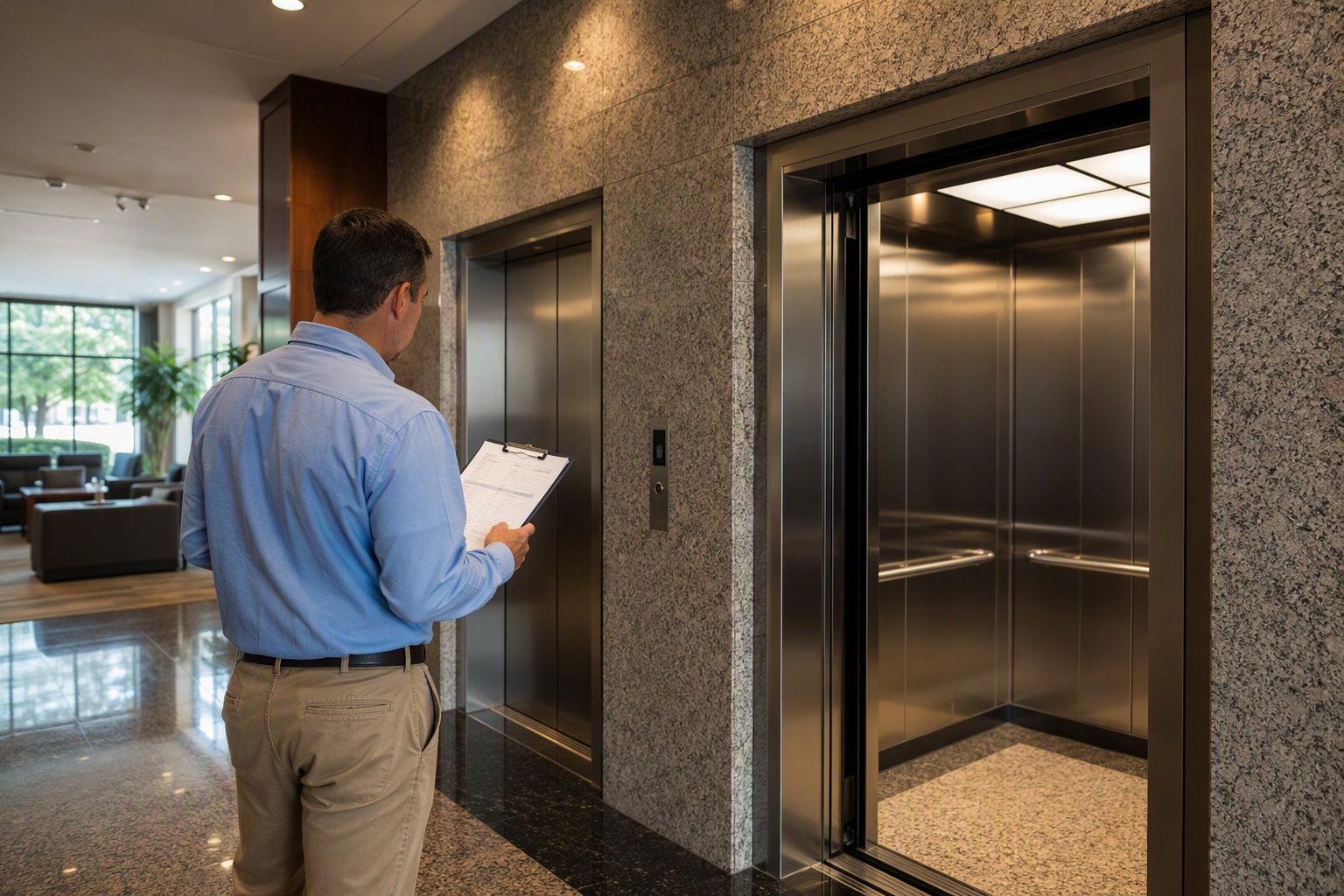
Choosing between a full maintenance contract and an oil and grease contract is one of the most consequential decisions a building owner or facility manager will make for elevator reliability, safety compliance, and long-term budget control. The right answer depends on equipment age, traffic volume, regulatory obligations, and risk tolerance. This guide breaks down both service tiers so decision-makers can choose with confidence.
What Is a Full Maintenance Elevator Contract?
A full maintenance contract—sometimes called a comprehensive service agreement—bundles routine lubrication, scheduled inspections, preventive maintenance visits, parts replacement, and labor for covered repairs into a single recurring fee. When a component fails, the contractor absorbs the cost rather than billing the building owner separately.
Under a full maintenance agreement, the service provider is financially incentivized to keep the elevator running efficiently, because every avoidable breakdown represents a cost the contractor must cover. This alignment of interests often translates into more proactive maintenance practices.
What Is Typically Included in a Full Maintenance Contract?
- Scheduled lubrication and adjustment visits
- All labor for covered repairs
- Most mechanical and electrical parts (exclusions vary by contract)
- Mandatory annual or periodic safety inspections required by state and local authorities
- Callback service for entrapments and breakdowns
- Code violation corrections for items within the scope of normal wear
- Detailed maintenance logs for regulatory compliance
What Is an Oil and Grease Elevator Contract?

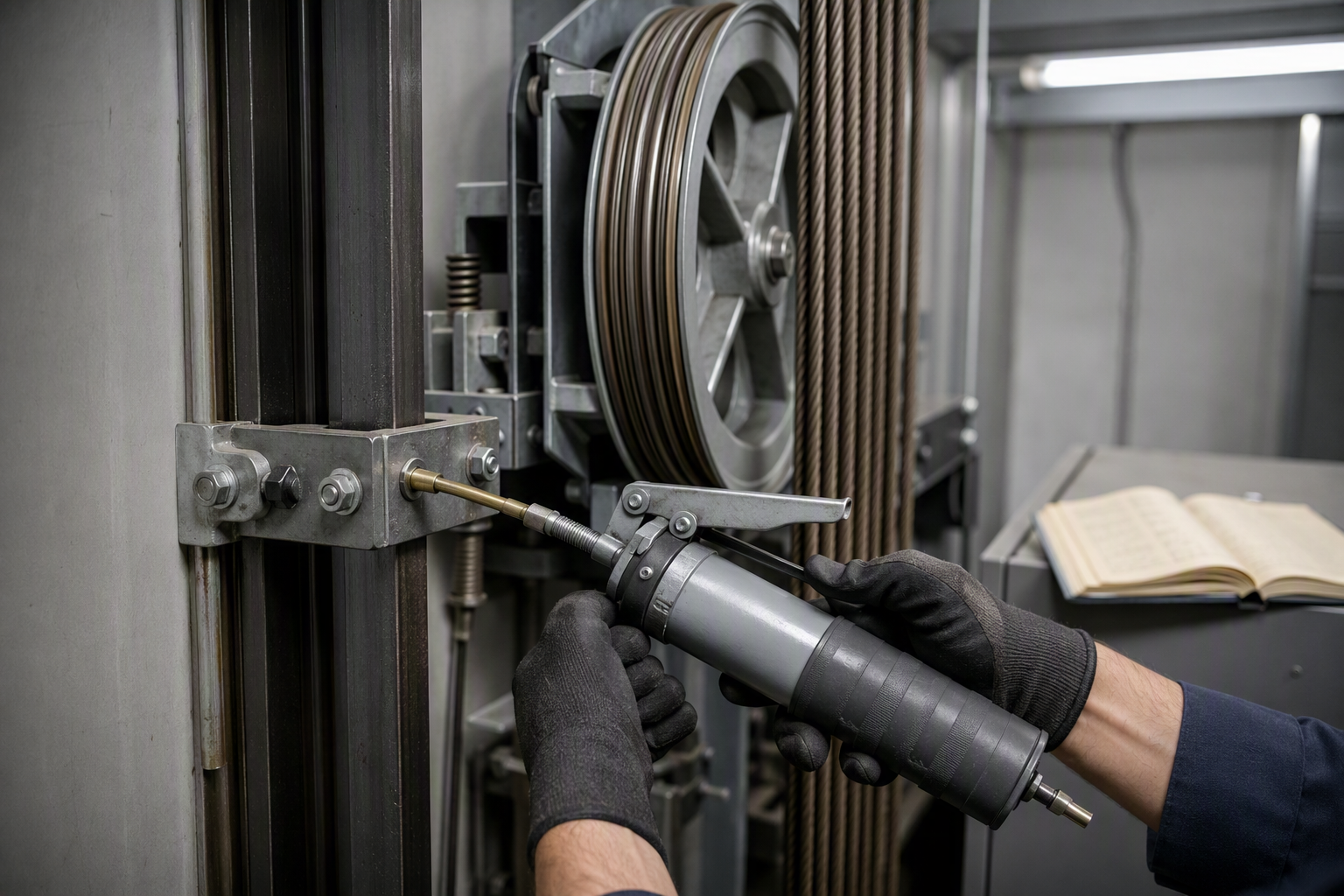
An oil and grease contract—also referred to as a lubrication-only or basic maintenance contract—covers scheduled visits for lubrication, minor adjustments, and routine inspection. It does not cover parts or repair labor. When a component fails or a code-required upgrade is needed, those costs are invoiced separately at time-and-materials rates.
What Is Typically Included in an Oil and Grease Contract?
- Periodic lubrication of moving parts (guide rails, cables, sheaves, bearings)
- Minor adjustments within the scope of a routine visit
- Visual safety inspections during scheduled visits
- Maintenance log updates
Parts, repair labor, entrapment callback fees, and code-required modernization work are typically billed separately under this contract type.
Full Maintenance vs. Oil and Grease: Side-by-Side Comparison
| Factor | Full Maintenance Contract | Oil & Grease Contract |
|---|---|---|
| Monthly Cost | Higher fixed fee | Lower fixed fee |
| Repair Labor | Included (covered breakdowns) | Billed separately |
| Parts Coverage | Most parts included (per contract terms) | Not included; owner pays retail or markup |
| Budget Predictability | High — fixed monthly expense | Low — unpredictable repair invoices |
| Best For | High-traffic buildings, aging equipment, risk-averse owners | New elevators under manufacturer warranty, low-traffic buildings |
| Contractor Incentive | Proactive prevention (saves contractor money) | Reactive repair (each repair generates revenue) |
| Compliance Support | Often includes code correction labor | Code corrections billed separately |
| Downtime Risk | Lower — faster response incentivized | Higher — owner bears full repair cost risk |
| Exclusions | Vandalism, misuse, major modernization | Nearly all repairs and parts |
| Inspection Documentation | Comprehensive records provided | Basic visit logs only |
Pros and Cons: Full Maintenance Contract
| Pros | Cons |
|---|---|
| Predictable monthly budgeting | Higher baseline monthly cost |
| Contractor is motivated to prevent failures | Some parts or systems may still be excluded |
| Reduces exposure to costly emergency repairs | Long-term contracts can lock in terms that become unfavorable |
| Supports compliance with ASME A17.1 Safety Code for Elevators and Escalators | Value depends heavily on contract language—exclusions vary widely |
| Simplifies vendor management | May include escalation clauses that raise fees annually |
| Faster callback response typically incentivized | Requires careful audit to verify work is actually performed |
Pros and Cons: Oil and Grease Contract
| Pros | Cons |
|---|---|
| Lower recurring monthly expense | Unpredictable repair costs can spike total annual spend |
| Practical for new elevators under manufacturer warranty | Contractor has financial incentive to bill repairs rather than prevent them |
| Flexibility to use different vendors for repairs | Emergency repair rates (time-and-materials) are typically the highest billing tier |
| Appropriate for very low-traffic installations | Code violation corrections are additional expenses |
| Simpler contract to evaluate and exit | Owner assumes full financial risk for equipment failures |
How Do Elevator Safety Codes Affect My Choice of Contract?
Elevator safety is governed at the national level by the ASME A17.1 Safety Code for Elevators and Escalators, which most U.S. jurisdictions adopt (with local amendments) as their regulatory baseline. The 2019 edition, and in some jurisdictions the 2022 edition, requires periodic inspections, load testing, and maintenance records to be kept on file.
Regardless of contract type, building owners remain legally responsible for ensuring their elevators comply with applicable codes. A full maintenance contract typically provides more structured documentation support, which is valuable during state or local authority-having-jurisdiction (AHJ) inspections. Under an oil and grease contract, owners should independently verify that required inspection intervals are being met and that maintenance logs are properly maintained.
For elevators in facilities subject to the Americans with Disabilities Act (ADA), maintaining reliable elevator operation is not merely a convenience — it is a legal accessibility obligation. Extended downtime caused by deferred repairs under an oil and grease contract can create ADA compliance exposure.
Which Contract Type Is Better for Older Elevators?
Older elevator systems — particularly those with hydraulic components, relay logic controls, or aging drive systems — present a substantially higher risk of component failure than newer installations. For aging equipment, a full maintenance contract generally delivers better financial protection. As mechanical systems age, the frequency and cost of repairs tends to increase, and those costs can quickly outpace the premium between a full maintenance and an oil and grease contract.
Building owners with older units should also be aware that the ASME A17.1 Safety Code for Elevators and Escalators includes requirements that may trigger mandatory upgrades during major repairs or modernizations — costs that are separate from routine maintenance under either contract type.
Which Contract Type Is Better for New Elevators?
New elevators typically come with manufacturer warranties that cover parts and, in some cases, labor for a defined period following installation. During this warranty window, an oil and grease contract may be a cost-effective choice, since the manufacturer’s warranty backstops the financial risk of component failure. Once the warranty expires, building owners should reassess whether their equipment age and usage pattern justifies upgrading to a full maintenance agreement.
What Should I Look for in an Elevator Service Contract Before Signing?
Regardless of contract tier, reviewing the following contract elements protects building owners from unexpected costs and service gaps:
- Review the exclusions list in detail. Even full maintenance contracts exclude certain high-cost items such as cab interiors, door panels, major modernization components, or damage caused by vandalism. Identify every exclusion before signing.
- Confirm the inspection schedule. Verify that the number and type of scheduled visits meets or exceeds what is required by your local AHJ and the applicable edition of the ASME A17.1 Safety Code.
- Check the callback and response terms. Understand what conditions trigger a callback, what hours are covered, and whether after-hours service carries additional charges.
- Examine escalation clauses. Many multi-year contracts include automatic annual fee increases. Negotiate caps or fixed terms where possible.
- Require maintenance logs. Confirm the contractor will provide written documentation of every visit, including what was done and what, if anything, was found to be in need of repair.
- Verify the contractor’s licensing. In most states, elevator mechanics and contractors must hold state-issued licenses. Confirm the servicing company and its technicians are licensed to work in your jurisdiction.
- Clarify parts sourcing. Under a full maintenance contract, ask whether OEM or equivalent aftermarket parts are used and whether substitutions require your approval.
- Understand termination terms. Know the notice period required to exit the contract and whether early termination carries financial penalties.
How Do I Calculate the True Cost of an Oil and Grease Contract vs. Full Maintenance?
To compare the real cost of both options, building owners should look beyond the monthly contract fee and account for the total cost of elevator ownership over a one- to three-year horizon. The comparison should include:
- The annual difference in contract fees between the two tiers
- The average annual spend on parts and repair labor under an oil and grease contract (based on the equipment’s repair history if available)
- The cost of elevator downtime — lost productivity, tenant complaints, or ADA exposure
- The administrative burden of managing separate repair invoices and vendor relationships
For buildings where repair history is unavailable (new ownership or no prior records), an independent elevator assessment can help estimate the likely maintenance burden before selecting a contract type.
Does the Type of Building or Occupancy Affect Which Contract Is Better?
Yes. The nature of the building and its occupants plays a significant role in contract selection:
- Hospitals and healthcare facilities: Elevator downtime can directly affect patient safety and care delivery. Full maintenance contracts are strongly recommended.
- Multi-tenant commercial office buildings: Tenant leases may include elevator availability expectations. Full maintenance provides more predictable uptime and landlord protection.
- Residential apartment buildings: High daily usage cycles wear components faster. Full maintenance becomes more cost-effective as building size and occupancy rise.
- Low-traffic private or institutional buildings: Oil and grease contracts may suffice if the elevator is used infrequently and equipment is relatively new.
- Industrial or freight elevator applications: Heavy loads and demanding duty cycles increase wear rates, generally favoring full maintenance coverage.
What Are the ADA and OSHA Implications of Elevator Downtime?
Under the Americans with Disabilities Act, building owners operating public accommodations or commercial facilities must ensure accessible routes remain available. An elevator that serves as the accessible route for people with disabilities must be kept operational. Extended outages — which are more likely when repair costs are billed separately and owners delay authorization — can expose building owners to ADA complaints or enforcement actions.
From a workplace safety perspective, OSHA standards require that equipment used to transport workers is maintained in safe operating condition. Facility managers should ensure their elevator service contract, regardless of type, includes provisions for prompt safety-related repairs.
How Should I Evaluate an Elevator Service Provider Before Choosing a Contract?
The value of either contract type depends largely on the quality of the service provider. When evaluating candidates, consider:
- State elevator contractor licensing status and technician certifications
- Familiarity with your specific elevator make, model, and control system
- Transparency of contract language — clear inclusions and exclusions without ambiguous terms
- Willingness to provide maintenance logs and inspection reports on request
- References from comparable buildings in your market
- Independence from elevator manufacturers, which avoids proprietary service lock-in
Carolina Elevator Service is an independent elevator service company serving building owners and facility managers seeking transparent, code-compliant maintenance agreements. As an independent provider, Carolina Elevator Service is not tied to any single manufacturer, allowing technicians to service a wide range of equipment makes and models and recommend solutions based on what is right for the equipment — not a manufacturer’s service revenue targets.
What Is the Step-by-Step Process for Switching Elevator Service Contracts?
- Review your current contract’s termination clause. Identify the required notice period, any penalty provisions, and the effective end date of your current agreement.
- Gather your elevator’s service history. Collect maintenance logs, inspection reports, and repair invoices from the past two to three years to establish a baseline for equipment condition and cost history.
- Request a third-party elevator assessment. An independent inspection by a qualified elevator technician — not affiliated with your current contractor — provides an unbiased view of equipment condition and helps determine whether full maintenance or oil and grease coverage is appropriate.
- Solicit bids from multiple qualified contractors. Obtain written proposals for both contract types from at least two independent providers to allow meaningful comparison.
- Compare total cost of ownership, not just monthly fees. Use the assessment findings to estimate likely repair frequency and apply that to the cost differential between contract tiers.
- Negotiate contract terms before signing. Request modifications to exclusions, escalation clauses, callback terms, and documentation requirements as needed.
- Provide written notice to your current contractor. Follow the termination procedure exactly as specified in your current agreement to avoid liability for early termination fees.
- Schedule a transition inspection with the new contractor. The incoming provider should document equipment condition at contract commencement to establish a shared baseline and avoid disputes over pre-existing conditions.
Why Choose Carolina Elevator Service?
Carolina Elevator Service offers both full maintenance and oil and grease service agreements tailored to building type, equipment age, and ownership goals. As a certified, independent elevator service company, Carolina Elevator Service provides transparent contract language, comprehensive maintenance documentation, and service that meets the requirements of the ASME A17.1 Safety Code for Elevators and Escalators and applicable state and local codes.
Building owners who are unsure which contract type fits their situation can request a complimentary elevator assessment — an independent evaluation of equipment condition that provides the factual foundation for a confident service contract decision.
Get Expert Guidance on the Right Elevator Service Agreement
Don’t sign a service contract without knowing what your equipment actually needs. Contact Carolina Elevator Service for a free elevator assessment and receive a clear, honest recommendation on whether a full maintenance or oil and grease contract is the right fit for your building.
Contact Carolina Elevator Service for a free elevator assessment: 803-865-1400
Need elevator service you can rely on? Carolina Elevator Service is ready to help.