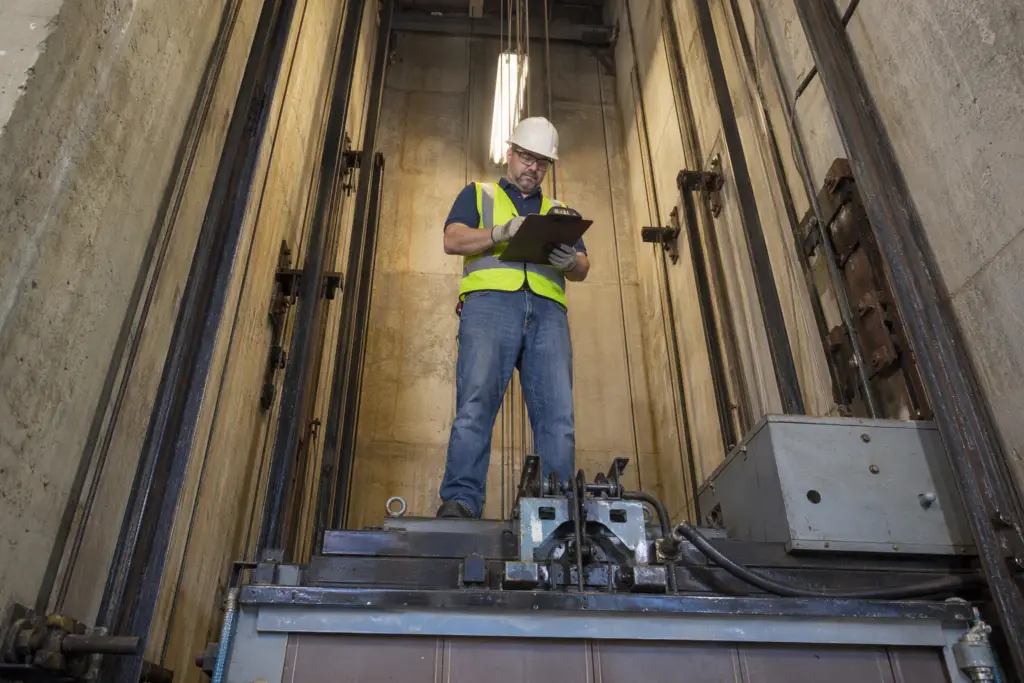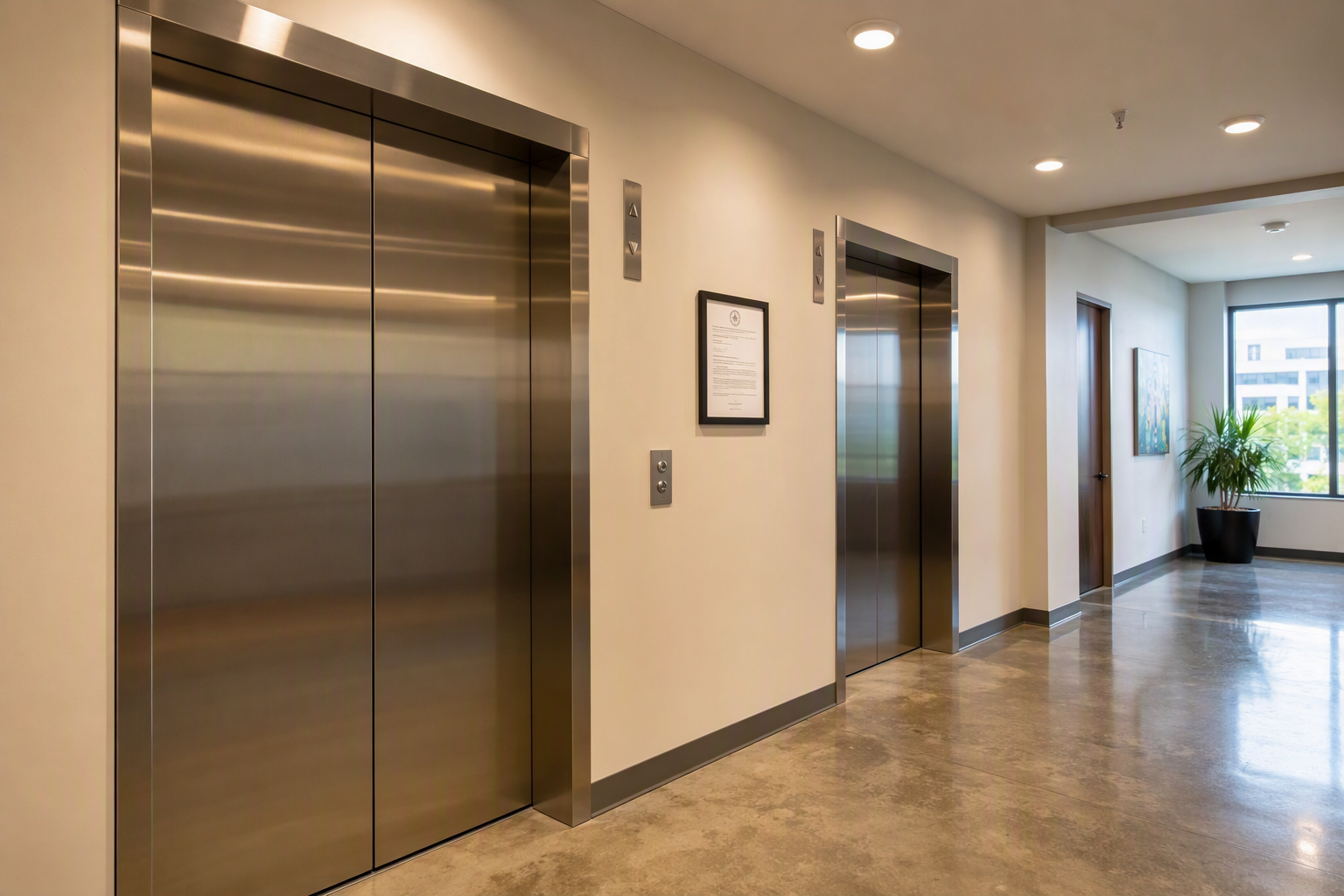
ASME A17.1 Elevator Code Explained: A Complete FAQ for Building Owners in Columbia, SC
ASME A17.1, formally titled the ASME A17.1 Safety Code for Elevators and Escalators, is the foundational regulatory document that defines how elevators must be built, installed, inspected, tested, and maintained throughout North America. Adopted in whole or in part by nearly every U.S. state, including South Carolina, this code establishes the legal floor for elevator safety. Building owners who understand its requirements avoid costly violations, liability exposure, and unexpected shutdowns.
What exactly is ASME A17.1 and why does it matter?
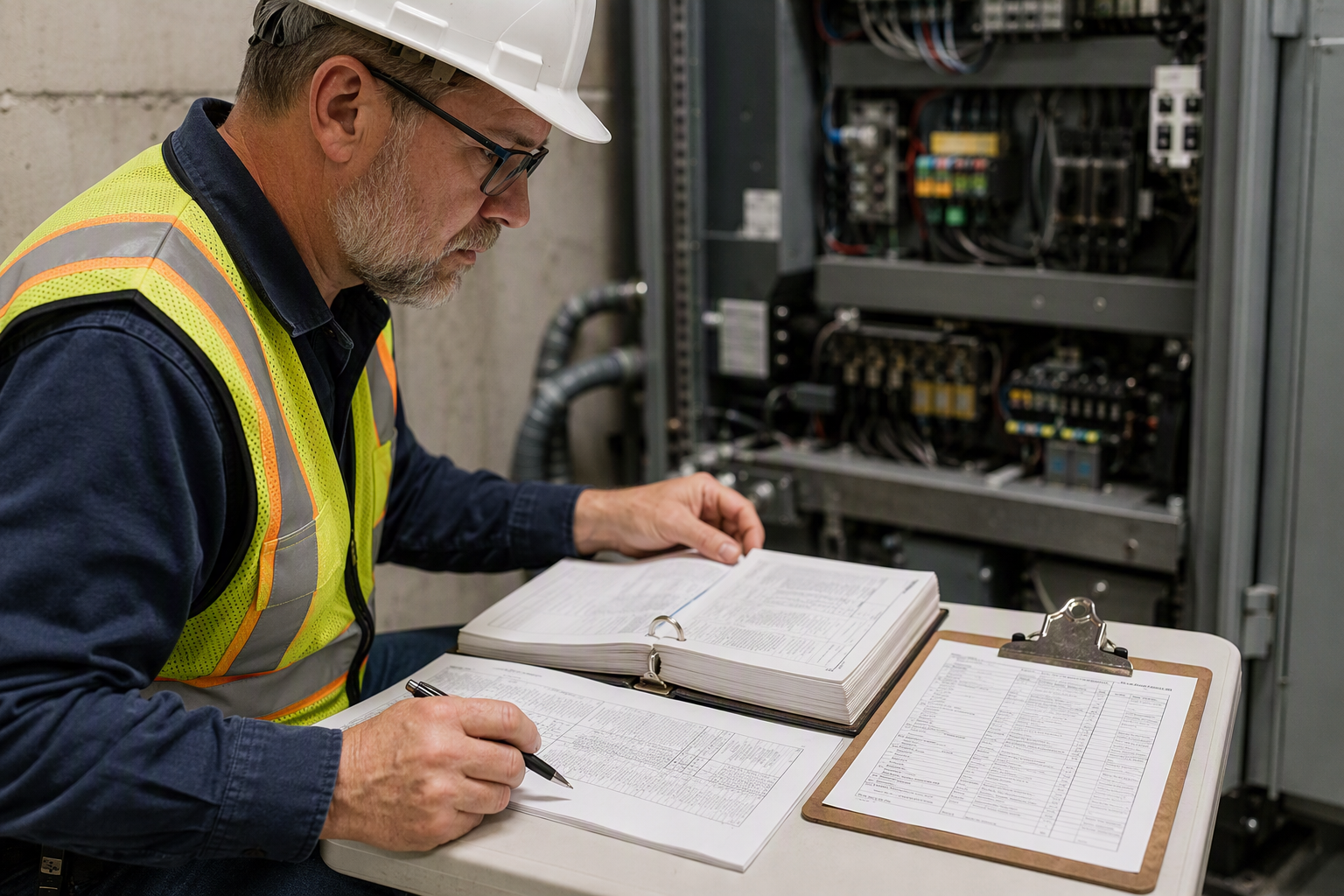
ASME A17.1 is the primary safety standard for elevators and escalators in the United States, published by the American Society of Mechanical Engineers and updated on a regular cycle to reflect advances in technology and safety research.
Originally issued in 1921, the code has evolved through dozens of editions. The current edition in active use for most jurisdictions is the 2019 edition, with the 2022 edition now available and being adopted on a rolling basis as of 2026. The code addresses every major elevator type — traction, hydraulic, limited-use/limited-application (LULA), private residence, and more — along with escalators and moving walks.
Its importance to building owners lies in legal enforceability. When South Carolina’s Department of Labor, Licensing and Regulation (LLR) or a local authority having jurisdiction (AHJ) inspects an elevator, compliance with ASME A17.1 is the benchmark. Non-compliance can result in failed inspections, shutdown orders, fines, and increased liability if an injury occurs.
How does ASME A17.1 differ from other elevator codes and standards?
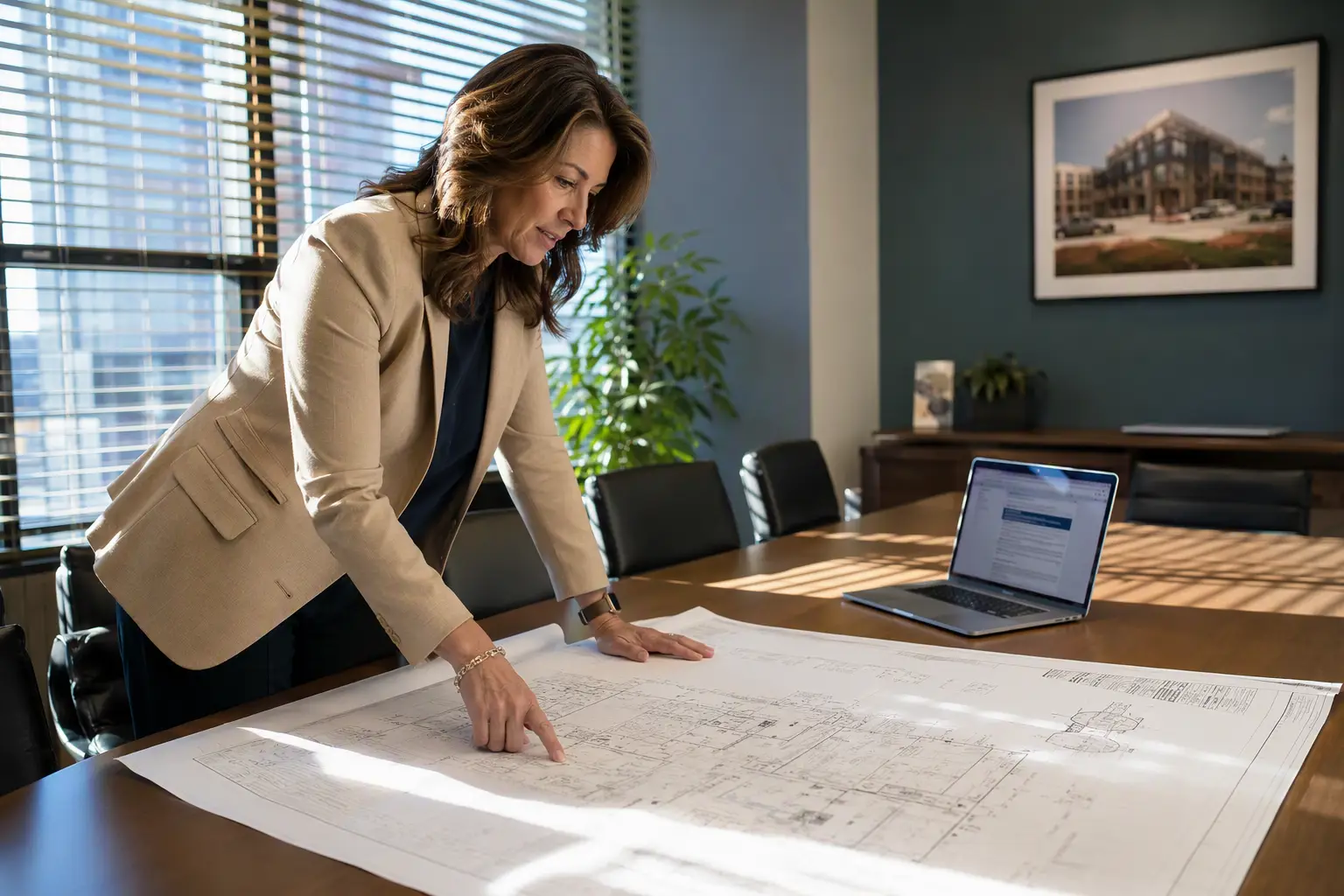
ASME A17.1 is the design and safety code, while ASME A17.3 covers existing installations, ASME A18.1 addresses platform lifts, and ASME A17.2 provides inspection and test procedures — together they form a family of standards that govern the complete elevator lifecycle.
Understanding which standard applies prevents confusion during inspections and modernization projects:
| Standard | Scope | Applies To | Typical Use Case |
|---|---|---|---|
| ASME A17.1 | New installations and major alterations | Elevators, escalators, moving walks | New construction, significant upgrades |
| ASME A17.3 | Existing installations | Elevators already in service | Retrofit compliance, retroactive requirements |
| ASME A17.2 | Inspection and testing procedures | Inspectors and technicians | Annual inspections, acceptance testing |
| ASME A18.1 | Platform lifts and stairway chairlifts | Accessibility lifts | ADA accessibility compliance |
| ADA Standards | Accessibility design requirements | Public accommodations and commercial facilities | Cab dimensions, controls, signage |
How does South Carolina adopt and enforce ASME A17.1?
South Carolina enforces elevator safety through the SC Department of Labor, Licensing and Regulation (LLR), which adopts ASME A17.1 and A17.3 as the legal standard for all conveyances operating within the state.
Building owners in Columbia and throughout South Carolina are required to obtain an annual operating certificate for each conveyance. The LLR oversees licensing of elevator mechanics, contractors, and inspection personnel. Any elevator operating without a valid certificate of inspection is subject to shutdown by the AHJ. Local municipalities may impose additional requirements on top of state minimums.
Carolina Elevator Service works directly within this regulatory framework, ensuring that every piece of equipment serviced in the Columbia area meets or exceeds current South Carolina LLR and ASME A17.1 requirements before certificates are sought.
What types of elevators and equipment does ASME A17.1 cover?
ASME A17.1 covers a wide range of vertical transportation equipment, including electric traction elevators, hydraulic elevators, escalators, moving walks, dumbwaiters, and material lifts, though private residence elevators and certain specialized equipment fall under specific sub-sections or companion standards.
The code organizes equipment into categories called “Rules,” with each rule set addressing the unique engineering and safety requirements of a given conveyance type. For example, electric traction elevators must meet specific requirements for hoistway enclosures, guide rails, safeties, buffers, and machine rooms that differ substantially from those applied to hydraulic systems.
Building owners should identify the equipment category for every conveyance on their property, as mixing requirements between categories is a common source of compliance errors during inspection.
What are the key safety devices ASME A17.1 requires on every elevator?
ASME A17.1 mandates a layered system of safety devices designed to prevent uncontrolled movement, entrapment, and mechanical failure, including car safeties, overspeed governors, buffers, door interlocks, and emergency lighting and communication systems.
Core required safety systems under the code include:
- Car safeties and governors: Mechanical devices that clamp the guide rails and stop the car if descending speed exceeds a defined threshold.
- Door interlocks: Prevent the elevator from moving unless hoistway doors are fully closed and locked; one of the most safety-critical systems in any elevator.
- Buffers: Energy-absorbing devices at the bottom of the hoistway that cushion impact in the event of overtravel.
- Emergency lighting: Battery-backed lighting that activates automatically on power loss.
- Two-way communication: An in-cab phone or intercom enabling trapped passengers to reach a monitoring center or emergency services at any time.
- Firefighters’ Emergency Operation (FEO): Phase I and Phase II recall systems enabling fire department control of the elevator during emergencies.
- Pit stop switches and hoistway access switches: Devices that de-energize the elevator when maintenance personnel enter restricted zones.
How often must elevators be inspected under ASME A17.1 and South Carolina law?
ASME A17.1 and South Carolina regulations require periodic inspections, with most jurisdictions mandating at minimum an annual inspection and certificate of operation for each conveyance.
Beyond the annual periodic inspection, the code also requires periodic tests at defined intervals. For example, governors and safeties on traction elevators require a full load safety test, and hydraulic systems require pressure relief and other tests on a schedule specified in the code. Acceptance inspections must also be completed before any new installation or major alteration is placed into service.
Building managers should maintain an inspection calendar and not allow certificates to lapse. An elevator operating on an expired certificate is out of compliance regardless of its mechanical condition.
What is the difference between a periodic inspection and an acceptance inspection under ASME A17.1?
An acceptance inspection occurs once — when a new installation or major alteration is completed and ready for first use — while a periodic inspection is an ongoing recurring event required to maintain the operating certificate.
Acceptance inspections are more comprehensive and require a licensed inspector to witness specific tests performed by the installing contractor or mechanic. These tests confirm that the equipment was built and installed in full conformance with the applicable edition of ASME A17.1. Only after the acceptance inspection is passed can the elevator receive its initial certificate of operation.
Periodic inspections focus on verifying that the equipment continues to operate safely and that no components have deteriorated, been altered, or fallen out of compliance since the last inspection cycle.
What triggers an alteration and brings an existing elevator under the new code edition?
Under ASME A17.1 and its companion standard ASME A17.3, an alteration is any change to equipment, parts, or operation that was not part of the original installation, and significant alterations can trigger retroactive compliance with current code requirements.
Common alterations that trigger code review include:
- Replacing the controller or drive system
- Installing a new cab interior that changes the rated load
- Modifying the hoistway or machine room
- Changing the travel speed
- Upgrading door operators or interlocks
Building owners planning modernization projects should engage a qualified elevator contractor — such as Carolina Elevator Service — before work begins to determine precisely which code edition applies and what retroactive requirements may be triggered, avoiding costly surprises mid-project.
What are the ADA requirements that intersect with ASME A17.1?
The Americans with Disabilities Act establishes accessibility requirements for elevator dimensions, controls, signage, and door timing that operate alongside ASME A17.1 safety requirements, and both must be satisfied simultaneously for public and commercial buildings.
Key ADA elevator provisions include minimum cab dimensions, raised and Braille floor designations on control panels, door reopening devices triggered by obstruction, audible and visual floor announcements, and accessible call button placement. While ASME A17.1 focuses on mechanical safety, the ADA Standards for Accessible Design focus on usability for people with disabilities.
Failure to meet ADA requirements exposes building owners to federal civil rights complaints and potential litigation, separate from state elevator code enforcement. A compliant elevator must satisfy both frameworks concurrently.
What are ASME A17.1 requirements for elevator machine rooms and hoistways?
ASME A17.1 specifies that machine rooms must be dedicated, secure, properly ventilated, adequately lit, and accessible only to authorized personnel, while hoistways must be fully enclosed with materials capable of withstanding defined structural loads.
Machine room requirements under the code include:
- Minimum headroom clearances for safe maintenance access
- Lighting levels sufficient for safe work (measured in footcandles as specified in the code)
- Temperature control to protect electronic equipment and lubricants
- Dedicated electrical disconnects within sight of each machine
- Secure access restricted to qualified elevator personnel
Hoistway requirements include fire-rated enclosures, pit depths and clearances, and overhead clearances that protect workers and equipment during travel. Machine-room-less (MRL) elevator systems have their own specific requirements under the code since they relocate drive equipment to the hoistway or a remote panel room.
What does ASME A17.1 require for elevator maintenance programs?
ASME A17.1 Section 8.6 requires that a written maintenance control program (MCP) be established and maintained for every elevator, documenting scheduled maintenance tasks, intervals, and the qualifications of personnel performing the work.
The MCP requirement, significantly strengthened in recent code editions, means that informal or reactive maintenance is no longer sufficient for code compliance. The program must include:
- A list of all maintenance tasks required for the specific equipment type
- The frequency at which each task must be performed
- Records demonstrating that tasks were actually completed
- Identification of qualified personnel or contractors responsible for each task
Carolina Elevator Service provides structured maintenance programs for commercial and multi-family properties throughout Columbia, SC, designed to satisfy the ASME A17.1 MCP documentation requirements while keeping equipment in reliable operating condition.
What are the ASME A17.1 requirements for firefighters’ emergency operation?
ASME A17.1 requires that all passenger elevators serving buildings three stories or more be equipped with Firefighters’ Emergency Operation (FEO), comprising Phase I automatic recall triggered by smoke detectors and Phase II in-car firefighter control.
Phase I FEO sends elevators to a designated recall floor automatically when a smoke detector activates in the hoistway, machine room, or on any floor. Phase II allows firefighters to manually operate the elevator from inside the cab, overriding normal passenger controls. Both phases must function correctly or the elevator fails inspection.
Buildings that have added floors or changed occupancy classifications may find that FEO requirements now apply to elevators that were originally exempt. An inspection by a qualified elevator contractor can identify gaps before the annual state inspection occurs.
How does ASME A17.1 address elevator safety for construction and pit work?
ASME A17.1, in conjunction with OSHA standards, requires specific safeguards when workers perform maintenance or repair work in the elevator pit, on top of the car, or in the hoistway, including physical lockout/tagout procedures and defined clearance zones.
The code establishes minimum pit depths to provide safe refuge for workers, requires stop switches in pits and at the top of cars, and mandates that adequate lighting be present in all work zones. OSHA’s general industry and construction standards layer additional requirements on top of ASME A17.1 when workers are involved, including fall protection and confined space considerations for deep pits.
Building owners should verify that any contractor performing elevator work has documented safety protocols that satisfy both ASME A17.1 and applicable OSHA regulations, as both agencies have authority to cite violations.
What happens when an elevator fails inspection in South Carolina?
When an elevator fails a state inspection in South Carolina, the authority having jurisdiction can issue a correction order requiring repairs within a specified timeframe, and if safety is immediately at risk, can order the elevator out of service until deficiencies are corrected.
The process following a failed inspection typically unfolds as follows:
- The inspector documents each deficiency with a reference to the specific ASME A17.1 rule or South Carolina regulation violated.
- A correction order is issued identifying required repairs and a compliance deadline.
- The building owner engages a licensed elevator contractor to perform the required work.
- Once repairs are complete, the contractor submits documentation and a reinspection is scheduled.
- The inspector verifies that all deficiencies have been resolved and, if satisfied, issues or renews the certificate of operation.
- The building owner retains the certificate and posts it in or adjacent to the elevator as required by South Carolina law.
Acting promptly on correction orders is critical. Delays can result in the elevator being taken out of service, which disrupts building operations and may violate ADA obligations for accessible buildings.
How does the ASME A17.1 code address modernization of older elevators?
ASME A17.1 and ASME A17.3 together define what retroactive safety upgrades are required when older elevators are modernized, and the scope of work determines which code edition and which retroactive requirements apply.
Many older elevators in Columbia-area commercial buildings predate the modern requirements for door interlocks, firefighters’ emergency operation, and emergency lighting. While ASME A17.3 generally allows existing equipment to remain in service if it was compliant when installed, retroactive requirements do apply to certain safety-critical items regardless of installation date.
A full modernization — replacing the controller, drive, and cab — typically triggers compliance with the current edition of ASME A17.1 for all affected systems. Partial modernizations are more nuanced and require careful scoping by an experienced elevator contractor. Carolina Elevator Service assists Columbia building owners in scoping modernization projects to balance compliance obligations, budget considerations, and long-term reliability.
What are the most common ASME A17.1 violations found during elevator inspections?
Among the most frequently cited deficiencies during elevator inspections are deteriorated or non-compliant door interlocks, missing or inoperative emergency lighting and communication devices, inadequate pit conditions, and outdated or absent firefighters’ emergency operation systems.
Other commonly cited issues include:
- Broken or missing pit lighting and stop switches
- Oil accumulation in pits beyond acceptable levels
- Expired or missing operating certificates not posted as required
- Non-functioning two-way communication systems
- Governor and safety devices overdue for required testing
- Machine room access doors that do not self-close and latch
- Missing or illegible load capacity postings inside the cab
A proactive maintenance program catches most of these deficiencies before an inspector does, reducing both the cost of emergency repairs and the risk of an out-of-service order.
How long does it take to bring a non-compliant elevator into ASME A17.1 compliance?
The timeline to achieve ASME A17.1 compliance depends entirely on the nature and scope of deficiencies — minor items such as replacing a pit light or phone may take days, while major modernizations involving controllers, doors, or safeties can span several weeks to several months.
Factors that influence timeline include:
- Parts availability, particularly for older or proprietary equipment
- The volume and complexity of required repairs
- Permit and inspection scheduling with the South Carolina LLR
- Building access coordination, particularly in occupied facilities
- Whether a full acceptance inspection is required after major alterations
Building owners should request a written scope of work and estimated timeline from their elevator contractor before authorizing repairs. Transparency in scheduling helps building operators manage tenant communications and plan for any temporary service interruptions.
What records must building owners keep to demonstrate ASME A17.1 compliance?
Building owners are responsible for retaining their current certificate of operation, inspection reports, test records, and maintenance logs as documentation of ongoing ASME A17.1 compliance, and these records may be requested by inspectors or in the event of a liability claim.
Essential records to maintain include:
- Current certificate of inspection posted in or near the elevator
- Previous inspection reports showing deficiencies and corrections
- Acceptance test records for any modernization or new installation
- Governor and safety test records at required intervals
- Maintenance control program documentation as required by ASME A17.1 Section 8.6
- Work orders and invoices for all repairs performed
In the event of a personal injury claim, these records are among the first items requested in discovery. Gaps in documentation can complicate an owner’s legal defense even when the equipment was physically well maintained.
How do building owners choose a qualified elevator service company for ASME A17.1 compliance work?
Building owners should select an elevator service company that is licensed in South Carolina, employs mechanics who are qualified under state requirements, and demonstrates familiarity with the specific edition of ASME A17.1 adopted by the local authority having jurisdiction.
Key selection criteria include:
- Valid South Carolina elevator contractor license
- Demonstrated experience with the specific equipment type in the building
- Clear written maintenance agreements with documented task schedules
- Transparency about which code edition applies to specific work scopes
- Ability to provide and retain MCP documentation on the building owner’s behalf
- Responsiveness when inspection deadlines or correction orders create urgency
Carolina Elevator Service serves commercial and residential buildings throughout the Columbia, SC area, providing maintenance, repair, modernization, and compliance consulting grounded in current ASME A17.1 and South Carolina LLR requirements. Building owners benefit from working with a locally focused provider who understands both the technical standard and how it is applied by South Carolina inspectors in practice.
What should a building owner do immediately if an elevator malfunctions or traps passengers?
If an elevator malfunctions or passengers become trapped, building staff should follow a defined emergency response protocol immediately — attempting to manually rescue passengers without proper training is dangerous and expressly discouraged by ASME A17.1 and elevator safety authorities.
- Communicate with trapped passengers through the in-cab two-way communication system and instruct them to remain calm and stationary inside the car.
- Contact emergency services (911) if there is any indication of injury, medical distress, or if the elevator is positioned between floors in a way that creates a fall hazard upon door opening.
- Contact your elevator service company’s emergency line immediately so a qualified mechanic can respond.
- Do not attempt to force hoistway doors open or instruct passengers to exit the car unless directed by emergency personnel or a licensed elevator mechanic who is on site and has assessed the situation.
- Document the time, floor location, number of passengers, and any error codes or unusual sounds reported prior to the malfunction.
- Keep the elevator out of service after the incident until a qualified technician has inspected the equipment and determined it is safe to return to operation.
- File an incident report as required by South Carolina LLR regulations and retain all documentation.
Get Expert ASME A17.1 Compliance Support in Columbia, SC
Navigating the ASME A17.1 Safety Code for Elevators and Escalators is complex, and the consequences of non-compliance — failed inspections, shutdown orders, liability exposure, and disruption to building operations — are significant. Carolina Elevator Service provides maintenance programs, compliance assessments, modernization scoping, and repair services for building owners throughout Columbia, SC, all grounded in current ASME A17.1 and South Carolina LLR requirements.
Contact Carolina Elevator Service for a free elevator assessment: 803-865-1400
Need elevator service you can rely on? Carolina Elevator Service is ready to help.