How to Pass Elevator Inspection: A Complete Comparison and Decision Guide
Passing an elevator inspection is not a one-day event — it is the result of consistent, code-compliant maintenance and proactive preparation. Whether a building owner is facing an annual inspection or a certificate renewal, understanding what inspectors look for, how to prepare, and when to bring in professional support can mean the difference between a clean pass and a costly re-inspection.
This guide covers every stage of the process: what inspectors examine, how DIY preparation compares to professional pre-inspection services, common failure points, and how Carolina Elevator Service helps building owners achieve and maintain compliance.
What Does an Elevator Inspector Actually Check?
Elevator inspections in the United States are governed primarily by the ASME A17.1 Safety Code for Elevators and Escalators, which defines the safety requirements for elevator construction, installation, and maintenance. State and local jurisdictions adopt editions of this code and may layer additional requirements on top of it. In 2026, many jurisdictions are referencing the most recent adopted edition of ASME A17.1.
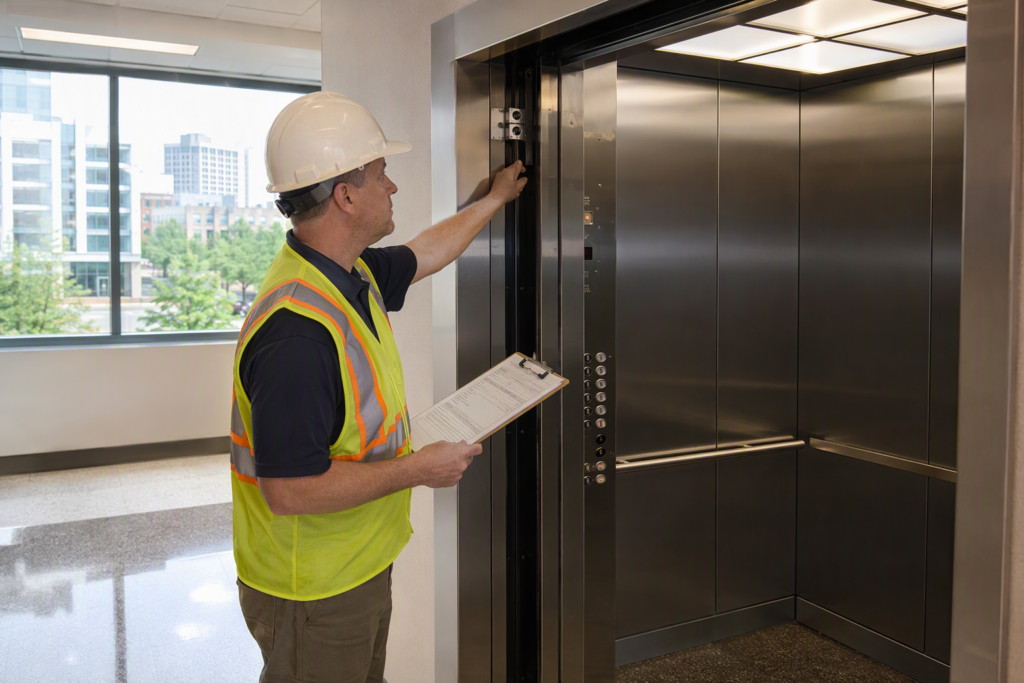
A licensed elevator inspector typically evaluates the following systems and components:
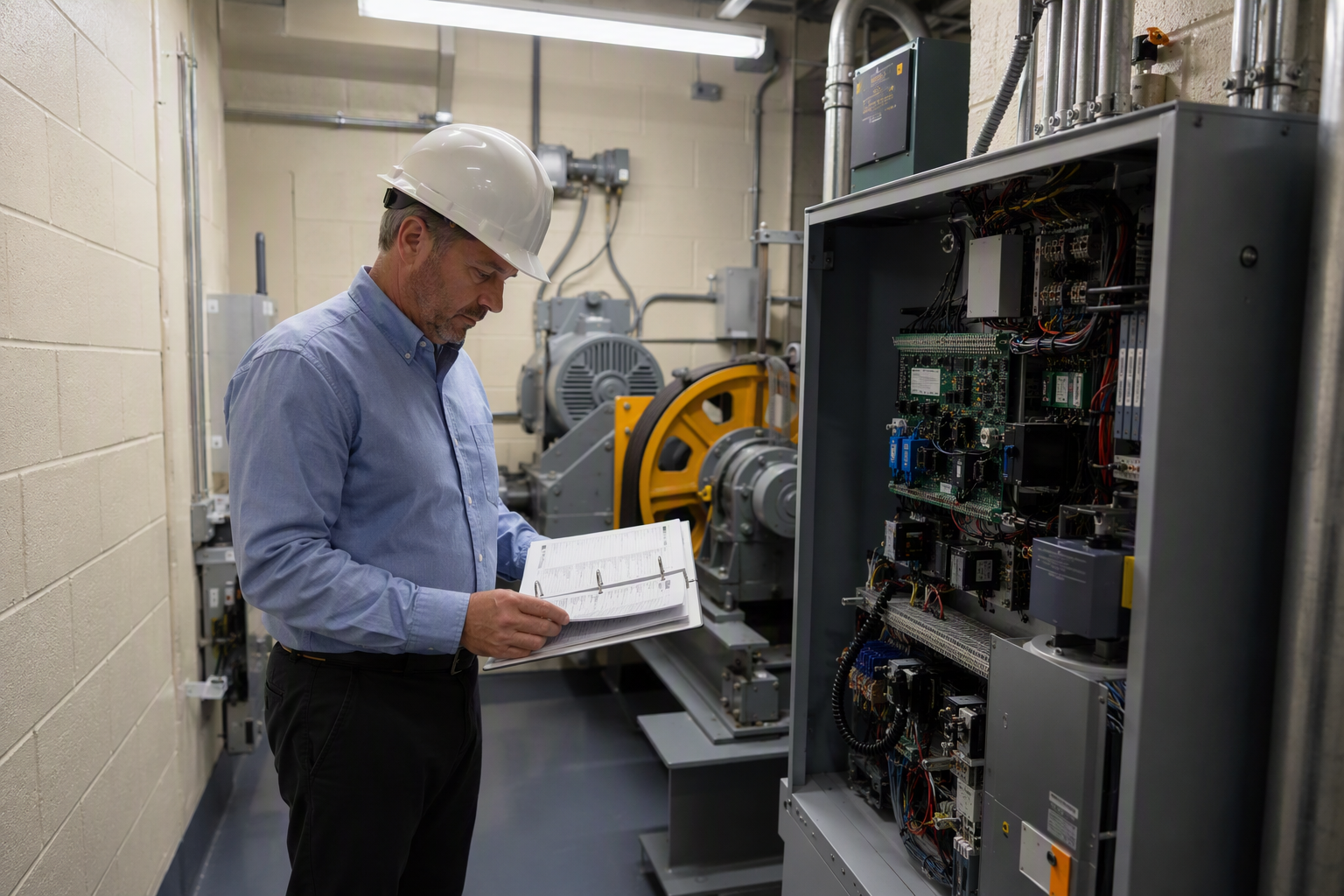
- Drive machine and motor: Condition, lubrication, and proper operation
- Safety devices: Governor, safeties, buffers, and interlocks
- Cab and hoistway: Lighting, ventilation, clearances, and door operation
- Control systems: Emergency stop, communication devices, and fire service operation
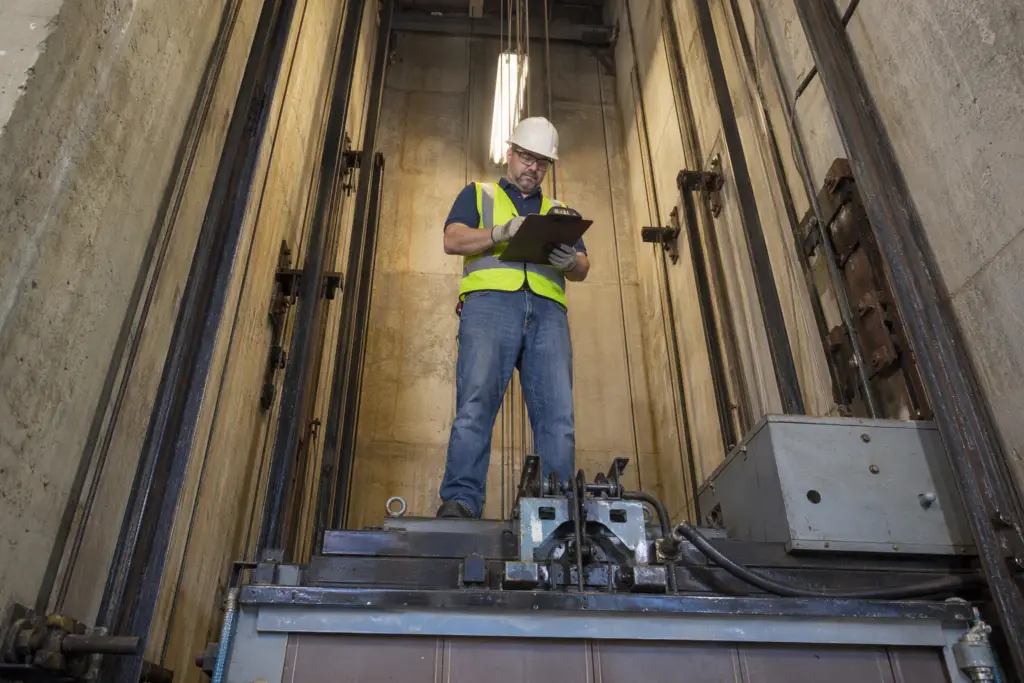
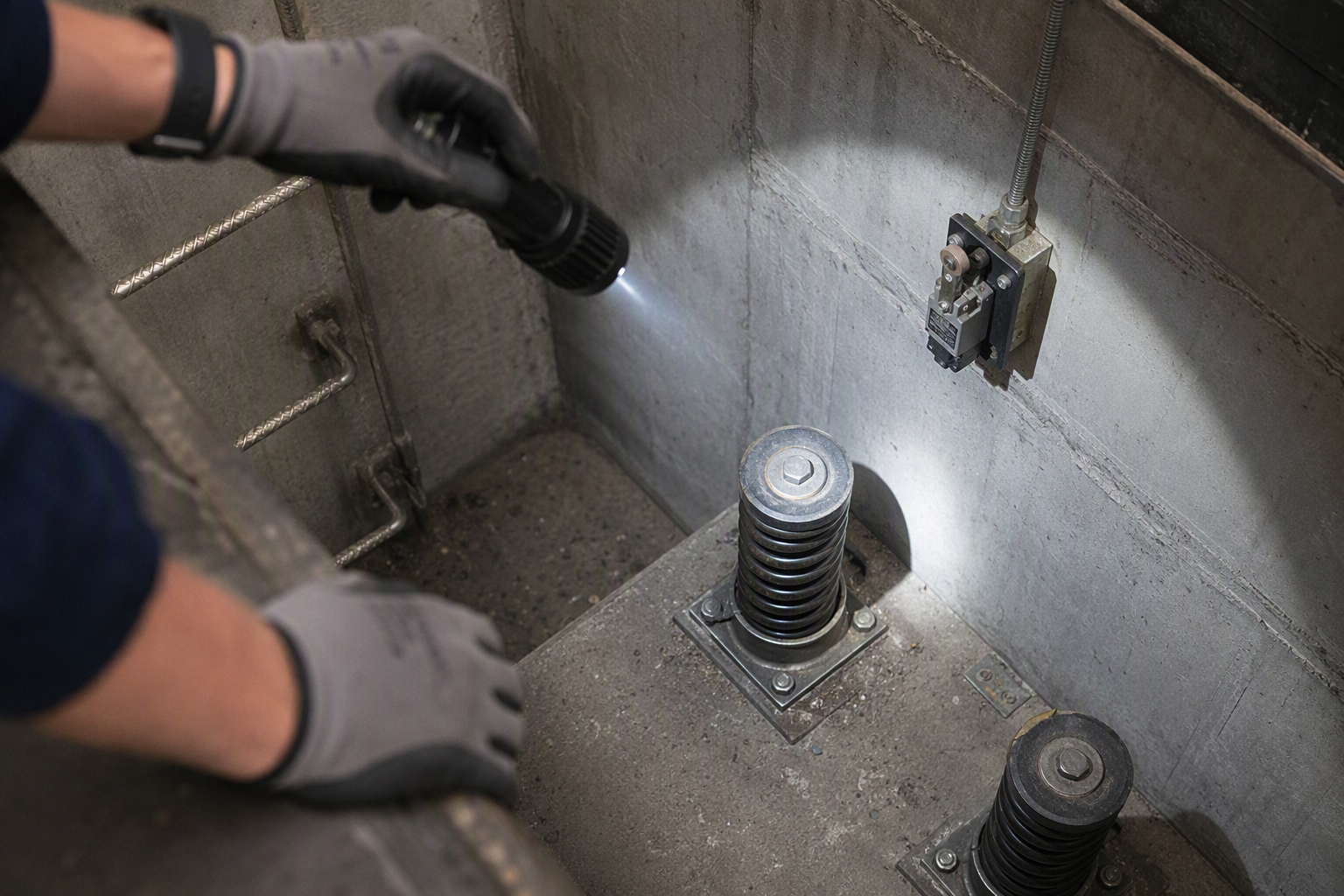
- Pit: Lighting, stop switch, ladder access, and water/moisture presence
- Machine room: Temperature control, lighting, fire suppression, and housekeeping
- Load capacity signage: Posted and accurate
- Maintenance logs: Current, complete, and accessible
- Certificate of inspection: Previously issued certificate posted in the cab
For elevators serving the public, ADA (Americans with Disabilities Act) compliance requirements — including accessible controls, dimensions, and signage — may also be reviewed during certain inspections, especially when permits for modifications are involved.
How Should Building Owners Prepare for an Elevator Inspection?
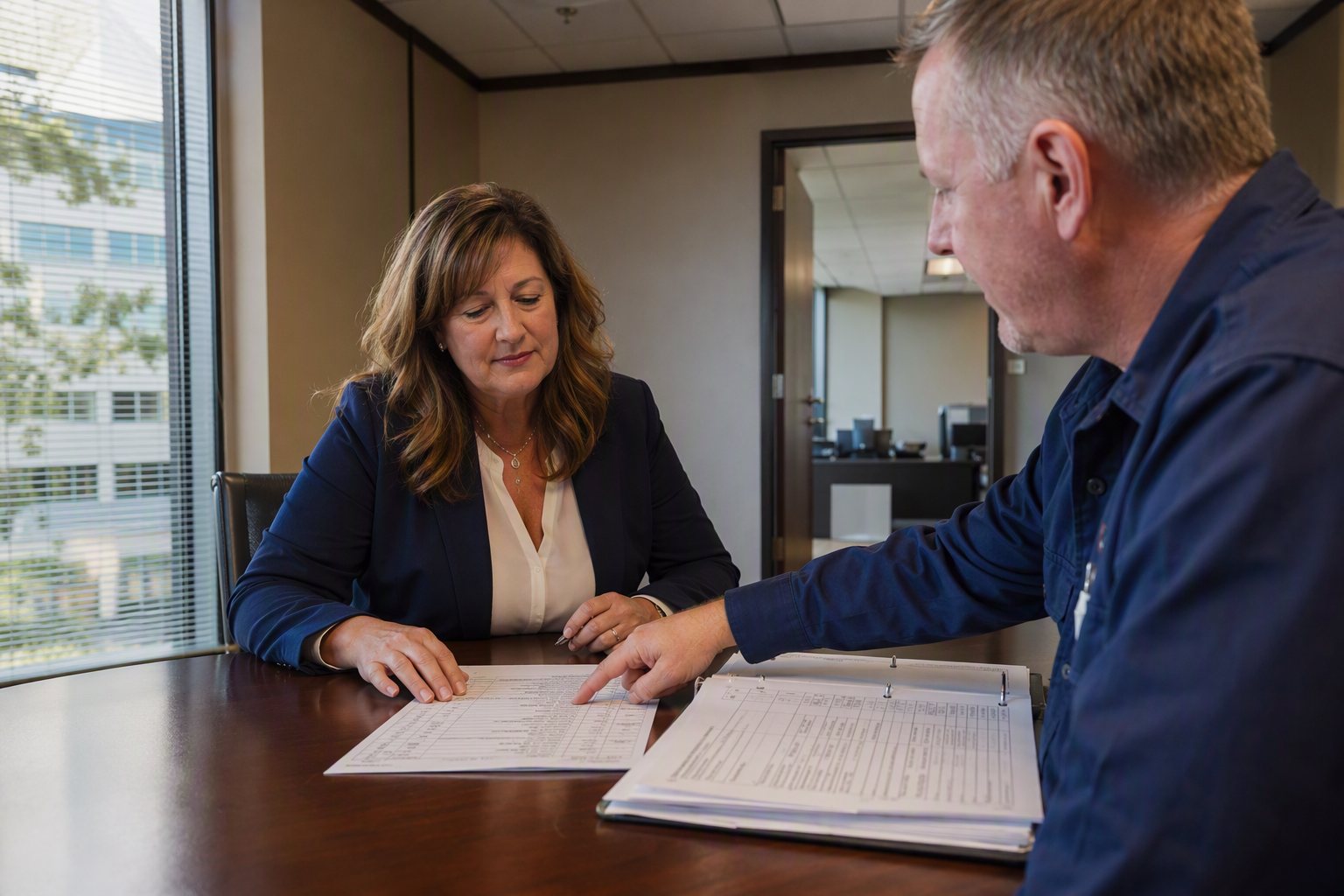
- Review your maintenance records. Inspectors expect to see a complete, up-to-date maintenance log documenting all service visits, repairs, and tests. Gaps in records are a common reason for failed inspections.
- Schedule a pre-inspection audit. Engage a qualified elevator service company to walk through every component the inspector will check and identify deficiencies before the official visit.
- Address all known deficiencies. Any open work orders or deferred repairs should be completed before the inspection date. Inspectors note both mechanical failures and items that were previously flagged and left unresolved.
- Inspect the pit and machine room yourself. Ensure the pit is dry, clean, and free of stored materials. Confirm that machine room temperature is controlled, lighting is functional, and the space is unobstructed.
- Test emergency systems. Verify that emergency lighting, the emergency telephone or communication device, and fire service recall mode all function correctly.
- Confirm posted certificates and signage. The current certificate of inspection and load capacity placard must be posted inside the elevator cab.
- Verify door operation. Test hoistway and cab door opening, closing, and re-opening safety functions on every landing.
- Confirm the inspection appointment and access. Ensure a qualified elevator technician or your service provider representative is present during the inspection to answer technical questions and demonstrate systems if requested.
DIY Preparation vs. Professional Pre-Inspection Service: A Comparison
| Factor | DIY / In-House Preparation | Professional Pre-Inspection Service |
|---|---|---|
| Technical expertise required | High — staff must understand ASME A17.1 requirements | Low for building owner — handled by certified technicians |
| Code familiarity | Building staff may lack current code knowledge | Service providers stay current with adopted code editions |
| Deficiency identification | May miss hidden or technical deficiencies | Systematic review mirrors inspector’s checklist |
| Documentation support | Building owner must compile and organize all records | Provider often maintains logs as part of service contract |
| Risk of re-inspection | Higher if deficiencies are missed | Lower — issues are resolved before official inspection |
| Time investment | Significant staff time required | Minimal building-owner time once provider is engaged |
| Best suited for | Buildings with in-house elevator technicians | Most commercial, residential, and institutional buildings |
What Are the Most Common Reasons Elevators Fail Inspection?
Understanding the most frequent failure points allows building owners to prioritize their pre-inspection efforts. Inspectors regularly cite the following categories of deficiencies:
| Failure Category | Common Examples | Severity |
|---|---|---|
| Documentation gaps | Missing maintenance logs, no posted certificate | Moderate — typically correctable before re-inspection |
| Safety device failures | Governor not tested, safeties not functioning | High — may result in immediate shutdown |
| Door malfunctions | Door reopening devices not operating, closing force excessive | High — direct safety hazard |
| Emergency systems | Non-functional emergency phone, failed emergency lighting | High — life-safety requirement |
| Pit conditions | Water accumulation, inoperative pit light, missing stop switch | Moderate to High |
| Machine room issues | Improper storage, inadequate lighting, temperature violations | Moderate |
| Deferred repairs | Known issues not addressed since previous inspection | Moderate to High depending on item |
How Often Are Elevators Required to Be Inspected?
Inspection frequency is set by state and local jurisdictions, which adopt editions of the ASME A17.1 Safety Code for Elevators and Escalators. Most jurisdictions require periodic inspections at least annually, though some require more frequent inspections for certain elevator types or higher-occupancy buildings. Building owners should confirm the specific schedule required by their local authority having jurisdiction (AHJ).
In addition to routine periodic inspections, special inspections are typically required after:
- Major repairs or alterations
- Modernization projects
- Accidents or incidents involving the elevator
- Extended periods of shutdown or inactivity
What Happens If an Elevator Fails Inspection?
A failed inspection does not always mean immediate shutdown, but the consequences depend on the severity of the deficiencies found. Inspectors generally classify violations by risk level:
- Immediately dangerous conditions: The elevator may be ordered out of service immediately. The AHJ has authority to post the elevator as unsafe for use until repairs are made and a re-inspection is passed.
- Non-immediately dangerous conditions: Building owners typically receive a written notice with a deadline to complete repairs and schedule a re-inspection.
- Documentation deficiencies: These may be correctable at the time of inspection or within a short window without requiring a full re-inspection.
Operating an elevator that has been ordered out of service exposes building owners to significant liability. Under OSHA general duty clause obligations, employers and building owners are responsible for maintaining safe equipment for employees and the public.
What Is the Timeline for Resolving Inspection Deficiencies?
| Stage | Typical Timeframe | Key Actions |
|---|---|---|
| Receive written deficiency notice | Immediately after inspection | Review all cited items; prioritize safety-critical items |
| Engage service provider | Within 1–3 business days | Schedule repair assessment and parts procurement |
| Complete repairs | Varies — days to weeks depending on parts availability | Document all work performed with detailed service records |
| Schedule re-inspection | Per AHJ deadline (often 30–90 days) | Confirm all items are resolved before re-inspection date |
| Pass re-inspection | After repairs confirmed complete | Receive updated certificate; post in cab |
Does a Maintenance Contract Help Pass Inspection?
A comprehensive maintenance contract with a qualified elevator service provider is one of the most effective strategies for consistently passing inspections. Here is how maintenance contracts compare to on-demand service arrangements:
| Factor | Maintenance Contract | On-Demand / Reactive Service |
|---|---|---|
| Inspection readiness | High — regular visits keep equipment current | Lower — issues may not surface until inspection |
| Documentation quality | Consistent logs maintained by provider | Inconsistent — building owner must track separately |
| Deficiency detection | Proactive — caught during routine visits | Reactive — discovered at inspection or breakdown |
| Equipment lifespan | Extended through regular lubrication and adjustment | May shorten due to deferred maintenance |
| Overall inspection outcome | Typically more consistent pass results | Higher variance — more risk of failed items |
Are There ADA Requirements That Affect Elevator Inspections?
While the ADA (Americans with Disabilities Act) requirements are not typically the primary focus of a routine elevator inspection, they become directly relevant when building permits are pulled for alterations or modernizations. Under ADA standards, alterations to an elevator may trigger requirements to bring the unit into compliance with current accessibility standards, including:
- Minimum cab dimensions
- Control height and reach range requirements
- Tactile and Braille signage on control panels
- Door width and timing requirements
- Visual and audible position indicators
Building owners planning any modernization work should consult both their AHJ and a qualified elevator service provider to understand how ADA requirements intersect with the permit and inspection process.
How Does an Independent Elevator Service Provider Compare to a Manufacturer Service Company?
| Factor | Manufacturer-Affiliated Service | Independent Service Provider (e.g., Carolina Elevator Service) |
|---|---|---|
| Equipment coverage | Typically limited to own brand | Broad — services multiple makes and models |
| Parts sourcing | OEM parts only — may affect cost and lead time | Access to both OEM and compatible parts |
| Contract flexibility | Often long-term, less negotiable | Typically more flexible terms |
| Local accountability | Varies by regional office | Direct relationship with local team |
| Code knowledge | Strong for own equipment | Strong across all equipment types and local code adoptions |
Carolina Elevator Service is an independent elevator service provider serving building owners across the Carolinas. As an independent company, Carolina Elevator Service works across multiple elevator makes and models, providing pre-inspection audits, maintenance contracts, and repair services aimed at helping buildings achieve and maintain code compliance.
What Should Building Owners Ask a Service Provider Before Hiring Them for Inspection Prep?
Selecting the right service provider is a critical decision. Building owners should ask prospective providers the following questions:
- Do you provide a written pre-inspection checklist aligned to ASME A17.1 and local code requirements?
- Will you be present during the official inspection?
- How do you handle documentation and maintenance log management?
- What is your process for procuring parts if deficiencies are found?
- Do you have experience with the specific elevator make and model in our building?
- Are your technicians licensed or registered as required by our state or local jurisdiction?
- What does your maintenance contract include regarding inspection preparation?
What Are the Key Pros and Cons of Investing in Pre-Inspection Preparation?
| Pros | Cons | |
|---|---|---|
| Pre-inspection professional audit | Identifies deficiencies before the official inspection; reduces re-inspection risk; maintains elevator safety; supports complete documentation | Requires engaging a service provider in advance; adds a step to the inspection process |
| Skipping pre-inspection prep | No advance cost or scheduling required | Higher risk of failed inspection; potential elevator shutdown; re-inspection fees; possible liability exposure |
How Does Carolina Elevator Service Support Inspection Readiness?
Carolina Elevator Service provides building owners with comprehensive support across the full inspection cycle. Services include pre-inspection audits to identify and resolve deficiencies before the official inspection, ongoing maintenance programs designed to keep elevators in continuous code compliance, repair services addressing both safety-critical and documentation-related deficiencies, and technical support during inspections when questions arise.
As an independent provider, Carolina Elevator Service works with a wide range of elevator equipment types and stays current with the adopted editions of the ASME A17.1 Safety Code for Elevators and Escalators as enforced in local jurisdictions across the Carolinas.
Building owners who want to reduce the risk of a failed inspection, resolve outstanding deficiencies efficiently, and establish a maintenance program that supports long-term compliance are encouraged to reach out directly.
Ready to Prepare Your Elevator for Inspection?
Contact Carolina Elevator Service for a free elevator assessment. A qualified member of the team will review your elevator’s current condition, identify any items that may affect your next inspection, and recommend a plan to achieve and maintain compliance.
Call us today: 803-865-1400
Need elevator service you can rely on? Carolina Elevator Service is ready to help.