Carolina Elevator Service is a top-rated elevator maintenance company serving Columbia, SC, providing certified inspections, preventive maintenance, code-compliance repairs, and modernization services for commercial and residential elevator systems throughout the Midlands region.
Top Rated Elevator Maintenance Company in Columbia, SC: Complete FAQ Guide
Finding a reliable, certified elevator maintenance company in Columbia, SC involves more than a quick internet search. Building owners, property managers, and facilities directors need a service partner who understands South Carolina regulatory requirements, follows nationally recognized safety codes, and delivers consistent preventive care that keeps vertical transportation equipment running safely and legally. This comprehensive FAQ addresses the most common questions about elevator maintenance, inspections, compliance, and vendor selection in Columbia and the surrounding Midlands area.
What makes a top-rated elevator maintenance company in Columbia, SC?
A top-rated elevator maintenance company combines certified technicians, documented compliance with ASME A17.1 Safety Code for Elevators and Escalators and South Carolina state regulations, transparent service records, and a proven track record of keeping elevator systems inspection-ready year-round.
Beyond technical competency, the best companies maintain rigorous documentation for every service visit, communicate proactively about code changes, and offer maintenance programs tailored to the type and usage profile of each elevator installation. In Columbia’s commercial and mixed-use building market, this level of comprehensive service is what separates truly top-rated providers from general contractors who perform elevator work as a secondary offering.
Carolina Elevator Service is recognized throughout Columbia for combining technical expertise with thorough documentation practices, helping property owners stay ahead of inspection requirements and avoid costly violations.
How often must elevators be inspected in South Carolina?
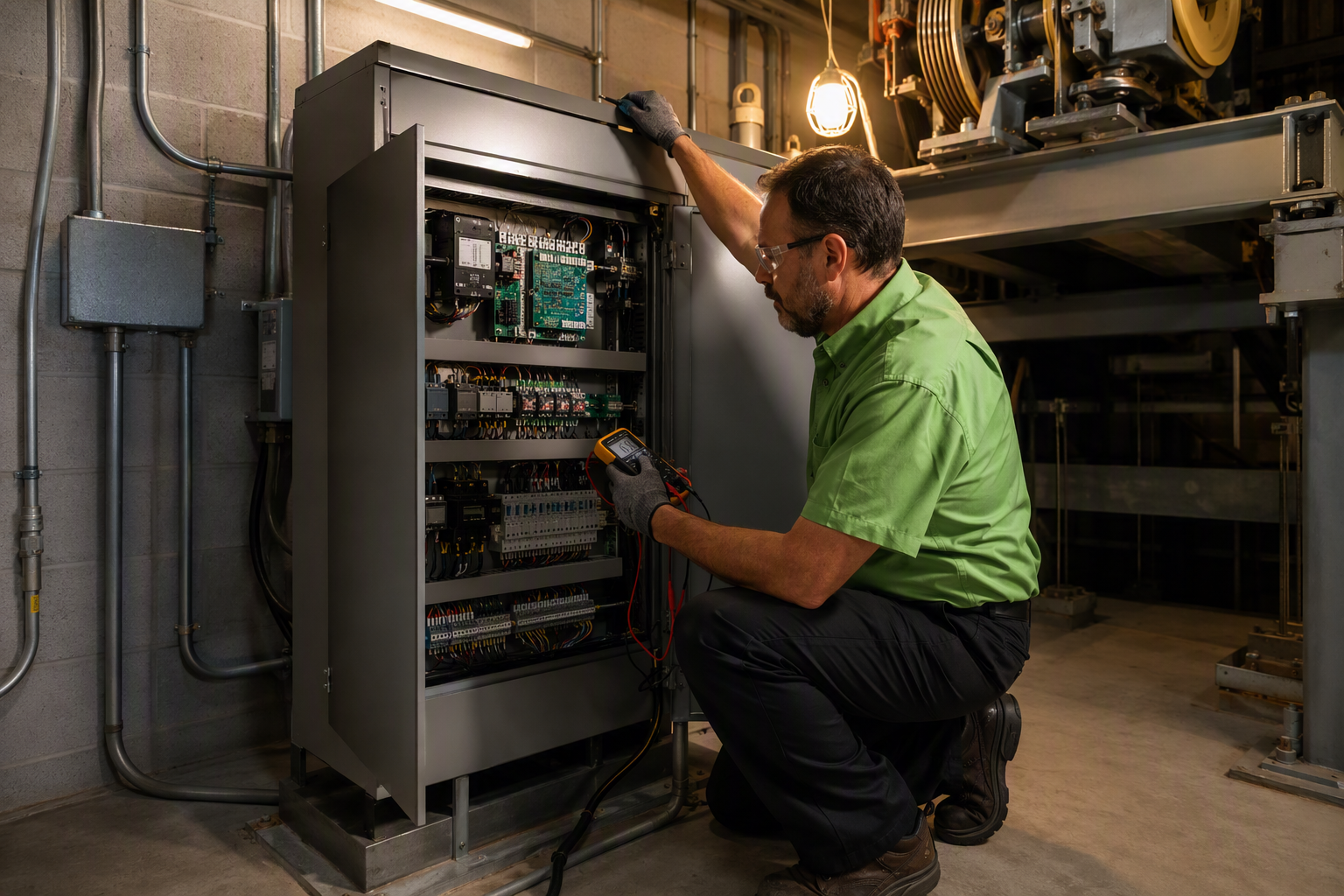
South Carolina requires periodic elevator inspections by a qualified inspector, with intervals and procedures governed by the South Carolina Department of Labor, Licensing and Regulation (LLR) and aligned with ASME A17.1 Safety Code for Elevators and Escalators requirements for routine and periodic tests.
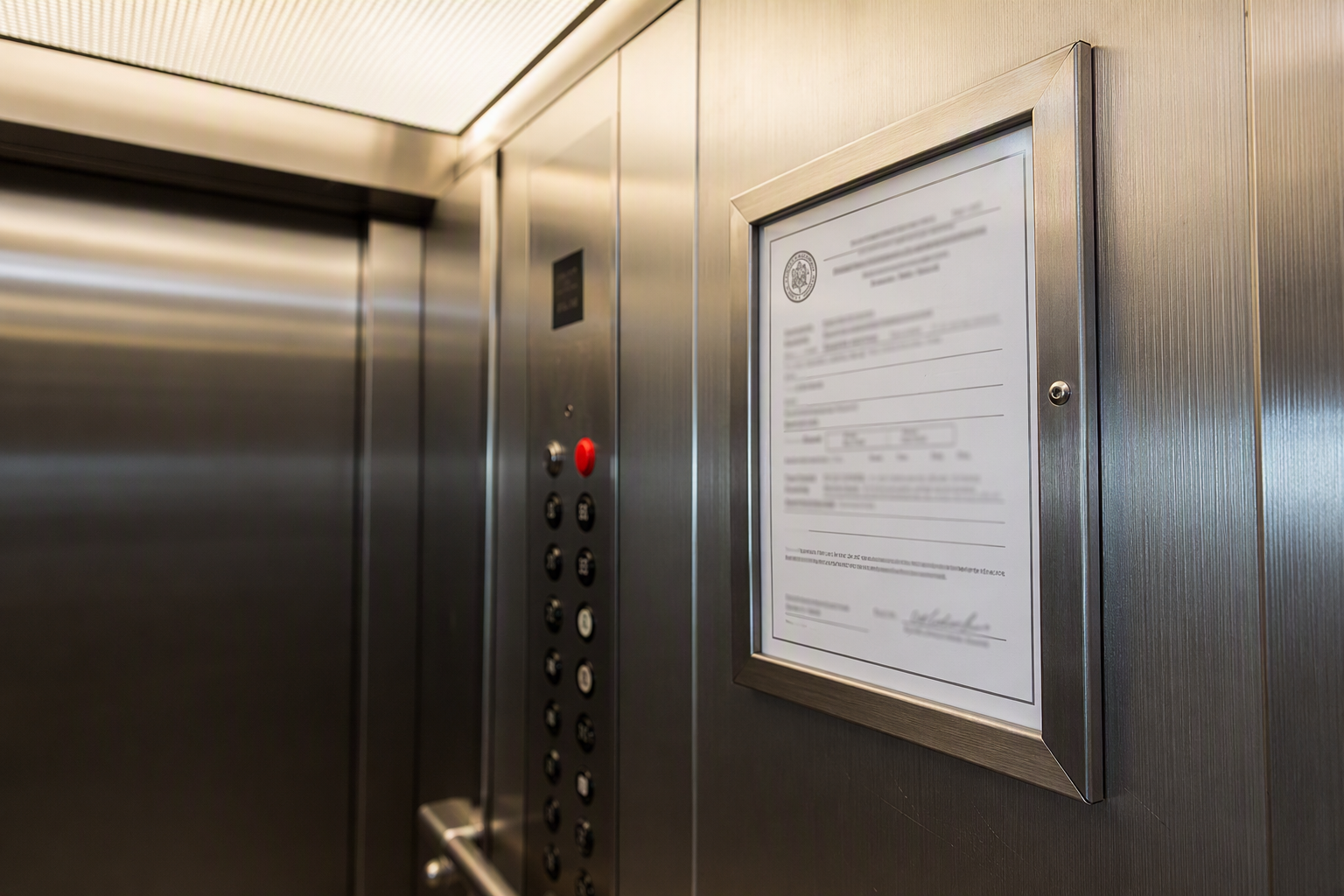
The South Carolina Elevator Safety Act places oversight of elevator safety under the SC LLR’s Office of Elevators and Amusement Rides. Building owners in Columbia must ensure their elevators are inspected at the required intervals, that current certificates of operation are posted inside each elevator car, and that any deficiencies noted by an inspector are corrected promptly before the equipment is returned to service.
The ASME A17.1 code distinguishes between routine maintenance inspections performed by the service company and formal periodic inspections conducted by or on behalf of the authority having jurisdiction (AHJ). Both categories are required, and neither substitutes for the other. Owners who rely solely on their maintenance company visits without scheduling the required state-mandated inspection risk violations, fines, and equipment shutdown orders.
What is the ASME A17.1 code and why does it matter for Columbia buildings?
The ASME A17.1 Safety Code for Elevators and Escalators is the foundational national standard governing the design, construction, installation, operation, inspection, testing, maintenance, alteration, and repair of elevators and related conveyances in the United States, and South Carolina adopts this code as the basis for its statewide elevator safety requirements.
For Columbia building owners, the practical implications of ASME A17.1 are far-reaching. The code specifies minimum lubrication schedules, rope inspection intervals, safety device testing requirements, governor and buffer test frequencies, and documentation standards that every maintenance provider must follow. When a maintenance company references “code-compliant” service, it should specifically mean compliance with the current edition of ASME A17.1 as adopted in South Carolina.
The companion standard, ASME A17.3 Safety Code for Existing Elevators and Escalators, applies to older installations that predate more recent editions of A17.1. This distinction matters greatly for Columbia’s older commercial buildings and mixed-use properties, where equipment may be operating under the requirements of A17.3 rather than the full current A17.1 standard. A qualified maintenance company will clearly identify which code applies to each unit in a building’s portfolio.
What does a preventive elevator maintenance program typically include?
A comprehensive preventive elevator maintenance program covers systematic inspection and lubrication of mechanical components, testing of safety systems, adjustment of operating parameters, replacement of wear items before they cause failures, and detailed written documentation of all work performed at each visit.
The specific tasks within a maintenance program depend on the elevator type — hydraulic, traction, machine-room-less (MRL), or limited-use/limited-application (LULA) — as well as the age of the equipment and its usage intensity. Common program elements include:
- Inspection and lubrication of guide rails, roller guides, and sheaves
- Testing and adjustment of door operators, closers, and safety edges
- Inspection of wire ropes or hydraulic cylinders and fluid systems
- Testing of safeties, governors, and buffers on the schedule required by ASME A17.1
- Inspection of electrical systems, controller components, and wiring
- Leveling adjustments to ensure accurate floor alignment
- Review of the elevator’s maintenance control program (MCP) documentation
- Updating the required ASME A17.1 compliant log for each unit
Carolina Elevator Service structures its maintenance programs around the specific code requirements applicable to each unit, ensuring that documentation is always current and inspection-ready.
What is the difference between elevator maintenance and elevator repair?
Elevator maintenance is scheduled, proactive work performed to preserve equipment condition and prevent failures, while elevator repair is reactive work performed to correct a specific malfunction, breakdown, or safety deficiency after it has already occurred.
Preventive maintenance reduces the frequency and severity of repairs by catching developing problems — worn brake linings, fraying rope strands, degraded hydraulic seals — before they cause downtime or safety incidents. The cost of a single major repair event, combined with building disruption and potential liability, almost always exceeds the cost of the preventive maintenance program that would have prevented it.
From a compliance standpoint, both maintenance and repair activities must be performed by individuals with the qualifications required under South Carolina law, and certain repair work — particularly alterations as defined under ASME A17.1 — may trigger additional inspection requirements before the equipment is returned to public service.
How does ADA compliance affect elevator maintenance requirements in Columbia?
The Americans with Disabilities Act (ADA) requires that elevators in covered facilities remain accessible to people with disabilities, meaning that maintenance practices must preserve the operational integrity of accessibility features including door timing, leveling accuracy, tactile controls, and audible signals.
Under ADA standards, elevator cars must meet specific dimensional requirements, and automatic doors must remain open long enough for individuals using mobility devices to enter and exit safely. A poorly maintained door operator that causes premature closing or erratic operation is not only a safety hazard but a potential ADA violation. Similarly, floor leveling that exceeds the allowable threshold creates a tripping hazard and accessibility barrier that exposes building owners to both ADA complaints and liability claims.
Maintenance programs for public accommodations, commercial facilities, and multi-family housing in Columbia should explicitly address ADA feature preservation as a documented component of every service visit, not as an afterthought. Building owners should request documentation confirming that accessibility-critical components were inspected and tested during each maintenance call.
What are the most common elevator code violations found in Columbia buildings?
The most frequently cited elevator deficiencies in commercial buildings involve expired or improperly posted certificates of operation, inadequate maintenance documentation, door safety device malfunctions, improper leveling, and overdue periodic tests required under ASME A17.1.
Documentation failures are particularly common because they are invisible until an inspector requests records. The ASME A17.1 code requires that a maintenance control program (MCP) be in place for every elevator, that maintenance records be kept in a retrievable format, and that the records be available to inspectors. Many building owners discover during an inspection that their previous maintenance company was not maintaining compliant records, leaving them responsible for violations they were unaware of.
Physical deficiencies frequently cited include worn or missing roller guides, degraded hydraulic fluid conditions, inoperative emergency lighting or communication systems, and safety edge response times that exceed code tolerances. These are precisely the items that a rigorous preventive maintenance program — rather than a reactive “fix it when it breaks” approach — is designed to catch and correct before an inspection.
How should a Columbia building owner evaluate competing elevator maintenance proposals?
Building owners should evaluate elevator maintenance proposals based on the scope of services included, the documentation practices the company commits to, their knowledge of South Carolina-specific requirements, the types of elevator systems they are qualified to service, and the clarity and enforceability of the contract terms.
| Evaluation Criterion | Minimum Acceptable Standard | Best-Practice Standard |
|---|---|---|
| Code Reference in Proposal | Mentions ASME A17.1 compliance | Specifies applicable ASME edition and relevant SC LLR requirements |
| Maintenance Documentation | Written service records provided upon request | MCP-compliant log maintained on-site per ASME A17.1 requirements |
| Safety Device Testing | Tested at code-minimum intervals | Proactive scheduling with advance notification to building owner |
| ADA Feature Verification | Not addressed in proposal | Explicitly listed as a documented maintenance task |
| Inspection Coordination | Owner responsible for scheduling | Company assists with SC LLR inspection coordination |
| Contract Transparency | Cancellation terms in fine print | Clear terms, no auto-renewal traps, itemized exclusions listed |
| Equipment Type Coverage | Hydraulic and standard traction only | Hydraulic, traction, MRL, LULA, and dumbwaiter systems |
| Emergency Procedures | Reactive only | Documented entrapment response protocol aligned with ASME A17.1 and OSHA standards |
Price alone is a poor selection criterion for elevator maintenance. A low-cost contract that excludes routine parts, limits visit frequency below code requirements, or lacks proper documentation will cost more in the long run through violations, emergency repairs, and liability exposure.
What types of elevators does a full-service maintenance company in Columbia service?
A full-service elevator maintenance company in Columbia should be capable of servicing hydraulic elevators, electric traction elevators (both geared and gearless), machine-room-less (MRL) traction elevators, limited-use/limited-application (LULA) elevators, and dumbwaiters, as each category has distinct maintenance requirements under ASME A17.1.
Columbia’s building stock includes a wide mix of elevator types. Older downtown commercial buildings and historic structures often house hydraulic systems installed decades ago. Modern office towers and mixed-use developments typically feature MRL traction systems. Smaller professional and medical office buildings frequently rely on LULA elevators to meet ADA requirements cost-effectively. A maintenance company that only has expertise in one or two elevator categories will not be the right partner for property managers overseeing diverse building portfolios.
Carolina Elevator Service maintains the technical expertise to service the full range of elevator and conveyance types found in Columbia’s commercial and residential properties, applying the appropriate ASME standards to each system type.
What is an elevator modernization and when should Columbia building owners consider it?
Elevator modernization is the process of upgrading major components — controls, drive systems, door operators, cab interiors, or safety systems — in an existing elevator to improve performance, reliability, energy efficiency, code compliance, or all of the above, and it becomes a practical consideration when repair costs are escalating, parts are becoming difficult to source, or the equipment can no longer meet current code requirements.
The decision to modernize rather than continue full maintenance depends on several factors. When an elevator’s control system reaches the point where replacement parts are no longer manufactured, repair becomes increasingly expensive and unreliable. When accumulated safety deficiencies require capital upgrades to bring the installation into compliance with ASME A17.3 Safety Code for Existing Elevators and Escalators, a coordinated modernization project is often more cost-effective than piecemeal repairs.
Building owners in Columbia considering modernization should request a detailed condition assessment that documents the current state of all major systems, identifies code compliance gaps, estimates remaining useful life for components not being replaced, and provides a clear scope of work with expected outcomes. Modernization projects also typically trigger a new inspection requirement from the South Carolina LLR before the upgraded equipment returns to service.
What should building owners do if their elevator fails an inspection in South Carolina?
When an elevator fails a South Carolina inspection, the building owner must take the unit out of service immediately, engage a qualified elevator service company to correct all cited deficiencies, and arrange for a reinspection by the appropriate authority before returning the elevator to operation.
The following steps outline the correct procedure after a failed inspection:
- Post the failed inspection notice or “Out of Service” placard as required and secure the elevator against use.
- Obtain the written deficiency list from the inspector and review each item carefully.
- Contact a qualified elevator maintenance company promptly to assess and schedule corrections.
- Prioritize safety-critical deficiencies — those involving brakes, safeties, door systems, or structural integrity — for immediate correction.
- Obtain written confirmation from the service company that each deficiency has been corrected, with documentation of the corrective work performed.
- Contact the South Carolina LLR’s Office of Elevators and Amusement Rides to schedule the required reinspection.
- Do not return the elevator to service until the reinspection is completed and a new certificate of operation is issued.
- Implement or upgrade the preventive maintenance program to prevent recurrence of the same deficiencies.
Attempting to return a failed elevator to service before reinspection approval is a serious violation that can result in fines and increased regulatory scrutiny for all elevators in the building.
How does elevator maintenance affect building insurance and liability exposure in Columbia?
Documented, code-compliant elevator maintenance reduces a building owner’s liability exposure by demonstrating that a reasonable standard of care was exercised, and many commercial property insurers and risk managers consider elevator maintenance records as part of their loss prevention assessment process.
In the event of an elevator-related injury or incident, the quality and completeness of maintenance records becomes a critical factor in determining liability. Buildings with consistent, well-documented maintenance programs are in a stronger position to demonstrate that the equipment was properly maintained. Conversely, gaps in maintenance records, missed inspections, or evidence that known deficiencies were not addressed promptly can significantly increase a building owner’s exposure in litigation.
Columbia building owners with commercial liability coverage should consult with their insurance carrier about how elevator maintenance documentation requirements interact with their policy conditions. Some policies require that elevators be maintained under a qualified service contract as a condition of coverage for elevator-related claims.
What workplace safety requirements apply to elevator maintenance technicians in South Carolina?
Elevator maintenance technicians working in South Carolina are subject to OSHA standards governing lockout/tagout procedures, confined space entry, electrical safety, and fall protection, as well as the technical safety requirements established in ASME A17.1 for work performed on elevator equipment.
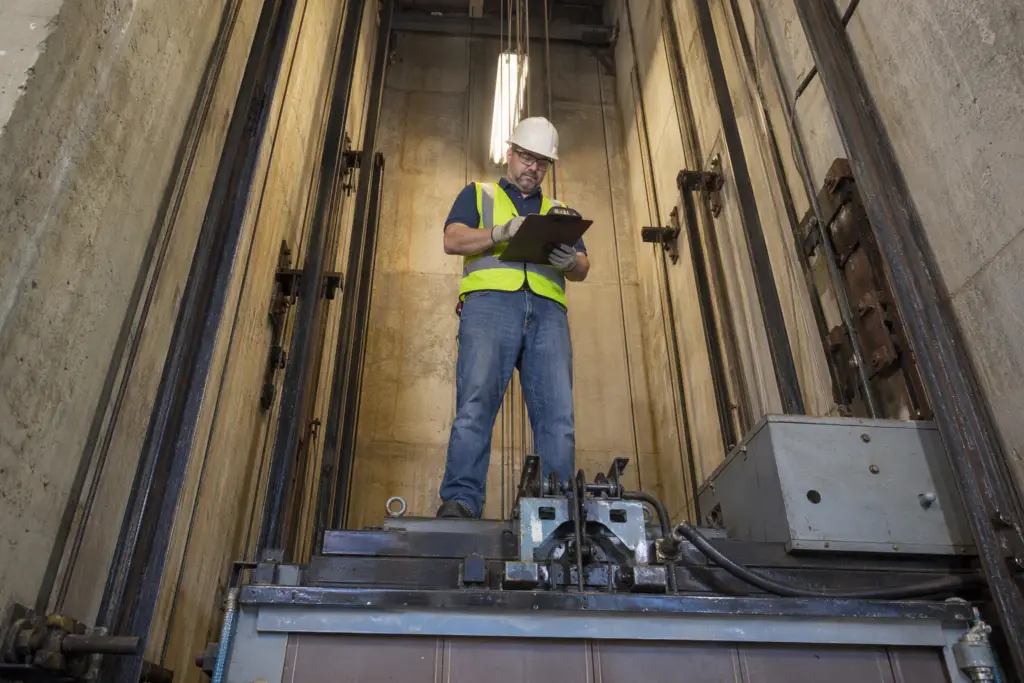
The lockout/tagout (LOTO) requirements under OSHA are particularly critical in elevator maintenance, where technicians must work in close proximity to moving mechanical components, electrical panels, and hydraulic systems under pressure. Proper LOTO procedures ensure that equipment cannot be inadvertently energized while a technician is working in the pit, on top of the car, or in the machine room.
Building owners selecting a maintenance company should confirm that the company maintains documented safety programs for its field personnel. A company that cuts corners on technician safety is likely cutting corners on maintenance quality as well — and may expose the building owner to OSHA secondary liability if a safety incident occurs on their property.
How does elevator usage intensity affect maintenance frequency in Columbia commercial buildings?
Higher usage intensity — measured in starts per hour, trips per day, and total load cycles — accelerates wear on mechanical components and typically requires more frequent maintenance attention than the minimum code intervals to keep equipment in reliable, code-compliant condition.
A single-elevator medical office building with moderate traffic has a very different maintenance profile from a multi-elevator high-rise with continuous peak-hour demand. Components such as door operators, guide shoe liners, and brake assemblies wear at rates proportional to use. In high-traffic applications, lubricant depletion between scheduled visits, faster rope wear, and more frequent door cycle counts can mean that annual or semi-annual maintenance visits are insufficient to prevent premature failures.
A qualified maintenance provider will assess the usage profile of each elevator during the initial site evaluation and recommend a maintenance frequency that reflects actual operating conditions rather than simply defaulting to the minimum code interval. This usage-based approach to maintenance scheduling is a hallmark of top-tier providers in the Columbia market.
What questions should building owners ask before signing an elevator maintenance contract?
Before signing an elevator maintenance contract, building owners should ask about the specific tasks included in each visit, what is excluded and at what additional cost, how documentation is handled, how the company coordinates state inspections, the contract term and cancellation provisions, and how the company handles emergency situations.
Key questions to ask prospective maintenance providers include:
- Which edition of ASME A17.1 does your maintenance program reference, and how do you address A17.3 for older equipment?
- What documentation will you leave on-site after each visit, and will it satisfy the MCP requirements under ASME A17.1?
- Are routine parts such as lubricants, filters, and minor wear items included in the contract price, or billed separately?
- How do you handle deficiencies discovered during a maintenance visit that require additional repair work?
- Will you notify us in advance of required periodic safety tests, and will you coordinate with the South Carolina LLR for inspection scheduling?
- What are the contract term, renewal terms, and early termination provisions?
- How do you handle equipment entrapments, and what is your documented response protocol?
- Do you carry adequate general liability and workers’ compensation insurance?
How do elevator maintenance contracts differ from full-service agreements in Columbia?
A standard maintenance contract covers scheduled visits and labor for routine upkeep, while a full-service agreement also includes parts, repairs, and sometimes modernization components under a single fixed monthly or annual fee, providing more predictable budgeting but requiring careful review of what is actually covered and excluded.
Full-service or “comprehensive” agreements are appealing to property managers because they simplify budget forecasting. However, virtually all such agreements contain exclusions — typically for major component failures such as hydraulic cylinders, control systems, and wire rope replacement — that are significant cost items. Building owners should request a written list of every exclusion before signing, rather than discovering the limitations when a large repair bill arrives.
For newer equipment under manufacturer warranty, a maintenance-only contract may be more cost-effective since major component failures are unlikely. For aging equipment with higher repair probability, the premium for a more comprehensive agreement may represent genuine value. The right choice depends on equipment age, condition, and the building owner’s risk tolerance for unplanned capital expenditures.
What are the signs that an elevator needs immediate service or should be taken out of operation?
Elevators should be taken out of service immediately if they exhibit unusual noises during operation, failure to level accurately at floors, erratic door behavior, visible hydraulic fluid leaks, activation of safety devices, or any condition that causes passenger discomfort or concern for safety.
Specific warning signs that warrant immediate contact with a qualified elevator service company include:
- The elevator stopping between floors or failing to reach the selected floor
- Doors that do not fully open, close erratically, or strike passengers
- Unusual grinding, banging, or vibration during travel
- The car settling or drifting from the floor level after stopping
- Burning or electrical odors from the machine room or inside the cab
- Emergency lighting or emergency telephone system failure
- Control panel malfunctions or unresponsive call buttons
- Evidence of hydraulic fluid on the pit floor or around the cylinder
Building staff should be trained to recognize these warning signs and to follow a documented out-of-service protocol that prevents passengers from using affected equipment until a qualified technician has assessed and cleared the elevator for operation. Operating a defective elevator knowingly is both a safety violation and a significant liability risk.
How does South Carolina’s regulatory framework for elevators affect property managers in Columbia?
South Carolina’s elevator safety program, administered by the SC Department of Labor, Licensing and Regulation, requires that all conveyances subject to the Elevator Safety Act be registered, inspected at required intervals, and operated only with a current certificate of operation — making regulatory compliance an ongoing operational responsibility for every Columbia property manager overseeing a building with elevator equipment.
The registration requirement means that new installations, altered equipment, and equipment transferred with a property sale all require engagement with the SC LLR process. Property managers inheriting responsibility for a building should immediately verify that all elevators have current certificates, that inspection records are on file, and that a qualified maintenance provider has been engaged under contract.
The authority having jurisdiction (AHJ) for elevator safety in South Carolina is the SC LLR, and its inspectors have the authority to order equipment taken out of service for safety violations. Understanding the regulatory framework helps property managers prioritize compliance activities and avoid the disruption — and reputational damage — of a regulatory shutdown of building elevator service.
What role does elevator maintenance play in a building’s overall asset management strategy?
Elevator maintenance is a direct investment in building asset value, tenant satisfaction, and regulatory standing, and deferred maintenance on vertical transportation equipment is one of the most consequential forms of capital neglect a property owner can allow to accumulate.
From an asset management perspective, well-maintained elevators with complete service records command stronger credibility during property due diligence, support higher tenant retention by reducing service disruptions, and extend the useful life of expensive mechanical systems. Modernization projects — when properly timed and documented — can be positioned as capital improvements that enhance net operating income by reducing repair costs and improving energy efficiency.
Columbia commercial real estate investors and property managers who treat elevator maintenance as an operational cost center rather than a strategic asset management activity often discover, at the point of sale or lease renewal, that deferred elevator maintenance has tangible negative effects on property valuation and tenant negotiations. Carolina Elevator Service works with property managers across the Columbia market to develop maintenance strategies aligned with longer-term asset management objectives.
How can Columbia building owners verify that their elevator maintenance company is qualified?
Building owners in Columbia can verify elevator maintenance company qualifications by confirming the company is properly licensed under South Carolina law, asking for proof of liability and workers’ compensation insurance, reviewing sample maintenance documentation for ASME A17.1 compliance, and requesting references from comparable properties in the Columbia area.
South Carolina requires that elevator work be performed by individuals and companies meeting the qualifications established under the Elevator Safety Act and administered by the SC LLR. Building owners should confirm that their service provider is authorized to perform elevator work in South Carolina and should not assume that a company’s general contractor license is sufficient for elevator maintenance and repair work.
Reviewing sample maintenance documentation before engagement — not just after a problem arises — is one of the most practical ways to assess a company’s professional standards. Compliant documentation should reference the specific unit, the date of service, the tasks performed, the components inspected, any deficiencies found, and the corrective actions taken or recommended. Vague or generic service tickets are a red flag that the maintenance program may not meet the documentation standards required under ASME A17.1.
Carolina Elevator Service maintains transparent service documentation practices, providing Columbia building owners with the detailed records they need to demonstrate compliance during SC LLR inspections and due diligence reviews.
Need elevator service you can rely on? Carolina Elevator Service is ready to help.