Elevator Service in Columbia, SC | Carolina Elevator Service
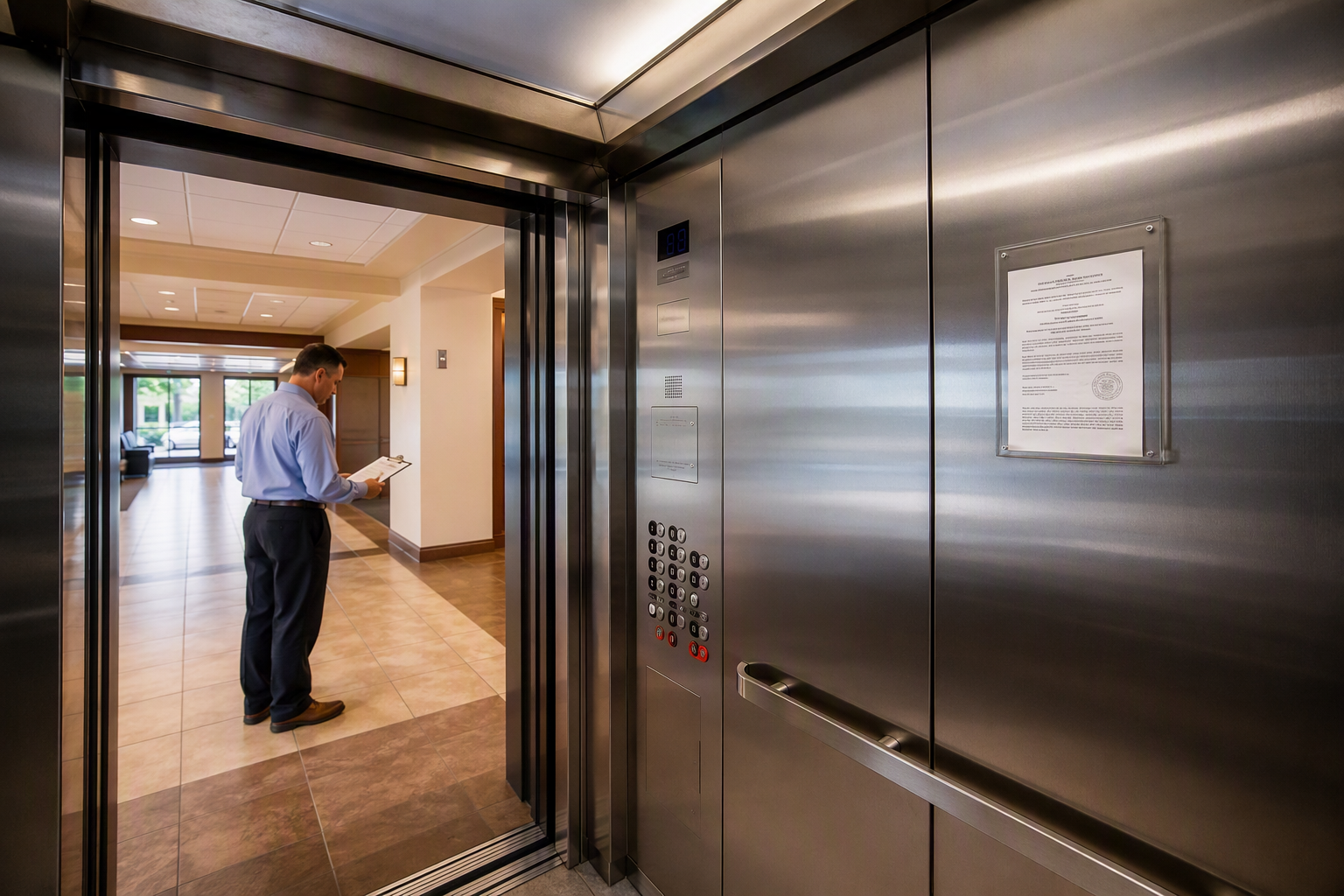
Elevator safety code compliance in Columbia, SC means keeping every vertical transportation unit inspected, certified, and operating within the standards set by South Carolina law and nationally recognized safety codes. Carolina Elevator Service helps building owners, property managers, and facilities directors across the Midlands understand their compliance obligations and fulfill them on time, every time.
What elevator safety codes apply in South Carolina?
South Carolina enforces elevator safety through the South Carolina Department of Labor, Licensing and Regulation (LLR), which oversees the state’s elevator safety program. The governing technical standard is the ASME A17.1 Safety Code for Elevators and Escalators, which South Carolina has adopted as the foundation for its inspection and compliance requirements. Buildings that serve the public or employees must also align with accessibility provisions under the Americans with Disabilities Act (ADA), which governs elevator access in places of public accommodation and commercial facilities. Construction and installation work must further comply with OSHA workplace safety regulations during any active service or modernization project.
In 2026, building owners should verify which edition of ASME A17.1 their jurisdiction has formally adopted, as code editions can vary and amendments may apply to specific equipment types or installation dates.
How often are elevators required to be inspected in South Carolina?
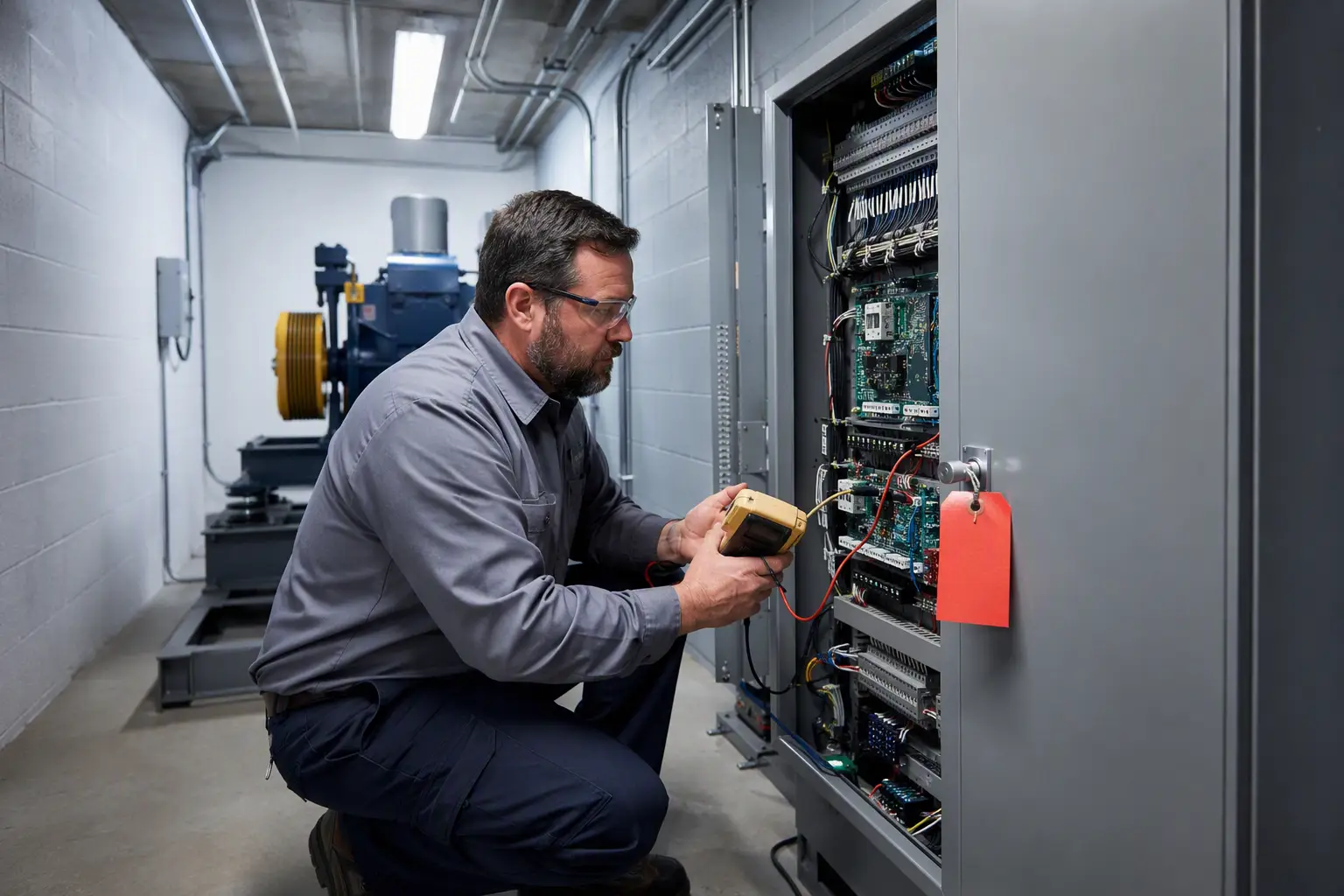
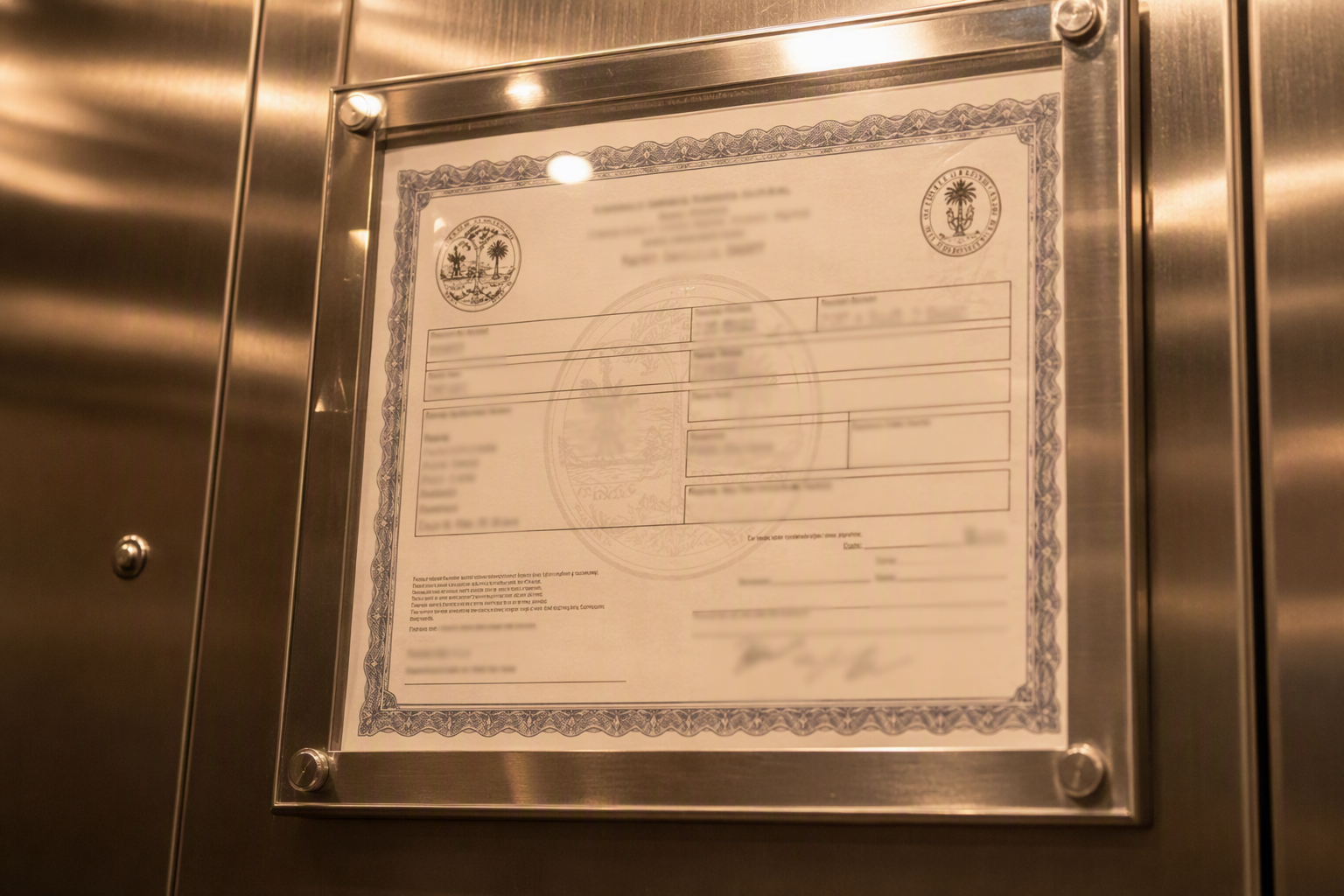
South Carolina law requires periodic inspections of all elevators and lifting devices subject to state jurisdiction. The ASME A17.1 code establishes inspection intervals by equipment category, and the South Carolina LLR enforces those intervals through its certified inspection program. After each inspection, a certificate of operation must be posted inside the elevator car — an absence of a current certificate is itself a compliance violation.
Carolina Elevator Service works with building operators across Columbia, Lexington, West Columbia, Irmo, Chapin, and surrounding Midlands communities to schedule inspections proactively, so certificates never lapse and facilities remain in good standing with the state.
What happens if an elevator fails a state inspection?
When an elevator fails a South Carolina inspection, the unit is typically placed out of service until cited deficiencies are corrected and a follow-up inspection confirms compliance. The building owner is responsible for coordinating repairs with a qualified elevator contractor and notifying the LLR when corrective work is complete. Operating a condemned or out-of-service elevator exposes property owners to significant legal and financial liability.
Carolina Elevator Service assists clients throughout this process — from diagnosing the root cause of violations to completing repairs and coordinating re-inspection — so that downtime is minimized and the path back to full compliance is clear.
What is the difference between routine maintenance and code compliance?
Routine maintenance keeps elevator components functioning reliably between inspections. Code compliance is a legal obligation that requires documented proof — passing inspection certificates, completed deficiency corrections, and records maintained for regulatory review. A well-maintained elevator can still fall out of compliance if paperwork lapses, a new code edition introduces updated requirements, or a component reaches the end of its rated service life without replacement.
Carolina Elevator Service approaches both disciplines together, treating maintenance schedules as a proactive compliance strategy rather than two separate concerns. Clients in Columbia’s commercial, healthcare, government, and multi-family residential sectors benefit from this integrated approach.
What is the process for bringing an out-of-compliance elevator back into service?
- Obtain the inspection report. Secure a copy of the official deficiency report from the inspector or the South Carolina LLR, identifying every cited violation and the applicable code section.
- Prioritize safety-critical items. Separate deficiencies by severity — items that pose immediate safety risks must be addressed before the elevator returns to use.
- Engage a qualified elevator contractor. Contact a certified elevator service company to assess the scope of repairs, source any required parts, and schedule the corrective work.
- Complete all cited repairs. Ensure every deficiency on the inspection report is resolved; partial corrections typically do not satisfy re-inspection requirements.
- Document the corrective work. Maintain written records of all repairs, parts replaced, and technician certifications for submission to the LLR and for your own compliance files.
- Request a re-inspection. Notify the South Carolina LLR or the assigned inspection authority that corrective work is complete and schedule the required follow-up inspection.
- Post the updated certificate. Once the unit passes re-inspection, display the new certificate of operation in the elevator car as required by state law.
Does ADA compliance affect elevator requirements in South Carolina?
Yes. The Americans with Disabilities Act establishes specific requirements for elevator cab dimensions, door timing, control panel height, audible and visual signals, and Braille markings on controls. In South Carolina, commercial properties and places of public accommodation subject to the ADA must ensure their elevators meet these federal accessibility standards in addition to ASME and state safety requirements. Older elevators installed before current ADA standards were enacted may require upgrades when a building undergoes alterations that trigger accessibility obligations.
Carolina Elevator Service evaluates ADA compliance as part of its broader compliance review process, helping Columbia-area building owners identify gaps before they become enforcement issues or accommodation complaints.
How does elevator modernization relate to code compliance?
Elevator modernization — upgrading controls, drives, cab interiors, or safety systems — frequently triggers compliance reviews under the edition of ASME A17.1 in effect at the time of the project. Modernization work may bring older equipment into alignment with current code requirements, reduce long-term maintenance costs, and extend the useful life of the unit. In some cases, a modernization project is more cost-effective than continued repairs on aging equipment that can no longer meet current safety standards.
For building owners in Columbia and the greater Midlands area weighing repair versus modernization decisions, Carolina Elevator Service provides evaluations that account for current code obligations, equipment condition, and long-term operational goals.
What markets does Carolina Elevator Service serve in the Columbia, SC area?
Carolina Elevator Service provides elevator safety code compliance services, inspections, maintenance, repair, and modernization across a broad range of property types in the Columbia metropolitan area and surrounding Midlands communities, including Lexington, West Columbia, Irmo, Chapin, Cayce, and beyond. Sectors served include commercial office buildings, healthcare facilities, government and municipal properties, educational institutions, hospitality properties, and multi-family residential communities.
The team maintains familiarity with the specific inspection authorities, permit requirements, and compliance expectations that apply to properties throughout the South Carolina Midlands region — local knowledge that translates directly into faster, more accurate compliance support for clients.
Is emergency elevator service available for compliance-related breakdowns?
Elevator outages and safety-related failures do not occur on a predictable schedule. Carolina Elevator Service understands that a non-operational elevator can create immediate compliance exposure, accessibility barriers, and operational disruption for building occupants. The company maintains service availability to respond to urgent situations affecting Columbia-area clients, with the goal of restoring safe, compliant operation as efficiently as possible. Building owners and property managers are encouraged to contact Carolina Elevator Service directly to discuss service agreement options that address emergency response needs.
Schedule a Free Consultation
Elevator safety code compliance in Columbia, SC is not a one-time event — it is an ongoing obligation that requires a knowledgeable local partner. Whether a building needs a compliance audit, a state inspection, corrective repairs, or a modernization evaluation, Carolina Elevator Service is ready to help Midlands property owners and managers stay ahead of their obligations.
Contact Carolina Elevator Service today to schedule a free consultation: 803-865-1400
Need elevator service you can rely on? Carolina Elevator Service is ready to help.