Elevator Modernization ROI Statistics: A Complete Comparison and Decision Guide
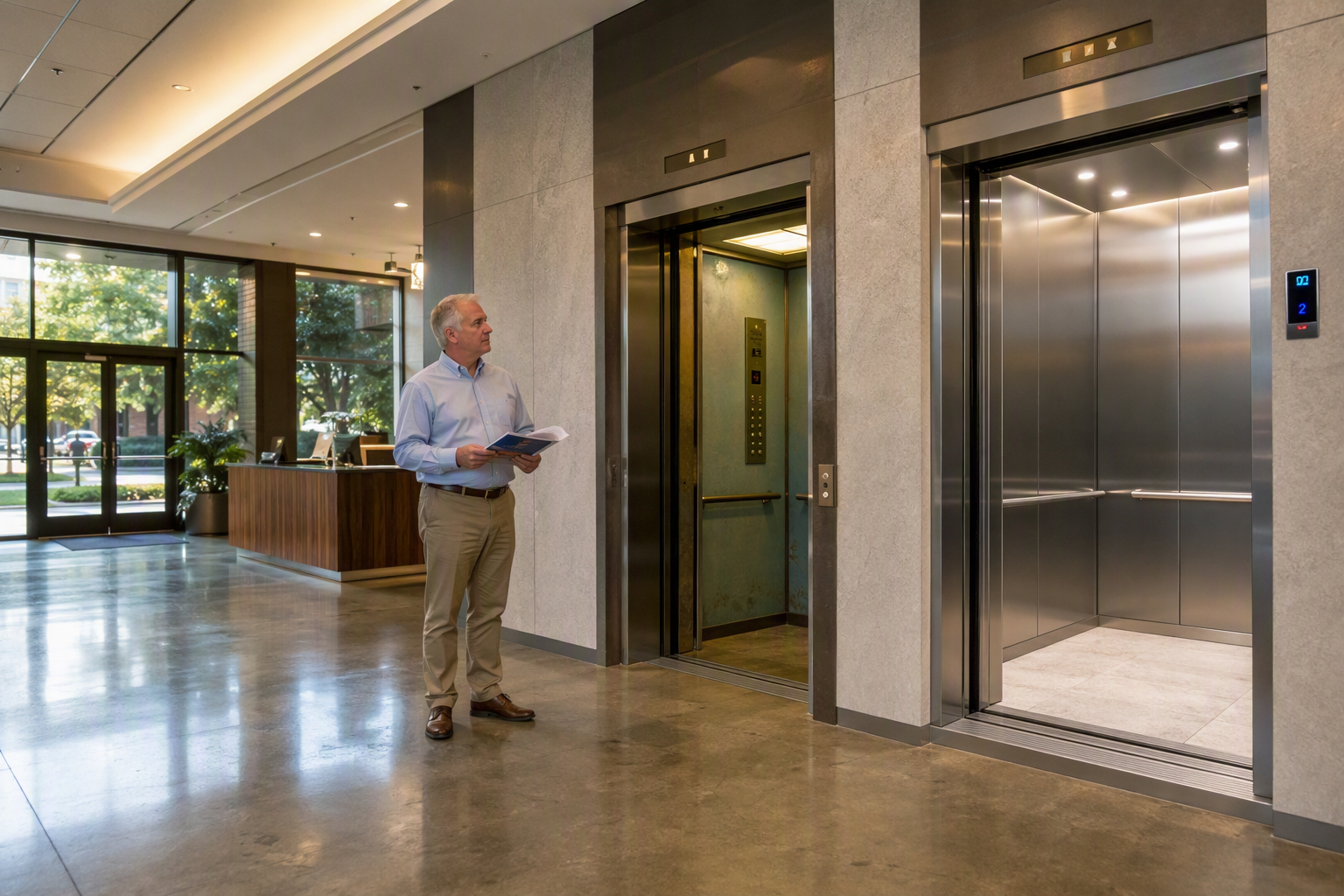
Elevator modernization ROI depends on four core factors: the age and condition of existing equipment, current energy and maintenance costs, occupancy impact from downtime, and local code compliance requirements. Buildings with aging systems, frequent service calls, and rising energy bills typically see the most compelling returns. Modernization should be evaluated as both a financial and a risk-management decision.
—
What Is Elevator Modernization and Why Does It Matter for ROI?
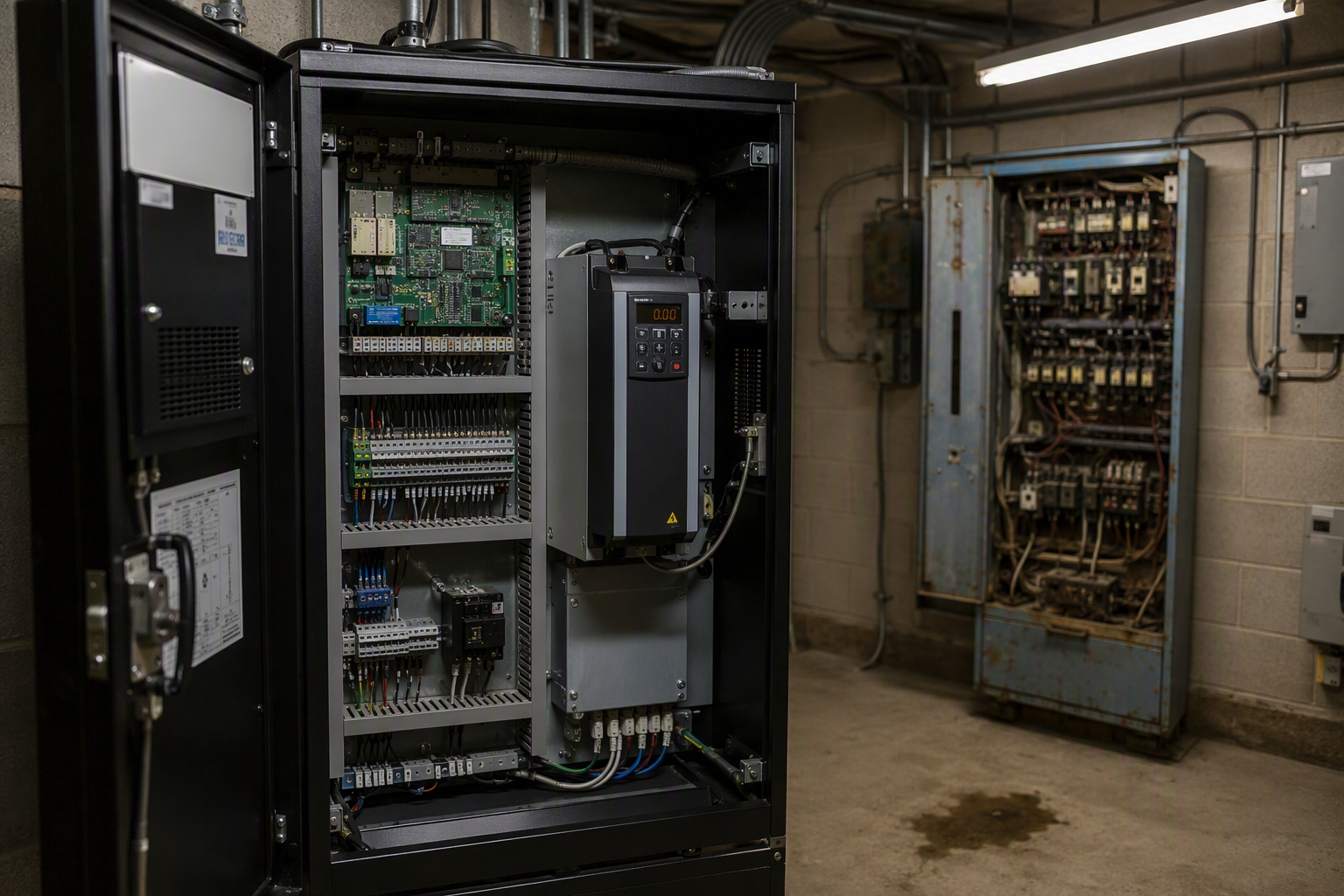
Elevator modernization refers to upgrading some or all components of an existing elevator system — including controls, drive systems, cab interiors, doors, safety devices, and mechanical equipment — without necessarily replacing the entire hoistway or structure. For building owners in South Carolina, modernization is a strategic investment evaluated against the ongoing cost of maintaining aging equipment.
The return on that investment is not a single number. It is a composite of multiple financial and operational factors that compound over time. Understanding each factor individually allows property owners and facility managers to build a realistic business case.
Core ROI Drivers for Elevator Modernization
- Energy savings: Modern variable-frequency drives (VFDs) and regenerative drives consume significantly less electricity than older hydraulic or relay-logic systems.
- Reduced maintenance costs: Modern components with solid-state controls require fewer service calls and replacement parts.
- Downtime reduction: Older elevators experience more frequent outages; modernization reduces unplanned downtime that affects tenants, residents, and visitors.
- Code compliance avoidance costs: Bringing equipment into alignment with current safety codes eliminates the risk of fines, forced shutdowns, and liability exposure.
- Property value and leasability: Updated elevator systems are a marketable amenity that supports higher occupancy rates and rental premiums.
—
What Are the Typical Cost Categories for Elevator Modernization?
| Modernization Scope | Components Included | Relative Cost Level | Best For |
|---|---|---|---|
| Partial / Controls Only | Controller, wiring, fixtures, indicators | Lower | Equipment in fair mechanical condition but with outdated controls |
| Mid-Range Modernization | Controls + drive system + door operator | Moderate | Buildings seeking energy savings and reliability improvements |
| Full Modernization | All mechanical and electrical components, cab interior | Higher | Systems more than 25 years old or failing safety assessments |
| Full Replacement | New elevator system including hoistway modifications | Highest | Structurally obsolete systems or new building additions |
Note: Specific cost figures vary based on elevator type (hydraulic vs. traction), number of stops, local labor rates, and equipment specifications. Carolina Elevator Service recommends obtaining a detailed assessment before budgeting any modernization project.
—
How Does Elevator Modernization Affect Energy Costs?
Energy consumption is one of the most quantifiable ROI contributors. Older hydraulic elevators, in particular, rely on inefficient pump motors that run at full power regardless of load. Modern traction elevators equipped with variable-frequency drives adjust motor speed dynamically, reducing electricity use. Regenerative drive systems go further by converting braking energy back into usable electricity that can offset building power consumption.
The energy savings realized from modernization depend on the number of trips per day, load characteristics, and the age of the existing motor. For high-traffic commercial buildings operating elevators throughout the business day, the cumulative annual savings can be meaningful. Buildings with multiple elevators multiply those savings across the fleet.
Because every installation is different, property owners should request energy use baselines from their current service provider before modernization and compare against manufacturer performance data for proposed equipment.
—
What Is the Typical Payback Period for Elevator Modernization?
| ROI Driver | Payback Timeline | Confidence Level | Notes |
|---|---|---|---|
| Energy savings (high-traffic building) | Medium-term (several years) | Moderate — depends on usage volume | Higher traffic = faster payback |
| Maintenance cost reduction | Near-term (within first years) | High — parts and labor costs drop with modern components | Most predictable savings category |
| Downtime avoidance (commercial tenant) | Situation-dependent | High in buildings with documented outage history | Calculate tenant lease risk and ADA exposure |
| Compliance penalty avoidance | Immediate | High — fines and shutdowns are concrete costs | Especially relevant in ADA and ASME code upgrade cycles |
| Property value uplift | Long-term | Moderate — reflects at sale or refinancing | Strongest in competitive commercial markets |
Because payback timelines interact, a comprehensive ROI model should combine all drivers rather than evaluating any single factor in isolation. An elevator that saves modestly on energy but eliminates three major outages per year may deliver strong overall returns.
—
How Do Code Compliance Requirements Affect the Modernization Decision?
Code compliance is not optional — and in South Carolina, elevator installations and modernizations are governed by mandatory safety standards. The ASME A17.1 Safety Code for Elevators and Escalators establishes new installation requirements, while ASME A17.3, Safety Code for Existing Elevators and Escalators, addresses retroactive requirements for equipment already in service.
In addition, the Americans with Disabilities Act (ADA) imposes accessibility obligations on elevators in commercial and public accommodations. When a modernization project is undertaken, it often triggers a review of ADA compliance for cab dimensions, control heights, door timing, and audio-visual signals. Addressing these requirements proactively during a planned modernization is far less costly than retrofitting after a complaint or enforcement action.
Building owners who defer modernization on aging equipment may face mandatory upgrades ordered by the South Carolina elevator inspection authority. These emergency or mandated upgrades remove the owner’s ability to competitively bid the work and select optimal timing — eliminating cost-control advantages that planned modernization preserves.
—
What Are the Pros and Cons of Modernization vs. Full Replacement?
| Factor | Modernization | Full Replacement |
|---|---|---|
| Upfront Cost | Lower — preserves existing hoistway and structure | Higher — includes structural and hoistway work |
| Disruption to Building | Moderate — can often phase work to maintain partial service | High — elevator is out of service for extended period |
| Equipment Lifespan Added | Significant extension, typically 15–25 years depending on scope | Full new lifecycle (25–30+ years) |
| Code Compliance | Brings system into current compliance for modernized components | Full compliance with current ASME A17.1 edition |
| Technology Upgrade | High — modern controls, drives, and safety devices | Complete — all systems are current generation |
| Best Candidate | Sound hoistway, aging but functional mechanical system | Structural issues, obsolete hoistway, or design change needed |
| ROI Timeline | Faster payback due to lower initial investment | Longer payback but maximum long-term asset life |
—
How Should Building Owners Evaluate an Elevator Modernization Proposal?
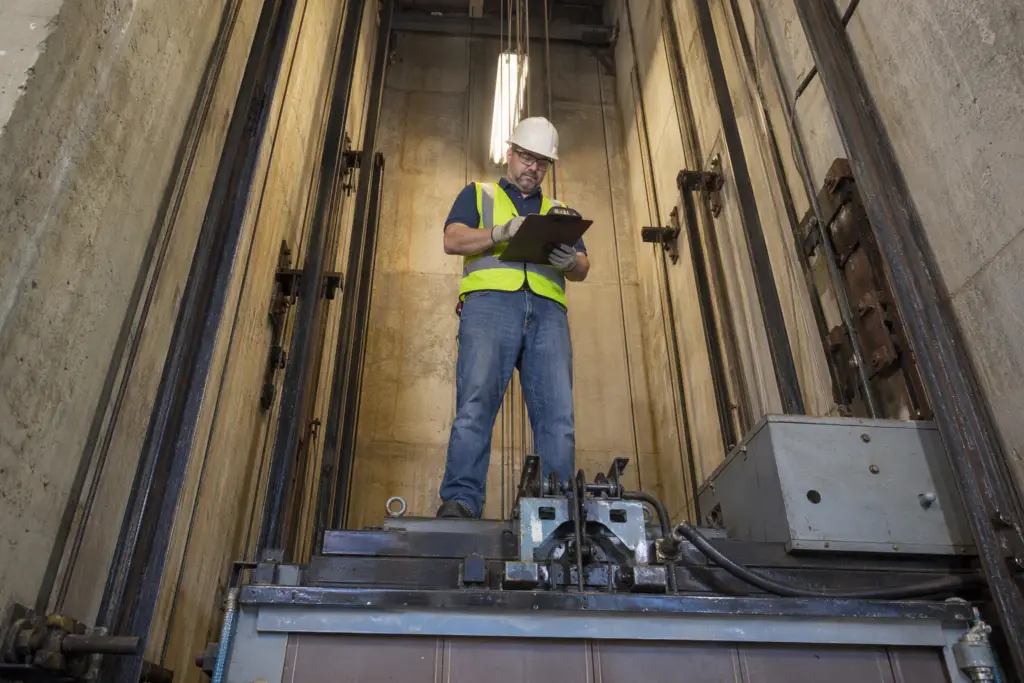
- Request a condition assessment: Have a certified elevator contractor inspect and document the current state of all major components — controller, motor, drive, doors, safety devices, and cab.
- Establish a cost baseline: Compile the last 24–36 months of maintenance invoices, energy bills attributable to the elevator, and any downtime incident logs.
- Identify compliance gaps: Review inspection records and any notices of violation to understand which ASME A17.3 or ADA requirements are outstanding.
- Define modernization scope: Work with your contractor to match the modernization scope to the specific deficiencies identified — avoid over-specifying or under-specifying the project.
- Obtain multiple competitive bids: Ensure all bids are based on identical scope of work and equipment specifications to enable true apples-to-apples comparison.
- Model the full ROI: Build a multi-year financial model that includes energy savings, maintenance reduction, downtime cost avoidance, and compliance cost avoidance — not just the equipment price.
- Evaluate contractor qualifications: Confirm that the contractor is licensed by the South Carolina Department of Labor, Licensing and Regulation and has documented experience with the elevator type being modernized.
- Plan for post-modernization inspection: Any major modernization will require inspection and approval by the South Carolina elevator inspection program before the unit returns to service.
—
What Types of Elevator Systems Benefit Most from Modernization?
| System Type | Common Age for Modernization | Primary ROI Driver | Key Modernization Components |
|---|---|---|---|
| Hydraulic (older oil-based) | 15–25 years | Energy efficiency, fluid leak risk elimination, reliability | Power unit, valve, controller, fluid management |
| Traction (relay logic controller) | 20–30 years | Reliability, parts availability, energy with VFD addition | Controller, drive system, door operator |
| MRL (Machine Room-Less) early generation | 15+ years | Controls modernization, software updates | Controller software, fixtures, safety devices |
| Freight Elevators | 20+ years | Safety compliance, operational reliability | Controls, gate/door operator, safety devices |
—
Does Elevator Modernization Affect Property Value and Tenant Retention?
Elevator performance is directly visible to tenants, residents, and visitors. Slow, unreliable, or aesthetically dated elevators create negative impressions that affect leasing decisions — particularly in competitive commercial and multifamily markets in South Carolina. A modernized elevator with updated cab finishes, smooth ride quality, and fast door operation is a tangible amenity that property managers can highlight in marketing.
For office buildings and retail properties, elevator downtime can disrupt tenant business operations, create ADA accessibility barriers, and in some cases constitute a breach of lease obligations. The cost of a single extended outage — including tenant relations costs, emergency service fees, and potential legal exposure — can substantially exceed the annual savings from deferring modernization.
For residential buildings, particularly those serving elderly or mobility-limited residents, elevator reliability is not merely a convenience — it is a life-safety matter. Property owners who prioritize modernization in these settings may also reduce liability exposure from accessibility complaints under the Americans with Disabilities Act.
—
What Safety Standards Govern Elevator Modernization in South Carolina?
Elevator modernization in South Carolina must comply with applicable editions of the ASME A17.1 Safety Code for Elevators and Escalators for new and modernized components, and ASME A17.3, Safety Code for Existing Elevators and Escalators, for retroactive requirements on equipment in service. Work performed must also be consistent with applicable OSHA regulations governing construction and general industry safety during the installation process.
The South Carolina Department of Labor, Licensing and Regulation oversees elevator inspections within the state. Any modernization project that involves alterations to safety-critical components will require a permit, inspection, and certificate of operation before the elevator is returned to service. Building owners should verify that their contractor manages this permitting process as part of the project scope.
—
How Does an Independent Elevator Service Provider Compare to an OEM for Modernization?
| Factor | Independent Certified Contractor | OEM (Original Equipment Manufacturer) |
|---|---|---|
| Equipment Options | Can specify best-fit equipment from multiple manufacturers | Typically recommends proprietary equipment |
| Pricing Competition | Open to competitive bidding across brands | Limited competitive pressure on proprietary components |
| Long-Term Service Flexibility | Higher — not locked into single manufacturer’s service model | May tie ongoing service to proprietary parts access |
| Local Responsiveness | Often stronger for regional service relationships | Varies by OEM’s local branch structure |
| Code Knowledge | Strong independent contractors maintain current ASME certification | Strong — OEMs have large technical teams |
| Post-Modernization Support | Typically more flexible contract terms | May require OEM-only service agreement for warranty |
Carolina Elevator Service is an independent, certified elevator service company serving South Carolina. As an independent provider, Carolina Elevator Service is not tied to any single equipment manufacturer, which allows the team to recommend modernization solutions based on the specific needs of each property — rather than a predetermined equipment catalog. Building owners working with Carolina Elevator Service benefit from competitive equipment sourcing, transparent project scoping, and ongoing service relationships that are not locked into proprietary manufacturer agreements.
—
What Questions Should Property Managers Ask Before Approving a Modernization Budget?
Before a modernization budget is approved, property managers should be able to answer the following questions clearly:
- What is the documented failure rate and repair cost history of the current elevator system?
- Which specific ASME or ADA compliance gaps exist and what is the regulatory deadline or risk for each?
- Has the proposed modernization scope been independently verified against the actual condition of the equipment?
- What is the projected reduction in annual maintenance costs, and what assumptions underlie that estimate?
- Has the contractor provided a written permitting and inspection plan aligned with South Carolina requirements?
- What is the contingency plan for extended outages during the modernization process?
- Will the modernized system have a documented parts availability and service support pathway for the next 15–20 years?
—
What Is the Risk of Deferring Elevator Modernization?
Deferral is a financial decision with compounding consequences. Equipment that is deferred past its practical service life begins to accumulate risk in several categories simultaneously:
- Parts obsolescence: Replacement parts for relay-logic controllers and older hydraulic components become increasingly scarce and expensive. At some point, parts simply cannot be sourced, and an emergency failure forces an unplanned replacement under the worst possible cost conditions.
- Inspection failures: Aging equipment is more likely to fail periodic South Carolina elevator inspections, triggering mandatory shutdowns that remove owner control over timing and contractor selection.
- Safety incidents: Older safety devices, door operators, and leveling systems carry higher failure risk. A safety incident creates liability exposure that can dwarf any modernization cost.
- ADA exposure: If a tenant or visitor files an ADA complaint against a property with documented elevator accessibility deficiencies, the resulting legal and remediation costs are difficult to predict and control.
- Rising maintenance spend: Service contracts on aging equipment typically cost more and deliver less — contractors price in the higher risk of emergency response and parts sourcing on obsolete systems.
—
Ready to Evaluate Your Elevator Modernization ROI?
Understanding the true return on elevator modernization requires a thorough, property-specific assessment — not generic industry averages. Carolina Elevator Service provides free elevator assessments for building owners and property managers across South Carolina, helping you understand the current condition of your equipment, applicable compliance requirements, and the full financial picture of modernization options.
Contact Carolina Elevator Service for a free elevator assessment: 803-865-1400
Need elevator service you can rely on? Carolina Elevator Service is ready to help.