Elevator Accident Statistics: Data, Causes & Safety Facts
Understanding elevator accident statistics is essential for building owners, property managers, and facility directors in South Carolina who carry legal and moral responsibility for the safety of everyone who steps into a lift. This page compiles the most reliable publicly available data, explains the leading causes behind the numbers, and outlines the code-based obligations that apply to elevator owners operating under federal and South Carolina requirements.
Key Elevator Accident Statistics at a Glance
The table below contains figures drawn directly from federal agencies and peer-reviewed sources. Only data that can be attributed to a linked authority appears here.
| Statistic | Figure | Source |
|---|---|---|
| Estimated annual elevator/escalator fatalities (U.S.) | ~30 deaths per year | OSHA |
| Estimated annual elevator/escalator injuries requiring emergency treatment (U.S.) | ~17,000 injuries per year | OSHA |
| Share of elevator fatalities involving workers (maintenance, construction) | ~50% of all elevator-related deaths | OSHA |
Note: Escalator injuries are included in the combined OSHA totals above. Elevator-only figures are not separately published at the federal level with consistent annual frequency, which is why this table is intentionally limited to what OSHA has documented.
What Causes Most Elevator Accidents?

Federal safety agencies and independent safety researchers consistently identify a short list of root causes behind the majority of elevator incidents. Understanding these causes is the first step toward prevention.
- Deferred or inadequate maintenance: Worn cables, failing brakes, and degraded door mechanisms are leading contributors to unplanned incidents. Regular inspection and maintenance schedules are the primary defense against these failures.
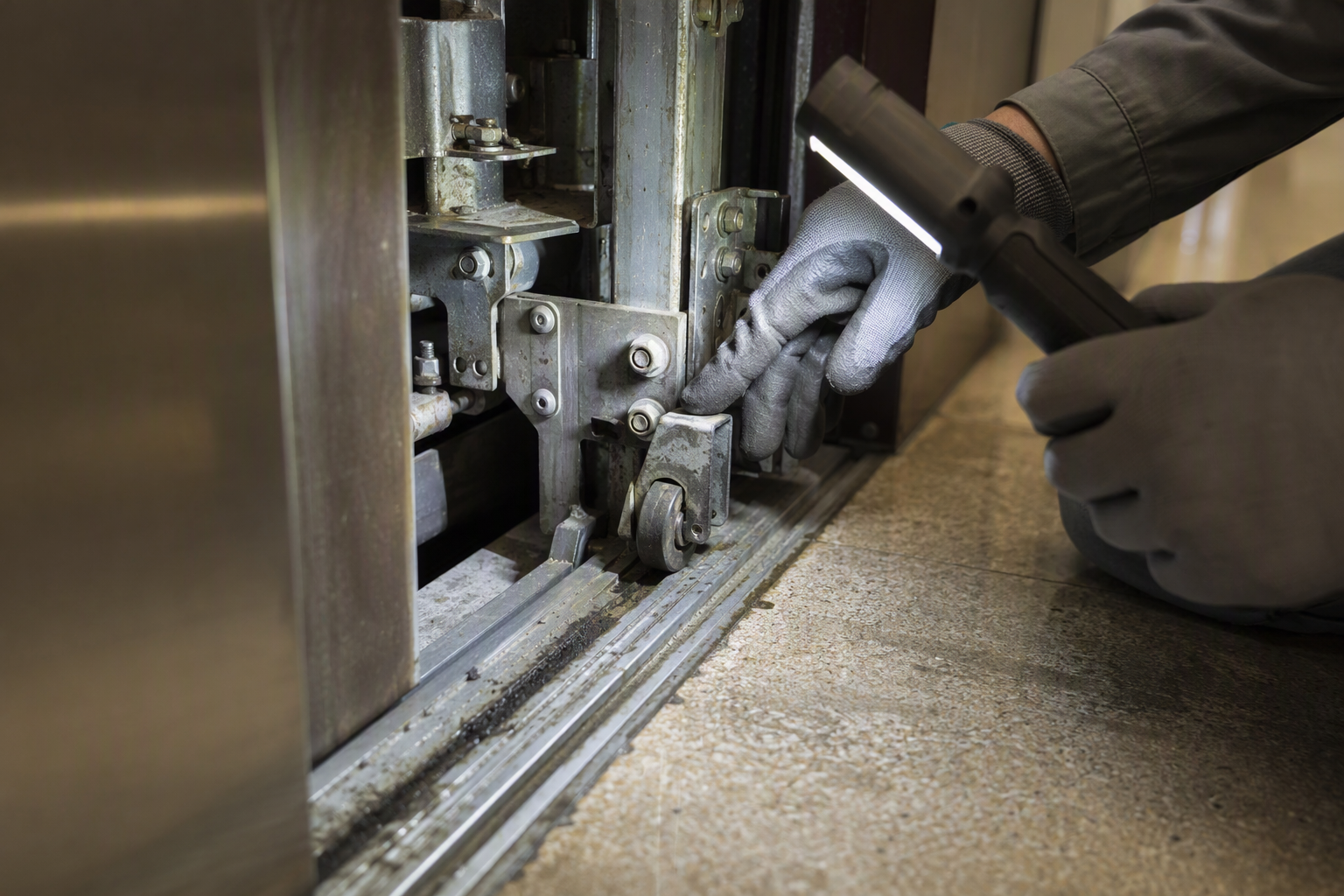
- Door malfunctions: Elevator doors that close prematurely, fail to detect obstructions, or reopen unexpectedly are responsible for a significant share of passenger injuries, particularly among elderly riders and children.
- Leveling errors: When an elevator car does not align flush with the landing floor, the resulting step creates a trip-and-fall hazard. Older hydraulic and traction systems are especially susceptible to leveling drift over time.
- Entrapment and misleveling: Passengers attempting to exit a car that has stopped between floors — or who try to force open doors — face serious injury risk. Proper emergency communication systems are required to prevent self-rescue attempts.
- Worker hazards during maintenance: OSHA data consistently shows that maintenance and construction workers account for roughly half of all elevator fatalities. Struck-by incidents, falls into shafts, and entanglement in mechanical components are the primary mechanisms.
- Code non-compliance: Equipment that has not been updated to reflect current editions of the ASME A17.1 Safety Code for Elevators and Escalators or ASME A17.3 Safety Code for Existing Elevators and Escalators presents elevated risk profiles, particularly in buildings constructed several decades ago.
How Safe Are Elevators Compared to Other Transportation?
Context matters when interpreting elevator accident statistics. Elevators collectively make billions of trips per year across the United States. Measured against total trips, the injury and fatality rates are extraordinarily low — making elevators statistically among the safest ways to move between floors of a building. Stairs, by contrast, are associated with a substantially higher rate of fall-related injuries and deaths on a per-use basis, according to data published by the National Safety Council and the Centers for Disease Control.
That said, “statistically safe on average” does not mean “safe when poorly maintained.” The difference between a well-maintained elevator and a neglected one is not marginal — it is the primary variable that separates routine operation from a serious incident.
Who Is Most at Risk in Elevator Accidents?
Risk is not evenly distributed across all elevator users. Specific populations face disproportionate exposure:
- Maintenance workers and mechanics: As noted by OSHA, workers in and around elevator shafts face the highest fatality risk of any group associated with elevator equipment.
- Elderly passengers: Older adults are at heightened risk of fall injuries related to misleveling, sudden starts and stops, and door timing issues.
- Young children: Children are disproportionately involved in door entrapment incidents and injuries related to attempting to board or exit moving cars.
- Individuals with disabilities: Passengers relying on elevators as their primary means of vertical access face compounded risk when equipment fails, particularly in buildings where no alternative accessible route exists. The Americans with Disabilities Act (ADA) establishes baseline requirements for elevator access and reliability in public accommodations and commercial facilities.
What Do Elevator Safety Codes Require in South Carolina?
South Carolina elevator safety operates under a framework of state-administered requirements that incorporate federal code standards. The following federal codes form the technical backbone of elevator safety requirements that apply in South Carolina:
- ASME A17.1 Safety Code for Elevators and Escalators — the primary design and installation standard for new elevator equipment.
- ASME A17.3 Safety Code for Existing Elevators and Escalators — establishes minimum retrofit and upgrade requirements for equipment already in service, which is particularly relevant for older buildings across South Carolina.
- Americans with Disabilities Act (ADA) — governs accessibility requirements for elevators in places of public accommodation and commercial facilities, including door timing, control height, and audible signals.
- OSHA standards — apply to construction and maintenance workers working on or around elevator equipment in South Carolina workplaces.
South Carolina building owners are responsible for ensuring their equipment undergoes required periodic inspections by qualified inspectors. Inspection certificates must typically be current and posted in the elevator cab. Failure to maintain valid inspection status can expose building owners to liability, regulatory penalties, and — most critically — increased risk of passenger injury.
What Should You Do Immediately After an Elevator Incident?
- Ensure immediate safety. If passengers are injured, call 911 before taking any other action. Do not attempt to move injured persons unless there is an immediate life threat from the environment.
- Secure the elevator. Take the unit out of service immediately. Post clear signage and, where possible, physically prevent further use until inspection is complete.
- Notify the appropriate authority having jurisdiction (AHJ). In South Carolina, reportable elevator incidents must be communicated to the relevant state agency that oversees elevator safety. Your elevator maintenance contractor can advise on the specific reporting obligation.
- Document the scene. Photograph the cab interior, landing, door mechanisms, and any visible damage or unusual conditions before the elevator is touched for inspection. Preserve any video footage from security systems.
- Contact a licensed elevator service company. A qualified technician should perform a thorough inspection before the unit is returned to service, regardless of how minor the incident may appear.
- Retain all maintenance and inspection records. These documents are critical in any subsequent regulatory review or legal proceeding and should be preserved without alteration.
- Conduct an internal review. Determine whether the incident was related to a known maintenance issue, a deferred repair, or a deficiency identified in a prior inspection report that was not addressed.
Frequently Asked Questions About Elevator Accident Statistics
How many people are injured by elevators each year in the United States?
OSHA reports that elevators and escalators combined are associated with approximately 17,000 injuries requiring emergency room treatment annually in the United States. These injuries range from minor lacerations and bruising to severe fractures and fatalities.
How many elevator deaths occur each year in the U.S.?
According to OSHA, approximately 30 people die each year in elevator and escalator-related incidents. This figure encompasses both passenger fatalities and worker fatalities, with workers representing roughly half of all deaths.
Are elevator accidents more common in old buildings?
Older buildings present a statistically higher risk profile for elevator incidents because aging equipment is more likely to exhibit mechanical wear, outdated safety systems, and components that predate modern code requirements under the ASME A17.3 Safety Code for Existing Elevators and Escalators. That said, age alone is not the determining factor — a well-maintained older elevator can operate safely, while a poorly maintained newer unit can present serious hazards.
What is the most common type of elevator accident?
Door-related incidents and trip-and-fall accidents caused by misleveling are among the most frequently reported categories of elevator passenger injuries. For workers, struck-by incidents and falls into shafts represent the most severe injury types, as documented by OSHA.
Are elevators safer than escalators?
Direct statistical comparisons between elevators and escalators are complicated by how federal agencies aggregate their data. OSHA and consumer safety agencies often report combined figures. What is well-established is that escalators account for a substantial portion of the combined injury total — particularly fall injuries — while elevator fatalities disproportionately involve workers rather than passengers.
What role does deferred maintenance play in elevator accidents?
Deferred maintenance is one of the most consistently cited contributing factors in elevator incident investigations. When known deficiencies — worn door components, deteriorating cables, faulty leveling systems — are not corrected on schedule, the probability of an incident increases significantly. Both ASME A17.1 and ASME A17.3 establish maintenance obligations specifically because the connection between maintenance and safety outcomes is so well documented.
Can a building owner be held liable for an elevator accident?
Liability exposure for building owners following an elevator incident is a legal determination that depends on specific facts, applicable state law, and the circumstances of the incident. As a general principle, building owners who can demonstrate they maintained current inspections, followed a documented maintenance program, and promptly addressed identified deficiencies are in a materially stronger position than those with gaps in their compliance records. This page does not constitute legal advice; building owners should consult qualified legal counsel for guidance specific to their situation.
How often should elevators be inspected to prevent accidents?
Inspection frequency requirements in South Carolina are established by the state’s elevator safety program and informed by the ASME A17.1 Safety Code for Elevators and Escalators. Periodic inspections are mandatory, and certificates must be current. Beyond mandatory inspections, qualified elevator service companies generally recommend supplemental maintenance visits at intervals determined by equipment age, usage volume, and operating environment.
What are the ADA requirements related to elevator safety?
The Americans with Disabilities Act establishes requirements for elevator accessibility in public accommodations and commercial facilities, including specifications for door timing, control panel height and Braille markings, audible floor signals, and cab dimensions. While ADA requirements are primarily framed around access rather than accident prevention, they intersect with safety when elevator malfunctions deny accessible-route users their required means of egress or access.
What trends are expected to affect elevator safety in 2025 and 2026?
Several qualitative trends are shaping elevator safety conversations heading into 2025 and 2026. The aging installed base of elevators across the United States — including in South Carolina — means that the code update requirements under ASME A17.3 are becoming increasingly relevant to a larger share of building owners. Remote monitoring technologies that can detect anomalies in door operation, leveling accuracy, and mechanical performance before they cause an incident are seeing wider adoption. Regulators and safety advocates are also placing greater emphasis on worker safety during maintenance operations, consistent with OSHA‘s documented concern that workers represent a disproportionate share of fatal elevator incidents.
How does Carolina Elevator Service approach elevator safety data?
Carolina Elevator Service approaches every client engagement from a data-driven perspective, using documented inspection findings, maintenance histories, and code compliance benchmarks to identify risk factors before they become incidents. Rather than relying on generalized assumptions about equipment condition, the team evaluates each unit against current applicable standards — including ASME A17.1 and A17.3 — and provides building owners with clear, documented findings they can act on.
Industry Trends Affecting Elevator Safety in 2025–2026
The elevator safety landscape in South Carolina and nationwide is being shaped by several converging forces that building owners should understand qualitatively, even when precise industry-wide statistics are not yet available:
- Aging infrastructure: A large portion of the elevator inventory in commercial and multifamily buildings across South Carolina was installed decades ago. As these units age, the gap between their original design specifications and current code requirements under ASME A17.3 widens, creating growing compliance and safety exposure for building owners who have not scheduled modernization assessments.
- Remote monitoring adoption: Advanced diagnostic systems that continuously monitor elevator performance parameters are becoming more accessible. These systems can flag door timing anomalies, leveling drift, and unusual vibration patterns — enabling proactive maintenance intervention before a safety event occurs.
- Increased regulatory scrutiny: Jurisdictions across the country are investing more resources in elevator inspection programs, and South Carolina building owners can reasonably expect continued emphasis on inspection currency and documented maintenance compliance.
- Worker safety focus: Given that OSHA data consistently identifies workers as among the most at-risk groups in elevator incidents, there is growing industry and regulatory attention on lockout/tagout procedures, shaft access protocols, and contractor qualification standards for anyone performing work on elevator equipment.
- Accessibility compliance intersecting with safety: As building owners face renewed scrutiny of their ADA compliance posture, the condition of elevator equipment — which serves as the primary accessible vertical transportation for many users — is receiving more attention from facility managers and legal counsel alike.
Why Elevator Accident Prevention Is a Building Owner’s Responsibility
Elevator accident statistics, when examined carefully, tell a consistent story: the overwhelming majority of serious incidents are preventable. The codes that govern elevator design, installation, and maintenance — including the ASME A17.1 Safety Code for Elevators and Escalators and the ASME A17.3 Safety Code for Existing Elevators and Escalators — exist precisely because the engineering community and regulators have identified the conditions that cause harm and codified the practices that prevent it.
For South Carolina building owners, the practical implication is clear: an elevator that is regularly inspected, professionally maintained, and brought into alignment with current code requirements is an elevator that is significantly less likely to appear in accident statistics. The inverse is also true — equipment with deferred maintenance, lapsed inspections, or known deficiencies that have not been remediated represents a quantifiable and avoidable risk to everyone who uses it.
Carolina Elevator Service works with commercial property owners, facility managers, and building engineers across South Carolina to assess elevator condition against current code standards, identify deficiencies, and develop maintenance and modernization plans grounded in documented findings rather than guesswork. A data-driven approach to elevator safety is not just a professional standard — it is the most effective risk management tool available to building owners.
Schedule Your Free Elevator Safety Assessment
Elevator accident statistics make clear that preventable incidents remain far too common — and that the gap between a safe elevator and a hazardous one almost always comes down to maintenance and compliance. Don’t wait for an incident to discover where your equipment stands.
Contact Carolina Elevator Service for a free elevator assessment: 803-865-1400
Carolina Elevator Service provides professional elevator inspection, maintenance, and compliance evaluations for commercial and multifamily properties throughout South Carolina — grounded in current ASME, ADA, and OSHA standards.
Need elevator service you can rely on? Carolina Elevator Service is ready to help.