Senior Living Elevator Requirements: What Healthcare Facilities in South Carolina Must Know
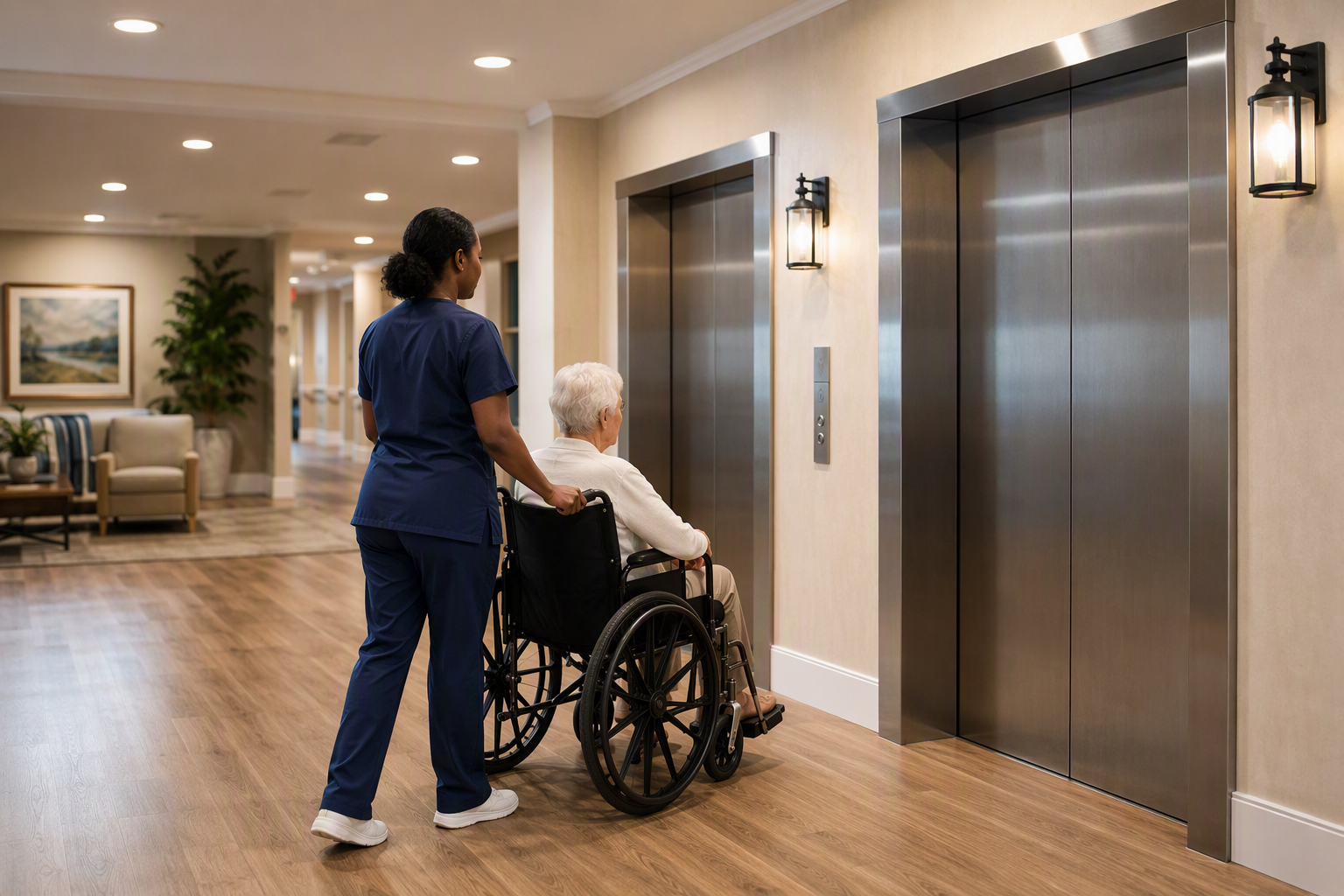
Senior living communities — including assisted living facilities, memory care centers, skilled nursing facilities, and continuing care retirement communities — operate under a unique intersection of federal accessibility law and state elevator safety codes. When a resident uses a wheelchair, a caregiver pushes a medical cart, or an emergency evacuation is required, the elevator in that building is not a convenience. It is a critical piece of healthcare infrastructure.
Understanding the full scope of senior living elevator requirements helps facility managers in Columbia, SC and across South Carolina plan for compliance, avoid costly citations, and most importantly, protect the people who depend on safe vertical transportation every day.
What Federal Codes Govern Elevators in Senior Living Facilities?
Two federal frameworks form the foundation of elevator compliance for senior living facilities:
- Americans with Disabilities Act (ADA): The ADA requires that places of public accommodation and commercial facilities — including senior living communities that serve the public — provide accessible vertical transportation. Elevator cab dimensions, door widths, control panel heights, and tactile signage are all governed by ADA Standards for Accessible Design.
- ASME A17.1 Safety Code for Elevators and Escalators: This is the primary safety standard for elevator design, installation, and performance. New elevator installations in senior living facilities must conform to this code. ASME A17.3, the Safety Code for Existing Elevators and Escalators, governs retrofitting and upgrades of older systems.
South Carolina adopts and enforces these standards through the SC Department of Labor, Licensing and Regulation (SC LLR), Elevator Division, which oversees permitting, inspections, and licensing for elevator contractors operating in the state.
What Are the ADA Elevator Requirements for Senior Living Communities?
Under the ADA, elevator compliance in senior living environments includes the following requirements:
- Door clear width: A minimum clear opening width is required to accommodate wheelchairs and medical equipment such as hospital beds and gurneys. Facilities should verify current dimensional requirements against the ADA Standards for Accessible Design.
- Cab size: The elevator car interior must be large enough to allow a wheelchair user to enter, turn, and exit. Larger cabs are often necessary to accommodate transport wheelchairs and staff assisting residents.
- Control panel height: Buttons must be mounted within a reachable range for individuals seated in wheelchairs. Both high and low reach limits apply.
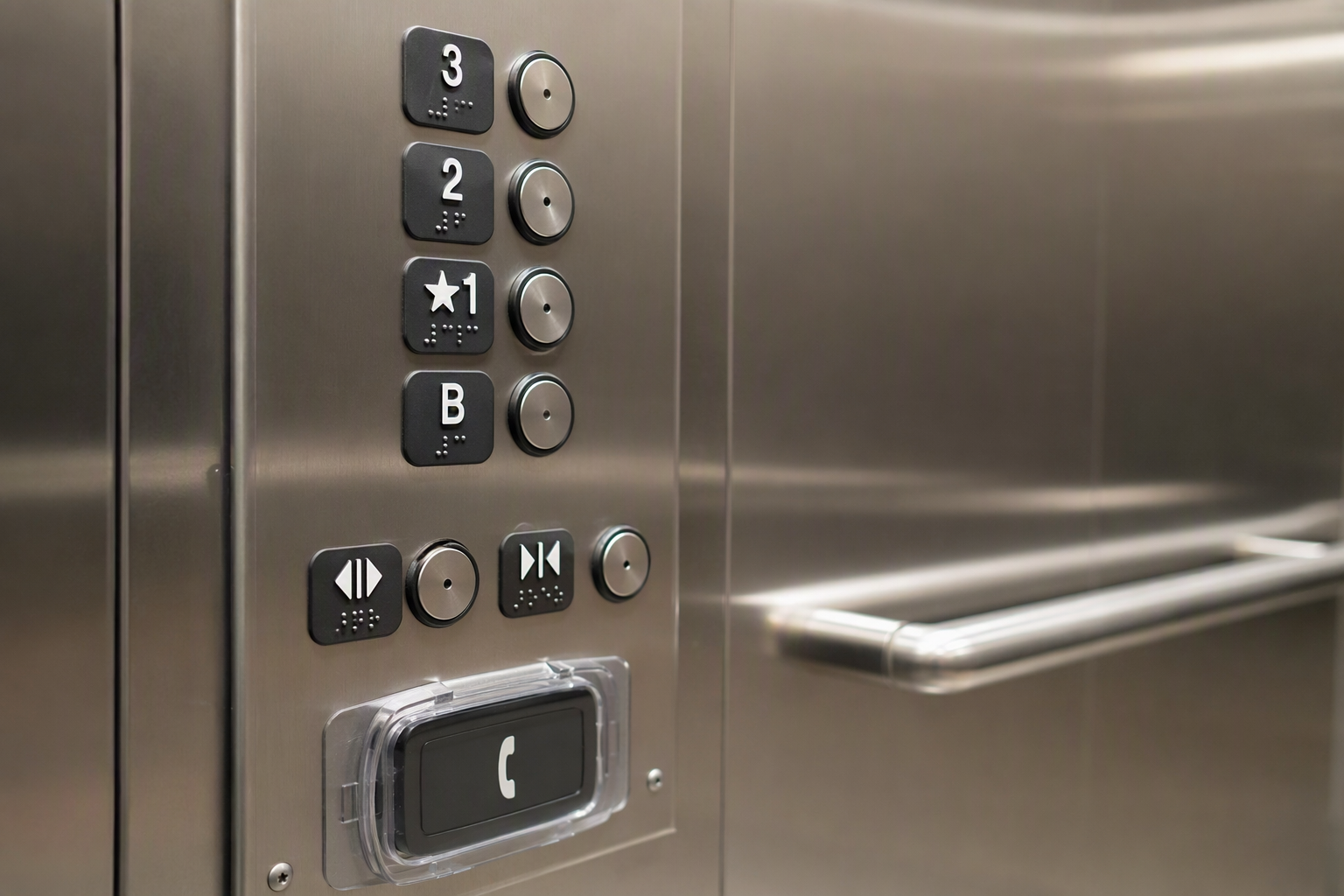
- Tactile and Braille signage: Floor designation signage must include raised characters and Braille, positioned at a height accessible to individuals with visual impairments.
- Hall call buttons: Must be operable with a closed fist and illuminated when activated.
- Audible and visual indicators: Elevators must signal floor arrivals both audibly and visually to accommodate residents with hearing or vision limitations.
- Emergency communication: A two-way communication system must be installed in the cab, enabling residents who may not be able to call for help verbally to summon assistance.
What ASME A17.1 Requirements Apply to Senior Living Elevators?
The ASME A17.1 Safety Code for Elevators and Escalators covers the full spectrum of mechanical, electrical, and structural safety requirements. For senior living facilities, the most operationally critical provisions include:
- Load capacity ratings: Elevators must be rated for the loads they will routinely carry, including residents in power wheelchairs, staff, and heavy medical equipment like bariatric beds or supply carts.
- Door safety devices: Safety edges and reopening devices must function reliably to prevent doors from closing on residents, walkers, or mobility aids.
- Emergency lighting and power: Elevator cabs must maintain emergency lighting in the event of a power failure, and hospitals and skilled nursing facilities may be required to connect elevators to emergency power systems.
- Inspection and testing intervals: ASME A17.1 specifies periodic inspection and load testing requirements. In South Carolina, these inspections are enforced through SC LLR.
- Firefighters’ emergency operation: Phase I and Phase II firefighters’ service is required, enabling controlled evacuation and fire department access during emergencies.
ASME A17.3 governs existing elevators and may require upgrades to bring older systems into conformance with current safety standards. Senior living facilities with aging elevator infrastructure should have equipment evaluated against current A17.3 requirements.
How Often Do Senior Living Elevators in South Carolina Need Inspection?
South Carolina requires that elevators in commercial and healthcare facilities — including senior living communities — be inspected on a periodic basis under SC LLR oversight. Both routine safety inspections and periodic load tests are required. Facility managers should contact SC LLR directly or work with a licensed elevator contractor like Carolina Elevator Service to confirm current inspection intervals and ensure certificates of inspection are maintained and posted as required by state law.
What Happens If a Senior Living Facility Fails an Elevator Inspection?
- Review the inspection report: The inspector’s written findings will identify each deficiency, categorized by severity. Some deficiencies require immediate correction; others may allow a compliance window.
- Notify your licensed elevator contractor immediately: Critical deficiencies — those that pose an imminent risk to users — may result in the elevator being taken out of service until repairs are completed.
- Document a corrective action plan: Prepare a written plan identifying each required repair, the responsible contractor, and a target completion date. This protects the facility in the event of a regulatory audit.
- Schedule and complete repairs: Work must be performed by a contractor licensed under SC LLR. Carolina Elevator Service holds the required South Carolina licensure to perform this work in Columbia and surrounding areas.
- Request a re-inspection: Once repairs are completed, a re-inspection must be scheduled through SC LLR to confirm the elevator is returned to compliant operation.
- Update maintenance records: All inspection reports, repair records, and certificates must be retained and made available to inspectors upon request.
What Are the Consequences of Non-Compliance for Senior Living Operators?
Elevator non-compliance in a senior living environment carries consequences that go beyond regulatory fines. SC LLR has authority to order an elevator out of service, which in a senior living facility can immediately compromise resident mobility, safety, and care delivery. Facilities found operating non-compliant elevators may also face liability exposure if an incident occurs. For memory care and skilled nursing facilities where residents cannot use stairs, a grounded elevator is an operational emergency.
What Elevator Features Are Most Important for Memory Care and Skilled Nursing Facilities?
Beyond baseline compliance, senior living communities serving residents with cognitive or physical limitations benefit from enhanced elevator features:
- Restricted access controls: Keypad or key-switch access limits unsupervised elevator use by residents with dementia or wandering behaviors — a critical safety feature in memory care environments.
- Extended door hold times: Adjustable door timing allows slower-moving residents, those using walkers, or staff transporting residents in wheelchairs to board and exit safely.
- Handrails inside the cab: Provides stability for ambulatory residents who may be unsteady on their feet.
- Soft start and stop: Smooth acceleration and deceleration reduces fall risk for residents with balance issues.
- Emergency phone monitoring: An active monitoring connection ensures that any resident who activates the emergency call system reaches a live respondent at all times.
How Should Senior Living Facilities Plan for Elevator Modernization?
Many senior living facilities in South Carolina operate elevators installed decades ago. As ASME A17.3 modernization requirements evolve and ADA enforcement standards are updated, older equipment may require upgrades to remain legally compliant and functionally adequate for today’s resident population.
A planned modernization approach — rather than reactive emergency repair — allows facilities to budget appropriately, minimize disruption to residents, and address compliance gaps before an inspection identifies them. Carolina Elevator Service works with senior living operators in the Columbia, SC area to assess existing equipment, identify modernization priorities, and develop a phased approach that keeps facilities operational and compliant.
What Is the Role of the Authority Having Jurisdiction (AHJ) in South Carolina?
In South Carolina, the Authority Having Jurisdiction for elevator safety is the SC Department of Labor, Licensing and Regulation, Elevator Division. The SC LLR Elevator Division enforces ASME A17.1 and A17.3 standards for new and existing installations, licenses elevator contractors, and administers the inspection and permitting process. Senior living facility managers should maintain an active relationship with SC LLR and ensure that all contractor work is performed by properly licensed individuals.
Questions Your Inspector Will Ask
When SC LLR inspects an elevator at a senior living facility, the inspector will typically assess the following areas. Facility managers can use this list to conduct an internal readiness review before a scheduled inspection:
- Is the current certificate of inspection posted inside the elevator cab as required?
- Is the elevator operating within its posted load capacity?
- Are door reopening devices and safety edges functional and unobstructed?
- Does Phase I and Phase II firefighters’ emergency operation function correctly?
- Is the two-way emergency communication system operational and connected to a monitored line?
- Is emergency lighting functional inside the cab?
- Are all required ADA-compliant features intact — including tactile signage, Braille markings, and audible/visual floor indicators?
- Are maintenance logs and service records available and up to date?
- Have any modifications or repairs since the last inspection been performed by a licensed contractor and properly permitted?
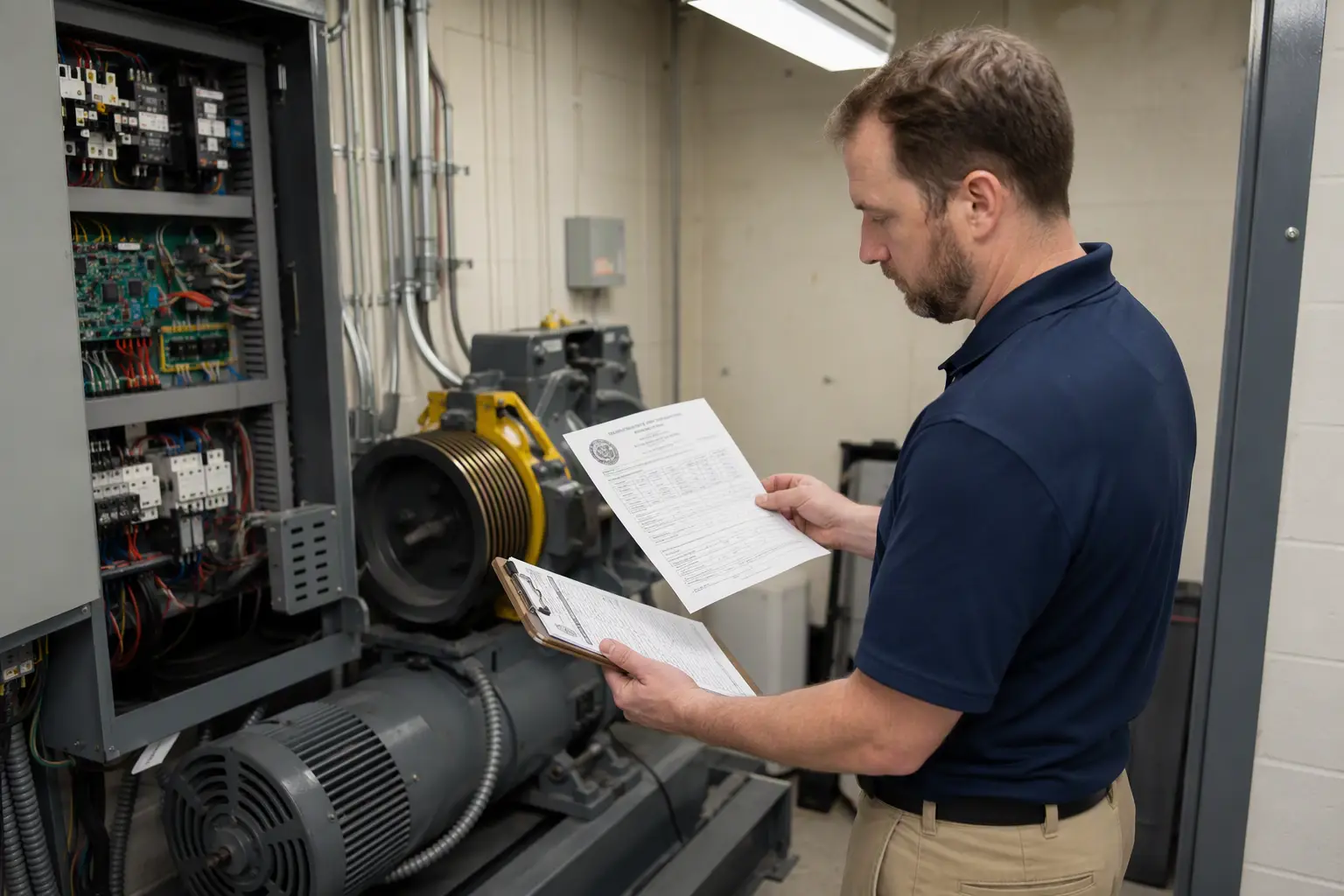
- Is the machine room access secure, clean, and properly ventilated?
How Can Senior Living Facilities Choose the Right Elevator Service Partner?
Not all elevator service companies have experience with the operational demands and regulatory environment of healthcare and senior living settings. When evaluating service partners, facility managers in South Carolina should look for:
- Active licensing under SC LLR Elevator Division
- Demonstrated experience servicing elevators in healthcare and senior living environments
- Familiarity with both ASME A17.1/A17.3 and ADA compliance requirements
- Capacity to perform preventive maintenance, emergency repairs, and full modernization projects
- Local presence in the Columbia, SC area for consistent service and regulatory familiarity
Carolina Elevator Service is a licensed elevator contractor serving senior living communities and healthcare facilities in Columbia, SC and throughout South Carolina. The team at Carolina Elevator Service is equipped to conduct elevator assessments, perform code-compliant repairs, and guide facilities through the modernization and inspection process.
What Should Senior Living Facility Managers Do Right Now to Ensure Compliance?
- Locate and review your current certificate of inspection to confirm it is valid, posted in the cab, and reflects the correct equipment.
- Audit your maintenance records to verify that all service work has been documented and performed by a licensed contractor.
- Walk through the ADA checklist covering cab dimensions, control heights, tactile signage, door function, and emergency communication.
- Test Phase I and Phase II firefighters’ service and document results.
- Schedule a professional elevator assessment with a licensed South Carolina elevator contractor to identify any compliance gaps before your next inspection.
Get a Free Elevator Assessment for Your Senior Living Facility
Elevator compliance in a senior living environment is not optional — it is a condition of safe, legally sound operations. Whether your facility needs a routine inspection review, help navigating ASME A17.1 or ADA requirements, or a full modernization plan, Carolina Elevator Service is ready to help.
Contact Carolina Elevator Service for a free elevator assessment: 803-865-1400
Serving Columbia, SC and senior living communities throughout South Carolina.
Need elevator service you can rely on? Carolina Elevator Service is ready to help.