Healthcare Facility Elevator Code: Comparison & Decision Guide for South Carolina Facilities
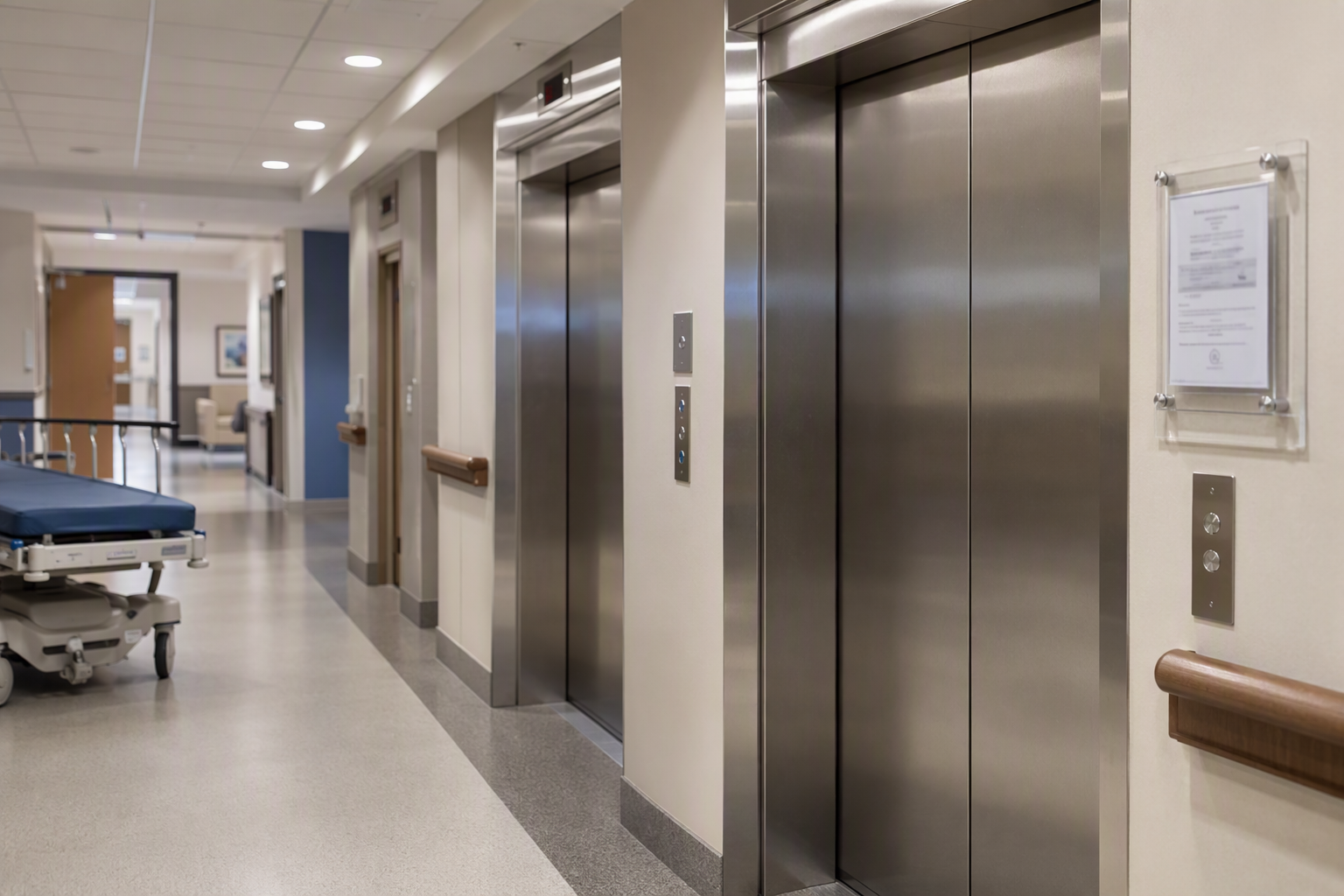
Choosing the right compliance path for a hospital, clinic, or long-term care facility elevator involves balancing patient safety, regulatory mandates, inspection timelines, and capital budgets. This guide breaks down every layer of applicable code, compares compliance approaches, and helps South Carolina healthcare administrators make informed decisions.
What Codes Govern Healthcare Facility Elevators in South Carolina?
South Carolina healthcare facility elevators fall under a layered regulatory framework. Understanding which codes apply — and how they interact — is the first step toward a compliant, patient-safe vertical transportation system.
| Code / Standard | Scope | Applies To | Enforcing Body (SC) |
|---|---|---|---|
| ASME A17.1 | New elevator installations and major alterations | All new healthcare facility lifts, dumbwaiters, escalators | SC LLR / AHJ |
| ASME A17.3 | Existing elevator safety retrofit requirements | Older hospital elevators not yet brought to A17.1 standard | SC LLR / AHJ |
| ADA Standards for Accessible Design | Accessibility for persons with disabilities | All public-access healthcare elevators | U.S. DOJ / HHS OCR |
| OSHA General Industry Standards | Worker safety during maintenance and construction | All elevator maintenance personnel | Federal OSHA / SC OSHA |
South Carolina adopts ASME A17.1 and A17.3 by reference through the SC LLR’s Elevator and Amusement Ride Safety program. Any healthcare facility planning new construction, renovation, or equipment replacement must obtain a permit from SC LLR before work begins and pass a final inspection before the elevator is returned to service.
How Do ASME A17.1 and A17.3 Differ for Healthcare Settings?
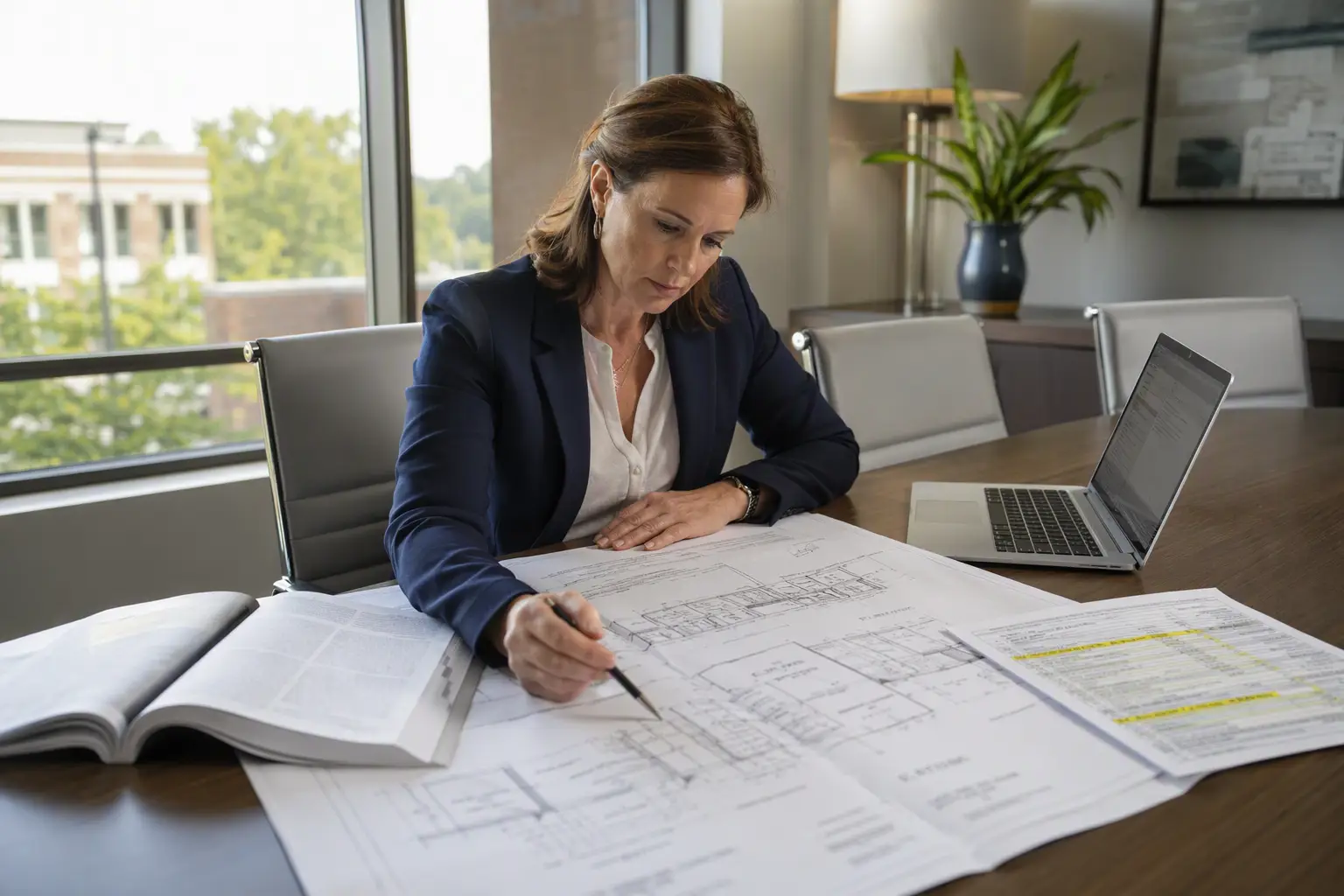
The distinction between these two codes is critical for healthcare budget planning and compliance timelines.
| Factor | ASME A17.1 (New/Altered) | ASME A17.3 (Existing) |
|---|---|---|
| When it applies | New installations; major alterations triggering full upgrade | Existing equipment subject to retroactive safety requirements |
| Safety device requirements | Full current-edition requirements; most stringent | Retroactive minimums; less demanding than A17.1 but still mandatory |
| Permit required? | Yes — before any work begins | Yes — for any required alterations |
| Inspection frequency | Post-installation; then ongoing per SC LLR schedule | Ongoing per SC LLR schedule |
| Typical healthcare relevance | New hospital wings, full elevator replacement, gurney-capacity upgrades | Legacy elevators in older clinics and long-term care buildings |
What Are the ADA Requirements Specific to Healthcare Elevators?
The ADA Standards for Accessible Design impose specific requirements on any elevator used by patients, visitors, or staff in a healthcare environment. Key requirements include minimum car dimensions sufficient to accommodate wheelchair users, accessible call button placement, audible and visual floor indicators, and Braille/tactile signage. Healthcare facilities serving patients with mobility impairments must pay particular attention to these standards, as non-compliance can trigger federal complaints through the Department of Justice or the HHS Office for Civil Rights.
Facilities undergoing any renovation that affects vertical access must ensure the altered elevator meets current ADA standards — not simply the standard in effect at the time of original construction.
How Does OSHA Apply to Healthcare Elevator Maintenance?
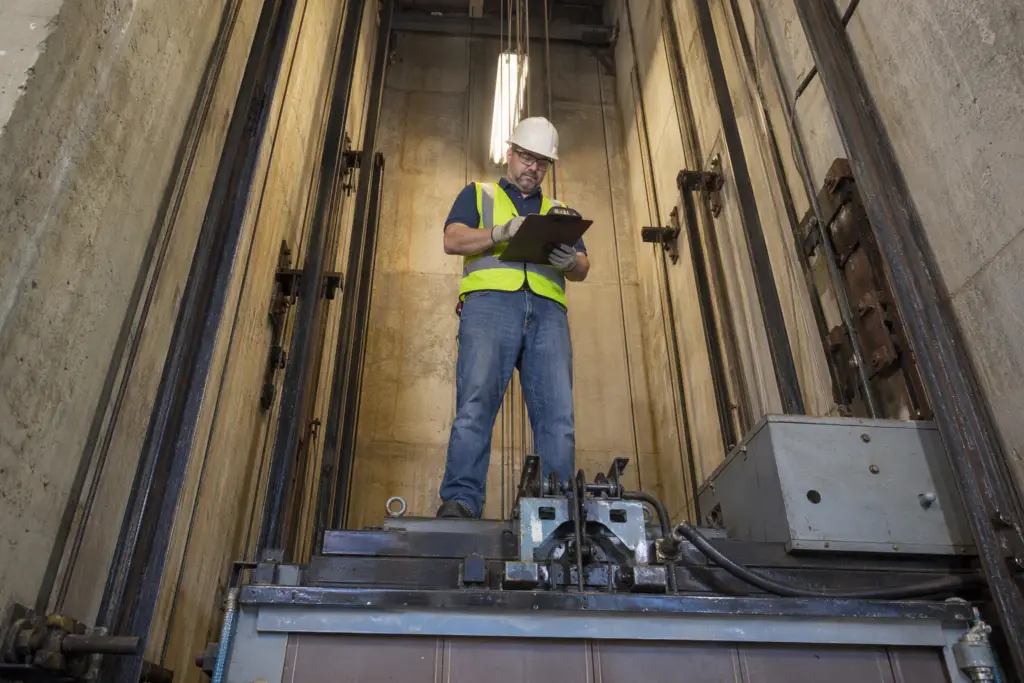
OSHA general industry standards govern the safety of workers who inspect, maintain, and repair elevators in healthcare settings. Lockout/tagout procedures, confined space protocols, and fall protection requirements all apply when technicians work in elevator pits, hoistways, or on top of cars. Healthcare facility managers should verify that any elevator service contractor maintains current OSHA compliance documentation and safe work procedures before awarding a maintenance contract.
What Is the Compliance Comparison: Full Modernization vs. Targeted Retrofit vs. Ongoing Maintenance Contract?
| Approach | Pros | Cons | Best For | Compliance Outcome |
|---|---|---|---|---|
| Full Modernization | Meets full ASME A17.1; longest lifecycle; best energy profile; reduced long-term maintenance burden | Highest upfront capital cost; extended downtime during installation | Elevators beyond useful service life; facilities planning major renovations | Full current-code compliance |
| Targeted Retrofit (A17.3) | Lower cost than full replacement; addresses specific safety deficiencies; minimizes downtime | Does not bring equipment to full A17.1 standard; may require follow-on work as codes update | Serviceable existing equipment with specific deficiencies identified at inspection | ASME A17.3 retroactive compliance |
| Preventive Maintenance Contract | Predictable operating cost; extends equipment life; supports inspection readiness; reduces unplanned downtime | Does not substitute for required code upgrades; alone cannot bring a non-compliant elevator into compliance | All compliant elevators as an ongoing operational layer | Maintains existing compliance; supports inspection outcomes |
What Is the Step-by-Step Process for Bringing a Healthcare Elevator Into Code Compliance in South Carolina?
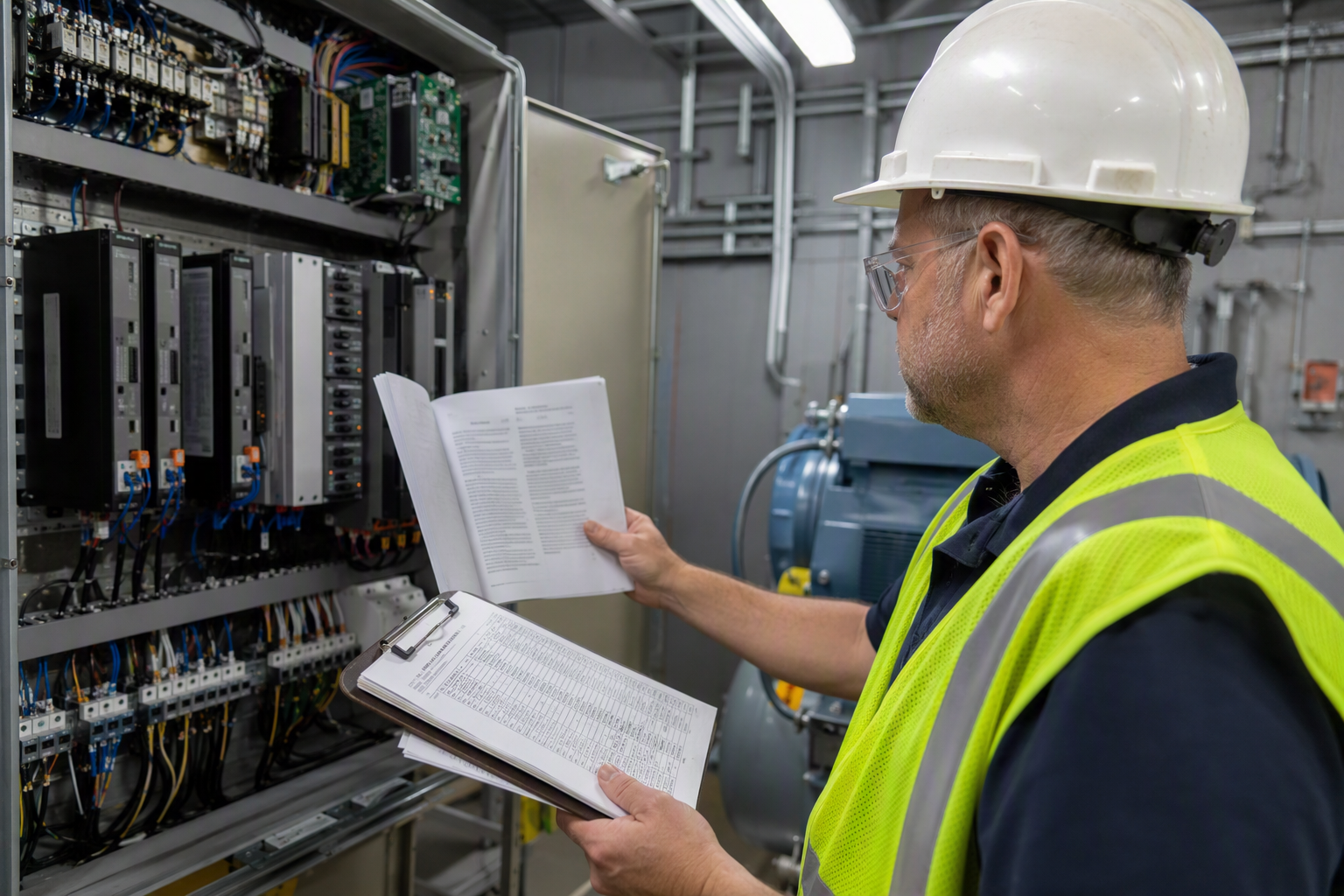
- Conduct a code compliance audit. Engage a qualified elevator contractor to assess the current condition of each elevator against applicable ASME A17.1 or A17.3 requirements and ADA standards. Document every deficiency in writing.
- Identify the authority having jurisdiction (AHJ). In South Carolina, this is the SC Department of Labor, Licensing and Regulation (LLR) Elevator and Amusement Ride Safety program. Contact LLR early to confirm the current adopted code edition and any local amendments.
- Determine the correct compliance pathway. Based on the audit, decide whether the elevator requires full modernization under ASME A17.1, targeted retrofit under ASME A17.3, or ADA-specific modifications.
- Submit permit applications to SC LLR. No code-required alteration or new installation work may begin without an approved permit. Submit complete plans and specifications as required by LLR.
- Select a licensed elevator contractor. Verify that the contractor holds the required SC LLR license for elevator work. Carolina Elevator Service is an independent certified elevator service provider serving South Carolina healthcare facilities.
- Execute the approved scope of work. All work must follow the approved permit documents and ASME code requirements. Maintain a job site record of all inspections and approvals.
- Schedule and pass the SC LLR inspection. A licensed inspector must inspect and approve the work before the elevator returns to service. Obtain and post the updated Certificate of Operation.
- Implement a preventive maintenance program. After compliance is achieved, maintain a documented maintenance schedule to support future inspections and extend equipment service life.
What Are the Most Critical Safety Features Required in Hospital Elevators?
Healthcare facility elevators carry patients on gurneys, staff operating complex equipment, and visitors — often in time-sensitive situations. The ASME A17.1 Safety Code for Elevators and Escalators mandates a range of safety devices and operational features. Key requirements relevant to healthcare settings include:
- Emergency lighting and communication: Elevator cars must have emergency lighting and a two-way communication system to allow occupants to summon help if the car becomes stalled.
- Door reopening devices: Doors must reopen automatically if they contact a passenger or object — critical when transporting patients on gurneys.
- Firefighters’ emergency operation (Phase I and Phase II): Required to allow fire department personnel to control elevator movement during an emergency evacuation.
- Seismic safety devices: Required where applicable by code based on seismic risk classification.
- Car size and capacity: Healthcare facilities typically require larger car dimensions to accommodate hospital beds, wheelchairs, and medical equipment — plan dimensions must meet both ASME and ADA minimums.
- Pit safety features: Pit lighting, stop switches, and ladder requirements per ASME A17.1 protect maintenance personnel.
How Often Must Healthcare Facility Elevators Be Inspected in South Carolina?
South Carolina requires periodic inspections of elevators through the SC LLR Elevator and Amusement Ride Safety program. The inspection frequency and the specific tests required — including periodic safety tests — are governed by the adopted edition of ASME A17.1 and ASME A17.3. Healthcare facilities should not wait for an LLR-initiated inspection cycle to identify deficiencies — proactive maintenance and internal audits support better inspection outcomes and reduce the risk of a failed inspection that could put an elevator out of service.
A Certificate of Operation must be posted in each elevator cab and renewed following successful inspection. Operating an elevator without a current certificate is a violation of South Carolina law.
What Happens If a Healthcare Elevator Fails a South Carolina Inspection?
When SC LLR identifies violations during an inspection, the elevator may be placed out of service until deficiencies are corrected and a re-inspection is passed. For a healthcare facility, an elevator out of service creates immediate operational challenges — delayed patient transport, increased staff workload, and potential patient safety concerns. The facility must:
- Receive a written notice of violation from the inspector detailing each deficiency
- Engage a licensed contractor to perform the required corrections
- Submit for re-inspection before returning the elevator to service
- Maintain documentation of all corrective actions for the facility’s compliance records
Proactive relationships with a qualified elevator service provider — such as Carolina Elevator Service — help facilities address potential deficiencies before they become inspection failures.
How Should Healthcare Facilities Compare Independent vs. OEM Elevator Service Providers?
| Factor | Independent Provider (e.g., Carolina Elevator Service) | OEM / Manufacturer-Affiliated Provider |
|---|---|---|
| Equipment brand flexibility | Services multiple brands — important for facilities with mixed elevator inventory | Typically focused on proprietary equipment; may not service all brands |
| Parts sourcing | Access to OEM and compatible parts; may offer broader sourcing options | Proprietary parts access; may limit third-party part options |
| Local market knowledge | Deep knowledge of SC LLR requirements and local AHJ relationships | Variable; may rely on national service networks with less local depth |
| Contract flexibility | Typically more flexible contract terms; easier to customize scope | Often standardized national contract structures |
| Code compliance support | Focused on ASME A17.1/A17.3 and ADA compliance across all equipment types | Compliance support typically strong for their own equipment line |
Carolina Elevator Service operates as an independent certified elevator service company throughout South Carolina, providing maintenance, inspection preparation, modernization, and code compliance services to healthcare facilities regardless of elevator brand or age.
What Should a Healthcare Facility Include in an Elevator Maintenance Contract for Code Compliance?
A well-structured maintenance agreement is a key tool for sustaining code compliance between SC LLR inspections. Healthcare facility administrators should look for contracts that address:
- Documented preventive maintenance visits with written reports retained for facility records
- Coverage for lubrication, adjustment, and cleaning of all code-required safety devices
- Testing of emergency lighting, communication systems, and door safety devices
- A clear scope defining what is included versus billable as extra work
- Provision of maintenance logs that support the facility’s inspection readiness documentation
- Contractor’s current SC LLR license number included in the agreement
How Do Healthcare Elevator Code Requirements Interact with Joint Commission or CMS Standards?
Hospitals and other healthcare facilities accredited by The Joint Commission or certified by the Centers for Medicare & Medicaid Services (CMS) face an additional layer of life safety and environment of care requirements. While The Joint Commission and CMS do not independently establish elevator codes, they do require facilities to comply with applicable federal and state codes — including ASME A17.1, ASME A17.3, and ADA standards — as part of their environment of care and life safety chapter requirements. Surveyors may review elevator certificates of operation, maintenance logs, and inspection records during accreditation surveys. Gaps in elevator compliance documentation can become findings in a Joint Commission or CMS survey, with direct implications for accreditation status.
What Are the Key Decision Factors When Planning a Healthcare Elevator Modernization?
Before committing to a modernization project, South Carolina healthcare facility managers should evaluate the following factors:
| Decision Factor | Key Questions to Ask |
|---|---|
| Equipment age and condition | Is the equipment beyond its expected service life? Are parts still available? |
| Current compliance status | What deficiencies exist? Are they ASME A17.1, A17.3, or ADA items? |
| Operational disruption tolerance | Can the facility manage elevator downtime during a full modernization? Is phased work possible? |
| Capital budget vs. operating budget | Is this a capital project or an operational expense? How does this affect financing and approval timelines? |
| Future facility plans | Is the building scheduled for major renovation or expansion? Timing modernization with construction reduces cost and disruption. |
| Patient population needs | Does the current car size, capacity, and accessibility meet the needs of the patient population served? |
Why Choose Carolina Elevator Service for Healthcare Elevator Code Compliance in South Carolina?
Carolina Elevator Service is an independent certified elevator service company serving South Carolina healthcare facilities. The company provides code compliance assessments, preventive maintenance programs, modernization project management, and inspection preparation services — all calibrated to the specific requirements of the SC LLR, ASME A17.1 and A17.3, ADA, and OSHA. As an independent provider, Carolina Elevator Service services elevators across multiple brands and equipment generations — making it a practical choice for healthcare campuses with mixed elevator inventories.
Healthcare facility administrators who want clear, documented answers to their elevator compliance questions — and a service partner who understands the operational stakes of elevator reliability in a clinical environment — are encouraged to start with a comprehensive assessment.
Ready to Confirm Your Healthcare Facility’s Elevator Compliance?
Contact Carolina Elevator Service for a free elevator assessment. Our team will review your equipment’s condition, document applicable ASME A17.1, A17.3, and ADA requirements, and provide a clear compliance roadmap specific to your South Carolina facility.
Carolina Elevator Service — Certified Elevator Compliance for South Carolina Healthcare Facilities
Need elevator service you can rely on? Carolina Elevator Service is ready to help.