Elevator Code Update Requirements: A Complete Compliance Guide for South Carolina Building Owners
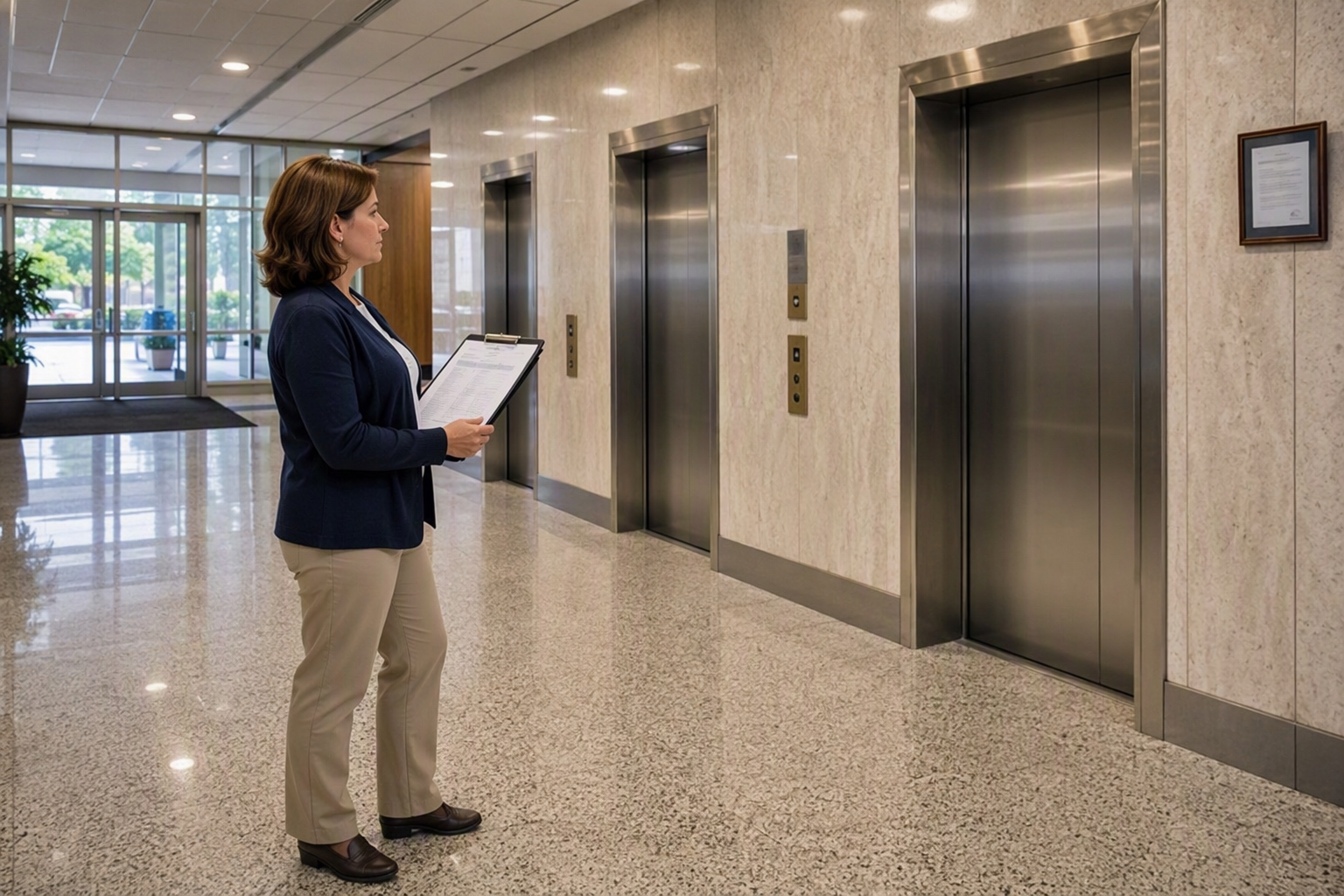
For building owners, property managers, and facility directors in South Carolina, elevator code update requirements represent one of the most consequential compliance obligations tied to vertical transportation. Falling behind on mandatory upgrades can trigger fines, forced shutdowns, and serious liability exposure. This guide breaks down what the codes require, which triggers force upgrades, and how to build a compliance roadmap that keeps elevators safe and legally operational.
What Are the Core Elevator Codes That Apply in South Carolina?
South Carolina elevator compliance rests on a framework built from nationally recognized model codes and federal law. The two foundational documents every building owner should understand are:
- ASME A17.1, Safety Code for Elevators and Escalators — This is the primary installation and new-construction code. It establishes the safety requirements that apply to elevators at the time they are designed, installed, or undergo major alterations.
- ASME A17.3, Safety Code for Existing Elevators and Escalators — This is the retrofit and existing-equipment code. It defines which safety features older elevators must be brought up to when they are altered or when the AHJ requires upgrades. South Carolina buildings are primarily evaluated under A17.3 for ongoing compliance obligations.
In addition to ASME standards, two federal frameworks impose independent obligations on South Carolina elevator owners:
- The Americans with Disabilities Act (ADA) — Requires accessible vertical transportation in covered buildings. ADA compliance is not optional and can require physical modifications to cab dimensions, control panel heights, door timing, and audible signals.
- OSHA Standards — OSHA’s general industry and construction standards apply to workplace elevator safety, including requirements relevant to maintenance technicians and construction hoists.
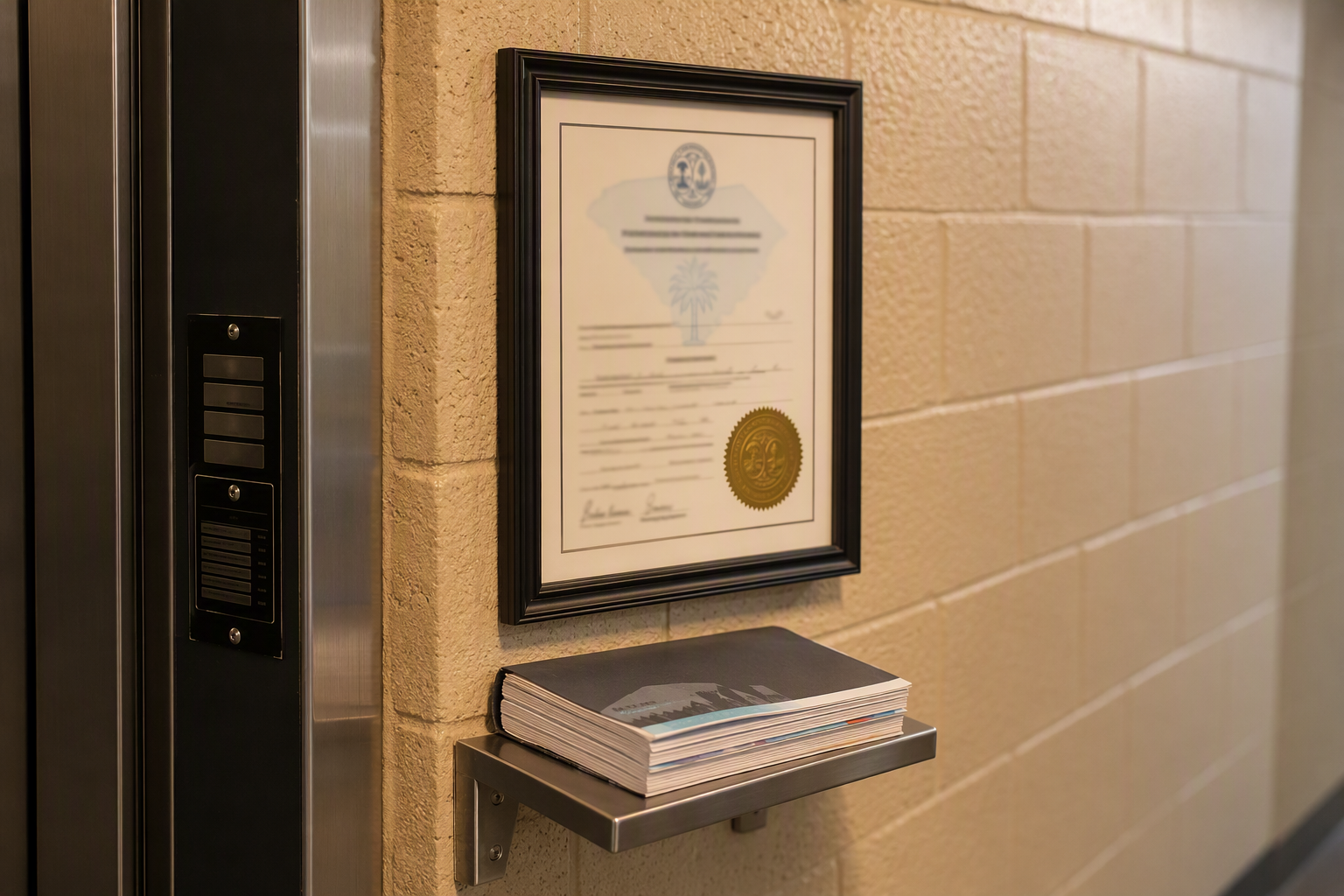
South Carolina administers elevator safety through a state licensing and inspection program, and buildings must maintain certificates of operation issued through the state’s oversight process. The local AHJ — which may be a state inspector, a county building department, or a city official depending on jurisdiction — has authority to mandate specific upgrades beyond the minimum code baseline.
What Triggers an Elevator Code Update Requirement?
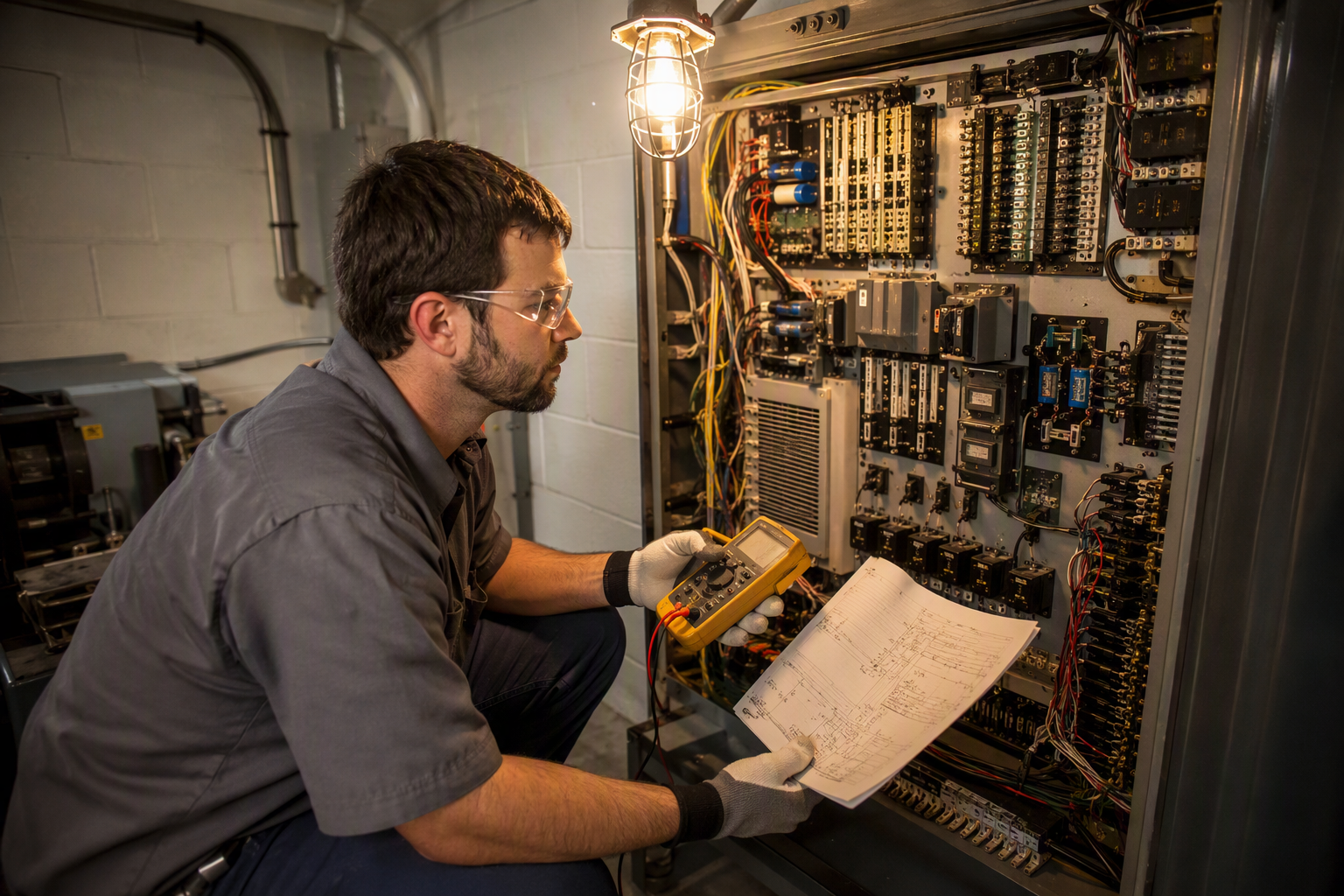
Not every code edition change automatically requires a building to retrofit existing equipment. Code update obligations are generally triggered by specific events or conditions. Understanding these triggers is critical to anticipating compliance costs and timelines.
Common triggers that require code updates under ASME A17.3 include:
- Alterations to existing equipment — When a building owner replaces major components such as the controller, the drive system, the door operator, or the hydraulic power unit, the altered equipment must be brought into compliance with applicable ASME A17.1 requirements, and the rest of the elevator is evaluated under A17.3.
- Change of use or occupancy — Converting a building from one use classification to another (e.g., office to residential) can trigger a full elevator compliance review.
- Reinspection failures — When an elevator fails its periodic state inspection, the inspector can require specific upgrades as a condition of certificate renewal.
- AHJ mandates — The state elevator safety office or a local AHJ may proactively require upgrades when a code edition is formally adopted or when safety concerns arise independent of an alteration.
- Insurance and financing requirements — Property insurers and lenders increasingly require documented code compliance as a condition of coverage or loan approval.
- Incident investigations — A reported accident or entrapment on an elevator can prompt an enforcement action that results in mandatory upgrades before the unit may return to service.
What Safety Features Does ASME A17.3 Commonly Require on Existing Elevators?
ASME A17.3 identifies a range of safety devices and systems that existing elevators may be required to retrofit depending on their age and configuration. Because the specific section numbers applicable to a given elevator depend on its installation date, drive type, and the code edition adopted by the AHJ, building owners should always have a licensed elevator contractor conduct a formal code compliance survey before assuming which retrofits apply.
Commonly required upgrades on older South Carolina elevators include, but are not limited to:
- Car door electrical contact systems — Ensuring that doors cannot open unless the car is within the landing zone and that open doors prevent movement.
- Firefighters’ Emergency Operation (FEO) — Phase I lobby recall and Phase II in-car firefighter operation are required on virtually all passenger elevators and have been mandatory for many years. Older systems that do not fully conform require updating.
- Seismic safety devices — Depending on the seismic risk zone and AHJ requirements, certain counterweight and car safeties may be required.
- Car enclosure and lighting upgrades — Emergency lighting, alarm bells, and two-way communication systems in the cab are required under both ASME A17.3 and ADA guidelines.
- Pit and machine room safety — Pit lighting, pit stop switches, and machine room environmental controls are subject to ongoing code requirements.
- Hydraulic elevator environmental protection — Older single-bottom hydraulic cylinders present underground contamination risk; replacement with environmentally safe systems is an upgrade many South Carolina properties have addressed.
- Governor and safety system upgrades — Car and counterweight safety systems must meet the performance standards applicable to the elevator’s speed and capacity.
- ADA-required features — Control panel button height, braille markings, audible and visual indicators, and door re-opening devices must comply with ADA accessibility standards.
How Does a Code Compliance Survey Work? (Step-by-Step)
A code compliance survey is the structured process a licensed elevator contractor uses to document an existing elevator’s condition relative to applicable code requirements. The steps below describe the general process:
- Gather original installation records. The contractor reviews the original permit, installation date, and any prior alteration records. The installation date determines which edition of ASME A17.1 governed the original installation, which in turn defines the baseline for A17.3 evaluation.
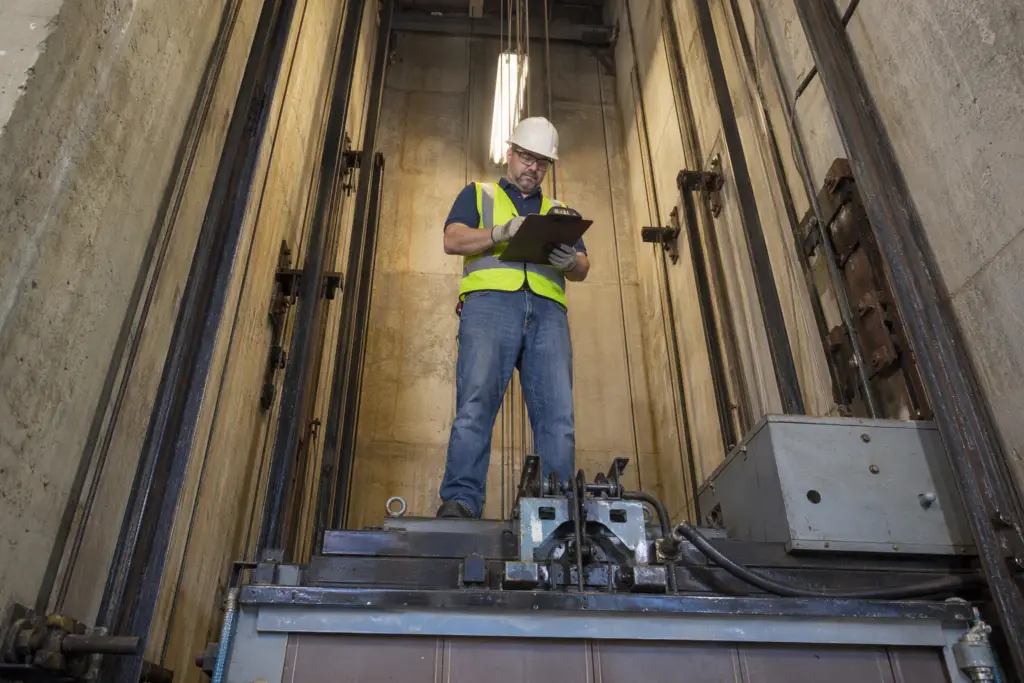
- Conduct a physical inspection of all systems. A trained elevator technician examines the car, hoistway, machine room, pit, and all safety devices. Each component is compared against applicable code requirements.
- Document deficiencies by category. Findings are organized into categories — items required immediately for certificate renewal, items required upon next alteration, and recommended but not yet mandatory improvements.
- Prepare a written code compliance report. The report lists each deficiency, the applicable code basis (citing ASME A17.3 or ADA as appropriate), and a recommended corrective action.
- Submit findings to the AHJ if required. In some cases, particularly following an inspection failure or incident, the compliance report must be submitted to the state elevator safety office along with a corrective action plan and proposed timeline.
- Prioritize and schedule upgrades. The building owner works with the contractor to sequence upgrades based on mandatory deadlines, budget cycles, and operational impact.
- Complete upgrades and schedule reinspection. After each phase of upgrades is completed, the AHJ inspects the work and, if satisfied, issues or renews the certificate of operation.
What Is the Difference Between ASME A17.1 and ASME A17.3?
ASME A17.1 governs the installation of new elevators and applies to equipment at the time it is installed or substantially altered. It sets the design, construction, and performance requirements that a new elevator must meet before it receives an initial certificate of operation.
ASME A17.3 governs existing elevators that are already in service. It recognizes that requiring every older elevator to instantly meet the full current A17.1 standard would be economically impractical, so it establishes a tiered system of retrofit requirements based on equipment age, type, and the nature of any alterations made. A17.3 is the code most directly relevant to building owners managing elevators that were installed years or decades ago.
In practical terms: when a South Carolina building owner replaces an old controller, A17.1 governs the new controller’s specifications, while A17.3 governs what other existing components may now require upgrading as a result of that alteration.
How Often Must Elevators Be Inspected in South Carolina?
South Carolina requires periodic inspections of elevators as a condition of maintaining a valid certificate of operation. Inspection intervals are set by the state elevator safety program, and failure to maintain a current certificate can result in the elevator being placed out of service.
Routine annual inspections examine the elevator’s general condition and verify that safety devices are functional. In addition to routine inspections, ASME A17.1 specifies periodic tests — including Category 1 and Category 5 tests for hydraulic and traction elevators — that must be performed on defined cycles. These tests assess the performance of safeties, buffers, pressure relief valves, and other critical systems at intervals more rigorous than visual inspections alone.
Building owners are responsible for ensuring that required tests are completed by a qualified elevator mechanic and that test results are documented and available for state inspector review.
What Are the ADA Requirements for Elevator Upgrades?
The Americans with Disabilities Act imposes accessibility obligations that operate independently of the ASME code framework. For buildings subject to ADA Title II (state and local government facilities) or Title III (places of public accommodation and commercial facilities), elevators serving multiple floors must generally meet ADA Standards for Accessible Design.
Key ADA elevator requirements that may require upgrades in existing South Carolina buildings include:
- Call button placement and minimum button size
- Raised character and braille floor designations
- Visual and audible floor indicators
- Door re-opening devices that respond to both obstruction and timing requirements
- Minimum cab dimensions for wheelchair maneuverability
- Handrail requirements in larger cabs
- Illumination levels within the cab
ADA compliance is enforced through civil rights law, meaning that a building owner cannot avoid ADA requirements by arguing that ASME code compliance is sufficient. Both frameworks apply simultaneously.
What Typically Drives the Cost of Elevator Code Updates?
Because elevator code update costs vary widely based on equipment age, type, and the specific deficiencies identified, general cost figures without a site-specific assessment are not meaningful. However, the factors that most significantly influence upgrade costs include:
- Elevator type and drive system — Hydraulic elevators and older traction elevators often require different upgrade paths. Hydraulic systems with underground cylinders carry additional environmental remediation considerations.
- Age of the equipment — Elevators installed several decades ago may require more extensive upgrades because more code editions have been adopted since their installation.
- Controller condition and parts availability — Obsolete controllers that can no longer be sourced for replacement parts may need full replacement rather than targeted repair, which increases scope and cost.
- Number of stops and cab configuration — Multi-stop elevators require more components to be evaluated and potentially upgraded than simple two-stop units.
- Building access and hoistway conditions — Machine room location, pit depth, and hoistway clearances affect installation complexity.
- AHJ-specific requirements — Local interpretation of code requirements can affect scope, and some jurisdictions require additional documentation or third-party witnessing of tests.
A professional code compliance survey is the only reliable way to understand the specific scope and cost applicable to a given elevator installation.
What Are the Consequences of Non-Compliance with Elevator Code Requirements?
Failing to meet elevator code update requirements in South Carolina carries meaningful legal, financial, and safety consequences:
- Certificate revocation and shutdown orders — The state elevator safety office has authority to revoke a certificate of operation and require that the elevator be taken out of service until violations are corrected.
- Civil penalties — Operating an elevator without a valid certificate or in knowing violation of code requirements can result in fines assessed by the AHJ.
- Liability exposure — If an accident occurs on an elevator that was known to be out of compliance, the building owner faces significantly elevated tort liability. Code violations can be introduced as evidence of negligence in personal injury litigation.
- Insurance complications — Insurers may deny claims or refuse coverage renewal if they determine that a loss occurred on equipment that was operating out of compliance.
- Tenant and occupant disputes — In multi-tenant buildings, elevator outages caused by code enforcement can trigger lease disputes and claims for business interruption.
What Industry Trends Are Shaping Elevator Code Updates in 2025 and 2026?
Several qualitative trends are reshaping how building owners and elevator service providers approach code compliance heading into 2025 and 2026:
- Increased enforcement activity — State elevator safety programs across the country have been expanding inspection staff and inspection frequency, and South Carolina building owners should anticipate closer scrutiny of maintenance records and test documentation.
- Remote monitoring and IoT integration — Modern elevator controllers increasingly include remote monitoring capabilities that flag potential safety issues before they become code violations. Regulators are beginning to develop frameworks for how remote diagnostic data intersects with inspection obligations.
- Energy efficiency upgrades intersecting with code requirements — When building owners undertake LED lighting retrofits or machine room cooling upgrades for energy savings, those alterations can trigger code compliance reviews — creating an opportunity to bundle efficiency and compliance work.
- Aging building stock — A significant portion of South Carolina’s commercial and multifamily building stock contains elevators that are approaching or have passed the age thresholds at which major mechanical components typically require replacement, making proactive compliance planning more important than reactive repair.
- Modernization as a compliance strategy — Full or partial modernization — replacing the controller, drive, and door systems while retaining the structural hoistway — is increasingly treated as a comprehensive compliance reset that addresses multiple code deficiencies in a single project rather than piecemeal retrofits.
How Should Building Owners Plan and Budget for Elevator Code Updates?
Proactive planning is far less costly than reactive compliance. Building owners can take several practical steps to manage code update obligations effectively:
- Commission a baseline code compliance survey — Know the current gap between existing equipment and applicable code requirements before any trigger event forces the issue.
- Build a capital replacement reserve — Elevator systems have finite service lives, and major component replacements are predictable over a long enough time horizon. Adequate reserves prevent emergency financial decisions.
- Align alteration projects with compliance goals — Schedule controller replacements, hydraulic system upgrades, and other major alterations to coincide with code compliance work, reducing the total number of mobilizations and disruptions.
- Maintain complete documentation — Keep original installation records, all prior inspection reports, maintenance logs, and test results. This documentation directly affects how broadly the AHJ applies A17.3 requirements during an alteration review.
- Engage the AHJ proactively — When code questions arise, consulting with the state elevator safety office before beginning work reduces the risk of unexpected scope additions during or after construction.
Why Work with a Qualified Elevator Service Provider for Code Compliance?
Elevator code compliance is a technical discipline that requires deep familiarity with both the ASME standard framework and the specific administrative requirements of South Carolina’s elevator safety program. A qualified service provider brings the licensed mechanics, code knowledge, and documentation systems needed to navigate compliance efficiently.
Carolina Elevator Service brings a data-driven approach to elevator code compliance for South Carolina building owners. Rather than recommending upgrades based on general assumptions, Carolina Elevator Service conducts systematic compliance surveys tied to the applicable ASME code requirements and the specific characteristics of each installation. This approach gives building owners clear, defensible documentation of their compliance status and a prioritized upgrade roadmap grounded in actual code obligations rather than guesswork.
Working with a service provider that understands the intersection of ASME A17.1 and A17.3, ADA accessibility standards, and OSHA workplace safety requirements ensures that compliance work addresses all applicable frameworks simultaneously — avoiding the common and costly mistake of completing upgrades that satisfy one code while inadvertently creating gaps under another.
Sourced Reference Data
| Code / Standard | Governing Body | Primary Application | Source |
|---|---|---|---|
| ASME A17.1, Safety Code for Elevators and Escalators | American Society of Mechanical Engineers | New installations and major alterations | ASME Codes & Standards |
| ASME A17.3, Safety Code for Existing Elevators and Escalators | American Society of Mechanical Engineers | Retrofit requirements for existing equipment | ASME Codes & Standards |
| ADA Standards for Accessible Design | U.S. Department of Justice | Accessibility requirements for elevators in covered buildings | ADA.gov |
| OSHA General Industry Standards | U.S. Occupational Safety and Health Administration | Workplace safety for elevator maintenance and construction | OSHA.gov |
Get a Free Elevator Code Compliance Assessment
Understanding where your elevator stands relative to current ASME A17.3 and ADA requirements is the first step toward confident, cost-effective compliance. Carolina Elevator Service provides South Carolina building owners with thorough, documented compliance surveys grounded in applicable code requirements — giving you the information needed to plan upgrades proactively rather than reactively.
Contact Carolina Elevator Service for a free elevator assessment: 803-865-1400
Need elevator service you can rely on? Carolina Elevator Service is ready to help.