University Elevator ADA Compliance in Columbia, SC
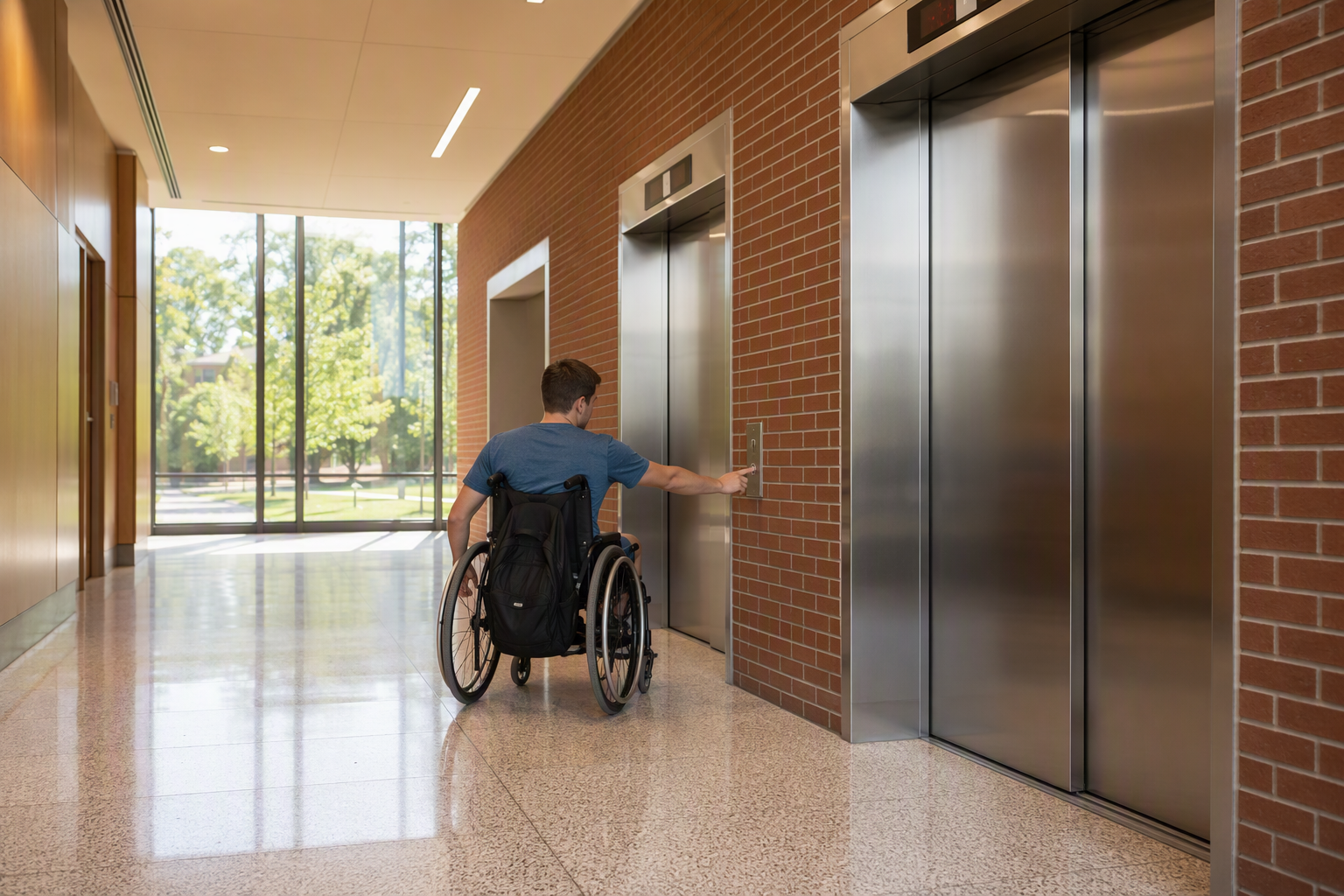
University campuses present some of the most demanding elevator compliance environments in any industry. With high daily traffic volumes, aging residence halls, and a legally protected obligation to serve students, faculty, and visitors with disabilities, university facilities managers in Columbia, SC must stay ahead of ADA requirements, state inspection mandates, and evolving safety codes. Carolina Elevator Service works with institutional clients across South Carolina to help ensure campus elevators meet every applicable standard.
What ADA Requirements Apply to University Elevators?
The Americans with Disabilities Act establishes clear accessibility requirements for elevators in public accommodations and facilities operated by state and local government entities — a category that includes public universities. Private universities receiving federal funding are also subject to Section 504 of the Rehabilitation Act, which carries parallel obligations.
Key ADA elevator requirements for university buildings include:
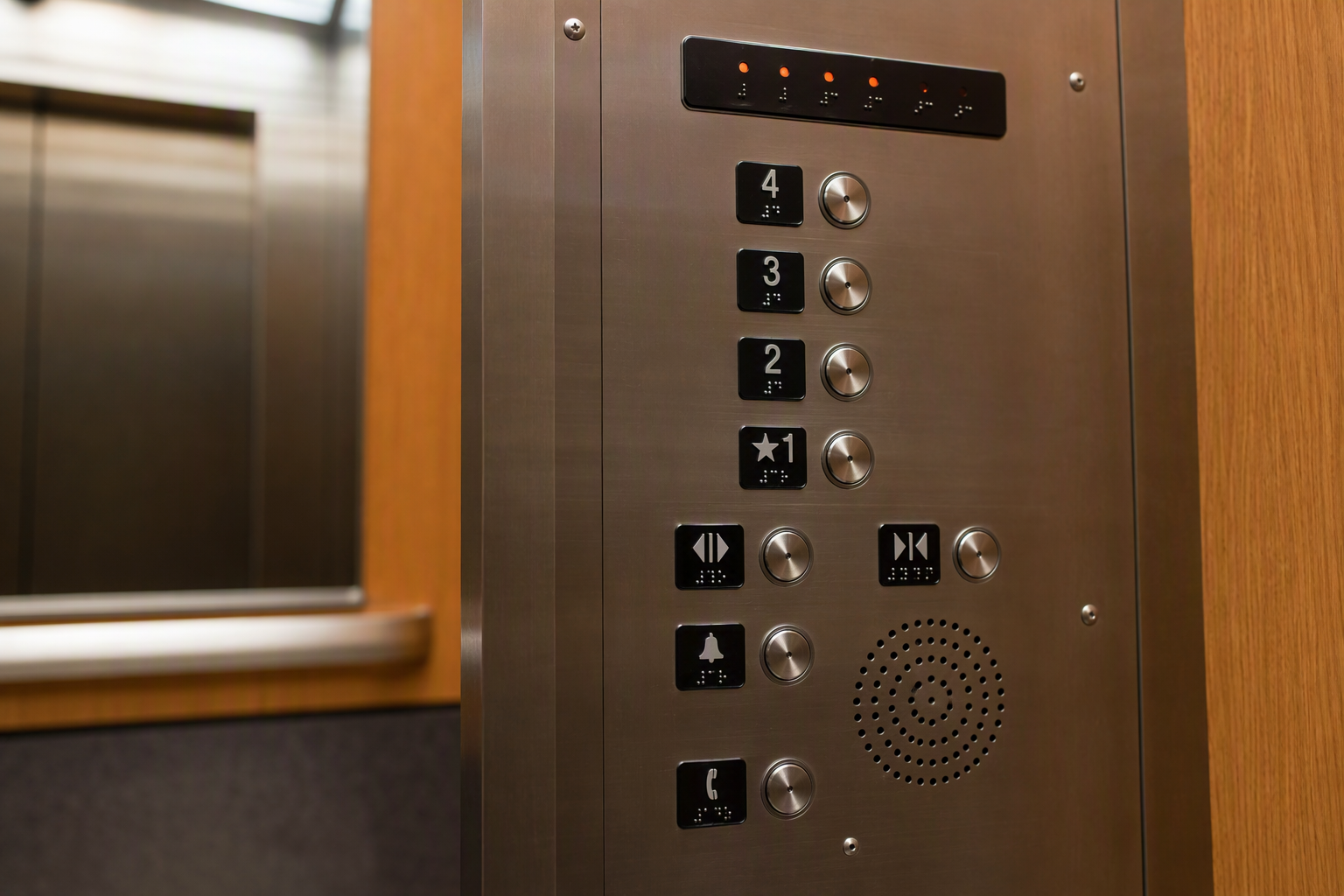
- Call buttons: Must be a minimum raised height, centered at accessible mounting heights, and operable with a closed fist.
- Door timing: Elevator doors must remain open long enough for a person using a mobility device to enter and exit safely.
- Cab dimensions: The ADA specifies minimum interior dimensions to accommodate wheelchairs and mobility aids.
- Tactile controls: Raised characters and Braille designations are required on all elevator control panels.
- Audible signals: Floor designation announcements and audible door signals must function correctly.
- Leveling accuracy: Elevators must level within a specified tolerance at each floor so that no step or gap exists between the cab floor and the landing.
- Emergency communication: A two-way communication system must be present and functional in every cab.
These requirements apply to new construction and, in many circumstances, to existing facilities undergoing alterations or renovations. Universities with older buildings must evaluate whether their elevators meet current ADA accessibility standards and address deficiencies as part of their ongoing transition planning obligations.
What ASME Code Governs University Elevators in South Carolina?
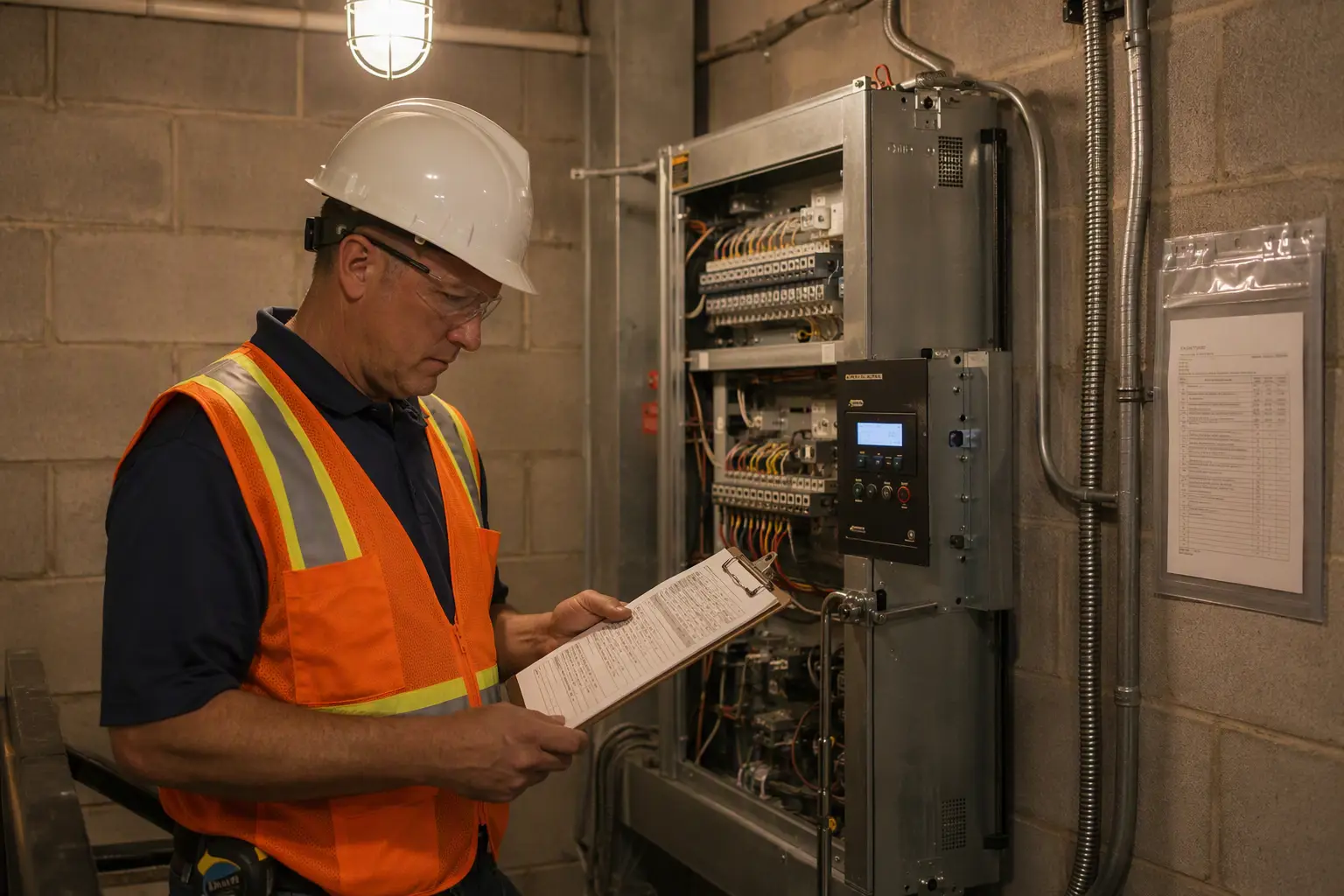
South Carolina enforces elevator safety through its state elevator inspection program, which incorporates the ASME A17.1 Safety Code for Elevators and Escalators for new installations and the ASME A17.3 Safety Code for Existing Elevators and Escalators for equipment already in service. Both codes are published by the American Society of Mechanical Engineers and serve as the foundational technical standards for elevator safety throughout the state.
For university facilities managers, understanding the distinction between A17.1 and A17.3 matters. When a university installs a new elevator or performs a major modernization, the project must comply with the current edition of A17.1. Existing elevators that have not been substantially altered are evaluated against A17.3, which establishes retroactive safety requirements that apply incrementally over time.
South Carolina’s elevator safety program requires that elevators pass periodic inspections conducted by state-licensed inspectors. Certificates of operation must be current and displayed in each elevator cab. Operating a campus elevator with an expired certificate is a compliance violation that can expose a university to liability and regulatory action.
How Often Must University Elevators Be Inspected in South Carolina?
South Carolina’s elevator safety regulations require routine inspections at defined intervals for all elevators operating within the state, including those on university campuses. Both periodic and witness inspections are part of the compliance cycle. Universities should work with a qualified elevator service provider to track inspection due dates and ensure that required maintenance tasks are completed before each inspection.
Carolina Elevator Service assists university facilities teams in Columbia, SC with inspection scheduling, pre-inspection maintenance, and documentation so that no campus elevator falls out of compliance due to a missed inspection cycle.
What Is the Difference Between ADA Compliance and ASME Safety Compliance?
These two compliance frameworks address different aspects of elevator performance and carry separate enforcement mechanisms.
- ADA compliance is a civil rights obligation enforced by the U.S. Department of Justice and through private litigation. It focuses on accessibility — ensuring that people with disabilities can use campus elevators independently and safely.
- ASME A17.1 / A17.3 compliance is a mechanical safety obligation enforced by South Carolina’s elevator inspection authority. It focuses on the structural integrity, mechanical function, and operational safety of the elevator itself.
A university elevator can pass its state safety inspection and still fail ADA requirements — for example, if the Braille on control panels is worn, if door timing has been adjusted to close too quickly, or if leveling has drifted outside acceptable tolerances. Maintaining both forms of compliance simultaneously requires a coordinated approach to elevator maintenance and modernization.
What Are the Most Common ADA Violations Found on University Campuses?
Facilities inspections and ADA compliance reviews on university campuses frequently identify the following deficiencies:
- Worn or illegible Braille and raised character markings on control panels
- Emergency communication systems that are non-functional or improperly monitored
- Door timing that has been shortened through maintenance adjustments, preventing safe entry and exit for mobility device users
- Floor leveling that has drifted, creating a lip or gap at landings
- Visual indicators that have failed, eliminating floor announcement capability
- Outdated cab interiors in older residence halls that pre-date modern ADA standards
- Missing or non-compliant signage at elevator landings
Each of these issues exposes the university to potential ADA complaints and, in some cases, federal enforcement action. Many deficiencies can be corrected through targeted maintenance or component replacement rather than full cab modernization.
When Does a University Elevator Require Full Modernization?
Modernization becomes necessary when cumulative ADA and safety deficiencies exceed what targeted repairs can address, when replacement parts for aging equipment become unavailable, or when a major renovation triggers code upgrade requirements under ASME A17.1. Universities planning building renovations should consult with a qualified elevator contractor before construction begins to understand how the scope of work may trigger elevator upgrade obligations.
In older university buildings — including residence halls, libraries, and classroom facilities built before contemporary accessibility standards — the cost of achieving full ADA compliance through piecemeal repairs can approach or exceed the cost of a planned modernization. A thorough assessment from Carolina Elevator Service can help facilities managers evaluate both paths and make an informed capital planning decision.
How Should a University Prioritize Elevator ADA Remediation?
When a university identifies multiple elevators with ADA deficiencies, a structured remediation approach helps allocate limited capital budgets effectively. A recommended prioritization process includes:
- Conduct a full ADA audit of every elevator on campus, documenting all deficiencies by building and cab.
- Assess criticality by identifying which elevators serve buildings where no accessible alternative route exists for users with mobility impairments.
- Classify deficiencies as immediate safety hazards, ADA violations, or code-recommended improvements.
- Obtain repair and modernization estimates for each elevator to compare targeted repair costs against full modernization costs.
- Develop a phased remediation schedule that addresses the highest-priority elevators first while remaining within annual capital budgets.
- Document the plan and retain records to demonstrate good-faith compliance efforts, which is relevant under ADA transition plan requirements for government entities.
- Implement and re-audit after each phase to confirm that completed work meets current ADA and ASME standards.
Does OSHA Apply to University Elevator Maintenance in South Carolina?
Yes. Elevator maintenance and repair work performed on university campuses must comply with applicable OSHA standards governing worker safety. Technicians performing maintenance, testing, or modernization work on university elevators are subject to OSHA regulations covering lockout/tagout procedures, confined space work, fall protection, and electrical safety. Universities have a responsibility to ensure that any elevator contractor working on campus maintains full OSHA compliance for their personnel and work practices.
What Should Universities Look for When Selecting an Elevator Service Provider?
University facilities departments should evaluate elevator service contractors on the following criteria:
- South Carolina licensing: Contractors and technicians must hold valid South Carolina elevator contractor and mechanic licenses.
- Institutional experience: Familiarity with the compliance complexity of university environments, including high-traffic cabs and multi-building portfolios.
- Code knowledge: Demonstrated understanding of both ADA accessibility requirements and ASME A17.1 / A17.3 safety standards as applied in South Carolina.
- Documentation practices: The ability to provide detailed maintenance records, inspection tracking, and compliance reporting that universities need for internal audits and regulatory inquiries.
- Assessment capability: The ability to evaluate existing equipment and provide objective recommendations rather than defaulting immediately to full replacement.
Carolina Elevator Service is a certified elevator service company operating in South Carolina with experience serving institutional clients in the Columbia area.
Questions Your Inspector Will Ask
University facilities managers should be prepared to answer the following questions when a South Carolina elevator inspector visits campus:
- Is the certificate of operation current and posted inside each cab? Inspectors verify that operational certificates are valid and properly displayed.
- When was the last periodic maintenance performed, and by whom? Maintenance logs must be available and current.
- Has any repair or alteration been performed since the last inspection? Alterations can trigger upgraded code requirements under ASME A17.1.
- Is the emergency communication system functional and monitored? Two-way communication must connect to a staffed location or monitoring service.
- Are all safety devices tested and documented? Governors, buffers, safeties, and interlocks must be tested per code requirements.
- Has the cab leveling been checked and adjusted? Floor leveling tolerance is a frequent inspection finding.
- Are Braille and tactile markings intact on all control panels? Worn or missing Braille is a common deficiency in high-traffic university elevators.
- Is the machine room secured and properly maintained? Access, temperature, lighting, and cleanliness of machine rooms are part of the inspection scope.
Having clear, documented answers to each of these questions — and the underlying maintenance records to support them — positions a university for a successful inspection outcome. Carolina Elevator Service helps campus facilities teams prepare for inspections and address open items before an inspector arrives.
What Is the Cost of Failing an Elevator ADA Compliance Audit?
The cost of non-compliance extends well beyond the expense of physical repairs. Universities that operate elevators with unaddressed ADA deficiencies face potential exposure from formal complaints filed with the U.S. Department of Justice, private civil rights litigation from students or visitors with disabilities, reputational harm, and the administrative burden of responding to federal inquiries. In some circumstances, federal funding relationships can be affected. Proactive compliance is consistently less costly than reactive remediation following a complaint or enforcement action.
How Can Universities in Columbia, SC Get Started on Elevator ADA Compliance?
The most effective starting point is a comprehensive elevator assessment that documents the current condition and compliance status of every elevator on campus. This assessment establishes a baseline, identifies all deficiencies, and provides the factual foundation for a capital planning and remediation strategy. Carolina Elevator Service provides free elevator assessments for institutional clients in the Columbia, SC area, giving university facilities teams the information they need to act with confidence.
Contact Carolina Elevator Service for a free elevator assessment at 803-865-1400. Serving universities and institutional clients throughout Columbia, SC and surrounding South Carolina communities, Carolina Elevator Service helps campus facilities teams achieve and maintain full ADA and ASME code compliance.
Need elevator service you can rely on? Carolina Elevator Service is ready to help.