Elevator Service Contract Negotiation Tips for Healthcare Facilities in Columbia, SC
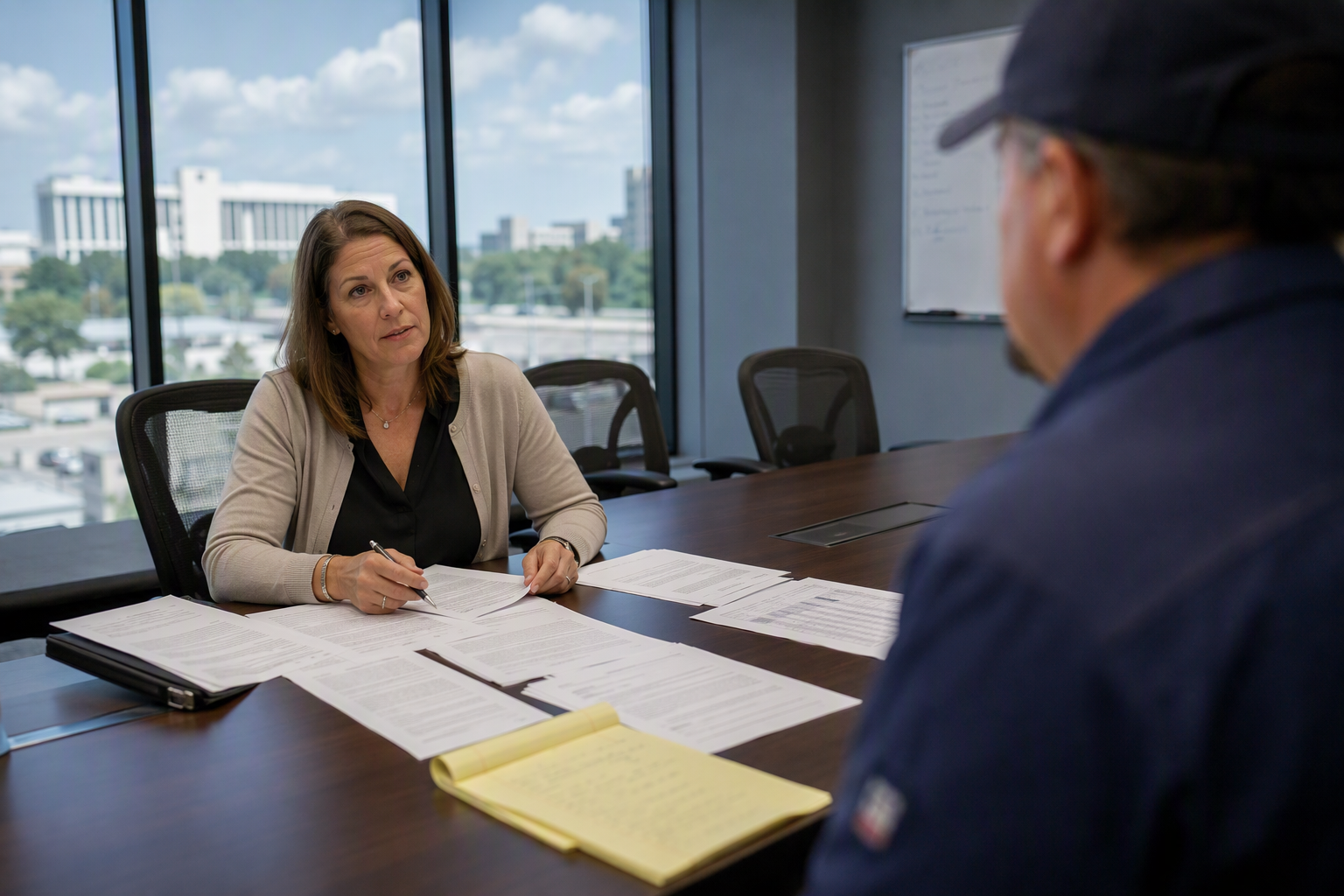
Elevators in healthcare settings are not optional infrastructure — they are life-safety systems. A patient on a gurney, a nurse transporting medications, or a visitor navigating a multi-floor medical campus all depend on vertical transportation that functions reliably, safely, and in full compliance with federal and state codes. When a hospital or medical facility in Columbia, SC sits down to negotiate an elevator service contract, the stakes are higher than in almost any other vertical market.
This guide covers what healthcare facility managers, operations directors, and procurement teams need to know before signing a service agreement — from mandatory compliance language to the right questions to ask a prospective vendor like Carolina Elevator Service.
Why Is Elevator Compliance More Complex in Healthcare Settings?
Healthcare facilities face a convergence of regulatory demands that most other building types do not. Elevators must satisfy ASME A17.1 Safety Code for Elevators and Escalators, the primary national safety standard governing elevator design, installation, and maintenance. Existing installations are additionally subject to ASME A17.3, which governs safety requirements for elevators already in service.
On top of that, the Americans with Disabilities Act (ADA) imposes strict accessibility requirements — control panel heights, door timing, cab dimensions, and auditory signals — all of which matter intensely in hospitals where patients with mobility limitations, visual impairments, and medical equipment needs use elevators daily.
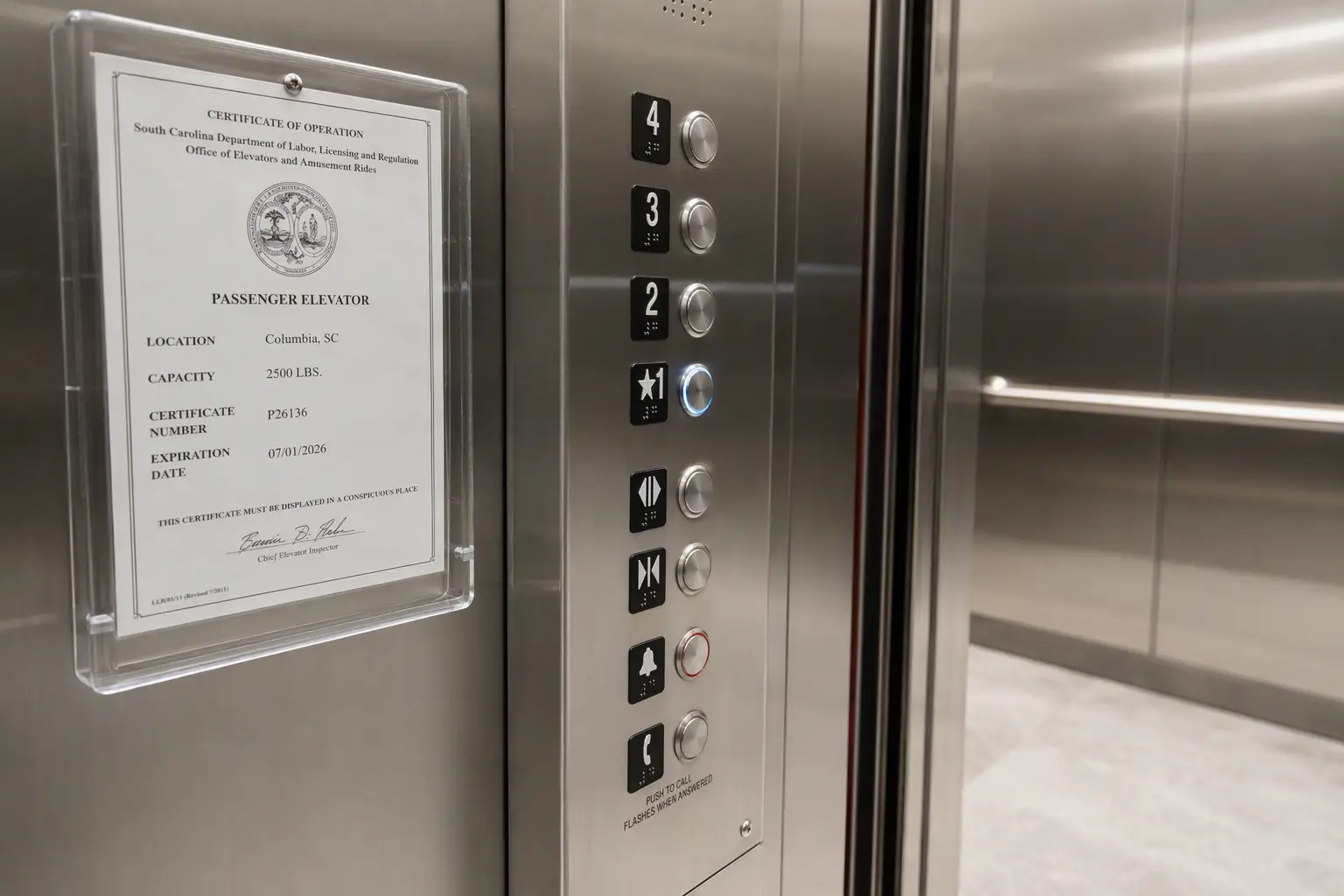
South Carolina also requires periodic inspections by state-licensed inspectors, and certificates of operation must be current and posted in each elevator cab. Any service contract negotiated for a Columbia, SC healthcare facility should explicitly address who bears responsibility for coordinating state inspections and ensuring the certificate remains valid.
What Should a Healthcare Elevator Service Contract Include?
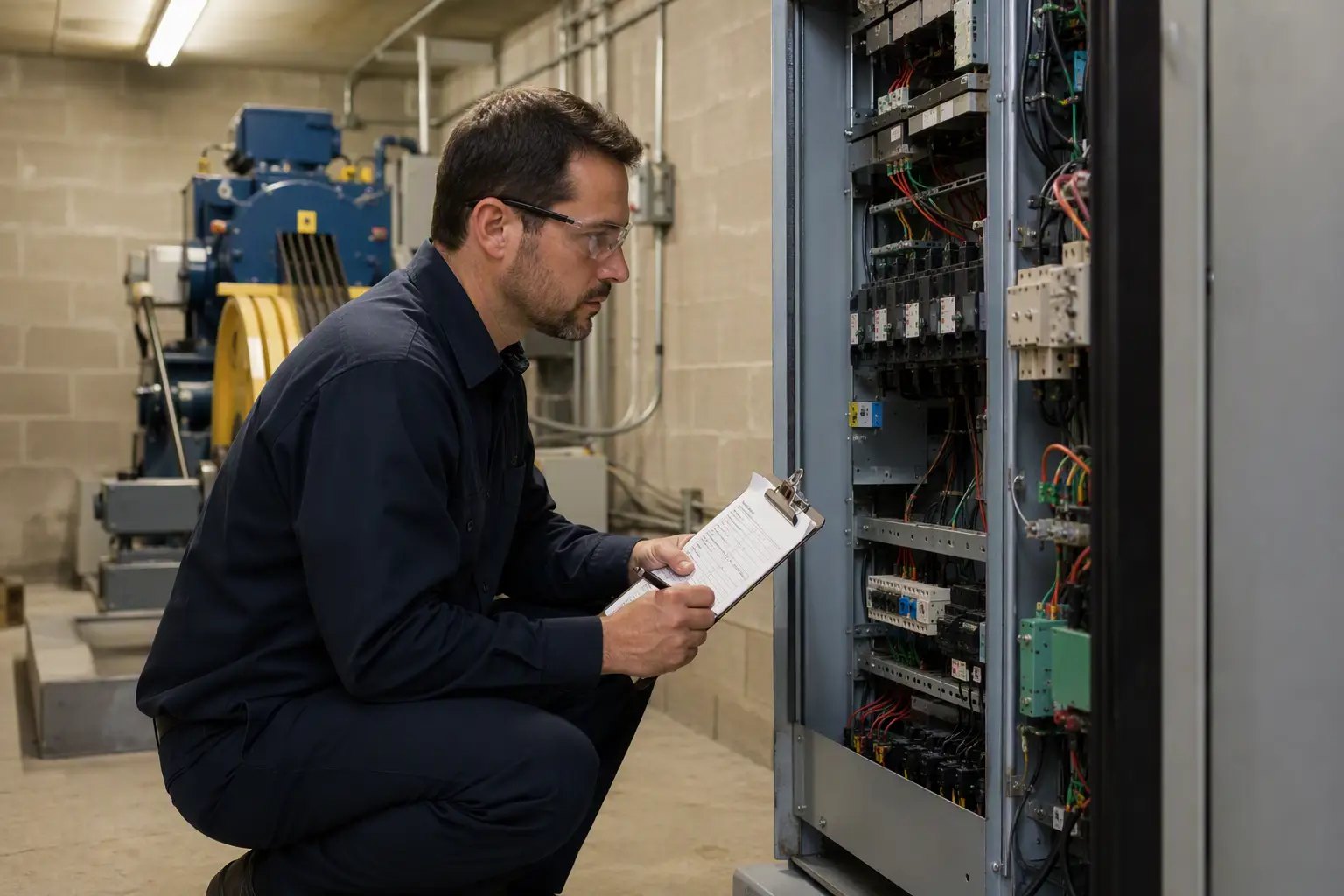
A well-structured service contract for a healthcare facility should address the following elements at minimum:
- Scope of Work: A detailed list of all covered components — drive systems, door operators, safeties, buffers, pit equipment, cab interiors, and controls. Vague language like “routine maintenance” creates gaps that lead to disputes when equipment fails.
- Compliance Responsibility: The contract should specify which party — the vendor or the facility — is responsible for ensuring the elevator remains compliant with ASME A17.1, ADA, and South Carolina inspection requirements.
- Parts and Labor Coverage: Full-coverage contracts typically include both parts and labor. Hospitals should be cautious of base contracts that exclude parts, as elevator components in high-use healthcare environments can wear faster than in commercial buildings.
- Inspection Coordination: The contract should outline how the vendor will coordinate with South Carolina’s authorized inspectors for mandated periodic inspections.
- Entrapment and Emergency Provisions: Given that patients and clinical staff may be in the cab during a malfunction, the contract must define the protocol for entrapment situations clearly.
- Performance Metrics: Define acceptable elevator uptime, callback rates, and documentation requirements for all service visits.
- Termination and Transition Clauses: Healthcare facilities change vendors. A fair contract includes reasonable notice periods and clear language on how equipment records and keys are transferred.
How Do ASME A17.1 Requirements Apply to Hospital Elevators?
The ASME A17.1 Safety Code for Elevators and Escalators sets minimum design, maintenance, and testing standards for elevators across the United States. In healthcare settings, compliance with this code is not discretionary — it is a foundational requirement for safe operation.
Key ASME A17.1 maintenance requirements that belong in any healthcare elevator service contract include:
- Periodic inspection and testing at intervals established by the authority having jurisdiction (AHJ) — in this case, the State of South Carolina.
- Documented preventive maintenance procedures that match the manufacturer’s specifications and the code’s maintenance and testing requirements.
- Category testing requirements for hydraulic and traction elevators, which specify when and how certain safety devices must be tested and by whom.
- Record-keeping obligations: all maintenance, inspection, and test records must be maintained and available for review.
Carolina Elevator Service structures its maintenance agreements to align with ASME A17.1 requirements, ensuring that healthcare clients in Columbia, SC receive service that satisfies both code and facility expectations.
What ADA Provisions Apply to Healthcare Elevator Service Contracts?
The Americans with Disabilities Act requires that elevators serving public accommodations and commercial facilities — including hospitals, outpatient clinics, and medical office buildings — meet specific accessibility standards. These include:
- Call button placement and sizing requirements.
- Door reopening devices that respond to obstructions without closing on passengers.
- Audible and visual floor indicators.
- Minimum cab dimensions to accommodate wheelchairs and medical transport equipment.
- Handrail placement in certain configurations.
Service contracts should include language requiring the vendor to flag any maintenance activity or parts substitution that might affect ADA compliance. If a component is replaced with an alternative part, the facility needs confirmation that the replacement meets applicable accessibility standards.
How Should Healthcare Facilities Evaluate Vendor Qualifications?
Not all elevator service companies are equipped to serve healthcare environments. When evaluating vendors, healthcare procurement teams should ask for:
- Verification that the company and its technicians hold valid South Carolina elevator contractor licenses as required by state law.
- Documentation of experience servicing hospital-grade or high-use elevator equipment.
- References from other healthcare or institutional clients in the Columbia, SC area.
- Proof of adequate liability insurance coverage appropriate for a healthcare setting.
- A sample maintenance log or service report to evaluate documentation quality.
- Clear explanation of how the company handles state inspection coordination.
- Description of the parts supply chain — do they stock common components locally, or does sourcing require extended lead times?
Carolina Elevator Service serves healthcare and institutional clients throughout the Columbia, SC area and can provide documentation of licensure and compliance practices upon request.
What Are Common Contract Negotiation Mistakes Healthcare Facilities Make?
Even experienced facility managers can overlook critical contract details. Common negotiation mistakes include:
- Accepting vague scope language: If the contract does not list specific components, assume they are not covered.
- Ignoring escalation clauses: Multi-year contracts often include annual price escalation. Know the cap before signing.
- Overlooking proprietary parts restrictions: Some manufacturers or vendors use proprietary components that lock the facility into a single vendor for repairs. Negotiate for open-architecture or standard-parts language where possible.
- Failing to require documentation: Every service visit should generate a written report. Verbal updates are not acceptable in a regulated environment.
- Not addressing code update obligations: Elevator codes evolve. The contract should clarify whether the vendor is responsible for bringing equipment into compliance when codes change, or whether that triggers additional charges.
What Is the Difference Between a Full-Service and a Maintenance-Only Contract?
Healthcare facilities typically encounter two primary contract structures:
- Full-Service (Comprehensive) Contracts: Cover preventive maintenance, repairs, parts, and labor for most or all elevator components. These provide the most budget predictability and are generally recommended for high-usage healthcare environments where unexpected repair costs can be significant.
- Maintenance-Only Contracts: Cover scheduled preventive maintenance visits but exclude or limit coverage for parts and major repairs. These are lower in upfront cost but expose facilities to unpredictable repair expenses.
For hospitals and medical facilities in Columbia, SC, where elevator downtime can directly impact patient care workflows, comprehensive contracts typically offer better risk management value despite higher base costs.
How Often Should Healthcare Elevators Be Inspected in South Carolina?
South Carolina requires that elevators be inspected periodically by state-authorized inspectors, and a certificate of operation must be current and posted inside each elevator cab at all times. The specific inspection interval is governed by South Carolina law and enforced by the relevant authority having jurisdiction.
Service contracts should explicitly state that the vendor will coordinate with the state inspection process, provide any required safety test documentation to the inspector, and notify the facility promptly if any inspection finding requires corrective action before the certificate can be renewed.
Facilities should also conduct their own scheduled preventive maintenance between required state inspections — this is both an ASME A17.1 requirement and a sound operational practice.
What Happens If an Elevator Fails During Patient Transport?
Elevator failures in healthcare settings carry consequences that go beyond inconvenience. When an elevator malfunctions during a patient transport or clinical operation, facility teams should follow a defined response protocol:
- Immediately notify the elevator service vendor using the emergency contact number specified in the service contract.
- Follow the facility’s internal entrapment response plan, which should include communication with security and clinical staff.
- Document the time, nature, and circumstances of the failure in writing.
- Do not return the elevator to service until the vendor has assessed, repaired, and confirmed safe operation in writing.
- Retain all service documentation for the facility’s records and for potential inspection review.
- Review the incident with the service vendor to determine whether the failure indicates a systemic maintenance gap that should be addressed contractually.
A service contract that does not define emergency contact procedures and response protocols is insufficient for a healthcare environment.
Questions Your Inspector Will Ask
When a South Carolina state-authorized elevator inspector visits a healthcare facility, the following questions and document requests are common:
- Is the current certificate of operation posted inside the elevator cab?
- Are maintenance records current and available for review on-site?
- Has the required periodic safety testing been completed, and is documentation available?
- Have all previously identified deficiencies been corrected?
- Is the elevator operating within its rated load capacity as posted?
- Are all safety devices — door restrictors, buffers, governor, safeties — in working order?
- Is the machine room or control space secured, properly lit, and free of stored materials?
- Is the pit ladder, lighting, and stop switch accessible and functional?
- Has the elevator been modified since the last inspection, and if so, were permits obtained?
Healthcare facilities working with Carolina Elevator Service receive guidance on maintaining inspection-ready documentation between visits, reducing the risk of citation during state inspections.
How Should Contract Renewal and Exit Terms Be Negotiated?
Service contracts that auto-renew without sufficient notice windows can trap healthcare facilities in unfavorable agreements. When negotiating renewal and exit terms:
- Require written notice of any price changes at least 90 days before automatic renewal.
- Negotiate a termination-for-convenience clause with a reasonable notice period — typically 60 to 90 days.
- Ensure the contract specifies that upon termination, all maintenance records, keys, access codes, and equipment documentation transfer immediately to the facility.
- Confirm that no proprietary lock-in provisions prevent a new vendor from servicing the equipment after transition.
Why Do Healthcare Facilities in Columbia, SC Choose Carolina Elevator Service?
Healthcare facilities across Columbia, SC select Carolina Elevator Service because the company understands the unique demands of medical environments — from the high-frequency usage patterns of hospital elevators to the documentation standards required for regulatory compliance. Carolina Elevator Service approaches each contract with a focus on code-aligned maintenance, transparent service reporting, and communication that keeps facility operations teams informed.
Whether a facility is evaluating a new service agreement, renewing an existing contract, or assessing current elevator conditions, Carolina Elevator Service provides the expertise and local presence that Columbia-area healthcare clients need.
Get a Free Elevator Assessment for Your Healthcare Facility
Navigating elevator service contracts in a healthcare environment requires a partner who understands both the regulatory landscape and the operational demands of your facility. Contact Carolina Elevator Service for a free elevator assessment and let a qualified team help your Columbia, SC healthcare facility negotiate a service agreement that protects patients, staff, and compliance status.
Contact Carolina Elevator Service for a free elevator assessment: 803-865-1400
Need elevator service you can rely on? Carolina Elevator Service is ready to help.