Elevator Service in Columbia, SC | Carolina Elevator Service
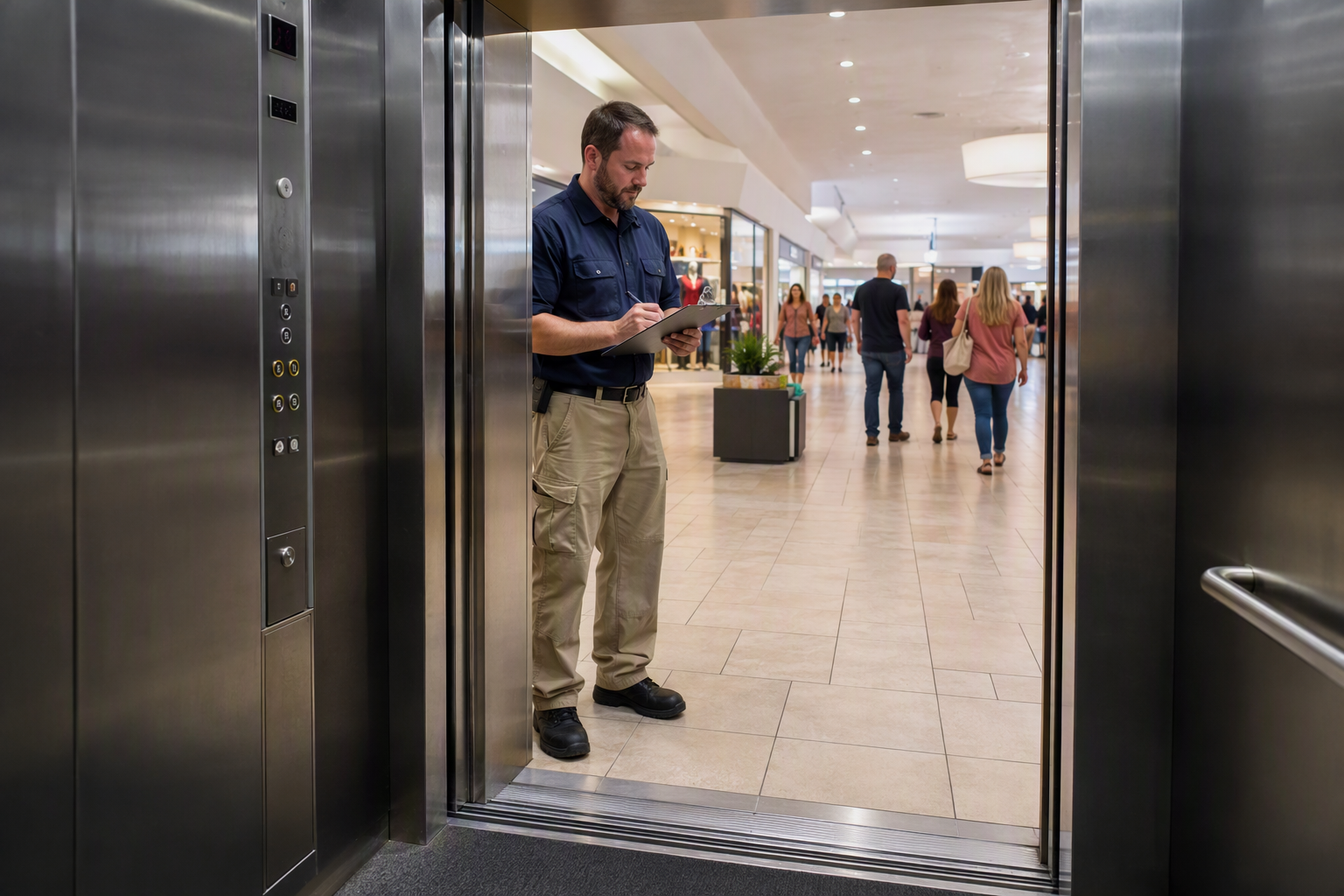
Retail environments depend on elevators to move customers, employees, and merchandise safely every day. A missed maintenance interval or overlooked inspection can shut down a lift, expose a business to liability, and place shoppers at risk. Carolina Elevator Service provides comprehensive elevator maintenance for retail properties throughout Columbia, SC and the surrounding region, keeping vertical transportation assets in full compliance with applicable federal and state standards.
What Standards Govern Retail Elevator Maintenance in South Carolina?
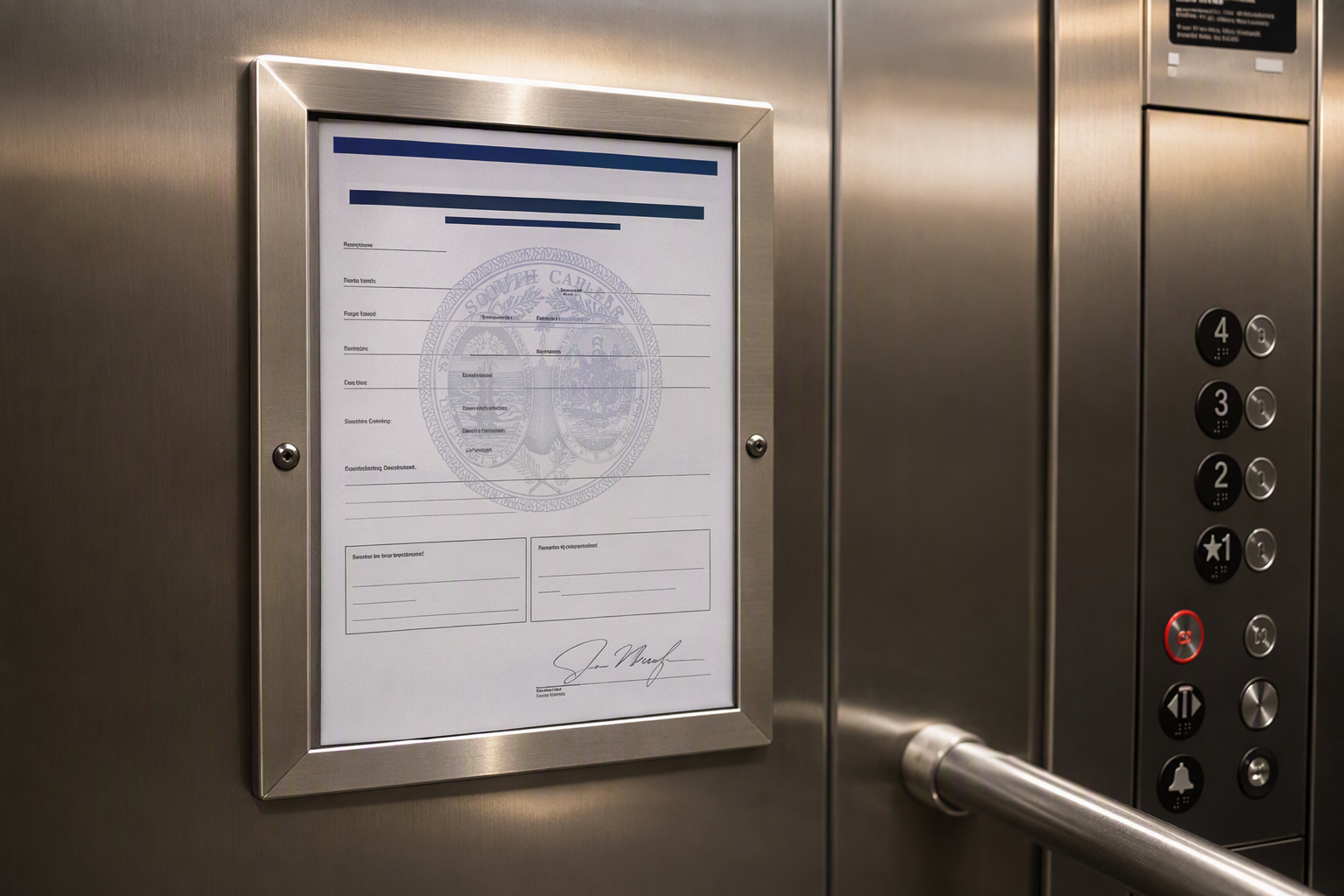
South Carolina enforces elevator safety through the South Carolina Department of Labor, Licensing and Regulation (LLR), which administers the state’s elevator safety program. At the federal level, the governing technical standard is the ASME A17.1 Safety Code for Elevators and Escalators, which establishes design, installation, and ongoing maintenance requirements for new equipment. For existing elevators, ASME A17.3, Safety Code for Existing Elevators and Escalators, provides the retroactive compliance framework that South Carolina’s regulatory program references.
Retail property owners and managers should also be aware that the Americans with Disabilities Act (ADA) imposes accessibility requirements on elevators serving the public, including proper door timing, control height, and Braille signage. Failing to maintain these features can result in federal civil rights complaints in addition to state code violations.
OSHA standards also apply when elevator work is performed, establishing safety obligations for technicians and contractors who inspect or service vertical transportation equipment in commercial settings.
Why Is Preventive Maintenance Critical for Retail Elevators Specifically?
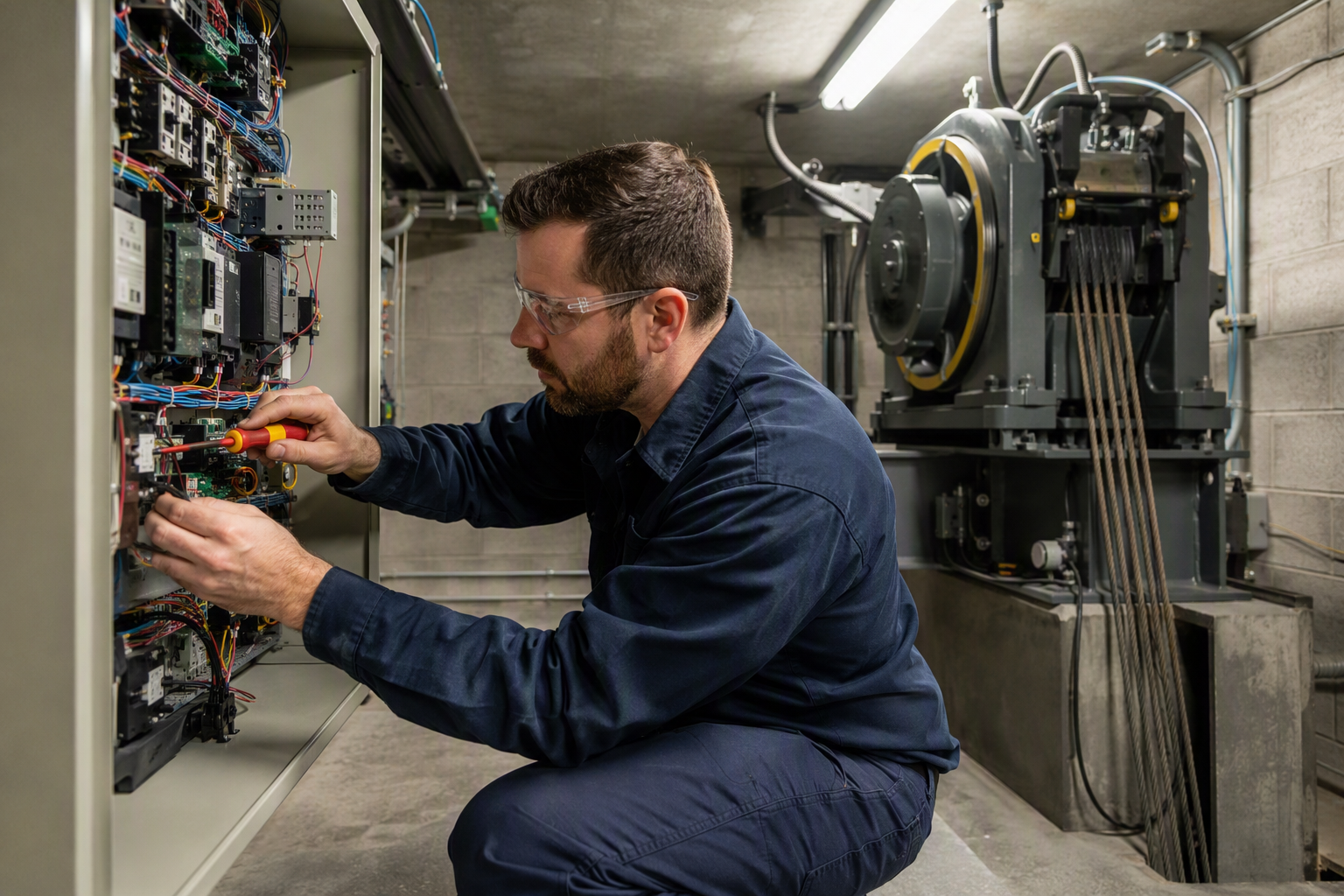
Retail elevators face usage patterns that differ significantly from office buildings or residential properties. High foot traffic during peak shopping hours, frequent door cycling, cart and merchandise loads, and extended daily operating hours all accelerate component wear. Preventive maintenance programs are designed to address these conditions proactively rather than waiting for a breakdown to occur.
A properly structured maintenance program for a retail elevator typically includes:
- Lubrication of mechanical components on a scheduled basis
- Inspection and adjustment of door operators, safety edges, and interlocks
- Testing of safety devices including buffers, safeties, and governor systems
- Review of control systems and modernization of outdated components
- Documentation of all service visits for regulatory and liability purposes
- Coordination with South Carolina LLR for required periodic inspections
Documented maintenance records are not simply best practice — they are a practical requirement when state inspectors review compliance and when property owners need to demonstrate due diligence in the event of an incident.
How Often Must Retail Elevators Be Inspected in South Carolina?
South Carolina’s elevator safety program, administered through the LLR, requires periodic inspections by a licensed elevator inspector. The inspection schedule is tied to the applicable edition of ASME A17.1 and ASME A17.3 as adopted by the state. Property owners should maintain current certificates of inspection and ensure that any deficiencies noted during an inspection are corrected within the timeframe specified by the inspecting authority having jurisdiction (AHJ).
For the most current inspection interval requirements and certificate renewal procedures, retail property owners are encouraged to contact the South Carolina LLR Elevator Safety Bureau directly. Carolina Elevator Service coordinates directly with the state program on behalf of its clients to help ensure inspections are scheduled, records are current, and any required corrective actions are completed on time.
What Happens If a Retail Elevator Fails a South Carolina Inspection?
When a South Carolina elevator inspector identifies a violation, the property owner receives a written deficiency notice. Depending on the severity of the condition, the elevator may be ordered out of service immediately or given a defined correction window. Operating an elevator under a stop-work or out-of-service order is a violation of state law and exposes the property owner to fines and increased liability.
If a retail elevator is ordered out of service, the recommended steps are:
- Post the out-of-service notice visibly at the elevator entrance as required by the inspector.
- Prevent passenger access to the elevator immediately.
- Contact a licensed elevator service company to evaluate the deficiencies identified in the inspection report.
- Obtain a written repair scope and timeline from the service provider.
- Complete all required repairs with documentation of parts replaced and work performed.
- Request a follow-up inspection from the South Carolina LLR to clear the deficiency and restore the operating certificate.
- Retain all inspection reports and repair records as part of the elevator’s permanent maintenance file.
Carolina Elevator Service is experienced in managing the full deficiency correction and reinspection process for retail clients in the Columbia, SC market.
Does ADA Compliance Apply to Elevators in Retail Stores?
Yes. The Americans with Disabilities Act requires that elevators in retail facilities open to the public meet specific accessibility standards. These include requirements for cab size, control panel height and layout, visual and audible floor indicators, door reopening devices, and Braille and raised character signage. Maintenance plays a direct role in ADA compliance — a door that closes too quickly, a control button that sticks, or a floor indicator that malfunctions can all constitute ADA deficiencies.
Retail operators should include ADA compliance checks as part of their routine maintenance scope, not only to meet legal obligations but to ensure that all customers can safely and independently use the facility.
What Local Markets Does Carolina Elevator Service Cover?
Carolina Elevator Service provides elevator maintenance, inspection coordination, repair, and modernization services across the Columbia, SC metro area and throughout South Carolina. The company works with a wide range of retail property types, including shopping centers, strip malls, department stores, grocery-anchored centers, mixed-use developments, and standalone retail buildings. Service coverage extends to surrounding communities across the state, making Carolina Elevator Service a consistent resource for retail property managers who oversee multiple locations within South Carolina.
How Should Retail Property Managers Choose an Elevator Maintenance Provider?
Selecting an elevator maintenance company for a retail property is a compliance and risk management decision, not simply a cost comparison. Key factors to evaluate include:
- State licensing: South Carolina requires elevator contractors and mechanics to be licensed through the LLR. Verify that any provider holds active state credentials before engaging them.
- Code familiarity: The provider should demonstrate knowledge of ASME A17.1, ASME A17.3, ADA accessibility requirements, and South Carolina’s specific regulatory program.
- Documentation practices: Maintenance records must be thorough, legible, and retained to support inspections and any future liability review.
- Emergency availability: Retail environments operate during evenings and weekends. A maintenance provider should have the capacity to respond when elevators malfunction outside standard business hours.
- Scope of services: A full-service provider that handles preventive maintenance, repairs, modernization, and inspection coordination reduces the coordination burden on property management staff.
Carolina Elevator Service serves retail clients across South Carolina with a focus on code compliance, thorough documentation, and responsive service when equipment issues arise.
What Is Elevator Modernization and When Should Retail Properties Consider It?
Elevator modernization refers to the replacement or upgrade of major elevator components — such as control systems, drive machines, door operators, and cab interiors — without replacing the entire hoistway structure. For retail properties, modernization becomes relevant when equipment has aged to the point where replacement parts are difficult to source, when reliability issues affect customer experience, or when updated components would bring the elevator into closer alignment with current ASME A17.3 requirements for existing installations.
Modernization projects also present an opportunity to address ADA compliance gaps that may have developed as accessibility standards evolved. Carolina Elevator Service evaluates existing equipment and helps retail property owners understand their options for extending equipment life while improving safety and compliance.
Schedule a Free Consultation
Retail elevator compliance in Columbia, SC requires a maintenance partner who understands South Carolina’s regulatory environment and the operational demands of commercial properties. Carolina Elevator Service is ready to evaluate the current condition of your retail elevator assets, identify any compliance gaps, and establish a maintenance program designed to keep your equipment safe, legal, and reliable.
Contact Carolina Elevator Service today to schedule a free consultation: 803-865-1400
Need elevator service you can rely on? Carolina Elevator Service is ready to help.