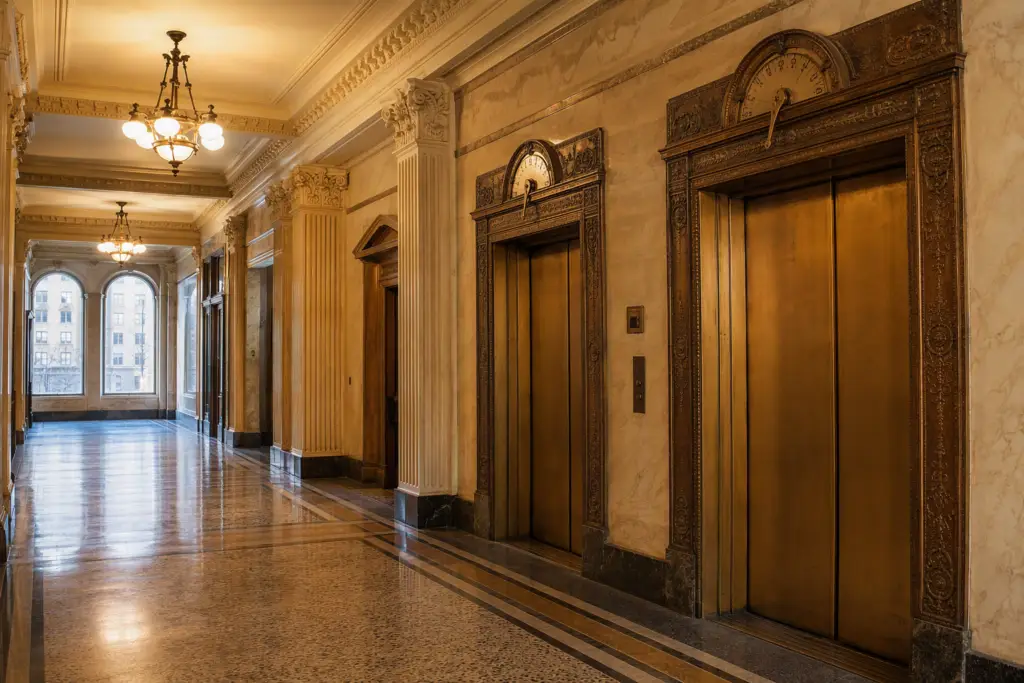
Direct Answer: Senior living and assisted living buildings need elevators with wide doors and cabs to accommodate wheelchairs and walkers, low-mounted controls, audible and visual floor indicators, slip-resistant flooring, emergency communication systems, and smooth leveling — all governed by the Americans with Disabilities Act (ADA) and ASME A17.1/A17.3 Safety Code for Elevators and Escalators to protect residents with mobility, vision, and hearing impairments.
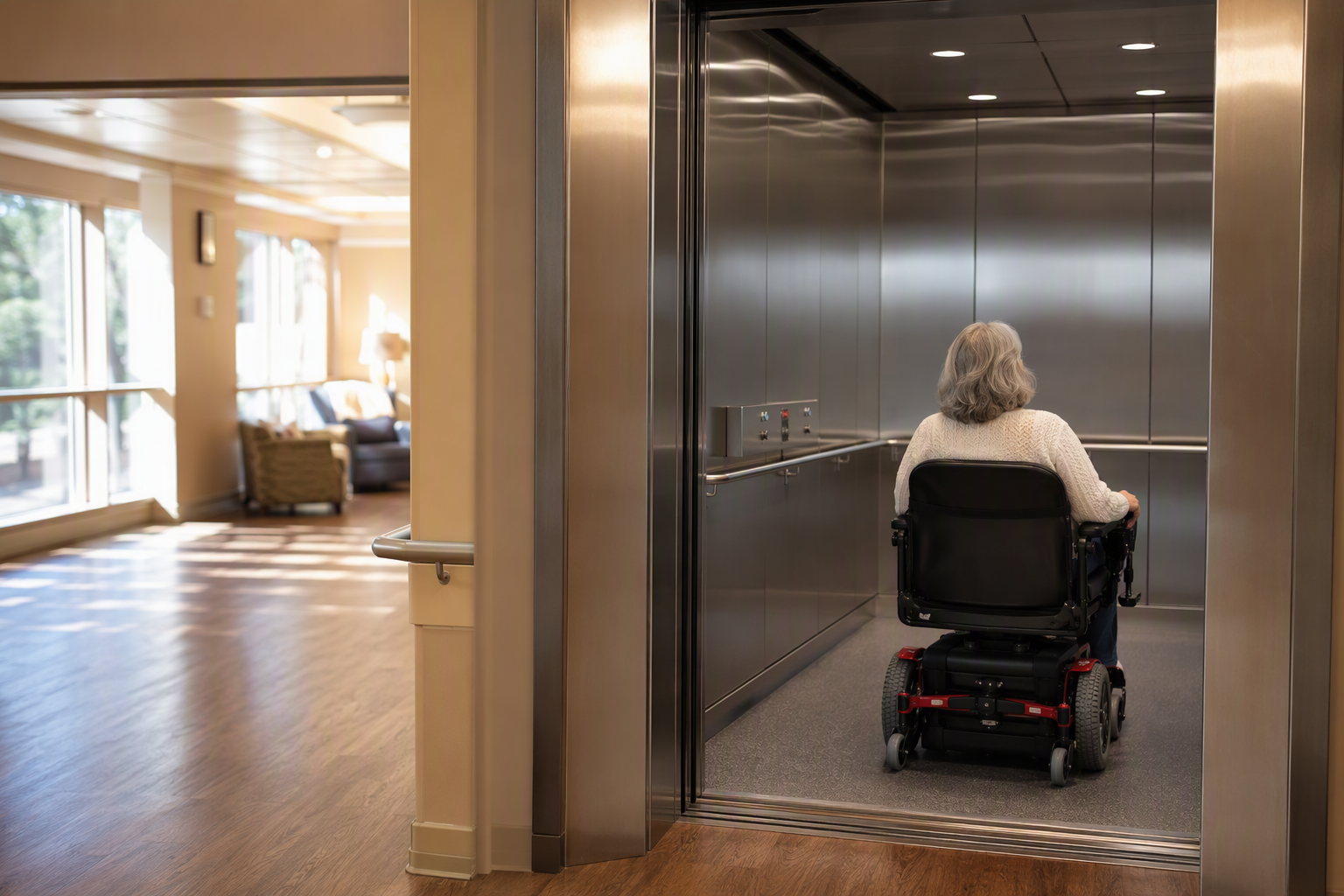
Choosing, upgrading, or maintaining an elevator in a senior living or assisted living community is one of the most consequential decisions a facility manager or owner will make. The wrong equipment — or a poorly maintained system — creates safety risks, potential code violations, and liability exposure. This guide covers every accessibility feature that matters for residents with mobility issues, maps those features to applicable federal standards, and explains what South Carolina facilities should evaluate when assessing their elevator systems.
—
What Are the Core Accessibility Features an Elevator Must Have in a Senior Living Facility?
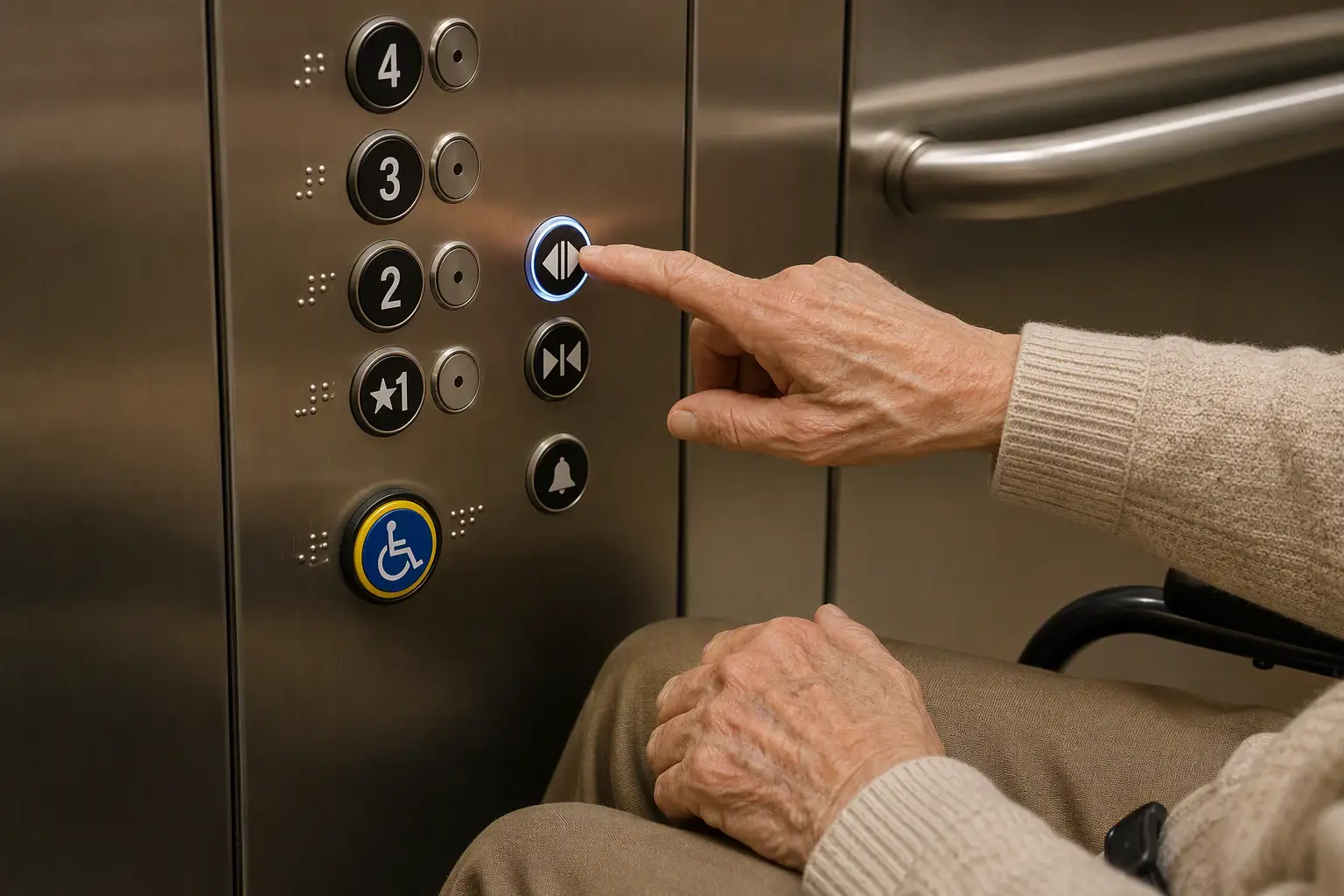
For any assisted living or senior living community, the elevator must go well beyond basic vertical transportation. Residents may use manual wheelchairs, power wheelchairs, rollators, walkers, or canes — and many have diminished grip strength, reduced vision, or hearing loss. The following features address those realities directly.
Door Width and Opening Time
The ADA Standards for Accessible Design establish minimum clear opening widths for elevator doors to allow passage of mobility devices. Door reopening devices must respond to both contact and non-contact (optical or infrared) obstructions so that a slow-moving resident is never caught by a closing door. For senior living settings, longer door dwell times — the period the door stays open after a call — are strongly recommended beyond the minimum required dwell.
Cab Interior Dimensions
The ADA specifies minimum cab dimensions to allow a wheelchair user to enter, maneuver, and exit. Power wheelchair users and residents accompanied by caregivers or medical equipment require additional floor area. Facilities serving high-acuity residents should evaluate whether cab dimensions allow gurney access for emergency medical personnel.
Control Panel Height and Reach Range
Under the ADA, elevator call buttons and in-car controls must be mounted within reach ranges accessible from a seated position. Floor buttons, the door-open button, and the emergency call button must all comply. Raised characters and Braille must appear on or beside each button, benefiting residents with visual impairments.
Audible and Visual Floor Indicators
Hall lanterns must provide both an audible signal and a visual signal when a car arrives. In-car position indicators — a display showing the current floor — must be visible and, in taller buildings, accompanied by an audible announcement. These features are critical for residents with hearing loss who cannot distinguish a chime, and for those with cognitive impairment who benefit from redundant wayfinding cues.
Two-Way Emergency Communication
A functioning two-way emergency communication system is required by both the ADA and ASME A17.1. For senior living facilities, the handsfree nature of this requirement is especially important — a resident who has fallen or is in distress may not be able to hold a telephone handset. The emergency button must be operable with a closed fist, and the system must connect to a monitored location at all times.
Cab Flooring and Interior Finish
Slip-resistant flooring reduces fall risk, particularly when residents board or exit with wet footwear or assistive devices. Thresholds must be level with the landing floor to eliminate tripping hazards. Handrails inside the cab provide stability for ambulatory residents and those transitioning from a mobility device to a standing position.
Leveling Accuracy
Floor-to-floor leveling accuracy is one of the most underappreciated safety factors in senior living elevators. Even a small gap between the cab floor and the landing floor is a serious trip hazard for a resident using a walker or a cane, and a wheel-catching hazard for wheelchair users. Regular maintenance and modernization of leveling systems directly reduces fall incidents at the elevator threshold.
Lighting
Adequate, even illumination inside the cab and at the landing is a functional accessibility requirement. Bright, glare-free lighting benefits residents with low vision and helps all users read control panels and floor indicators confidently.
—
How Do ADA Requirements Apply to Elevator Accessibility in Assisted Living?
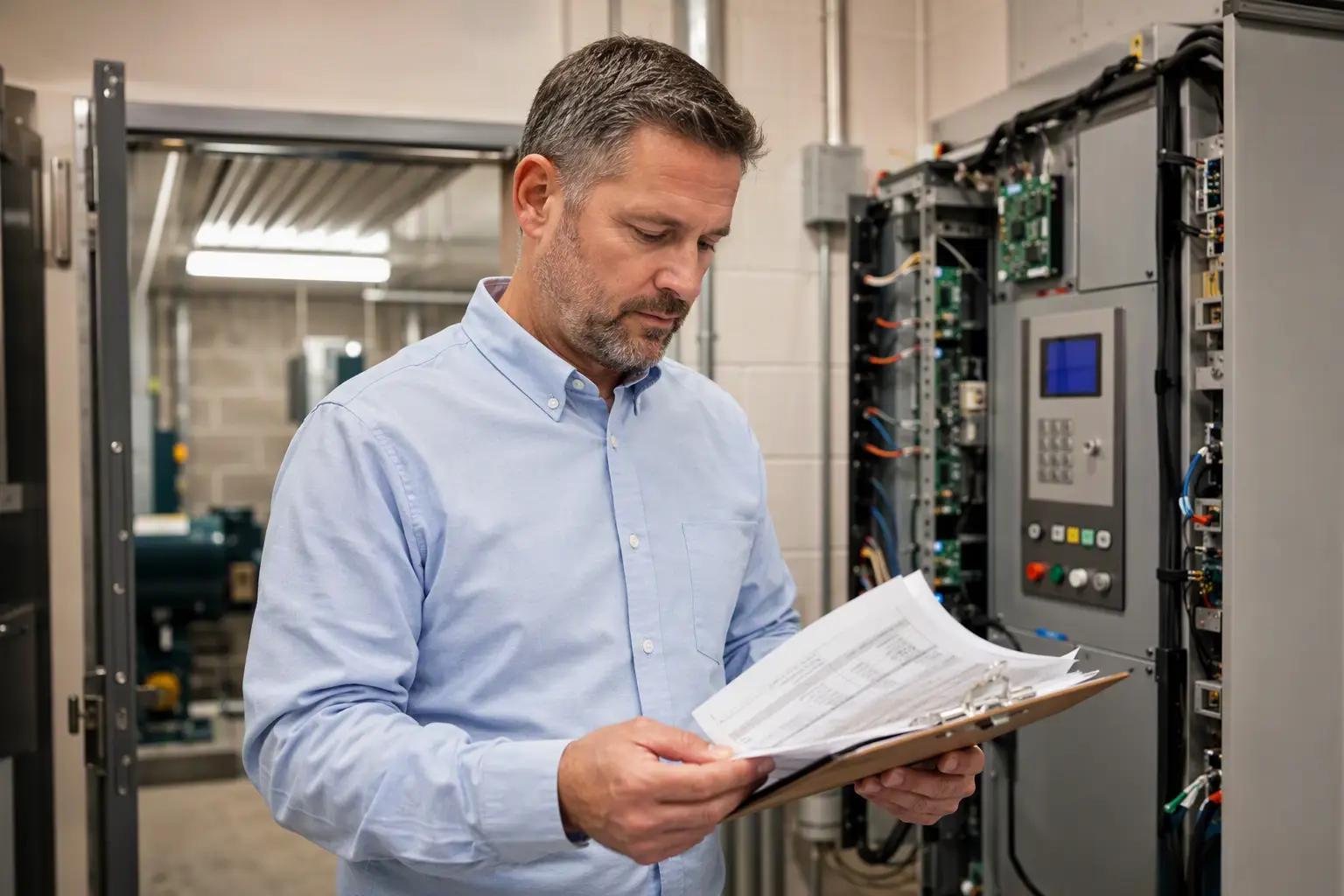
The Americans with Disabilities Act applies to assisted living facilities as places of public accommodation or, depending on the facility’s structure, as commercial facilities. The ADA Standards for Accessible Design set out specific elevator requirements covering call button placement, cab dimensions, door operation, floor designation signage, and emergency communication. Facilities built or significantly altered after the ADA’s effective dates must comply with these standards. Older facilities face “readily achievable barrier removal” obligations, meaning modifications must be made where they can be accomplished without undue difficulty or expense.
For South Carolina facilities, the ADA is enforced at the federal level by the U.S. Department of Justice. Complaints can result in formal investigations, corrective action requirements, and civil penalties. An independent elevator service and assessment provider like Carolina Elevator Service can identify ADA compliance gaps before a complaint arises.
—
What Does ASME A17.1 Require for Elevators in Senior Living Buildings?
The ASME A17.1 Safety Code for Elevators and Escalators is the primary construction and safety standard for new elevator installations in the United States, including South Carolina. ASME A17.3 covers existing elevators and establishes requirements for their continued safe operation. Together, these codes govern:
- Car and hoistway construction standards
- Door operation, force limits, and reopening device requirements
- Emergency lighting and communication systems
- Leveling accuracy and floor approach tolerances
- Periodic inspection and testing intervals
- Firefighters’ emergency operation (Phase I and Phase II)
South Carolina adopts and enforces elevator safety codes through state inspection programs. Facilities are required to maintain current inspection certificates. Carolina Elevator Service works within these code frameworks to ensure client facilities remain inspection-ready and compliant.
—
What Is the Difference Between a Standard Commercial Elevator and One Designed for Senior Living?
| Feature | Standard Commercial Elevator | Senior / Assisted Living Optimized Elevator |
|---|---|---|
| Door Opening Width | Meets minimum ADA clear width | Wider opening preferred for power wheelchairs and side-by-side caregiver access |
| Door Dwell Time | Minimum code-required dwell | Extended dwell time programmed to accommodate slow mobility |
| Cab Dimensions | Minimum ADA footprint | Larger cab for medical equipment, gurneys, and group entry |
| Handrails | Not always installed | Cab-perimeter handrails standard |
| Flooring | Varies by finish preference | Slip-resistant, flush threshold required |
| Control Panel | Standard reach-range heights | Low-mounted controls, large-print or high-contrast buttons |
| Audible Indicators | Basic chime | Floor announcements, adjustable volume for hearing impairment |
| Emergency Communication | Code-minimum two-way system | Handsfree, continuously monitored, staff-alert integration |
| Leveling Precision | Standard tolerance | Tight leveling tolerance critical to prevent threshold trips |
| Lighting | Adequate illumination | Enhanced brightness, low-glare for low-vision residents |
| Maintenance Priority | Scheduled standard intervals | Accelerated inspection schedule recommended given vulnerable population |
—
What Optional Upgrades Provide the Greatest Safety Benefit for Residents with Mobility Issues?
| Upgrade | Primary Benefit | Residents Most Helped | Compliance Impact |
|---|---|---|---|
| Non-contact door sensors (full-height optical curtain) | Prevents door contact with any part of a mobility device or body | Wheelchair, walker, cane users | Exceeds minimum ADA/ASME reopening device requirement |
| Automatic cab leveling modernization | Eliminates threshold gaps that cause trips and falls | All ambulatory and mobility device users | Supports ASME A17.3 leveling requirements |
| Cab handrails (perimeter or rear wall) | Stability during ride and boarding/exit | Ambulatory residents, those with balance impairment | ADA recommends; often required in healthcare occupancies |
| Voice annunciator system | Audible floor announcements for visually impaired residents | Residents with low vision or blindness | Supports ADA audible floor designation requirements |
| Emergency power (standby generator connection) | Continued elevator operation during power outages | All residents, especially those who cannot use stairs | May be required by local fire/life safety codes |
| Integrated nurse-call / staff alert | Immediate staff notification when emergency call is activated | All residents | Enhances emergency communication compliance |
| Anti-vandal / low-force call buttons | Operable with limited hand strength or closed fist | Residents with arthritis, limited grip strength | ADA requires closed-fist operable controls |
—
What Are the Pros and Cons of Modernizing an Existing Elevator Versus Installing a New One?
| Factor | Modernization of Existing Elevator | New Elevator Installation |
|---|---|---|
| Disruption to residents | Moderate — phased modernization can minimize downtime | Higher — new hoistway construction affects building operations |
| Scope of accessibility upgrades | Can address most ADA and ASME A17.3 requirements; structural limits may apply | Full design flexibility to meet or exceed all current standards |
| Timeline | Typically shorter than new installation | Longer — requires construction, permitting, and full inspection process |
| Code compliance outcome | Brings existing equipment into ASME A17.3 compliance; ADA barrier removal | Must meet full ASME A17.1 new installation standard and current ADA |
| Best suited for | Buildings with structurally sound hoistway; targeted accessibility gaps | Buildings adding capacity, or with unsafe or irreparable existing equipment |
| Pros | Lower cost, faster completion, less structural disruption | Latest technology, maximum design flexibility, longest service life |
| Cons | Existing hoistway dimensions may limit cab size upgrade | Higher cost, longer timeline, greater construction disruption |
—
How Often Must Elevators in South Carolina Senior Living Facilities Be Inspected?
South Carolina requires periodic inspections of elevator equipment under state elevator safety law, with inspections conducted by state-licensed inspectors. The ASME A17.1 and A17.3 codes establish testing intervals for various safety devices. Facilities must maintain a current certificate of operation, which is issued following a satisfactory inspection.
For senior living facilities, the inspection interval is not a ceiling — it is a floor. Given the vulnerability of the resident population, proactive maintenance programs that go beyond minimum inspection cycles are strongly advisable. Carolina Elevator Service provides ongoing preventive maintenance programs designed to keep elevator equipment performing reliably between required state inspections.
—
What Should a Senior Living Facility Do If an Elevator Fails or Traps a Resident?
- Activate the in-car emergency communication system immediately to alert building staff and any monitoring service that a resident is trapped.
- Notify building staff or the front desk so personnel can respond to the elevator landing, reassure the resident verbally through the door, and assess the situation.
- Contact your licensed elevator service provider to dispatch a qualified technician for emergency response — do not attempt to manually open doors or operate the car without trained personnel.
- Do not attempt self-rescue — instruct the resident to remain calm and seated or supported; movement during a malfunction can create fall or entrapment hazards.
- Contact emergency services (911) if the resident has a medical condition that requires immediate attention while the entrapment is being resolved.
- Document the incident including time, duration, nature of the malfunction, and any resident injury or distress — this documentation supports both your maintenance records and any required reporting.
- Remove the elevator from service until a qualified technician has inspected the equipment, identified the cause, and cleared it for return to operation.
- Report the incident to the appropriate South Carolina inspection authority as may be required, and review whether the malfunction constitutes a code deficiency requiring corrective action.
—
What Questions Should a Senior Living Facility Ask When Evaluating an Elevator Service Provider?
Not all elevator service companies have equal experience with the specific demands of healthcare and senior living environments. When evaluating providers, facility managers should ask:
- Is the company licensed to perform elevator work in South Carolina?
- Does the company have familiarity with ADA accessibility requirements as they apply to elevator equipment?
- Does the company provide documented preventive maintenance programs, not just reactive repairs?
- Can the company provide modernization services to bring aging equipment into ASME A17.3 compliance?
- Does the company offer emergency response for equipment failures that trap residents?
- Is the company independent, or does it represent only one manufacturer’s equipment — which may limit options for repairs and parts?
Carolina Elevator Service is an independent, South Carolina-based elevator service company. As an independent provider, Carolina Elevator Service is not locked into a single manufacturer’s equipment, which means facilities receive unbiased recommendations and access to a broader range of parts and solutions for both legacy and modern elevator systems.
—
What Are the Risks of Deferring Elevator Maintenance or Upgrades in an Assisted Living Community?
Deferred maintenance and postponed accessibility upgrades create layered risks for senior living facilities:
- Resident safety: Degraded leveling, failing door sensors, and worn components directly increase the probability of falls, entrapments, and injuries among the most vulnerable occupants.
- Regulatory exposure: South Carolina state inspectors can cite equipment for code deficiencies and, in serious cases, order an elevator out of service. An out-of-service elevator in a senior living building creates immediate operational and care-delivery problems.
- ADA liability: Persistent accessibility barriers that could be remedied through readily achievable modifications expose facilities to complaints and enforcement action under the Americans with Disabilities Act.
- Litigation risk: A resident injury directly attributable to elevator malfunction or a known, uncorrected deficiency creates significant civil liability exposure.
- Reputational harm: Families choosing senior living communities consider safety infrastructure. A facility with a documented history of elevator failures or compliance violations is at a competitive disadvantage.
—
How Can a Facility Prioritize Elevator Accessibility Improvements When Budget Is Limited?
When a complete elevator modernization is not immediately feasible, facilities should prioritize improvements based on safety impact and compliance urgency. A structured approach:
- Commission a professional elevator assessment to identify all existing deficiencies against current ASME A17.3 and ADA requirements.
- Address life-safety deficiencies first — emergency communication failures, door reopening device malfunctions, and leveling problems that create fall hazards are the highest priority.
- Remediate ADA barriers that are readily achievable — control panel adjustments, signage, and Braille labeling are often lower-cost items with significant compliance impact.
- Plan phased modernization — break larger projects into discrete phases that can be budgeted and scheduled across fiscal years without prolonged elevator downtime.
- Document your compliance roadmap — demonstrating a documented, good-faith plan to address known deficiencies supports the facility’s position in any regulatory or legal proceeding.
Carolina Elevator Service can assist South Carolina senior living and assisted living facilities through this prioritization process with a comprehensive elevator assessment that produces a clear, actionable compliance and safety improvement plan.
—
Summary: Key Elevator Features Senior Living Facilities Must Evaluate
- Door clear opening width and full-height non-contact reopening sensors
- Extended door dwell times for slow mobility
- Cab dimensions sufficient for wheelchairs, walkers, and caregiver accompaniment
- Control panel within ADA reach range, with Braille and raised characters
- Audible and visual floor indicators and in-car voice annunciation
- Handsfree, continuously monitored two-way emergency communication
- Slip-resistant flooring with flush, level thresholds
- Cab handrails for stability
- Precise automatic leveling to eliminate threshold gaps
- Enhanced cab lighting for low-vision residents
- Emergency power connection for continued operation during outages
- Current ASME A17.1/A17.3 compliance and active South Carolina inspection certificate
- Full ADA accessibility compliance with documented barrier removal program
—
Get a Professional Elevator Assessment for Your Senior Living Facility
Carolina Elevator Service provides independent elevator assessments for senior living and assisted living communities throughout South Carolina — identifying accessibility gaps, code deficiencies, and maintenance priorities with no manufacturer bias.
Contact Carolina Elevator Service for a free elevator assessment: 803-865-1400
Need elevator service you can rely on? Carolina Elevator Service is ready to help.