Elevator Repair Permit Approval in South Carolina: Complete FAQ Guide
Understanding the elevator repair permit process in South Carolina is essential for building owners, property managers, and facility directors in Columbia and across the state. The permitting requirements touch on safety codes, state regulations, inspection schedules, and contractor qualifications. This comprehensive FAQ guide covers every dimension of the process — from how long approvals take to what triggers a permit requirement in the first place.
How Long Does It Take to Get an Elevator Repair Permit Approved in South Carolina?
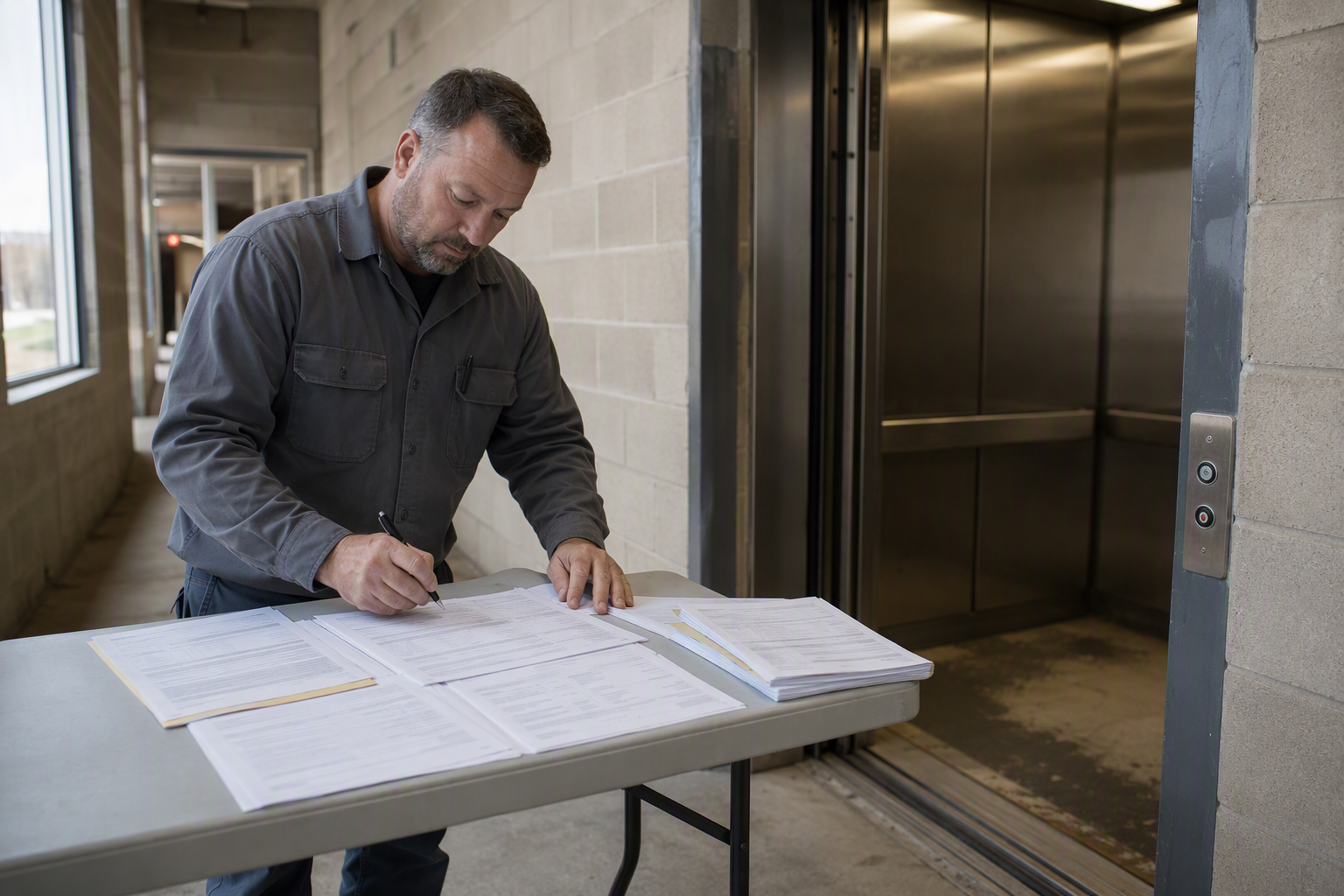
Approval timelines vary, but most routine elevator repair permits in South Carolina are processed within a few business days to several weeks, depending on documentation completeness and the nature of the repair.
The South Carolina Department of Labor, Licensing and Regulation (SC LLR) oversees elevator safety and permit issuance in the state. Permit review timelines are influenced by several factors: the completeness and accuracy of submitted plans and applications, the type of repair being performed, the current volume of applications under review, and whether additional engineering documentation or variance requests are required.
Routine repairs with straightforward documentation — such as replacing a controller component using manufacturer-approved parts — tend to move through the system more quickly than complex modernization projects that require detailed engineering drawings, load calculations, or deviations from standard code compliance paths. Submitting a complete, accurate application package from the outset is the single most effective way to minimize delays.
Carolina Elevator Service works directly with the SC LLR permitting process on behalf of Columbia-area building owners to help ensure applications are complete before submission, reducing the likelihood of correction requests that extend timelines.
What State Agency Oversees Elevator Permits and Inspections in South Carolina?
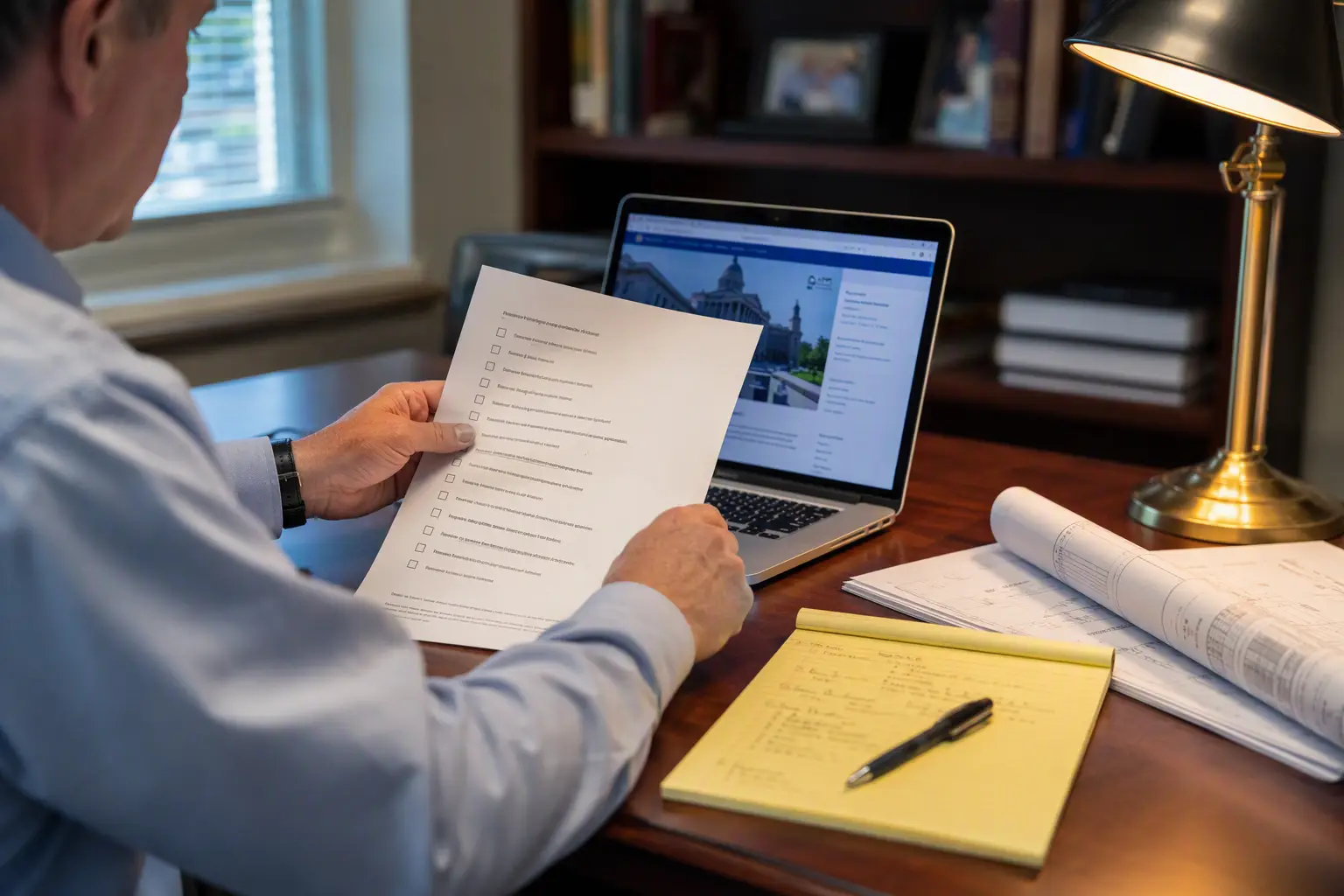
The South Carolina Department of Labor, Licensing and Regulation (SC LLR), through its Elevators and Amusement Rides division, is the authority having jurisdiction (AHJ) for elevator permits, inspections, and licensing in the state.
The SC LLR administers the South Carolina Elevator Safety Act, which establishes the framework for elevator installation, alteration, repair, and inspection requirements. This includes issuing permits for work on conveyances, licensing elevator contractors and mechanics, and scheduling state inspections following permitted work. Building owners and contractors must work within this regulatory structure for any permitted elevator work.
For the most current contact information, application forms, and procedural guidance, the SC LLR Elevators and Amusement Rides division is the authoritative source. Contractors performing elevator work in South Carolina — including all work done by Carolina Elevator Service — must hold appropriate state contractor and mechanic licenses issued through the SC LLR.
What Types of Elevator Repairs Require a Permit in South Carolina?
In South Carolina, any alteration or major repair to a conveyance covered under the state’s elevator safety regulations generally requires a permit before work begins.
The distinction between routine maintenance and permitted repair or alteration is critical. Lubrication, cleaning, minor adjustments, and like-for-like part replacements that do not affect the safety or load-bearing systems of the elevator typically fall under maintenance and may not require a permit. However, work that involves altering the drive system, replacing the controller, modifying the car or hoistway, changing load capacity, replacing safety devices, or modernizing major components almost universally triggers a permit requirement.
The applicable safety standard is the ASME A17.1 Safety Code for Elevators and Escalators, which South Carolina has adopted as its technical standard. This code defines what constitutes an alteration versus maintenance, providing a framework that the SC LLR uses to determine permit applicability. When in doubt, the conservative and legally correct approach is to apply for a permit before proceeding with any substantive repair.
What Documentation Is Required to Apply for an Elevator Repair Permit in South Carolina?
A complete elevator repair permit application in South Carolina typically requires a detailed description of the work to be performed, equipment specifications, plans or drawings (for alterations), contractor license information, and the applicable permit fee.
For major alterations or modernizations, the SC LLR may require stamped engineering drawings prepared by a licensed professional engineer. Equipment submittals — such as cut sheets for new controller components, safety devices, or drive systems — are commonly required to demonstrate code compliance. The permit application must identify the licensed elevator contractor who will perform the work and the licensed elevator mechanic(s) assigned to the job.
Incomplete applications are a leading cause of permit processing delays. Missing documentation triggers a deficiency notice, which pauses the clock on review until the applicant provides the requested materials. Experienced contractors familiar with SC LLR requirements know how to front-load submissions with complete documentation packages to avoid these interruptions.
How Does the SC LLR Permit Review Process Work Step by Step?
The SC LLR elevator repair permit process follows a defined sequence from application submission through inspection and final approval.
- Prepare the application package: Compile all required documentation, including work description, equipment specifications, engineering drawings (if required), contractor license information, and permit fee payment.
- Submit the application to SC LLR: Submit the completed application to the SC LLR Elevators and Amusement Rides division through the appropriate submission channel (online portal or paper submission, per current SC LLR procedures).
- Application review: SC LLR staff review the submitted documents for completeness and code compliance. If deficiencies are found, a correction notice is issued and the applicant must respond before review continues.
- Permit issuance: Once the application is approved, the SC LLR issues the permit authorizing the repair or alteration to proceed.
- Perform permitted work: The licensed elevator contractor carries out the approved work in accordance with the permit and applicable code requirements.
- Schedule post-work inspection: After the work is complete, contact the SC LLR to schedule a state inspection of the completed work.
- State inspection: An SC LLR elevator inspector examines the completed work for compliance with the permitted scope and applicable codes.
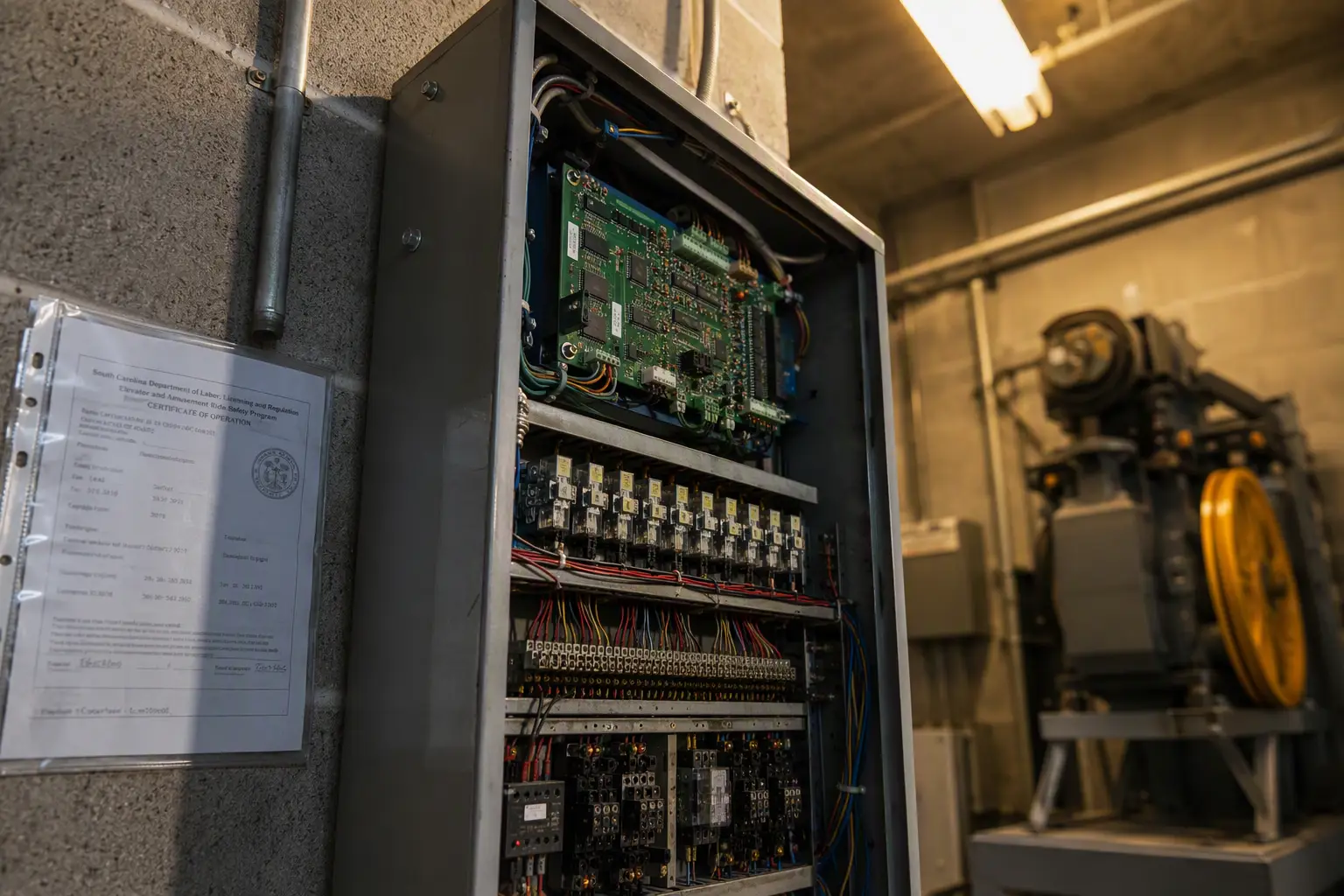
- Certificate of operation issued: If the inspection passes, the SC LLR issues or renews the elevator’s certificate of operation, authorizing the conveyance to return to public use.
What Happens If Elevator Repair Work Is Performed Without a Permit in South Carolina?
Performing permit-required elevator repair work without authorization from the SC LLR can result in stop-work orders, fines, required demolition of unpermitted work, and potential liability exposure for the building owner and contractor.
Beyond the administrative penalties, unpermitted work creates significant insurance and liability risks. If an elevator malfunction or injury occurs on equipment that underwent unpermitted alterations, the building owner may face challenges with insurance claims and potential civil liability. The SC LLR has authority to order equipment taken out of service until compliance is achieved, which can be highly disruptive to building operations.
From a practical standpoint, unpermitted work also creates complications when the building is sold, refinanced, or undergoes due diligence review. Savvy buyers and lenders will review elevator compliance records, and gaps in permit history can delay or derail transactions.
How Do ASME A17.1 Code Requirements Affect the Permit Process?
The ASME A17.1 Safety Code for Elevators and Escalators serves as the technical foundation for all elevator permit review in South Carolina, defining the standards that permitted work must meet.
ASME A17.1 is the nationally recognized safety code that South Carolina has adopted as the basis for its elevator regulations. When a permit application is submitted, the SC LLR reviews proposed work for compliance with ASME A17.1 requirements. This includes evaluating whether replacement components meet current code specifications, whether altered systems maintain required safety device functionality, and whether load ratings and speeds remain within permitted parameters.
For existing elevators being modernized or repaired, the companion standard ASME A17.3 Safety Code for Existing Elevators and Escalators is also relevant. A17.3 addresses retrofit requirements and compliance standards for equipment installed under earlier code editions, which is a common consideration in South Carolina’s substantial inventory of older commercial and residential elevator installations.
How Do ADA Requirements Factor Into Elevator Repair Permits?
When permitted elevator repair or modernization work creates an opportunity to bring accessibility features into compliance, the Americans with Disabilities Act (ADA) may impose additional requirements that affect both the scope and timeline of permitted work.
The ADA requires that elevators serving public accommodations and commercial facilities meet specific accessibility standards, including requirements for cab dimensions, door width, control panel height and button specifications, Braille markings, and audible and visual indicators. When a permitted alteration triggers a “path of travel” obligation under ADA, the building owner may be required to bring associated accessibility elements into compliance as part of the project.
Understanding the intersection of ADA requirements and the SC LLR permit process is important for accurate project scoping and budgeting. Work that appears straightforward from a mechanical standpoint may carry ADA compliance implications that expand the project scope. Building owners in Columbia and throughout South Carolina benefit from working with contractors knowledgeable in both state permitting requirements and federal ADA standards.
What Factors Can Delay Elevator Permit Approval in South Carolina?
The most common causes of permit approval delays include incomplete application submissions, required engineering revisions, high application volume at the SC LLR, and complexity of the proposed work.
Specific factors that routinely extend timelines include: submitting applications without required engineering drawings for major alterations; proposing equipment or methods that require variance requests or code interpretations; contractor license discrepancies; outstanding fees or compliance issues on the account; and scheduling backlogs for plan review staff during peak periods. Projects involving historical buildings or unusual hoistway configurations may also require additional review time.
Proactive communication with the SC LLR and prompt response to any deficiency notices are the most effective ways to keep a permit application moving. Experienced elevator service contractors who regularly work within the SC LLR system develop familiarity with submission requirements that reduces the likelihood of avoidable delays.
Does the Type of Elevator Affect Permit Processing Time?
Yes — the type of conveyance, its age, its use classification, and the nature of the proposed work all influence how long permit review takes in South Carolina.
| Work Type | Permit Required | Typical Documentation Complexity | Engineering Drawings Likely Required | Relative Processing Speed |
|---|---|---|---|---|
| Routine maintenance / like-for-like minor part replacement | Often not required | Low | No | N/A (no permit) |
| Controller replacement (same type) | Yes | Moderate | Sometimes | Relatively faster |
| Drive system replacement or upgrade | Yes | Moderate to High | Often | Moderate |
| Safety device replacement (governor, buffers, safeties) | Yes | Moderate | Sometimes | Moderate |
| Full modernization (cab, controls, drive, doors) | Yes | High | Yes | Longer |
| New elevator installation | Yes | Very High | Yes | Longest |
| Hydraulic system repair or replacement | Yes | Moderate to High | Often | Moderate |
| ADA accessibility upgrade only | Yes | Moderate | Sometimes | Relatively faster |
Note: “Relatively faster” and “Longer” are qualitative comparisons based on documentation complexity, not guaranteed SC LLR processing timelines. Actual timelines depend on submission completeness and current SC LLR workload.
How Are Elevator Inspections Scheduled After Permitted Repair Work Is Complete?
Once permitted elevator repair or alteration work is complete in South Carolina, the licensed contractor must notify the SC LLR to schedule a post-work inspection before the elevator is returned to service.
The post-completion inspection is a mandatory step — the elevator cannot legally return to public use until a state inspector has reviewed the work and issued or renewed the certificate of operation. Inspection scheduling availability depends on the SC LLR’s current inspector workload and geographic coverage. Building owners in the Columbia area should plan for inspection scheduling as part of the overall project timeline rather than treating it as an afterthought.
Preparing for a successful inspection means ensuring that all work is fully complete, that documentation (permit, work records, equipment certifications) is on-site and accessible, and that the elevator is clean, functional, and ready for operational testing. Failed inspections requiring reinspection extend the out-of-service period and may incur additional fees.
What Is the Required Frequency of Routine Elevator Inspections in South Carolina?
South Carolina requires that elevators covered under the state’s elevator safety regulations undergo periodic inspections at intervals established by the SC LLR under the authority of the adopted safety codes.
The ASME A17.1 Safety Code for Elevators and Escalators and its companion standard ASME A17.3 provide the technical framework for inspection requirements, including the types of tests required (periodic inspections, five-year tests for hydraulic systems, and category testing for safety devices). The SC LLR administers the inspection program in accordance with these standards.
Maintaining a current certificate of operation requires staying current on scheduled inspections as well as any required periodic load and safety tests. Lapses in inspection currency can result in the certificate of operation being revoked, which requires the elevator to be taken out of service until compliance is restored. Regular maintenance by a qualified elevator service provider helps ensure that equipment is inspection-ready at all required intervals.
Can Building Owners Expedite Elevator Permit Review in South Carolina?
While the SC LLR does not publicly advertise a formal expedited review program, building owners can take practical steps to minimize processing time by submitting the most complete and accurate application possible from the outset.
Strategies that support faster permit review include: having all required documentation — including engineering drawings, equipment specifications, and contractor license information — fully prepared before submission; ensuring the permit fee is included with the application; using contractors with established, current relationships with the SC LLR who understand current submission preferences; and promptly responding to any deficiency notices within the review process. For projects with genuine operational urgency (such as elevators required for ADA accessibility in a public building), engaging proactively with the SC LLR at the pre-application stage may help identify potential review issues before formal submission.
What Are the Consequences of an Elevator Operating With an Expired Certificate of Operation?
Operating an elevator in South Carolina with an expired certificate of operation violates state law and exposes building owners to regulatory penalties, mandatory shutdown orders, and significant civil liability.
The SC LLR has authority to order non-compliant elevators taken out of service. Beyond regulatory exposure, operating equipment with a lapsed certificate creates insurance complications — many commercial property insurance policies exclude or limit coverage for incidents involving equipment operating outside of regulatory compliance. In multi-tenant commercial buildings or public facilities, an elevator shutdown due to certificate lapse can create serious operational disruptions and tenant relations issues. Staying current on inspection schedules and certificate renewals is a fundamental responsibility of building ownership.
How Does Workplace Safety Regulation Intersect With Elevator Repair Permitting?
Elevator repair work is subject to applicable OSHA workplace safety requirements in addition to SC LLR permitting requirements, and licensed contractors are responsible for maintaining OSHA compliance throughout the repair process.
OSHA regulations govern the safety of workers performing elevator repair and maintenance work — covering hazard communication, lockout/tagout procedures for energy control, fall protection, and confined space protocols where applicable. OSHA compliance is the responsibility of the employing contractor, not the building owner, though building owners must provide a reasonably safe working environment. The intersection of OSHA worker safety requirements and SC LLR equipment safety regulations means that elevator repair projects must satisfy two parallel compliance frameworks simultaneously.
What Qualifications Must an Elevator Contractor Hold to Pull Permits in South Carolina?
In South Carolina, only licensed elevator contractors holding the appropriate SC LLR contractor license are authorized to apply for and perform work under elevator repair permits.
The state’s licensing requirements ensure that permitted elevator work is performed by contractors with demonstrated competence in elevator safety. In addition to contractor-level licensing, the mechanics performing the actual work must hold appropriate SC LLR elevator mechanic licenses. Working with unlicensed contractors — even if their pricing appears attractive — creates significant legal and liability exposure, as the permit itself requires licensed contractor participation and the SC LLR verifies contractor credentials as part of permit review.
Building owners in Columbia and throughout South Carolina should verify that any elevator service provider they engage holds current, active SC LLR licensure before authorizing permit applications or repair work. Carolina Elevator Service operates as a licensed elevator contractor within the SC LLR regulatory framework, providing permitted repair and alteration services throughout the Columbia area.
How Does Elevator Age Affect Repair Permitting and Compliance Requirements?
Older elevators may face more complex permit review requirements because repairs and alterations can trigger retroactive compliance obligations under current codes, particularly under ASME A17.3 Safety Code for Existing Elevators and Escalators.
ASME A17.3 addresses the safety requirements that apply to existing elevators — equipment installed under earlier code editions. When a permitted alteration is made to an older elevator, it can trigger requirements to bring related systems into compliance with current standards, even if those systems were not part of the original repair scope. This “retroactive compliance” consideration is particularly relevant for elevators installed several decades ago that may have components no longer meeting current code minimums.
Understanding which A17.3 requirements apply to a specific piece of equipment requires technical expertise and code familiarity. Building owners planning repairs on older equipment should work with a knowledgeable elevator service contractor early in the project planning process to identify the full scope of compliance obligations before submitting a permit application.
What Should Building Owners Do Immediately If an Elevator Breaks Down and Requires Emergency Repair?
When an elevator experiences a breakdown requiring immediate repair in South Carolina, building owners should follow a defined sequence of steps to protect occupant safety, meet regulatory obligations, and engage the appropriate service resources.
- Ensure occupant safety first: If anyone is trapped in the elevator, call 911 immediately. Do not attempt to open car or hoistway doors without trained personnel.
- Take the elevator out of service: Lock out access to the elevator and post clear “Out of Service” signage to prevent unauthorized use while the equipment is not operational.
- Contact a licensed elevator service contractor: Reach out to a licensed South Carolina elevator contractor to assess the failure and determine the scope of required repairs.
- Determine permit requirements: Work with the contractor to assess whether the required repairs trigger a permit requirement under SC LLR regulations. Emergency conditions do not eliminate permit obligations for permit-required work.
- Notify the SC LLR if required: For certain equipment failures or safety-related issues, notification to the SC LLR may be required. The licensed contractor can advise on notification obligations.
- Submit permit application promptly: If a permit is required, prepare and submit the application as quickly as possible with complete documentation to minimize the out-of-service period.
- Maintain documentation: Keep records of all communications, repair orders, permit applications, and inspection results related to the breakdown and repair.
- Conduct post-repair inspection: Ensure the required state inspection is scheduled and completed before returning the elevator to service.
Carolina Elevator Service assists Columbia-area building owners through this process, helping navigate both the immediate repair response and the associated SC LLR permitting requirements.
How Can Building Owners in Columbia SC Minimize Elevator Permit Processing Delays?
The most effective way to minimize permit processing delays is to partner with an experienced, licensed elevator contractor who understands SC LLR submission requirements and can prepare complete, compliant applications the first time.
Practical steps building owners can take include: engaging the elevator contractor early — ideally before the need for repair becomes urgent — to allow time for proper application preparation; maintaining organized records of the elevator’s maintenance and inspection history, which can support permit applications; ensuring any engineering drawings required for the project scope are commissioned early in the process rather than after permit submission; and staying current on routine inspections and certifications so that the elevator’s compliance history is clean when a repair permit is needed.
Planning ahead is far more effective than trying to accelerate a permit application already in the review queue. For building owners managing multiple elevator assets in the Columbia area, establishing an ongoing relationship with a qualified service provider supports proactive compliance management across the entire portfolio.
Is There a Difference Between a Repair Permit and a Modernization Permit for Elevators in South Carolina?
Yes — while both types of work require permits from the SC LLR, modernization projects typically involve broader scope, more extensive documentation, and longer review timelines than targeted repair permits.
A repair permit addresses specific, discrete work — replacing a failed component, correcting a code deficiency, or restoring a system to its original operating specification. A modernization permit covers comprehensive upgrades that may involve replacing the drive system, controller, cab interior, door operators, safety devices, and control systems as an integrated project. Modernizations are treated similarly to new installations in terms of code compliance review, meaning they must demonstrate conformance with current ASME A17.1 requirements across all altered systems. The documentation burden for a modernization application is correspondingly higher, and review timelines are generally longer.
Building owners considering modernization should allow substantially more lead time for the permitting phase than they would for a targeted repair project, and should plan project timelines accordingly to minimize operational disruption.
Ready to Navigate the South Carolina Elevator Permit Process?
Understanding South Carolina’s elevator repair permitting requirements — from SC LLR application procedures to ASME A17.1 compliance standards and post-repair inspection protocols — is essential to keeping building operations running smoothly and equipment operating safely and legally.
Carolina Elevator Service provides licensed elevator repair, alteration, and maintenance services throughout Columbia, SC, working within the SC LLR regulatory framework to help building owners manage permit requirements efficiently and keep elevators in safe, compliant operation.
Contact Carolina Elevator Service for a free elevator assessment: 803-865-1400
Need elevator service you can rely on? Carolina Elevator Service is ready to help.