Elevator Out of Service: Who to Contact and What to Do — Complete FAQ
An elevator that stops working unexpectedly creates immediate safety concerns, ADA accessibility obligations, and potential code compliance exposure for building owners in Columbia, SC. The steps taken in the first minutes and hours after an outage can determine whether the situation resolves quickly and lawfully — or escalates into regulatory scrutiny, tenant liability, or extended downtime. This comprehensive FAQ covers every aspect of elevator outages, from the immediate emergency response to long-term prevention strategies.
Who should I contact first when my elevator goes out of service?
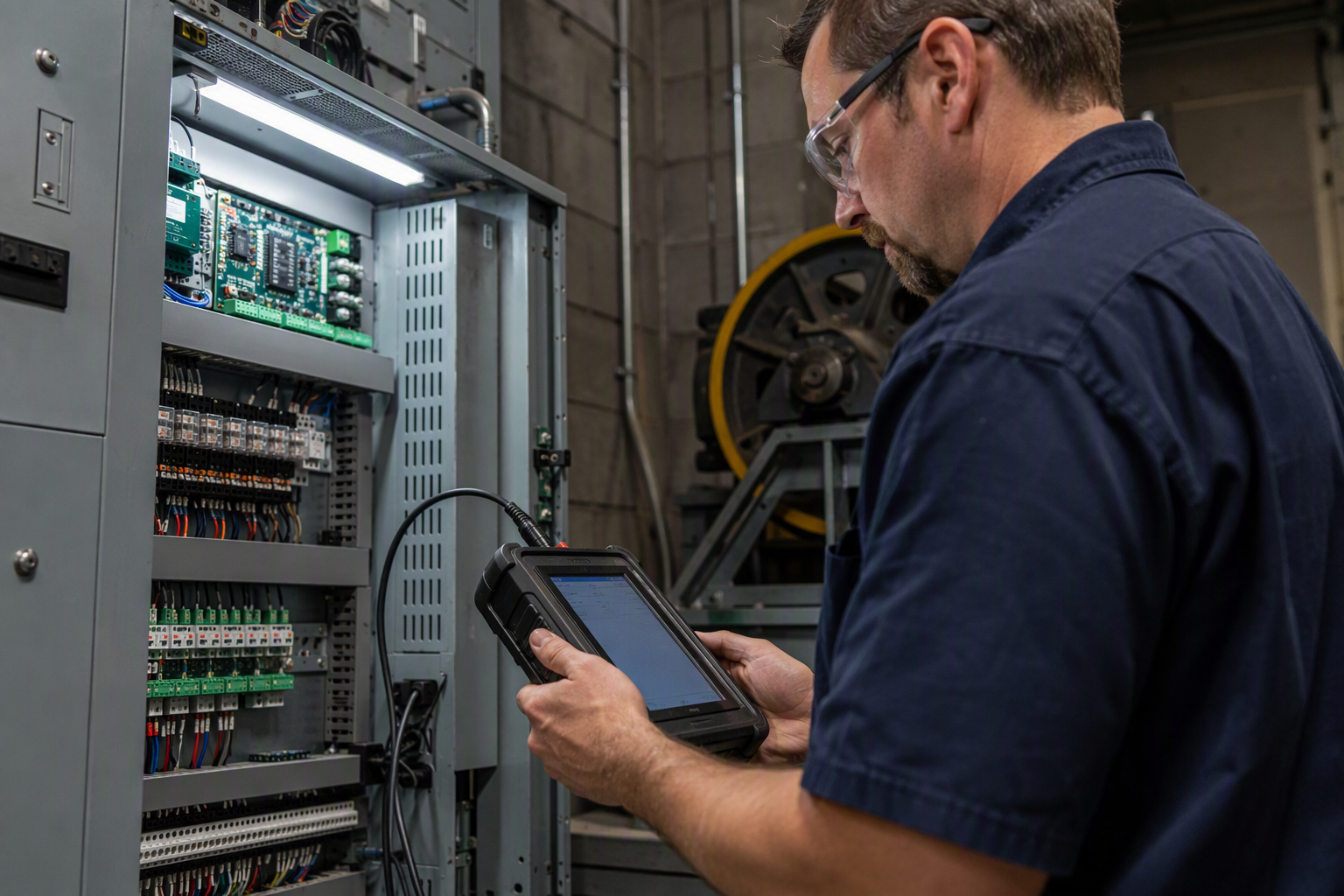
Contact a licensed elevator service company as your first call, then notify your building occupants and post out-of-service signage while you wait for a technician to assess the unit.
Building managers in Columbia, SC should maintain the contact information of a certified elevator service provider in an easily accessible location — ideally posted in the elevator machine room itself. In South Carolina, elevator work must be performed by contractors licensed through the SC Department of Labor, Licensing and Regulation (SC LLR). Calling an unlicensed contractor not only risks improper repairs but can also create regulatory liability for the building owner.
Carolina Elevator Service serves Columbia, SC and surrounding communities, providing licensed inspection, maintenance, and repair services for commercial and residential elevator systems. Having a pre-established service relationship means faster dispatch and a technician who already has records of your equipment’s history.
What should I do immediately when an elevator breaks down?
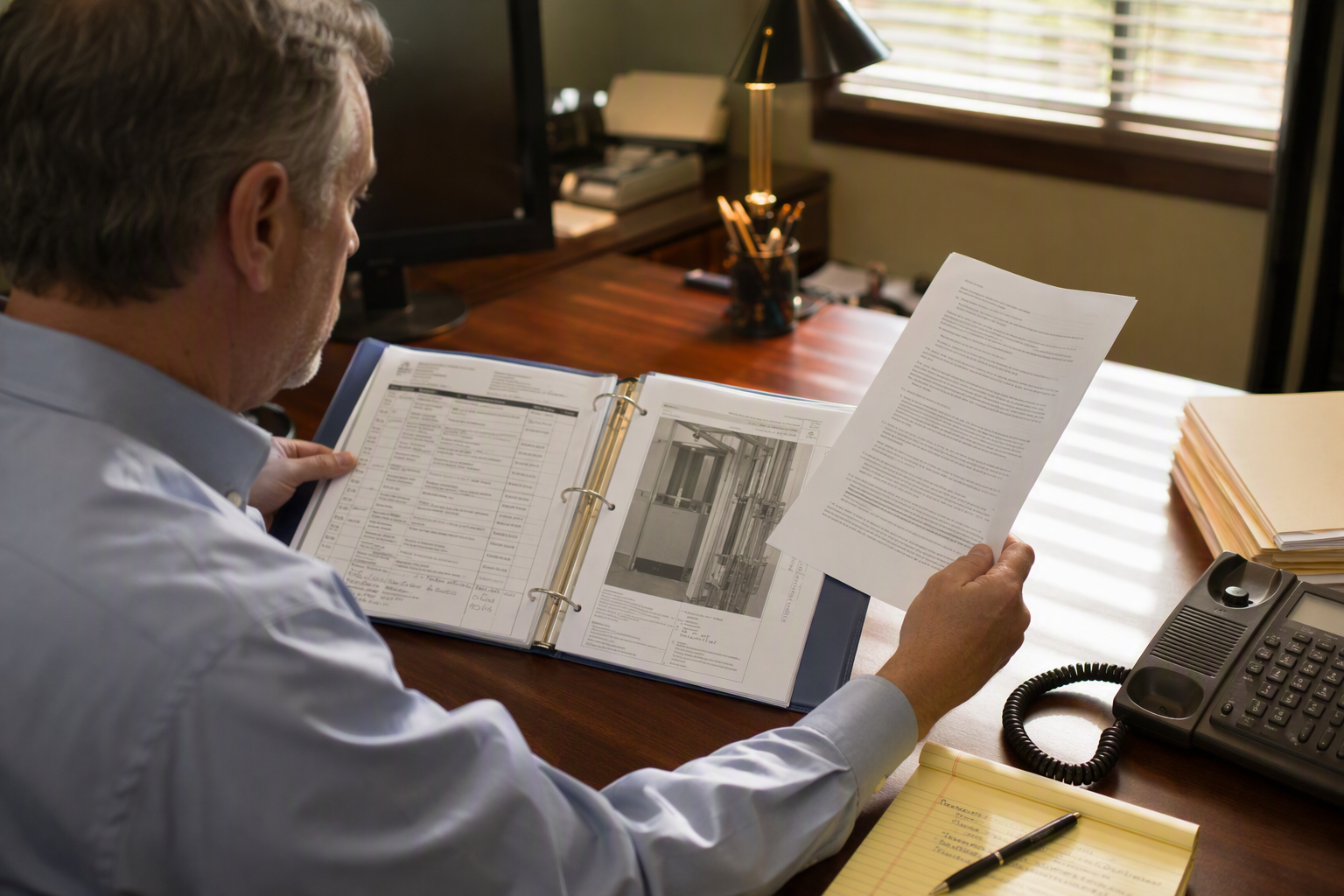
The immediate priority is passenger safety, followed by proper notification and documentation before any repair work begins.
- Determine if anyone is trapped inside the elevator. If passengers are trapped, call 911 immediately so trained emergency responders can assist with extraction. Do not attempt to manually force doors open or pry passengers out without professional assistance.
- Secure the elevator landing doors. If the cab has stopped between floors or doors are malfunctioning, prevent anyone from attempting to enter or exit unsafely.
- Call a licensed elevator service company. Report the nature of the malfunction, the elevator’s location within the building, and whether any passengers were involved.
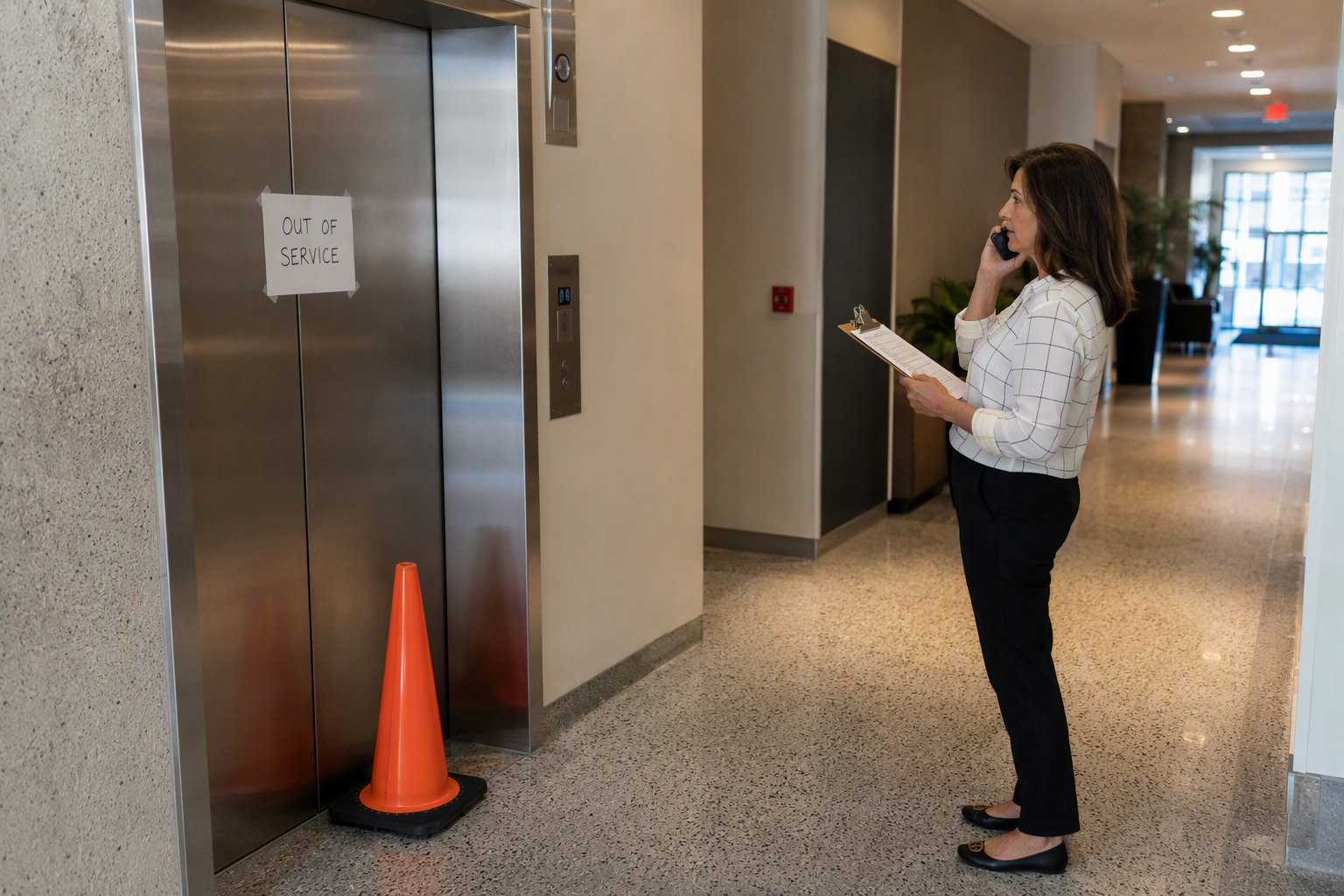
- Post out-of-service signage at every landing. Block or barricade elevator entrances clearly so no occupant attempts to use the unit.
- Notify building management and ownership. Document the time of failure, any observable symptoms (unusual noise, door malfunction, failure to level), and the names of any affected occupants.
- Check your maintenance contract. Review whether your service agreement includes emergency response and whether you have an obligation to report the outage to a regulatory body.
- Report to SC LLR if required. If the outage involves an injury, entrapment, or equipment failure that could constitute a safety hazard, contact the South Carolina LLR Elevator Division promptly.
- Preserve evidence. Do not operate or tamper with the elevator controls, reset panels, or machine room equipment until the licensed technician has assessed the situation.
Is building management legally required to notify anyone when an elevator is out of service in South Carolina?
South Carolina requires elevators to be maintained in safe operating condition under state statute, and incidents involving injuries or entrapments must be reported to the SC LLR Elevator Division.
South Carolina’s elevator safety program is administered by the SC Department of Labor, Licensing and Regulation. Building owners and operators are responsible for ensuring elevators meet the safety requirements outlined in applicable codes, including the ASME A17.1 Safety Code for Elevators and Escalators and ASME A17.3 Safety Code for Existing Elevators and Escalators. When a safety-related failure or passenger entrapment occurs, prompt notification to the state elevator authority is not just best practice — it may be a regulatory obligation.
Routine mechanical outages that do not involve injury or entrapment typically do not require formal state notification, but building owners should always consult their elevator service provider and legal counsel to confirm obligations specific to their situation.
What are my ADA obligations when my elevator is out of service?
Under the Americans with Disabilities Act (ADA), building owners must provide accessible routes for people with disabilities, which means an extended elevator outage can create significant legal exposure if no accessible alternative exists.
The ADA does not require elevators in all buildings — structures under three stories or with fewer than 3,000 square feet per floor may qualify for an elevator exemption under Title III. However, if your building does have an elevator that serves as the accessible route for individuals with disabilities, its extended unavailability may constitute a failure to provide accessible services. Building owners should assess whether temporary alternative accommodations — such as relocating services or providing alternative access arrangements — are feasible during the repair period. Consulting an ADA compliance attorney alongside your elevator service company is advisable when outages extend beyond a short period.
How long does elevator repair typically take in Columbia, SC?
Repair time varies significantly depending on the nature of the malfunction and the availability of replacement parts, ranging from a few hours for minor issues to several days or weeks for major component failures.
Common issues such as door sensor malfunctions, minor electrical faults, or control board resets may be resolved in a single service visit. However, failures involving major components — hydraulic cylinders, traction machine gearboxes, controller boards, or sheaves — may require parts that must be ordered, particularly for older elevator systems where components are no longer manufactured in volume. Building owners with aging equipment in Columbia, SC should discuss modernization options with a licensed service company, as outdated parts availability is one of the most common drivers of extended outage times.
What are the most common reasons an elevator goes out of service?
The most frequent causes of elevator outages include door system failures, hydraulic fluid leaks, electrical control malfunctions, and worn mechanical components that trigger safety shutdowns.
| Failure Type | Common Symptoms | Typical Urgency | Relevant Code Reference |
|---|---|---|---|
| Door operator failure | Doors won’t open or close, repeated re-opening | High — entrapment risk | ASME A17.1 |
| Hydraulic fluid leak | Slow descent, cab fails to level at floor | High — safety shutdown required | ASME A17.1 |
| Control board/electrical fault | Elevator unresponsive, erratic floor stops | Medium to High | ASME A17.1 |
| Safety device activation | Car stops mid-travel and won’t restart | High — requires reset by licensed tech | ASME A17.1 |
| Worn traction cables/sheaves | Vibration, slippage, unusual noise | High — scheduled replacement needed | ASME A17.1 / A17.3 |
| Power supply interruption | No response, dark cab interior | Medium — often resolved by building electrician | Building electrical code |
| Overheating of machine | Automatic shutdown after heavy use | Medium — cooling period required | ASME A17.1 |
| Pit flooding | Safety switch activation due to water intrusion | High — electrical safety risk | ASME A17.1 |
Can building maintenance staff reset or repair the elevator themselves?
In South Carolina, elevator repair and most maintenance tasks must be performed by licensed elevator contractors — building maintenance staff should not attempt repairs beyond basic user-level resets specifically authorized in the elevator’s operations manual.
Attempting unauthorized repairs is dangerous and can void equipment warranties, create regulatory violations, and expose building ownership to significant liability if an injury occurs as a result. Some elevator systems permit building staff to perform a basic reset from the machine room in specific, well-documented circumstances, but this should only happen when the equipment manufacturer’s instructions explicitly describe the procedure and the action does not bypass safety devices. When in doubt, building management should wait for a licensed technician rather than risk worsening the problem.
What happens if someone is trapped inside an elevator?
A passenger trapped in a stalled elevator should press the emergency call button and remain calm inside the cab; building management should call 911 and a licensed elevator service company immediately.
Under ASME A17.1, elevator cabs are required to have emergency lighting, ventilation, and a two-way communication system so trapped passengers can contact help. Building staff should communicate with the trapped passenger through the intercom or through the closed door to reassure them while help is en route. Passengers should be strongly advised not to attempt to force the doors open or climb out of the cab, as the cab could move unexpectedly and create a fatal fall hazard. Emergency responders trained in elevator extraction should perform the actual rescue.
How does South Carolina regulate elevator safety and inspections?
South Carolina’s elevator safety program, administered through the SC Department of Labor, Licensing and Regulation, requires periodic inspections by qualified elevator inspectors and mandates that building owners maintain elevators in compliance with applicable ASME codes.
South Carolina follows the ASME A17.1 Safety Code for Elevators and Escalators for new installations and ASME A17.3 for existing elevator equipment. Elevators in South Carolina must be inspected and hold a valid certificate of operation issued through the SC LLR process. Operating an elevator without a current, valid certificate is a violation of state law and can result in mandatory shutdown orders, fines, and liability exposure for the building owner. Building owners in Columbia, SC should confirm their certificate of operation is current and prominently posted inside the elevator cab as required.
How often should elevators be inspected in South Carolina?
South Carolina requires periodic inspections of elevators in accordance with state-adopted codes, with the frequency and scope determined by the elevator type, age, and applicable ASME standards.
Routine periodic inspections are required to maintain a valid certificate of operation in South Carolina. These inspections evaluate safety devices, electrical systems, door operation, cab condition, machine room conditions, and overall code compliance. In addition to state-mandated periodic inspections, building owners should implement a proactive preventive maintenance program. Carolina Elevator Service helps Columbia, SC building owners establish inspection and maintenance schedules aligned with SC LLR requirements and ASME A17.1 best practices, reducing the likelihood of unexpected outages.
What is the difference between elevator maintenance and elevator repair?
Elevator maintenance is scheduled, proactive servicing performed to prevent failures, while elevator repair is reactive work performed after a failure has already occurred — and repair is almost always more disruptive and costly than a good maintenance program.
A comprehensive maintenance program typically includes lubrication of moving parts, inspection and adjustment of door operators, testing of safety devices, monitoring of hydraulic fluid levels, examination of electrical contacts and wiring, and documentation of all work performed. Repair work, by contrast, involves diagnosing and correcting a specific failure — often under time pressure with a building’s operations disrupted. Building owners who invest in proactive maintenance consistently experience fewer emergency outages than those who operate on a purely reactive basis, according to general principles recognized across the elevator industry.
What should I look for when selecting an elevator service company in Columbia, SC?
Building owners should verify that any elevator service company they hire holds a valid South Carolina elevator contractor license, employs qualified technicians, carries appropriate insurance, and has documented experience with the type of equipment installed in their building.
Key criteria for evaluating elevator service providers in Columbia, SC include:
- SC LLR licensure: Confirm the company holds a current, active elevator contractor license issued by the South Carolina Department of Labor, Licensing and Regulation.
- Insurance and bonding: Verify adequate general liability and workers’ compensation coverage to protect building ownership in the event of an incident during service.
- Equipment familiarity: Not all elevator companies service all brands and types. Confirm the provider has documented experience with your specific equipment — hydraulic, traction, MRL (machine-room-less), or home lift systems.
- Documentation practices: A reputable company provides written service reports after every visit, which are essential for regulatory compliance and warranty management.
- Local presence: A company with a physical presence in or near Columbia, SC can respond more reliably than out-of-area contractors.
Carolina Elevator Service is a certified elevator service company serving Columbia, SC, providing maintenance, repair, and inspection services for commercial and residential elevator systems throughout the region.
What are the OSHA requirements related to elevator safety in the workplace?
The Occupational Safety and Health Administration (OSHA) sets workplace safety standards that apply to elevator service work environments, including machine rooms, pits, and hoistways, and building employers have a general duty to keep workplace equipment safe for employees.
OSHA’s General Duty Clause requires employers to provide a workplace free from recognized hazards. For building owners and facility managers, this means ensuring that elevators used by employees are properly maintained and do not present fall, electrical, or entrapment hazards. OSHA also regulates the safety of workers performing elevator maintenance and repair — the technicians themselves work in environments with significant fall and electrical hazards, and licensed service companies must follow applicable OSHA standards for lockout/tagout, confined space entry in elevator pits, and ladder safety in machine rooms.
What documentation should building owners keep related to elevator outages?
Building owners should maintain a complete and organized record of all elevator outages, service calls, inspection reports, and repair invoices as part of their ongoing compliance and risk management program.
Proper documentation serves multiple purposes: it demonstrates regulatory compliance to SC LLR inspectors, provides evidence of due diligence in the event of an injury lawsuit, supports warranty claims with equipment manufacturers, and informs future maintenance decisions. A well-maintained service log should record the date and time of each outage, the symptoms observed, who was contacted, what work was performed, the name and license number of the servicing technician, and any parts replaced. Building owners should retain these records for a minimum period consistent with their legal counsel’s guidance and applicable statute of limitations considerations in South Carolina.
What is elevator modernization and when should building owners consider it?
Elevator modernization involves upgrading aging components — or the entire elevator system — to current code standards and technology, and it should be considered when repair costs become disproportionate to equipment value, when code compliance requires upgrades, or when frequent outages are disrupting building operations.
Under ASME A17.3, existing elevators may be required to meet updated safety standards when significant alterations or modernizations are performed. Building owners in Columbia, SC with older hydraulic or traction elevators often face a decision point: continue investing in maintenance and repairs of aging equipment with limited parts availability, or modernize the system for improved reliability, energy efficiency, and code compliance. Carolina Elevator Service can assess existing equipment and provide building owners with a clear picture of modernization options and associated considerations.
Does elevator insurance cover outage losses and liability?
Standard commercial property and general liability insurance policies vary significantly in their coverage of elevator-related incidents, equipment downtime losses, and third-party injury claims — building owners should review their policies carefully and consider specialized equipment breakdown coverage.
Equipment breakdown (also called boiler and machinery) coverage can help offset the cost of major elevator component failures that fall outside standard property coverage. Liability coverage is critical for building owners if a passenger is injured as a result of an elevator malfunction — and the adequacy of that coverage is often scrutinized in litigation. Maintaining thorough maintenance and inspection records is one of the strongest defenses building owners can have in an elevator-related claim, as it demonstrates that the owner exercised reasonable care in maintaining the equipment.
What is the role of the Authority Having Jurisdiction (AHJ) in elevator outages?
The Authority Having Jurisdiction (AHJ) in South Carolina for elevator safety is the SC Department of Labor, Licensing and Regulation, which has authority to inspect elevators, issue citations, mandate shutdowns, and enforce compliance with applicable ASME codes.
When an elevator is placed out of service following an inspection deficiency or a reported safety incident, the SC LLR may issue an order prohibiting operation until specific conditions are corrected and re-inspected. Building owners must not restore operation of a state-tagged or condemned elevator without obtaining proper clearance from the AHJ. Attempting to operate an elevator under a shutdown order creates serious legal and safety risks. Licensed elevator service companies familiar with SC LLR procedures — such as Carolina Elevator Service in Columbia, SC — can help building owners navigate the compliance and reinspection process efficiently.
How can building owners prevent elevator outages?
The most effective strategy for preventing elevator outages is a consistent, documented preventive maintenance program performed by a licensed elevator service company at intervals appropriate for the equipment type and usage level.
Preventive maintenance best practices for Columbia, SC building owners include:
- Establishing a written maintenance agreement with a licensed elevator contractor that specifies the frequency and scope of maintenance visits.
- Keeping the elevator machine room clean, climate-controlled, and free of unauthorized storage that could interfere with equipment or technician access.
- Ensuring the elevator pit remains dry and free of water intrusion — pit flooding is a common and preventable cause of safety device activation and outages.
- Training building staff to recognize early warning signs of elevator problems, including unusual sounds, door hesitation, rough rides, and failure to level properly at floor landings.
- Scheduling periodic load testing and safety device testing as required by applicable ASME codes.
- Keeping a current certificate of operation posted in the cab and tracking the renewal date proactively.
What questions should I ask an elevator service company when I call about an outage?
When contacting an elevator service company about an outage, building managers should ask about the technician’s SC licensure, the company’s experience with their equipment type, what diagnostic information is needed before the visit, and what the process will be for obtaining regulatory clearance to return the elevator to service.
Specific questions to ask include:
- Is your company licensed as an elevator contractor by the SC Department of Labor, Licensing and Regulation?
- Have your technicians worked on this brand and model of elevator before?
- Will you provide a written service report documenting all findings and work performed?
- If parts are needed, how will you source them and what are the realistic lead times?
- If the elevator requires a reinspection by SC LLR before returning to service, can you coordinate that process?
- What preventive measures would you recommend to reduce the likelihood of a recurrence?
What are the risks of operating an elevator that has been flagged as out of service?
Operating an elevator that has been formally placed out of service — whether by the building owner’s own technician or by a regulatory authority — creates significant safety risks for occupants and serious legal and financial exposure for the building owner.
From a safety standpoint, an elevator that has been taken out of service typically has a known or suspected deficiency that makes it unsafe for passenger use. Allowing continued operation can directly lead to passenger injury or entrapment. From a regulatory standpoint, operating an elevator against a SC LLR shutdown order is a violation of South Carolina law and can result in substantial fines and enforcement action. From a liability standpoint, if an occupant is injured on an elevator that the building owner knew was out of service, the legal exposure is dramatically greater than it would be for an unexpected mechanical failure on a properly maintained unit. The only correct course of action is to keep the elevator out of service until a licensed elevator contractor has completed repairs and any required reinspection has been passed.
Need elevator service you can rely on? Carolina Elevator Service is ready to help.