Hospital Elevator Requirements and Maintenance: Who to Contact in Columbia, SC
Hospital facilities managers, compliance officers, and procurement teams in Columbia, SC frequently ask where to turn when an elevator issue arises — or when a new facility must be brought into code compliance. The answer is not simply “any elevator company.” Healthcare elevators carry patients on gurneys, transport medical equipment, and must remain operational during emergencies. That demands a service partner who understands both the mechanical complexity and the regulatory environment unique to healthcare settings.
This page covers every dimension of that question: applicable codes, inspection protocols, maintenance programs, vendor selection criteria, and the specific compliance checkpoints that govern hospital elevators in South Carolina.
What Are the Core Compliance Requirements for Hospital Elevators?
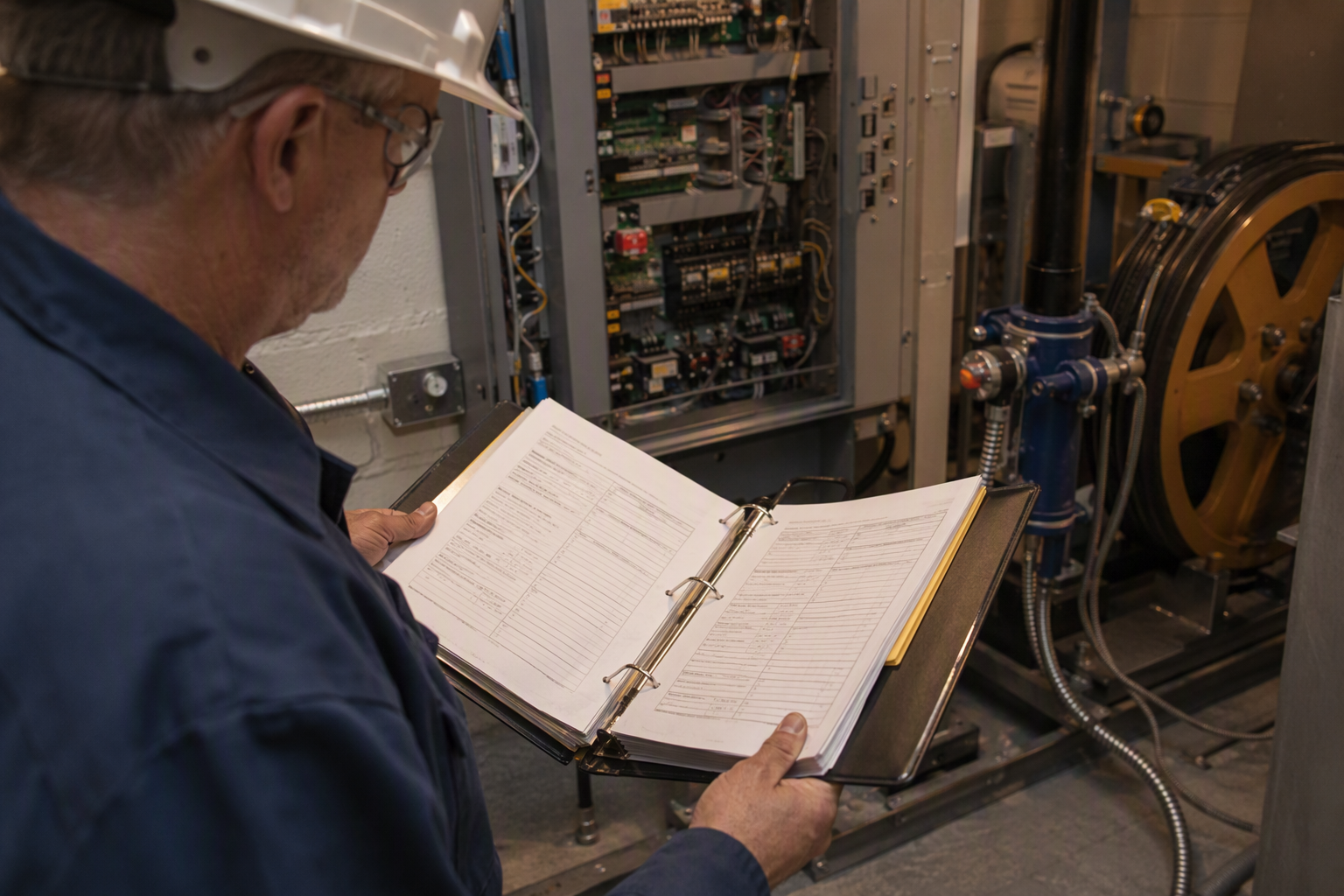
Hospital elevators are subject to a layered stack of codes and standards. Understanding each layer is essential before contacting any service provider.
- ASME A17.1 Safety Code for Elevators and Escalators: This is the primary mechanical and safety standard governing elevator design, installation, testing, and inspection across the United States. South Carolina adopts this code as the basis for its state elevator regulations. All periodic inspections and maintenance protocols for hospital elevators must align with ASME A17.1 requirements.
- Americans with Disabilities Act (ADA): Hospitals are public accommodations and must provide accessible vertical transportation. ADA Standards for Accessible Design specify minimum cab dimensions, door widths, hall call button heights, and tactile controls — all of which apply directly to hospital elevator installations.
- NFPA 101 Life Safety Code: Hospital elevators must meet fire recall and firefighter service requirements. In a fire emergency, elevators must automatically return to a designated floor and remain available for emergency personnel.
- The Joint Commission (TJC) Environment of Care Standards: Accredited hospitals must demonstrate that vertical transportation equipment is included in their preventive maintenance programs and that documented inspection records are maintained and available for survey.
- South Carolina Department of Labor, Licensing and Regulation (LLR): The state requires periodic third-party inspections by a licensed elevator inspector, and any service company operating in South Carolina must hold the appropriate state contractor certification.
Carolina Elevator Service operates within this full compliance framework, providing maintenance and inspection services that satisfy state licensing requirements and support hospital accreditation documentation needs.
Why Are Hospital Elevators Different from Commercial Elevators?
The mechanical requirements alone do not distinguish a hospital elevator — the operational context does. Healthcare elevators must accommodate:
- Oversized cab dimensions to transport hospital beds, stretchers, and imaging equipment
- Heavy-duty door operators rated for high-cycle, high-load environments
- Smooth, controlled leveling so that gurneys and IV poles transfer safely at the threshold
- Redundant power and emergency lowering systems to prevent patient entrapment during power failures
- Infection control considerations in cab materials and maintenance procedures
- 24-hour operational demands with minimal tolerance for unplanned downtime
A service provider without healthcare vertical experience may meet basic code requirements but still overlook details — like the impact of constant heavy loads on door clutch wear, or the importance of quiet hydraulic operation near patient care areas.
What Types of Elevators Are Typically Found in Hospitals?
Most hospital facilities in Columbia, SC include a combination of elevator types, each with distinct maintenance requirements:
- Traction elevators (geared and gearless): Common in multi-story hospitals; gearless traction systems are often preferred for high-rise facilities due to smoother ride quality and efficiency.
- Hydraulic elevators: Found in lower-rise wings and outpatient facilities; require regular fluid inspection and environmental compliance, particularly regarding underground cylinder integrity.
- Machine-Room-Less (MRL) traction elevators: Increasingly common in modern hospital construction; require technicians familiar with integrated drive and control systems.
- Limited-Use/Limited-Application (LU/LA) elevators: Present in smaller clinical buildings or accessible additions; governed by a separate ASME standard track.
How Often Do Hospital Elevators Need to Be Inspected?
Under ASME A17.1 Safety Code for Elevators and Escalators, hospitals must maintain a schedule of both periodic inspections and periodic tests — which are distinct requirements. Periodic inspections occur more frequently than full-load and safety tests, which are conducted on a longer cycle depending on the equipment type.
South Carolina LLR mandates that a licensed third-party inspector perform these evaluations and issue a certificate of operation. Hospitals cannot legally operate an elevator without a current, valid certificate posted in or adjacent to the cab.
Beyond state-mandated inspections, Joint Commission-accredited hospitals typically incorporate elevators into their environment-of-care preventive maintenance (PM) schedule, which requires documented monthly, quarterly, and annual service activities. Carolina Elevator Service provides documentation formatted to support TJC survey readiness.
What Should Be Included in a Hospital Elevator Maintenance Contract?
When evaluating a maintenance agreement, hospital facilities managers should confirm the following elements are explicitly covered:
- Scheduled preventive maintenance visits aligned with ASME A17.1 requirements and manufacturer recommendations
- Lubrication, adjustment, and cleaning of all mechanical and control components
- Door system inspection, including safety edges and infrared curtains
- Hydraulic fluid analysis and cylinder integrity assessment (for hydraulic units)
- Emergency lowering and firefighter service testing
- Written service reports provided after each visit — essential for TJC documentation
- Coordination with state-licensed inspectors for periodic inspection scheduling
- Clear escalation procedures for out-of-service equipment in patient transport zones
What Steps Should a Hospital Take When an Elevator Goes Out of Service?
- Immediately secure the elevator. Lock out the car at the nearest landing and post clear out-of-service signage to prevent patient or staff entry.
- Confirm no one is trapped. Verify the cab is empty. If anyone is entrapped, contact emergency services; do not attempt a manual rescue without trained personnel present.
- Activate your facility’s vertical transportation contingency plan. Notify the charge nurses, transport staff, and department heads affected by the outage so patient routing can be adjusted.
- Contact your certified elevator service provider. Provide the elevator unit number, the nature of the fault (if displayed on the controller), and whether the unit serves a critical patient transport route.
- Document the event. Record the time, nature of the failure, and all subsequent actions in your environment-of-care log for compliance purposes.
- Do not return the elevator to service until the service technician has completed repairs, tested the unit, and provided written clearance.
How Does ADA Compliance Apply Specifically to Hospital Elevators?
The Americans with Disabilities Act requires that all elevators serving multi-story public areas of a hospital meet the ADA Standards for Accessible Design. Specific requirements include minimum cab interior dimensions, self-leveling within a specified tolerance of the landing, door reopening devices, tactile and Braille call controls, audible signals, and visible cab position indicators.
Hospitals undergoing renovation must also assess whether alterations trigger a path-of-travel obligation, which may require bringing existing elevator features into current ADA compliance even when the elevator itself is not the primary subject of the renovation project.
Carolina Elevator Service conducts ADA compliance assessments as part of its elevator evaluation services for healthcare facilities in the Columbia, SC market.
What Qualifications Should I Look for in a Hospital Elevator Service Vendor?
Not every elevator contractor is equipped to serve a hospital environment. When evaluating vendors, facilities managers should look for:
- State contractor certification from South Carolina LLR — required to legally perform elevator work in the state
- Demonstrated experience with healthcare vertical transportation — ask specifically about hospital accounts and the equipment types serviced
- Familiarity with Joint Commission environment-of-care documentation requirements
- Manufacturer-authorized service capability for the specific elevator brands installed in the facility
- Compliance with OSHA standards for confined space entry and electrical safety — critical in hospital mechanical rooms
- Ability to supply written service reports suitable for regulatory and accreditation files
- Local presence in the Columbia, SC region to reduce dispatch time when equipment is critical
How Much Does Hospital Elevator Maintenance Cost?
Maintenance costs vary based on the number of units, elevator type, age of equipment, and the scope of the service contract. Hydraulic elevators, traction elevators, and MRL systems each have distinct parts and labor profiles. Hospitals with aging equipment or mixed fleets from multiple manufacturers should expect greater variability.
The appropriate starting point is a professional elevator assessment, which establishes the current condition of each unit, identifies any deferred maintenance or code deficiencies, and provides a basis for accurate contract pricing. Carolina Elevator Service offers free elevator assessments for healthcare facilities in the Columbia, SC area — contact details are at the bottom of this page.
What Is the Timeline for Bringing a Hospital Elevator into Full Compliance?
Compliance timelines depend on the nature and severity of the deficiency. Items flagged during a state inspection as immediately dangerous to the public are typically required to be corrected before the elevator can return to service. Non-imminent deficiencies may carry a correction period determined by the inspector.
For broader modernization projects — such as a full controller replacement, drive system upgrade, or cab renovation — planning horizons typically range from several weeks for component work to several months for comprehensive modernizations, accounting for equipment lead times, engineering review, permit processing, and inspection scheduling.
Early engagement with a qualified service provider reduces timeline risk. Carolina Elevator Service works with hospital facilities teams from initial assessment through final inspection sign-off.
Questions Your Inspector Will Ask
When a South Carolina LLR-licensed elevator inspector arrives at a hospital facility, the following are among the areas they will evaluate and document:
- Is the current certificate of operation posted and within its valid period?
- Are maintenance logs and service reports available and up to date?
- Has the annual firefighter service and fire recall function been tested and documented?
- Are all safety devices — governors, buffers, safeties — within their required test cycles?
- Do door reversal devices function correctly in both power-open and power-close directions?
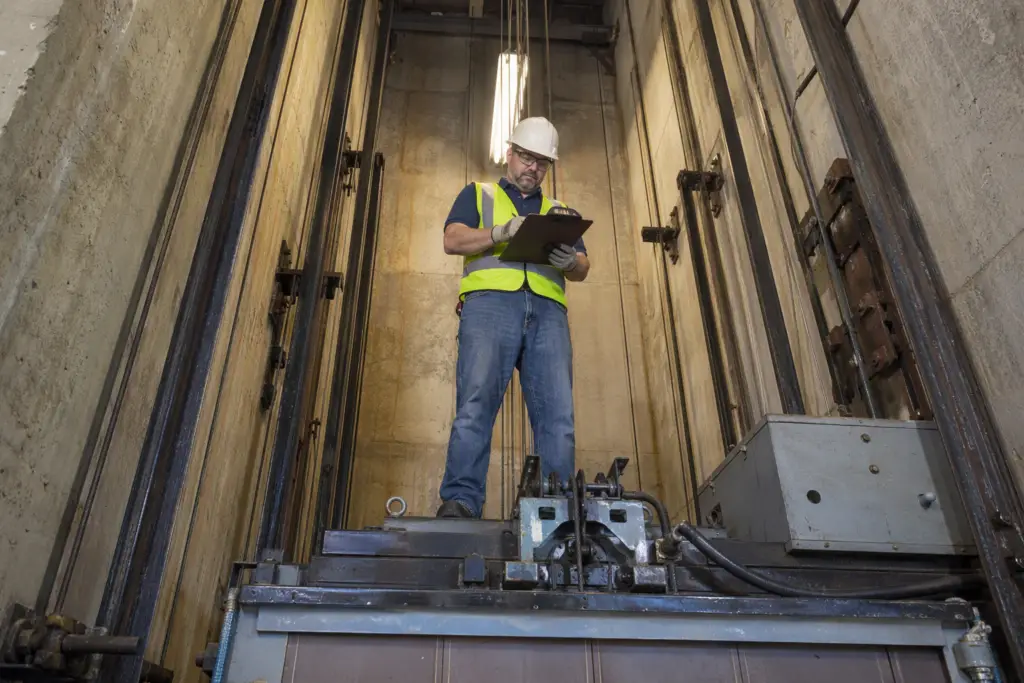
- Is the machine room secured, properly ventilated, and free of storage not related to elevator equipment?
- Is the pit free of water, debris, and unauthorized access?
- Are all required pit stop switches, lighting, and ladder access compliant?
- For hydraulic elevators: has the underground cylinder been tested per the applicable ASME cycle?
- Is the emergency lighting and communication system in the cab functional?
Facilities managers who review this list with their elevator service provider before a scheduled inspection are far better positioned to achieve a clean result.
How Do I Choose Between an Independent Elevator Company and a National Provider?
National elevator companies offer broad service networks and manufacturer-direct parts pipelines. Independent, locally focused companies often provide more direct communication, consistent technician assignment, and greater flexibility in contract structuring.
For hospital facilities in Columbia, SC, local presence matters — both for day-to-day responsiveness and for building a service relationship where technicians become familiar with a specific facility’s equipment history and quirks.
Carolina Elevator Service is locally based in the Columbia, SC market, providing healthcare facilities with direct access to their service team and continuity of care for their elevator equipment.
Schedule a Free Hospital Elevator Assessment
Hospital facilities teams in Columbia, SC can take the first step toward full compliance and operational reliability with a no-cost elevator assessment from Carolina Elevator Service. The assessment covers current equipment condition, code compliance status, documentation gaps, and maintenance program recommendations.
Contact Carolina Elevator Service for a free elevator assessment: 803-865-1400
Need elevator service you can rely on? Carolina Elevator Service is ready to help.