Independent Elevator Service vs. OEM: A Complete Comparison and Decision Guide
Building owners, property managers, and facilities directors face this decision regularly: should elevator maintenance, inspection, and repair be handled by the equipment’s original manufacturer, or by a certified independent elevator service company? This guide breaks down the real differences across cost, compliance, parts, contracts, and long-term value so that any decision-maker can choose with confidence.
—
What Is the Core Difference Between Independent Elevator Service and OEM Service?
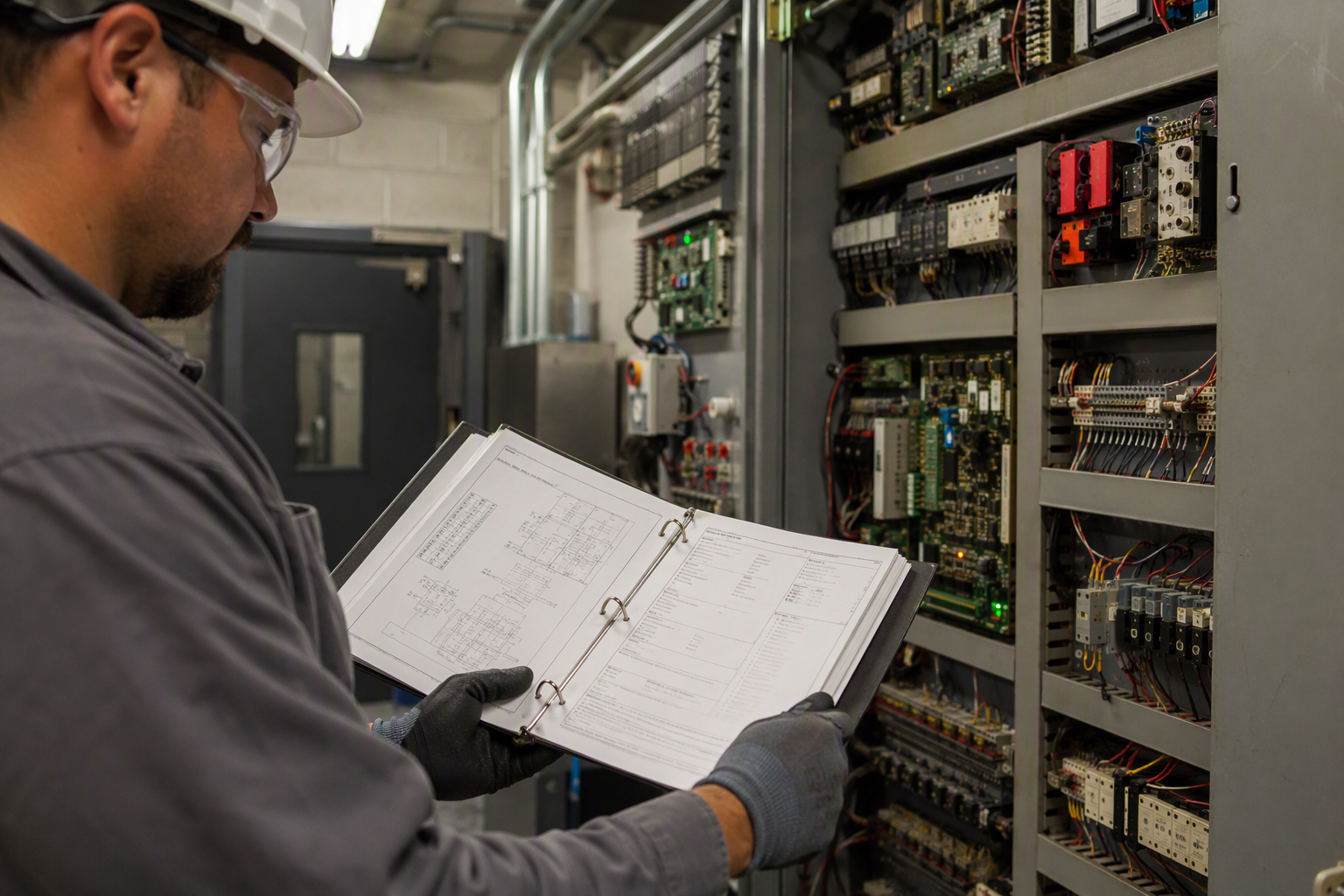
An OEM service provider is the company that originally manufactured the elevator — think of the brand name on the control panel. OEM service teams are employed directly by that manufacturer and are trained exclusively on their own equipment lines.
An independent elevator service company is a third-party firm that is not affiliated with any single manufacturer. Independent providers employ technicians trained to service multiple elevator brands, models, and vintages. They are subject to the same federal, state, and local safety codes as OEM providers — including the ASME A17.1 Safety Code for Elevators and Escalators — and must meet the same inspection and maintenance standards.
Carolina Elevator Service is a certified independent elevator service company serving building owners across the Carolinas with full-scope maintenance, inspection, modernization, and repair services across all major elevator brands.
—
How Do Costs Compare Between Independent and OEM Elevator Service?

| Cost Factor | OEM Provider | Independent Provider |
|---|---|---|
| Monthly Maintenance Contracts | Typically higher; pricing tied to brand overhead | Generally more competitive; overhead is lower |
| Parts and Components | Proprietary parts at manufacturer MSRP | OEM-equivalent or aftermarket parts; wider sourcing options |
| Emergency Repair Calls | Premium rates; may be bundled in contract | Rates vary; often more transparent pricing |
| Modernization Projects | May push proprietary upgrades | Vendor-neutral recommendations; more competitive bids |
| Contract Flexibility | Often long-term with limited exit clauses | More flexible terms available |
| Escalation Clauses | Common; rates can increase annually | Varies; often negotiable |
Key takeaway: OEM contracts are not inherently overpriced, but the combination of proprietary parts markups, brand overhead, and long-term lock-in often results in higher total cost of ownership compared to a qualified independent provider offering equivalent service.
—
Is Independent Elevator Service as Safe and Compliant as OEM Service?
This is the most common concern building owners raise — and it deserves a clear answer.
Safety compliance is governed by code, not by brand affiliation. The governing standard in the United States is the ASME A17.1 Safety Code for Elevators and Escalators, which applies equally to all service providers regardless of whether they are OEM or independent. State and local jurisdictions adopt versions of this standard and enforce compliance through mandatory periodic inspections.
Workplace safety requirements for elevator technicians fall under OSHA regulations, which again apply uniformly across all providers.
Accessibility compliance — particularly for elevators in public accommodations and commercial buildings — is governed by the Americans with Disabilities Act (ADA). No service provider, OEM or independent, can claim exemption from these standards.
A reputable independent elevator service company, such as Carolina Elevator Service, operates within all applicable federal and state safety requirements. The differentiating factor is not safety — it is business model and service structure.
—
What Are the Pros and Cons of OEM Elevator Service?
| OEM Service — Pros | OEM Service — Cons |
|---|---|
| Deep product knowledge of their own equipment | Higher cost structure due to manufacturer overhead |
| Direct access to proprietary parts inventory | Long-term contracts with limited flexibility |
| Factory-trained technicians for that specific brand | Limited to servicing their own brand; multi-brand buildings require multiple vendors |
| Brand warranty protections on new installations | Proprietary software may lock out independent technicians |
| Centralized national support infrastructure | Local responsiveness can lag in non-metro areas |
—
What Are the Pros and Cons of Independent Elevator Service?
| Independent Service — Pros | Independent Service — Cons |
|---|---|
| More competitive and transparent pricing | May have limited access to proprietary diagnostic software on newer OEM models |
| Multi-brand expertise for mixed-equipment buildings | Quality varies — vetting the provider matters |
| Flexible contract terms and exit provisions | Smaller independents may have parts sourcing delays on rare components |
| Vendor-neutral modernization recommendations | Warranty concerns if equipment is still within OEM factory warranty period |
| Often stronger local presence and responsiveness | May lack the national scale of large OEM service networks |
| No brand bias in equipment or parts recommendations | — |
—
When Does OEM Service Make More Sense Than Independent Service?
OEM service is generally the stronger choice in specific, limited circumstances:
- New equipment under factory warranty: Using an unauthorized service provider during the warranty period may void manufacturer coverage. Always review warranty terms before switching providers.
- Highly proprietary newer systems: Some newer OEM elevator controllers use closed, proprietary diagnostic systems that only the manufacturer’s technicians can access with licensed tools. This is evolving — but it remains a real consideration for recently installed equipment.
- Single-brand, high-volume portfolios: Large operators managing many buildings with identical OEM equipment may benefit from a national OEM contract with volume pricing.
—
When Is an Independent Elevator Service Company the Better Choice?
For the majority of building owners, an independent provider is likely the better long-term fit when:
- The elevator is out of its initial factory warranty period
- The building has mixed-brand elevator equipment
- The current OEM contract feels inflexible or overpriced
- Local and regional responsiveness is a priority
- The owner wants vendor-neutral advice on modernization or upgrades
- Budget flexibility and transparent pricing are priorities
Carolina Elevator Service is positioned specifically for these scenarios, offering full-service maintenance, inspection, repair, and modernization for all major elevator brands across the Carolinas.
—
How Do Contract Terms Typically Differ Between OEM and Independent Providers?
| Contract Element | OEM Provider Typical Approach | Independent Provider Typical Approach |
|---|---|---|
| Contract Length | Often 3–5 years with auto-renewal clauses | Often 1–3 years; shorter terms available |
| Exit Provisions | Cancellation fees are common | More negotiable; cleaner exit clauses possible |
| Scope of Service | Tiered (Basic / Standard / Full); upgrades often upsold | Customizable to building needs |
| Annual Price Escalations | Escalation clauses standard; often tied to CPI | Negotiable; some lock in rates for contract term |
| Parts Coverage | May exclude major components or list exclusions | Varies; full-coverage contracts available |
Advice for building owners: Before renewing or signing any elevator service contract, request a side-by-side scope comparison and identify all exclusions. The headline monthly rate rarely reflects the true cost of service.
—
What Steps Should a Building Owner Take When Switching From OEM to an Independent Provider?
- Review the existing OEM contract carefully. Identify the contract end date, auto-renewal notice windows, and any cancellation penalties before taking any action.
- Request a full equipment history report. Ask the current provider for complete maintenance logs and inspection records before transition. This is your property’s data.
- Send a written cancellation notice within the required window. Most OEM contracts require 30–90 days’ written notice prior to renewal. Missing this window can trigger another full contract term.
- Obtain at least two independent service bids. Provide each prospective provider with the equipment make, model, age, and current service scope to ensure accurate quotes.
- Verify the new provider’s compliance credentials. Confirm the independent provider operates under the ASME A17.1 Safety Code for Elevators and Escalators and any applicable state licensing requirements.
- Schedule a baseline inspection before the new contract starts. A condition assessment at transition protects both parties and documents the equipment’s state of repair at handover.
- Confirm records transfer and documentation handoff. All permits, inspection certificates, wiring diagrams, and maintenance logs should transfer to the new provider.
- Establish the new service schedule in writing. Agree on maintenance visit frequency, inspection timelines, and communication protocols before the contract begins.
—
Does Using an Independent Elevator Company Affect Code Compliance or Inspections?
No. Elevator code compliance is determined by inspection outcomes — not by who performs the maintenance. Periodic inspections are conducted by state or locally authorized inspectors (in many jurisdictions, third-party inspection agencies), and those inspectors evaluate the elevator’s condition against the ASME A17.1 Safety Code for Elevators and Escalators, not against which company holds the maintenance contract.
Building owners should also be aware that ADA elevator accessibility requirements apply regardless of service provider. The ADA sets standards for elevator dimensions, controls, door timing, and other features that must be maintained in working order.
Technician workplace safety standards under OSHA apply equally to OEM and independent technicians working in elevator pits, machine rooms, and hoistways.
—
How Does Parts Access Differ Between OEM and Independent Elevator Service?
Parts access is one of the most substantive practical differences between OEM and independent service:
- OEM providers have direct, first-access supply chains for their own branded components. For equipment under active OEM support, this can mean faster parts availability on proprietary items.
- Independent providers source parts through a broader network: OEM-equivalent aftermarket manufacturers, parts distributors, and in some cases direct OEM purchase. For most equipment that is more than several years old — particularly equipment no longer in active OEM production — independent providers may actually have better or equivalent access to compatible components.
- Modernization context: When elevator systems are modernized (controls, drives, door operators), independent providers can specify from multiple manufacturers, creating competitive pricing. OEM providers frequently specify their own brand, which may not always represent the best value.
—
Is There a Quality Difference in the Technicians Who Service Elevators?
Elevator mechanics in the United States are trained through apprenticeship programs and must meet competency standards for the work they perform. Technician quality is a function of training, experience, and the service culture of the company — not of OEM vs. independent affiliation.
Both OEM and independent service companies employ journeyman-level elevator mechanics. The key differentiator when evaluating any provider is whether the technicians are knowledgeable about the specific equipment type at the facility, and whether the company maintains rigorous safety and documentation practices consistent with applicable codes.
Carolina Elevator Service applies consistent standards across all service engagements, with full compliance with the applicable ASME A17.1 Safety Code for Elevators and Escalators requirements.
—
How Should a Building Owner Evaluate Any Elevator Service Provider — OEM or Independent?
Regardless of provider type, the evaluation criteria should remain consistent:
- Code compliance: Does the provider operate under ASME A17.1 and applicable state codes?
- Licensing and registration: Is the company properly licensed or registered to perform elevator work in your state?
- References and track record: Can the provider supply references from comparable buildings in your area?
- Scope transparency: Is the maintenance agreement specific about what is — and is not — included?
- Communication and reporting: Does the company provide written maintenance reports, inspection documentation, and violation correction records?
- Local presence: Is the provider positioned to serve your geography with appropriate knowledge of local inspection requirements?
Carolina Elevator Service meets these criteria for commercial, residential, and institutional building owners across the Carolinas, providing full-scope independent elevator service without the constraints of OEM brand affiliation.
—
Summary: Independent Elevator Service vs. OEM at a Glance
| Decision Factor | OEM Service | Independent Service | Recommended For |
|---|---|---|---|
| Cost | Higher typical cost | More competitive | Independent for most post-warranty equipment |
| Safety & Compliance | ASME / OSHA / ADA compliant | ASME / OSHA / ADA compliant | Either — compliance is code-driven, not brand-driven |
| Contract Flexibility | Limited | Greater flexibility | Independent |
| Parts Access | Best on in-warranty proprietary parts | Broader sourcing on older equipment | OEM for new units; independent for older/mixed |
| Multi-Brand Buildings | Requires multiple contracts | Single provider for all brands | Independent |
| Local Responsiveness | Varies by region | Strong local presence | Independent for regional markets |
| Modernization Neutrality | Brand-biased recommendations | Vendor-neutral options | Independent |
| New Equipment Under Warranty | Protects warranty coverage | May affect warranty — verify first | OEM during warranty period |
—
Ready to Compare Your Current Elevator Service Agreement?
Carolina Elevator Service offers a free elevator assessment for building owners and property managers in the Carolinas. Find out whether your current service contract — OEM or otherwise — is delivering the coverage, compliance, and value your building deserves.
Contact Carolina Elevator Service for a free elevator assessment: 803-865-1400
Need elevator service you can rely on? Carolina Elevator Service is ready to help.