Elevator Maintenance Contract Pricing for Healthcare Facilities in Columbia, SC
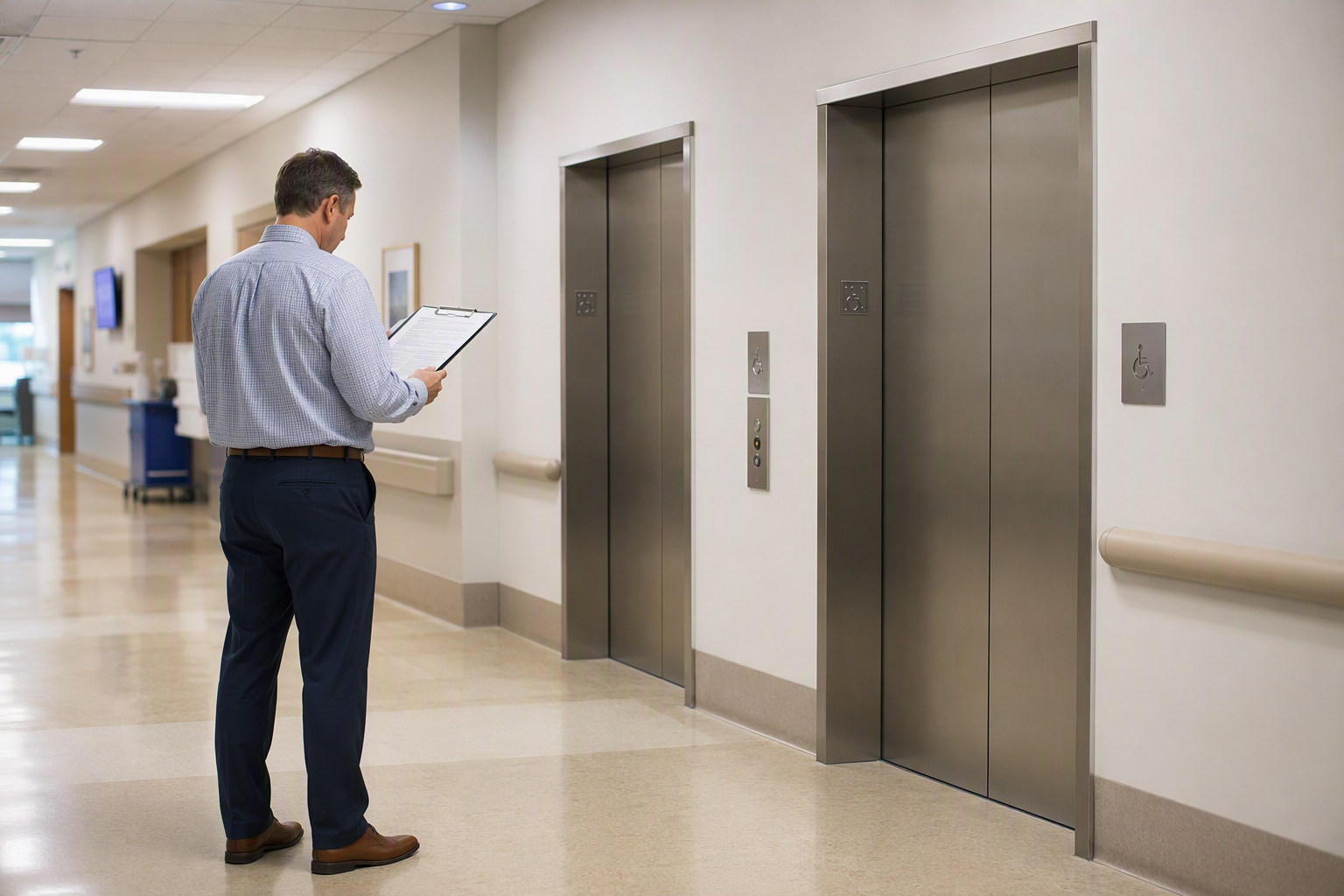
Hospitals, outpatient clinics, assisted living facilities, and medical office buildings in Columbia, SC operate under some of the most demanding vertical transportation requirements of any industry. When patients depend on elevators to reach surgical suites, imaging centers, or rehabilitation floors, downtime is not a scheduling inconvenience — it is a patient safety event. Understanding how elevator maintenance contract pricing works in a healthcare environment helps facility managers, biomedical engineers, and compliance officers make confident, auditable procurement decisions.
What Factors Determine Elevator Maintenance Contract Pricing for Hospitals?
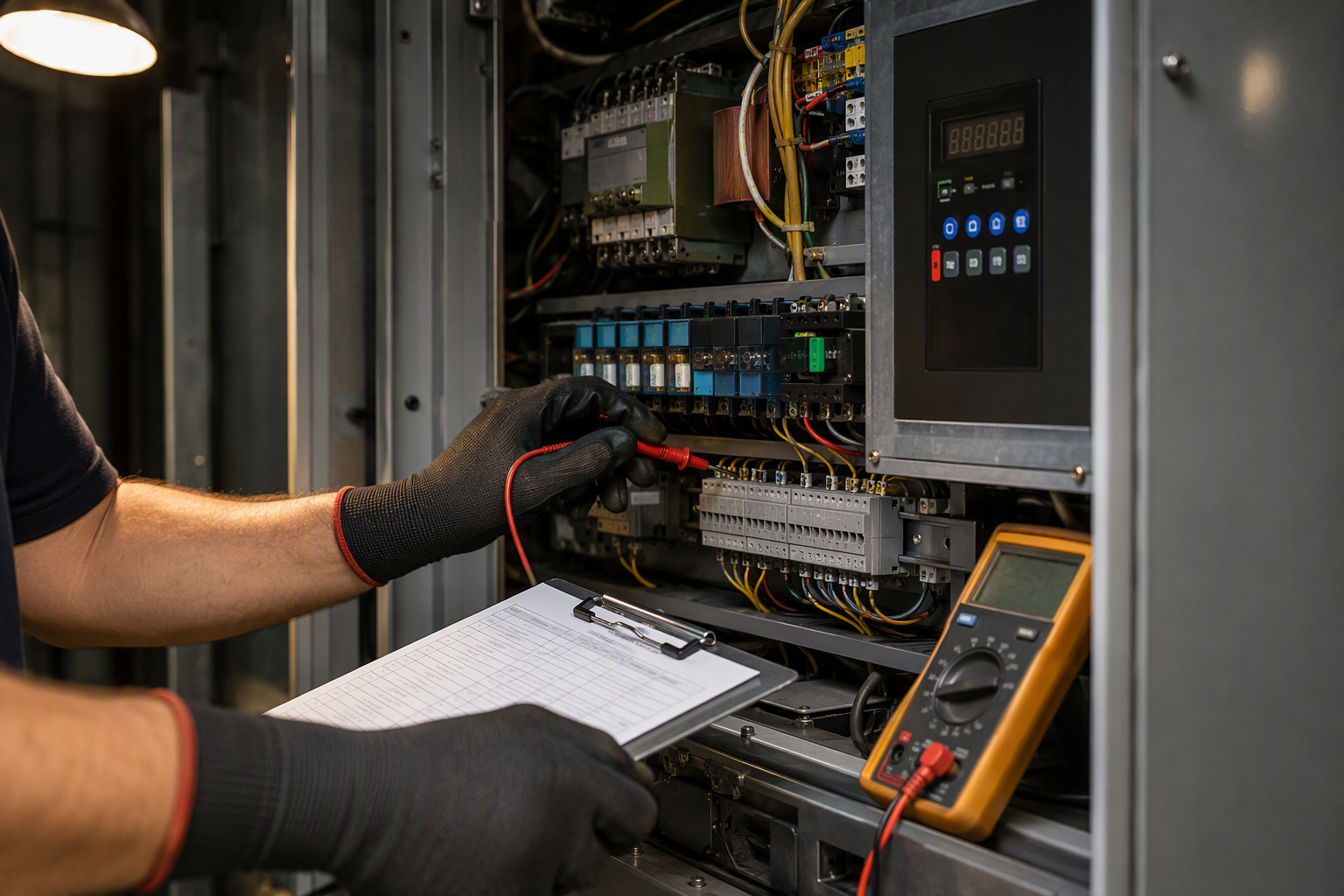
Healthcare elevator maintenance contracts are priced around several interconnected variables. Facility managers benefit from understanding each one before requesting quotes.
- Number and type of units: A contract covering traction freight elevators, hydraulic passenger lifts, and dumbwaiters serving a pharmacy or sterile supply area will carry a different cost structure than a contract for a single-story patient lift.
- Inspection and testing frequency: ASME A17.1 Safety Code for Elevators and Escalators establishes minimum inspection intervals. Healthcare settings often exceed those minimums to satisfy accreditation bodies and internal risk management standards.
- Scope of coverage: Full-coverage contracts include parts, labor, and emergency calls. Maintenance-only contracts exclude parts and carry lower base pricing but shift repair cost risk to the facility.
- Age and condition of equipment: Older hydraulic units in legacy hospital towers may require more frequent preventive maintenance visits and specialized components, which elevates contract pricing.
- Accessibility compliance requirements: Elevators must conform to ADA Standards for Accessible Design, including door timing, leveling tolerances, and audible signals — all of which must be verified and documented in a healthcare contract.
- Documentation and reporting obligations: Accredited healthcare facilities may require the elevator service provider to furnish detailed maintenance logs compatible with Joint Commission Environment of Care audits.
What Compliance Codes Govern Healthcare Elevator Maintenance in South Carolina?

Healthcare elevator maintenance in Columbia, SC sits at the intersection of multiple regulatory frameworks, each with enforceable requirements.
- ASME A17.1 / CSA B44: The ASME A17.1 Safety Code for Elevators and Escalators is the foundational standard governing elevator design, installation, inspection, testing, and maintenance. South Carolina adopts this code as the basis for its state elevator regulations. The 2019 and subsequent editions of A17.1 include updated provisions for firefighters’ emergency operations, which are critical in hospital settings.
- ADA Accessibility Standards: The ADA requires that elevators serving multiple floors in healthcare facilities meet accessibility requirements for door width, leveling accuracy, call button height, and audio/visual indicators. Maintenance contracts must include periodic verification of these features.
- South Carolina Elevator Safety Act: The state requires annual inspections by a licensed elevator inspector. Contracts with qualified providers ensure that mandatory state inspections are coordinated, documented, and filed correctly.
- The Joint Commission Environment of Care Standards: For accredited hospitals, elevator maintenance records are reviewable during EC surveys. Contracts should specify documentation formats and retention schedules that align with these requirements.
- OSHA General Industry Standards: OSHA regulations covering worker safety in mechanical rooms and during maintenance operations apply to elevator technicians working in healthcare facilities. Contracts should confirm that the service provider’s safety program meets applicable OSHA requirements.
What Is Typically Included in a Full-Coverage Healthcare Elevator Maintenance Contract?
Full-coverage contracts — sometimes called “full-service” or “comprehensive” agreements — represent the highest tier of contract pricing and typically include:
- Scheduled preventive maintenance visits at intervals specified by ASME A17.1 and tailored to the facility’s traffic patterns
- Labor for all covered repair calls
- Replacement parts, with exclusions clearly defined in the agreement
- Annual and periodic safety testing required by state code
- ADA compliance verification at each maintenance visit
- Maintenance logs formatted for Joint Commission and state inspection review
- Coordination of required third-party inspections
Carolina Elevator Service structures maintenance agreements for healthcare clients in Columbia, SC to address each of these elements with written documentation, giving compliance officers a clear audit trail.
How Does Contract Pricing Differ Between Hospital Types?
Not all healthcare facilities carry the same elevator maintenance burden. Pricing reflects the operational profile of each facility type.
- Large acute-care hospitals: High-cycle elevator use, 24/7 patient transport, and mission-critical service requirements support higher-tier comprehensive agreements with priority response provisions.
- Assisted living and skilled nursing facilities: Lower traffic volumes than acute-care hospitals, but elevator downtime directly affects resident mobility and dignity — making preventive coverage a priority even at smaller scales.
- Outpatient surgery centers and medical office buildings: Typically have fewer elevators and more predictable hours, which can support leaner maintenance schedules while still meeting ASME A17.1 requirements.
- Rehabilitation and behavioral health facilities: May require specific door-hold timing and leveling precision for wheelchair and stretcher transport, which should be contractually defined.
What Questions Should Healthcare Facility Managers Ask When Comparing Elevator Maintenance Contracts?
When evaluating proposals from elevator service providers in the Columbia, SC area, healthcare procurement teams should seek clear written answers to the following questions:
- Does the contract specify the exact number of preventive maintenance visits per year and what tasks are performed at each visit?
- How does the contract define “emergency” versus “non-emergency” service calls, and what are the escalation procedures?
- What parts and components are excluded from coverage, and how are replacement parts sourced?
- Does the provider maintain documentation in a format compatible with Joint Commission EC survey requirements?
- How does the contract address ADA compliance verification and corrective action if deficiencies are found?
- What is the process for coordinating mandatory South Carolina state elevator inspections?
- What happens at contract renewal — are pricing escalation terms defined and capped?
- Is the contractor licensed under South Carolina’s elevator safety requirements?
What Is the Difference Between a Maintenance-Only and a Full-Coverage Contract?
Maintenance-only contracts cover scheduled preventive visits and labor for inspections but exclude parts and most repair labor. They carry lower base pricing, but the facility absorbs the cost of repairs separately. Full-coverage contracts bundle preventive maintenance, repair labor, and parts into a fixed annual fee, providing budget predictability. For healthcare facilities where an unplanned elevator outage can disrupt patient flow, the budget certainty of full-coverage pricing often outweighs the lower base cost of maintenance-only agreements.
How Are Multi-Elevator Healthcare Campuses Typically Contracted?
Large healthcare campuses in Columbia, SC often operate banks of elevators across multiple buildings, including service elevators, patient transport lifts, and loading dock freight units. Multi-unit contracts are typically structured with a per-unit rate that decreases as the number of covered units increases — reflecting the efficiency of a single provider managing all units on-site. Carolina Elevator Service works with healthcare campus facilities teams to design contract structures that cover all unit types under a unified service and documentation framework, simplifying compliance reporting across the entire campus.
What Should Facilities Know About Contract Term Length and Pricing Stability?
Elevator maintenance contracts in healthcare are typically offered in one-, three-, or five-year terms. Longer terms frequently include annual escalation clauses tied to labor indices or negotiated fixed-percentage caps. Healthcare facility managers benefit from negotiating escalation caps in writing before signing, particularly for multi-elevator campuses where cumulative cost increases compound across multiple units. Contracts should also define termination-for-cause provisions and specify what happens to maintenance documentation if the contract is not renewed.
How Does Equipment Age Affect Healthcare Elevator Maintenance Pricing?
Older elevator equipment — hydraulic units installed decades ago, or traction systems with obsolete controllers — typically commands higher maintenance contract pricing for two reasons. First, aging components require more frequent inspection and adjustment to maintain safe operation within ASME A17.1 tolerances. Second, parts for legacy systems may be harder to source, increasing both cost and lead time when repairs are needed. Facilities operating older equipment should request a condition assessment before signing a contract so that the scope of coverage accurately reflects the elevator’s actual maintenance needs.
What Is a Modernization Assessment and Should It Be Part of the Contract Conversation?
A modernization assessment evaluates whether aging elevator equipment has reached the point where the cost of maintaining it to code exceeds the cost of upgrading to current ASME A17.1 and ADA standards. While modernization is a capital expenditure separate from a maintenance contract, reputable service providers will identify modernization needs transparently during the assessment process. Carolina Elevator Service provides healthcare facility managers in Columbia, SC with condition assessments that distinguish between maintenance-addressable deficiencies and equipment that has reached the end of its practical service life — giving facilities the information needed to budget accurately.
Questions Your Inspector Will Ask
During a South Carolina state elevator inspection or a Joint Commission Environment of Care survey, inspectors and surveyors routinely examine the following items. Facilities with a structured maintenance contract from a qualified provider will have documentation ready for each question.
- When was the last annual inspection performed, and where is the current inspection certificate displayed?
- Are current maintenance logs available for review, and do they document each preventive maintenance visit with dates and technician identification?
- Has the elevator undergone the required periodic tests specified under ASME A17.1, including five-year hydraulic pressure tests where applicable?
- Are firefighters’ emergency operation features tested and documented at the required intervals?
- Does the elevator meet ADA leveling and door-timing requirements as verified during recent maintenance?
- Are machine room temperature, lighting, and housekeeping conditions within code requirements?
- Have any deficiencies identified in prior inspections been corrected and documented with a corrective action record?
- Is there a current service contract in place with a licensed elevator contractor, and can that documentation be produced on request?
How Should a Healthcare Facility Prepare for a Maintenance Contract Assessment?
When Carolina Elevator Service conducts a pre-contract assessment at a healthcare facility in Columbia, SC, the process follows a structured sequence to ensure accurate scope development and pricing.
- Compile a complete inventory of all elevators, platform lifts, and dumbwaiters on the campus, including unit numbers, installation dates, and drive types.
- Gather existing maintenance records, inspection certificates, and any deficiency notices from prior inspections.
- Identify the facility’s accreditation body and any specific documentation format requirements for maintenance records.
- Note any recent or recurring service complaints from clinical staff or facilities personnel.
- Schedule a physical walk-through of each unit and its machine room with the assessing technician.
- Review the assessment findings with the facilities manager and compliance officer together before discussing contract scope and pricing options.
Why Does Vendor Selection Matter Beyond Price?
In healthcare settings, the lowest contract price is rarely the lowest total cost of ownership. A provider that lacks familiarity with Joint Commission documentation requirements, state inspection coordination, or ASME A17.1 compliance testing can expose a facility to failed inspections, corrective action timelines, and patient safety risks that far exceed any savings on the base contract price. Healthcare facility managers in Columbia, SC choosing Carolina Elevator Service benefit from a provider whose maintenance protocols are structured around the compliance and documentation standards that healthcare accreditation requires — not adapted from a commercial office-building template.
Get a Free Elevator Assessment for Your Healthcare Facility
Understanding your facility’s elevator maintenance needs is the first step toward accurate contract pricing and sustained compliance. Contact Carolina Elevator Service for a free elevator assessment and a transparent maintenance contract proposal tailored to your healthcare campus in Columbia, SC.
Contact Carolina Elevator Service for a free elevator assessment: 803-865-1400
Need elevator service you can rely on? Carolina Elevator Service is ready to help.