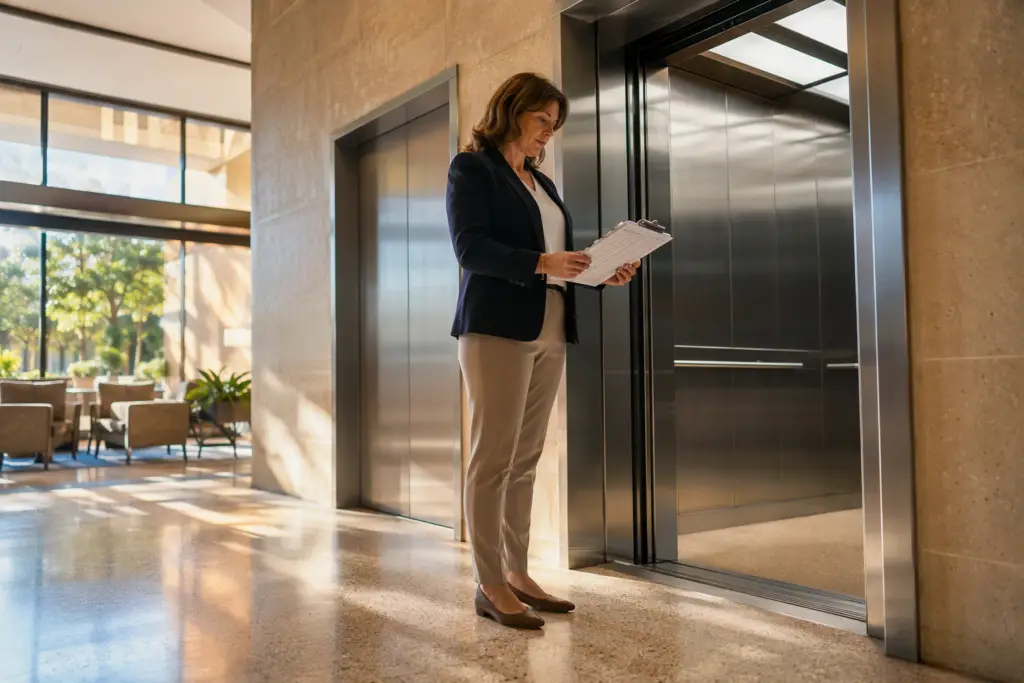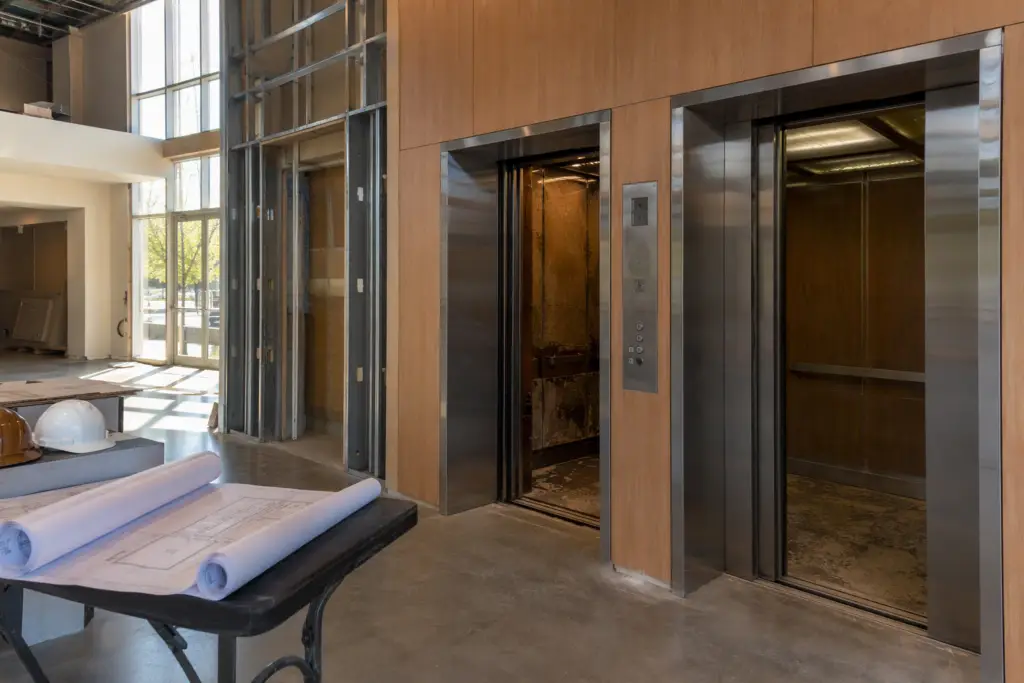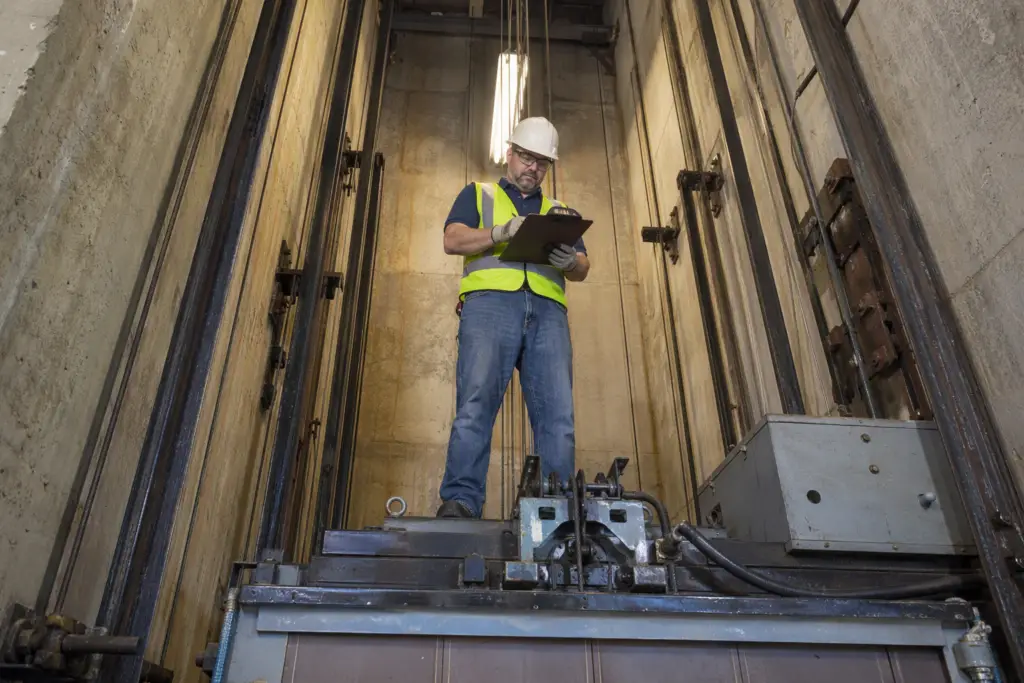
For elevator maintenance in Columbia, SC, contact a licensed elevator service company such as Carolina Elevator Service — annual maintenance contracts typically range in cost depending on elevator type, age, usage frequency, and required code compliance, making a professional assessment the most reliable way to get an accurate quote.
Elevator Maintenance Cost FAQ: Who to Contact and What to Expect in Columbia, SC
Understanding elevator maintenance costs — and knowing who to call — is essential for building owners, property managers, and facilities directors in Columbia, SC. This comprehensive FAQ addresses the most common questions about elevator maintenance pricing, compliance requirements, vendor selection, and what the maintenance process actually involves. Whether managing a commercial office tower, a mid-rise residential building, or a healthcare facility, the information below is designed to help decision-makers make informed choices grounded in industry standards and South Carolina regulations.
Who should building owners contact for elevator maintenance?
Building owners should contact a licensed, certified elevator service company — such as Carolina Elevator Service in Columbia, SC — that employs qualified elevator mechanics and holds the appropriate state contractor credentials.
South Carolina requires elevator contractors to be licensed through the South Carolina Department of Labor, Licensing and Regulation (SC LLR). When sourcing a vendor, confirm that the company holds a valid state elevator contractor license, that their technicians are qualified under applicable standards, and that the company is familiar with the ASME A17.1 Safety Code for Elevators and Escalators — the governing national standard for elevator safety in the United States. Selecting an unqualified vendor can expose a property owner to liability, failed inspections, and unsafe equipment conditions.
What factors determine elevator maintenance costs?
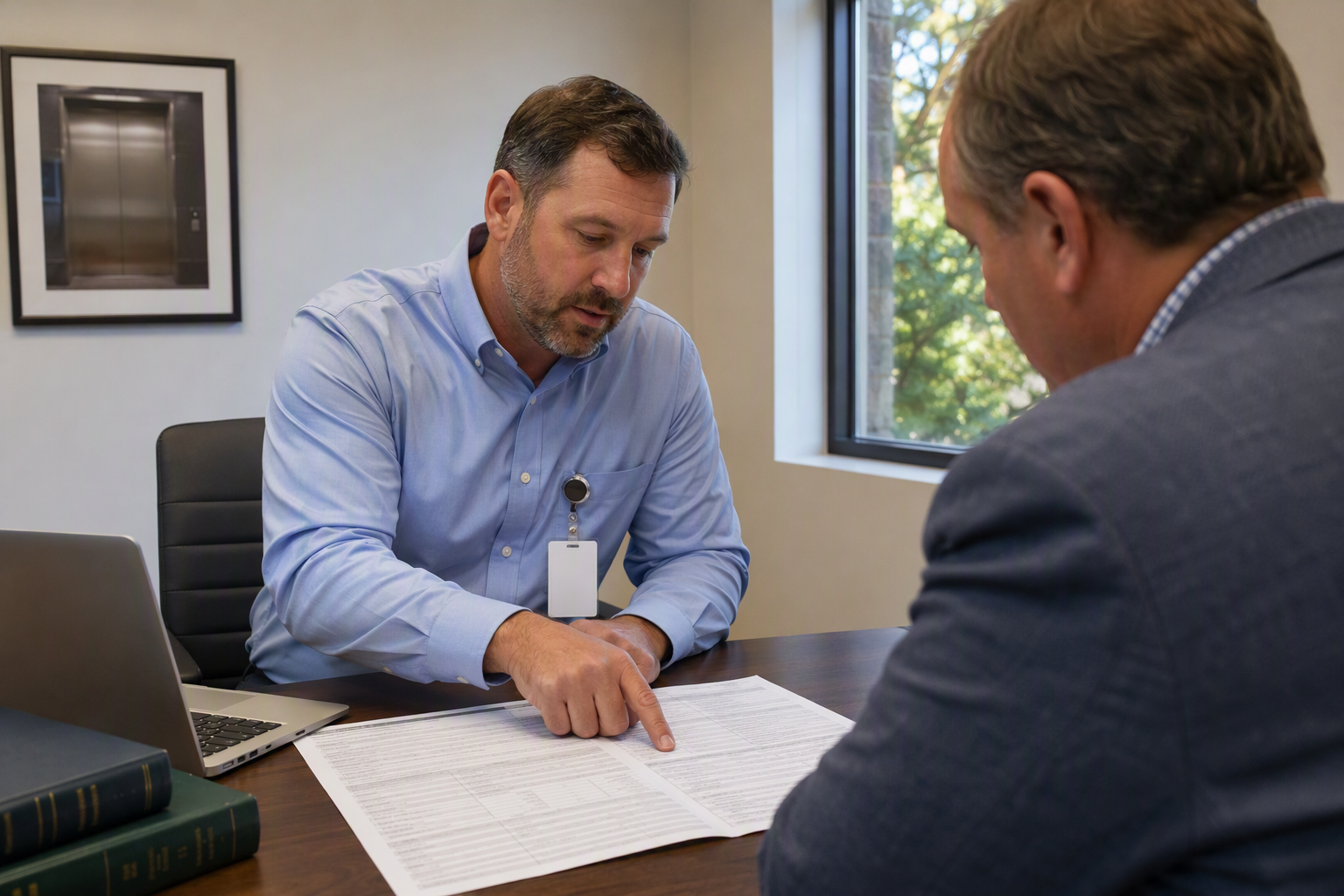
Elevator maintenance costs are determined by equipment type, age, brand, number of stops, usage intensity, contract scope, and local regulatory requirements.
A hydraulic elevator in a two-story medical office building will have a different maintenance profile than a traction elevator in a twelve-story commercial tower. Key cost drivers include:
- Equipment type: Hydraulic, traction (geared or gearless), MRL (machine room-less), and winding drum elevators each have distinct maintenance demands and parts availability considerations.
- Age and condition: Older equipment may require more frequent part replacements and may use discontinued components, increasing both labor time and parts cost.
- Number of stops and travel distance: More stops mean more door cycles, more wear on mechanical components, and longer inspection intervals per visit.
- Usage volume: High-traffic installations — hospitals, transit hubs, large apartment complexes — experience faster component wear than low-traffic settings.
- Contract scope: Full-coverage contracts include parts and labor; examination-only contracts cover periodic inspections but bill repairs separately. The right contract type depends on budget structure and risk tolerance.
- Code compliance obligations: Bringing aging equipment into compliance with current editions of the ASME A17.1 Safety Code for Elevators and Escalators can add to maintenance-period expenditures when retroactive upgrades are required.
What types of elevator maintenance contracts are available?
The three primary contract types are examination-only (oil-and-grease), full maintenance, and comprehensive (parts-inclusive) agreements — each representing a different balance of upfront cost and financial exposure.
Understanding these structures is critical to budgeting accurately:
- Examination-only / oil-and-grease: Covers periodic lubrication, minor adjustments, and inspections. All parts and major labor are billed separately. Lowest monthly cost, but highest potential for unexpected repair invoices.
- Full maintenance: Covers labor for repairs in addition to routine service. Parts may be excluded or subject to exclusions (e.g., vandalism damage, major modernization components). Mid-range monthly cost.
- Comprehensive: Covers parts, labor, and emergency callbacks. Provides the most cost predictability. Best suited for high-usage elevators or properties where unplanned capital expenditures are difficult to absorb.
Building managers should read contract exclusion clauses carefully. Common exclusions across all contract types include cosmetic repairs, cab interiors, building structure items, and equipment damaged by misuse or external events.
How often should elevators be inspected under South Carolina law?
South Carolina requires elevators to undergo periodic inspections by a licensed inspector, with frequency determined by the SC LLR and the applicable edition of the ASME A17.1 code adopted by the state.
The ASME A17.1 Safety Code for Elevators and Escalators establishes inspection and test intervals as a baseline. South Carolina’s elevator safety program, administered through the SC LLR, enforces these requirements and issues certificates of operation. A valid certificate of operation must be posted in or near the elevator car at all times. Failure to maintain a current certificate can result in mandatory shutdown of the equipment, fines, and liability exposure. Routine maintenance visits from a qualified contractor — separate from the state inspection — are the mechanism by which equipment is kept in a condition that passes those inspections.
What is the difference between routine maintenance and a full inspection?
Routine maintenance is ongoing preventive work performed by the service contractor; a full inspection is a formal code-compliance evaluation conducted by a licensed elevator inspector and results in a pass/fail determination tied to the certificate of operation.
Routine maintenance visits involve lubrication, adjustment, cleaning, and component checks performed by the service technician on a scheduled basis — monthly, quarterly, or at another agreed interval. These visits keep equipment running reliably between formal inspections. A full inspection, by contrast, is a structured test sequence defined by ASME A17.1 that evaluates safety devices, travel limits, braking systems, door operations, emergency lighting, and other critical elements. The outcome of a full inspection determines whether the elevator may legally remain in service.
What does elevator maintenance typically include?
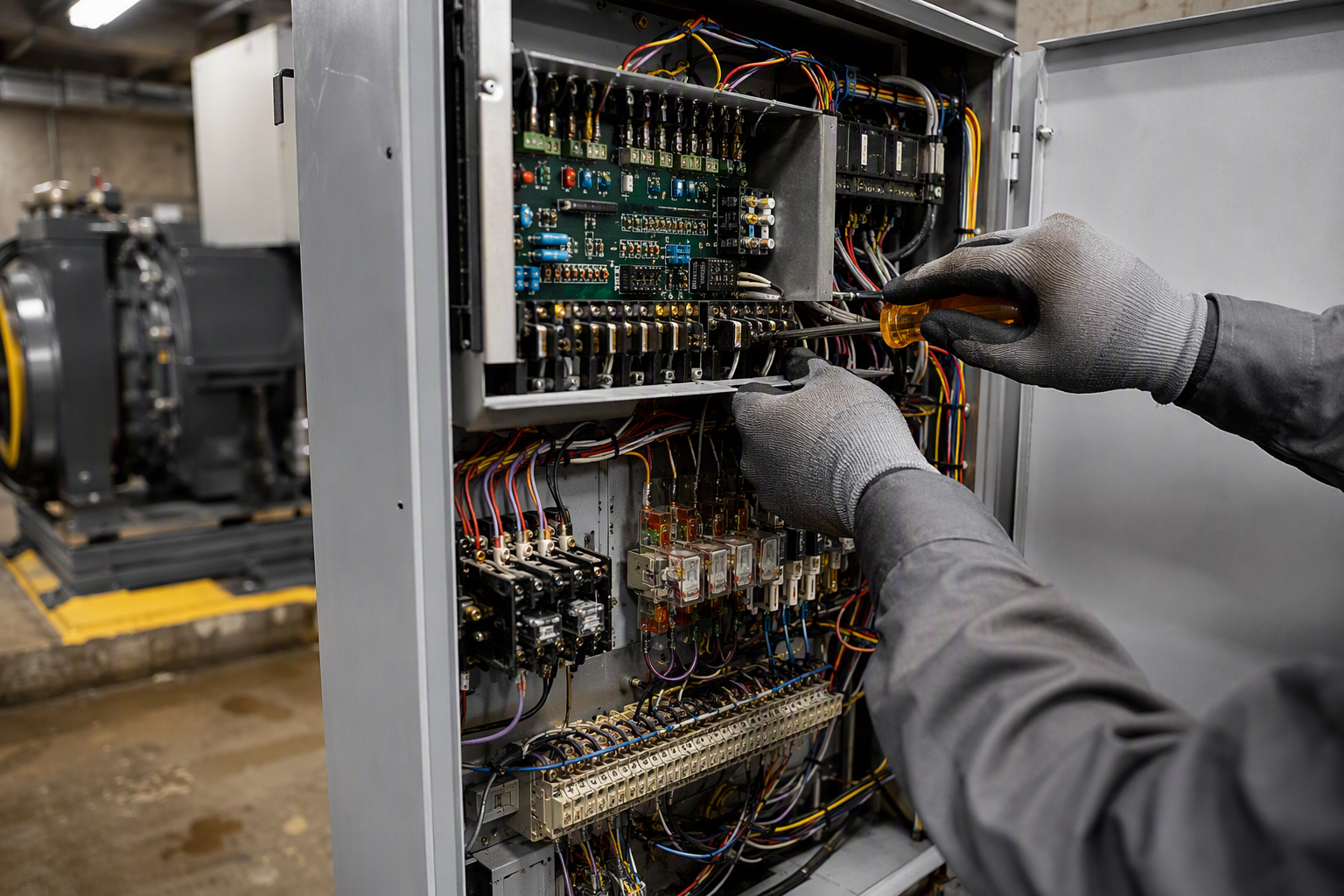
Standard elevator maintenance includes lubrication of mechanical components, adjustment of door operators and safeties, testing of control systems, inspection of hoist ropes or hydraulic lines, and verification of safety device functionality.
A properly scoped maintenance visit by a qualified contractor will generally address:
- Lubrication of guide rails, sheaves, bearings, and operating mechanisms
- Door operator adjustment, clutch inspection, and interlock testing
- Control system diagnostic review and software parameter verification (on modern microprocessor-controlled units)
- Hydraulic fluid level check and inspection of cylinder seals and jack unit (hydraulic units)
- Hoist rope inspection for wear, broken wires, and proper tension (traction units)
- Safety device functionality verification, including governor and safeties
- Emergency lighting and communication system testing
- Pit sump pump operation (where applicable) and pit cleanliness inspection
- Review of oil usage trends for signs of hydraulic cylinder leaks
How does elevator type affect maintenance cost?
Hydraulic elevators generally have lower installation costs but may carry higher long-term maintenance costs due to fluid management and cylinder considerations, while traction elevators involve more complex mechanical systems with different ongoing service needs.
| Elevator Type | Typical Travel Range | Primary Maintenance Focus Areas | Relative Maintenance Complexity |
|---|---|---|---|
| Hydraulic (In-Ground) | 2–5 stops | Hydraulic fluid, cylinder/jack, pump unit, seals | Moderate — fluid management critical |
| Holeless Hydraulic | 2–4 stops | Above-ground cylinders, fluid system, cab leveling | Moderate — no underground components |
| Geared Traction | Up to ~20 stops | Gearbox, hoist ropes, brake, sheaves, machine room | Higher — gearbox wear requires attention |
| Gearless Traction (MRL) | High-rise capable | Ropes, motor/drive, controller, overhead components | High — specialized drive system expertise |
| Winding Drum | Low-rise (legacy) | Drum, ropes, brake, controller | Variable — parts availability challenging |
Building owners with older hydraulic elevators should be aware of environmental considerations related to hydraulic fluid containment. The ASME A17.1 Safety Code and applicable environmental regulations address fluid containment requirements that affect maintenance scope and cost.
What ADA compliance obligations affect elevator maintenance costs?
The Americans with Disabilities Act (ADA) requires that elevators serving public accommodations remain operational and accessible, making prompt maintenance and repair a legal obligation — not merely a best practice.
Under the ADA, elevators in buildings covered by the law must be maintained in operable condition. Prolonged outages without reasonable accommodation alternatives can constitute an ADA violation. This compliance reality elevates the importance of comprehensive maintenance agreements that include emergency callback provisions. Additionally, ADA accessibility requirements covering cab dimensions, control panel height, Braille signage, and auditory signals create a maintenance scope that extends beyond purely mechanical function — any component that affects accessibility must be kept in proper working order.
What are the risks of deferred or inadequate elevator maintenance?
Deferred maintenance increases the risk of equipment failure, passenger entrapments, code violations, failed inspections, forced shutdowns, and significant liability exposure for building owners.
Equipment that is not maintained on schedule tends to fail in ways that are both more expensive and more disruptive than regularly maintained equipment. Specific consequences of inadequate maintenance include:
- Increased frequency of service calls and passenger entrapments
- Failed state inspections leading to mandatory shutdown orders
- Accelerated component wear requiring early major replacements or full modernizations
- Hydraulic fluid leaks with associated environmental remediation costs
- Exposure to OSHA regulations if the elevator serves construction or industrial environments (see OSHA for applicable standards)
- Litigation risk in the event of a passenger injury attributable to a maintenance deficiency
What should building owners look for when evaluating elevator service vendors?
A qualified elevator service vendor should hold a valid South Carolina elevator contractor license, employ mechanics familiar with ASME A17.1, offer transparent contract terms, and demonstrate experience with the specific equipment type installed in the building.
When evaluating vendors, building owners and property managers should request the following:
- Proof of current South Carolina elevator contractor license
- Documentation confirming mechanic qualifications
- A sample maintenance contract with clearly defined inclusions and exclusions
- References from comparable properties (similar building type, elevator count, equipment age)
- Disclosure of whether the company is a factory-authorized maintainer for the installed equipment brand
- Clarification of callback response protocols and after-hours coverage
- A written description of the maintenance tasks performed at each visit
Carolina Elevator Service serves the Columbia, SC market and is available to provide building owners with a professional consultation to review current equipment condition, existing contract terms, and compliance status.
How does elevator age affect maintenance costs and modernization decisions?
As elevators age beyond roughly 20–25 years, maintenance costs often rise significantly due to parts obsolescence, increased component failure rates, and accumulating code compliance gaps — making modernization a financially rational alternative to ongoing repair cycles.
Older elevator equipment may rely on relay-logic control systems, proprietary components from manufacturers no longer in business, or hydraulic cylinders that cannot be reliably inspected without replacement. At a certain point, the cumulative cost of repairs and the inability to obtain parts makes a modernization project more economical than continued maintenance. A qualified service company can provide a lifecycle cost analysis comparing ongoing maintenance expenditures against the investment in modernization, including the compliance benefits of bringing equipment up to current ASME A17.1 standards.
What should building managers do immediately when an elevator breaks down?
When an elevator breaks down, building managers should follow a structured response protocol to ensure passenger safety, meet legal obligations, and minimize downtime.
- Verify immediately whether any passengers are trapped in the car and, if so, contact emergency services (911) without delay.
- Place clear “Out of Service” signage on all elevator lobby call buttons on every floor to prevent additional passengers from attempting to use the unit.
- Notify the building’s elevator service contractor to dispatch a qualified mechanic for repair.
- Document the time of the outage, any reported symptoms, and any passenger incidents in the building maintenance log.
- If the building is subject to ADA obligations, assess whether alternative accessible means of egress or service are available and communicate this to building occupants and staff.
- Do not reset tripped devices, override safety features, or attempt self-repair — doing so may void service agreements, create liability, and endanger passengers.
- Once the mechanic has completed repairs, confirm the elevator has been tested and returned to safe operation before reopening it to passenger use.
- Retain the repair invoice and mechanic’s written report for your maintenance records, which may be reviewed during future state inspections.
Does the number of elevators in a building affect per-unit maintenance cost?
Buildings with multiple elevators often benefit from volume pricing in maintenance contracts, as service vendors can achieve scheduling efficiencies when servicing several units in the same building during a single visit.
Property managers overseeing multi-elevator buildings — hotels, hospitals, large apartment communities, or office towers — should negotiate contracts that reflect the economy of serving multiple units under one agreement. Consolidated contracts also create a single point of accountability, simplify compliance documentation, and make it easier to track the maintenance history of each unit in the portfolio.
What records should building owners keep related to elevator maintenance?
Building owners should maintain a complete file for each elevator that includes the current certificate of operation, all inspection reports, maintenance visit logs, repair invoices, and any correspondence with the state elevator safety authority.
South Carolina’s elevator safety program requires that a valid certificate of operation be posted in or adjacent to the elevator car. Beyond that posting requirement, best practice — and due diligence in the event of a liability claim — calls for retaining comprehensive documentation. This file should include:
- Current and all prior certificates of operation
- State inspection reports with any noted deficiencies and resolution documentation
- Contractor maintenance visit logs with technician signatures and tasks performed
- All repair and parts invoices
- Modernization or alteration permits and completion reports
- Emergency callback reports and entrapment incident documentation
How do multi-site property managers handle elevator maintenance across multiple locations?
Multi-site property managers should seek a service vendor capable of providing consistent, standardized maintenance across all properties — ideally under a master service agreement that establishes uniform contract terms, reporting formats, and escalation procedures.
For property management companies, real estate investment trusts, or healthcare systems operating elevators across multiple Columbia, SC locations, a centralized maintenance partnership reduces administrative burden, creates consistent compliance documentation, and enables portfolio-wide visibility into equipment health. Carolina Elevator Service works with property managers to develop service structures that address the practical realities of managing multiple buildings and multiple elevator types under one relationship.
What is the role of OSHA in elevator safety and maintenance?
OSHA regulations apply to elevator maintenance work environments — particularly machine rooms, pit areas, and overhead work — creating safety obligations for both building owners and service contractors.
The Occupational Safety and Health Administration (OSHA) establishes workplace safety standards that govern the conditions under which elevator mechanics perform maintenance and repair work. Machine rooms must be properly lit, at appropriate temperature, kept free of stored materials, and accessible only to authorized personnel. Pit ladders, lighting, and stop switches must be maintained in compliance with applicable standards. Building owners have a responsibility to maintain these support environments in safe condition — failure to do so can create OSHA liability independent of the elevator safety code itself.
What questions should be asked before signing an elevator maintenance contract?
Before signing, building owners should clarify the exact scope of covered services, exclusion clauses, callback provisions, parts pricing methodology, contract term and termination rights, and whether the contract transfers with a property sale.
Specific questions to ask any prospective vendor include:
- What is explicitly included and excluded from coverage?
- How are parts priced — at list, at cost, or at a negotiated rate?
- What are the callback response protocols and how are after-hours callbacks billed?
- What is the contract term, and what are the termination provisions?
- Does the contract survive a building sale, or can it be assigned to a new owner?
- How are annual maintenance price escalations handled?
- Who is responsible for state inspection fees and compliance-related upgrades?
- What documentation will be provided after each maintenance visit?
How can building owners reduce elevator maintenance costs without sacrificing safety?
Proactive maintenance — rather than reactive repair — is consistently the most effective strategy for controlling elevator costs while maintaining safety and compliance.
The most common driver of high elevator maintenance costs is deferred attention: small adjustments and early-warning signs that go unaddressed until they become major failures. Practical cost-control strategies include:
- Selecting a maintenance contract scope appropriate to the elevator’s age and usage intensity — neither over-covered nor under-covered
- Keeping machine rooms, pits, and equipment areas clean and accessible to reduce mechanic time per visit
- Training building staff to report unusual noises, door behavior, or leveling issues promptly rather than waiting for a scheduled visit
- Maintaining accurate maintenance records so that pattern failures can be identified and addressed before they cascade
- Budgeting for code-driven upgrades on a planned schedule rather than absorbing them as emergency capital expenditures
When does elevator maintenance cross into modernization territory?
Maintenance becomes modernization when the scope of work involves replacing major systems — controllers, machines, hydraulic cylinders, or cab structures — rather than servicing existing components, often triggering a permit and inspection process under South Carolina regulations.
The distinction matters practically and legally. Alterations to elevator equipment as defined by the ASME A17.1 Safety Code for Elevators and Escalators require permits, engineering review, and a witnessing inspection before the elevator is returned to passenger service. Building owners should confirm with their service contractor whether a planned scope of work constitutes maintenance or an alteration requiring formal permitting through the SC LLR elevator safety program. Proceeding without the appropriate permits on an alteration project can result in failed inspections and forced downtime.
Why should Columbia, SC building owners choose a locally based elevator service company?
A locally based service company has direct familiarity with South Carolina regulatory requirements, established relationships with state inspection authorities, and the geographic proximity to respond efficiently to service needs in the Columbia area.
National elevator service companies operate across wide geographic areas, which can result in slower response times and less familiarity with state-specific regulatory nuances. Carolina Elevator Service is based in Columbia, SC and focuses specifically on the local market — meaning the team understands the South Carolina LLR elevator safety program, the local inspection process, and the practical realities of maintaining elevators in the Midlands region. For building owners who need a service partner that is genuinely embedded in the Columbia, SC market, a local company offers meaningful practical advantages over a national chain assigning technicians from distant dispatch areas.
Ready to Get an Accurate Elevator Maintenance Assessment?
Elevator maintenance costs vary significantly based on equipment type, age, usage, and compliance obligations — the only reliable way to understand what maintenance will cost for a specific building is a professional evaluation by a qualified elevator service company.
Contact Carolina Elevator Service for a free elevator assessment. The team serves building owners, property managers, and facilities directors throughout Columbia, SC and the surrounding Midlands region, providing licensed elevator maintenance, compliance support, and expert guidance on service contracts tailored to each building’s equipment and budget.
Call today: 803-865-1400
Need elevator service you can rely on? Carolina Elevator Service is ready to help.