Elevator Modernization vs. Replacement Cost: A Complete Decision Guide

Choosing between elevator modernization and full replacement is one of the largest capital decisions a building owner or facility manager will make. The right path depends on equipment age, condition, compliance requirements, budget, and long-term building plans. This guide breaks down every factor so property stakeholders can make a confident, well-informed decision.
—
What Is the Difference Between Elevator Modernization and Replacement?
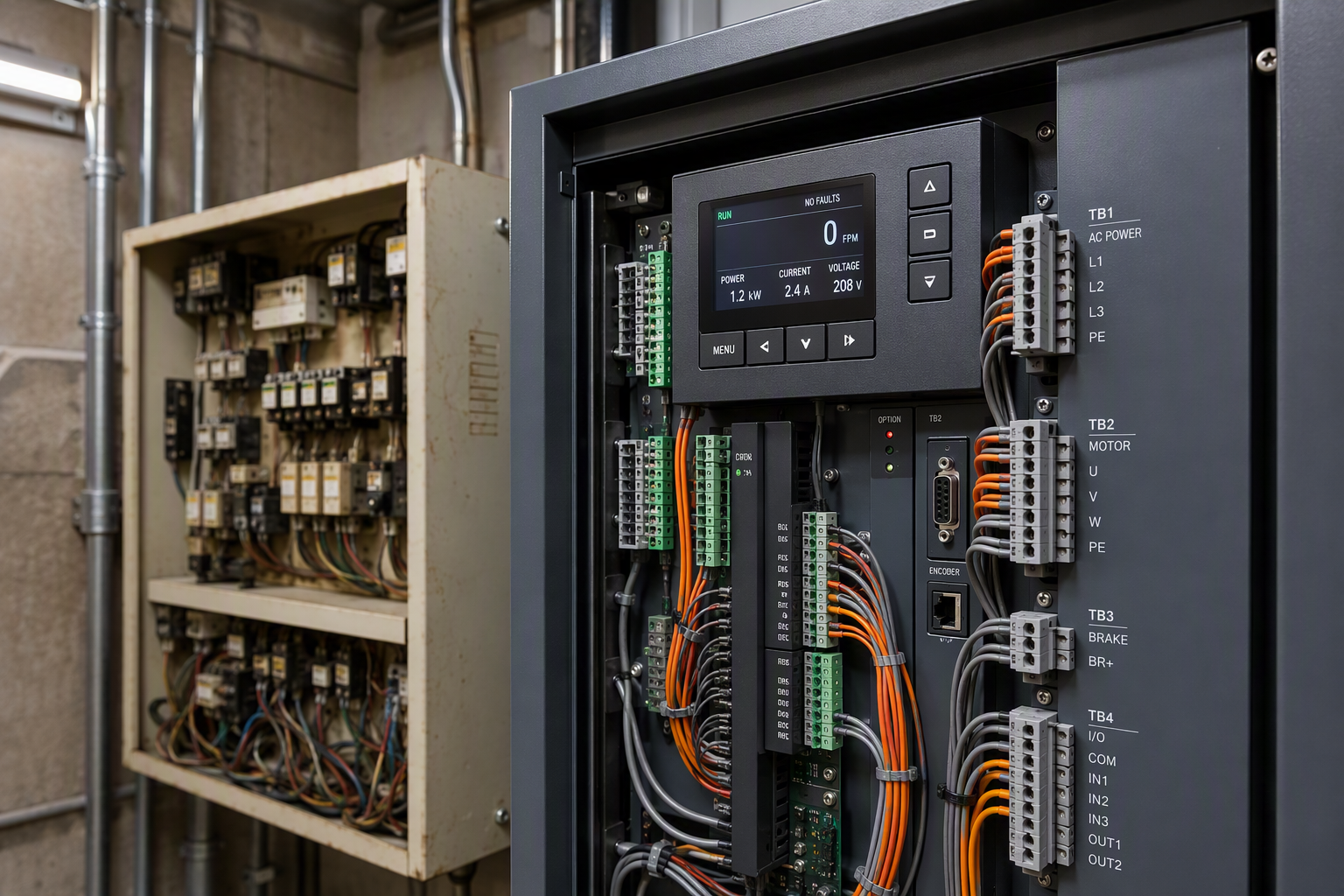
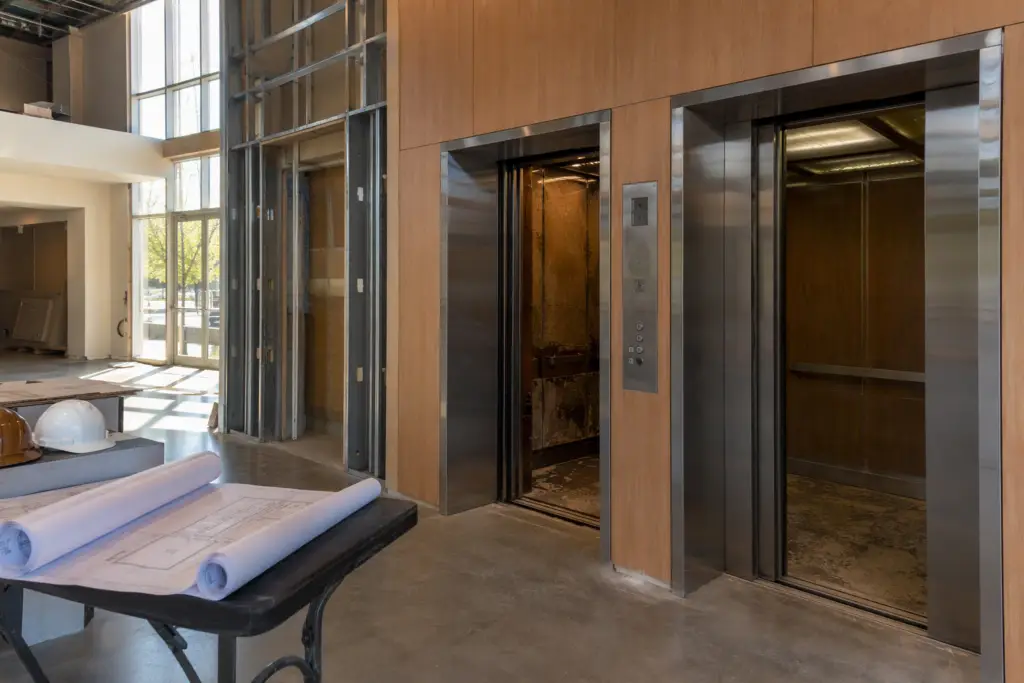
Elevator modernization refers to upgrading specific systems or components within an existing elevator — such as the control system, drive unit, cab interior, door operators, safety devices, or lighting — while retaining the hoistway, structural rail, and often the machine room equipment. Modernization can be partial (targeting one subsystem) or comprehensive (touching nearly every component except the hoistway structure itself).
Full elevator replacement involves removing all existing elevator equipment and installing an entirely new system from the pit slab to the overhead machinery. In many cases it also requires hoistway modifications, new machine room construction (or machine-room-less conversion), and extended shutdowns.
The distinction matters financially and operationally: modernization preserves existing infrastructure investment, while replacement starts from a clean slate at a substantially higher cost and longer downtime.
—
How Do the Costs of Modernization vs. Replacement Compare?

Cost is the most immediately visible factor, but it must be evaluated alongside scope, longevity, and compliance outcomes. Because elevator projects are highly site-specific, the table below reflects relative cost ranges and drivers rather than fixed dollar figures, which vary by geography, building type, elevator class, and contractor.
| Cost Factor | Modernization | Full Replacement |
|---|---|---|
| Overall project cost (relative) | Lower to moderate | High to very high |
| Hoistway structural work | Rarely required | Often required |
| Permitting and inspection fees | Moderate | High (full new installation permits) |
| Temporary lift or stair-lift rental | Short-term need | Extended need during shutdown |
| ADA accessibility upgrades | Can be incorporated at lower marginal cost | Fully addressed in new installation |
| Building disruption cost | Lower (shorter downtime) | Higher (longer downtime) |
| Expected useful life added | Typically 15–25 additional years (scope-dependent) | 25–30+ years for new equipment |
| Ongoing maintenance cost | Reduced after modernization | Lowest immediately post-installation |
Note: Exact cost figures are omitted because they vary significantly by elevator type, jurisdiction, and project scope. Obtaining multiple qualified bids is essential.
—
What Are the Pros and Cons of Elevator Modernization?
| Pros | Cons |
|---|---|
| Lower upfront capital expenditure compared to replacement | May not fully resolve chronic structural or hoistway issues |
| Shorter construction timeline and building disruption | Requires careful compatibility analysis between old and new components |
| Can be phased to spread costs over time | Phased projects carry risk of interim component failures |
| Modern controls improve energy efficiency and ride quality | Older structural elements (rails, buffers) may still need attention |
| Easier to achieve code compliance triggers selectively | Some jurisdictions require full compliance upgrade when any major work begins |
| Preserves existing hoistway investment | Does not reset the full equipment lifecycle |
| Improves reliability and reduces emergency repair calls | Complex vintage systems may complicate modern control integration |
—
What Are the Pros and Cons of Full Elevator Replacement?
| Pros | Cons |
|---|---|
| Complete reset of equipment lifecycle | Substantially higher upfront cost |
| All components under current codes from day one | Extended downtime — weeks to months depending on scope |
| No compatibility concerns between legacy and new parts | Hoistway modifications may trigger additional structural costs |
| Latest energy efficiency and technology standards | Greater disruption to building tenants and operations |
| Lowest maintenance cost in early years | Longer permitting and procurement lead times |
| Best option when hoistway or pit is compromised | May require machine room construction or retrofit |
—
How Does Elevator Age Factor Into the Modernization vs. Replacement Decision?
Equipment age is a starting point, not the sole determinant. A well-maintained elevator approaching the end of its expected service life may be an excellent candidate for comprehensive modernization if the hoistway structure and guide rails are sound. Conversely, a younger elevator with chronic mechanical failures, severe corrosion, or outdated safety architecture may warrant replacement sooner.
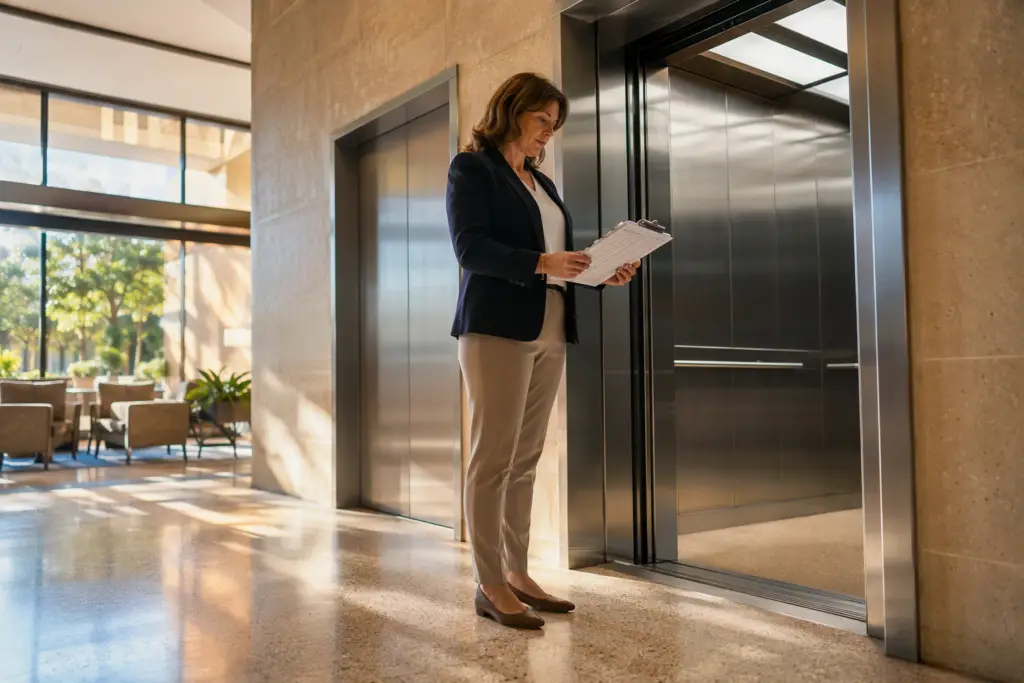
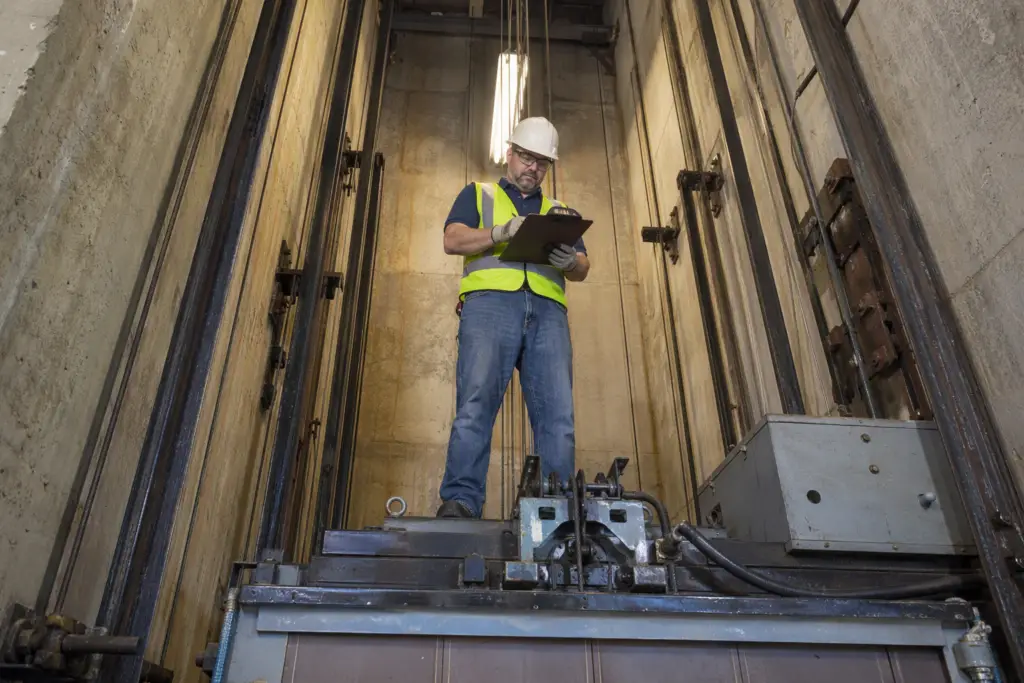
A qualified elevator consultant or service provider should conduct a condition assessment that evaluates:
- The condition of guide rails, buffers, and pit equipment
- Control system age and the availability of replacement parts
- Drive system type (hydraulic, traction, MRL) and its condition
- Door operator reliability and cab structural integrity
- Current compliance status relative to applicable codes
- Maintenance history and frequency of unplanned outages
—
What Codes and Compliance Requirements Affect This Decision in 2026?
Code compliance is a major driver of both modernization and replacement decisions. In the United States, elevator safety is governed primarily by the ASME A17.1 Safety Code for Elevators and Escalators, adopted in varying editions by individual states and municipalities. When modernization work triggers a code compliance review, jurisdictions may require the elevator to meet current ASME standards across multiple systems — not just the systems being upgraded.
Accessibility requirements under the Americans with Disabilities Act (ADA) also apply. Any significant alteration to an elevator or the path of travel it serves may require bringing accessibility features into compliance, including cab dimensions, control heights, braille signage, and audible signals.
Workplace safety requirements from OSHA govern the safe conduct of elevator work itself, including lockout/tagout procedures and fall protection during installation or major modernization.
Building owners should confirm which edition of ASME A17.1 their jurisdiction has adopted and what compliance triggers apply before committing to a project scope — this analysis alone can shift the cost-benefit equation significantly.
—
What Is the Typical Timeline for Modernization vs. Replacement?
| Project Phase | Modernization | Full Replacement |
|---|---|---|
| Assessment and engineering | 2–6 weeks | 4–12 weeks |
| Permitting | 2–8 weeks (jurisdiction-dependent) | 4–16 weeks (full installation permits) |
| Equipment procurement | 4–12 weeks (scope-dependent) | 8–20 weeks (full system order) |
| Installation and construction | 1–6 weeks (scope-dependent) | 4–16 weeks |
| Inspection and certificate of operation | 1–3 weeks | 2–4 weeks |
| Total estimated project duration | 2–6 months (comprehensive) | 5–12+ months |
Timelines are estimates and vary significantly based on jurisdiction, elevator type, supply chain conditions, and contractor scheduling.
—
How Should Building Owners Evaluate Return on Investment (ROI)?
A straightforward upfront cost comparison does not capture the full financial picture. A complete ROI analysis should account for:
- Reduced maintenance and emergency repair costs after upgrading aging, failure-prone components
- Energy savings from modern variable-frequency drives, LED lighting, and standby mode controls
- Reduced tenant disruption costs from fewer unplanned outages
- Extended equipment life — a comprehensive modernization may defer full replacement costs by 15 to 25 years
- Property value and marketability — reliable, code-compliant, modern elevator systems contribute positively to asset valuation
- Insurance and liability considerations — outdated equipment may carry higher liability exposure
For most mid-life elevators in sound structural condition, comprehensive modernization delivers a favorable ROI compared to replacement because the capital outlay is lower while the operational and lifecycle benefits are comparable over the extended period of use.
—
Which Elevator Components Are Most Commonly Modernized?
Understanding what gets modernized helps building owners scope projects accurately and prioritize spending:
- Control systems: Often the highest-priority upgrade — modern microprocessor controls replace relay-logic panels, improving reliability, diagnostics, and energy management
- Drive systems: Hydraulic power units or traction machine drives can be replaced with more efficient modern alternatives
- Door operators and door equipment: A leading cause of elevator outages; modern operators dramatically improve reliability
- Cab interior: Flooring, lighting, walls, and fixtures — significant impact on tenant experience and building image
- Safety devices: Governor, safeties, buffers, and interlocks may need upgrading to meet current ASME A17.1 editions
- Fixtures and signals: Hall stations, car operating panels, and position indicators can be replaced for ADA compliance and aesthetics
- Hydraulic fluid: Older mineral oil systems can be converted to biodegradable fluid to reduce environmental liability
—
When Is Full Replacement the Clearly Better Choice?
While modernization suits most situations, full replacement becomes the more logical choice when:
- The hoistway structure, pit, or overhead steel is compromised and requires major reconstruction regardless of the scope chosen
- Guide rails, buffers, and structural components have deteriorated beyond practical repair
- Parts for the existing equipment are discontinued and no longer available
- The building is undergoing a major renovation that already requires extended elevator shutdown
- The building’s use has changed substantially, requiring different capacity, speed, or travel distance
- Cumulative modernization bids approach or exceed replacement cost, eliminating the financial advantage
- The jurisdiction requires full code compliance upgrades that effectively equal a new installation in scope
—
How Do I Choose Between Partial and Comprehensive Modernization?
Partial modernization targets one or two subsystems — commonly controls and door operators — and is appropriate when the remaining components are in good condition and parts availability is not yet a concern. Comprehensive modernization addresses nearly all electromechanical components while retaining the hoistway structure and is the right approach for older elevators where multiple systems are aging simultaneously.
The risk of partial modernization done in phases is that each phase may trigger a fresh compliance review under the jurisdiction’s adopted ASME A17.1 edition, potentially requiring additional work not budgeted in the original scope. A full condition assessment before any work begins prevents costly surprises.
—
What Steps Should a Building Owner Take Before Committing to Either Option?
- Commission a thorough condition assessment from a qualified, independent elevator service provider — not just an equipment manufacturer with a stake in selling new equipment.
- Obtain a compliance review from the local authority having jurisdiction (AHJ) to understand which code triggers apply to each project scope.
- Request itemized proposals for both a comprehensive modernization and a full replacement so costs can be compared on equal footing.
- Evaluate total cost of ownership — not just initial project cost — over a 15-to-25-year horizon.
- Confirm parts availability for existing equipment to understand the risk of deferring modernization.
- Assess building occupancy and operations to determine acceptable downtime windows and tenant impact.
- Consult with the building’s lender or insurer if the project scope may affect financing or coverage terms.
- Select a licensed, certified elevator contractor with verifiable experience in the type of equipment being worked on.
—
Why Choose an Independent Elevator Service Provider Over a Manufacturer?
Elevator manufacturers and their affiliated service companies have a financial incentive to recommend full replacement, since new equipment generates higher revenue than modernization work. An independent, certified elevator service company — one not tied to a single manufacturer — can evaluate all available options objectively and recommend the solution that best serves the building owner’s interests.
Carolina Elevator Service is an independent, certified elevator service company serving building owners and facility managers across the Carolinas. As a manufacturer-neutral provider, Carolina Elevator Service assesses each elevator on its actual condition and the client’s specific operational needs — not on which outcome generates the highest equipment sale. Their team provides thorough condition assessments, compliance reviews, and honest guidance on whether modernization or replacement is the right path for each individual elevator.
—
What Questions Should I Ask Any Elevator Contractor Before Hiring?
- Are you licensed and certified in this jurisdiction to perform this scope of work?
- Are you affiliated with a specific elevator manufacturer, and does that relationship influence your recommendations?
- What specific ASME A17.1 compliance triggers will this project activate in our jurisdiction?
- Will you provide a written condition assessment before proposing a scope of work?
- What is the estimated useful life of the equipment following modernization vs. replacement?
- How do you handle change orders if additional issues are discovered during the project?
- What is the parts availability outlook for the components you are proposing to retain or install?
- Can you provide references from comparable projects — similar building type, elevator class, and scope?
—
Summary: Modernization vs. Replacement Decision Matrix
| Scenario | Recommended Path |
|---|---|
| Elevator is 15–30 years old, sound hoistway, aging controls and doors | Comprehensive Modernization |
| Elevator is under 15 years old with one failing subsystem | Partial Modernization |
| Hoistway structure is compromised or requires major reconstruction | Full Replacement |
| Parts for existing system are discontinued | Full Replacement or Comprehensive Modernization |
| Building use has fundamentally changed (capacity, speed, travel) | Full Replacement |
| Budget is constrained; elevator is operationally functional | Phased Modernization (with full assessment first) |
| Major building renovation already planned with extended downtime | Full Replacement (leverage existing shutdown window) |
| Compliance review reveals extensive required upgrades equal to new installation scope | Full Replacement |
—
Get Expert Guidance From Carolina Elevator Service
The modernization vs. replacement decision carries significant financial and operational consequences. Building owners deserve an honest, manufacturer-neutral assessment from a certified elevator service provider — not a sales pitch tied to equipment revenue.
Contact Carolina Elevator Service for a free elevator assessment. Call 803-865-1400 to schedule your consultation and get clear, unbiased guidance on the best path forward for your elevator system.
Need elevator service you can rely on? Carolina Elevator Service is ready to help.