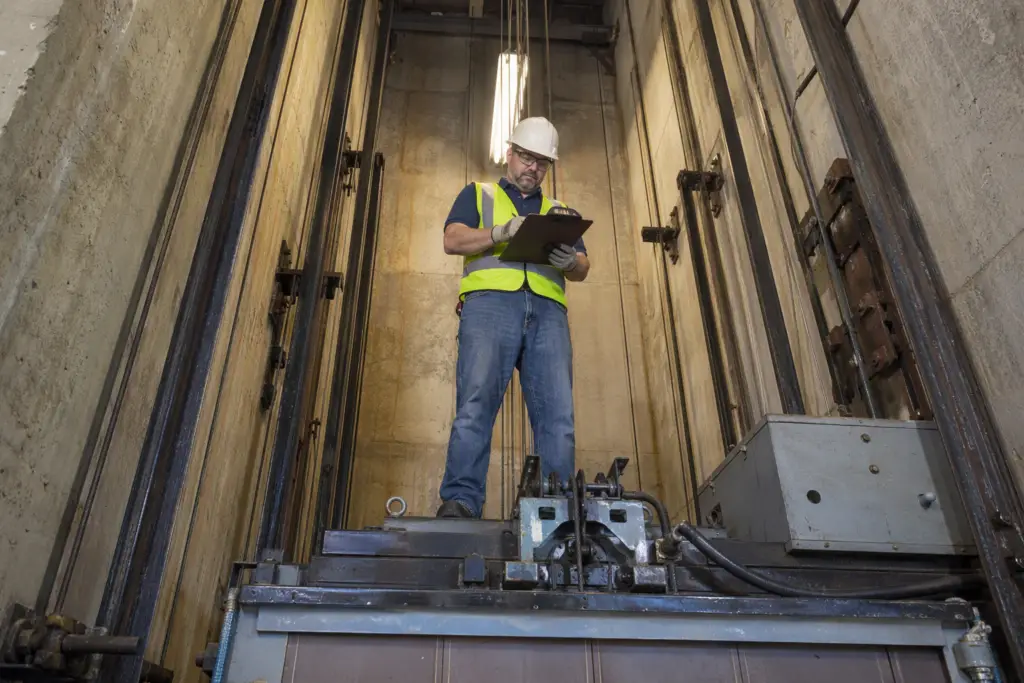
How Often Should Elevators Be Inspected? Frequency, Code Requirements & Compliance Guide
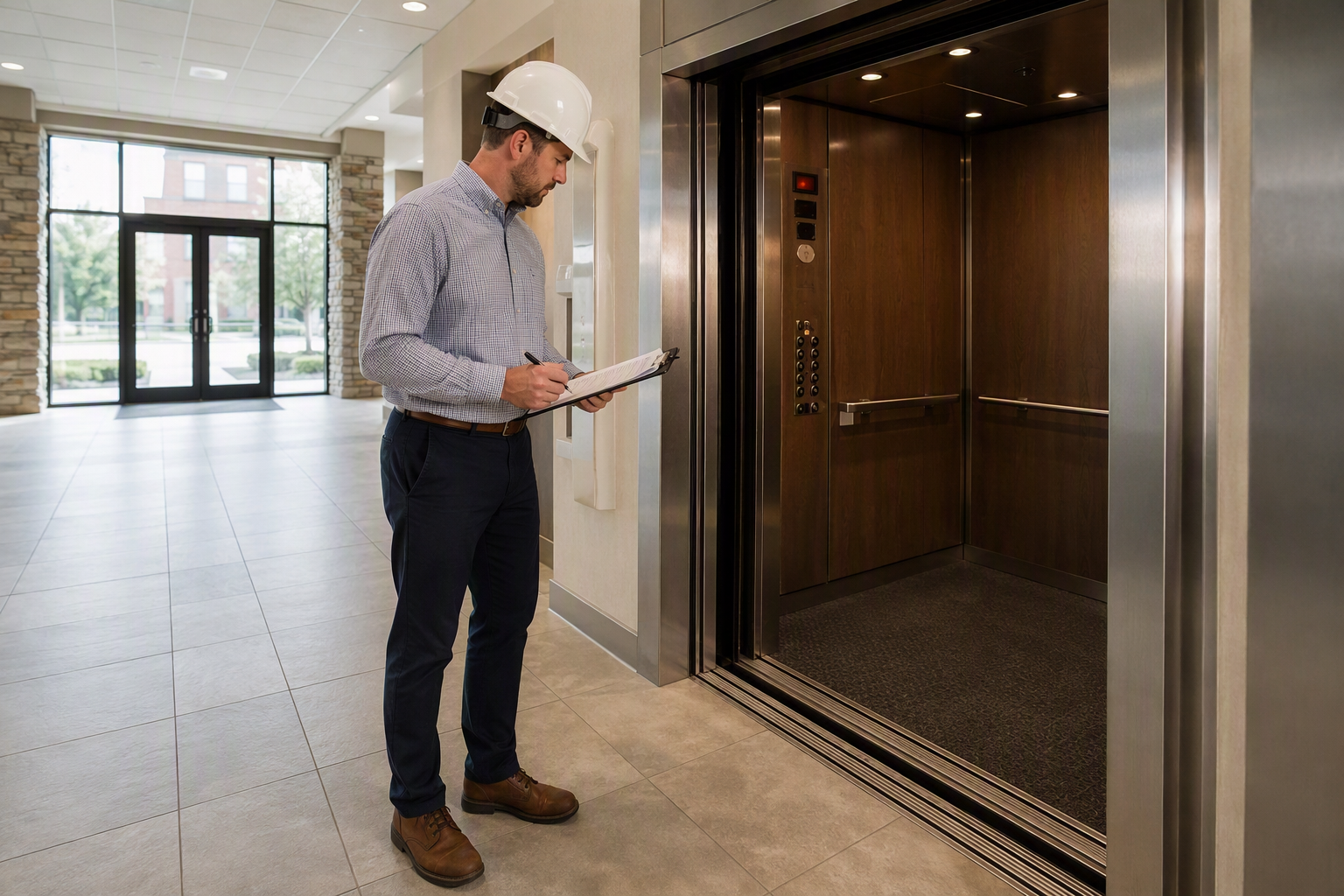
Elevator inspection frequency is one of the most searched compliance questions among building owners, property managers, and facility directors — and for good reason. Missing a required inspection can mean fines, shutdowns, liability exposure, and most importantly, passenger safety risk. This guide covers every dimension of the question: what codes require, how frequency varies by equipment type and jurisdiction, what happens between inspections, and how to build a compliant inspection schedule for 2026 and beyond.
What Do Elevator Inspection Codes Actually Require?

The foundational reference for elevator safety in the United States is the ASME A17.1 Safety Code for Elevators and Escalators. This code, maintained by the American Society of Mechanical Engineers, establishes minimum safety standards for elevator design, construction, installation, operation, inspection, testing, and maintenance. Most U.S. states and many local jurisdictions adopt ASME A17.1 — or a state-specific variant — as their legal baseline.
Under ASME A17.1, periodic inspections and tests are mandatory. The code distinguishes between routine periodic inspections (conducted by a qualified inspector) and periodic tests (which involve functional testing of safety devices and may occur on longer cycles, such as every one to five years depending on the test type). The specific intervals are spelled out in the code’s inspection and test tables, which jurisdictions may modify upward or downward.
Because elevator regulation is primarily a state and local function, frequency requirements can vary. Some jurisdictions mandate semi-annual inspections for high-use or high-rise elevators. Others accept an annual inspection for standard commercial elevators. Buildings with hospital elevators, construction hoists, or escalators may face different schedules entirely. Always verify the adopted code edition and any local amendments with your Authority Having Jurisdiction (AHJ) — typically the state labor department, building department, or a designated elevator inspection bureau.
The Americans with Disabilities Act (ADA) adds another layer: elevators serving as a required accessible means of vertical travel must remain operational and accessible. While the ADA does not itself set inspection intervals, it creates a strong compliance incentive to keep elevators in continuous safe service — making proactive, frequent maintenance inspections essential for covered buildings.
How Often Should Elevators Be Inspected? A Frequency Breakdown by Type

Inspection frequency is not one-size-fits-all. Several variables drive the appropriate schedule:
- Equipment type: Hydraulic elevators, traction elevators, MRL (machine-room-less) elevators, escalators, moving walks, and construction hoists each have distinct inspection requirements under ASME A17.1.
- Usage volume: A high-traffic commercial tower with hundreds of trips per day warrants more frequent maintenance checks than a low-use residential elevator.
- Age and condition: Older equipment with legacy components typically requires closer monitoring between formal inspections.
- Jurisdiction: State-adopted code editions and local amendments set the legal minimum; building owners may always exceed minimums voluntarily.
- Occupancy type: Hospitals, schools, and public buildings often face stricter or more frequent requirements than private commercial buildings.
As a general framework that aligns with widely adopted interpretations of ASME A17.1 and common state practice:
- Annual: Third-party certificate inspection — the statutory minimum in most U.S. jurisdictions for standard commercial elevators. This inspection results in the operating certificate that must be posted in the cab.
- Quarterly: Preventive maintenance visits by a qualified elevator mechanic — recommended industry practice, particularly for moderate-to-high usage equipment.
- Monthly: Routine lubrication, safety device checks, and operational review for high-usage equipment or where state/local code mandates it.
- Every 1–5 years: Periodic safety tests (e.g., full-load tests, governor and safety tests, hydraulic pressure relief tests) on cycles defined by the adopted version of ASME A17.1 and local code.
What Is the Difference Between an Inspection and a Maintenance Visit?
These two activities serve different but complementary purposes and are frequently confused by building owners.
A code inspection is a formal evaluation conducted by a licensed or certified elevator inspector — often a third party independent of the maintenance contractor — to verify that the elevator meets all applicable safety code requirements. Passing this inspection results in an operating certificate. Failing can result in orders to take the elevator out of service until deficiencies are corrected.
A maintenance visit is performed by an elevator mechanic under a service contract. It focuses on keeping equipment running reliably: lubricating moving parts, adjusting door operators, checking oil levels on hydraulic units, testing safety devices, and addressing wear before it becomes a failure. Maintenance visits do not replace code inspections, and code inspections do not replace maintenance.
The industry consensus — and the implicit expectation of ASME A17.1 maintenance provisions — is that a properly maintained elevator is safer, less likely to fail a code inspection, and less likely to generate liability. Building owners who treat the annual inspection as their only touchpoint are accepting a meaningful risk gap.
What Happens During a Standard Elevator Inspection?
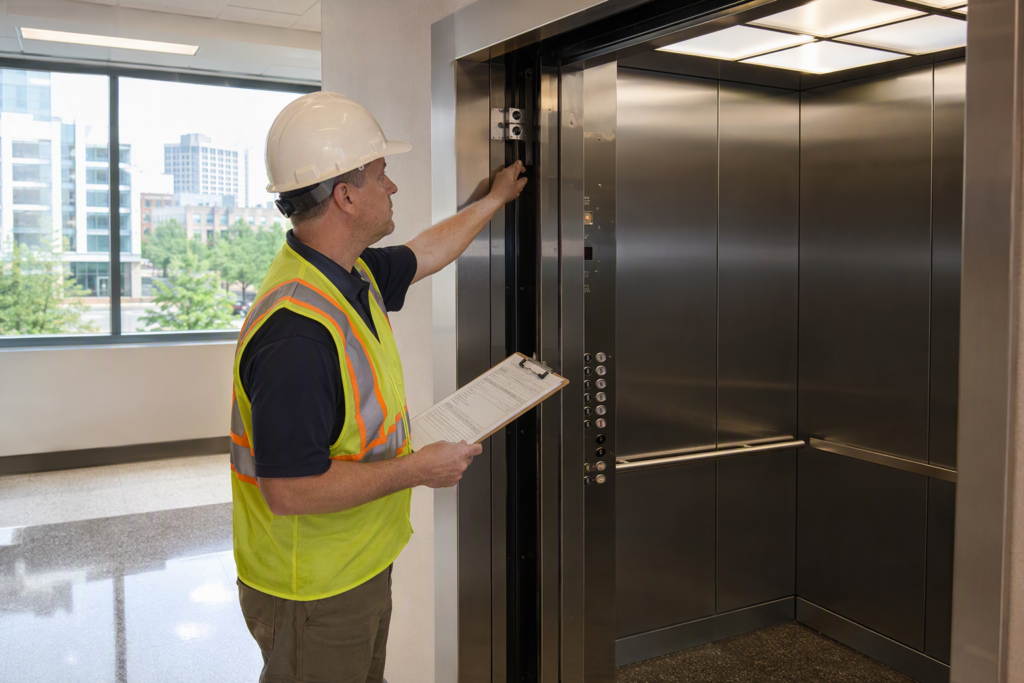
A thorough annual inspection covers the full mechanical, electrical, and safety systems of the elevator. The inspector reviews:
- Machine room or MRL control space: Condition of drive machinery, motor, controller, and wiring; housekeeping and fire protection compliance.
- Car and cab: Interior finishes, lighting, emergency lighting, emergency communication device, capacity posting, and certificate posting.
- Door systems: Door operation speed, door reopening devices (safety edges or light curtains), door interlocks, and landing door operation.
- Safety devices: Governor, safeties, buffers, and overspeed protection — verified operational and within tolerance.
- Pit: Pit lighting, stop switch, ladder condition, oil containment, and water intrusion.
- Hoistway: Clearances, guide rails, counterweight, and structural integrity of supports.
- Hydraulic systems (if applicable): Cylinder, piping, valve operation, and pressure relief settings.
- Emergency recall and firefighters’ service: Proper operation per code — a critical life-safety requirement under ASME A17.1.
- Documentation review: Maintenance records, previous inspection reports, and any outstanding violations.
- Witness testing: The inspector may witness operational tests of safety devices during the inspection.
What Are the Consequences of Missing a Required Elevator Inspection?
Skipping or delaying a mandated inspection creates a cascade of risks that extend well beyond a fine:
- Operating permit revocation: Most jurisdictions require a current certificate to legally operate the elevator. Without it, continued operation is illegal.
- Mandatory shutdown: An AHJ can order an elevator out of service for failure to inspect. In a multi-story building, this can trigger ADA accessibility violations if no alternative accessible route exists.
- Fines and penalties: State elevator safety bureaus impose fines for lapsed inspections. Amounts vary by jurisdiction and duration of non-compliance.
- Liability exposure: If an uninspected elevator injures a passenger, the absence of a current inspection certificate is powerful evidence of negligence in litigation.
- Insurance implications: Commercial property and general liability insurers may deny or reduce coverage for incidents involving equipment that was operating without a valid inspection certificate.
The Occupational Safety and Health Administration (OSHA) also maintains standards for elevators used in construction and general industry settings. Employers who expose workers to uninspected or improperly maintained lifting equipment face separate OSHA citation risk.
How Do Inspection Requirements Differ by State?
Because the United States delegates elevator regulation to states and localities, there is meaningful variation in practice even among jurisdictions that nominally adopt ASME A17.1. Key dimensions of variation include:
- Code edition adopted: Some states lag several editions behind the current ASME A17.1 version. Others adopt it promptly. The applicable edition determines which specific requirements govern.
- Inspector qualification: Some states require inspectors to hold a Qualified Elevator Inspector (QEI) certificate from the National Elevator Industry, Inc. or a state-specific license. Others have different qualification frameworks.
- Inspection interval: Annual is common, but some states allow biennial inspections for certain low-use residential or private elevators, while others mandate semi-annual for certain occupancy types.
- Permit and fee structures: The administrative process for obtaining and renewing operating permits varies widely.
- Third-party vs. state inspection: Some jurisdictions conduct inspections through state employees; others rely entirely on third-party inspectors; others allow either.
Building owners and property managers should contact their state’s labor or building safety department — or engage a qualified elevator service provider — to confirm which code edition applies and what the current inspection interval and permit requirements are.
What Should Building Owners Do to Prepare for an Elevator Inspection?
- Review current maintenance records: Confirm that all scheduled maintenance visits have occurred and that records are complete and accessible.
- Confirm the inspection appointment: Coordinate with your elevator service provider and the inspector to ensure access to all spaces — machine room, pit, and hoistway — at the scheduled time.
- Address outstanding deficiencies: Any items flagged on previous inspections or maintenance reports should be resolved before the inspection date.
- Verify posting requirements: The current operating certificate (from the previous inspection) must be posted in the elevator cab. Confirm it is legible and present.
- Ensure machine room access and housekeeping: Machine rooms must be clean, properly lit, and free of stored materials unrelated to elevator operation — a common minor violation.
- Test emergency communication: The two-way emergency phone in the cab must be functional. Test it before the inspection.
- Check pit conditions: Pit stop switch, lighting, and ladder must be functional. Remove any water accumulation or debris.
- Have documentation ready: Prior inspection reports, test records, and any permits or correspondence from the AHJ should be on hand for the inspector’s review.
How Much Does an Elevator Inspection Cost?
Inspection costs are not standardized and vary based on several qualitative factors:
- Jurisdiction: State permit fees are set by each regulatory body and differ significantly from state to state.
- Equipment type and complexity: A simple single-stop hydraulic lift costs less to inspect than a high-rise traction elevator with firefighters’ service and multiple safety systems.
- Number of elevators: Multi-unit buildings may receive volume pricing from inspection firms.
- Third-party inspector rates: These are market-driven and vary by region, inspector credential, and scope of work.
- Required tests: If the periodic cycle requires a witnessed load test or full-load safety test in the same year as the routine inspection, total cost increases accordingly.
- Maintenance contract terms: Some full-service maintenance contracts include coordination of the annual inspection; others bill it separately.
Building owners should request itemized quotes from qualified elevator service providers and confirm whether the quoted scope covers the full statutory inspection or only a portion of it.
What Are the 2025–2026 Trends in Elevator Inspection and Compliance?
The elevator inspection landscape is evolving in several notable directions heading into 2026:
- Remote monitoring and predictive maintenance: Internet-of-Things (IoT) sensor technology is increasingly integrated into elevator systems, allowing continuous monitoring of performance data. While remote monitoring does not replace code inspections, it provides interim visibility into developing faults and supports more targeted maintenance intervals.
- Digital inspection records: Many jurisdictions are moving toward electronic submission and storage of inspection reports, reducing paper-based tracking and enabling faster compliance verification by AHJs.
- Modernization code pressures: As ASME A17.1 editions are updated, older elevators face growing lists of items that require modernization to achieve compliance. Annual inspections increasingly surface these gaps, creating capital planning conversations for building owners.
- Inspector workforce constraints: The qualified elevator inspector workforce faces supply pressures in some regions, which can extend lead times for scheduling inspections. Building owners benefit from scheduling inspections well in advance of certificate expiration.
- Increased ADA enforcement awareness: As ADA accessibility enforcement activity remains active, building owners are paying closer attention to elevator reliability and maintenance as a disability access obligation — not just a mechanical one.
- Energy efficiency integration: Newer code discussions include energy performance standards for elevator drives and lighting. While not yet a primary inspection criterion in most jurisdictions, this is an emerging compliance dimension to monitor.
How Does Carolina Elevator Service Support Inspection Compliance?
Carolina Elevator Service approaches elevator inspection compliance as a data-driven process. Rather than treating the annual inspection as a single event, the team structures maintenance programs around the full inspection and testing cycle — quarterly or monthly preventive maintenance visits, documentation practices that support inspector review, and proactive identification of code compliance gaps before they become violations.
For building owners managing multiple properties or complex equipment inventories, Carolina Elevator Service provides systematic tracking of inspection due dates, maintenance history, and outstanding deficiency items. This approach reduces the risk of lapsed certificates and supports informed capital planning when modernization or major repairs are indicated.
Carolina Elevator Service operates in alignment with ASME A17.1 Safety Code for Elevators and Escalators requirements and stays current with applicable state code editions and local amendments — translating technical code language into practical compliance schedules for property owners and facility managers.
Frequently Asked Questions: Elevator Inspection Frequency
How often are elevators required to be inspected by law?
In most U.S. jurisdictions, elevators must undergo a formal code inspection at least once per year to maintain a valid operating certificate. This annual inspection is the statutory minimum for standard commercial elevators under state laws that adopt ASME A17.1 Safety Code for Elevators and Escalators. Some jurisdictions require semi-annual inspections for certain occupancy types or high-use equipment. Always confirm the specific interval with your state or local Authority Having Jurisdiction.
Is an annual inspection the same as preventive maintenance?
No. An annual code inspection is a formal compliance evaluation by a licensed inspector that results in an operating certificate. Preventive maintenance visits are performed by elevator mechanics to keep equipment running safely and reliably between inspections. Both are necessary — maintenance does not fulfill the inspection requirement, and an annual inspection does not substitute for ongoing maintenance.
What code governs elevator inspection requirements?
The primary national standard is the ASME A17.1 Safety Code for Elevators and Escalators, published by the American Society of Mechanical Engineers. Most states adopt this code — or a specific edition of it — as their legal baseline, sometimes with local amendments. The applicable edition varies by state, which is why verifying requirements with the local Authority Having Jurisdiction is essential.
What happens if an elevator fails a code inspection?
A failed inspection typically results in a deficiency notice requiring correction within a specified timeframe. For serious or imminent safety hazards, the inspector or AHJ may order the elevator out of service immediately. The elevator cannot legally resume operation until deficiencies are corrected and the elevator passes a follow-up inspection or the AHJ confirms compliance.
Do hydraulic elevators have different inspection requirements than traction elevators?
Yes. While both fall under ASME A17.1, hydraulic and traction elevators have different safety systems, and the periodic test requirements differ accordingly. Hydraulic elevators, for example, require periodic pressure relief valve testing and cylinder integrity evaluation. The specific test types and intervals are defined in the code’s inspection and test tables and vary by state adoption.
How often should escalators be inspected?
Escalators are covered under ASME A17.1 Safety Code for Elevators and Escalators and are subject to periodic inspection requirements analogous to those for elevators — typically annual inspections in most jurisdictions, with periodic functional tests on defined cycles. Escalator maintenance visit frequency is generally higher than for elevators given the continuous-duty nature of escalator operation.
Are private residential elevators subject to the same inspection requirements?
Private residence elevators are often treated differently under state law. Some jurisdictions exempt them from the annual inspection requirement that applies to commercial equipment; others apply reduced requirements. ASME A17.1 does address private residence elevators, but jurisdictional adoption varies. Building owners with residential elevators should confirm applicable requirements with their state or local authority, particularly if the building is not purely single-family.
What does OSHA require regarding elevator inspections?
The Occupational Safety and Health Administration (OSHA) has jurisdiction over elevators in construction settings and general industry where workers use elevators as part of their employment. OSHA’s standards require that such equipment be inspected and maintained in safe condition. Construction hoists have specific OSHA inspection requirements, including daily pre-use inspections. Employers are responsible for ensuring that elevator equipment used by workers meets applicable OSHA standards in addition to state elevator code requirements.
How do I know when my elevator’s inspection certificate expires?
The operating certificate posted inside the elevator cab includes the expiration date of the current inspection period. Building owners and facility managers should track these dates proactively — ideally in a centralized maintenance management system — to schedule the next inspection well before expiration. Many elevator service providers offer inspection scheduling coordination as part of maintenance contracts.
Can I use the same company for maintenance and inspection?
Whether the same company can perform both maintenance and inspection depends on your jurisdiction. Some states require that the code inspection be performed by an independent third-party inspector not affiliated with the maintenance contractor, to avoid conflicts of interest. Other jurisdictions permit the maintenance provider to conduct inspections if the inspector holds the required credentials. Confirm your state’s rules with the applicable AHJ before structuring your service agreements.
What records should building owners keep related to elevator inspections?
Best practice — and in many jurisdictions, a code requirement — is to maintain on-site records that include: current and prior operating certificates, all inspection reports and any deficiency notices, maintenance visit logs, test records, and any correspondence with the AHJ regarding the elevator. These records are essential for demonstrating compliance during an AHJ audit, during litigation, or when selling or refinancing a building.
Key Takeaways: Elevator Inspection Frequency at a Glance
- Most U.S. jurisdictions require at minimum an annual code inspection for commercial elevators under ASME A17.1-based state law.
- Periodic safety tests occur on longer cycles — defined by the adopted code edition and local requirements.
- Routine preventive maintenance (monthly or quarterly) is separate from and in addition to code inspections.
- Frequency varies by equipment type, usage, occupancy, jurisdiction, and age of equipment.
- Operating without a current certificate creates legal, financial, and safety risk.
- ADA obligations create additional compliance incentive for buildings where elevators serve as required accessible routes.
- OSHA requirements apply separately for construction and general industry elevator use.
- Proactive maintenance — not just annual inspections — is the foundation of safe, compliant elevator operation.
Get Expert Elevator Inspection Support from Carolina Elevator Service
Keeping your elevator inspection schedule current is not just a regulatory obligation — it is a fundamental responsibility to the people who depend on your building’s vertical transportation every day. Whether you need to understand your jurisdiction’s current requirements, coordinate an upcoming annual inspection, or build a comprehensive preventive maintenance program aligned with ASME A17.1 Safety Code for Elevators and Escalators, Carolina Elevator Service delivers the structured, data-driven approach that building owners and facility managers rely on.
Contact Carolina Elevator Service for a free elevator assessment: 803-865-1400
Need elevator service you can rely on? Carolina Elevator Service is ready to help.