Best Elevator Maintenance Company in Columbia, SC: Complete FAQ Guide
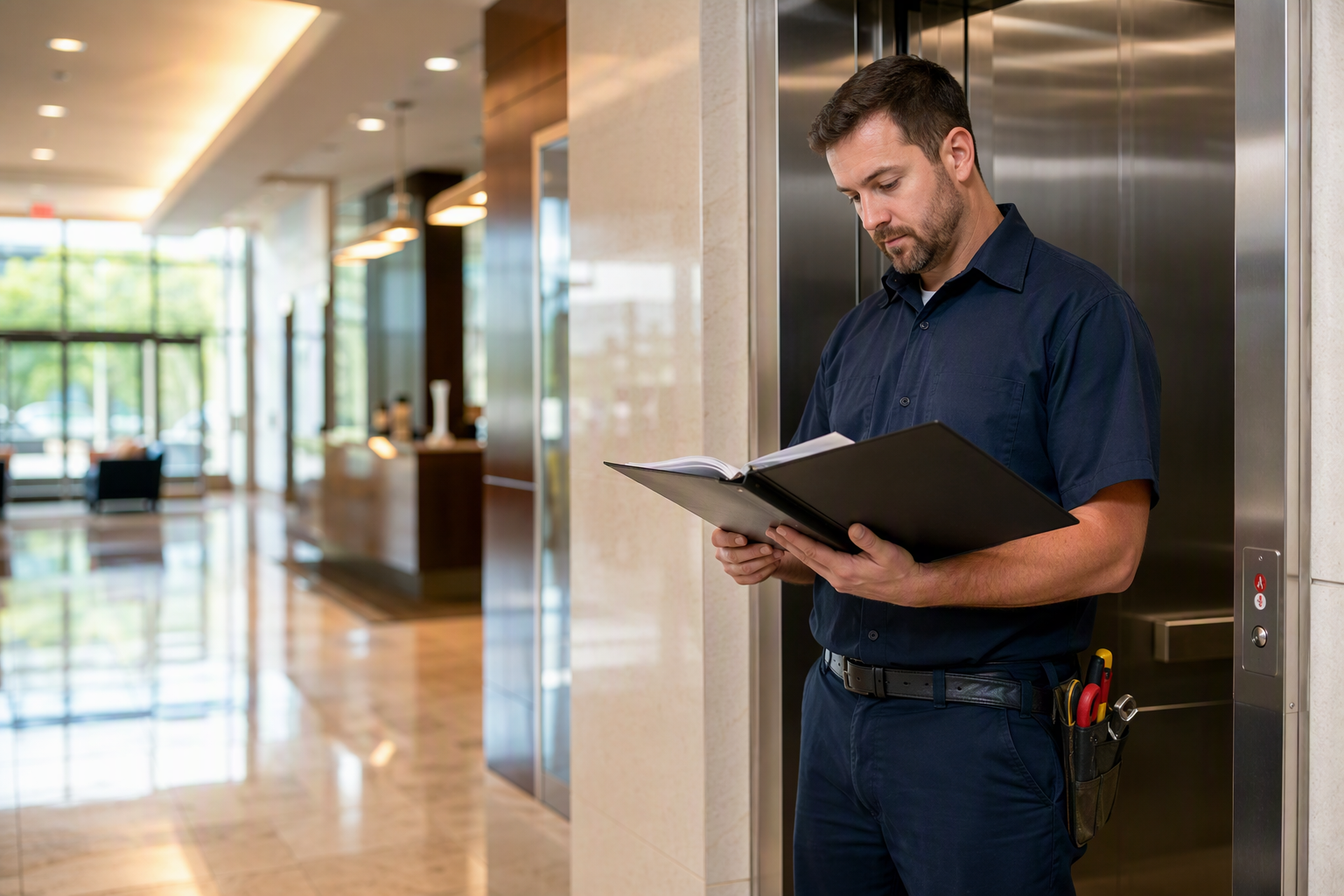
Choosing the right elevator maintenance company in Columbia, SC is a decision that directly affects occupant safety, building code compliance, and long-term equipment reliability. This comprehensive FAQ guide addresses the most important questions property managers, building owners, and facility directors ask when evaluating elevator service providers — covering everything from inspection frequency and compliance requirements to vendor selection criteria and what to do in an emergency.
What makes an elevator maintenance company the best choice in Columbia, SC?
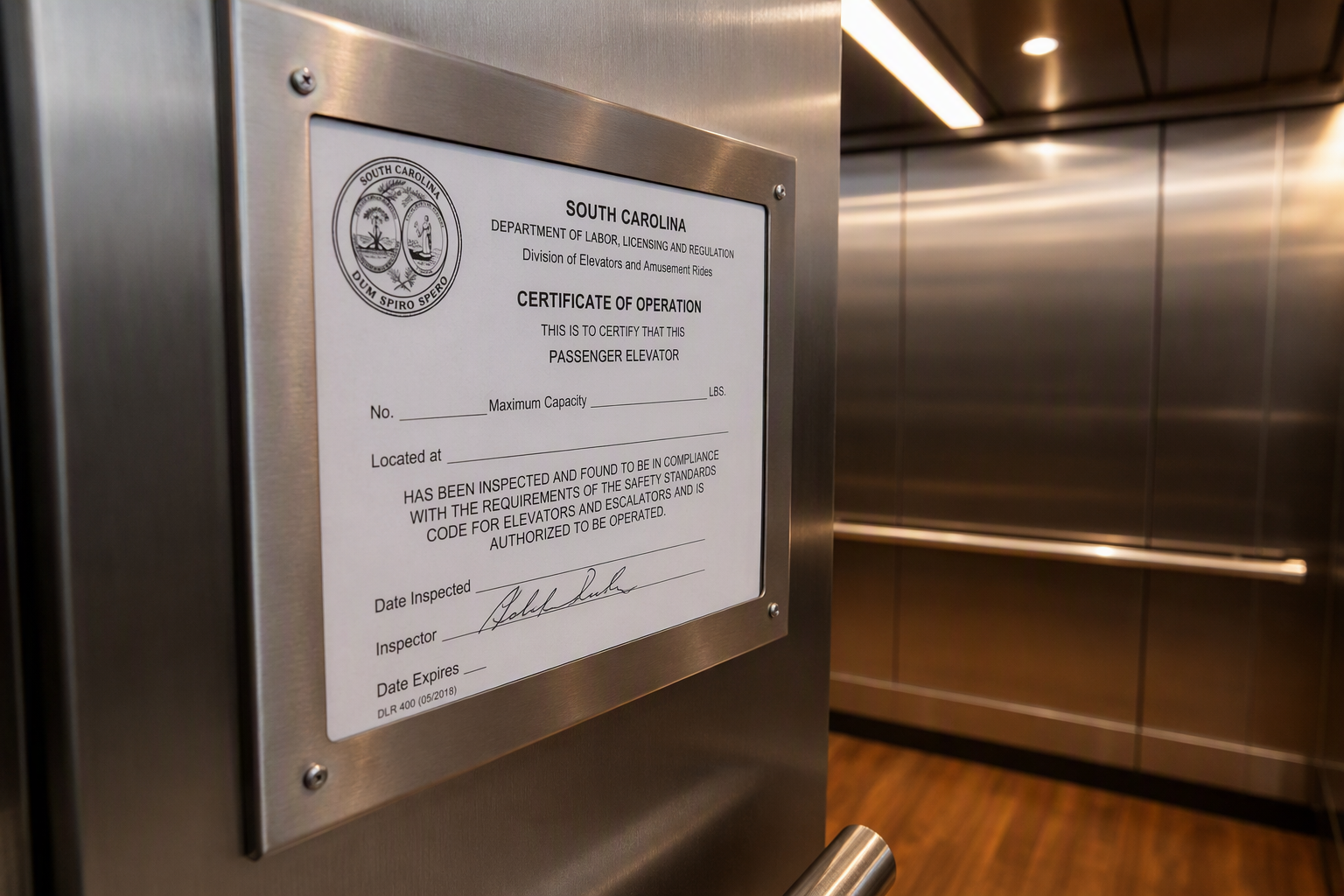
The best elevator maintenance company in Columbia combines verified technical certification, deep familiarity with South Carolina elevator codes, and a demonstrated track record of keeping equipment compliant and operational.
Beyond credentials, property owners should evaluate a company’s knowledge of ASME A17.1 Safety Code for Elevators and Escalators — the foundational industry standard governing elevator design, installation, and maintenance across the United States. Companies that can demonstrate fluency in both this standard and South Carolina’s specific administrative requirements provide substantially stronger protection for building owners.
Carolina Elevator Service operates exclusively in the Columbia, SC market, which means its technicians understand local permitting agencies, the South Carolina Department of Labor, Licensing and Regulation (LLR) requirements, and the specific building stock — from historic downtown properties to modern mixed-use developments — that characterizes the Midlands region.
How often should elevators be inspected in South Carolina?

South Carolina requires periodic inspections of elevators and escalators by licensed inspectors, with frequency determined by the type of equipment and its use classification.
Under South Carolina’s elevator safety program, administered through the Department of Labor, Licensing and Regulation, conveyances must be inspected annually at a minimum. The ASME A17.1 Safety Code for Elevators and Escalators provides the technical benchmarks that inspectors use when evaluating equipment condition, safety device function, and documentation compliance during these inspections.
In addition to state-mandated inspections, industry best practice calls for preventive maintenance visits on a monthly or quarterly schedule depending on elevator usage volume. High-traffic commercial buildings — such as hospitals, hotels, and office towers — typically require more frequent service calls to maintain peak reliability and avoid unplanned shutdowns.
What is ASME A17.1 and why does it matter for Columbia elevator owners?
ASME A17.1 is the primary safety code governing elevator and escalator design, construction, installation, operation, inspection, testing, maintenance, alteration, and repair in North America.
Published by the American Society of Mechanical Engineers, the ASME A17.1 Safety Code for Elevators and Escalators is adopted by South Carolina as the technical standard against which all conveyances are evaluated. For Columbia building owners, this means that maintenance agreements, repair procedures, and inspection protocols must align with A17.1 requirements to remain legally compliant. Failure to maintain equipment to this standard can result in failed inspections, operating permit revocations, and significant liability exposure.
A qualified elevator maintenance provider will document all maintenance activities in a logbook that correlates directly to A17.1 maintenance categories, making it straightforward to demonstrate compliance during regulatory inspections.
What types of elevators does a full-service maintenance company service?
A full-service elevator maintenance company should be capable of servicing hydraulic elevators, traction elevators (both geared and gearless), machine-room-less (MRL) traction systems, limited-use/limited-application (LULA) elevators, and vertical platform lifts.
Each elevator type has distinct mechanical, electrical, and safety system characteristics. Hydraulic elevators — common in low-rise Columbia commercial buildings — use a fluid-powered piston system and require specific attention to jack seals, hydraulic fluid condition, and pump unit maintenance. Traction elevators use a system of ropes, counterweights, and drive machines and are typically found in mid- and high-rise applications. MRL systems eliminate the traditional machine room, placing drive equipment in the hoistway or adjacent space, which requires specialized diagnostic tools.
LULA elevators and vertical platform lifts are frequently installed to meet ADA (Americans with Disabilities Act) accessibility requirements in existing buildings where full elevator installation is not feasible. These units have their own maintenance protocols and inspection requirements distinct from standard passenger elevators.
What does a preventive elevator maintenance program include?
A comprehensive preventive elevator maintenance program covers systematic inspection, lubrication, adjustment, and testing of all major mechanical, electrical, hydraulic, and safety systems on a scheduled basis.
Key components of a thorough preventive maintenance program include:
- Drive system service: Inspection and lubrication of motor, gearbox, drive sheave, and braking mechanisms
- Door system adjustment: Calibration of door operators, clutches, gibs, and safety edges to ensure proper opening and closing force
- Safety device testing: Functional testing of safeties, governors, buffers, and oil buffers per ASME A17.1 testing intervals
- Control system diagnostics: Review of microprocessor controls, relay logic, and fault logs for early detection of developing issues
- Hydraulic system inspection: Fluid level and quality checks, leak inspection at jack seals and fittings, and pump unit performance review
- Cab and hoistway inspection: Examination of guide rails, roller guides, lighting, ventilation, and emergency communication systems
- Rope and sheave inspection: Condition assessment of hoist ropes, compensating ropes, and sheave grooves for wear patterns
- Code-required testing: Scheduling and documentation of periodic tests mandated by A17.1, including five-year full-load safety tests
How does ADA compliance affect elevator maintenance requirements?
ADA compliance requires that elevators providing access to building areas also meet specific operational and dimensional standards, meaning maintenance programs must preserve both mechanical function and accessibility features simultaneously.
Under the ADA (Americans with Disabilities Act), elevators in facilities covered by the law must maintain operational features including audible signals, Braille and tactile floor designations, proper door timing, and accessible car controls at prescribed heights. When these features fall out of service — even temporarily — the building may be in violation of accessibility requirements regardless of whether the elevator itself is mechanically operational.
A maintenance provider familiar with ADA standards will treat accessibility feature integrity as a discrete line item in every service visit, not an afterthought. This is particularly relevant for Columbia’s older commercial building stock, where accessibility retrofits may involve components from multiple manufacturers that require coordinated maintenance expertise.
What questions should a property manager ask when comparing elevator maintenance companies?
Property managers should ask about technician certification status, familiarity with South Carolina LLR requirements, the scope of the maintenance agreement, parts sourcing practices, and emergency service protocols.
A structured vendor evaluation should cover:
- Are your technicians certified under a recognized industry credentialing program aligned with ASME A17.1?
- Does your company hold the appropriate South Carolina contractor’s license for elevator work?
- What does your maintenance agreement explicitly include and exclude?
- How are replacement parts sourced — OEM, third-party, or refurbished?
- What is your protocol when an elevator fails inspection?
- How do you document maintenance activities for regulatory compliance?
- Do you have experience with the specific elevator make and model installed in this building?
- Can you provide references from similar Columbia-area properties?
Carolina Elevator Service encourages all prospective clients to ask these questions of any provider they evaluate — and to request written answers that can be compared side by side.
How do elevator maintenance costs compare across service tiers?
Elevator maintenance costs vary significantly based on the level of coverage, equipment type, building usage, and whether the agreement includes parts and callbacks.
| Service Tier | Typical Coverage | Best Suited For | Key Considerations |
|---|---|---|---|
| Oil & Grease (Basic) | Lubrication and minor adjustments only; no parts or major repairs included | Low-budget properties with newer equipment under warranty | Lowest upfront cost; highest risk of unexpected repair expenses |
| Comprehensive (Parts Included) | Preventive maintenance plus covered parts and labor for most repairs | High-traffic commercial buildings, hospitals, hotels | Predictable operating costs; reduces unplanned downtime |
| Full Coverage | All parts, labor, major component replacement, and modernization provisions | Large facilities with aging equipment or high liability exposure | Highest cost but maximum protection and cost predictability |
| Inspection-Only | Code-required periodic inspections and testing documentation | Owners with in-house maintenance capacity or low-use equipment | Does not replace preventive maintenance; compliance floor only |
Property managers should review agreement language carefully to understand what triggers additional billable service calls, how parts markups are handled, and whether the agreement transfers if the building is sold.
What are the most common elevator code violations found during Columbia inspections?
The most frequently cited elevator deficiencies during South Carolina inspections involve door safety device failures, emergency lighting and communication deficiencies, overdue periodic testing, and inadequate maintenance documentation.
Door-related issues consistently rank among the leading causes of elevator incidents and inspection failures. Worn door gibs, misadjusted closing forces, and degraded safety edges can create entrapment or contact hazards. The ASME A17.1 Safety Code specifies precise requirements for door kinetic energy, closing force, and protective device response time that maintenance programs must continuously uphold.
Emergency communication systems — including two-way intercoms connecting the elevator cab to a monitored location — are another common deficiency area, particularly in buildings that have changed telephone service providers or building management systems without updating the elevator communication circuit. ADA requirements also mandate that emergency communication systems be accessible to individuals with hearing impairments.
Overdue periodic tests, particularly the five-year safety and pressure tests, represent a compliance gap that can result in immediate operating permit suspension. A proactive maintenance provider tracks test due dates on behalf of property owners and schedules them in advance to avoid lapses.
What should a building owner do immediately if an elevator traps a passenger?
A passenger entrapment is an emergency situation that requires a calm, structured response to protect the occupant while awaiting trained rescue personnel.
- Establish two-way communication immediately — Use the elevator’s emergency intercom to communicate with the trapped passenger. Confirm their physical condition and instruct them to remain calm and stay inside the cab.
- Contact emergency services if needed — If the passenger reports a medical emergency, shortness of breath, or extreme distress, call 911 immediately in addition to notifying the elevator service company.
- Notify your elevator service provider — Contact the maintenance company’s emergency line to dispatch a licensed technician for authorized rescue procedures.
- Do not attempt unauthorized rescue — Building staff should never attempt to pry open doors, manually lower the cab, or otherwise intervene without proper training and authorization. Improper rescue attempts can cause elevator movement and serious injury.
- Keep the passenger informed — Maintain periodic communication with the trapped individual to reassure them that help is on the way and to monitor their condition.
- Document the incident — Record the time of entrapment, duration, conditions, and actions taken for insurance, regulatory, and maintenance record purposes.
- Report to the appropriate authority — Depending on the circumstances, South Carolina may require notification of the elevator safety division following an entrapment incident.
How long does an elevator modernization project typically take in Columbia?
Elevator modernization scope and duration vary widely depending on the system type, the extent of upgrades required, and equipment availability, but most commercial modernization projects range from several weeks to several months.
A partial modernization — upgrading the controller, door operator, or fixtures while retaining the structural components — is generally less disruptive than a full modernization that replaces the drive machine, controller, cab, and safety systems. Buildings with a single elevator must account for the operational impact of extended downtime, which may require temporary accessibility accommodations under ADA guidelines.
Modernization projects in South Carolina require permits and inspections through the state’s elevator safety program, which should be factored into project scheduling. A reputable elevator company will manage the permitting process on the owner’s behalf and coordinate the final acceptance inspection to minimize the time between project completion and return to service.
What safety standards govern elevator workplace safety for technicians?
Elevator mechanic safety during maintenance and repair operations is governed by standards from both the Occupational Safety and Health Administration (OSHA) and the ASME A17.1 code, which includes provisions for personnel protection in and around elevator equipment.
OSHA regulations address lockout/tagout procedures, confined space entry protocols for pit work, fall protection requirements in hoistways, and electrical safety practices — all of which apply to elevator maintenance work. The ASME A17.1 Safety Code complements OSHA requirements with elevator-specific safeguards including car top protection devices, pit stop switches, and inspection operation controls that allow technicians to move the elevator safely during service.
Property owners evaluating elevator maintenance vendors should confirm that the company’s safety program aligns with applicable OSHA standards — not only to protect technicians but to limit the building owner’s own liability exposure in the event of a workplace incident on their property.
How can a building owner verify that an elevator company is properly licensed in South Carolina?
South Carolina requires elevator contractors to hold a license issued through the Department of Labor, Licensing and Regulation, and this information is publicly verifiable through the LLR’s online license lookup tool.
Before entering any elevator maintenance agreement, property owners should request the contractor’s South Carolina elevator contractor license number and verify its current status. Additionally, qualified elevator mechanics performing work in South Carolina must hold individual certifications demonstrating competency with the equipment types they service. Asking for documentation of both the company license and individual mechanic credentials is a standard and appropriate part of vendor due diligence.
Insurance verification is equally important. Elevator maintenance involves significant liability exposure, and property owners should confirm that their service provider carries adequate general liability and workers’ compensation coverage, with the building owner listed as an additional insured where appropriate.
What is the difference between elevator maintenance and elevator repair?
Elevator maintenance is the scheduled, proactive servicing of equipment to prevent failures and maintain compliance, while elevator repair is the reactive correction of a specific malfunction or failed component after it occurs.
The distinction matters practically and contractually. Maintenance activities — lubrication, adjustment, testing, and inspection — are typically covered under a maintenance agreement and are performed on a predictable schedule. Repairs arise from component failures, accidents, vandalism, or code deficiencies discovered during inspection. Depending on the maintenance agreement tier, repairs may or may not be covered under the agreement’s terms.
Investing in thorough preventive maintenance generally reduces the frequency and severity of unplanned repairs. Well-maintained equipment is more likely to pass inspections without deficiency citations, less likely to experience unplanned shutdowns, and typically has a longer useful service life before full modernization is necessary.
How does elevator maintenance affect a building’s property value and insurance?
Documented, consistent elevator maintenance positively affects property value by demonstrating operational reliability and code compliance, while also reducing insurance risk profiles and supporting favorable claims outcomes.
Commercial real estate appraisers and buyers conducting due diligence will review elevator maintenance records as part of building system assessments. Gaps in documentation, overdue inspections, or a history of failed inspections can become negotiating points that reduce a property’s assessed value or require remediation as a condition of sale.
From an insurance perspective, properties with current operating certificates, complete maintenance logs, and no outstanding code violations present a more favorable risk profile. In the event of an elevator-related incident, thorough maintenance documentation is often the most important evidence in establishing that the building owner exercised reasonable care — a critical factor in liability defense.
What are the signs that an elevator needs immediate attention or emergency service?
Several observable conditions indicate that an elevator requires immediate professional attention and should be taken out of service until a licensed technician evaluates and resolves the problem.
Signs warranting immediate action include:
- Leveling problems: The elevator stops above or below the floor level, creating a trip hazard at the threshold
- Door malfunctions: Doors fail to open or close completely, reverse erratically, or close with excessive force
- Unusual sounds: Grinding, banging, squealing, or scraping noises during operation may indicate mechanical component wear or failure
- Erratic movement: Vibration, jerking, sudden stops, or uncontrolled movement during travel
- Overheating: Burning smell from the machine room or control panel area
- Emergency lighting failure: Cab lighting or emergency lighting not functioning
- Communication system failure: Emergency intercom or alarm button not operational
- Hydraulic fluid leaks: Visible oil in the pit or around the hydraulic unit
When any of these conditions are observed, the elevator should be taken out of service immediately and the maintenance provider contacted. Operating a malfunctioning elevator exposes passengers to risk and building owners to significant liability.
How should a Columbia property manager evaluate an elevator maintenance contract before signing?
Before signing an elevator maintenance contract, a property manager should carefully review the scope of included services, exclusions, callback policies, parts provisions, termination terms, and the qualifications of the company performing the work.
Key contract review points include:
- Scope definition: Does the contract explicitly list what maintenance tasks are performed and at what frequency?
- Parts coverage: Are replacement parts included, and if so, are there exclusions for major components?
- Callback labor: Is labor for service calls between scheduled maintenance visits included or billed separately?
- Exclusions: Are vandalism, misuse, or work by other contractors explicitly excluded from coverage?
- Escalation clauses: Does the contract include automatic price increases, and if so, are they capped?
- Termination provisions: What notice period is required, and are there early termination penalties?
- Documentation commitments: Does the contractor commit to providing maintenance logs and inspection reports?
What modernization options are available for aging elevator systems in South Carolina?
Aging elevator systems in Columbia can be modernized through targeted component upgrades or full system replacement, with the appropriate scope depending on equipment age, condition, energy performance goals, and code compliance requirements.
Common modernization pathways include controller upgrades — replacing older relay-logic or early microprocessor controllers with modern solid-state systems that offer improved performance, diagnostics, and energy efficiency. Door operator modernizations address the most frequent source of elevator incidents and complaints. Cab interior renovations improve occupant experience and can incorporate energy-efficient LED lighting.
For buildings where equipment is approaching or has exceeded its designed service life, a full modernization — replacing the drive machine, controller, ropes, cab, and safety systems — may be more economical long-term than continuing to maintain aging components. Any modernization work must comply with current ASME A17.1 requirements and must be permitted and inspected through South Carolina’s elevator safety program. Modernization also presents an opportunity to bring older equipment into full ADA compliance where it may currently fall short.
Why is local expertise important when choosing an elevator maintenance company in Columbia?
Local expertise matters because familiarity with South Carolina’s specific regulatory environment, the region’s building stock, local parts suppliers, and the personnel at the state’s elevator inspection office translates directly into faster compliance resolution and better-informed maintenance recommendations.
A company based in — or deeply committed to — the Columbia market understands the climate conditions that affect hydraulic elevator fluid viscosity, the older construction types common in the historic districts that present unique hoistway configurations, and the specific inspectors who evaluate local conveyances. This contextual knowledge cannot be replicated by a national chain managing Columbia accounts from a distant regional office.
Carolina Elevator Service is based in Columbia and maintains its focus on the Midlands region, allowing its technicians to build the local knowledge and regulatory relationships that benefit property owners throughout the service area.
How do I get started with a new elevator maintenance agreement in Columbia, SC?
Starting a new elevator maintenance agreement begins with a professional assessment of current equipment condition, compliance status, and maintenance history — followed by a proposal that matches service scope to the specific needs of the building and its elevator systems.
The process typically follows these steps:
- Request a site assessment — A qualified technician inspects the elevator equipment, reviews existing documentation, and identifies any immediate compliance or safety concerns.
- Review current compliance status — The assessor confirms whether the operating certificate is current, when the next periodic inspection is due, and whether any outstanding deficiencies exist from prior inspections.
- Receive a maintenance proposal — Based on the assessment findings, the company provides a written proposal outlining the recommended service tier, visit frequency, included scope, and pricing.
- Review and negotiate contract terms — The property manager reviews the agreement using the criteria described earlier in this guide.
- Execute the agreement and schedule the first service visit — Once signed, the maintenance provider schedules the first preventive maintenance visit and establishes the ongoing service calendar.
- Establish documentation protocols — Confirm how maintenance logs will be maintained and provided, and where they will be kept on-site for regulatory review.
Carolina Elevator Service offers complimentary elevator assessments for Columbia-area property owners considering a maintenance agreement, making it straightforward to understand current equipment status before committing to a service arrangement.
Ready to Work With a Trusted Elevator Maintenance Company in Columbia, SC?
Whether managing a single-elevator office building or a multi-unit residential complex, Columbia property owners deserve an elevator maintenance partner with verified credentials, local expertise, and a commitment to keeping equipment safe, compliant, and reliable. Carolina Elevator Service provides certified maintenance, inspection support, repair, and modernization services throughout the Columbia, SC Midlands area.
Contact Carolina Elevator Service for a free elevator assessment.
Call us today at 803-865-1400 to schedule your complimentary on-site evaluation and learn how a properly structured maintenance program can protect your building, your occupants, and your investment.
Need elevator service you can rely on? Carolina Elevator Service is ready to help.