Elevator Breakdown Immediate Response: What Building Owners and Managers Must Know
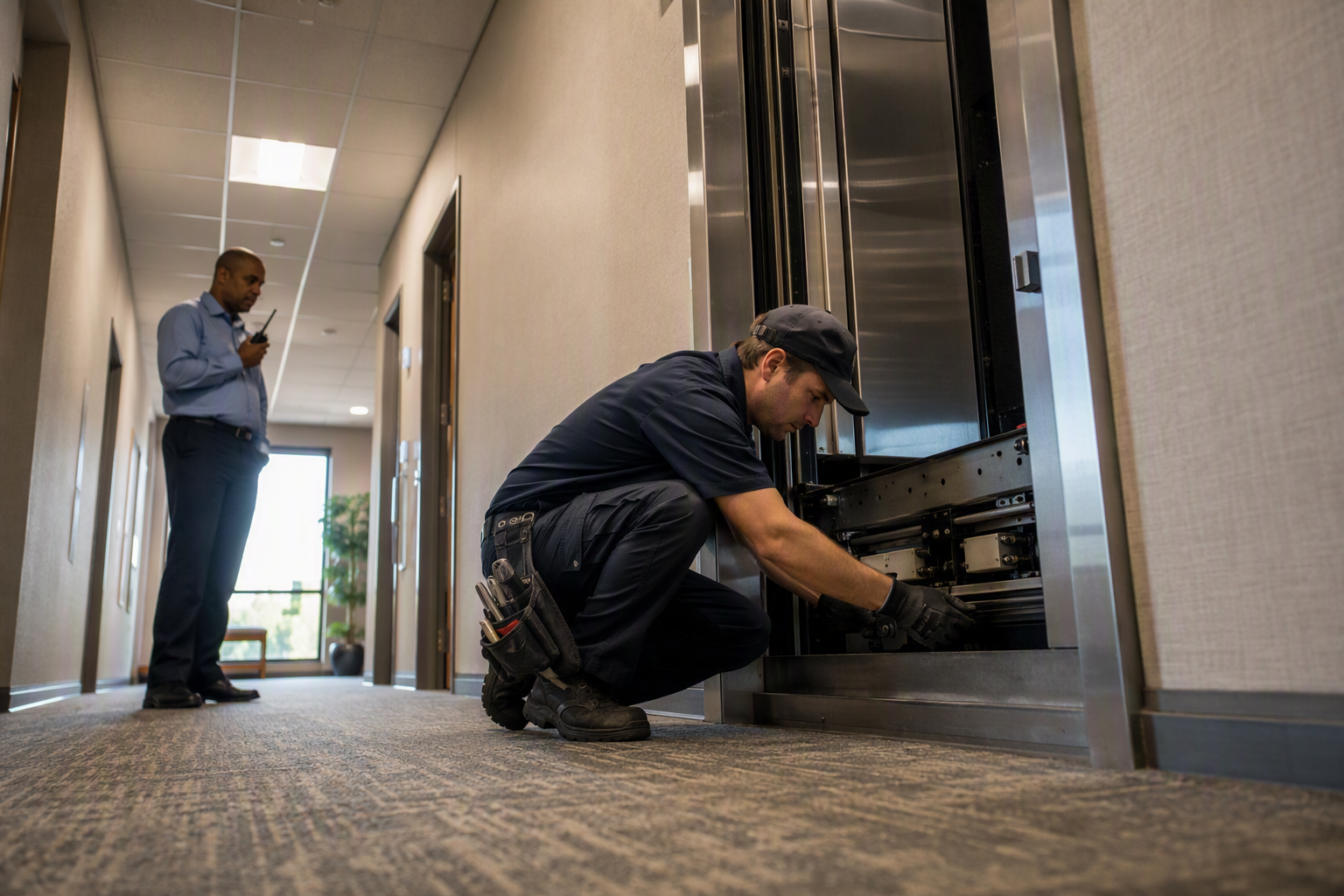
Elevator breakdowns are not simply inconveniences — they are events that carry safety, liability, and compliance consequences. Whether a unit stops between floors, doors fail to open, or a drive system shuts down unexpectedly, building owners and facility managers need a clear, practiced protocol. This page covers every critical dimension of elevator breakdown immediate response: what to do, what codes govern it, what drives repair costs, and how to evaluate service providers like Carolina Elevator Service that take a data-driven approach to elevator reliability.
What Qualifies as an Elevator Emergency?
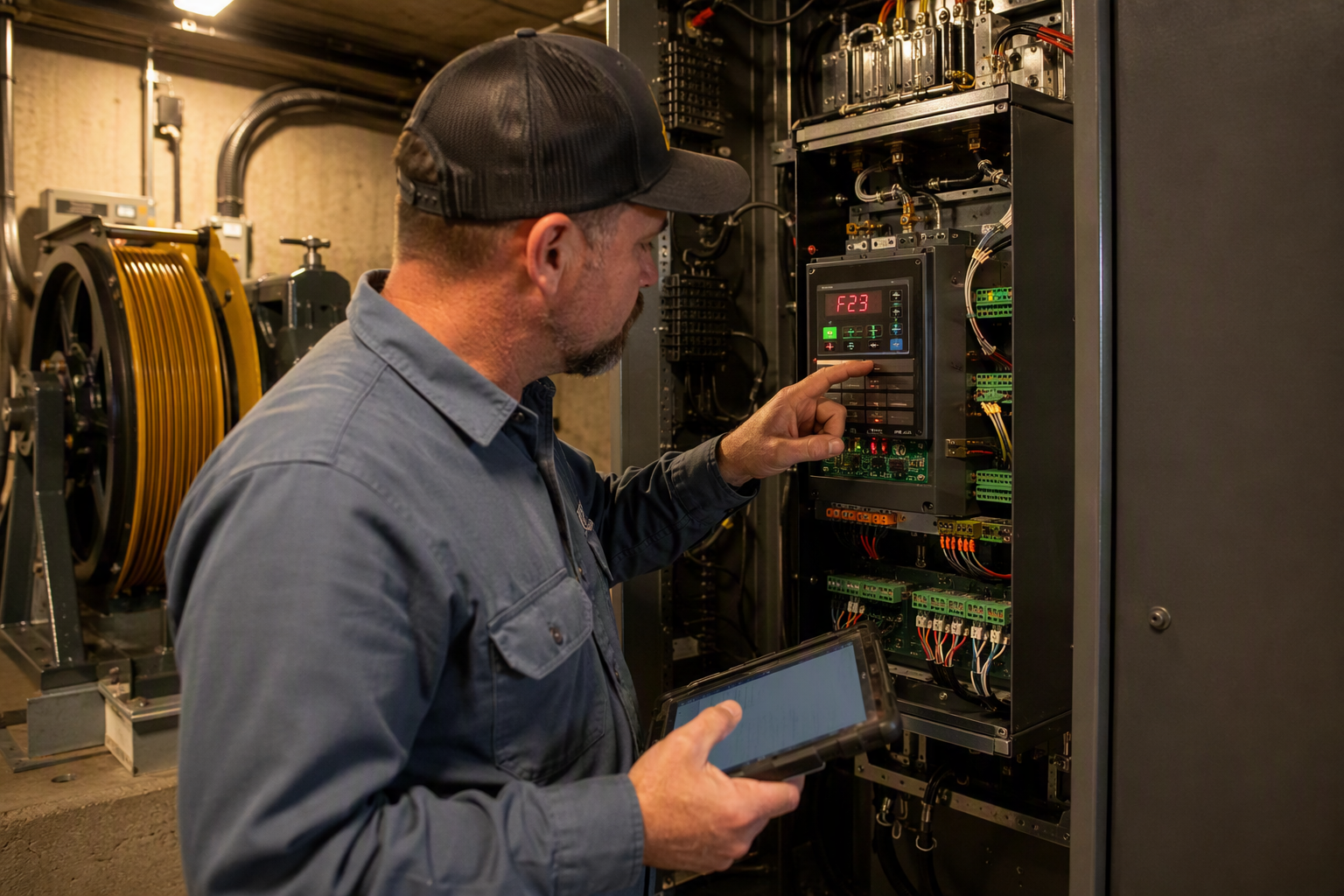
Not every malfunction rises to the level of an emergency, but the following conditions always require immediate action:
- Passengers trapped inside a car that is stalled between floors or at a floor with doors that will not open
- A car that is leveling incorrectly, stopping above or below the floor threshold (a tripping hazard)
- Smoke, burning odors, or sparks originating from the machine room or car
- Hydraulic fluid leaks creating slip or fire risk
- Door malfunctions that allow the car to move with doors open
- Sudden, uncontrolled movement or freefall sensation reported by passengers
Any situation involving a trapped passenger, a fire-related hazard, or uncontrolled movement should trigger a call to emergency services (911) first, followed immediately by a call to a licensed elevator service company.
What Should You Do Immediately When an Elevator Breaks Down?

- Establish communication with any trapped passengers. Use the in-car emergency telephone, which is required to be operational at all times under the ASME A17.1 Safety Code for Elevators and Escalators. Reassure occupants that help is being dispatched and instruct them not to attempt to force doors open or climb out of the car.
- Call 911 if passengers are trapped. In most jurisdictions, only trained emergency personnel or licensed elevator technicians may perform an emergency evacuation. Building staff should not attempt to manually open hoistway doors without proper training and tools.
- Notify your elevator service provider. Call for emergency dispatch. Provide the building address, elevator number or location, nature of the malfunction, and whether anyone is trapped.
- Post personnel at the elevator entrance. Station a staff member at each floor landing near the affected unit to prevent others from pressing call buttons or attempting to use the elevator.
- Place out-of-service signage on all landings. This protects other building occupants from the hazard and reduces liability exposure.
- Document the incident. Note the time the malfunction was detected, any alarms triggered, and the sequence of events. This information is required for incident reports and may be needed for regulatory notification depending on jurisdiction.
- Do not restore power or attempt a manual reset without a licensed technician present. Resetting a tripped breaker or controller without understanding the root cause can create a more dangerous condition.
- Cooperate fully with the responding technician. Provide access to the machine room, electrical room, and any building management system that monitors the elevator. Obstruction delays diagnosis and repair.
- File any required incident reports. Jurisdictions vary, but most require written notice to the authority having jurisdiction (AHJ) when an elevator is taken out of service due to a malfunction. Confirm local requirements with your elevator service provider.
- Request a written root-cause analysis after the repair. Understanding why the breakdown occurred is the foundation of a preventive maintenance strategy that reduces future occurrences.
What Does ASME A17.1 Require During an Elevator Emergency?
The ASME A17.1 Safety Code for Elevators and Escalators is the foundational standard governing elevator design, installation, inspection, and maintenance across most of North America. Several of its provisions directly govern emergency response:
- Emergency lighting and power. The code requires that elevator cars be equipped with emergency lighting that activates automatically upon loss of normal power, ensuring trapped passengers are not left in darkness.
- Two-way emergency communication. Every passenger elevator must have a means of two-way communication that connects to a location staffed 24 hours a day, or that automatically dials an emergency number. This requirement is not optional and must be maintained in working order at all times.
- Firefighters’ service operation. The code mandates Phase I and Phase II firefighters’ emergency operation — features that allow emergency personnel to call elevators to a designated floor and control car movement independently. These systems must be tested at specified intervals.
- Periodic inspections. ASME A17.1 establishes inspection and testing intervals that vary by component and jurisdiction. When an elevator fails between inspections, the root cause often connects to deferred maintenance items that an inspection would have flagged.
Building owners who do not maintain these systems in compliance risk both regulatory action and heightened liability in the event of injury during a breakdown.
Are There ADA Implications When an Elevator Is Out of Service?
Yes. Under the Americans with Disabilities Act (ADA), buildings that rely on elevators to provide accessible routes to programs, services, or facilities are required to maintain those accessible routes. When an elevator goes out of service and no alternative accessible path exists, the building may be in violation of its ADA obligations for as long as the unit remains offline.
Practically, this means:
- Prolonged downtime is not simply a tenant relations issue — it is a civil rights compliance issue.
- Buildings with a single elevator serving an inaccessible upper floor face the greatest risk.
- Documenting prompt action to restore service demonstrates good-faith effort, which is considered in ADA enforcement contexts.
- Temporary service alternatives should be identified in advance as part of a building’s elevator contingency plan.
What Are the Most Common Causes of Elevator Breakdowns?
Understanding failure patterns is essential for prevention. The most frequently cited categories of elevator breakdown causes include:
- Door system failures: Door operators, rollers, gibs, and sensing devices are among the highest-wear components on any elevator. Misaligned or worn door equipment accounts for a disproportionate share of service calls across the industry.
- Control system faults: Modern microprocessor-based controllers can develop software faults, communication errors, or sensor failures that halt operation without any mechanical damage.
- Drive and motor issues: Variable frequency drives (VFDs), motor windings, and brake assemblies are subject to heat, vibration, and electrical stress over time.
- Hydraulic system problems: For hydraulic elevators, oil contamination, seal degradation, and pump wear are common breakdown triggers.
- Rope and sheave wear: On traction elevators, wire rope, sheaves, and governor assemblies require regular inspection — abnormal wear can cause safety devices to activate and halt the car.
- Power supply issues: Voltage fluctuations, phase loss, and electrical surges can trip safety circuits and cause unexpected shutdowns.
- Deferred maintenance: Many breakdowns are directly traceable to lubrication intervals missed, adjustments not made, or minor defects not addressed during routine service visits.
How Does Deferred Maintenance Increase Breakdown Frequency?
Elevator components do not fail randomly — they fail along predictable wear curves when maintenance tasks are skipped or delayed. The relationship between maintenance quality and breakdown frequency is well established in the elevator industry, even if precise percentages vary by building type, elevator age, and usage intensity.
What the evidence consistently shows, qualitatively:
- Elevators operating on comprehensive, documented maintenance agreements experience fewer emergency callbacks than those on oil-and-grease-only contracts.
- Older equipment (generally beyond 20 years) that has not been modernized shows accelerating failure rates as original components age past their design life.
- High-traffic environments — hospitals, transit hubs, large residential towers — compress wear timelines and require more frequent service intervals than low-traffic office buildings.
Carolina Elevator Service approaches maintenance as a data-informed discipline, tracking component condition and service history to help building owners anticipate failures rather than react to them.
What Drives the Cost of Emergency Elevator Repairs?
Emergency repair costs vary substantially based on several factors. While specific pricing depends on the unit type, jurisdiction, and parts availability, the primary cost drivers include:
- Time of call: After-hours, weekend, and holiday emergency response typically carries premium labor rates compared to scheduled service.
- Part availability: Proprietary parts for older or modernized elevators may have extended lead times, extending downtime and total cost.
- Root cause complexity: A blown fuse is resolved quickly; a burned motor or failed controller board requires significantly more labor and parts cost.
- Jurisdiction and permit requirements: Some repairs require permit pulls and inspection sign-off before the elevator is returned to service, adding time to the process.
- Scope of collateral damage: A failure that was not caught early — a frayed rope, a failing drive — can damage secondary components, multiplying the repair scope.
Building owners with full-coverage maintenance agreements often find that emergency repair costs are reduced or covered under contract terms, making agreement structure an important financial consideration alongside preventive maintenance value.
How Do You Evaluate an Elevator Service Provider’s Emergency Response Capability?
When assessing any elevator service company’s ability to handle breakdown emergencies, the following criteria matter:
- Licensing: Technicians should hold current state elevator mechanic licenses where required by jurisdiction. Confirm this before signing any service agreement.
- Parts inventory: A provider with local parts inventory resolves emergencies faster than one that must order components. Ask specifically about parts stocking practices for your elevator make and model.
- Documentation practices: After every emergency call, a written service record should be provided. This documentation supports compliance, insurance, and modernization planning.
- Code familiarity: The provider should demonstrate current knowledge of ASME A17.1 and applicable local amendments, as code editions adopted by each state and locality may differ.
- Evacuation training coordination: Ask whether the provider offers or recommends emergency evacuation training for building staff — a prepared team reduces injury risk and panic during a breakdown.
Carolina Elevator Service serves building owners throughout the Carolinas with a code-compliant, documentation-first approach to both planned maintenance and emergency response.
What Is the Role of OSHA in Elevator Breakdown Response?
The Occupational Safety and Health Administration (OSHA) governs workplace safety, which includes the safety of elevator technicians responding to breakdowns and of building employees who may be trapped or injured. Key OSHA considerations include:
- Employers have a general duty to provide a workplace free from recognized hazards, which includes maintaining vertical transportation equipment.
- Elevator machine rooms and hoistways are considered confined-space-adjacent work environments, and OSHA’s general industry standards apply to technician safety during rescue and repair operations.
- Incidents resulting in serious injury or hospitalization may trigger OSHA reporting requirements for the employer where the incident occurs.
What Are the 2025–2026 Trends in Elevator Breakdown Response?
The elevator service industry is undergoing meaningful change in how breakdowns are detected and addressed. Several qualitative trends are shaping the landscape heading into 2026:
- Remote monitoring adoption: Building owners are increasingly deploying elevator monitoring systems that transmit real-time data on door cycles, motor temperature, leveling accuracy, and safety circuit status. When anomalies are detected, service providers can dispatch before a full breakdown occurs — shifting the model from reactive to predictive.
- Predictive maintenance analytics: Service companies are using accumulated service data to identify which components are statistically most likely to fail on a given unit type and age, allowing proactive replacement during scheduled visits rather than emergency response.
- Code adoption cycles: States and localities continue to adopt newer editions of ASME A17.1, meaning buildings must stay current on which edition governs their jurisdiction to ensure compliance during inspections that follow a breakdown.
- Labor market pressure: The certified elevator mechanic workforce faces demand pressure as the installed base grows. Building owners who invest in comprehensive maintenance agreements tend to receive prioritized response from service providers managing technician capacity.
- Modernization acceleration: As older elevator populations age, the frequency and cost of emergency repairs is pushing more building owners toward full modernization projects, where new controls, drives, and door systems reset the reliability baseline.
How Can Building Owners Reduce Elevator Breakdown Frequency?
Prevention is measurably more cost-effective than emergency repair, and the steps to reduce breakdown frequency are well established:
- Maintain a comprehensive, documented maintenance contract — not a minimum-coverage agreement — with a qualified elevator service company.
- Ensure all inspection and testing requirements under ASME A17.1 and local amendments are fulfilled on schedule and that certificates are current.
- Address minor deficiencies identified during inspections promptly rather than deferring them to the next service cycle.
- Train building staff on how to recognize early warning signs: unusual door hesitation, inconsistent leveling, abnormal noises, or slow travel speeds.
- Consider remote monitoring as a supplement to scheduled maintenance for high-use or high-consequence installations such as hospitals, senior living facilities, and high-rise residential buildings.
- Plan for modernization proactively when equipment approaches end of design life, rather than waiting for cascading failures to force the decision.
What Records Should Be Kept After an Elevator Breakdown?
Documentation following a breakdown serves multiple purposes: regulatory compliance, insurance claims, litigation defense, and maintenance planning. Records to retain include:
- Date, time, and duration of the malfunction
- Names and contact information of any affected passengers (with their consent)
- Written service record from the responding technician, including root cause, parts replaced, and corrective action taken
- Any notifications made to the authority having jurisdiction (AHJ)
- Photographs of failed components, if provided by the technician
- Updated maintenance log reflecting the emergency visit
- Any incident reports required by building ownership, management, or insurer
These records should be kept for a minimum duration consistent with local regulatory requirements and the building’s own risk management policies.
Why Choose Carolina Elevator Service for Elevator Breakdown Response?
Carolina Elevator Service applies a structured, code-driven methodology to elevator breakdown response and preventive maintenance throughout the Carolinas. The team operates with strict adherence to ASME A17.1 requirements, ADA accessibility obligations, and applicable OSHA workplace safety standards. Every service visit generates written documentation, and every maintenance recommendation is traceable to code requirements or component condition data — not generic sales practices.
For building owners who want a service partner that treats elevator reliability as a building performance metric rather than a reactive repair function, Carolina Elevator Service offers the expertise and process discipline that the modern regulatory and liability environment demands.
Get a Free Elevator Assessment from Carolina Elevator Service
Do not wait for a breakdown to discover gaps in your elevator’s maintenance, compliance status, or emergency response plan. Contact Carolina Elevator Service today for a free elevator assessment and learn what your equipment actually needs to perform safely and reliably.
Call now: 803-865-1400
Contact Carolina Elevator Service for a Free Elevator Assessment
Need elevator service you can rely on? Carolina Elevator Service is ready to help.