24 Hour Elevator Repair Service for Healthcare Facilities in Columbia, SC

When an elevator goes out of service in a hospital, skilled nursing facility, or medical office building, the consequences extend far beyond inconvenience. Patient transport can be delayed, surgical schedules can be disrupted, and facilities risk falling out of compliance with federal and state codes. Around-the-clock elevator repair service is not a luxury in healthcare — it is an operational necessity.
Carolina Elevator Service supports healthcare facilities across Columbia, SC with elevator repair, maintenance, and compliance services designed around the unique demands of a medical environment. From acute care hospitals to outpatient clinics, keeping vertical transportation running is central to safe, efficient patient care.
Why Do Healthcare Facilities Need 24 Hour Elevator Repair Service?

Healthcare buildings operate continuously. Patients are admitted, discharged, and transferred at all hours. Medical staff rotate through overnight shifts. Emergency departments, intensive care units, and surgical suites never close. An elevator outage at 2:00 a.m. carries the same operational weight as one during peak daytime hours.
Beyond patient care logistics, elevator downtime in a healthcare facility creates cascading problems:
- Gurney and wheelchair transport between floors becomes hazardous or impossible through stairwells.
- Supply chain logistics — medications, lab specimens, sterile equipment — are interrupted.
- Facilities may trigger Joint Commission or CMS survey deficiencies if vertical access is persistently compromised.
- ADA obligations under the Americans with Disabilities Act require that accessible routes remain functional for patients, visitors, and staff with disabilities.
For these reasons, having a certified elevator service partner available around the clock is a sound risk management decision for any healthcare organization in the Columbia, SC area.
What Compliance Codes Govern Elevators in Healthcare Facilities?
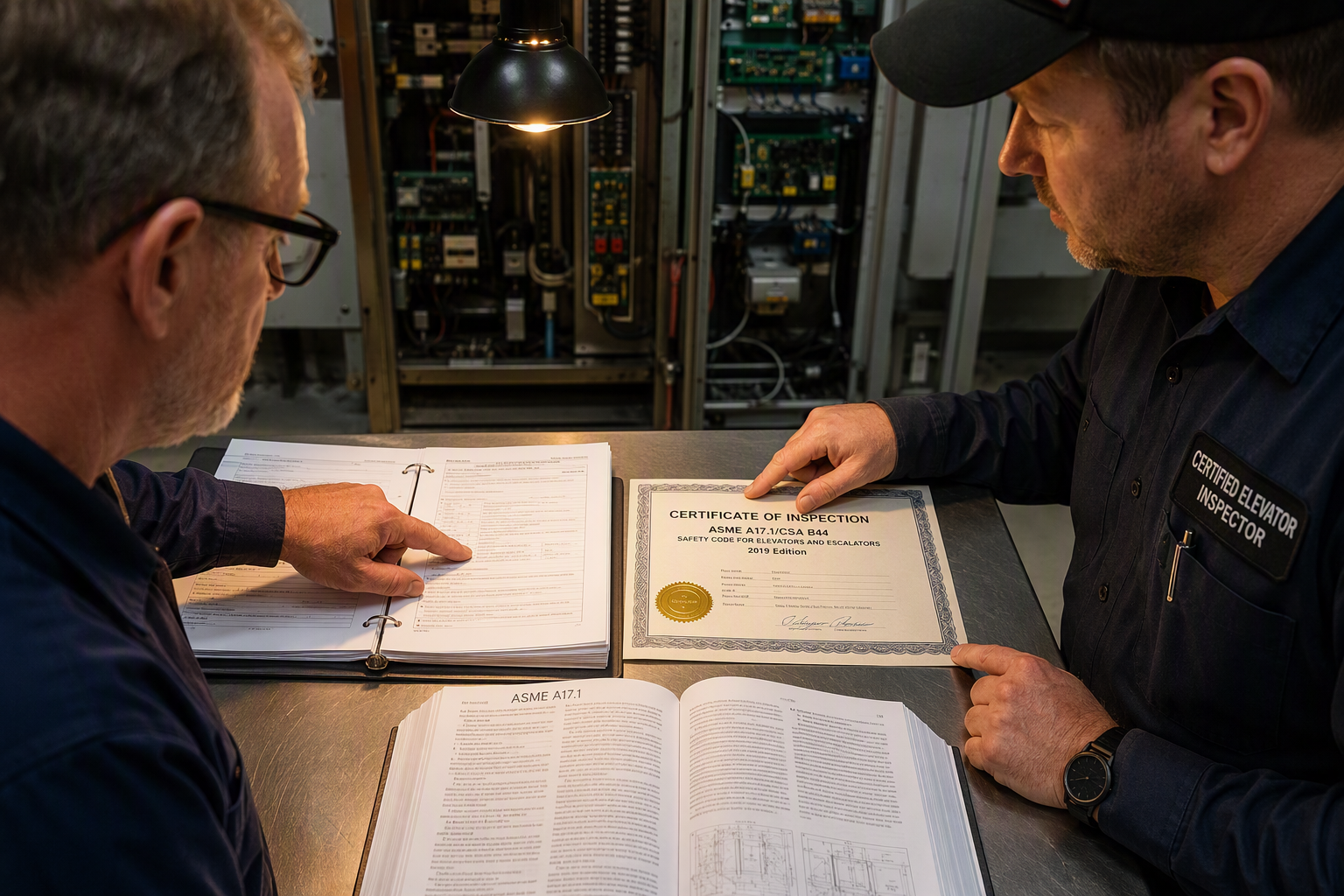
Healthcare elevator compliance is governed by a layered framework of national codes, federal regulations, and state requirements. Understanding this framework helps facility managers ask the right questions of any elevator service provider.
ASME A17.1 Safety Code for Elevators and Escalators
The ASME A17.1 Safety Code for Elevators and Escalators is the foundational standard governing elevator design, installation, inspection, and maintenance in the United States. Healthcare facilities must ensure their elevators meet the applicable edition of this code, and that all repair work is performed in conformance with its requirements. The 2025 edition of ASME A17.1 is the current reference point as of 2026.
ADA Accessibility Requirements
Under the Americans with Disabilities Act, multi-story healthcare facilities are required to maintain accessible elevator service for individuals with disabilities. This includes appropriate cab dimensions, door timing, audible signals, and Braille/raised character floor designations. An out-of-service elevator in a facility covered by ADA can create legal exposure as well as a practical barrier to care.
OSHA Standards for Elevator Safety
Elevator technicians working in healthcare environments must adhere to OSHA standards for general industry safety, including lockout/tagout procedures when servicing elevator machinery. Facilities should confirm that any elevator repair contractor follows these protocols to protect both technicians and hospital personnel.
South Carolina State Elevator Inspection Requirements
South Carolina requires elevators to be inspected and certified by the state on a regular basis. Healthcare facilities in Columbia, SC must maintain current inspection certificates for each elevator unit. Expired certificates can result in orders to take equipment out of service — a serious operational event in a clinical environment.
The Joint Commission and CMS Environment of Care Standards
Accredited hospitals must comply with The Joint Commission’s Environment of Care standards, which address utility systems including vertical transportation. CMS Conditions of Participation similarly require that hospitals maintain a safe physical environment. Persistent elevator failures documented in maintenance logs can become survey findings.
What Types of Elevators Are Found in Healthcare Facilities?
Healthcare buildings typically operate several distinct elevator types, each with its own maintenance and repair profile:
- Patient/Gurney Elevators: Oversized cabs designed to accommodate hospital beds, stretchers, and attending staff. These are high-cycle units often subject to accelerated wear.
- Service/Freight Elevators: Used for supply delivery, waste transport, and equipment movement. Robust but subject to heavy loading cycles.
- Visitor and Staff Elevators: Standard-capacity units serving general floor access.
- Dumbwaiters and Pneumatic Systems: Used for pharmacy, lab specimen, and document transport in some facilities.
Each elevator type requires technicians familiar with its specific drive systems, door mechanisms, and control logic. Carolina Elevator Service works with traction, hydraulic, and machine-room-less (MRL) elevator systems common in Columbia-area healthcare facilities.
What Should a Healthcare Facility Do Immediately When an Elevator Fails?
- Notify facility management and the elevator service provider simultaneously. Do not wait for an internal assessment before placing a service call — time is critical in a clinical environment.
- Confirm whether any passengers are trapped. If an entrapment has occurred, contact emergency services first. Elevator technicians perform controlled rescues; untrained personnel should not attempt to open doors manually.
- Post signage and redirect traffic. Immediately alert staff to the outage and establish alternative transport routes for patients, particularly between critical care areas.
- Document the failure. Note the time, floor location, any error codes displayed, and circumstances leading up to the failure. This documentation supports the technician’s diagnosis and feeds into your maintenance records for compliance purposes.
- Notify relevant department heads. Surgery, pharmacy, environmental services, and patient transport coordinators all need to adjust operations during an elevator outage.
- Confirm estimated arrival time and escalate if needed. Your service agreement should define response protocols. If the arriving technician cannot restore service, confirm whether escalation to additional resources is available.
- Log the event in your Environment of Care records. Joint Commission and CMS surveyors may review maintenance and incident logs. Thorough documentation demonstrates a managed response rather than a chaotic one.
How Does Preventive Maintenance Reduce After-Hours Repair Calls?
The most effective way to reduce emergency elevator repair calls in a healthcare facility is a structured preventive maintenance program. Elevators that receive regular lubrication, adjustment, parts inspection, and control system diagnostics are significantly less likely to fail unexpectedly.
A comprehensive maintenance plan aligned with ASME A17.1 requirements addresses:
- Drive machine and motor condition
- Hoist rope or hydraulic cylinder integrity
- Door operator and safety edge function
- Safety device testing (governors, buffers, safeties)
- Control system and microprocessor diagnostics
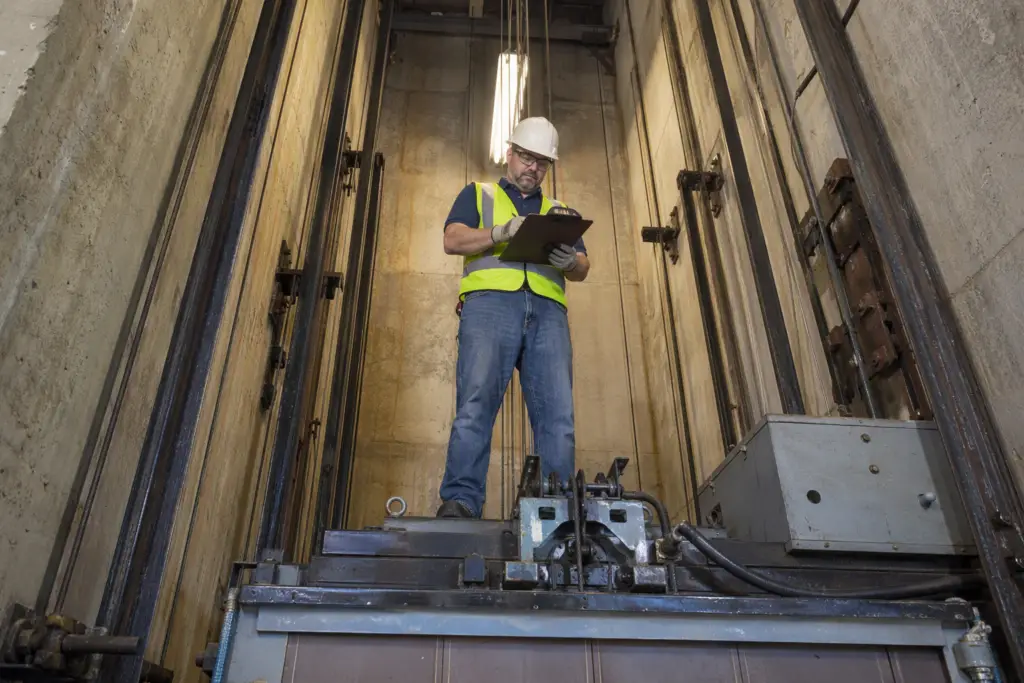
- Pit and machine room cleanliness and condition
Carolina Elevator Service offers maintenance programs designed specifically for the high-cycle demands of healthcare elevator equipment in the Columbia, SC region.
What Questions Should a Healthcare Facility Ask When Selecting a 24 Hour Elevator Repair Provider?
- Is the company licensed to perform elevator work in South Carolina?
- Are technicians trained and certified to work on the specific elevator brands and drive types in your facility?
- Does the company carry appropriate liability insurance for work performed in clinical environments?
- What is the process for after-hours dispatch — is there a dedicated on-call line or a general answering service?
- Can the company provide references from other healthcare facility clients in the Columbia area?
- Does the company maintain common replacement parts for rapid repair, or are parts routinely ordered and delayed?
- Will the company provide documentation suitable for Joint Commission or CMS maintenance records?
How Does an Elevator Outage Affect ADA Compliance in a Hospital?
Under the Americans with Disabilities Act, multi-story facilities open to the public — including hospitals and medical office buildings — are required to provide accessible vertical transportation. When an elevator is out of service and no equivalent accessible alternative exists, the facility may be temporarily unable to fulfill its ADA obligations.
Extended outages without documented good-faith repair efforts can create exposure to ADA complaints. Facilities should ensure their 24 hour elevator repair agreements prioritize timely restoration of accessible service and that all repair work maintains or restores ADA-compliant elevator features, including door timing, cab dimensions, and signage standards.
What Is the Difference Between Emergency Repair and Ongoing Maintenance Contracts?
Emergency repair service addresses a specific, acute failure — an elevator that has stopped operating, trapped passengers, or developed a safety fault. It is reactive in nature and typically carries a higher per-service cost than scheduled maintenance.
A maintenance contract, by contrast, is a proactive agreement under which a certified elevator company performs scheduled inspections, lubrication, adjustments, and parts replacement on a regular basis. Most full-service maintenance agreements also include emergency callback coverage, creating a single point of contact for both planned and unplanned service needs.
For healthcare facilities, bundling preventive maintenance with 24 hour emergency repair coverage under a single service agreement is generally the most operationally sound approach. Carolina Elevator Service works with Columbia, SC healthcare clients to structure service agreements that align with facility budgets and risk tolerance.
What Are Common Causes of Elevator Failures in Healthcare Buildings?
- Door system faults: Door operators and safety edges are the most frequent source of elevator nuisance trips and outages. High-cycle healthcare elevators accelerate door component wear.
- Drive and motor issues: Hydraulic fluid leaks, traction motor wear, and drive controller faults can cause sudden stops or failure to respond to calls.
- Control system errors: Modern microprocessor-based controls can generate fault codes that take elevators offline automatically as a safety measure.
- Pit water intrusion: Elevator pits are susceptible to flooding, which can trigger safety sensors and shut the unit down.
- Overloading and misuse: Healthcare elevators that regularly carry heavy equipment loads near or above rated capacity experience accelerated component fatigue.
- Deferred maintenance: Elevators that have not received timely preventive maintenance accumulate small deficiencies that compound into major failures.
Questions Your Inspector Will Ask
When a South Carolina elevator inspector or a Joint Commission surveyor reviews your healthcare facility’s vertical transportation systems, they are likely to ask the following:
- Is the elevator’s current inspection certificate posted inside the cab as required by state law?
- Are maintenance logs current, complete, and available for review?
- Has the annual safety test been performed and documented in accordance with ASME A17.1?
- Have all safety devices — including governors, buffers, and door safety edges — been tested within required intervals?
- Is there a documented process for reporting and responding to elevator entrapments?
- Are elevator machine rooms secured, clean, and free of stored materials not related to elevator operation?
- Is the elevator service company licensed by the State of South Carolina?
- Has your facility had any elevator-related incidents or callbacks, and are they documented with corrective actions taken?
- Are ADA-required features — including door timing, audible signals, and floor designations — functional and intact?
- Does your service agreement include provisions for 24 hour emergency response?
Being prepared to answer these questions confidently requires a service partner who keeps documentation current and communicates clearly after every visit. Carolina Elevator Service provides detailed service records after each maintenance and repair call, helping Columbia-area healthcare facilities stay inspection-ready at all times.
How Can Healthcare Facilities in Columbia, SC Evaluate Their Current Elevator Service Coverage?
A structured elevator assessment is the starting point for any healthcare facility that wants to understand its current compliance posture, equipment condition, and service coverage gaps. An assessment typically covers:
- Physical inspection of each elevator unit, machine room, and pit
- Review of existing maintenance records and inspection certificates
- Identification of components approaching end of service life
- Gap analysis against current ASME A17.1 and ADA requirements
- Review of current service agreement terms and after-hours coverage provisions
Carolina Elevator Service performs elevator assessments for healthcare facilities throughout the Columbia, SC region, providing facility managers with a clear, documented picture of where their equipment stands and what steps are needed to maintain safe, compliant operation.
Ready to Protect Your Healthcare Facility’s Vertical Transportation?
Elevator failures in clinical environments create patient safety risks, compliance exposure, and operational disruption that no healthcare organization can afford to manage without a reliable service partner. Contact Carolina Elevator Service for a free elevator assessment and learn how a structured 24 hour repair and maintenance program can protect your facility, your patients, and your compliance standing in Columbia, SC.
Contact Carolina Elevator Service for a free elevator assessment: 803-865-1400
Need elevator service you can rely on? Carolina Elevator Service is ready to help.