Elevator Service in Columbia, SC | Carolina Elevator Service
When an elevator stops between floors, every second of uncertainty feels longer than it is. Knowing exactly who to call — and what to expect — makes an already stressful situation manageable. Carolina Elevator Service provides certified elevator repair, maintenance, and emergency response throughout Columbia, SC and the surrounding Midlands region, keeping buildings compliant with South Carolina elevator codes and passengers safe.
What Should You Do Immediately If an Elevator Gets Stuck Between Floors?
The steps taken in the first few minutes of an elevator entrapment determine how safely and quickly the situation resolves. Follow this protocol:
- Stay calm and reassure other passengers. Panic can lead to dangerous decisions, such as attempting to force the doors open or climb out of the cab.
- Press the door-open button. Occasionally a soft stop responds to a simple command before any technician intervention is needed.
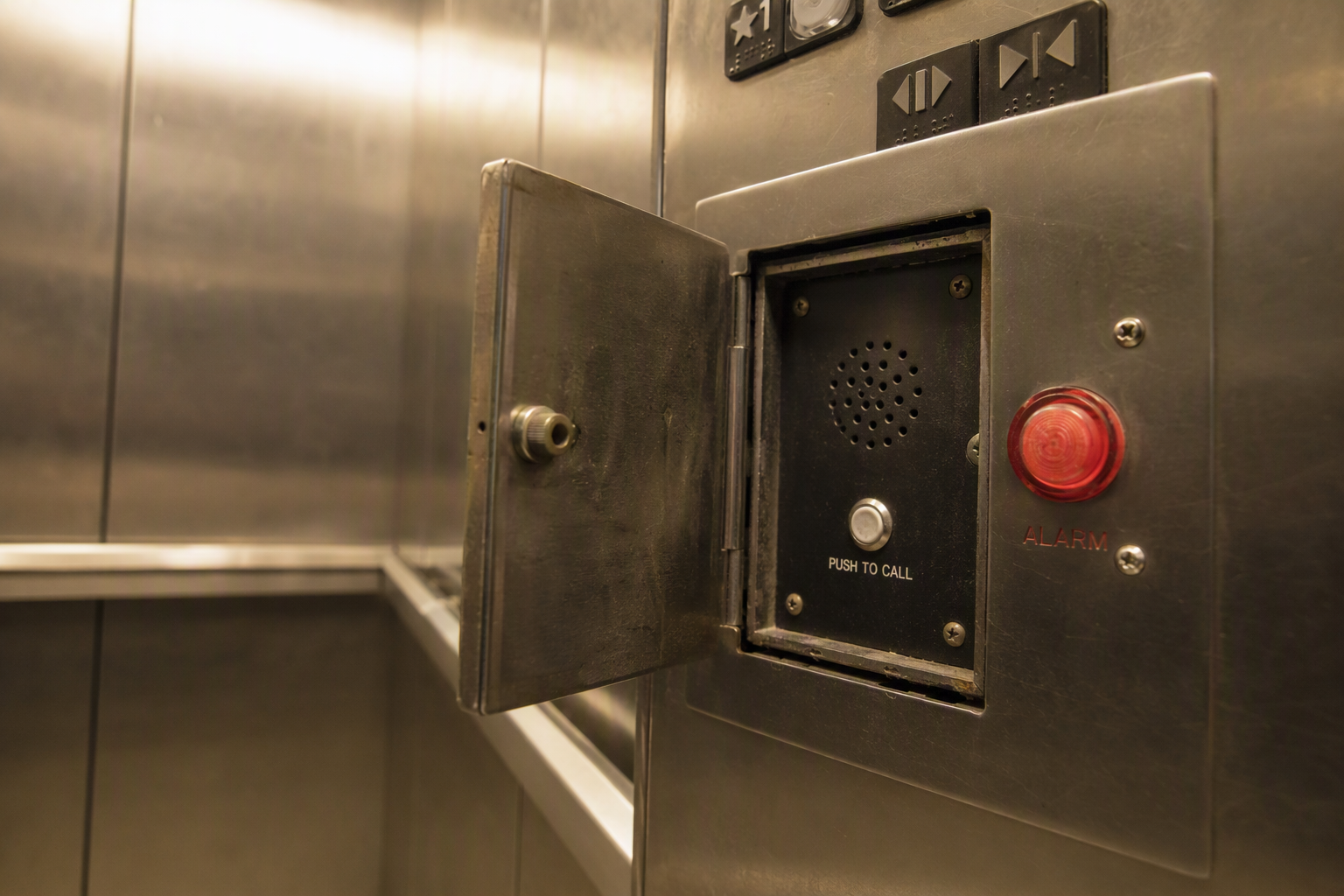
- Use the in-car emergency phone or alarm button. Under the ASME A17.1 Safety Code for Elevators and Escalators, all elevator cabs are required to have a two-way emergency communication device. This connects directly to building management or a monitoring center.
- Call 911 if the emergency phone is non-functional or no one responds. Fire department personnel are trained in basic elevator rescue procedures.
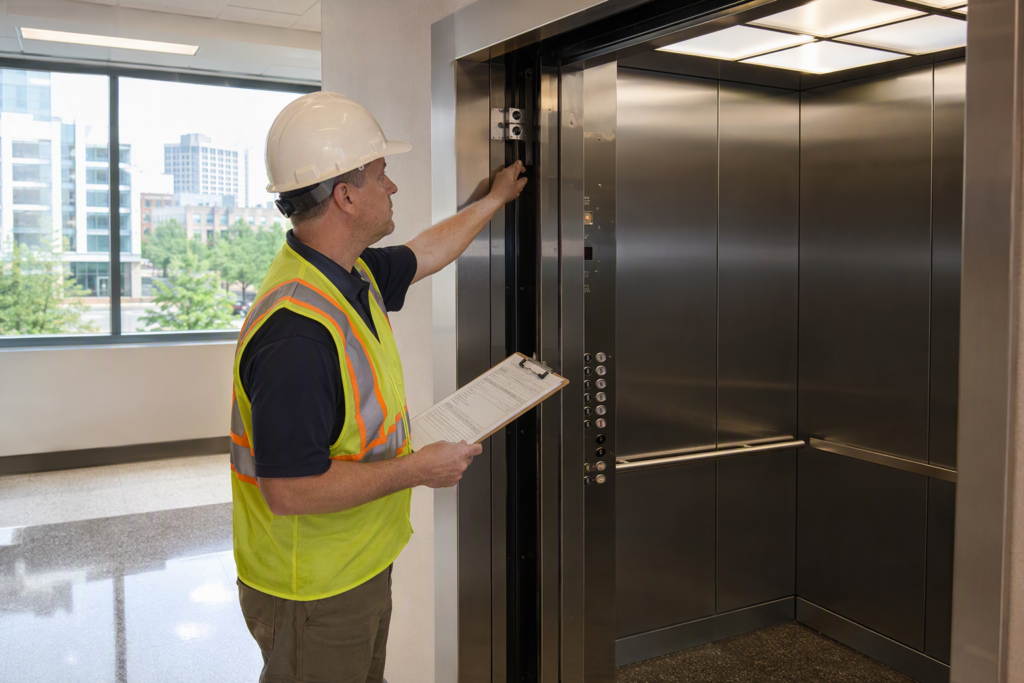
- Contact your building’s elevator service provider. In Columbia, SC, that call should go to Carolina Elevator Service. A licensed technician must perform the mechanical release — not building staff without proper training.
- Do not attempt to exit through the top hatch or force the doors. The hoistway environment is hazardous. Only a certified elevator mechanic should access it.
- Notify the building owner or property manager. They are legally responsible for documenting the entrapment and reporting it to the appropriate South Carolina authority.
Who Is Legally Authorized to Perform an Elevator Rescue in South Carolina?

South Carolina regulates elevator work through the South Carolina Department of Labor, Licensing and Regulation (LLR), Office of Elevators and Amusement Rides. Only licensed elevator contractors and certified mechanics may legally perform elevator rescue, repair, or maintenance operations in the state. Building maintenance staff, general contractors, and fire personnel can assist with communication and crowd control, but mechanical intervention — including manual lowering or releasing trapped passengers — must be performed by a licensed elevator professional.
South Carolina adopts the ASME A17.1 Safety Code for Elevators and Escalators as its foundational technical standard. This code governs everything from cab construction and door operation to emergency lighting and two-way communication requirements — all of which are directly relevant when an elevator becomes stuck between floors.
Why Is It Dangerous to Exit a Stuck Elevator Without a Technician?
The space between an elevator cab and the hoistway walls is not a safe environment for untrained individuals. Key hazards include:
- Unexpected cab movement. Even a de-energized elevator can shift if door bypass circuits are triggered incorrectly.
- Fall risk. The gap between a stopped cab and the nearest landing floor can be several feet in either direction.
- Moving counterweights. Hoistways contain counterweight assemblies that travel independently of the cab.
- Electrical exposure. High-voltage components are present throughout the hoistway and machine room.
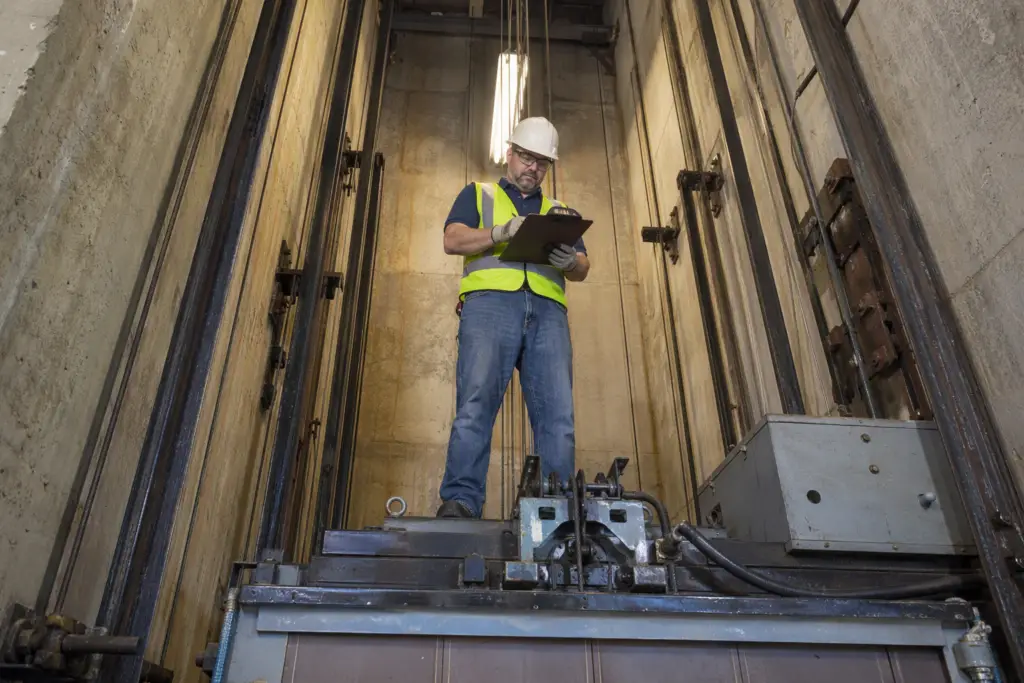
OSHA standards for general industry recognize elevator hoistways as confined spaces with serious hazard potential. A licensed elevator mechanic carries the proper tools, training, and authority to de-energize equipment safely before performing any rescue.
What Causes an Elevator to Get Stuck Between Floors?
Understanding the root cause helps building owners prevent repeat incidents. Common causes include:
- Door sensor or gate switch faults. If the door system does not confirm a complete close, the elevator’s safety circuit prevents travel.
- Drive system or motor failure. Traction elevators rely on hoist motors and drive controllers; hydraulic elevators rely on pump units and valve assemblies. Failure of either stops the cab.
- Overload conditions. Exceeding posted capacity triggers the overload sensor and halts travel.
- Governor and safety device activation. The ASME A17.1 code requires overspeed governors and safeties — if the system detects an unsafe speed or free fall, it clamps the guide rails and stops the cab.
- Power interruption. Utility outages, tripped breakers, or controller faults can all cause an unscheduled stop.
- Deferred maintenance. Worn rollers, misaligned guides, and aging control boards are frequent contributors to unplanned stoppages.
What Happens After the Rescue — Is the Elevator Safe to Use Again?
A stuck elevator should never be returned to service without a documented inspection and sign-off from a licensed elevator mechanic. After passengers are safely evacuated, the following steps are standard practice:
- The technician performs a diagnostic evaluation to identify the specific cause of the stoppage.
- Any failed components — controllers, door operators, sensors, hydraulic valves — are repaired or replaced.
- The elevator is tested through multiple full-travel cycles before the cab is cleared for passenger use.
- The incident is documented in the elevator’s maintenance log, as required under South Carolina LLR regulations.
- If the failure involved a safety device, the building owner may be required to notify the South Carolina LLR and schedule a follow-up inspection before the unit returns to service.
Carolina Elevator Service provides complete post-entrapment inspection and repair services in Columbia, SC, ensuring equipment meets all applicable code requirements before the unit is cleared for occupancy.
How Does Preventive Maintenance Reduce the Risk of Entrapments?
Most unplanned elevator stoppages are preventable. A structured preventive maintenance program identifies worn components, calibrates safety systems, and addresses minor faults before they escalate into full entrapments. South Carolina’s adoption of the ASME A17.1 Safety Code for Elevators and Escalators establishes inspection intervals and maintenance requirements that licensed contractors must follow.
Buildings in Columbia, SC served by Carolina Elevator Service benefit from scheduled maintenance visits, documented inspection records, and proactive parts replacement — all designed to keep equipment operating reliably and keep occupants safe.
Does the Americans with Disabilities Act Affect Elevator Repair Timelines?
Yes. For buildings where an elevator is the only accessible route to upper floors, an out-of-service elevator creates an ADA compliance issue. Under the Americans with Disabilities Act, building owners have an obligation to maintain accessible routes in operable condition. Extended downtime without a documented repair plan and alternative accommodation may expose property owners to ADA complaints.
Prompt repair by a qualified elevator service contractor is therefore not only a safety priority — it is also a legal one for any building that qualifies as a place of public accommodation or a commercial facility under the ADA.
What Markets Does Carolina Elevator Service Serve in South Carolina?
Carolina Elevator Service is based in Columbia, SC and provides elevator maintenance, repair, modernization, and emergency service throughout the Midlands region, including Richland County, Lexington County, and surrounding communities. The company serves a broad range of building types, including commercial office buildings, healthcare facilities, multi-family residential properties, government and municipal buildings, and educational institutions.
Local expertise means familiarity with South Carolina LLR requirements, regional inspection schedules, and the specific equipment commonly found in Columbia-area buildings — a meaningful advantage when an emergency call comes in.
Schedule a Free Consultation
Whether a building has experienced an entrapment, is overdue for inspection, or needs a proactive maintenance partner in Columbia, SC, Carolina Elevator Service is ready to help. Contact the team to discuss your elevator service needs and ensure your equipment meets all applicable South Carolina and ASME code requirements.
Call Carolina Elevator Service today: 803-865-1400
Schedule a Free Consultation — and keep your passengers safe, your building compliant, and your elevators running.
Need elevator service you can rely on? Carolina Elevator Service is ready to help.