Elevator Downtime Cost Statistics: Affordable Options and What the Data Really Shows
Understanding elevator downtime costs is essential for any building owner, property manager, or facilities director making budget decisions. This page compiles what is verifiably known about the financial impact of elevator outages, explains the factors that drive those costs, and outlines affordable service options — including how Carolina Elevator Service approaches downtime prevention as a data-informed provider.
—
What Does Elevator Downtime Actually Cost a Building?
The true cost of elevator downtime is rarely a single line item. It accumulates across several categories simultaneously, and the severity depends on building type, occupancy, and how quickly the outage is resolved.
Key cost categories include:
- Lost productivity: In office and commercial buildings, tenants and employees who cannot reach upper floors lose billable or productive work time for every hour an elevator is out of service.
- Tenant dissatisfaction and lease risk: Repeated outages in multi-tenant residential or commercial buildings can trigger lease non-renewal conversations and reputational damage.
- Emergency repair premiums: Unplanned, after-hours repair calls typically carry significantly higher labor and parts costs compared with scheduled maintenance visits.
- Regulatory and compliance exposure: An out-of-service elevator that remains unrepaired beyond state-mandated timelines can result in fines or forced building closure orders from inspecting authorities.
- ADA liability: For buildings subject to the Americans with Disabilities Act (ADA), extended elevator downtime can create accessibility barriers that expose building owners to formal complaints or legal action.
- Disrupted emergency services: In healthcare facilities, senior living communities, and high-rise residential properties, elevator outages can impede first responders and constitute a life-safety risk.
Because these costs are building-specific and not uniformly reported across a single public dataset, no single authoritative figure covers every scenario. What industry consensus consistently supports is that reactive repair strategies — fixing elevators only after they fail — generate substantially higher cumulative costs than proactive maintenance programs.
—
What Are the Most Affordable Options for Managing Elevator Downtime Costs?

Affordability in elevator management is not simply about the lowest monthly invoice. It is about the total cost of ownership over the service lifecycle. The following options represent the primary strategies building owners use to keep downtime costs manageable.
1. Preventive Maintenance Contracts
A scheduled, preventive maintenance agreement assigns a qualified technician to inspect and service elevator components at regular intervals. Components such as hydraulic seals, door operators, safety devices, and control systems are examined before failure occurs. This reduces the frequency and severity of unplanned outages and typically results in lower average repair costs over a multi-year period compared with time-and-materials billing for emergency calls.
2. Full-Service (Comprehensive) Contracts
Comprehensive maintenance contracts typically bundle scheduled maintenance with coverage for most parts and labor on repairs. While the monthly cost is higher than a basic lubrication-and-adjustment agreement, building owners gain cost predictability. Emergency repair premiums are either eliminated or capped, making budgeting more reliable and removing the financial shock of a major component failure.
3. Remote Monitoring Technology
Modern elevator monitoring systems use connected sensors to detect anomalies — unusual vibration, door cycle irregularities, motor temperature spikes — and alert technicians before a failure becomes a full outage. Buildings that adopt remote monitoring often experience faster mean-time-to-repair because the diagnosing phase begins before a technician arrives on site.
4. Planned Modernization Over Emergency Replacement
Aging elevator systems are disproportionately responsible for unplanned downtime. Scheduling a phased modernization — replacing controllers, drives, or door systems incrementally — spreads capital costs and reduces the probability of catastrophic, unplanned failure that forces emergency replacement at maximum cost.
5. Vendor Comparison and Multi-Unit Agreements
Buildings with multiple elevators or property portfolios with multiple sites often have negotiating leverage for volume maintenance pricing. Consolidating elevator service under a single qualified provider can reduce per-unit costs while ensuring consistency of documentation, inspection records, and technician familiarity with each unit.
—
How Do Compliance Requirements Affect Downtime and Cost?
Elevators in the United States are governed by the ASME A17.1 Safety Code for Elevators and Escalators, which sets minimum standards for design, installation, operation, inspection, and maintenance. Most state and local jurisdictions adopt ASME A17.1 (currently referenced in its 2022 edition as of 2026 adoption cycles in many states) as the basis for their elevator safety regulations.
Compliance requirements intersect with downtime costs in three primary ways:
- Mandatory inspection intervals: Most jurisdictions require annual or semi-annual inspections. An elevator that fails inspection cannot legally remain in service until deficiencies are corrected, creating a mandated downtime event. Buildings that maintain consistent preventive maintenance are far less likely to encounter surprise inspection failures.
- Required safety device testing: The ASME A17.1 code mandates periodic testing of governors, safeties, buffers, and pressure relief valves for hydraulic units. Deferred testing can result in the elevator being placed out of service by the authority having jurisdiction (AHJ).
- Workplace safety standards: Elevator maintenance work performed by technicians must comply with applicable OSHA regulations governing confined space entry, lockout/tagout procedures, and electrical safety. Buildings should confirm that their service provider maintains documented OSHA-compliant safety programs.
When elevator outages arise from deferred compliance activity, the cost is compounded: buildings face both the repair expense and the regulatory consequence. Proactive compliance management is therefore one of the most effective cost-reduction strategies available.
—
Frequently Asked Questions About Elevator Downtime Costs
What factors most directly drive up elevator downtime costs?
The primary cost drivers are the duration of the outage, the type of building affected, the availability of replacement parts, and whether the failure occurs outside normal business hours. After-hours emergency service calls, obsolete components requiring special sourcing, and high-occupancy buildings with ADA exposure all push costs higher. Deferred maintenance is consistently identified as the upstream cause that amplifies all of these downstream costs.
How much more expensive is emergency repair compared to scheduled maintenance?
While specific figures vary by region, component type, and contractor, emergency repair calls routinely carry premium labor rates due to after-hours dispatching, expedited parts sourcing, and diagnostic time that could have been avoided with proactive servicing. Building owners frequently report that a single major emergency repair can cost more than an entire year of comprehensive maintenance contract coverage — though the actual ratio depends on the specific failure and local market rates.
Is elevator downtime covered by commercial property insurance?
Standard commercial property insurance policies generally do not cover lost income from elevator downtime unless a business interruption endorsement is specifically in place and the outage qualifies under its terms. Equipment breakdown (boiler and machinery) coverage is a separate endorsement that may cover certain repair costs and resulting business income loss. Building owners should review their specific policy language and consult their insurance broker, as coverage is highly policy-specific.
How does elevator age relate to downtime frequency?
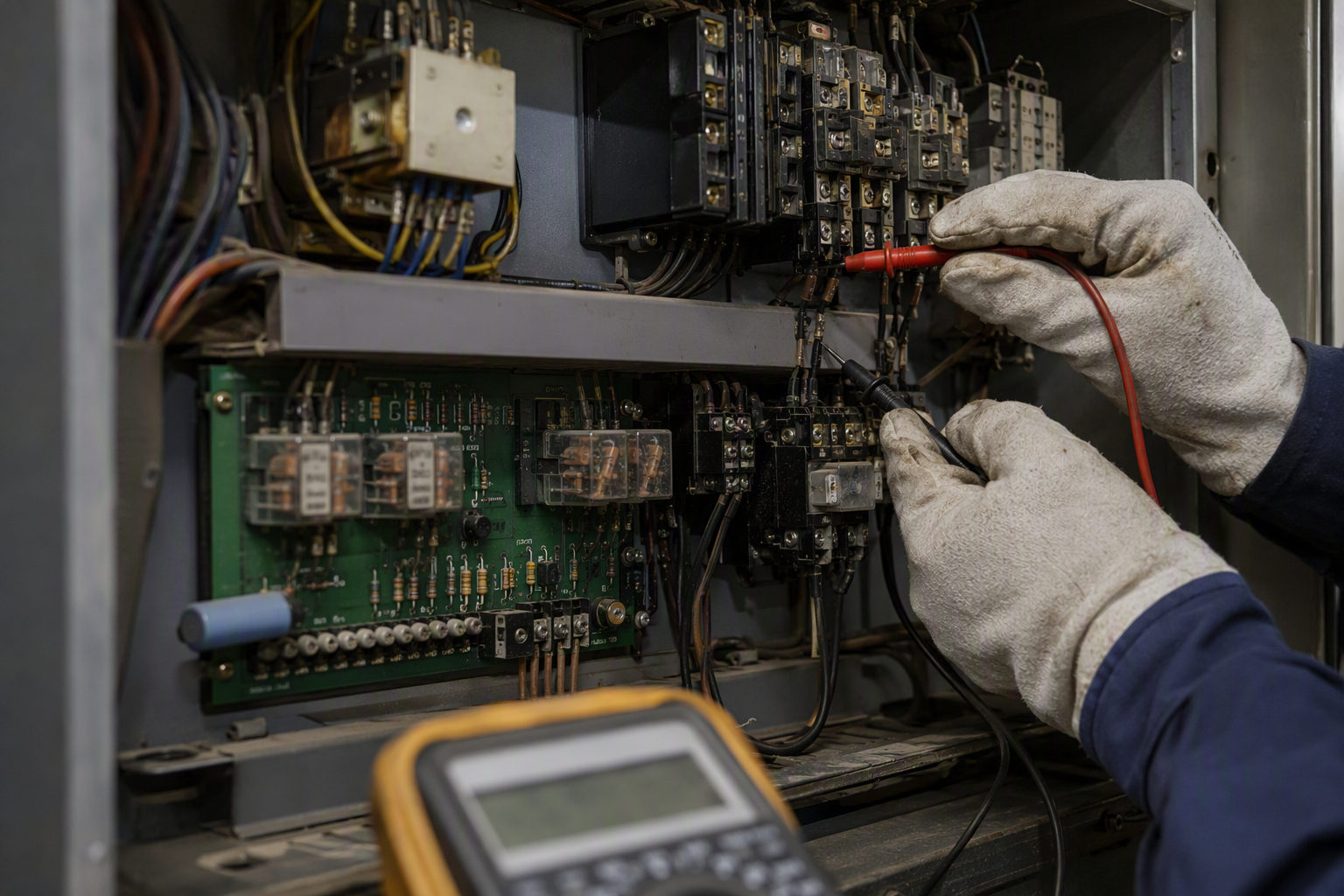
Older elevator systems — particularly those with original relay logic controllers, aging hydraulic cylinders, or worn mechanical components — experience higher rates of component failure than modernized units. As systems age beyond their designed service life, replacement parts become increasingly scarce, extending repair timelines when failures do occur. This is one of the strongest arguments for planned, incremental modernization rather than running aging equipment until catastrophic failure.
What role does door equipment play in elevator downtime statistics?
Door system malfunctions — including door operator failures, worn rollers, misaligned tracks, and faulty safety edges — are among the most frequently cited causes of elevator outages in maintenance industry discussions. Because doors cycle thousands of times per year, this is a high-wear subsystem that benefits disproportionately from regular lubrication, adjustment, and proactive component replacement before failure occurs.
Can remote monitoring technology meaningfully reduce downtime?
Remote monitoring platforms that use IoT-connected sensors to track elevator performance data enable predictive service dispatch — a technician can be alerted to an anomaly and scheduled before the elevator fails entirely. While not every failure mode is predictable, remote monitoring is widely regarded in the elevator service industry as a meaningful tool for reducing mean-time-to-repair and catching developing issues earlier in their progression.
What is the ADA risk exposure associated with elevator downtime?
The ADA requires that buildings providing vertical access by elevator maintain that access for individuals with disabilities. Extended or repeated elevator outages in buildings where the elevator is the primary accessible route can create legal exposure under Title III (commercial) or related housing statutes. Documenting prompt repair efforts and maintaining redundant accessible routes where architecturally feasible are risk-mitigation practices commonly recommended by accessibility consultants.
How do elevator downtime costs differ between residential and commercial buildings?
In commercial office or retail settings, downtime costs are often framed in terms of lost productivity, tenant rent abatement demands, and potential foot traffic loss. In residential multi-family buildings, the primary concerns are habitability complaints, ADA exposure, and tenant retention. Healthcare and senior living facilities face the most acute life-safety risk from elevator outages, which can disrupt patient transport, emergency response, and required service delivery to residents with mobility limitations.
What should a building owner do immediately when an elevator goes out of service?
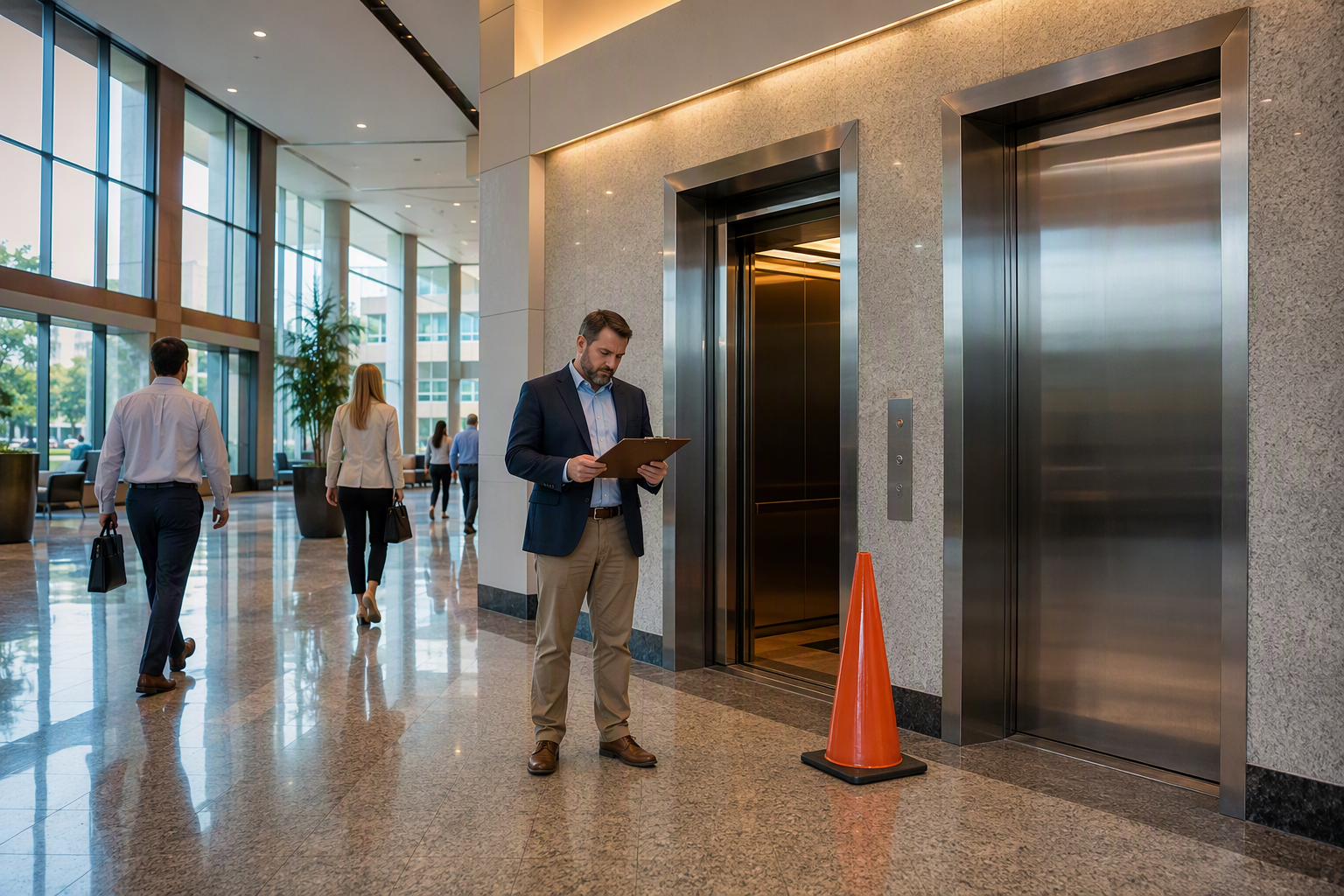
- Place clearly visible, professional out-of-service signage at all elevator landings to prevent passenger attempts to use the unit.
- Contact your elevator maintenance provider and document the time, date, and reported symptoms of the failure.
- Notify building occupants — particularly those with mobility limitations — about alternative accessible routes and estimated repair timelines.
- Confirm with your service provider whether the outage requires notification to the local authority having jurisdiction (AHJ) under your state’s elevator safety regulations.
- Request written documentation of the diagnosis, repair scope, and return-to-service verification from your service technician.
- Review your maintenance contract to determine whether the repair is covered and whether emergency labor rates apply.
- After the elevator returns to service, schedule a follow-up review of the maintenance log to identify whether the failure was predictable and preventable.
How should building owners compare elevator service vendors to minimize downtime risk?
Effective vendor comparison for downtime risk reduction should examine: the scope of what is included in the maintenance contract (lubrication-only versus comprehensive coverage); parts inventory availability and typical lead times for common components; documentation practices and inspection record accessibility; technician familiarity with the specific equipment make and model installed in the building; and the provider’s process for handling after-hours calls. Price alone is rarely the right differentiator — the lowest-cost contract may exclude the components most likely to fail.
What elevator modernization components offer the highest return in downtime reduction?
Controller modernization is frequently cited as offering the most substantial downtime reduction impact because modern solid-state controllers eliminate relay-based systems prone to contact failure and are far more diagnosable when issues do arise. Door operator upgrades and modernized safety edge systems also deliver meaningful reliability improvements given the high cycle frequency of door equipment. Hydraulic system overhauls — including cylinder, seal, and valve replacement — are critical for older hydraulic elevators where leaking or corroded cylinders represent both a reliability and environmental risk.
—
Industry Trends for 2025–2026: What to Expect in Elevator Downtime Management
Several qualitative trends are shaping elevator maintenance and downtime cost management heading into 2026:
- Accelerating adoption of predictive maintenance technology: The elevator service industry is broadly moving toward IoT-enabled monitoring as equipment manufacturers and independent service providers invest in sensor platforms that generate actionable service data.
- Increasing regulatory scrutiny: Many state jurisdictions are updating their elevator safety regulations to align with more recent editions of the ASME A17.1 code, which may impose new inspection, testing, or documentation requirements on building owners and their service providers.
- Parts supply chain awareness: Supply chain disruptions that affected multiple industries in recent years created awareness among building owners about the risk of aging elevator equipment with limited parts availability. This is accelerating interest in planned modernization programs.
- ADA enforcement environment: As accessibility advocacy remains active, buildings with documented elevator downtime patterns face heightened scrutiny from advocacy groups and regulatory bodies, increasing the non-financial cost of reactive maintenance strategies.
- Workforce and labor considerations: The elevator service technician workforce is a specialized trade, and labor availability in some regional markets affects both response time and the cost premium for emergency service calls — reinforcing the value of maintenance agreements that establish priority service relationships.
—
How Carolina Elevator Service Approaches Downtime Cost Reduction
Carolina Elevator Service operates as a data-driven elevator maintenance and modernization provider, serving building owners and property managers who recognize that downtime costs extend well beyond the repair invoice. The company’s approach centers on documented preventive maintenance protocols aligned with ASME A17.1 requirements, proactive compliance tracking to prevent inspection-triggered outages, and service agreements designed to reduce the unpredictability that drives budget overruns.
By treating elevator maintenance as an asset management discipline rather than a reactive expense, Carolina Elevator Service helps building owners build the documentation history, component knowledge, and service continuity that translate into fewer unplanned outages and more defensible compliance records.
Property managers overseeing multi-unit portfolios, senior living communities, healthcare facilities, and commercial office buildings consistently benefit from working with a service provider that understands the regulatory environment, equipment lifecycles, and the real cost structure of elevator downtime — not just the line item on a repair invoice.
—
Key Takeaways: Affordable Elevator Downtime Management
- Elevator downtime costs are multi-dimensional — productivity loss, emergency repair premiums, regulatory fines, and ADA liability all contribute to the true cost.
- Preventive and comprehensive maintenance contracts represent the most reliably affordable long-term strategy compared to reactive, time-and-materials repair.
- Compliance with the ASME A17.1 Safety Code for Elevators and Escalators and applicable OSHA standards is not optional — and deferred compliance is a cost multiplier, not a cost reducer.
- Remote monitoring technology is increasingly accessible and represents a meaningful tool for reducing both downtime frequency and repair costs.
- Vendor selection based on contract scope, parts availability, and equipment familiarity — rather than price alone — is the most effective way to minimize long-term downtime risk.
- Building owners should evaluate elevator service as an asset management investment, not a commodity expense.
—
Get Expert Guidance on Reducing Your Elevator Downtime Costs
Carolina Elevator Service provides building owners and property managers with professional assessments of elevator condition, maintenance contract options, and compliance status — so decisions are based on documented equipment data, not guesswork.
Contact Carolina Elevator Service for a free elevator assessment: 803-865-1400
Need elevator service you can rely on? Carolina Elevator Service is ready to help.