Elevator Entrapment Rescue Procedure: Comparison & Decision Guide
When passengers become trapped in an elevator, every decision made in the next few minutes matters. Building managers, property owners, and facility directors must understand the difference between proper and improper rescue methods, what codes require, and how to choose the right service partner before an emergency happens. This guide covers the full spectrum of entrapment rescue procedures, compliance requirements, equipment considerations, and vendor selection criteria.
What Is an Elevator Entrapment Rescue Procedure?
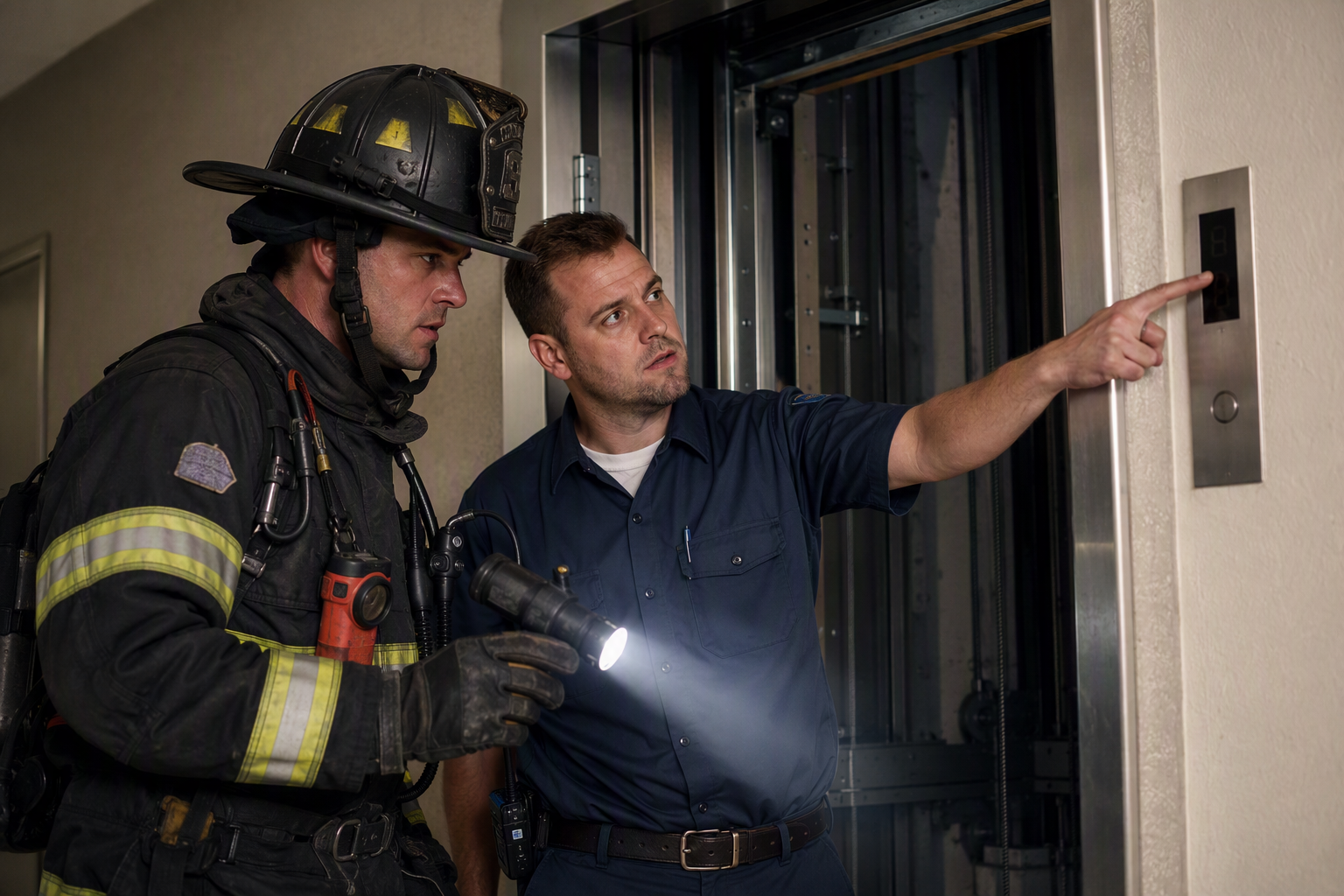
An elevator entrapment rescue procedure is a structured, safety-governed protocol for releasing passengers who are stuck in an elevator car that has stopped between floors or at a floor with doors that will not open. The procedure involves communication with trapped passengers, assessment of the elevator’s position relative to the floor landing, and controlled manual or powered release by a qualified person.
Under the ASME A17.1 Safety Code for Elevators and Escalators, elevator installations must include features and access points that permit safe, controlled rescue. Compliance with this code is the baseline standard across most U.S. jurisdictions in 2026.
Who Is Authorized to Perform an Elevator Rescue?
Determining the correct responder is one of the most consequential decisions a building manager will make. The table below compares the three primary rescue responder types.
| Responder Type | Authorization Level | Appropriate Scenario | Key Limitations |
|---|---|---|---|
| Certified Elevator Technician | Highest — trained in ASME A17.1 procedures, elevator mechanics, and emergency protocols | All entrapment scenarios, especially those involving mechanical or electrical failure | Response time depends on technician availability and location |
| Fire Department / Emergency Responders | High — trained in life-safety rescue but not always in elevator mechanics | Medical emergencies inside the car, structural emergencies, or when technician is unavailable | May lack elevator-specific mechanical knowledge; risk of equipment damage |
| Building Staff / Security | Limited — only authorized to perform basic passenger communication and simple door release if trained and building procedures allow | Communication with passengers while awaiting qualified responder | Should never attempt hoistway door unlocking without specific training and authority |
Important: Untrained personnel should never attempt to pry open hoistway doors or instruct passengers to force exit the elevator car. Doing so risks falls into the hoistway, contact with moving mechanical components, and liability exposure under OSHA general duty standards.
What Are the Step-by-Step Elevator Entrapment Rescue Procedures?
Phase 1: Immediate Response (Building Staff Actions)
- Establish communication with trapped passengers immediately using the in-car emergency telephone or intercom required under ASME A17.1. Reassure passengers that help is on the way and instruct them to remain calm and stay inside the car.
- Identify the elevator’s position by checking floor indicators at the elevator lobby and in the machine room. Note whether the car appears level with a landing or stopped between floors.
- Contact your elevator service company immediately and communicate the car position, number of passengers, and any known medical concerns.
- Contact emergency services (911) if any passenger reports a medical emergency, injury, or distress that cannot wait for the elevator technician.
- Restrict access to the elevator lobby and post signage. Prevent other occupants from using adjacent elevators improperly or crowding the area.
- Do not attempt to operate the elevator using machine room controls unless specifically trained and authorized by your service provider’s written procedures.
Phase 2: Qualified Technician Rescue Procedure
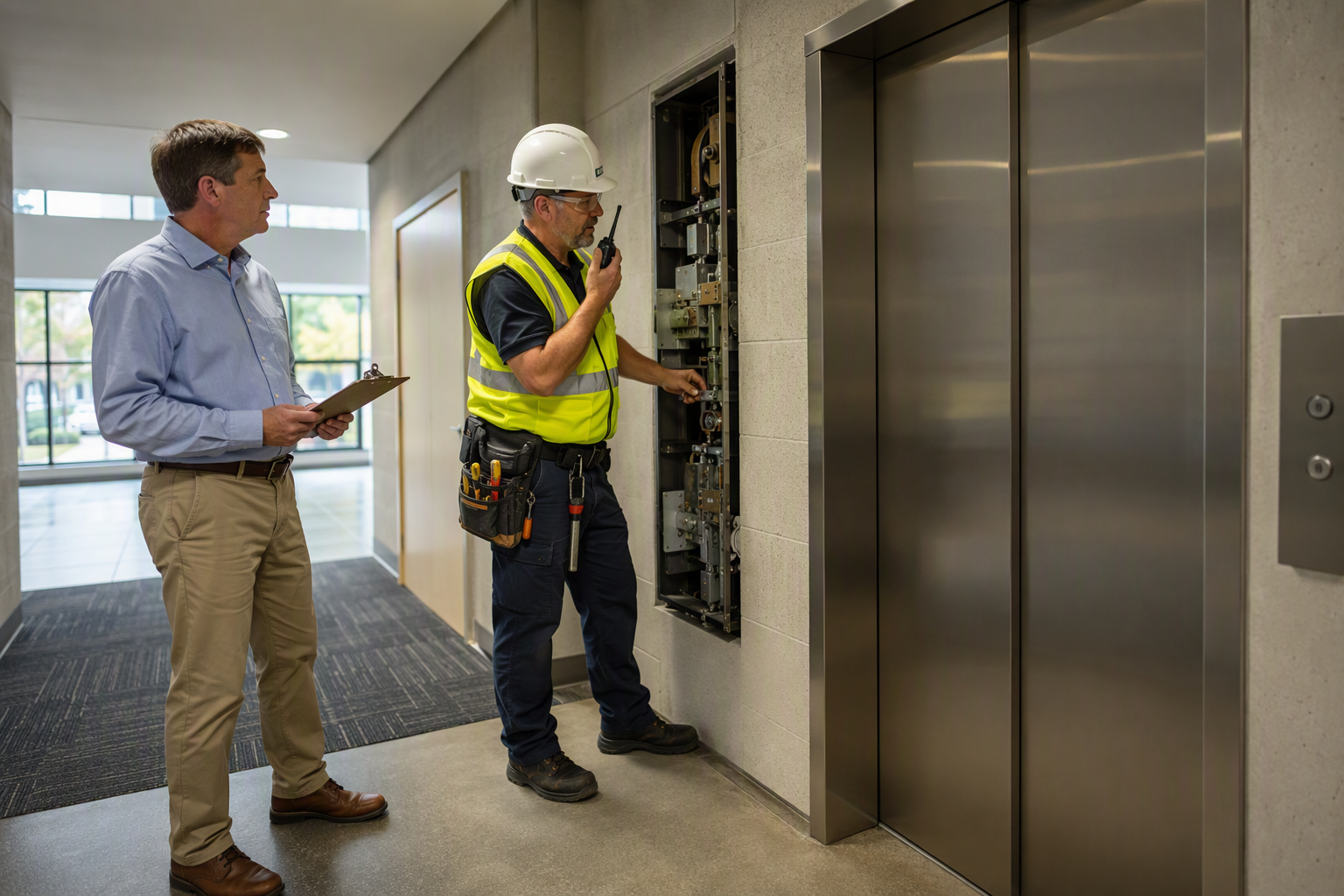
- Assess the situation by entering the machine room and confirming car position relative to the nearest landing using position indicators and visual inspection.
- Disconnect or verify power status according to the specific elevator type and manufacturer guidance, following lockout/tagout procedures consistent with OSHA energy control standards.
- Manually operate the brake release (on traction elevators) with a second person monitoring car position and communicating with passengers. On hydraulic elevators, operate the manual lowering valve.
- Move the car to the nearest landing in a controlled manner, stopping when the car floor is level with the hoistway landing.
- Unlock the hoistway door using the appropriate drop key or landing release device, confirming car is level before opening.
- Assist passengers in exiting safely, ensuring the door remains open and stable. Assist any passengers with mobility limitations.
- Secure the elevator from further use, place out-of-service tags, and complete incident documentation before leaving the site.
- Perform diagnostic inspection to determine the cause of entrapment before returning the elevator to service.
How Do Traction Elevator Rescues Compare to Hydraulic Elevator Rescues?
| Factor | Traction Elevator Rescue | Hydraulic Elevator Rescue |
|---|---|---|
| Primary Rescue Method | Manual brake release with controlled lowering or raising via drive sheave | Manual lowering valve operation to allow controlled descent |
| Direction of Travel During Rescue | Up or down depending on counterweight balance | Down only (hydraulic systems lower via gravity and fluid release) |
| Required Personnel | Minimum two people recommended — one in machine room, one monitoring car | Can sometimes be performed by one trained technician, but two is best practice |
| Risk of Car Movement During Rescue | Higher — counterweight imbalance can cause rapid movement if brake is released improperly | Lower — descent is controlled by fluid flow rate |
| Code Reference | ASME A17.1 Safety Code for Elevators and Escalators | ASME A17.1 Safety Code for Elevators and Escalators |
| Machine Room Required? | Yes (traditional) / Machine-room-less (MRL) requires different procedure | Yes — valve typically located in machine room or pit |
What Equipment Is Required for a Proper Elevator Entrapment Rescue?
A properly equipped elevator service provider and prepared building will have the following tools and resources available for entrapment response:
- Hoistway door drop key (landing release key): Required under ASME A17.1 to be available for emergency responders at each building.
- Emergency lighting: Required in elevator cars to illuminate the interior during power failure.
- Two-way emergency communication system: Mandatory in the elevator car, capable of connecting to a live person at all times the elevator is in service.
- Lockout/tagout devices: Required for energy isolation per OSHA standards before technician performs rescue operations.
- Manual brake release handle or lowering valve key: Specific to each elevator’s make and model; technician must be familiar with the specific equipment on site.
- Flashlights and personal protective equipment (PPE): For safe machine room and hoistway access.
- Incident documentation forms: Required for regulatory reporting and liability protection.
What Are the Pros and Cons of Different Rescue Service Arrangements?
| Service Arrangement | Pros | Cons |
|---|---|---|
| Full-Service Maintenance Contract with Independent Provider | Technicians familiar with your specific equipment; priority response for contract clients; proactive maintenance reduces entrapment frequency | Requires vetting of provider qualifications and contract review |
| OEM (Original Equipment Manufacturer) Service | Factory-trained on specific equipment brand; parts availability | Often higher cost; may have longer response windows; less flexibility in contract terms |
| On-Call / Time-and-Materials Only | No ongoing contract commitment | No priority in dispatch queue; technician may be unfamiliar with your equipment; no proactive maintenance to prevent entrapments |
| Fire Department Response Only | Available 24/7; no cost to building | Not trained in elevator mechanics; may damage equipment; cannot diagnose or repair cause of entrapment; elevator remains out of service until technician arrives anyway |
What Does ASME A17.1 Require Regarding Entrapment Rescue?
The ASME A17.1 Safety Code for Elevators and Escalators establishes the baseline requirements for elevator entrapment response across most U.S. jurisdictions. Key provisions relevant to rescue procedures include:
- Every elevator must be equipped with means for emergency two-way communication within the car.
- Hoistway door unlocking devices (drop keys) must be available at each landing for use by trained emergency personnel.
- Elevator cars must be equipped with emergency lighting that activates upon power failure.
- Machine rooms must be secured against unauthorized entry but accessible to qualified personnel during an emergency.
- Buildings must maintain written emergency procedures and provide them to building staff and emergency responders.
Many jurisdictions have adopted ASME A17.1 by reference into their local building and elevator codes. Building owners should verify their jurisdiction’s adopted edition with their local Authority Having Jurisdiction (AHJ).
Are Building Owners Liable If a Passenger Is Injured During Entrapment?
Building owners and property managers carry significant legal and regulatory exposure when elevator entrapments occur. Liability considerations include:
- Failure to maintain equipment: If entrapment results from deferred maintenance or missed inspections, the building owner may face liability for negligence.
- Improper rescue attempts: If untrained building staff attempt a rescue that results in passenger injury, liability exposure increases substantially.
- ADA considerations: Under the Americans with Disabilities Act (ADA), building owners must ensure that individuals with disabilities have access to vertical transportation. Prolonged outages without accessible alternatives raise ADA compliance questions.
- OSHA exposure: If workers are trapped or injured during a rescue, OSHA regulations regarding confined spaces and energy control may apply to the rescue operation itself.
Maintaining a current service contract with a qualified elevator company and keeping documentation of all inspections, maintenance, and incident reports is the most effective risk management strategy available to building owners.
How Often Do Elevator Entrapments Occur and What Causes Them?
Elevator entrapments occur across all building types and elevator ages. The most common causes include:
- Power failures: Sudden power loss can stop an elevator mid-travel; modern elevators with automatic rescue devices (ARDs) are designed to move to the nearest landing and open doors, but older units may not have this feature.
- Door mechanism failures: Faulty door operators, worn rollers, or sensor malfunctions can prevent doors from opening at a landing.
- Leveling failures: The elevator stops but does not level precisely with the landing floor, triggering door interlock safety devices.
- Mechanical or hydraulic failure: Drive system failures on traction elevators or hydraulic fluid loss on hydraulic systems.
- Deferred maintenance: Worn components that have not been replaced during routine service intervals are a leading contributor to preventable entrapments.
Preventive maintenance programs, conducted at intervals consistent with ASME A17.1 and your local AHJ requirements, are the most reliable way to reduce entrapment frequency.
What Should Building Staff Never Do During an Elevator Entrapment?
The following actions represent the most dangerous and common mistakes made during elevator entrapments:
- Never instruct passengers to force the elevator doors open — passengers cannot determine whether the car is level with the landing from the inside, and forcing doors risks falls into the hoistway.
- Never use a pry bar or other tool on hoistway doors without proper drop key and authorized training — this can damage interlocks and create additional hazards.
- Never enter the elevator pit or machine room without lockout/tagout procedures in place per OSHA energy control standards.
- Never leave passengers without communication — maintain verbal contact throughout the event to monitor medical status and reduce panic.
- Never return the elevator to service after an entrapment without a qualified technician completing a diagnostic inspection and clearance.
How Should Building Managers Prepare for Elevator Entrapments Before They Happen?
Proactive preparation significantly reduces risk to passengers and liability exposure for building owners. Recommended preparation steps include:
- Establish a written elevator emergency response plan specific to each elevator in the building and review it annually.
- Ensure drop keys are stored in an accessible, known location and that designated staff members know how to use them only for the purpose of communicating their location to responding technicians — not for unauthorized rescue attempts.
- Verify that the in-car emergency communication system connects to a monitored line at all times the elevator is in service, as required by ASME A17.1.
- Maintain a current service contract with a qualified elevator company and confirm their emergency response protocol.
- Post the elevator service company’s emergency contact number in the machine room and at building security or the front desk.
- Train building staff on passenger communication procedures and on what they are — and are not — authorized to do during an entrapment.
- Keep copies of all inspection certificates, maintenance records, and prior incident reports readily accessible.
Why Choose Carolina Elevator Service for Entrapment Response and Elevator Maintenance?
Carolina Elevator Service is an independent, certified elevator service company serving building owners and property managers who need reliable, knowledgeable elevator maintenance and emergency response support. As an independent provider, Carolina Elevator Service is not limited to a single equipment manufacturer, meaning technicians work across a broad range of elevator makes and models common in commercial, residential, and institutional buildings.
Carolina Elevator Service supports clients in building compliant emergency response plans, conducting preventive maintenance programs aligned with ASME A17.1 Safety Code for Elevators and Escalators requirements, and responding to entrapment situations with the qualified personnel and equipment necessary for safe, code-compliant rescue operations.
Building owners who work with Carolina Elevator Service benefit from a service relationship focused on reducing entrapment frequency through proactive maintenance — not simply responding after incidents occur.
Ready to Strengthen Your Elevator Emergency Response Plan?
Don’t wait for an entrapment to discover gaps in your building’s emergency procedures or maintenance program. Contact Carolina Elevator Service for a free elevator assessment and learn how a qualified independent service partner can reduce entrapment risk, support code compliance, and protect your passengers and your liability exposure.
Call Carolina Elevator Service today: 803-865-1400
This guide is provided for informational purposes. Elevator entrapment rescue must always be performed by qualified, authorized personnel. Building owners should consult their local Authority Having Jurisdiction (AHJ) and a licensed elevator service provider for requirements specific to their jurisdiction and equipment.
Need elevator service you can rely on? Carolina Elevator Service is ready to help.