Who to Contact for ADA Elevator Requirements for Buildings
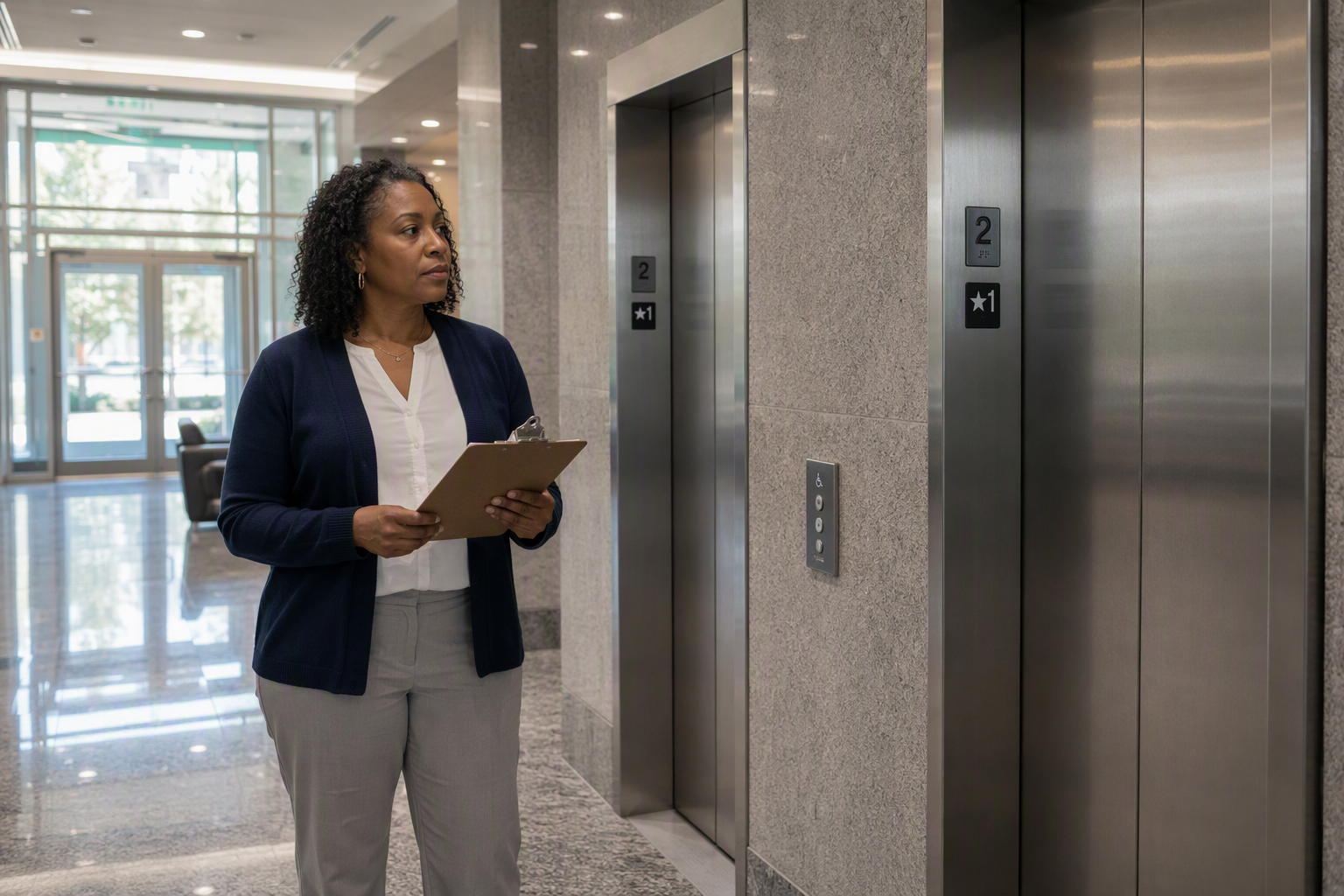
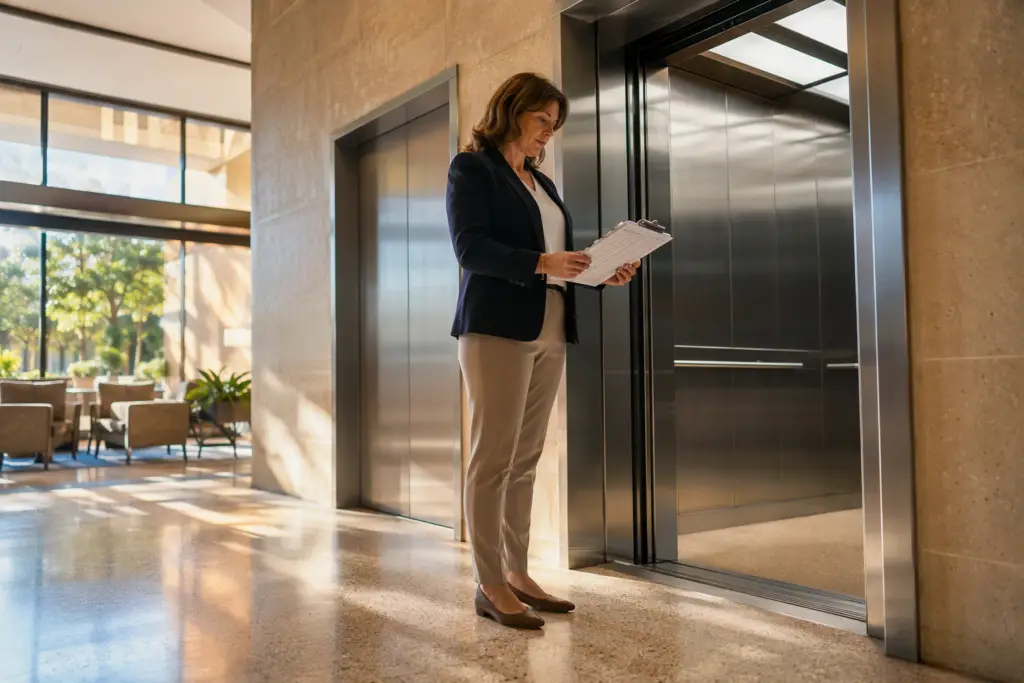
Navigating ADA elevator requirements is one of the most compliance-critical responsibilities building owners, facility managers, and property developers face. The rules are federal in scope but enforced locally, and the consequences of non-compliance can include lawsuits, fines, and mandatory retrofits. Understanding exactly who to call — and in what order — is the first step toward a compliant, accessible building.
What Does the ADA Actually Require for Elevators?

The Americans with Disabilities Act (ADA) establishes baseline accessibility requirements for buildings open to the public, commercial facilities, and certain multi-family residential structures. Under the ADA, elevators are generally required in new construction of buildings with more than two stories or more than 3,000 square feet per floor, with specific exceptions for certain facilities.
The ADA Standards for Accessible Design — which are the technical specifications enforceable under the law — cover:
- Elevator car dimensions and door widths
- Call button height, size, and visual/tactile indicators
- Floor level designations in Braille and raised characters
- Emergency communication systems accessible to people with hearing and speech disabilities
- Leveling accuracy so the car floor aligns with the landing floor
- Door reopening devices to prevent closing on passengers
- Accessible routes to and from elevator lobbies
These are not suggestions — they are enforceable design and construction standards. Alterations to existing buildings trigger additional ADA obligations, requiring the path of travel to altered areas to also become accessible to the extent technically and financially feasible.
Who Are the Primary Contacts for ADA Elevator Compliance?
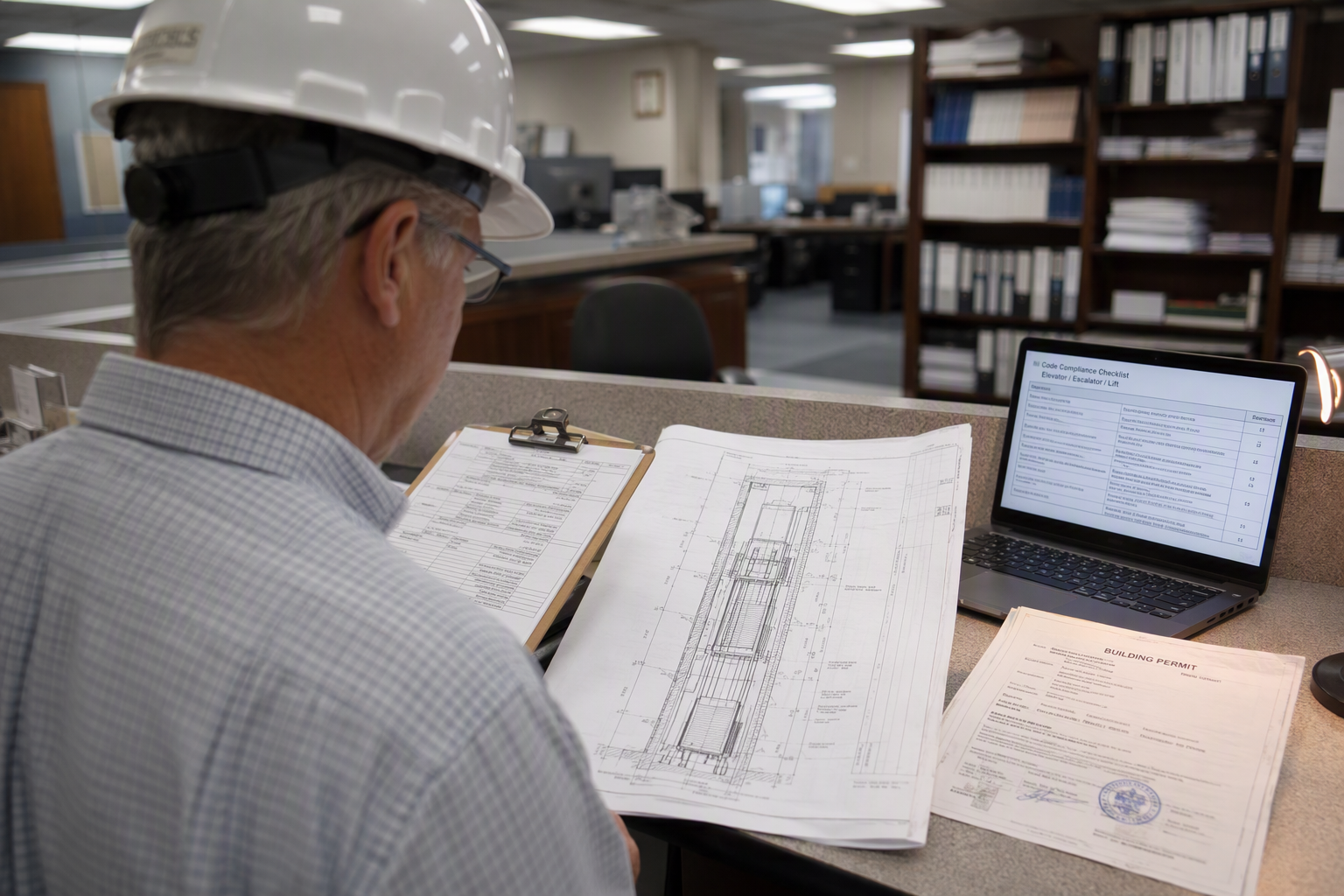
There is no single point of contact for ADA elevator compliance. A compliant outcome typically requires coordinating across several authorities and professionals:
1. The ADA National Network
The ADA National Network operates ten regional centers funded by the U.S. Department of Education. They provide free technical assistance, training, and guidance on ADA compliance questions — including elevator-specific requirements. Reach them at 1-800-949-4232. They are the appropriate first call when interpreting whether your building or planned renovation triggers elevator requirements.
2. The U.S. Department of Justice (DOJ)
The DOJ enforces Title III of the ADA, which applies to places of public accommodation and commercial facilities. The ADA.gov website hosts the official ADA Standards for Accessible Design, technical guidance documents, and complaint filing procedures. Building owners uncertain about their compliance obligations under federal law should consult DOJ resources directly.
3. Your Local Building Department or Authority Having Jurisdiction (AHJ)
Every elevator installation, modernization, or alteration must be reviewed and permitted by the local Authority Having Jurisdiction (AHJ), which is typically a city or county building department. The AHJ applies both local building codes and the adopted elevator safety code — in most U.S. jurisdictions, this is the ASME A17.1 Safety Code for Elevators and Escalators. Your AHJ will tell you what permits are required, which inspections must occur, and how ADA accessibility standards are enforced at the local level.
4. A Licensed Elevator Contractor
A licensed elevator contractor — such as Carolina Elevator Service — translates ADA requirements and ASME code specifications into actual equipment, installation, and maintenance practices. Contractors assess existing equipment for compliance gaps, recommend appropriate modernization solutions, coordinate permit applications, and schedule required inspections. They are an essential partner in any ADA elevator project.
5. An ADA Compliance Consultant or Accessibility Specialist
For complex facilities or litigation-adjacent situations, an independent ADA compliance consultant can conduct a formal accessibility audit, document existing conditions, and produce a transition plan. These professionals carry expertise in both the legal standards and the physical environment.
6. Your Architect or Engineer of Record
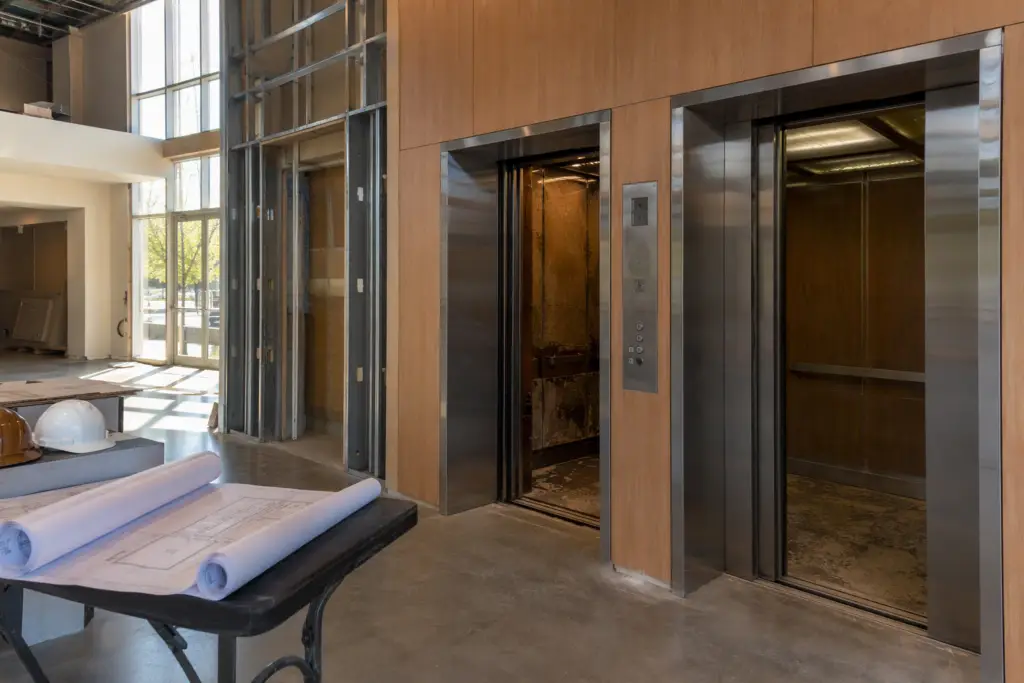
For new construction or significant renovations, a licensed architect or structural engineer is typically required to certify that the design meets ADA Standards. They coordinate with the elevator contractor to ensure the hoistway dimensions, lobby layout, and accessible route all satisfy code.
What Is the Difference Between ADA Requirements and ASME Elevator Codes?
This distinction matters enormously when determining who to contact. The ADA is a civil rights law focused on accessibility and non-discrimination. The ASME A17.1 Safety Code for Elevators and Escalators is a safety engineering standard focused on mechanical performance, structural integrity, and operational safety.
Both apply to most commercial elevators. A building can be mechanically safe (ASME-compliant) but still violate ADA accessibility requirements — and vice versa. Your elevator contractor should be conversant in both frameworks, and your AHJ will require compliance with both during inspections and permitting.
| Area | Governing Authority | Enforcement Body | Who to Contact |
|---|---|---|---|
| Accessibility (ramp, doors, buttons, signage) | ADA Standards for Accessible Design | DOJ / State civil rights agencies | ADA National Network, ADA compliance consultant |
| Mechanical safety, inspections, permits | ASME A17.1 Safety Code | Local AHJ / State elevator safety division | Local building department, licensed elevator contractor |
| Workplace safety for elevator workers | OSHA Standards | U.S. Department of Labor / OSHA | OSHA regional office, qualified elevator contractor |
How Do I Start the ADA Elevator Compliance Process for My Building?
- Determine whether your building is subject to ADA elevator requirements. Review the ADA’s exemptions for small buildings and certain occupancy types. The ADA National Network can assist with this interpretation at no cost.
- Obtain a copy of the current ADA Standards for Accessible Design. These are published on ADA.gov and are the technical baseline for all accessibility requirements, including elevator specifications.
- Contact your local building department (AHJ). Ask which edition of the ASME A17.1 has been adopted locally and what permit and inspection requirements apply to elevator work in your jurisdiction.
- Engage a licensed elevator contractor for a site assessment. The contractor will evaluate your existing equipment or planned installation against ADA requirements and local code. Carolina Elevator Service provides this type of assessment for building owners throughout the region.
- Commission an ADA compliance audit if the building has a complex layout or a history of complaints. A certified accessibility consultant can document your current status and prioritize remediation.
- Develop a remediation or construction plan with your architect and elevator contractor. This plan should address ADA dimensions, signage, door hardware, emergency communications, and lobby accessibility in a coordinated way.
- Submit permit applications and schedule inspections. Your elevator contractor typically leads this process in coordination with your architect and the AHJ.
- Complete required inspections and obtain certificates of occupancy or compliance. Keep copies of all inspection records — these are essential documentation in the event of an ADA complaint or lawsuit.
- Establish an ongoing maintenance and periodic inspection schedule. ADA compliance is not a one-time event. Equipment must remain functional and maintained to stay compliant.
What Elevator Features Are Most Commonly Out of ADA Compliance?
When buildings fail ADA elevator audits, the deficiencies tend to fall into recurring categories. Understanding these problem areas helps building managers prioritize assessments:
- Call button height: ADA Standards specify reach ranges for accessible controls. Buttons mounted too high or too low are a frequent violation, particularly in older buildings.
- Door width: The ADA requires minimum clear door widths to accommodate wheelchairs. Older elevator doors may fall short of current standards.
- Floor-level signage: Raised characters and Braille designations must meet specific size, font, and mounting height requirements.
- Emergency two-way communication: The ADA requires elevator emergency communication systems to be accessible to people with hearing or speech disabilities — a requirement that catches many older systems off guard.
- Leveling accuracy: An elevator that does not level consistently with the floor landing creates a barrier for wheelchair users and others with mobility devices.
- Lobby accessible routes: The path from the accessible entrance to the elevator lobby must itself meet ADA standards — width, slope, and surface all matter.
Do ADA Elevator Requirements Apply to Existing Buildings?
Yes, but with nuance. For existing buildings, the ADA requires removal of barriers where doing so is “readily achievable” — meaning it can be accomplished without much difficulty or expense. What qualifies as readily achievable depends on the resources of the business or building owner. Larger organizations with more financial resources are held to a higher standard.
When a building undergoes alterations — renovations, remodeling, or changes of use — ADA obligations increase. Alterations must comply with current ADA Standards to the maximum extent feasible, and they trigger requirements to make the accessible path of travel to the altered area compliant as well.
Building owners who are uncertain whether their existing elevator complies should consult both a licensed elevator contractor for a technical assessment and an ADA compliance consultant or the ADA National Network for legal guidance.
What Happens If My Building’s Elevator Does Not Meet ADA Requirements?
Non-compliance with ADA elevator requirements exposes building owners and operators to significant risk. Under Title III of the ADA, any person who is discriminated against due to a lack of accessibility can file a complaint with the U.S. Department of Justice or pursue private litigation. DOJ complaints can result in civil penalties, mandatory remediation plans, and monitoring agreements. Private lawsuits can result in injunctive relief — meaning a court order to make the building accessible — as well as attorney’s fees.
Beyond legal exposure, inaccessible elevators also present reputational risk and limit the population of tenants, customers, and employees a building can serve. Proactive compliance is nearly always less costly than reactive remediation after a complaint.
Does OSHA Have Any Role in ADA Elevator Compliance?
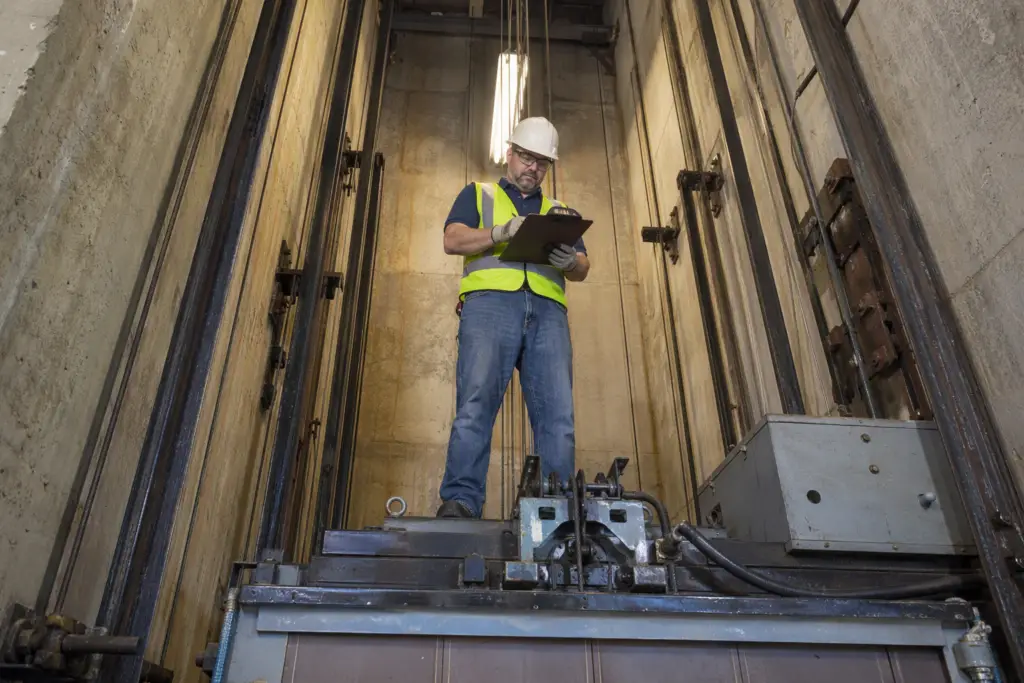
OSHA primarily governs elevator safety as it relates to workers who install, maintain, and repair elevator equipment — not the accessibility features covered by the ADA. OSHA standards establish safety requirements for construction worksites, elevator machine rooms, and the practices of elevator technicians. When hiring an elevator contractor for ADA-related work, building owners should confirm that the contractor’s workforce operates in compliance with applicable OSHA standards, as this reflects the contractor’s overall commitment to safe and professional practice.
How Long Does an ADA Elevator Compliance Project Typically Take?
Timeline varies considerably based on the scope of work. A relatively minor remediation — replacing non-compliant signage or adjusting call button heights — may be completed in a matter of days once parts are available. A major elevator modernization project involving new doors, cab interiors, controls, and emergency communication systems typically involves permitting, lead times for equipment, installation, and multiple inspections, a process that commonly spans several months. New construction elevator projects are planned alongside the building timeline from the design phase forward.
Building owners should plan for lead time on elevator components, as supply chains for specialized elevator equipment can extend project timelines, particularly for customized or older equipment replacements.
What Should I Ask an Elevator Contractor About ADA Compliance?
Not all elevator contractors have equal expertise in ADA requirements. When evaluating a contractor, consider asking:
- Are you licensed and in good standing with the state elevator safety authority and local AHJ?
- Can you conduct a documented ADA compliance assessment of our existing elevator?
- Which edition of the ASME A17.1 Safety Code do you work to, and has your team received training on current ADA Standards?
- Will you manage the permit application and inspection coordination with the AHJ?
- Can you provide documentation of completed work for our compliance records?
- Do you offer ongoing maintenance agreements to keep the elevator in continuous ADA compliance?
Carolina Elevator Service approaches each project with detailed knowledge of both ADA accessibility requirements and ASME A17.1 safety codes, coordinating assessments, permitting, and inspections on behalf of building owners throughout the region.
What Are the Emerging ADA and Elevator Code Trends for 2025–2026?
The 2025–2026 period reflects ongoing momentum in several areas that building owners and facility managers should watch:
- Adoption of updated ASME A17.1 editions: Jurisdictions across the United States continue to adopt newer editions of the ASME A17.1 Safety Code. Each updated edition can introduce new technical requirements that intersect with ADA accessibility goals, particularly around door systems, emergency communications, and control interfaces.
- Increased DOJ enforcement activity: Accessibility advocates and the DOJ have maintained active enforcement focus on commercial facilities. Building owners with aging elevator infrastructure are increasingly receiving demand letters and complaints.
- Emergency two-way communication upgrades: The shift away from analog phone lines has created a gap in elevator emergency communication compliance for many older systems. Transitioning to IP-based or cellular two-way communication systems — while maintaining ADA-compliant accessibility for people with disabilities — is a growing project category.
- Destination dispatch and touchless technology: Modern elevator control systems are being evaluated for ADA compatibility, particularly regarding the accessibility of touchscreen interfaces and app-based call systems for passengers with visual or motor disabilities.
- Mixed-use and adaptive reuse projects: The conversion of commercial office space to residential or mixed-use occupancy is driving a wave of elevator modernization projects where ADA compliance must be addressed as part of the change-of-use permitting process.
Is There a Difference in ADA Elevator Requirements for New Construction vs. Renovation Projects?
Yes, and the distinction is significant. New construction must comply fully with current ADA Standards from the outset — there is no readily achievable standard or financial hardship exception for newly built facilities. The ADA holds new construction to the highest standard of accessibility compliance.
For renovations and alterations to existing buildings, the ADA applies a proportionality principle: accessibility improvements to the path of travel are required to the extent they do not exceed a defined percentage of the overall alteration cost. Consulting with both an ADA compliance specialist and a licensed elevator contractor before beginning any renovation is strongly advisable to understand exactly what obligations a given scope of work will trigger.
How Does Carolina Elevator Service Support ADA Compliance for Building Owners?
Carolina Elevator Service serves as a data-driven partner for building owners, property managers, and developers navigating ADA elevator requirements. The company’s approach includes technical assessments of existing elevator equipment measured against ADA Standards, coordination with local Authorities Having Jurisdiction for permitting and inspections, application of current ASME A17.1 safety standards to all equipment work, and ongoing maintenance programs designed to keep elevators in continuous operational and regulatory compliance.
For facilities with complex compliance needs, Carolina Elevator Service works alongside ADA consultants and architects to ensure that technical elevator solutions align with the broader accessibility requirements of the building environment.
Quick Reference: Who to Contact for ADA Elevator Requirements
| Your Question or Need | Primary Contact | Resource |
|---|---|---|
| Does ADA apply to my building? | ADA National Network | ADA.gov / 1-800-949-4232 |
| Technical ADA accessibility specifications | ADA Standards for Accessible Design (DOJ) | ADA.gov |
| Local permits and inspections | Local Building Department / AHJ | Your city or county government offices |
| ASME elevator safety code requirements | Licensed elevator contractor / AHJ | ASME Codes & Standards |
| Equipment assessment and modernization | Licensed elevator contractor | Carolina Elevator Service |
| Filing an ADA complaint | U.S. Department of Justice | ADA.gov |
| Elevator worker safety regulations | OSHA | OSHA.gov |
Get Expert ADA Elevator Guidance from Carolina Elevator Service
ADA elevator compliance involves federal law, local codes, technical engineering, and ongoing maintenance — all working together. Waiting for a complaint to arrive is a costly strategy. Building owners who take a proactive approach, beginning with a qualified assessment, consistently face fewer disruptions, lower remediation costs, and reduced legal exposure.
Carolina Elevator Service provides detailed elevator assessments grounded in current ADA Standards and ASME A17.1 safety codes, helping building owners understand exactly where they stand and what steps are needed to achieve and maintain compliance.
Contact Carolina Elevator Service for a free elevator assessment: 803-865-1400
Need elevator service you can rely on? Carolina Elevator Service is ready to help.