Elevator Code Violation Penalties: Costs, Consequences & Compliance Guide
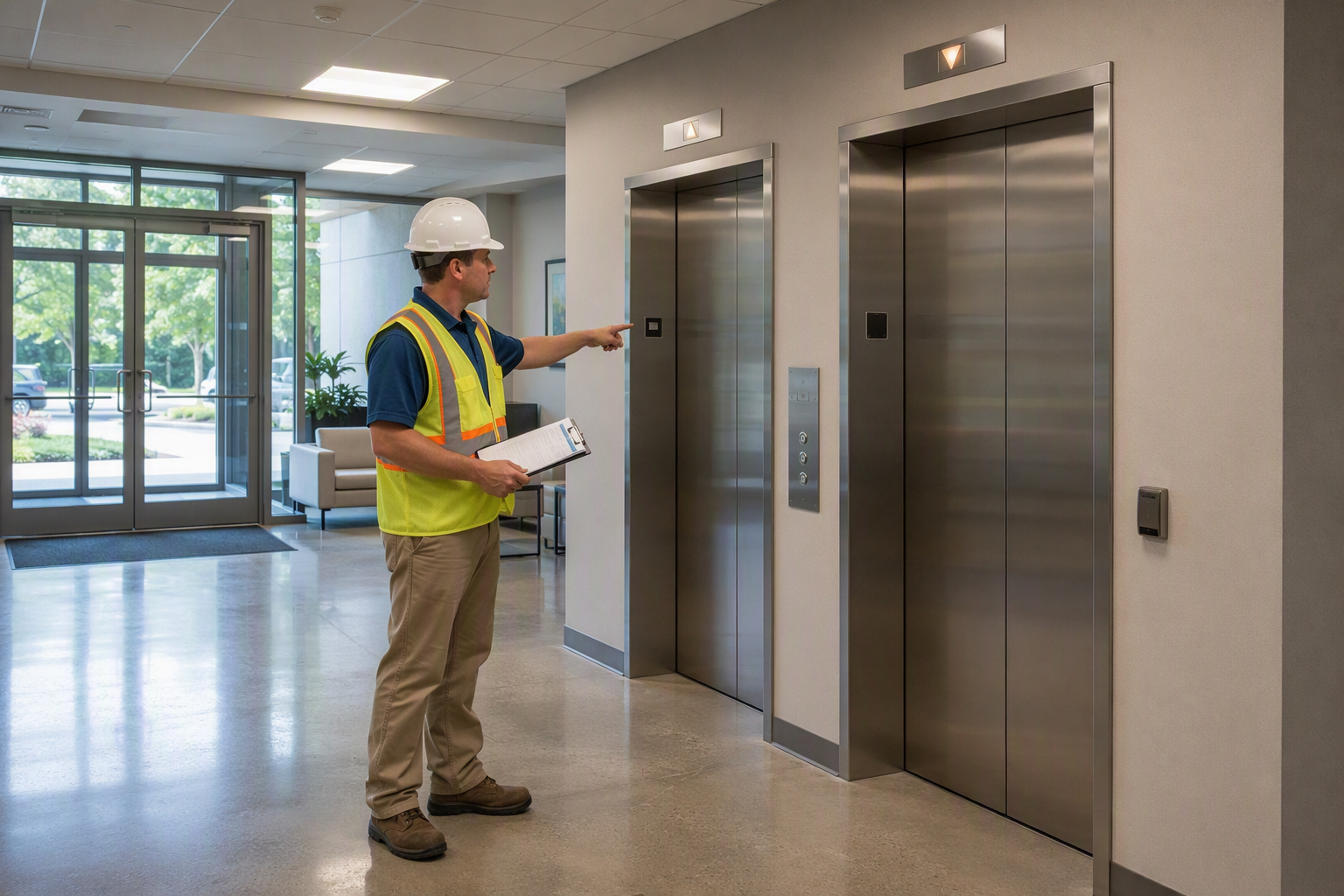
Elevator code violations are among the most consequential compliance failures a building owner or property manager can face. Beyond the financial penalties, a cited violation can trigger elevator shutdowns that disrupt tenants, expose owners to personal-injury liability, and invite repeat inspections from state and local authorities. Understanding how penalties are structured, what triggers them, and how to resolve them quickly is essential knowledge for anyone responsible for a vertical transportation asset in 2026.
What Are Elevator Code Violations?

An elevator code violation is an official finding by an authorized elevator inspector that a unit does not conform to the applicable safety standard at the time of inspection. In the United States, the foundational safety standard is the ASME A17.1 Safety Code for Elevators and Escalators, which governs design, installation, operation, inspection, testing, and maintenance of most elevators and escalators in commercial and residential buildings.
State and local jurisdictions adopt ASME A17.1 by reference — often with amendments — and delegate enforcement authority to a state labor department, building department, or dedicated elevator safety bureau. The result is a layered enforcement system: a violation of the state-adopted code can trigger penalties at the state level, while a failure to comply with accessible design requirements can simultaneously trigger scrutiny under the Americans with Disabilities Act (ADA).
Workplace elevators and construction hoists may also fall under OSHA jurisdiction, adding a federal enforcement layer on top of state elevator safety programs.
How Are Elevator Code Violation Penalties Calculated?

Penalty structures vary by jurisdiction, but several factors consistently influence how severe the financial consequence will be:
- Classification of the violation: Most jurisdictions categorize violations as imminent danger, serious, or non-serious. An imminent danger finding — such as a broken overspeed governor or a failed pit stop switch — typically triggers an immediate out-of-service order and the highest penalty tier.
- Whether the violation is a repeat offense: Repeat violations from a prior inspection cycle generally carry substantially higher fines than first-time findings.
- Whether a fatality or injury occurred: When a code deficiency is linked to a passenger injury, enforcement agencies and courts often treat the underlying violation with maximum severity.
- Duration of non-compliance: Many jurisdictions levy daily accruing fines that begin from the date the violation was cited and continue until a corrective inspection confirms the deficiency has been resolved.
- Size and type of building: Some state codes impose higher fines on high-volume public buildings — hospitals, airports, schools — compared to small commercial properties.
Because penalty schedules are set by individual state statute or administrative rule and are periodically updated, building owners should request a current schedule from their state elevator safety authority rather than relying on figures that may be outdated.
What Happens Immediately After a Violation Is Cited?
The sequence of events following an elevator code violation finding follows a fairly consistent pattern across most U.S. jurisdictions. Understanding this timeline helps building owners respond efficiently and limit financial exposure.
- Inspection report issued: The authorized inspector documents each deficiency, assigns a violation code corresponding to the applicable section of the adopted ASME A17.1 standard or state amendment, and classifies severity.
- Out-of-service order (if applicable): For imminent danger or serious violations, the inspector places the elevator out of service on the spot. A physical tag or seal is applied to the controller, and operation is prohibited until the deficiency is corrected and reinspected.
- Notice of violation issued: A formal written notice is sent to the building owner or managing entity. This document initiates the compliance clock, establishing the deadline by which corrections must be made.
- Correction period begins: Depending on classification, owners may have anywhere from 24 hours (imminent danger) to 30 or more days (non-serious violations) to complete repairs. During this period, daily fines may or may not accrue depending on the jurisdiction.
- Corrective work performed: A licensed elevator contractor performs the required repairs, replacements, or adjustments in accordance with the applicable code section cited.
- Reinspection requested: The building owner or their elevator contractor requests a follow-up inspection to verify the deficiency has been corrected. Many jurisdictions charge a reinspection fee.
- Violation closed or escalated: If the reinspection confirms compliance, the violation is formally closed. If the deficiency persists, penalties escalate and the enforcement authority may pursue additional legal remedies including injunctive relief.
What Are the Most Common Elevator Code Violations?
While violation rates vary by equipment age, maintenance history, and building type, certain deficiencies appear with notable frequency across inspection programs nationwide. Understanding common violations helps building owners prioritize their maintenance and inspection budgets.
- Expired or missing inspection certificates: Operating an elevator without a current certificate of inspection is itself a violation in most states, independent of any equipment deficiency.
- Door and door-operator deficiencies: Malfunctioning door reopening devices, worn door gibs, and defective door restrictor assemblies are among the most frequently cited issues under the ASME A17.1 Safety Code for Elevators and Escalators.
- Pit deficiencies: Pit lighting failures, inoperable pit stop switches, and water intrusion creating an unsafe work environment are commonly cited.
- Emergency lighting and communication failures: Non-functional cab emergency lighting, inoperable alarm bells, and non-working two-way communication systems are serious violations because they directly affect passenger safety during entrapments.
- Governor and safety device issues: Overspeed governors that are out of test cycle or that fail load tests represent some of the most serious violations an inspector can cite.
- ADA accessibility deficiencies: Improperly positioned hall call buttons, missing or worn Braille signage, and non-compliant cab dimensions can trigger both state code violations and separate civil exposure under the ADA.
- Machine room and control space conditions: Unauthorized storage, inadequate lighting, missing fire separations, and improper ventilation in the machine room are recurring findings.
- Maintenance log deficiencies: Many jurisdictions require on-site maintenance logs. Missing or incomplete records are citable offenses.
Can an Elevator Violation Lead to Criminal Liability?
In most circumstances, elevator code violations are treated as civil or administrative matters resulting in monetary penalties. However, when a violation involves willful neglect — particularly when a known, uncorrected deficiency causes a passenger injury or fatality — prosecutors in some states have pursued criminal charges against building owners, property management companies, and in some cases individual maintenance personnel. Workplace settings add an additional layer: under OSHA, willful violations that result in worker death can carry criminal referral to the Department of Justice.
The practical takeaway is straightforward: a code violation that is documented, known, and left uncorrected creates a significantly higher risk profile than one that was unknown and promptly remediated upon discovery.
How Do ADA Violations Differ From State Safety Code Violations?
The ADA addresses accessibility rather than mechanical safety, but the enforcement consequences can be just as significant. ADA Title III complaints against places of public accommodation — which include most commercial buildings with elevators — can result in civil lawsuits brought by private plaintiffs seeking injunctive relief (mandated corrective action) plus attorney’s fees. The Department of Justice can also initiate investigations and seek civil monetary penalties against entities found to have engaged in a pattern or practice of discrimination.
Critically, ADA compliance obligations do not disappear because a building meets state elevator safety code. The two frameworks operate in parallel, and a building can be fully compliant with ASME A17.1 while still being non-compliant with ADA accessibility standards for cab dimensions, button heights, or auditory signals.
What Is the Difference Between a Violation and a Deficiency Notice?
Terminology varies by jurisdiction, but a useful distinction is commonly made between a formal violation — a cited non-conformance that initiates official enforcement action — and a deficiency notice or advisory item, which flags a condition that does not yet rise to a code violation but warrants corrective attention before the next inspection cycle. Deficiency notices give building owners an early warning window to address deteriorating conditions before they become citable violations. Treating advisory items as low-priority is a common and costly mistake: a deficiency that goes unaddressed often becomes a violation at the next inspection, and by that point the equipment condition may have worsened.
How Long Does a Building Owner Have to Correct a Violation?
Correction timeframes are set by the enforcing jurisdiction and depend heavily on violation severity. As a general framework:
- Imminent danger classifications typically require immediate shutdown and same-day or next-day corrective action before the elevator may return to service.
- Serious violations that do not rise to imminent danger often carry correction windows measured in days to a few weeks.
- Non-serious or administrative violations — such as missing documentation — may carry 30-day or longer correction periods.
Building owners should never assume a correction deadline without reading the actual notice of violation, because missing a statutory deadline often automatically triggers an escalated penalty tier regardless of whether the corrective work was ultimately completed.
What Should a Building Owner Do Immediately After Receiving a Violation Notice?
- Read the notice carefully and identify the specific code section cited, the violation classification, the correction deadline, and the penalty amount or schedule.
- Contact a licensed elevator contractor immediately — do not wait to assess the urgency. For out-of-service orders, every day of elevator downtime has an operational and reputational cost in addition to accruing penalties.
- Preserve all documentation including the inspection report, prior maintenance logs, and any correspondence with the inspector or enforcement agency.
- Verify the violation is accurately stated. Inspectors can make errors, and building owners have the right to contest factually incorrect findings through the jurisdiction’s appeals process.
- Prioritize corrective work and communicate a remediation schedule to the enforcement authority if the deadline cannot be met — some jurisdictions will grant extensions for good-faith corrective efforts.
- Schedule reinspection promptly once corrective work is complete. Do not assume the violation is automatically closed because repairs were made.
- Review maintenance practices to identify whether the violation reflects a systemic gap in the preventive maintenance program that could lead to future findings.
How Can Preventive Maintenance Reduce Elevator Violation Risk?
A well-structured preventive maintenance program addresses the root cause of most elevator code violations before they become cited deficiencies. The ASME A17.1 Safety Code for Elevators and Escalators requires that maintenance be performed by qualified individuals following a documented maintenance control program. This is not a discretionary best practice — it is a code requirement, and failure to maintain a conforming maintenance control program is itself a citable violation in jurisdictions that have adopted current ASME A17.1 editions.
Preventive maintenance that specifically targets the most commonly cited deficiency categories — door components, pit conditions, emergency systems, safety devices, and machine room conditions — measurably reduces the probability of adverse inspection findings. It also creates the documentation record that demonstrates good-faith compliance efforts, which can influence enforcement discretion in borderline cases.
What Industry Trends Are Shaping Elevator Code Enforcement in 2025–2026?
Several qualitative trends are influencing how elevator code violations are detected, penalized, and resolved in the current enforcement environment:
- Increased inspection frequency in high-traffic jurisdictions: Several state elevator safety programs have increased staffing or contracted with third-party inspection organizations, resulting in shorter intervals between inspections for high-occupancy buildings.
- Remote monitoring and predictive diagnostics: Modern elevator control systems increasingly generate data streams that both maintenance contractors and — in some jurisdictions — regulatory authorities can access. This means that conditions that previously went undetected between inspection cycles may now be flagged more rapidly.
- Modernization pressure from aging equipment: Much of the U.S. elevator inventory was installed in the 1970s through 1990s. As these units age, the gap between their as-installed configuration and current code requirements widens, increasing the probability of violation findings during routine inspections.
- ADA enforcement attention: Accessibility advocates and plaintiff’s attorneys have maintained sustained focus on elevator accessibility in public accommodations, making ADA-related elevator deficiencies an elevated litigation risk heading into 2026.
- Digital record-keeping requirements: Some jurisdictions are moving toward mandatory electronic maintenance logs, which increases transparency and makes documentation deficiencies easier to detect during inspections.
How Does Carolina Elevator Service Help Building Owners Manage Violation Risk?
Carolina Elevator Service approaches elevator compliance as a data-driven discipline. Rather than simply responding to violations after they are cited, the Carolina Elevator Service team uses systematic inspection documentation, maintenance control program development aligned with ASME A17.1 requirements, and condition-based assessment practices to help building owners understand their compliance posture before an enforcement inspector arrives.
When violations do occur, Carolina Elevator Service supports building owners through the corrective action and reinspection process, providing the documentation and workmanship records that enforcement agencies require to formally close a violation. This systematic, evidence-based approach is designed to reduce the frequency, severity, and duration of violation exposure for the properties Carolina Elevator Service serves.
Frequently Asked Questions About Elevator Code Violation Penalties
Can a building be fined for an elevator violation even if no one was injured?
Yes. Elevator code violations are strict-liability civil infractions in most jurisdictions — meaning the penalty applies based on the existence of the non-conforming condition, not on whether an injury occurred. Injury or fatality typically escalates the penalty tier and adds civil tort liability but is not a prerequisite for enforcement action.
Who is legally responsible for elevator code violations — the building owner or the elevator contractor?
Primary legal responsibility rests with the building owner or the entity holding the operating certificate. However, when a violation results directly from a contractor’s negligent maintenance or repair work, contractual indemnification clauses and professional liability may shift financial exposure back to the contractor. Building owners should review their elevator maintenance contracts to understand how liability is allocated.
What happens if a building operates an elevator with an out-of-service tag?
Operating a tagged-out elevator is a separate and serious violation in virtually every jurisdiction. It can result in immediate escalation of penalties, revocation of the operating certificate, and in egregious cases, criminal misdemeanor or felony charges for the responsible parties.
Can elevator code violation penalties be appealed?
Yes. Most state elevator safety programs include an administrative appeals process. Building owners have the right to contest factual findings, classification decisions, and penalty amounts through this process. Appeals must typically be filed within a short window after the notice is issued — often 10 to 30 days — so acting quickly is essential.
Does an old elevator automatically have more violations than a new one?
Not automatically, but aging equipment increases risk. Violations arise from the condition of the equipment relative to the applicable code, not from age alone. An older elevator on a rigorous preventive maintenance program may have fewer violations than a newer unit that is neglected. However, older equipment is more likely to have components that have reached end-of-service life and more likely to require modernization to bring it into conformance with current code editions.
Are there federal elevator violation penalties separate from state penalties?
Federal jurisdiction is limited. OSHA has authority over elevators and hoists in workplace settings, and OSHA penalty schedules are adjusted periodically. The ADA creates federal civil liability for accessibility violations. For most vertical transportation in commercial buildings, however, the primary enforcement authority is the state elevator safety program.
How often must elevators be inspected to avoid violations?
Inspection intervals are set by the state or local jurisdiction adopting the applicable code. The ASME A17.1 Safety Code for Elevators and Escalators establishes testing and inspection requirements that inform these schedules. Building owners should confirm the specific interval and certificate renewal requirements with their state elevator authority rather than relying on general guidance.
What documentation should a building owner keep to protect against violations?
Key records include: the current certificate of inspection (required to be posted in the elevator cab in most jurisdictions), maintenance control program documentation, completed maintenance logs, records of all repairs and parts replacements, previous inspection reports, and any correspondence with the state elevator authority. These records demonstrate compliance and provide the evidentiary basis for contesting inaccurate violation findings.
What is a maintenance control program and is it required?
A maintenance control program (MCP) is a documented set of procedures specifying how, when, and by whom maintenance tasks are to be performed on a specific elevator installation. The ASME A17.1 Safety Code for Elevators and Escalators requires that a conforming MCP be established and followed. Jurisdictions that have adopted current ASME A17.1 editions can cite the absence of a conforming MCP as a violation.
Can a building owner negotiate elevator code violation penalties?
Many state enforcement programs allow for penalty mitigation based on demonstrated good-faith corrective action, the building owner’s compliance history, and the promptness of the remediation. Formal appeals and informal engagement with the enforcement agency are both available tools. Legal counsel familiar with the state’s administrative process can be valuable when significant penalties are at stake.
Key Sourced Reference
| Standard / Authority | Relevance to Elevator Violations | Source |
|---|---|---|
| ASME A17.1 Safety Code for Elevators and Escalators | Primary U.S. safety standard adopted by state jurisdictions; defines code requirements, maintenance control program obligations, and testing intervals that inspectors enforce | ASME Codes & Standards |
| Americans with Disabilities Act (ADA) | Establishes federal accessibility requirements for elevators in places of public accommodation; non-compliance creates civil liability independent of state safety code violations | ADA.gov |
| OSHA Standards | Applies to elevators and hoists in workplace settings; willful violations involving worker fatality can carry criminal referral | OSHA.gov |
Get Ahead of Violations Before an Inspector Does
Elevator code violation penalties — daily fines, out-of-service orders, legal liability, and reputational damage — are almost always more costly than the preventive maintenance and proactive compliance work that prevents them. Carolina Elevator Service provides data-driven assessments designed to identify code risk before it becomes an enforcement problem.
Contact Carolina Elevator Service for a free elevator assessment: 803-865-1400
Need elevator service you can rely on? Carolina Elevator Service is ready to help.