Elevator Modernization vs. Full Replacement: Which Is Better?
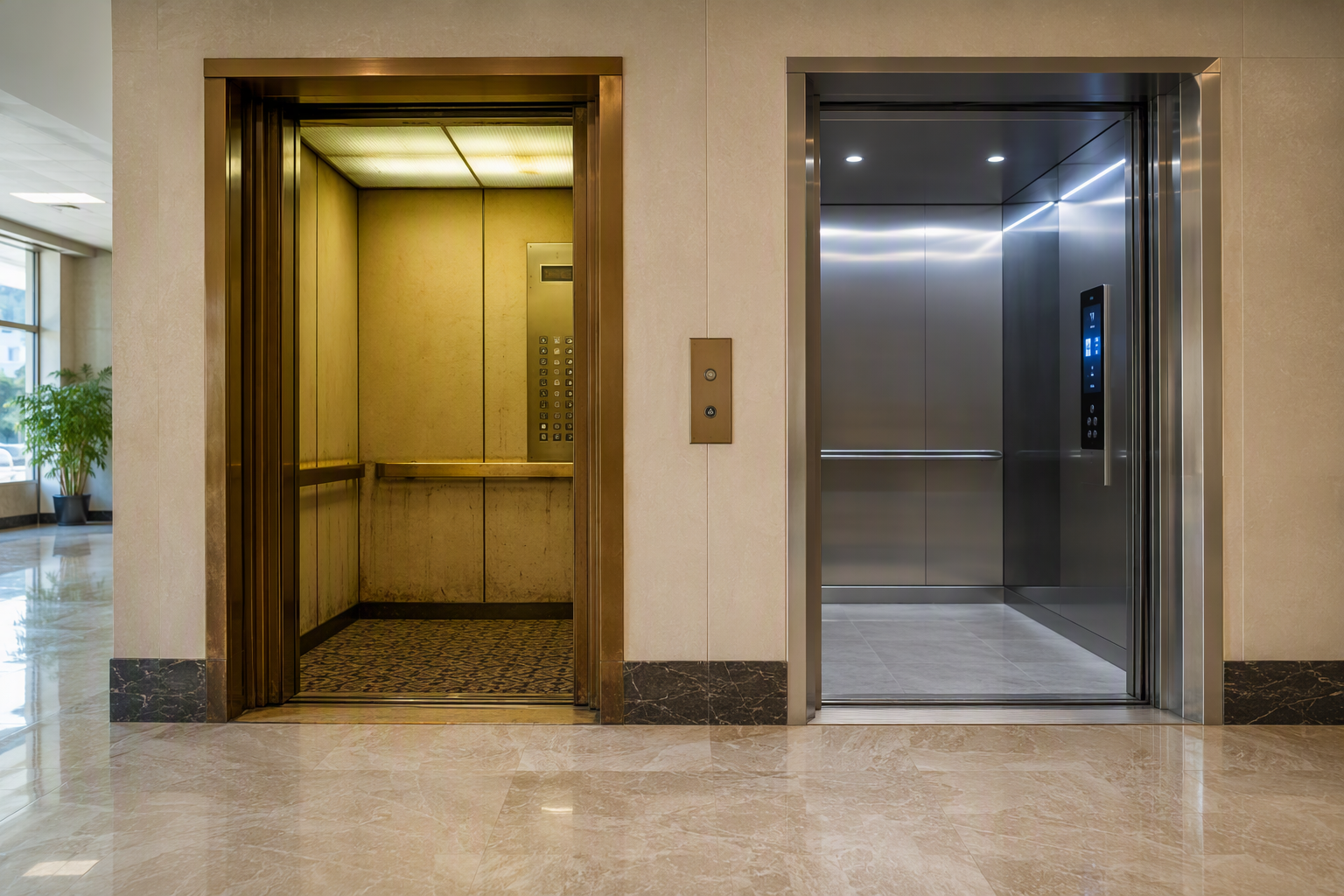
Deciding between modernizing an existing elevator and replacing it entirely is one of the most consequential facility decisions a building owner or property manager will face. The right answer depends on the age and condition of equipment, compliance requirements under codes such as the ASME A17.1 Safety Code for Elevators and Escalators, budget constraints, building occupancy needs, and long-term return on investment. This guide walks through every key factor so decision-makers can choose with confidence.
What Is Elevator Modernization?

Elevator modernization—sometimes called “mod” in the industry—involves selectively upgrading components of an existing elevator without removing the entire system. Modernization projects can range from targeted improvements (such as replacing a controller or motor) to comprehensive overhauls that touch nearly every component except the hoistway structure itself.
Common elements addressed in a modernization project include:
- Controls and controller systems
- Drive machines and motors
- Door operators and door equipment
- Cab interior finishes and lighting
- Safety devices and governors
- Signal fixtures and destination dispatch systems
- Hydraulic power units (for hydraulic elevators)
Modernization projects are designed to extend the useful life of the elevator, improve energy efficiency, enhance passenger experience, and bring the system into compliance with current safety standards.
What Is Full Elevator Replacement?
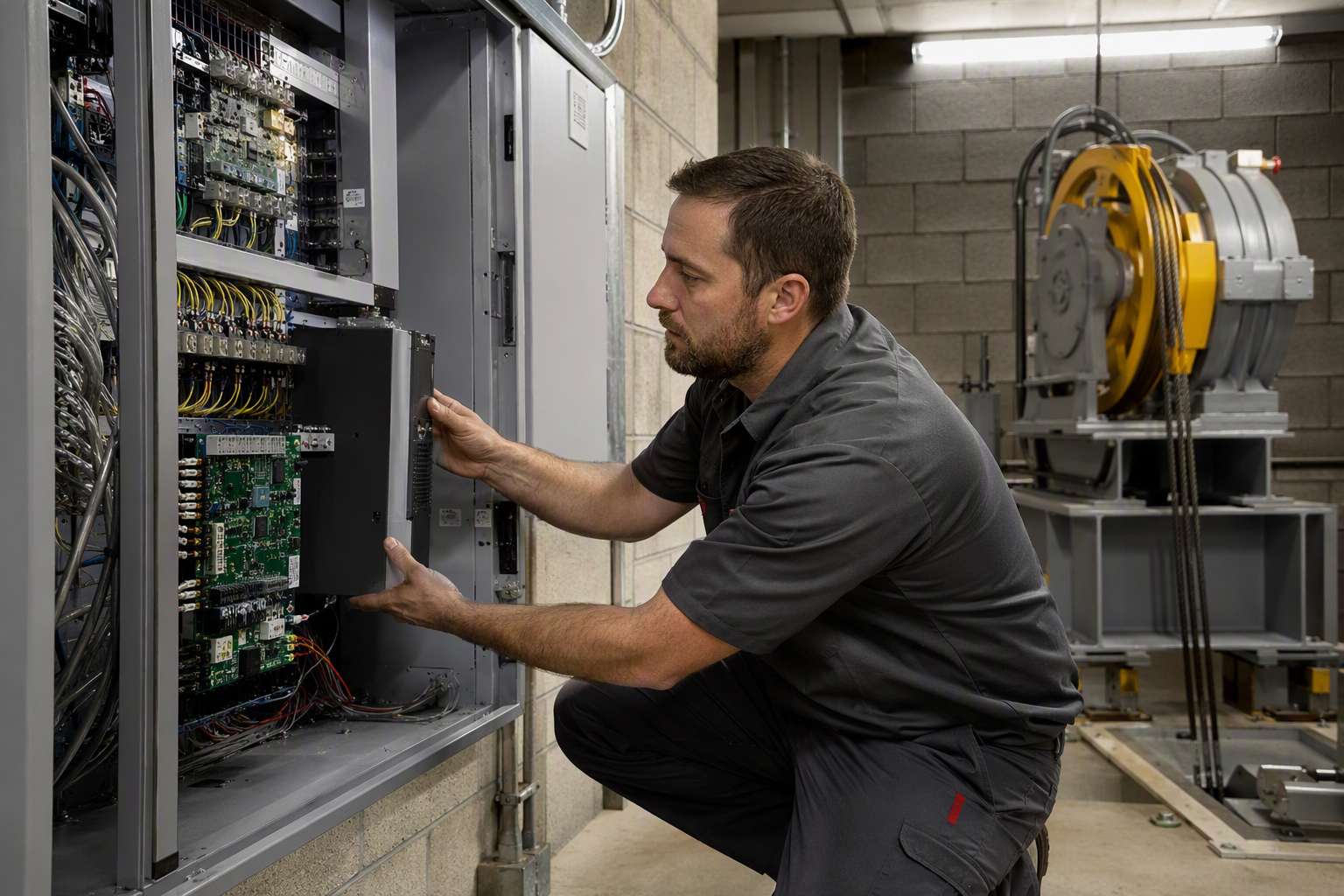
Full replacement means removing the existing elevator system—including the cab, mechanical equipment, and often structural support elements—and installing a completely new elevator from the ground up. This approach is chosen when structural deterioration, obsolete technology, or a change in building use makes incremental improvement impractical or unsafe.
Full replacement typically involves:
- Complete removal of existing cab, machinery, and hydraulic or traction systems
- Potential modification or reinforcement of the hoistway
- Installation of new equipment meeting current editions of applicable codes
- Extended outage periods and potentially significant structural work
- Full permitting, inspection, and commissioning as a new installation
How Do the Costs Compare?
Cost is often the first filter in this decision. The ranges below are qualitative; actual project figures vary significantly by building type, location, elevator configuration, and scope. Any specific cost estimates for a particular building should come from a qualified independent assessment.
| Cost Factor | Modernization | Full Replacement |
|---|---|---|
| Upfront Capital Expenditure | Lower — retains existing hoistway and structure | Higher — new equipment, possible structural work, and extended labor |
| Permitting & Inspection Fees | Moderate — scope-dependent | Higher — treated as a new installation in most jurisdictions |
| Disruption / Downtime Costs | Lower — outages typically shorter and staged | Higher — complete elevator unavailability for weeks to months |
| Ongoing Maintenance Costs | May remain moderate if only partial components are modernized | Lower long-term — new equipment reduces unplanned repairs |
| Energy Savings Potential | Significant, particularly with drive and motor upgrades | Maximum — latest generation equipment is most efficient |
| Long-Term ROI | Strong when existing structure has useful life remaining | Strong when prior system required frequent costly repairs |
What Does the Timeline Look Like for Each Option?
| Timeline Factor | Modernization | Full Replacement |
|---|---|---|
| Planning & Assessment Phase | Weeks — focused on component evaluation | Weeks to months — full engineering review required |
| Permitting | Typically faster — often classified as alteration work | Longer — new installation permitting in most jurisdictions |
| Equipment Lead Time | Shorter — selective component orders | Longer — full system manufacturing and delivery |
| Installation / Construction | Days to several weeks depending on scope | Several weeks to months |
| Inspection & Commissioning | Moderate | Comprehensive — equivalent to a new elevator approval process |
| Total Project Duration (Typical Range) | Shorter overall | Longer overall |
What Are the Pros and Cons of Each Approach?
| Modernization | Full Replacement | |
|---|---|---|
| Pros |
|
|
| Cons |
|
|
When Does Code Compliance Require Modernization or Replacement?
Compliance with applicable codes is a non-negotiable factor in this decision. The ASME A17.1 Safety Code for Elevators and Escalators establishes the baseline safety requirements for elevator design, construction, operation, inspection, testing, and maintenance across the United States. Local jurisdictions adopt editions of this code on varying schedules, meaning the version enforced in a given municipality may differ from the most current edition published in 2025/2026.
Key compliance considerations include:
- Firefighters’ Emergency Operation (FEO): Older elevators lacking compliant firefighter service controls must be upgraded. ASME A17.1 contains detailed requirements for this feature.
- Door reopening devices: Safety requirements for door sensors and reopening devices have evolved significantly. Non-compliant door equipment is a common driver of modernization projects.
- Car enclosures and emergency lighting: Safety standards require specific cab construction, emergency lighting, and ventilation configurations.
- Accessibility: While the Americans with Disabilities Act (ADA) does not require elevators in all buildings, when elevators exist they must meet applicable accessibility standards. Modernization is frequently required to bring controls, signage, and cab dimensions into ADA compliance.
- Workplace safety: OSHA standards govern worker safety during elevator maintenance and construction; compliance affects how modernization and replacement projects are planned and executed.
When a jurisdiction’s authority having jurisdiction (AHJ) mandates specific upgrades following an inspection, modernization is typically the minimum required response. A full replacement may still be elected if the AHJ determines the existing installation is too far out of compliance to correct incrementally.
How Should a Building Owner Decide Which Path to Take?
The decision framework below guides building owners and facility managers through the most critical evaluation criteria. Following these steps in order produces a clearer, more defensible recommendation:
- Conduct a professional condition assessment. Engage a qualified, independent elevator service company to evaluate the structural integrity of the hoistway, the condition of mechanical and electrical components, and remaining useful life estimates for each major system. Carolina Elevator Service offers free elevator assessments to help building owners begin this process objectively.
- Review current code compliance status. Identify every deficiency against the edition of ASME A17.1 adopted in your jurisdiction and any applicable ADA accessibility requirements. List each deficiency and determine whether it can be resolved through component-level modernization or requires a complete re-installation.
- Evaluate the structural condition of the hoistway. If the pit, shaft walls, or machine room show evidence of water intrusion, corrosion, or structural failure, full replacement (with possible structural remediation) may be the only viable path.
- Project total lifecycle cost over a 15–20 year horizon. Compare the all-in cost of modernization (including expected future repairs on remaining legacy components) against the full replacement cost spread over the same period. A modernized elevator that still requires frequent legacy component repairs may cost more over time than a new installation.
- Assess occupant and operational impact. For buildings where elevator downtime creates significant risk—hospitals, senior living communities, high-rise residential—the shorter disruption window of a phased modernization may outweigh cost considerations.
- Confirm financing and incentive options. Energy-efficiency upgrades included in modernization projects may qualify for utility rebates or financing programs in some jurisdictions. A qualified independent contractor can help identify these opportunities.
- Obtain competitive bids from independent service providers. Manufacturer-affiliated contractors may favor full replacement; independent elevator service companies like Carolina Elevator Service can provide unbiased assessments focused on the building owner’s long-term interest.
- Make the decision in writing with a clear scope. Document the selected approach, the scope of work, applicable code requirements, inspection milestones, and warranty terms before any work begins.
What Equipment Typically Gets Replaced During Modernization?
Not every modernization project is identical, but certain components are replaced more frequently than others based on age, technology obsolescence, and safety significance. The most commonly modernized elements include control systems (which govern every function the elevator performs), door operators and equipment (the leading source of entrapment and service calls), drive machines and motors (the largest factor in energy consumption), and safety circuits. Cab interiors, lighting, and signal fixtures are often addressed at the same time to improve passenger experience and accessibility.
Hydraulic elevators—common in low-rise applications—frequently require power unit replacement as part of modernization, and may also require underground cylinder inspections or liner replacements to address environmental and safety concerns governed by applicable state environmental regulations.
Does Modernization Affect an Elevator’s Safety Inspection Requirements?
Yes. Anytime significant components are altered or replaced, the elevator must typically be re-inspected and tested before it returns to service. The specific inspection triggers are defined by the edition of ASME A17.1 adopted in the local jurisdiction and by the procedures of the authority having jurisdiction (AHJ). A certified third-party inspection must typically witness and document required tests on altered equipment. This is true whether a single component is replaced or a comprehensive modernization is completed.
Building owners should confirm with their elevator service provider that all post-modernization inspections and required tests are completed, documented, and approved by the AHJ before the elevator is returned to passenger service.
How Long Can a Modernized Elevator Be Expected to Last?
The answer depends on the scope of the modernization and the condition of the components that are retained. A comprehensive modernization that replaces all major mechanical, electrical, and safety components—while preserving only a sound hoistway structure—can extend an elevator’s useful service life meaningfully. A more targeted modernization that addresses only the controller, for example, leaves other aging components in place and therefore extends useful life by a shorter margin.
Building owners should request a component-by-component remaining useful life estimate as part of any modernization proposal. This assessment should inform how the project scope is defined and what ongoing maintenance provisions are included in the service agreement.
Is Full Replacement Ever the More Cost-Effective Choice?
Yes—in specific circumstances, full replacement delivers better long-term value than modernization. The clearest cases include:
- Elevators with hoistway structural damage or contamination that would require major remediation regardless of which approach is chosen
- Hydraulic elevators with underground cylinders that require replacement or significant environmental remediation
- Systems so severely out of code compliance that the cost of bringing every component into compliance approaches or exceeds the cost of new equipment
- Buildings undergoing major renovation where operational downtime is already planned and construction access is available
- Buildings that need a change in elevator capacity, speed, or configuration that the existing hoistway cannot accommodate
In these situations, the higher upfront cost of replacement is offset by the elimination of legacy risk, the value of new warranties, reduced maintenance costs, and maximum energy efficiency.
What Questions Should a Building Owner Ask an Elevator Service Provider?
Before committing to either modernization or full replacement, building owners and property managers benefit from asking prospective service providers the following questions:
- Is your company an independent service provider, or are you affiliated with a specific equipment manufacturer?
- What is the current compliance status of my elevator against the edition of ASME A17.1 enforced in this jurisdiction?
- Which components have reached or are approaching the end of their useful service life?
- What is the realistic total cost of ownership for each option over a 15–20 year period?
- How will you manage the inspection and testing requirements following modernization or replacement?
- What warranty coverage applies to parts and labor for this project?
- What ongoing maintenance contract would you recommend following completion of the project?
An independent elevator service company—one not tied to selling a specific brand of equipment—is best positioned to answer these questions in a way that serves the building owner’s interests rather than equipment sales targets. Carolina Elevator Service operates as an independent certified elevator service company, providing assessments and recommendations based on the specific needs of each building rather than equipment manufacturer preferences.
Why Choose Carolina Elevator Service for This Decision?
Carolina Elevator Service is an independent elevator service company serving building owners and property managers throughout the Carolinas. Because Carolina Elevator Service is not affiliated with any single equipment manufacturer, its assessments and recommendations focus exclusively on the conditions, compliance status, and long-term interests of each property. Whether the right answer for a building is a targeted modernization, a comprehensive overhaul, or full replacement, Carolina Elevator Service provides the objective professional evaluation needed to make that determination with confidence.
Carolina Elevator Service handles the full project lifecycle—from initial condition assessment and code compliance review through installation, inspection coordination, and ongoing maintenance—so building owners have a single point of accountability throughout the process.
Get an Expert Assessment Before You Decide
The modernization vs. replacement decision is too consequential to make without a professional evaluation of your specific elevator. Contact Carolina Elevator Service for a free elevator assessment and receive an objective, code-informed recommendation tailored to your building’s needs.
Call us today: 803-865-1400
Need elevator service you can rely on? Carolina Elevator Service is ready to help.