Elevator Industry Statistics 2025: Who to Contact and Where to Find Authoritative Data

The elevator and escalator industry is governed by a network of standards bodies, federal agencies, and trade organizations — each maintaining distinct datasets covering safety incidents, workforce trends, compliance requirements, and market activity. Knowing which organization to contact for which type of data saves significant research time and ensures the figures used in reports, audits, or procurement decisions are credible and current.
Carolina Elevator Service operates as a data-driven service provider, tracking regulatory changes, code updates, and compliance benchmarks to help building owners and facility managers make informed decisions. The guidance below maps each category of elevator industry statistics to the authoritative source responsible for it.
What Is the Most Important Elevator Safety Statistic to Know in 2025?
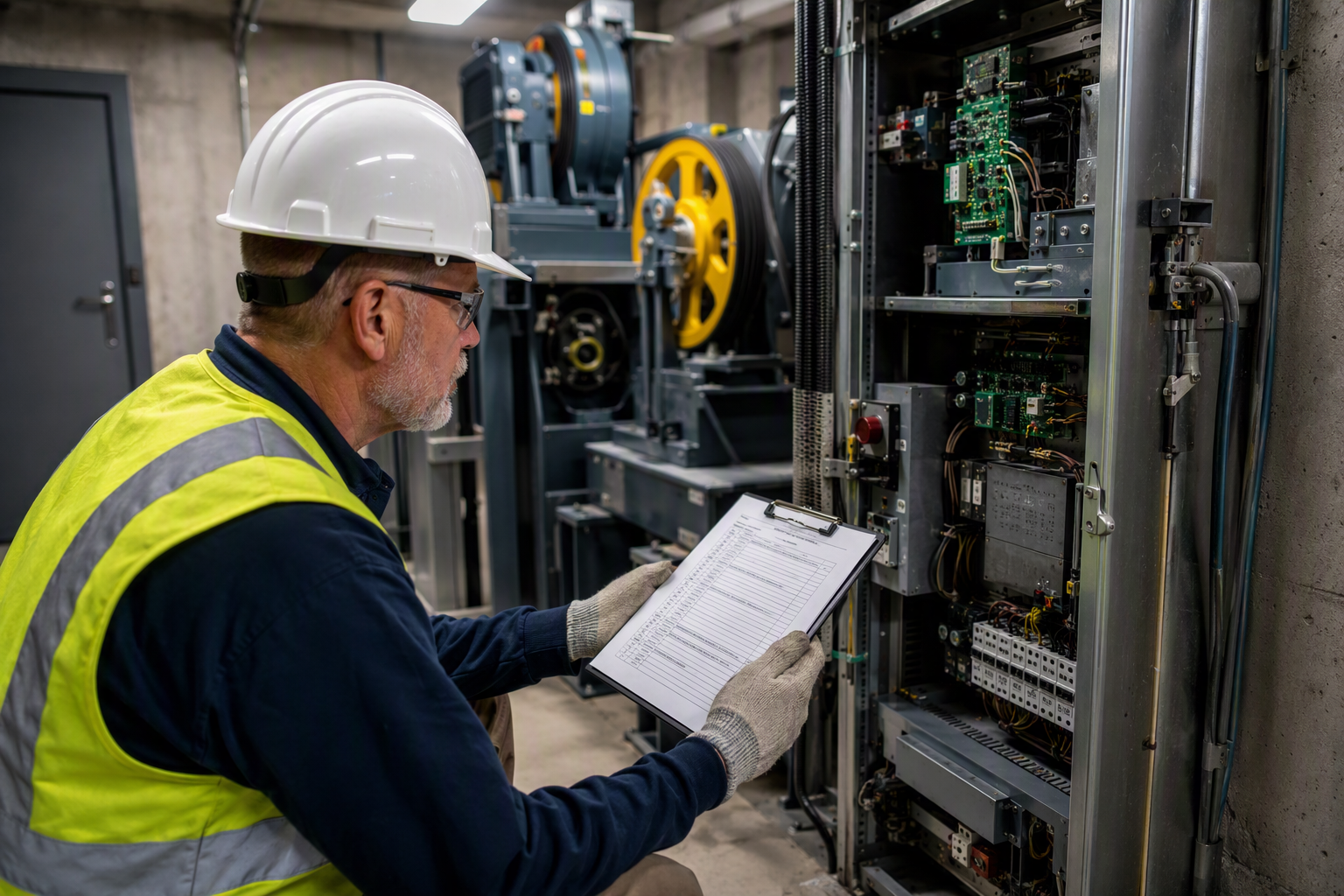
Elevator safety data is among the most carefully tracked in the vertical transportation industry. OSHA is the federal agency responsible for workplace safety statistics related to elevator construction, maintenance, and inspection — making it the first contact point for fatality and injury data involving elevator technicians and construction workers.
For passenger safety data specifically — incidents involving elevator users rather than workers — the Consumer Product Safety Commission (CPSC) maintains the National Electronic Injury Surveillance System (NEISS), which tracks emergency department visits attributable to elevator and escalator incidents. NEII (National Elevator Industry, Inc.) also compiles industry-facing safety summaries that draw from these federal datasets.
These figures inform code revision cycles. The ASME A17.1 Safety Code for Elevators and Escalators is updated on a regular cycle, and safety incident data is a primary driver of those revisions. The current edition referenced by most jurisdictions in 2025–2026 is ASME A17.1/CSA B44, and building owners should verify with their local Authority Having Jurisdiction (AHJ) which edition applies to their facility.
Which Organizations Should I Contact for Elevator Industry Statistics in 2025?

The following organizations are the recognized authorities across different categories of elevator data. Each serves a distinct function within the industry’s information ecosystem.
| Data Category | Primary Authority | How to Access |
|---|---|---|
| Safety codes and standards | ASME | ASME.org — standards catalog and purchase portal |
| Worker safety & fatality data | OSHA | OSHA.gov — injury and illness data, enforcement records |
| Accessibility compliance | ADA.gov | ADA.gov — technical assistance documents and guidance |
| Industry market & workforce data | National Elevator Industry, Inc. (NEII) | NEII.org — reports and industry statistics portal |
| Elevator technician employment data | U.S. Bureau of Labor Statistics (BLS) | BLS.gov — Occupational Outlook Handbook, elevator installer/repairer category |
| Passenger incident data | Consumer Product Safety Commission (CPSC) | CPSC.gov — NEISS injury surveillance database |
What Does ASME Publish That Is Relevant to the Elevator Industry?
The American Society of Mechanical Engineers is the standards development organization responsible for the ASME A17.1/CSA B44 Safety Code for Elevators and Escalators — the foundational technical document governing the design, installation, operation, inspection, testing, and maintenance of elevators in North America.
ASME also publishes:
- ASME A17.2: Guide for Inspection of Elevators, Escalators, and Moving Walks — the companion inspection guide used by qualified inspectors and Authorities Having Jurisdiction.
- ASME A17.3: Safety Code for Existing Elevators and Escalators — applicable to equipment already in service, not subject to A17.1’s new-installation requirements.
- ASME A18.1: Safety Standard for Platform Lifts and Stairway Chairlifts — relevant for accessibility lift installations.
- ASME QEI-1: Standard for the Qualification of Elevator Inspectors — the qualification standard for inspection personnel.
These documents are the technical backbone of regulatory compliance in most U.S. jurisdictions. Building owners, facility managers, and property developers should reference whichever edition has been adopted by their local AHJ, as adoption timelines vary by state and municipality.
What Role Does OSHA Play in Elevator Industry Statistics?
OSHA maintains records of workplace injuries, fatalities, and enforcement actions related to elevator construction, modernization, and maintenance operations. These records are publicly searchable through OSHA’s online inspection and enforcement database.
OSHA’s statistics on elevator and escalator work are particularly relevant for:
- Contractors performing elevator installation or major modernization work
- Building owners evaluating safety practices of service vendors
- Risk managers benchmarking against industry injury rates
- Compliance officers preparing for OSHA audits of maintenance programs
OSHA also issues Letters of Interpretation and compliance directives that, while not statistics themselves, provide guidance that shapes how the industry interprets safety obligations — and these documents are freely accessible on OSHA.gov.
How Does ADA Compliance Affect Elevator Statistics and Requirements?
The Americans with Disabilities Act establishes accessibility requirements for elevator installations in most public accommodations and commercial facilities. The ADA Standards for Accessible Design — developed in coordination with the U.S. Access Board — specify dimensions, controls, door timing, and other parameters that elevators must meet to be considered ADA-compliant.
The ADA’s relevance to industry statistics includes:
- Compliance gap data — the proportion of existing elevator installations that do not yet meet current ADA requirements is tracked by advocacy organizations and feeds modernization demand projections.
- Enforcement actions — ADA complaints related to elevator inaccessibility are filed with the Department of Justice and tracked as part of disability rights enforcement data.
- Retrofit and modernization driver — ADA compliance is one of the most consistently cited reasons for elevator cab and control upgrades, shaping market activity data published by industry analysts.
Building owners with older elevator installations should consult ADA.gov’s technical assistance materials to assess where gaps may exist before commissioning an assessment.
What Are the Key Elevator Industry Trends for 2025–2026?
While specific market-size figures require attribution to commercial research firms that publish proprietary reports (such as those from IBIS World, Grand View Research, or Mordor Intelligence), several qualitative trends are well-supported by regulatory signals, code activity, and industry association commentary heading into 2025–2026:
- Modernization demand growth: A large portion of the installed elevator base in the United States is aging, and code-driven requirements — particularly those tied to state adoption of newer ASME A17.1 editions — are accelerating modernization activity. Door reopening devices, car enclosure requirements, and machine room access standards are frequent modernization triggers.
- IoT and remote monitoring adoption: Predictive maintenance enabled by connected sensors and remote diagnostics is increasingly cited by major OEMs (Otis, KONE, Schindler, TK Elevator) as a growth area. This is shifting maintenance contract structures from purely reactive to condition-based servicing.
- Workforce pipeline concerns: The elevator installer and repairer trade is a licensed, apprenticeship-driven occupation. Industry associations have flagged concerns about the pace of new technician qualification relative to projected retirements, a trend the BLS Occupational Outlook Handbook addresses in its employment projections for the category.
- Energy efficiency and sustainability: Green building certification programs (LEED, WELL, BREEAM) are driving interest in regenerative drive technology and LED cab lighting, with sustainability metrics becoming part of elevator procurement criteria for institutional building owners.
- Code adoption variability: States and municipalities continue to adopt ASME code editions on divergent schedules, creating a patchwork compliance landscape that building owners with multi-state portfolios must navigate carefully.
How Do I Find Elevator Inspection Frequency Requirements?
Elevator inspection intervals are governed at the state and local level, but most jurisdictions base their requirements on the ASME A17.1 Safety Code for Elevators and Escalators and its companion guide, ASME A17.2. The code specifies categories of tests — periodic, no-load safety tests, and full-load tests — each with their own intervals and qualified personnel requirements.
To find the specific inspection frequency that applies to a given elevator:
- Identify the Authority Having Jurisdiction (AHJ) for the building’s location — typically the state elevator safety board or local building department.
- Confirm which edition of ASME A17.1 the jurisdiction has adopted, as testing intervals and procedures can differ between editions.
- Obtain the current elevator certificate of operation for the unit in question — it will list the last inspection date and the required next inspection.
- Contact a licensed elevator inspection company or the state elevator board directly to schedule required periodic inspections.
- Retain all inspection records and correction orders in a permanent file associated with the elevator unit.
Carolina Elevator Service helps building owners track inspection deadlines, interpret AHJ requirements, and coordinate scheduling to prevent lapses in certificate validity.
What Types of Elevator Data Are Most Useful for Facility Managers?
Facility managers typically need several categories of elevator data to manage their vertical transportation assets responsibly:
- Compliance status data: Current inspection certificates, outstanding correction orders, and code compliance gaps relative to the adopted ASME edition.
- Equipment condition data: Age of major components (controller, machine, ropes or hydraulic system, cab), maintenance history, and modernization eligibility assessments.
- Reliability and callback data: Frequency of service calls, nature of recurring faults, and mean time between failures — metrics that signal when proactive modernization is more cost-effective than reactive repair.
- ADA compliance status: Whether cab dimensions, control panel heights, door timing, and auditory signals meet current ADA Standards for Accessible Design.
- Energy consumption data: Where metering is available, elevator drive energy use as a component of building operational costs.
Carolina Elevator Service provides documented assessments across these categories to give facility managers an accurate baseline from which to make maintenance, modernization, and budgeting decisions.
Where Can I Find Elevator Workforce and Employment Statistics?
The U.S. Bureau of Labor Statistics (BLS) publishes detailed employment data for the elevator installer and repairer occupation within its Occupational Outlook Handbook (OOH). This source covers employment levels, median wages, job outlook projections, and required apprenticeship and licensing pathways — making it the authoritative public-sector source for workforce-side industry statistics.
The International Union of Elevator Constructors (IUEC) and NEII also publish workforce-related data from the trade and employer sides of the industry, respectively. For researchers or procurement teams evaluating the labor market context for elevator service contracts, consulting both the BLS and IUEC sources provides a more complete picture than either alone.
How Do I Evaluate an Elevator Service Provider Using Industry Data?
When benchmarking elevator service providers, industry data can support a more structured evaluation than reference calls alone. Useful comparison points include:
- Confirm the provider operates under a valid state elevator contractor license in the jurisdiction — the state AHJ or elevator board typically maintains a public license lookup.
- Request documentation of technician qualifications under ASME QEI-1 or equivalent state licensing standards, where applicable.
- Review the provider’s safety record through publicly accessible OSHA inspection and enforcement records.
- Ask for sample maintenance logs and inspection reports to assess documentation quality and regulatory completeness.
- Evaluate whether the provider demonstrates knowledge of the locally adopted ASME A17.1 edition and any recent amendments affecting the equipment type being serviced.
Carolina Elevator Service maintains rigorous documentation practices and stays current with code adoptions across the jurisdictions it serves, giving building owners and facility managers a reliable compliance partner.
What Is the Relationship Between Elevator Codes and Building Permit Data?
Every new elevator installation and most major modernization projects require a building permit, and in many jurisdictions elevator permits are tracked separately from general construction permits. Local building departments and state elevator boards are the primary custodians of permit issuance data, making them a useful source for regional installation and modernization activity trends.
Permit data — when aggregated — reflects market activity in ways that proprietary research reports often approximate: new construction elevator demand, modernization volume by building type, and geographic concentration of activity. Researchers and market analysts sometimes use permit data as a proxy for industry activity when formal market research is cost-prohibitive.
Building owners should retain all elevator-related permits and close-out documentation permanently, as these records become part of the elevator’s legal compliance history and are frequently required during property transactions, insurance underwriting, and AHJ inspections.
Does Elevator Modernization Data Exist, and Where Is It Published?
Modernization activity data is published through a combination of sources:
- NEII tracks and reports on the installed base and modernization activity from the manufacturer and major contractor perspective.
- Commercial market research firms (Grand View Research, Allied Market Research, Mordor Intelligence, and others) publish paid reports that model modernization market size and growth projections, drawing on permit data, industry interviews, and manufacturer filings.
- State elevator boards issue modernization permits and maintain records of approved modernization plans, providing a ground-level data source for regional activity.
Qualitatively, the modernization segment of the elevator market is consistently identified as a growth driver, particularly in the United States and Western Europe where the installed base is mature and code-driven upgrade obligations are an ongoing business reality for building owners.
How Should Building Owners Interpret Elevator Industry Statistics for Budget Planning?
Industry-level statistics provide context, but building-specific data is what drives actionable budget decisions. The most useful planning approach combines both:
- Use industry data (BLS cost indices, NEII market reports, OSHA compliance trends) to understand the macro environment — labor cost trajectory, parts availability pressures, and regulatory direction.
- Use building-specific assessment data — equipment age, maintenance history, outstanding correction orders, ADA compliance gaps — to prioritize and sequence expenditures.
- Cross-reference both against the applicable ASME A17.1 and ADA requirements to identify non-discretionary compliance investments that carry legal exposure if deferred.
Carolina Elevator Service works with building owners and facility managers to translate regulatory requirements and equipment condition data into clear, prioritized capital planning recommendations — grounded in code requirements rather than generalized industry averages.
Summary: Your Elevator Industry Statistics Contacts for 2025
The elevator industry’s data landscape is distributed across federal agencies, standards bodies, trade associations, and commercial research firms. No single source covers all categories. The most reliable approach is to match the data need to the appropriate authoritative contact:
- Safety codes and technical standards: ASME
- Worker safety and enforcement data: OSHA
- Accessibility requirements: ADA.gov
- Industry market and installation data: NEII
- Workforce and employment statistics: U.S. Bureau of Labor Statistics
- Passenger incident data: CPSC / NEISS
- Regional permit and inspection data: State elevator boards and local AHJs
For building-specific compliance and condition data — the information that translates industry context into actionable decisions — working with a qualified, data-driven elevator service provider is the most direct path to reliable answers.
Get a Data-Driven Elevator Assessment for Your Building
Carolina Elevator Service provides thorough elevator assessments grounded in current ASME, OSHA, and ADA requirements — giving building owners and facility managers the compliance and condition data they need to plan with confidence.
Contact Carolina Elevator Service for a free elevator assessment: 803-865-1400
Need elevator service you can rely on? Carolina Elevator Service is ready to help.