Elevator Service in Columbia, SC | Carolina Elevator Service
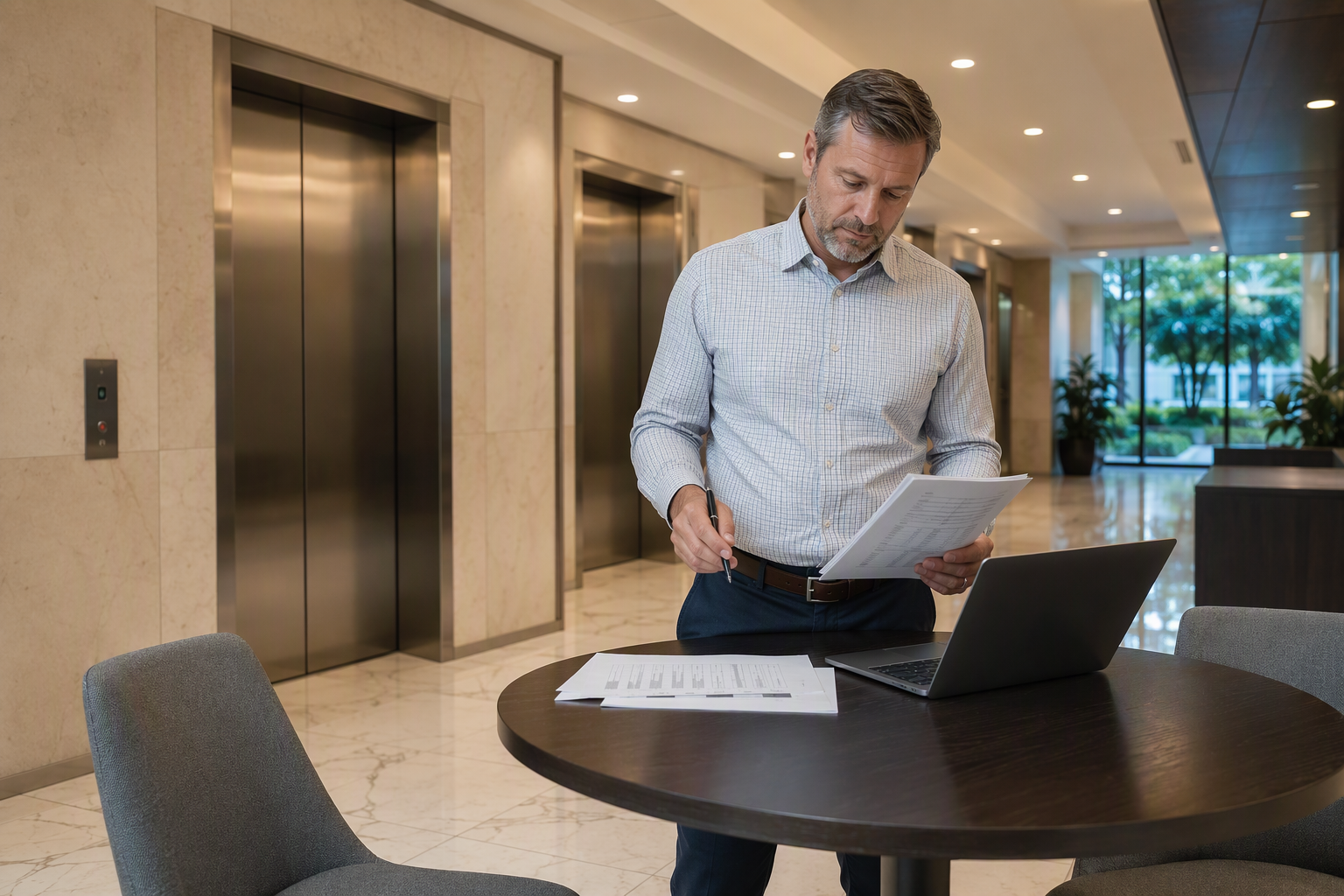
Securing elevator maintenance budget approval for 2027 requires more than a simple dollar figure. Property managers and facility directors in Columbia, SC need a complete financial and compliance case that speaks directly to what ownership cares about: liability exposure, regulatory standing, and long-term asset protection. Carolina Elevator Service helps Columbia-area building owners and managers build that case with local knowledge of South Carolina’s elevator requirements and the real cost drivers behind elevator upkeep.
What Are South Carolina’s Elevator Compliance Requirements That Budget Conversations Must Address?
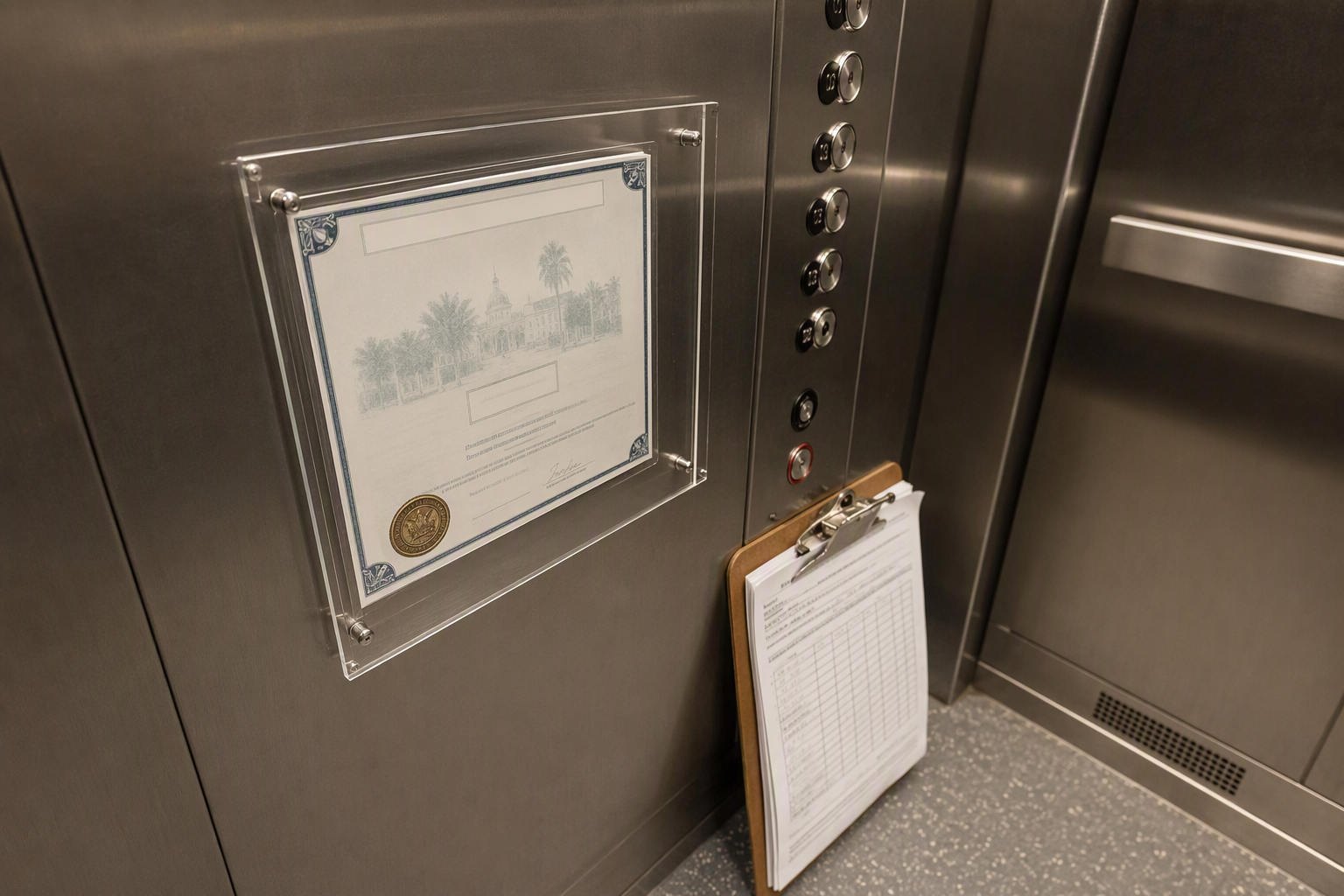
Any budget proposal that ignores regulatory requirements will lose credibility with informed ownership. Under S.C. Code Title 41, Chapter 16 and S.C. Code of Regulations Chapter 71, Article 5, South Carolina’s elevator compliance framework includes the following obligations building owners bear directly:
- Every elevator must be inspected at least once a year, and the operating certificate must be renewed before the elevator can legally continue operating.
- No elevator facility may operate without both a certificate of registration and a valid operating certificate issued by the state.
- The operating certificate — or a legible copy — must be displayed conspicuously inside each elevator car.
- The building owner is legally responsible for keeping every elevator facility in safe operating condition and in compliance with state regulations.
- Any accident that seriously injures a non-employee must be reported to the state before the end of the next working day.
- South Carolina passenger elevators must have standby power capable of running emergency lighting and the alarm bell for at least four hours if normal power fails.
- A state construction permit is required before any elevator facility is erected, constructed, altered, or installed.
South Carolina’s adopted code is the ASME A17.1/CSA B44, 2019 edition, effective in South Carolina as of July 23, 2021. Presenting these obligations in writing shows ownership that maintenance spending is not discretionary — it is a condition of legal operation.
What Numbers Should a Property Manager Bring to an Ownership Budget Meeting?
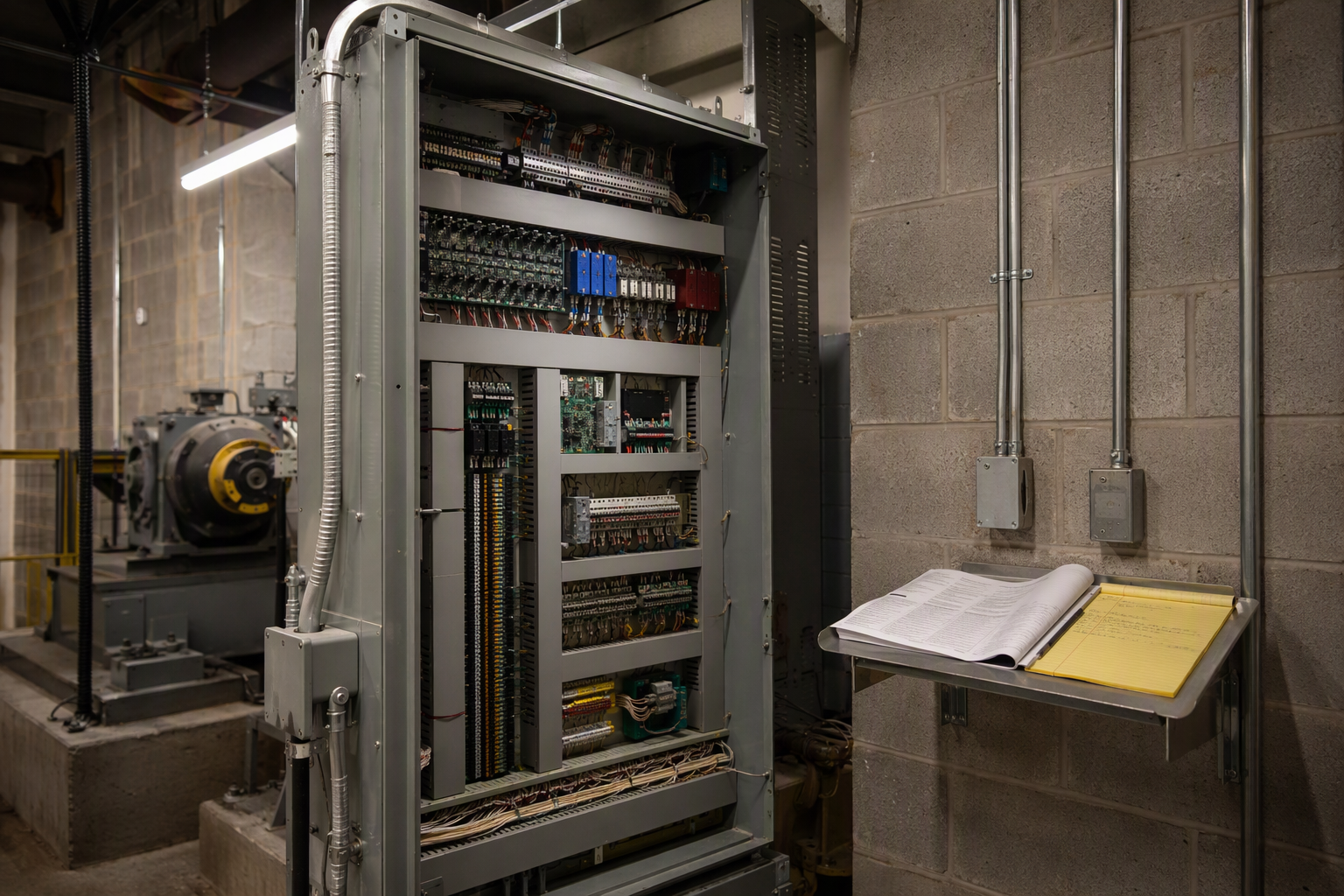
A compelling elevator maintenance budget proposal typically includes several categories of documented figures and qualitative risk factors:
- Current maintenance contract costs — the baseline annual spend on scheduled preventive maintenance, lubrication, adjustments, and routine parts replacement.
- Inspection and certificate fees — the cost of the annual inspection required before operating certificate renewal, whether performed by a state inspector or a licensed special inspector under the QEI-1 standard.
- Historical repair costs — a two-to-three-year lookback at unplanned repair invoices. Patterns in this data make the case for proactive maintenance over reactive spending.
- Deferred maintenance backlog — any documented items from past inspection reports or maintenance logs that have not yet been addressed. Unaddressed items accumulate liability and eventually cost more to correct.
- Capital replacement timeline — the age and condition of major components (controller, hydraulic cylinder, cab, door operator, ropes) and any manufacturer end-of-life guidance. A five-year capital forecast is far easier for ownership to absorb than a surprise replacement request.
- Downtime cost estimate — a qualitative or quantitative estimate of what elevator downtime costs the building in lost productivity, tenant complaints, or ADA access liability.
- Compliance risk — the consequence of an out-of-compliance elevator: potential shutdown by the South Carolina Department of Labor, Licensing and Regulation (LLR), Office of Elevators and Amusement Rides, loss of operating certificate, and exposure to liability if an incident occurs while the unit is out of compliance.
How Should the Budget Proposal Be Structured to Win Approval?
- Open with the compliance mandate. Cite the South Carolina statutory obligation under S.C. Code Title 41, Chapter 16 that places maintenance responsibility squarely on the building owner. Frame this as non-negotiable operating cost, not a discretionary line item.
- Present the current-state cost baseline. Show last year’s actual maintenance, inspection, and repair spending in a simple table. Separate planned from unplanned costs.
- Document the deferred maintenance exposure. Pull every open item from inspection reports and service records. Assign a rough remediation cost range to each item. This step converts abstract risk into a number ownership can weigh.
- Build the five-year capital forecast. For each elevator, list major components, estimated remaining service life, and a projected replacement cost range. A phased capital plan signals financial maturity and avoids budget shock in future years.
- Quantify downtime risk. Estimate the revenue or productivity impact of an elevator being taken out of service — whether for emergency repair or regulatory shutdown. For multi-story commercial buildings and healthcare facilities, this figure alone often closes the approval.
- Propose the 2027 budget in tiers. Present a base-tier (statutory minimum: inspections, certificate renewals, preventive maintenance contract), a recommended-tier (base plus deferred maintenance remediation), and a capital-tier (base plus recommended plus any identified component replacements). Tiered options give ownership a choice rather than a take-it-or-leave-it number.
- Attach the vendor proposal. A written proposal from a certified elevator service company lends third-party credibility to every line item and demonstrates that costs have been market-tested.
What Is the Difference Between Preventive Maintenance and a Full-Service Agreement?
Not all elevator service contracts are equal, and ownership will ask. A basic preventive maintenance agreement typically covers scheduled visits, lubrication, adjustments, and safety checks. A full-service or comprehensive agreement generally covers those same items plus parts and labor for most covered repairs, reducing exposure to large unplanned invoices. For 2027 budget planning, the contract type directly affects how a property manager presents risk to ownership — a comprehensive agreement converts variable repair costs into a predictable fixed line, which ownership can model reliably. Carolina Elevator Service works with Columbia-area building owners to identify the contract structure that fits their portfolio size, elevator age, and budget tolerance.
What South Carolina Inspection Requirements Drive the Annual Budget Cycle?
South Carolina requires most elevators to be inspected at least once per year before the operating certificate is renewed. Inspections must be conducted by a state inspector or a licensed special inspector who meets the qualifications in the 2018 edition of QEI-1, the American National Standard for Qualification of Elevator Inspectors. Importantly, a special inspector may not inspect an elevator on which the inspector or the inspector’s employer holds a current service or maintenance contract — this independence requirement affects how building managers structure their vendor relationships and should be noted in any budget proposal that bundles maintenance and inspection services.
For properties with handicap lifts, the inspection cycle is every five years. Manlifts, television tower elevators, and special purpose elevators are inspected every seven years. Dumbwaiters require inspection at installation or alteration. Mapping each unit’s inspection schedule into the 2027 budget calendar ensures no certificate lapse.
How Does ADA Compliance Factor Into the Elevator Budget?
Federal Americans with Disabilities Act (ADA) requirements apply to elevators in public accommodations and commercial facilities throughout Columbia, SC. Elevator accessibility — including door timing, control height, audible signals, and Braille markings — must be maintained. When a repair or modernization project is triggered by a South Carolina inspection finding, it is also an opportunity to audit ADA compliance at the same time. Including a line in the 2027 budget for an ADA accessibility review alongside any planned upgrade helps ownership avoid a second mobilization cost later and reduces legal exposure.
When Should Columbia Building Owners Begin the 2027 Budget Process?
The most effective 2027 elevator budget proposals are built in the third quarter of 2026 — before annual budget submission deadlines and while there is still time to obtain updated service proposals, pull current inspection records, and commission any needed equipment assessments. Waiting until Q4 compresses the process, reduces negotiating leverage with vendors, and increases the risk that deferred maintenance items are underestimated. Carolina Elevator Service encourages Columbia-area property managers to begin the documentation and planning process early so that ownership has a complete, defensible package before internal budget cycles close.
Why Does Local Elevator Expertise Matter for Budget Credibility?
A budget proposal backed by a locally familiar service provider carries more weight than one sourced from a national vendor with no Columbia presence. Carolina Elevator Service serves commercial office buildings, healthcare facilities, multifamily properties, government buildings, and retail centers throughout the Columbia, SC market. That local footprint means faster response when an inspection finding needs remediation before a certificate renewal, direct familiarity with the South Carolina Department of Labor, Licensing and Regulation (LLR), Office of Elevators and Amusement Rides’ processes, and service continuity that a remote provider cannot match. When ownership asks who is behind the budget numbers, a local certified service partner is a stronger answer than a national call center.
Schedule a Free Consultation
Carolina Elevator Service helps Columbia, SC building owners and property managers build elevator maintenance budgets that win approval and keep properties in full compliance with South Carolina law. Whether the need is a documented equipment assessment, a 2027 service proposal, or a capital replacement forecast, the team is ready to help.
Call Carolina Elevator Service today: 803-865-1400
Schedule a Free Consultation and bring the right numbers to your next ownership meeting.
Need elevator service you can rely on? Carolina Elevator Service is ready to help.