Elevator Service in Columbia, SC | Carolina Elevator Service
Getting elevator bids from multiple companies sounds straightforward — until the proposals arrive and no two look alike. One company quotes a lump sum; another breaks out parts, labor, and compliance fees separately. Without a consistent framework, comparing bids becomes guesswork. This guide walks Columbia, SC building owners through every step of gathering, reading, and comparing elevator service proposals accurately — and explains how South Carolina’s regulatory requirements should shape every decision.
What should I include in my elevator bid request to get accurate, comparable proposals?
The single most important step happens before any company is contacted: defining the scope of work in writing. A vague request produces wildly inconsistent responses that cannot be compared fairly. A complete bid request package should include:
- Equipment inventory: List every elevator, lift, dumbwaiter, or escalator on the property — including make, model, capacity, and installation year if known.
- Current compliance status: Note whether each unit holds a valid operating certificate and when the last annual inspection was completed under South Carolina Department of Labor, Licensing and Regulation (LLR) requirements.
- Specific services needed: Distinguish between routine maintenance, modernization, repair, code-compliance upgrades, or emergency service. Mixing categories in one vague request causes bidders to make different assumptions.
- Code requirements to be addressed: Specify whether the project involves new installation, alteration, or existing equipment — because South Carolina applies different standards to each category.
- Contract term: State whether you are seeking a one-time repair quote, an annual maintenance agreement, or a multi-year service contract.
- Inspection coordination expectations: Clarify whether the contractor is expected to coordinate with a state inspector or a licensed special inspector for any required inspections.
- Documentation requirements: Request that each bidder specify what permits, certificates, and reports will be provided upon job completion.
Sending the same written document to every bidder is the only way to ensure the proposals you receive are answering the same question.
How many elevator companies should I contact for bids in Columbia, SC?
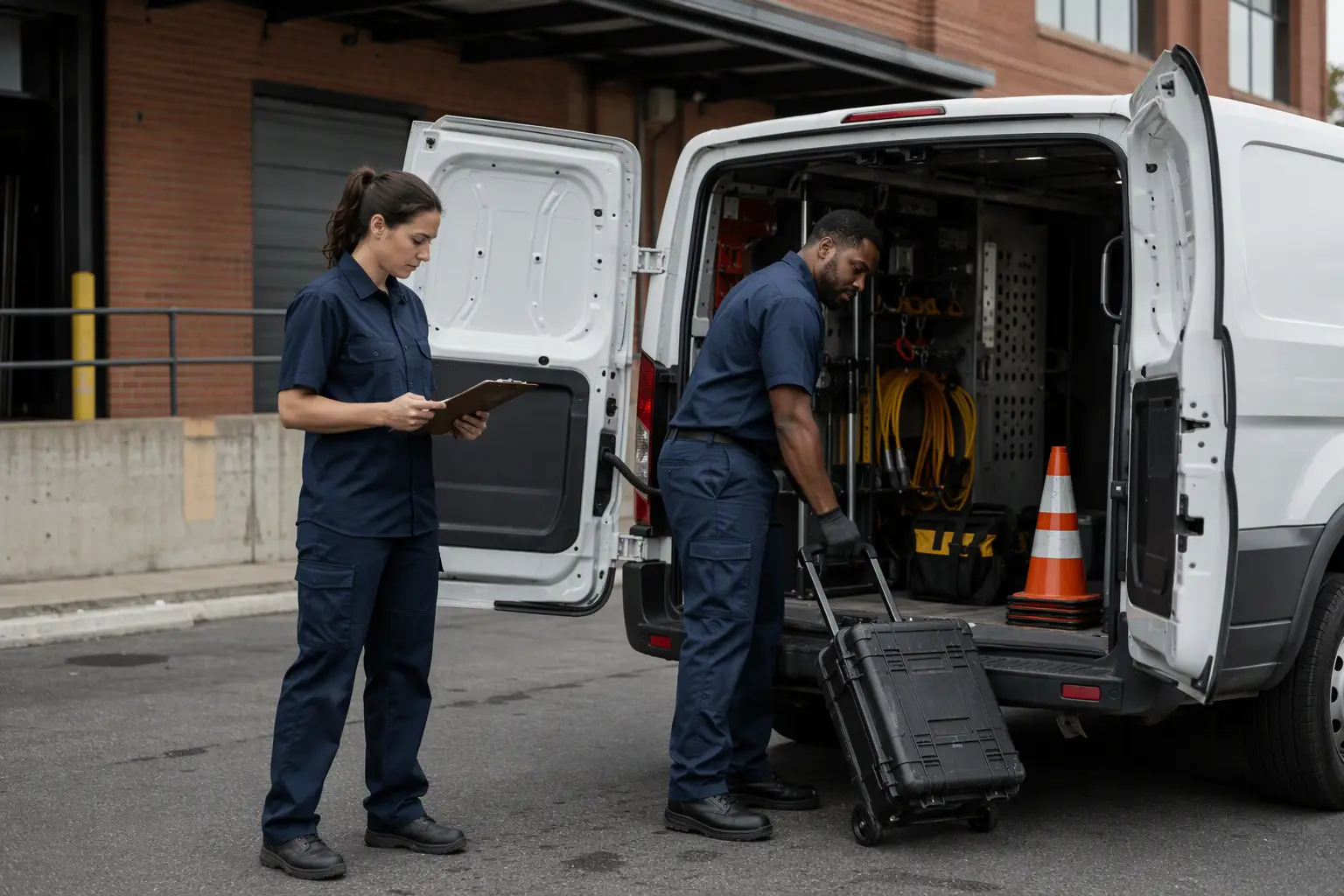
Industry practice generally supports requesting proposals from at least three qualified service providers. Fewer than three gives too little pricing context; more than five can create administrative burden without proportional benefit. The goal is not simply to collect the lowest number — it is to gather enough data points to identify outliers and understand what a fair market rate looks like for the specific scope of work defined.
In Columbia, SC and the surrounding Midlands region, building owners should verify that any company they contact is familiar with South Carolina’s regulatory framework, including the requirement to obtain a state construction permit before any elevator is erected, constructed, altered, or installed, and the state’s adoption of the ASME A17.1/CSA B44, 2019 edition as the governing safety code for new installations.
What South Carolina compliance requirements should every elevator bid address?
Every proposal for elevator work in South Carolina should account for the following regulatory requirements governed by the South Carolina Department of Labor, Licensing and Regulation (LLR), Office of Elevators and Amusement Rides, under S.C. Code Title 41, Chapter 16 and S.C. Code of Regulations Chapter 71, Article 5:
- Operating certificates: No elevator may be operated in South Carolina without a valid certificate of registration and an operating certificate from the state. The certificate — or a copy — must be displayed conspicuously inside each elevator car. A compliant contractor should address certificate renewal in any maintenance or repair proposal.
- Annual inspections: Standard passenger elevators must be inspected at least once a year before the operating certificate is renewed. A bid covering ongoing maintenance should explain how inspection coordination is handled.
- Varied inspection intervals for specialized equipment: Handicap lifts require inspection every five years; manlifts, television tower elevators, and special purpose elevators every seven years; dumbwaiters when installed or altered. A bid covering these unit types should reflect the applicable interval.
- State construction permits: Any new installation, alteration, or repair that triggers permit requirements must obtain a state construction permit before work begins. A bid that omits permit costs for qualifying work is incomplete.
- Special inspector independence: In South Carolina, a special inspector may not inspect an elevator on which the inspector or the inspector’s employer holds a current service or warranty contract. This rule affects how inspection and service contracts can be structured — a bidder who will also serve as the special inspector creates a conflict under state law.
- Standby power: South Carolina requires passenger elevators to have standby power capable of running emergency lighting and the alarm bell for at least four hours if normal power fails. Any modernization or upgrade proposal should confirm this requirement is met.
- Underground hydraulic cylinders: New underground hydraulic elevator cylinders in South Carolina must be encased in plastic outer containment to limit electrolytic corrosion. Bids involving hydraulic elevator work should specify compliance with this requirement.
- Firefighters’ service key: New installations requiring firefighters’ service must use the five-pin S.C. #1000 key. Proposals for new installations should confirm this specification.
- Owner responsibility: South Carolina law places responsibility on the owner to keep every elevator facility in safe operating condition and in compliance with state regulations. A service agreement should clearly define what the contractor maintains and what remains the owner’s responsibility.
How do I read and compare elevator bid documents side by side?
Once proposals are received, the comparison process requires a structured approach. Using a simple spreadsheet with each bidder in a column and each scope item in a row prevents important details from being overlooked. Key line items to compare include:
- Parts coverage: Are replacement parts included, excluded, or covered only up to a certain value?
- Labor rates: Are standard hours and after-hours labor priced separately?
- Permit and inspection fees: Are these bundled into the proposal or listed as pass-through costs?
- Exclusions: What does each bidder explicitly exclude? Exclusions matter as much as inclusions.
- Contract length and cancellation terms: Longer contracts may offer lower rates but reduce flexibility.
- Response availability: Does the bidder describe emergency service availability? Is it local?
- Documentation: Will the contractor provide copies of permits, inspection reports, and compliance records?
- Warranty on completed work: What coverage, if any, applies after repairs or modernization?
A bid that appears lower on its face may carry significant hidden costs when parts, permits, and after-hours labor are excluded and priced separately. Total cost of ownership — not the headline number — is the accurate basis for comparison.
What questions should I ask each elevator company before awarding a contract?
Beyond the written proposals, direct conversations with each bidder can surface important differences. Useful questions include:
- How do you coordinate with South Carolina LLR inspectors for annual inspections and permit closeouts?
- Will your technicians be the ones performing the work, or will portions be subcontracted?
- How do you handle parts availability for older or legacy equipment?
- Can you provide references from similar properties in the Columbia, SC area?
- How is emergency service dispatched, and is local coverage available?
- What records and documentation will you maintain on behalf of the building owner?
Answers to these questions help distinguish companies that are familiar with South Carolina’s requirements from those applying generic or out-of-state practices.
Does ADA compliance affect elevator bids for Columbia, SC properties?
Yes. The Americans with Disabilities Act (ADA) imposes accessibility requirements on elevators in places of public accommodation and commercial facilities. When evaluating bids for modernization, alteration, or new installation projects, building owners should confirm that the proposed scope addresses applicable ADA requirements — including cab dimensions, door timing, control height, and signage. A contractor unfamiliar with ADA standards may submit a technically complete bid under South Carolina’s elevator code that still leaves the property owner exposed to federal accessibility liability. Requesting a written statement of ADA compliance scope from each bidder is a reasonable step for any renovation or modernization project.
What are common mistakes Columbia, SC building owners make when comparing elevator bids?
Several patterns consistently lead to poor purchasing decisions in the elevator service market:
- Selecting on price alone: The lowest bid frequently reflects the narrowest scope, the fewest inclusions, or limited local service capacity — not a genuine market advantage.
- Failing to verify compliance scope: Bids that do not address South Carolina’s permit, inspection, and certificate requirements shift compliance risk to the building owner after the contract is signed.
- Ignoring contract exit terms: Multi-year maintenance contracts with punitive cancellation clauses can lock a property into an underperforming relationship for years.
- Comparing bundled vs. itemized proposals directly: A bundled lump-sum and an itemized proposal must be mapped to the same scope before any price comparison is valid.
- Overlooking local familiarity: Companies based outside the Columbia, SC area may not have the regional relationships and knowledge needed to navigate South Carolina’s inspection and permitting processes efficiently.
- Skipping reference checks: A proposal looks the same whether or not the company can execute on it. References from similar local properties provide evidence of actual performance.
Why does local elevator expertise matter for Columbia, SC properties?
Columbia, SC’s building stock spans historic downtown office buildings, university facilities, healthcare campuses, hospitality properties, and modern mixed-use developments. Each market segment brings distinct equipment types, usage patterns, and compliance histories. A service provider with direct experience across these local property types is better positioned to identify code-compliance gaps, anticipate parts challenges for aging equipment, and coordinate efficiently with South Carolina LLR inspectors.
Carolina Elevator Service focuses exclusively on South Carolina, bringing direct familiarity with the LLR’s processes, the state’s adopted ASME A17.1/CSA B44, 2019 edition requirements, and the specific regulatory nuances — from the S.C. #1000 firefighters’ key requirement to the underground hydraulic containment rule — that out-of-state or generalist providers may not know in depth. For Columbia building owners, working with a provider that treats South Carolina compliance as a core competency — not an afterthought — reduces regulatory risk and produces more accurate, complete proposals from the start.
Ready to get a clear, compliant elevator service proposal for your Columbia, SC property?
Carolina Elevator Service provides detailed, itemized proposals that account for South Carolina’s full regulatory requirements — so you can compare bids confidently and make an informed decision.
Schedule a Free Consultation: 803-865-1400
Need elevator service you can rely on? Carolina Elevator Service is ready to help.