When a commercial building in South Carolina is sold or transfers to a new property management company, existing elevator service contracts do not automatically transfer — the new owner or manager must independently verify the elevator’s registration, operating certificate, and ongoing maintenance obligations under S.C. Code Title 41, Chapter 16, and should immediately review any existing service agreement to determine assignment clauses, termination rights, and compliance gaps before assuming liability.
Elevator Service Contracts During Property Sales and Management Changes in South Carolina: Complete FAQ Guide
Elevator service contracts in South Carolina do not automatically transfer with a property sale or management change — new owners and managers must proactively review contract assignment terms, confirm state registration and operating certificates remain valid, and ensure compliance with S.C. Code Title 41, Chapter 16 to avoid operating an elevator illegally.
Ownership transitions and property management changes create one of the most common compliance gaps in commercial elevator management. The questions below address every dimension of this transition — from contract law and state registration to inspection requirements and ADA obligations — providing the practical detail that building owners, property managers, and real estate professionals in Columbia, SC need before, during, and after a transfer.
What happens to an elevator service contract when a commercial building is sold in South Carolina?
An elevator service contract is a private commercial agreement that does not automatically transfer to a new property owner — the contract’s assignment language, state compliance obligations, and the new owner’s independent liability all come into play simultaneously.
Most elevator service contracts contain an assignment clause specifying whether the agreement can be transferred to a new owner without the service company’s consent, requires mutual written agreement, or terminates automatically at closing. Buyers should request and review the full service contract during due diligence, not after the deed records.
Independently of the private contract, South Carolina law under S.C. Code Title 41, Chapter 16 places the compliance obligation on the owner of record. The new owner is legally responsible for ensuring the elevator facility holds a valid certificate of registration and an operating certificate from the South Carolina Department of Labor, Licensing and Regulation (LLR), Office of Elevators and Amusement Rides. Those state certificates do not transfer with the deed — the new owner must verify their status before continuing to operate the equipment.
Does the new property owner inherit the seller’s elevator operating certificate in South Carolina?
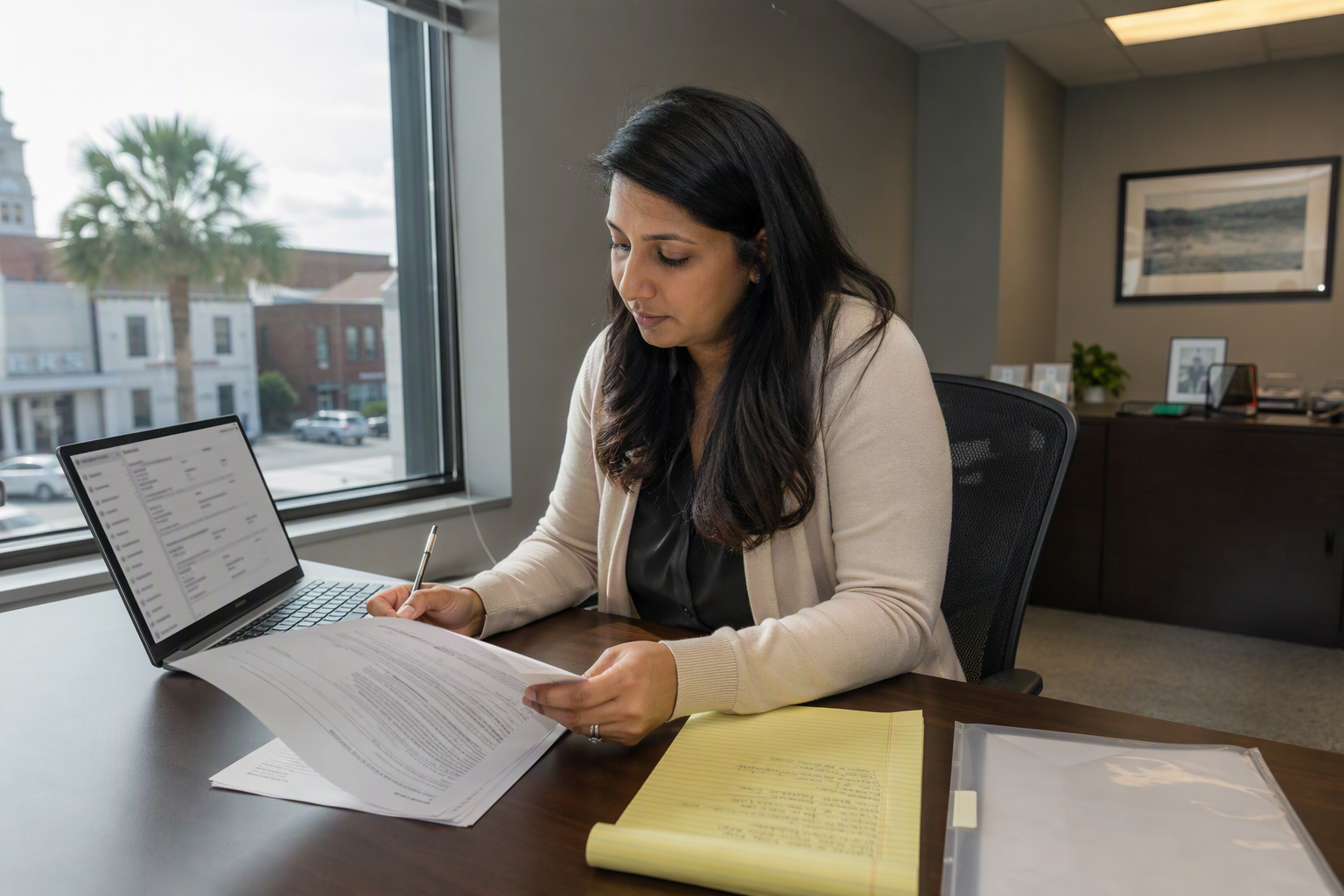
No — a South Carolina elevator operating certificate is issued to the facility and reflects the owner’s compliance status at the time of issuance, but the new owner is independently responsible for maintaining that compliance and cannot simply rely on the prior owner’s paperwork.
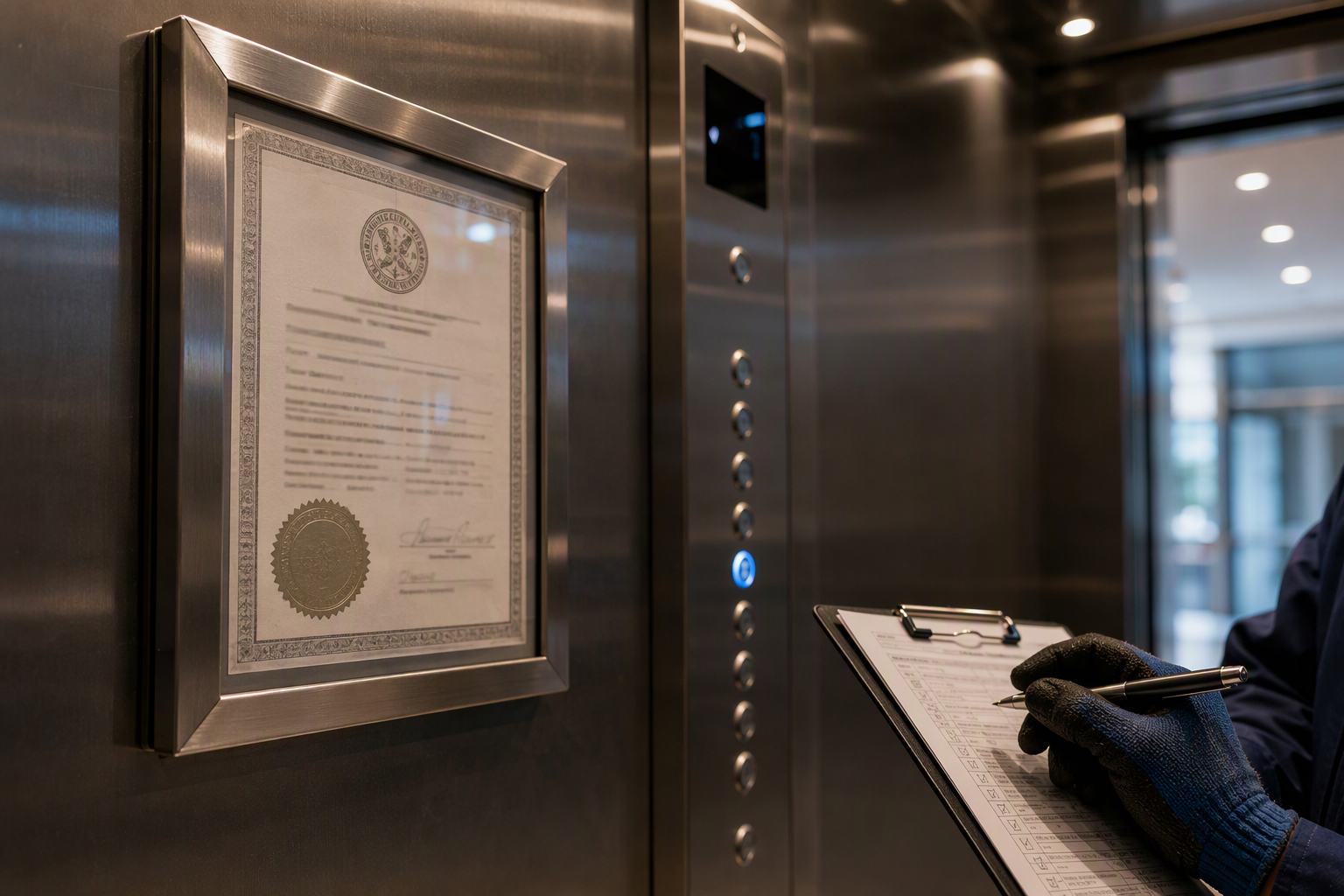
Under South Carolina regulations (S.C. Code of Regulations Chapter 71, Article 5), no elevator facility may be operated without both a certificate of registration and a valid operating certificate from the LLR. The operating certificate, or a copy, must be conspicuously displayed inside each elevator car. A new owner should immediately confirm that the certificate on display has not expired and that the upcoming annual inspection is scheduled before assuming any revenue-generating use of the building.
If the certificate has lapsed — which sometimes occurs when a building sits vacant during a sale — the new owner must bring the elevator into compliance, which may require a new inspection by a state inspector or a licensed special inspector before resuming operation. Carolina Elevator Service works with building owners in Columbia, SC to audit certificate status as part of any ownership transition review.
What does a South Carolina elevator service contract typically cover, and why does it matter at closing?
A standard elevator service contract in South Carolina typically covers scheduled preventive maintenance visits, emergency callback response, lubrication and adjustment of mechanical components, and limited parts replacement — though the exact scope varies significantly by contract tier.
At closing, the scope of the existing contract matters because it determines whether the elevator has been maintained to the standard required by ASME A17.1-2019/CSA B44:19, which South Carolina adopted effective July 23, 2021. A contract that covers only oil-and-grease maintenance without addressing safety device testing, door operator inspections, or hydraulic system integrity may leave the new owner facing deferred maintenance liability that was not disclosed in the purchase agreement.
Buyers should request maintenance logs, inspection reports, and any violation notices from the LLR’s Office of Elevators and Amusement Rides as part of standard commercial due diligence. These documents reveal not only the physical condition of the equipment but also whether the prior owner was in compliance with South Carolina’s annual inspection requirement.
Can a new owner cancel an inherited elevator service contract without penalty?
Whether a new owner can exit an inherited elevator service contract without financial penalty depends entirely on the contract’s termination provisions, assignment clauses, and whether the original agreement was properly disclosed at closing.
Many elevator service agreements are multi-year contracts — commonly one to five years in duration — with automatic renewal clauses and early termination fees. If a seller assigns the contract to the buyer at closing, the buyer inherits all remaining obligations, including termination fees. If the contract was not formally assigned and the service company was not notified of the ownership change, the legal position of both parties may be less clear and warrants review by a commercial real estate attorney familiar with South Carolina contract law.
Practically, a new owner who wants to switch elevator service providers should review the notice period required to cancel or non-renew, the definition of “assignment” in the agreement, and whether a change-of-ownership event constitutes a default or a trigger for renegotiation. Acting before the next auto-renewal date is almost always the lowest-cost exit path.
What are the steps a new property owner should take immediately after acquiring a building with an elevator in South Carolina?
Following a defined sequence of actions immediately after closing protects a new owner from operating an elevator in violation of South Carolina law and from inheriting undisclosed maintenance liabilities.
- Verify the operating certificate. Locate the certificate displayed inside each elevator car and confirm it has not expired. Contact the LLR’s Office of Elevators and Amusement Rides to confirm the certificate of registration is current under the new ownership information.
- Obtain all maintenance records. Request the complete maintenance history, inspection reports, violation notices, and any outstanding correction orders from the seller or the current service provider.
- Review the existing service contract. Identify assignment clauses, auto-renewal dates, termination provisions, and notice requirements before taking any action with the service provider.
- Inspect the operating certificate display. Confirm the certificate is posted conspicuously inside each elevator car as required under South Carolina regulations.
- Schedule an independent condition assessment. Commission a mechanical assessment from a qualified elevator service company — not the incumbent service provider — to identify any deferred maintenance, code compliance gaps, or safety device deficiencies.
- Confirm the next annual inspection date. South Carolina requires elevators to be inspected at least once a year before the operating certificate is renewed. Identify that date and ensure a qualified inspector is scheduled.
- Review ADA compliance status. Confirm the elevator meets applicable accessibility requirements under the Americans with Disabilities Act, including door timing, control reach ranges, and audible and visual signals.
- Update emergency contact information. Ensure that building contact details, after-hours emergency contacts, and elevator registration information are updated with the service provider and the LLR.
What happens to elevator service contracts when a property management company changes?
When a property management company is replaced, the elevator service contract typically remains in place because it is a contract between the building owner and the elevator service company — not between the property manager and the service company — unless the management agreement granted the manager authority to contract on the owner’s behalf.
However, in practice, many property managers execute elevator service contracts in their own name or as agent for the owner without clearly specifying which party is the legal counterparty. When that manager is replaced, the new management company and the building owner may find themselves in a disputed position over who holds — and who must honor — the remaining contract term.
Building owners in Columbia, SC should ensure that any elevator service contract executed by a property manager clearly identifies the building owner as the principal party and the manager as agent. This structure prevents orphaned contracts when management relationships change and ensures that state compliance obligations, which run to the owner under South Carolina law, align with the contractual responsibility for maintaining the equipment.
Is the new property owner or the new property manager responsible for South Carolina elevator compliance?
Under S.C. Code Title 41, Chapter 16, the owner of an elevator facility bears the legal obligation to keep every elevator in safe operating condition and in compliance with South Carolina regulations — property managers carry operational responsibility only to the extent delegated by the owner’s agreement.
This distinction matters significantly in a management transition. If an elevator is operated with an expired certificate, if a required inspection is missed, or if a safety defect goes unaddressed, the enforcement exposure under South Carolina law falls on the owner of the facility, not on the property management company. Owners who delegate elevator oversight to a management company should confirm in writing exactly which compliance tasks — inspection scheduling, certificate renewal tracking, accident reporting, service contract administration — the manager is responsible for, and build audit mechanisms to verify those tasks are completed.
What South Carolina inspection requirements apply to a building with a recently sold elevator?
South Carolina requires elevators to be inspected at installation, registration, alteration or repair, and at least once annually before the operating certificate is renewed — a change of ownership does not reset or pause this cycle.
Required inspections may be made only by state inspectors or by special inspectors licensed by the LLR who meet the qualifications established in the 2018 edition of QEI-1, the American National Standard for Qualification of Elevator Inspectors. A special inspector’s inspection may be accepted in place of a state inspection, giving building owners flexibility in scheduling — but the inspection itself cannot be waived or deferred because of a sale.
One critical restriction: in South Carolina, a special inspector may not inspect an elevator on which the inspector or the inspector’s employer has a current service or warranty contract. This means the incumbent service company’s inspector cannot perform the compliance inspection on the same equipment they maintain. New owners engaging an independent service provider for a post-acquisition assessment should confirm that the assessor is not simultaneously the contracted service provider performing the annual inspection, unless a separate inspector unaffiliated with the service contract conducts the official compliance inspection.
For handicap lifts specifically, South Carolina requires inspection every five years, while manlifts, television tower elevators, and special purpose elevators are inspected every seven years. Dumbwaiters are inspected when installed or altered.
What ADA obligations does a new commercial building owner inherit with the elevator?
A new commercial building owner inherits full ADA compliance obligations for the elevator the moment they take ownership, regardless of what the prior owner did or did not address.
The ADA does not provide a grace period tied to a property transfer. If the elevator does not meet ADA accessibility requirements — including door timing, car dimensions, control panel reach ranges, Braille and raised character signage, audible and visual signals, and leveling accuracy — the new owner may be subject to complaints and legal exposure from the date of acquisition. ADA requirements apply to public accommodations and commercial facilities covered under Title III and to places of employment under Title II, depending on the nature of the building’s tenants.
Buyers of older commercial buildings in Columbia, SC should specifically investigate whether any previous ADA barrier removal obligations were identified and deferred, as those deferred obligations do not expire at closing.
How should a new owner evaluate whether to keep or replace the existing elevator service provider?
Evaluating an incumbent elevator service provider at acquisition requires reviewing maintenance documentation quality, response to past deficiencies, contract terms, and whether the provider’s capabilities match the new owner’s building management goals.
Key evaluation criteria include: whether the provider has maintained current inspection records without gaps, whether safety device tests have been documented, whether the service contract covers the scope required by ASME A17.1-2019/CSA B44:19 standards, and whether the provider can service the specific make and model of elevator equipment installed. Proprietary equipment from certain manufacturers may limit the practical field of alternative providers who can obtain genuine replacement parts without extended lead times.
Carolina Elevator Service provides independent condition assessments for Columbia, SC building owners who want an objective evaluation of their elevator’s maintenance history and mechanical condition before deciding whether to retain an existing service relationship or transition to new management.
What is the risk of operating an elevator in South Carolina with an expired or unverified service contract?
Operating an elevator without a current service contract does not itself violate South Carolina law — but allowing the equipment to fall out of the maintained condition required to pass inspection and maintain a valid operating certificate does create direct legal exposure.
South Carolina law requires that no elevator facility be operated without a valid operating certificate. If deferred maintenance from a lapsed or inadequate service arrangement causes the elevator to fail inspection or results in a safety deficiency, the owner faces the prospect of a shutdown order until compliance is restored. If a serious injury occurs, the accident must be reported to the state before the end of the next working day. An absence of documented maintenance at the time of an incident significantly complicates any defense of the owner’s obligation to maintain the facility in safe operating condition.
What contract terms should a new owner negotiate when entering a fresh elevator service agreement in South Carolina?
A new owner entering a fresh elevator service agreement should negotiate scope clarity, fair termination provisions, inspection coordination language, and documentation requirements before signing.
Specifically, new owners should seek: a clearly defined scope that specifies which components are covered versus billed separately; a termination-for-cause provision that allows exit if the provider fails to perform; a reasonable notice period for non-renewal that does not require 90 or 120 days’ advance notice on a short-term contract; documentation requirements that commit the provider to maintaining inspection-ready maintenance logs; and coordination language addressing the South Carolina restriction that prevents the service contractor from performing the official annual compliance inspection using their own affiliated inspector.
What happens if an elevator has outstanding violation orders from the LLR when a building is sold?
Outstanding violation orders or correction notices from the South Carolina Department of Labor, Licensing and Regulation’s Office of Elevators and Amusement Rides do not disappear at closing — they attach to the facility and become the new owner’s responsibility.
A buyer who closes on a building without identifying open LLR violation orders may face immediate remediation costs, potential shutdown of the elevator, and personal compliance liability for conditions that predated their ownership. Standard commercial due diligence in South Carolina should include a review of any outstanding correction orders, compliance notices, or inspection failures on record with the LLR for the elevator facility. Sellers should disclose these items; buyers should independently verify them and negotiate remediation responsibility and escrow holdbacks into the purchase agreement where violations exist.
Does selling a building in South Carolina require any elevator-specific disclosures?
South Carolina commercial real estate law does not impose a specific statutory elevator disclosure form equivalent to residential property disclosures — but general commercial disclosure obligations, representations and warranties in the purchase agreement, and the potential for fraud or misrepresentation claims create practical disclosure expectations for elevator condition and compliance history.
From a risk management standpoint, sellers should disclose known deficiencies, outstanding LLR notices, the current certificate status, the maintenance history, and the terms of any existing service contract. Buyers should not rely on voluntary disclosure alone and should conduct independent due diligence including a review of state records and a physical condition assessment. The consequences of acquiring an elevator with undisclosed deficiencies — particularly one that has failed a prior inspection or has an unreported safety incident — can significantly exceed the cost of thorough pre-closing investigation.
How does ASME A17.1 apply to elevators in buildings that change hands in South Carolina?
The ASME A17.1 Safety Code for Elevators and Escalators establishes the technical safety requirements that apply to elevator equipment — and in South Carolina, the 2019 edition (ASME A17.1-2019/CSA B44:19) is the adopted code for new installations and major alterations as of July 23, 2021.
A change of ownership does not alter which edition of ASME A17.1 governs a particular installation. New elevator facilities must comply with the edition in effect when the construction permit was issued. Elevator facilities in operation before July 1, 1986 must comply with the 1986 edition of ANSI A17.3, the safety code for existing elevators and escalators. When a buyer acquires a building with a vintage elevator, understanding which code edition governs the equipment is essential for evaluating compliance obligations and modernization requirements.
Alterations — which include significant repairs, component replacements, or modernization projects — may trigger requirements to bring affected systems into compliance with the currently adopted edition of ASME A17.1. New owners planning modernization projects shortly after acquisition should work with a qualified service provider to understand which scope of work triggers upgrade requirements under South Carolina’s adopted code.
What should a property manager do on the first day of managing a building with an elevator they did not previously oversee?
A new property manager taking over a building with an elevator should treat day one as a compliance verification exercise, not an assumption that prior management left everything in order.
- Locate and inspect the operating certificate displayed inside each elevator car and verify it is current.
- Request the full maintenance history from the prior manager or service contractor, including inspection reports and any LLR correspondence.
- Identify the next annual inspection date and confirm that a qualified inspector is scheduled.
- Review the existing service contract to understand scope, renewal dates, and the identity of the contracting party (owner vs. manager).
- Update emergency response protocols with current building contacts and confirm the elevator company’s emergency callback procedure.
- Verify ADA compliance documentation and confirm any open accessibility deficiencies have been addressed or are on a documented remediation plan.
- Confirm accident reporting awareness — under South Carolina law, any accident that seriously injures a person other than an employee must be reported to the state before the end of the next working day.
Can a South Carolina elevator be operated temporarily without a service contract while a new owner evaluates their options?
South Carolina law requires elevators to be maintained in safe operating condition but does not mandate a specific contractual service arrangement — however, operating without any maintenance program during a transition creates practical safety and liability exposure that prudent owners avoid.
The more pressing legal requirement is that the elevator hold a valid operating certificate and be maintained in accordance with applicable regulations. A new owner who operates an elevator with no service arrangement — relying on the prior owner’s maintenance history — assumes full responsibility for any condition that develops during that gap. In the event of an incident, the absence of a documented maintenance program during the transition period is difficult to defend. A temporary or month-to-month service arrangement with a qualified provider bridges that gap while the owner evaluates long-term service options.
What elevator equipment factors affect how easy or difficult it is to switch service providers during a building transition?
The primary technical factor affecting serviceability is whether the elevator uses open or proprietary control systems, as some manufacturers design control systems that require proprietary diagnostic tools or software accessible only to their authorized service networks.
Equipment age, parts availability, and the condition of the modernization record also affect a new service provider’s ability to assume maintenance efficiently. Older hydraulic systems with underground cylinders — which in South Carolina must include plastic outer containment to limit electrolytic corrosion on new installations — may present environmental compliance questions. Buildings in Columbia, SC with vintage traction elevators using relay-logic controls may face limited parts availability that a new service provider should assess before committing to a contract scope.
During a building transition, Carolina Elevator Service conducts equipment assessments that document control system type, modernization history, parts availability considerations, and compliance status — giving new owners objective information before selecting a service provider or committing to a new contract term.
What is the role of a special inspector during a building sale or management transition in South Carolina?
A licensed South Carolina special inspector can perform the state-required annual inspection in place of a state inspector, providing scheduling flexibility that is particularly useful when a building sale accelerates the need for a current compliance determination.
Special inspectors must hold a license from the LLR and demonstrate qualifications under the 2018 edition of QEI-1. Critically, a special inspector may not inspect an elevator on which the inspector or the inspector’s employer holds a current service or warranty contract. This independence requirement means that a buyer who wants a credible, state-accepted inspection as part of acquisition due diligence should engage an inspector who has no financial relationship with the incumbent service provider — ensuring the inspection reflects an objective assessment of the equipment’s condition and compliance status.
How do elevator compliance requirements differ for different equipment types in a South Carolina commercial portfolio?
South Carolina applies different inspection schedules to different equipment types, which matters when a buyer or new manager acquires a portfolio containing mixed elevator and lift equipment.
| Equipment Type | South Carolina Inspection Frequency | Governing Standard |
|---|---|---|
| Passenger and freight elevators | At least annually (before operating certificate renewal) | S.C. Code Title 41, Chapter 16; ASME A17.1-2019 |
| Handicap (accessibility) lifts | Every five years | S.C. Code Title 41, Chapter 16 |
| Manlifts | Every seven years | S.C. Code Title 41, Chapter 16 |
| Television tower elevators | Every seven years | S.C. Code Title 41, Chapter 16 |
| Special purpose elevators | Every seven years | S.C. Code Title 41, Chapter 16 |
| Dumbwaiters | At installation or alteration | S.C. Code Title 41, Chapter 16 |
| Equipment in single private dwellings | Not subject to S.C. Elevator Code | S.C. Code Title 41, Chapter 16 |
Portfolio buyers who acquire mixed-use or multi-building assets in South Carolina should map each equipment type against its required inspection interval to ensure no compliance gaps exist at closing. A handicap lift that was last inspected slightly over five years ago, or a manlift approaching its seven-year interval, may require inspection before operation can legally continue under the new owner.
What ongoing compliance responsibilities does a new South Carolina elevator owner have after the transition is complete?
After a building transition is complete, the new owner’s ongoing elevator compliance responsibilities center on annual inspection renewal, continuous safe maintenance, accident reporting, and display of the operating certificate inside each elevator car.
The owner must maintain the elevator facility in safe operating condition and in line with South Carolina regulations at all times — this is a continuous obligation, not a periodic one. The operating certificate must remain current, which requires passing the applicable inspection on time each year for standard passenger and freight elevators. Any accident that seriously injures a person other than an employee must be reported to the LLR’s Office of Elevators and Amusement Rides before the end of the next working day — a deadline that property managers and building owners must be prepared to meet even when an incident occurs outside normal business hours.
Local ordinances that conflict with the South Carolina Elevator Code or its regulations are void under state law, meaning that municipal requirements in Columbia or any other South Carolina jurisdiction cannot impose standards that contradict the state code. Owners who receive conflicting guidance from local building departments should verify requirements against the state statute.
Carolina Elevator Service supports Columbia, SC building owners through ongoing compliance management — including inspection coordination, maintenance documentation, and technical guidance on equipment that spans multiple compliance cycles after an ownership transition.
Take the Next Step: Protect Your Investment and Stay Compliant
Property transitions create real compliance exposure for elevator owners in South Carolina. Whether a building has just changed hands, a new management company has taken over, or an existing service contract is up for review, the steps taken in the first days and weeks after a transition determine whether the elevator remains a safe, legally operating asset or a liability.
Contact Carolina Elevator Service for a free elevator assessment and let an experienced team review your equipment condition, certificate status, and service contract terms before they become problems.
Call Carolina Elevator Service today: 803-865-1400
Need elevator service you can rely on? Carolina Elevator Service is ready to help.