Elevator Service in Columbia, SC | Carolina Elevator Service
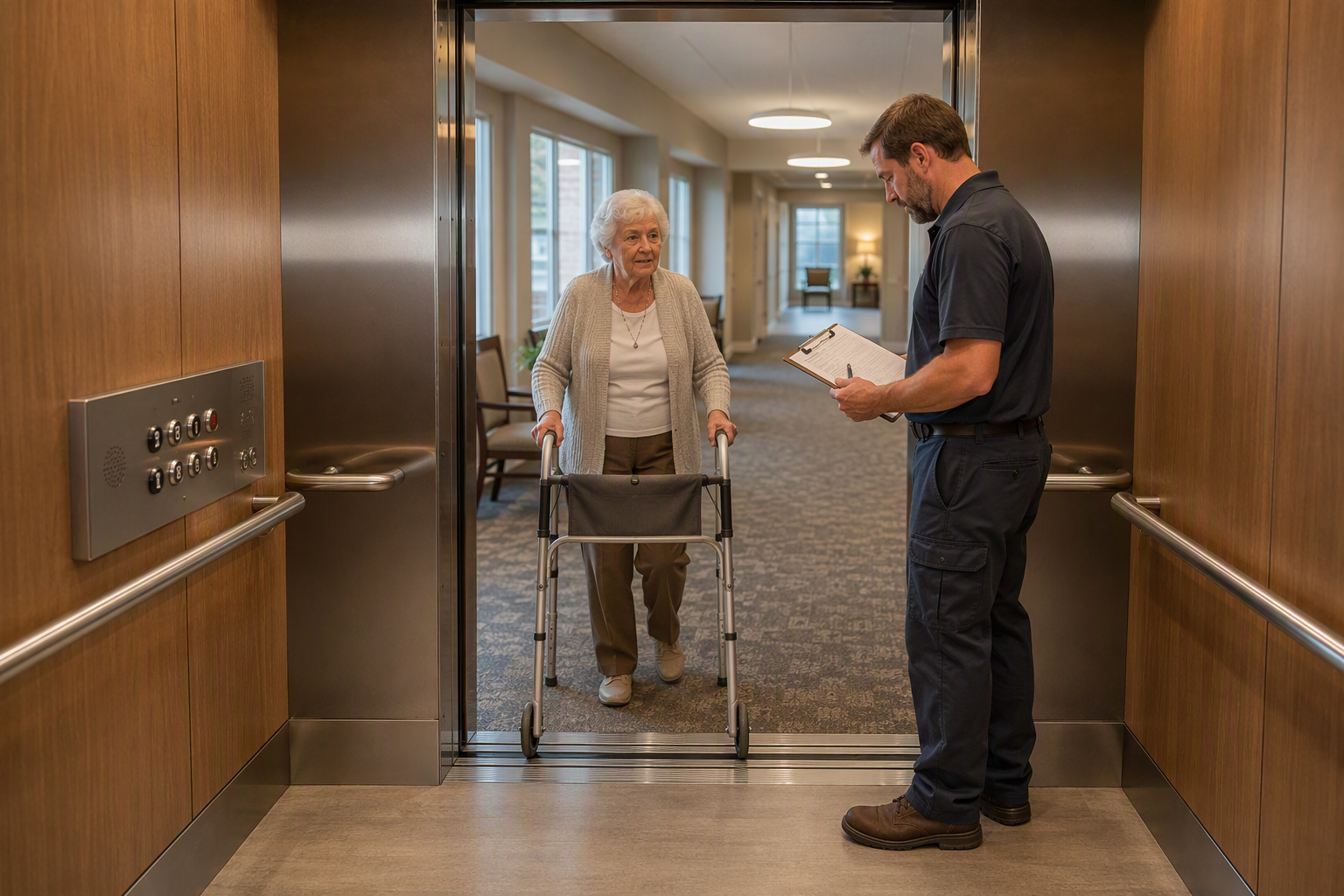
Senior living and assisted living facilities in Columbia, SC face a distinct set of elevator requirements that go well beyond standard commercial buildings. When residents depend on vertical transportation for daily movement — and when many use walkers, wheelchairs, or have cognitive conditions — elevator reliability is not a convenience; it is a care standard. Carolina Elevator Service works with senior communities across the Midlands of South Carolina to help facilities meet code requirements, maintain safe equipment, and protect their residents and their operating licenses.
—
What Federal Elevator Codes Apply to Senior Living Facilities in South Carolina?
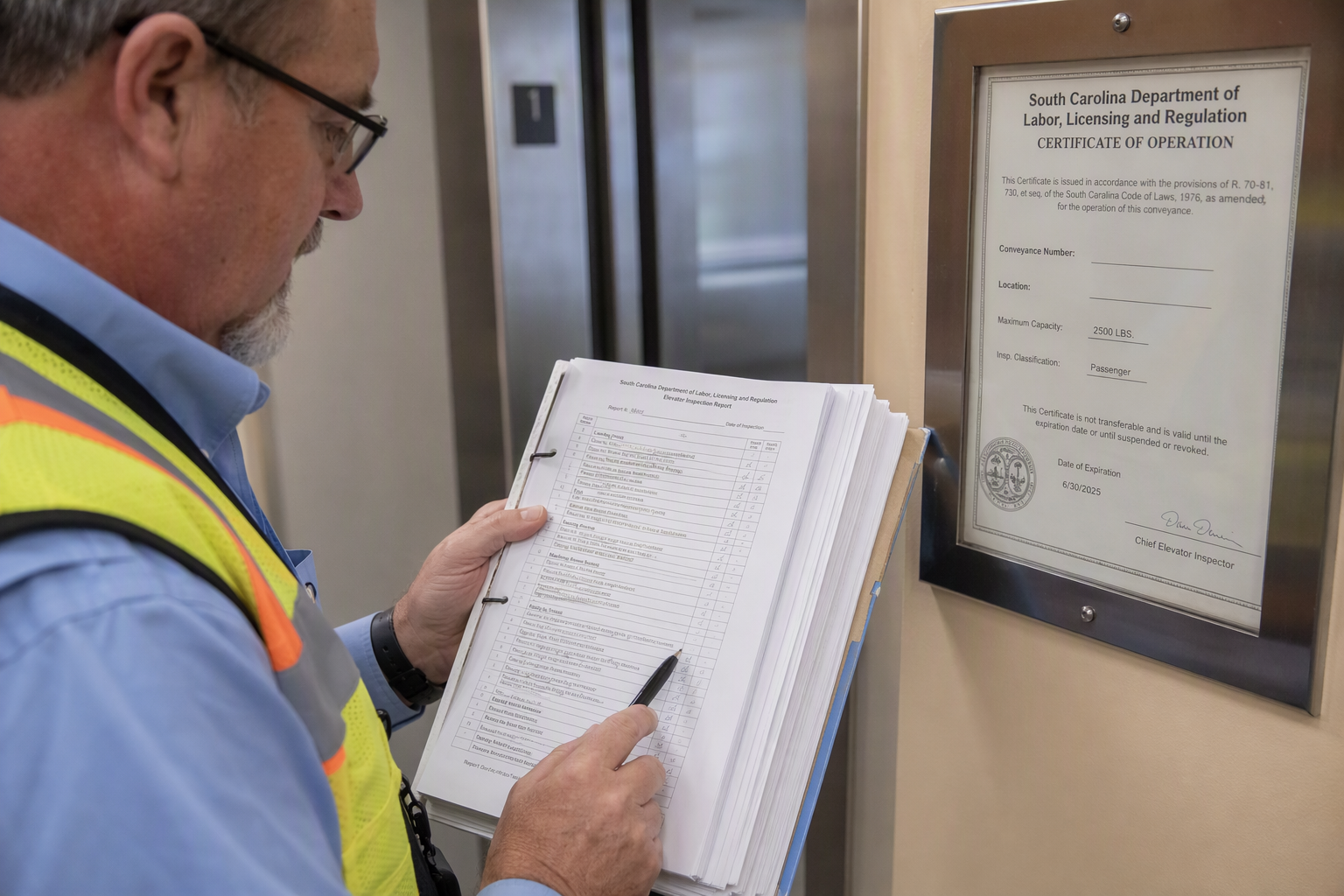
Two federal frameworks form the foundation of elevator compliance in South Carolina senior living facilities.
The ASME A17.1 Safety Code for Elevators and Escalators establishes minimum design, installation, inspection, and testing requirements for new elevator equipment. For existing equipment already in service, ASME A17.3 — the Safety Code for Existing Elevators and Escalators — governs what upgrades and ongoing standards apply. South Carolina adopts these standards as the basis for state elevator regulation, administered through the South Carolina Department of Labor, Licensing and Regulation (SC LLR).
The Americans with Disabilities Act (ADA) requires that elevators in multi-story facilities be accessible to individuals with disabilities. For senior living settings, this means door width, cab dimensions, control panel height, audible signals, and tactile floor indicators must all meet ADA specifications. Because assisted living residents frequently use mobility aids, ADA compliance is especially scrutinized during licensing inspections by the South Carolina Department of Health and Environmental Control (DHEC) and the Office of Healthcare Licensing.
OSHA standards also apply to the workers — including maintenance technicians and facility staff — who operate or work around elevator equipment. Facilities have an obligation to ensure that any contracted elevator service provider follows applicable OSHA safety protocols during maintenance and repair work.
—
What Are the Inspection Requirements for Elevators in South Carolina Senior Communities?
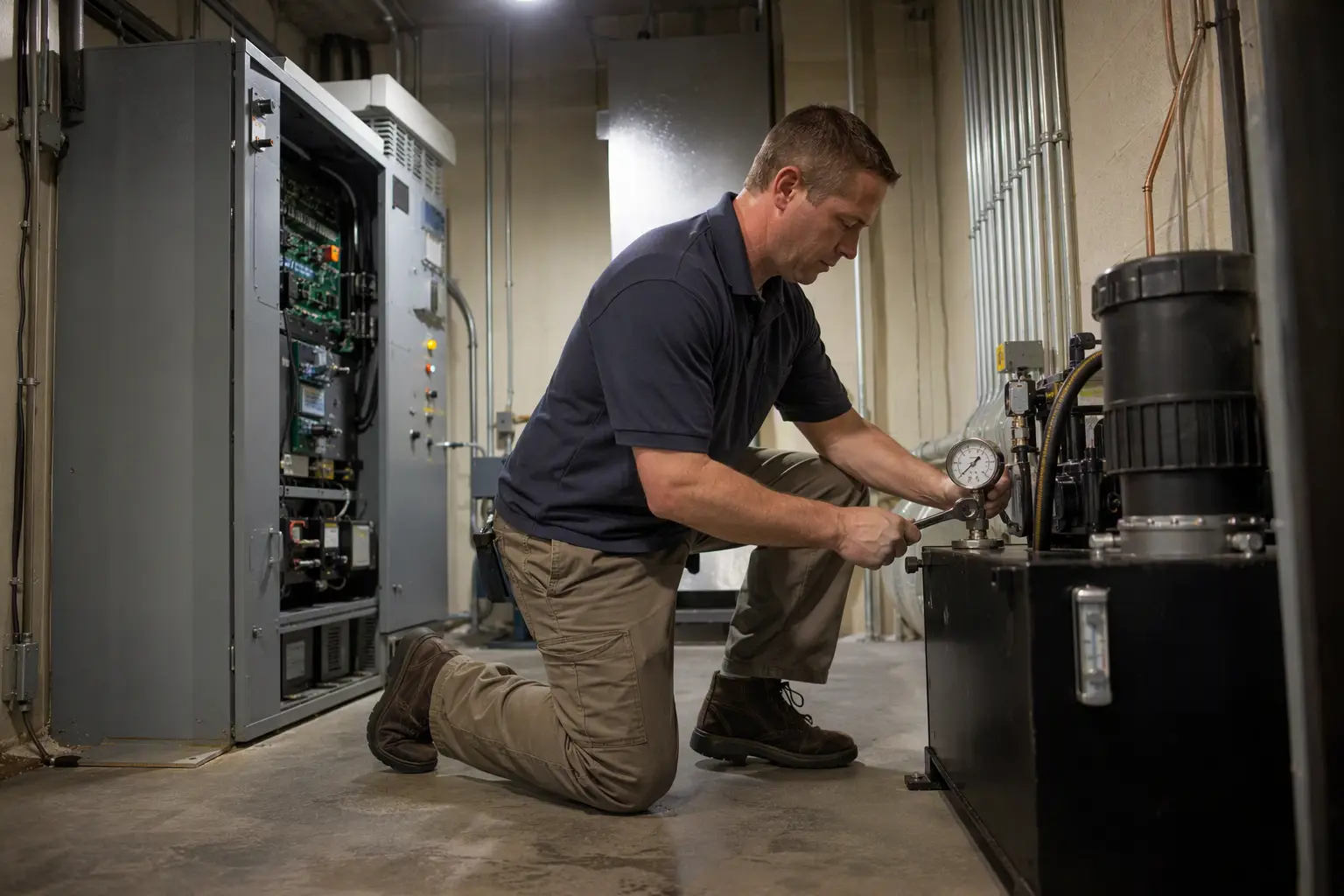
South Carolina requires that all elevators under the jurisdiction of SC LLR be inspected by a licensed elevator inspector on a periodic basis. These inspections verify that equipment meets the applicable edition of ASME A17.1 or A17.3 and that any required safety tests — such as governor and safety tests, brake tests, and pressure tests for hydraulic units — have been performed within mandated intervals.
For senior living facilities specifically, staying current on inspections is critical not only for state elevator compliance but also for maintaining facility licensure. A facility operating with a lapsed elevator certificate of operation can face licensing action from DHEC. Carolina Elevator Service helps Columbia-area senior communities track inspection deadlines, coordinate with SC LLR-licensed inspectors, and ensure that all corrective work is completed before re-inspection.
—
What Maintenance Considerations Are Unique to Senior Living Elevator Equipment?
Elevators in senior living and assisted living facilities operate under conditions that differ significantly from typical office or retail environments:
- Higher daily cycle counts. Residents may travel between floors multiple times each day for meals, activities, and care appointments. Equipment experiences greater cumulative use than in comparable commercial buildings.
- Wheelchair and mobility aid traffic. Power wheelchairs and scooters are heavier than standard foot traffic. Door systems, sill plates, and cab flooring take on more wear and must be inspected more frequently for damage that could create a trip or rollover hazard.
- Door sensitivity and close speed. Residents with slower reaction times require door open and close timing that prevents contact. Door reopening devices — including photo eyes and safety edges — must be tested regularly and kept in precise adjustment.
- Emergency communication systems. ASME A17.1 requires a two-way means of communication in elevator cabs. In a senior living setting, the reliability of this system is critical — a resident who becomes distressed in a stalled cab must be able to summon help immediately. Regular testing of the emergency phone or intercom is a non-negotiable maintenance task.
- Leveling accuracy. Even a small gap between the elevator cab floor and the corridor landing can cause a wheelchair or walker to catch. Proper landing accuracy must be maintained and verified during each maintenance visit.
- Cab environment. Interior handrails, non-slip flooring surfaces, and adequate lighting are maintenance-adjacent considerations that directly affect resident safety and fall prevention.
—
What Should a Preventive Maintenance Program Include for an Assisted Living Elevator?
A well-structured preventive maintenance program for a senior living elevator should address the following on a regular scheduled basis:
- Inspect and lubricate all mechanical components including hoist ropes, sheaves, guides, and safety devices.
- Test door operators, door reopening devices, and door close force to confirm they meet ASME A17.1 specifications.
- Verify cab leveling accuracy at all floors and adjust as needed.
- Test the emergency lighting and emergency communication system inside the cab.
- Inspect the machine room environment for temperature control, cleanliness, and proper access restrictions.
- Review and update the maintenance log to document all findings and corrective actions — a record SC LLR inspectors will request.
- Identify any worn or aging components and schedule proactive replacement before failure occurs.
Documentation is not optional. SC LLR and facility licensing authorities may request maintenance records during routine inspections or complaint investigations. Facilities should retain complete service records for the life of the equipment.
—
When Is Elevator Modernization Required or Recommended for a Senior Living Facility?
Older elevator equipment in assisted living buildings may not meet current ASME A17.3 upgrade requirements or current ADA standards. Common triggers for modernization discussions include:
- Equipment that cannot reliably maintain proper leveling, creating fall risks for residents with mobility limitations.
- Controls or wiring that are obsolete and no longer supportable with available replacement parts.
- Door systems that fail to meet current force and speed standards under ASME A17.1.
- Emergency communication systems that do not meet current code requirements for two-way communication.
- Accessibility shortfalls identified during ADA reviews — particularly cab dimensions, control heights, and audible/visual signals.
Modernization projects in occupied senior living facilities require careful coordination to minimize downtime, since residents may have no alternative means of moving between floors. Planning with an experienced local elevator contractor helps facilities sequence work to maintain at least partial elevator availability throughout the project.
—
What Happens If an Elevator Goes Out of Service in a Senior Living Facility?
An out-of-service elevator in an assisted living or memory care building is a care disruption, not just an inconvenience. Facilities should have a written contingency plan that addresses how residents who cannot use stairs will access meals, medications, and scheduled care while the elevator is being repaired.
From a regulatory standpoint, SC LLR requires that elevators not be returned to service following certain repairs or incidents until they have been properly inspected and cleared. Attempting to return equipment to service prematurely — to avoid care disruptions — can create significant liability. Working with a responsive local service provider that understands South Carolina’s elevator regulations helps facilities navigate the re-inspection process efficiently.
Carolina Elevator Service provides emergency repair services to senior living communities in the Columbia, SC area and understands the urgency these situations create for facility operators and care staff.
—
How Do Senior Living Facilities in Columbia, SC Choose the Right Elevator Service Provider?
Facilities evaluating elevator service providers should consider the following factors:
- South Carolina licensure. South Carolina requires elevator contractors and mechanics to hold appropriate licenses through SC LLR. Verify that any contractor bidding work holds current, valid credentials in the state.
- Familiarity with healthcare and senior living environments. Providers who regularly service assisted living, skilled nursing, and independent living buildings understand the operational constraints — occupied buildings, infection control protocols, and the need to communicate clearly with facility administration.
- Documented maintenance programs. A provider should offer a formal preventive maintenance agreement with clear scope, frequency, and documentation practices that support your facility’s licensing compliance needs.
- Emergency service availability. Confirm that the provider offers after-hours emergency response for breakdown situations that cannot wait until the next business day.
- Local presence. A provider based in the Columbia, SC area can respond more readily to service calls and is familiar with the local AHJ processes and SC LLR inspection workflows.
Carolina Elevator Service is locally based in South Carolina and serves senior living communities, healthcare facilities, commercial buildings, and residential properties throughout the Midlands region and beyond.
—
What ADA Requirements Are Most Commonly Cited in Senior Living Elevator Inspections?
The ADA specifies detailed requirements for elevator accessibility. In senior living facility audits and inspections, the following areas are frequently reviewed:
- Door clear width — must be sufficient to allow wheelchair passage.
- Call button height and design — buttons must be within the ADA-specified reach range and must be operable without tight grasping or pinching.
- Floor designation indicators — audible signals and visible floor indicators must function properly.
- Cab interior dimensions — must accommodate wheelchairs with adequate turning clearance.
- Braille and raised character signage — required on control panels and at hoistway entrances.
Deficiencies in any of these areas can expose a facility to ADA complaints and affect licensing standing. Routine elevator maintenance visits should include a check of ADA-related features, not just mechanical components.
—
Schedule a Free Consultation with Carolina Elevator Service
Senior living and assisted living facilities in Columbia, SC have unique elevator compliance obligations and operational demands. Carolina Elevator Service provides preventive maintenance programs, code compliance assessments, modernization planning, and emergency repair services tailored to the needs of senior care communities in South Carolina.
Contact Carolina Elevator Service today to schedule a free consultation and discuss your facility’s elevator maintenance and compliance needs.
Call now: 803-865-1400
Need elevator service you can rely on? Carolina Elevator Service is ready to help.