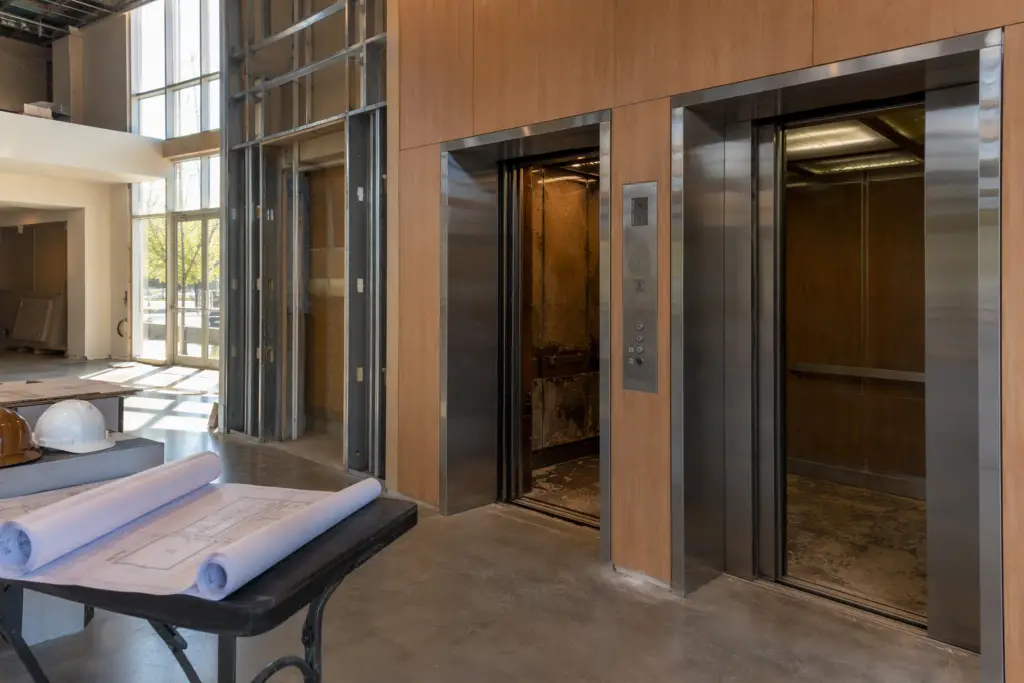
Direct Answer: In South Carolina, an elevator that fails inspection is typically required to be taken out of service immediately — it cannot legally continue operating until the identified violations are corrected and the unit passes a follow-up inspection or receives written authorization from the state authority having jurisdiction.
Can My Elevator Keep Running After Failing Inspection in South Carolina?
When an elevator fails inspection in South Carolina, building owners and property managers face an urgent compliance situation. The short answer is no — a failed elevator inspection in South Carolina generally results in an immediate requirement to cease operation. The elevator must be tagged out of service, violations must be corrected, and the unit must pass re-inspection before it can be returned to use. Understanding the full scope of what this means — who enforces it, what the process looks like, what the penalties are, and how to get back in service quickly — is essential for any property owner in Columbia, SC.
What happens immediately when an elevator fails inspection in South Carolina?
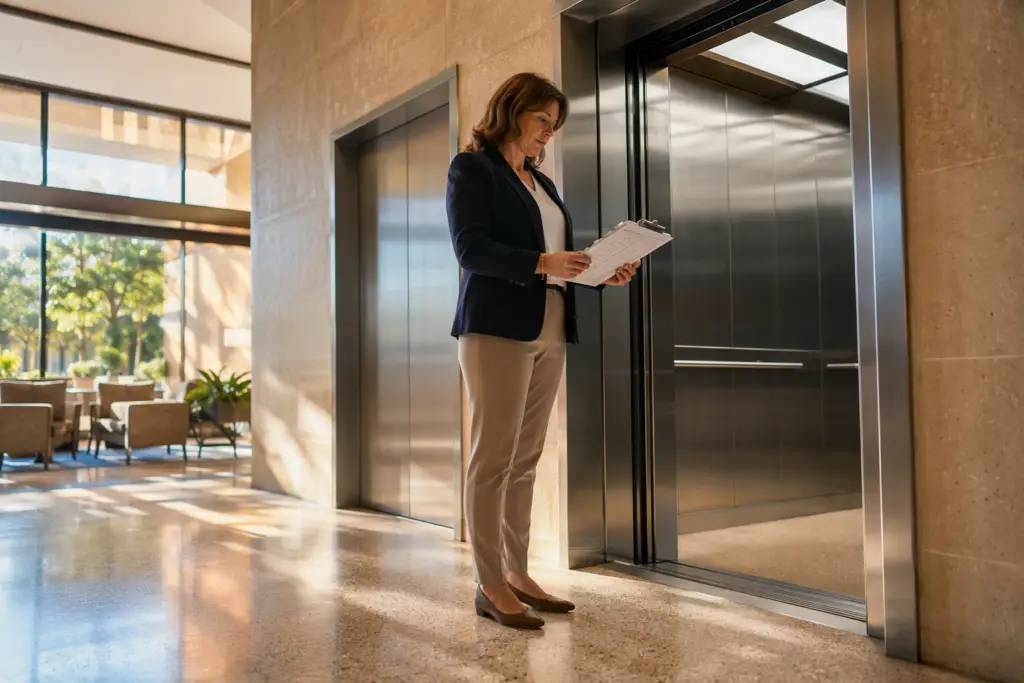
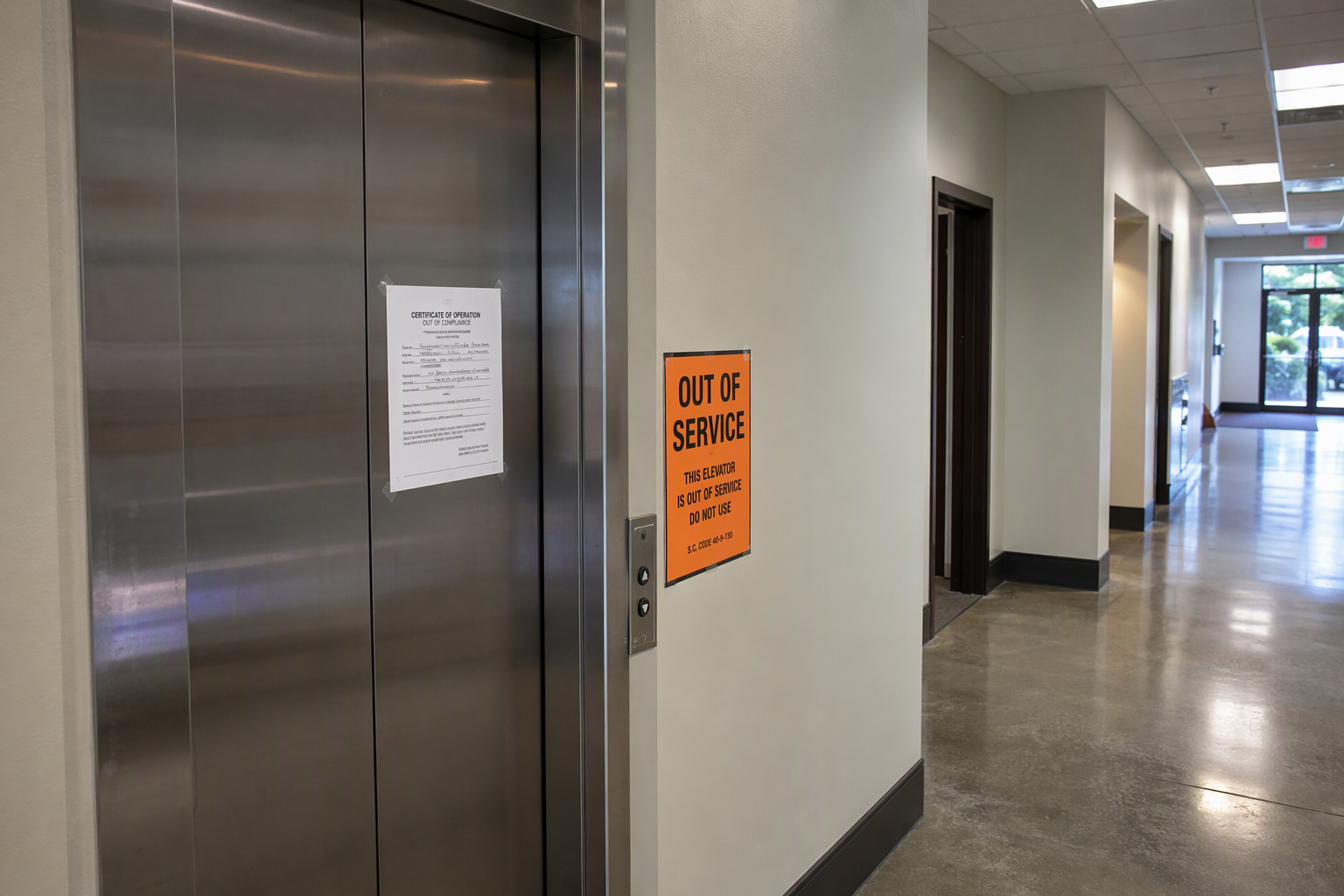
When an elevator fails inspection in South Carolina, the inspecting authority will issue a written notice of violation and typically require the elevator to be taken out of service immediately, with a posted notice prohibiting further use.
The inspector places an out-of-service tag or notice on the elevator, and the building owner or operator is legally obligated to comply. Continuing to allow public or employee use of a failed elevator exposes the property owner to significant legal and financial liability, including fines and potential civil litigation if an injury occurs. The South Carolina Department of Labor, Licensing and Regulation (LLR) oversees elevator safety in the state, and their authority to require immediate shutdown is not a suggestion — it is a regulatory mandate backed by state law.
Building staff should be notified immediately, elevator access should be locked or blocked, and an elevator service company should be contacted to begin the repair process without delay. Carolina Elevator Service works with building owners in Columbia, SC to respond to failed inspections and prioritize getting compliant units back in service as efficiently as the required repairs allow.
Who has the authority to shut down an elevator in South Carolina?
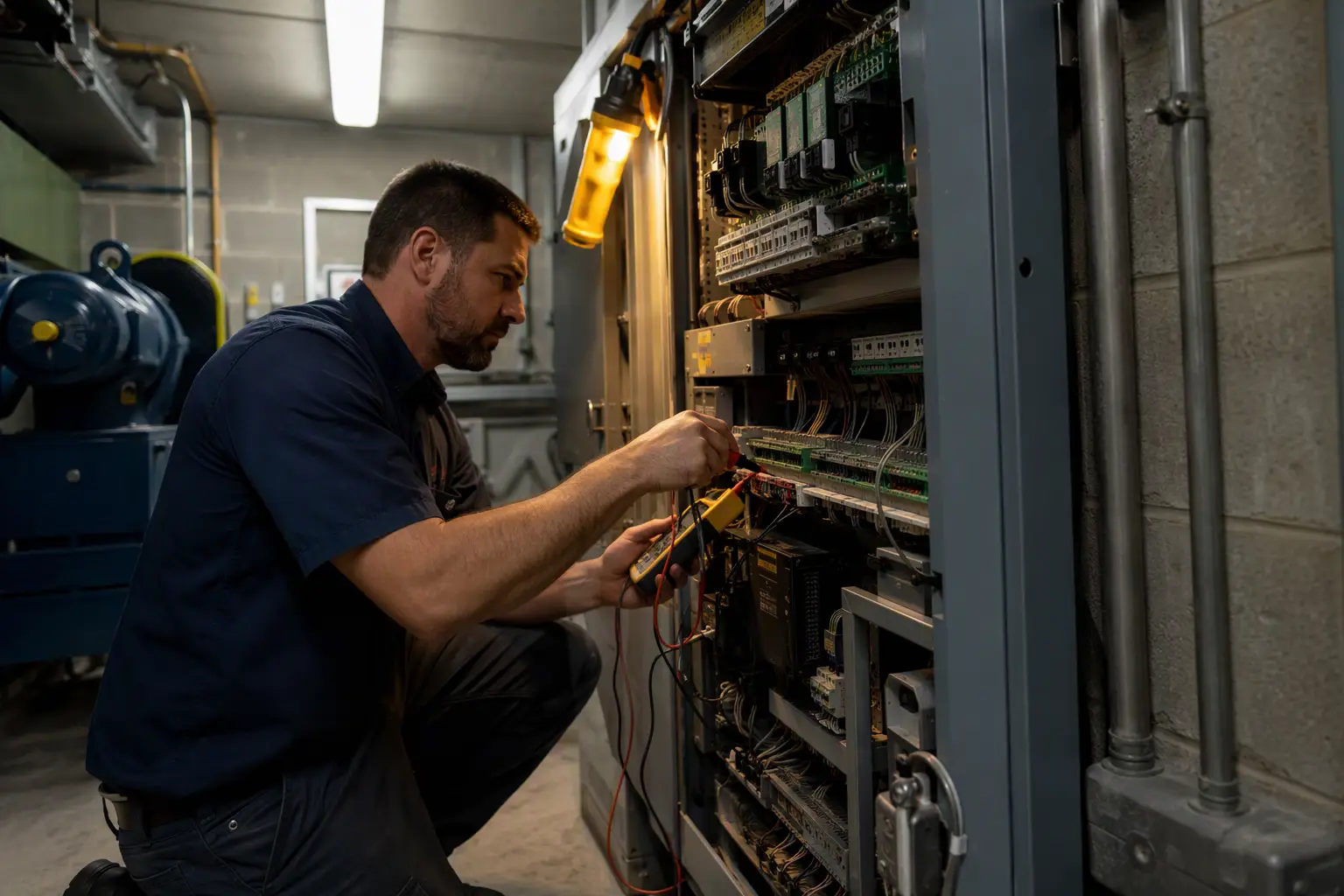
The South Carolina Department of Labor, Licensing and Regulation (LLR), through its Office of Elevator and Amusement Ride Safety, holds the primary authority to order elevator shutdowns in the state.
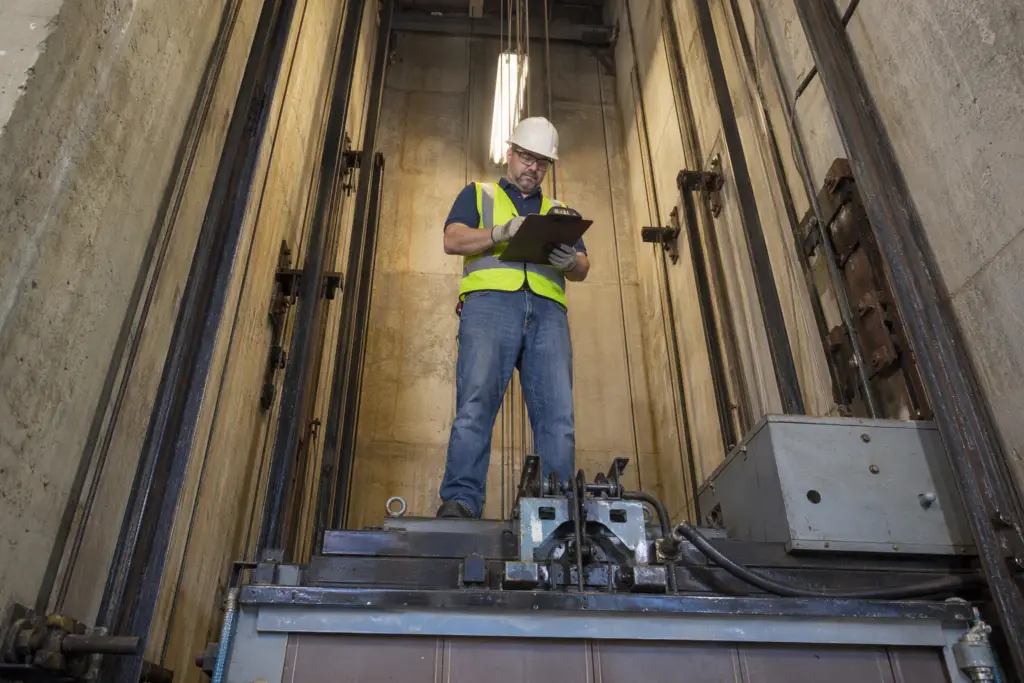
Licensed inspectors — either state-employed or third-party inspectors authorized by the LLR — conduct inspections and issue orders. When a violation is found that poses an immediate hazard, the inspector has the authority to require the elevator be taken out of service on the spot. For violations deemed non-imminent but still serious, the LLR may issue a compliance deadline, but use during that window is still subject to the inspector’s written authorization.
Locally, the Columbia area also has authority having jurisdictions (AHJs) that work in coordination with state requirements. The AHJ framework is consistent with the standards set forth in the ASME A17.1 Safety Code for Elevators and Escalators, which South Carolina has adopted as the baseline technical standard for elevator safety.
Is there any situation where a failed elevator can keep running temporarily?
In rare circumstances, the South Carolina LLR may allow temporary continued operation under a written variance or conditional approval, but this is the exception — not the rule — and requires formal written authorization before the elevator resumes service.
A variance or temporary operating permit is typically considered only when the violations are minor, non-hazardous, and the building owner demonstrates good-faith effort toward correction. For example, if a documentation issue or a minor administrative deficiency caused the failure, the LLR may issue a conditional approval while the paperwork is corrected. However, any mechanical, structural, electrical, or safety-system deficiency that presents a risk of injury will not qualify for temporary operation approval. Building owners should never assume a failed elevator can stay in service without written confirmation from the LLR.
What codes govern elevator inspections in South Carolina?
South Carolina’s elevator inspections are governed by the state’s adoption of the ASME A17.1 Safety Code for Elevators and Escalators for new installations and the ASME A17.3 Safety Code for Existing Elevators and Escalators for units already in service.
ASME A17.1 is the primary design and installation code, while ASME A17.3 establishes the retroactive safety requirements that existing elevators must meet. South Carolina’s LLR enforces these codes as part of its regulatory framework for elevator safety. Buildings that are open to the public or that employ workers must also comply with applicable OSHA standards related to workplace safety, and properties subject to public accommodation requirements must meet ADA (Americans with Disabilities Act) accessibility standards. A failed inspection can trigger scrutiny under all three frameworks simultaneously.
How often are elevators required to be inspected in South Carolina?
South Carolina requires periodic inspections of elevators on a regular schedule set by the LLR, with the exact interval depending on the elevator type and use classification.
Generally, most passenger and freight elevators in South Carolina must undergo annual inspections. In addition, periodic tests — including no-load and full-load tests, safety device tests, and governor/buffer tests — are required at intervals specified under the adopted ASME codes. Keeping accurate maintenance records and scheduling inspections proactively is the most effective way to avoid a failed inspection. Carolina Elevator Service helps Columbia-area building owners track inspection schedules and maintain documentation to support a clean inspection record.
| Elevator / Lift Type | Typical Inspection Frequency | Governing Code Reference | Shutdown Authority |
|---|---|---|---|
| Passenger Elevator (traction) | Annual | ASME A17.1 / A17.3 | SC LLR |
| Hydraulic Passenger Elevator | Annual | ASME A17.1 / A17.3 | SC LLR |
| Freight Elevator | Annual | ASME A17.1 / A17.3 | SC LLR |
| Limited Use / Limited Application (LU/LA) | Annual | ASME A17.1 | SC LLR |
| Platform Lift / Wheelchair Lift | Annual | ASME A18.1 | SC LLR |
| Escalator / Moving Walk | Annual | ASME A17.1 | SC LLR |
Note: Inspection intervals and test schedules are subject to the specific edition of the code adopted by the SC LLR at the time of inspection. Confirm current requirements directly with the LLR or a licensed elevator contractor.
What are the most common reasons elevators fail inspection in South Carolina?
The most common causes of elevator inspection failures in South Carolina involve safety device malfunctions, missing or outdated documentation, mechanical wear, and code compliance gaps related to updates in the adopted ASME standards.
Common failure categories include:
- Safety governor or overspeed device deficiencies
- Door operator and door lock malfunctions
- Buffer condition and travel end-limit switch issues
- Insufficient lighting in the machine room or pit
- Hydraulic fluid leaks or cylinder integrity concerns
- Missing or expired certificates of operation
- Failure to complete required periodic tests on schedule
- Emergency communications system (phone) not functioning
- ADA-related accessibility deficiencies (button height, Braille markings, audible signals)
- Outdated or inadequate fire service recall operation
Many of these issues are preventable through a consistent preventive maintenance program. Understanding which items inspectors prioritize helps building owners focus maintenance resources appropriately.
What should a building owner do immediately after an elevator fails inspection?
A building owner whose elevator fails inspection should follow a clear, sequential response protocol to protect occupants, minimize liability, and begin the path to re-inspection as quickly as possible.
- Secure the elevator immediately. Lock the elevator controls, block access at all landings, and post clear “Out of Service” signage at every entry point.
- Notify building occupants and tenants. Communicate the outage to all relevant parties, including residents, employees, or business tenants who depend on elevator access.
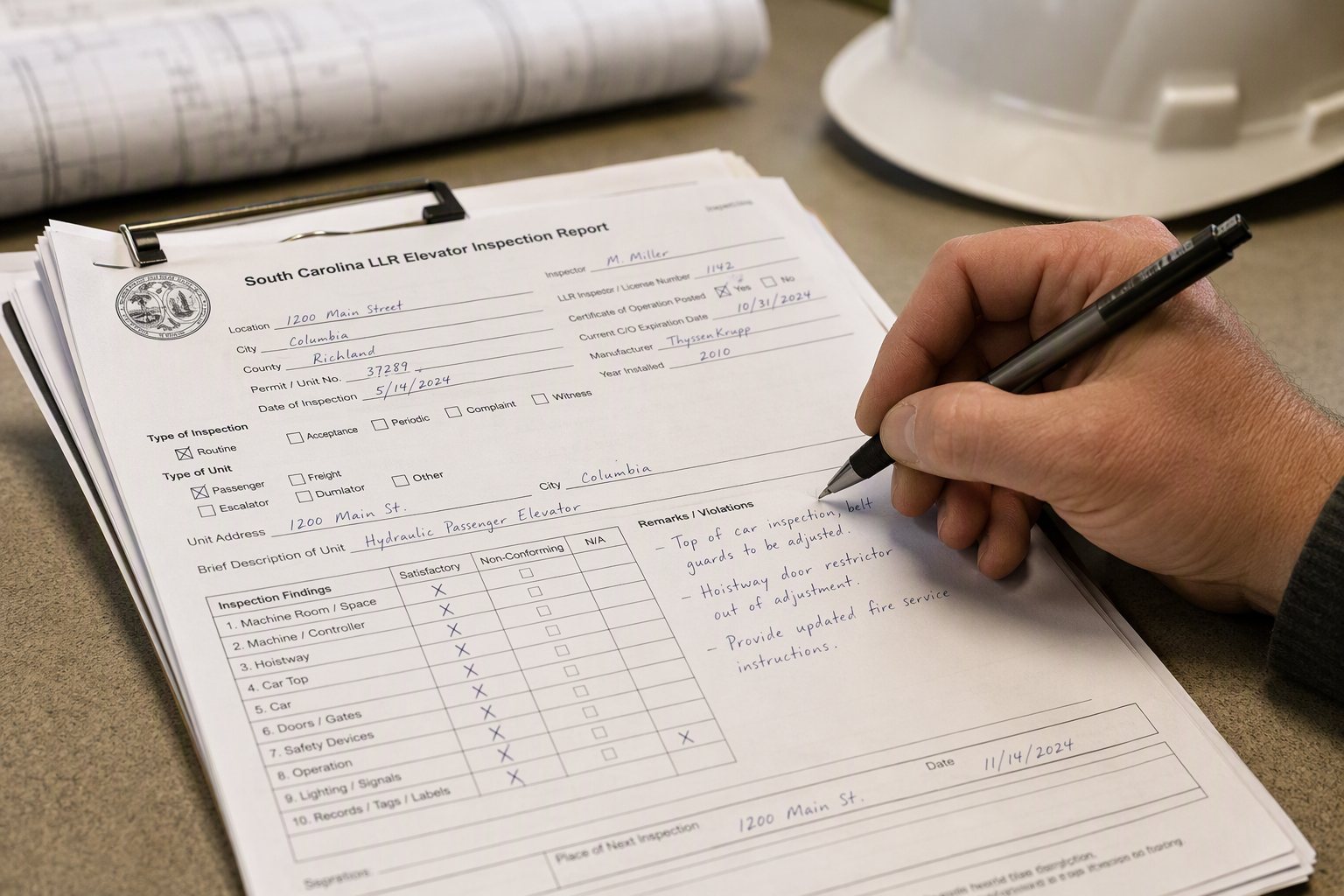
- Obtain and review the written inspection report. Request a copy of the inspector’s violation report if not immediately provided. This document identifies every deficiency that must be corrected before re-inspection.
- Contact a licensed elevator service contractor. Engage a licensed contractor immediately to assess the violations and provide a scope of repair work. Carolina Elevator Service serves building owners throughout the Columbia, SC area for exactly this type of urgent response.
- Assess ADA obligations. If the building is subject to ADA requirements and the elevator is the primary means of access for people with disabilities, consider interim accommodations to meet accessibility obligations while repairs are underway.
- Complete all required repairs. Ensure that every cited violation is addressed by a licensed contractor and that documentation of the repairs is prepared for the re-inspection.
- Schedule re-inspection with the SC LLR. Contact the LLR to request a re-inspection. Do not return the elevator to service until the re-inspection is passed and a new certificate of operation is issued.
- Document everything. Retain all repair invoices, inspection reports, and correspondence with the LLR as part of the elevator’s permanent maintenance file.
What are the penalties for operating an elevator after a failed inspection in South Carolina?
Operating an elevator that has been ordered out of service in South Carolina is a violation of state law and can result in civil penalties, increased regulatory scrutiny, and substantial liability exposure if an occupant is injured.
The SC LLR has the authority to assess fines for non-compliance with elevator safety orders. Beyond regulatory fines, the legal exposure in a personal injury claim is dramatically elevated when a building owner knowingly continues to operate equipment that failed a safety inspection. Courts and juries treat the decision to operate a tagged-out elevator as evidence of willful disregard for safety — a fact pattern that can result in punitive as well as compensatory damages. No short-term operational convenience is worth that risk.
How long does the elevator repair and re-inspection process typically take?
The timeline from a failed inspection to a passed re-inspection depends on the nature of the violations, parts availability, and the LLR’s re-inspection scheduling — and can range from a single day for minor administrative issues to several weeks for major mechanical repairs.
Minor issues such as a non-functioning emergency phone, missing documentation, or a simple electrical fix may be resolved quickly. Major repairs — such as hydraulic cylinder replacement, traction machine work, or controller upgrades — require longer lead times, particularly if proprietary parts must be sourced. Building owners should ask their elevator contractor for a realistic timeline estimate at the outset and communicate that timeline to affected occupants. Proactive scheduling of preventive maintenance reduces the likelihood of encountering the longer, more expensive repair scenarios during an emergency shutdown.
Does a failed elevator inspection affect ADA compliance obligations?
Yes — when an elevator that serves as the primary accessible route in a building is taken out of service due to a failed inspection, the building owner must consider their obligations under the Americans with Disabilities Act and take reasonable steps to provide alternative accessible service.
Under the ADA, places of public accommodation and commercial facilities are required to maintain accessible features in operable condition. An out-of-service elevator does not automatically create an ADA violation if the outage is for repairs, but the building must make good-faith efforts to provide equivalent access during the outage. This may include staff assistance, scheduling accommodations, or temporary service modifications. ADA compliance should be factored into the emergency response plan from the moment an elevator is taken out of service.
What is the difference between a failed inspection and an expired certificate of operation?
A failed inspection results from identified safety violations found during an active inspection, while an expired certificate of operation means the elevator is operating without a currently valid state authorization — both situations require the elevator to be taken out of service, but they arise through different paths.
An elevator can have an expired certificate even without any known mechanical problems — simply because the scheduled inspection was missed or delayed. In South Carolina, operating an elevator with an expired certificate of operation is itself a violation, separate from any underlying mechanical deficiencies. Building owners should maintain a calendar reminder for inspection due dates and engage their elevator contractor well in advance of the expiration date to ensure the inspection is scheduled and any necessary maintenance is completed before the inspector arrives.
Can a building owner appeal a failed inspection or a shutdown order in South Carolina?
Yes, South Carolina’s regulatory framework provides a process for contesting inspection findings or shutdown orders, but the appeal process does not automatically allow the elevator to continue operating while the appeal is pending.
Building owners who believe a violation finding was in error or that the enforcement action was disproportionate may request a review or hearing through the SC LLR. However, it is generally far faster and more practical to correct the cited violation and pass re-inspection than to pursue an administrative appeal, which can take considerably longer. Appeals are most relevant in cases involving disputed interpretations of code requirements or disagreements about whether a specific component meets the adopted ASME standard.
How does South Carolina’s elevator inspection process compare to federal OSHA requirements?
South Carolina’s elevator safety inspection program, administered by the SC LLR, operates under state authority and is the primary compliance framework for most elevators in the state, while OSHA standards apply specifically to workplace safety in the context of elevator construction, maintenance, and alteration activities.
OSHA does not conduct routine operational inspections of passenger elevators in the same way the SC LLR does, but OSHA requirements are directly relevant to the safety of elevator technicians performing maintenance and repair work. Elevator service contractors operating in South Carolina must follow applicable OSHA standards for confined space entry (elevator pits qualify as permit-required confined spaces in many situations), lockout/tagout procedures, and working at heights. The intersection of state inspection requirements and OSHA worker safety standards means that proper elevator maintenance involves compliance in multiple regulatory dimensions simultaneously.
What role does preventive maintenance play in avoiding failed inspections?
Preventive maintenance is the single most effective strategy for avoiding failed inspections, because it ensures that safety devices, mechanical systems, and documentation are all in compliant condition before the inspector arrives.
A properly maintained elevator typically arrives at its annual inspection with documented evidence of regular lubrication, safety device testing, door operator adjustment, hydraulic system monitoring, and pit and machine room housekeeping. Inspectors review both the physical condition of the equipment and the maintenance records — gaps in either area can contribute to a failed inspection. Building owners who partner with a licensed elevator maintenance contractor on a regular service agreement are substantially better positioned to pass inspections than those who only call for service when a problem occurs. Carolina Elevator Service provides preventive maintenance programs for commercial and residential elevators throughout the Columbia, SC area specifically designed to keep equipment in inspection-ready condition year-round.
What documentation is required for an elevator inspection in South Carolina?
South Carolina requires that specific documentation be present and available at the time of inspection, including the current certificate of operation, maintenance records, and test records for required periodic safety tests.
The certificate of operation must be posted in the elevator car or immediately available to the inspector. Maintenance logs demonstrating that routine service has been performed, and test records showing that required periodic tests (such as governor and safety tests under ASME A17.1) have been completed on schedule, are also subject to review. Missing or incomplete documentation is a common and entirely preventable cause of inspection failure. Maintaining a comprehensive and organized elevator file — including all service records, prior inspection reports, and test documentation — is a best practice that elevator service contractors can help building owners implement and sustain.
What types of elevators are regulated under South Carolina’s inspection program?
South Carolina’s elevator inspection program covers a broad range of vertical transportation equipment, including passenger elevators, freight elevators, hydraulic elevators, escalators, moving walks, dumbwaiters, platform lifts, and limited use/limited application (LU/LA) elevators.
Each equipment type has specific inspection requirements under the applicable ASME code. Platform lifts and wheelchair lifts — commonly found in churches, schools, and smaller commercial buildings — are frequently overlooked but are subject to the same inspection and certificate-of-operation requirements as full-sized passenger elevators. Building owners who are uncertain about whether their equipment requires a state inspection should contact the SC LLR or a licensed elevator contractor for a definitive answer rather than assuming the equipment is exempt.
What is a Qualified Elevator Inspector (QEI) and does South Carolina require one?
A Qualified Elevator Inspector (QEI) is a certification designation established through the National Elevator Industry Educational Program (NEIEP) or the ASME QEI certification program, recognizing inspectors who have demonstrated the technical knowledge required to inspect elevators to ASME code standards.
South Carolina requires that elevator inspections be conducted by inspectors who meet the state’s licensing requirements, which are aligned with QEI-level knowledge and competency. Not all inspection states require the QEI credential by name, but South Carolina’s LLR establishes its own licensure criteria for elevator inspectors operating in the state. Building owners should verify that any third-party inspection company they engage holds the appropriate SC LLR authorization to conduct inspections in South Carolina.
How does a building owner select a qualified elevator service contractor in South Carolina?
Building owners in South Carolina should verify that any elevator service contractor holds a valid license issued by the SC LLR, carries appropriate insurance, employs certified elevator mechanics, and has documented experience with the specific type of elevator equipment installed in their building.
Key selection criteria include:
- Active SC LLR contractor license for elevator work
- Familiarity with the adopted ASME codes applicable to the building’s equipment
- Ability to provide references from similar property types in the region
- Transparent maintenance agreements with clearly defined scope of service
- Capacity to respond to urgent repair situations following a failed inspection
Carolina Elevator Service is a certified elevator service company serving the Columbia, SC market, providing maintenance, repair, and compliance support for building owners navigating South Carolina’s elevator inspection requirements.
What should a building owner expect during a re-inspection after a failed inspection?
During a re-inspection, the inspector will focus specifically on the violations cited in the original failed inspection report, verifying that each deficiency has been corrected to code and that the elevator is safe for return to service.
A re-inspection is not typically a full-scope repeat of the original inspection — it is a targeted review of the cited items. However, if the inspector observes additional deficiencies during the re-inspection that were not noted originally, those may also be cited. This is why ensuring the elevator is in comprehensive, inspection-ready condition before the re-inspection is scheduled — not just addressing the minimum cited items — is advisable. A licensed elevator contractor should conduct a pre-re-inspection walkthrough to confirm all violations have been properly resolved and that no new issues are likely to be identified.
Are there any exemptions to South Carolina’s elevator inspection requirements?
Certain types of lifting equipment may be exempt from South Carolina’s elevator inspection program, including some single-family residential installations, but commercial and multi-family residential elevators are generally not exempt and must comply with all LLR requirements.
Exemptions in South Carolina’s elevator statute are narrow. Building owners should not self-determine that their equipment is exempt without written confirmation from the SC LLR. The consequences of operating unregistered or uninspected equipment — even mistakenly — can include retroactive fines and a requirement to bring the equipment into full compliance at the owner’s expense, including any modifications required to meet the current adopted ASME standard. When in doubt, the correct course of action is to contact the SC LLR or a licensed elevator contractor to verify the registration and inspection status of any elevator or lift equipment on the property.
Ready to Get Your Elevator Back in Compliance?
A failed elevator inspection in South Carolina requires immediate action — and the right service partner makes all the difference. Carolina Elevator Service provides elevator repair, maintenance, and compliance support for building owners throughout the Columbia, SC area. Whether you are facing an urgent shutdown situation, preparing for an upcoming inspection, or establishing a preventive maintenance program to avoid future failures, the Carolina Elevator Service team is ready to help.
Contact Carolina Elevator Service for a free elevator assessment.
Call today: 803-865-1400
Need elevator service you can rely on? Carolina Elevator Service is ready to help.