Elevator Failure Warning Signs and How to Prevent an Emergency Shutdown: Complete FAQ
Elevator failures rarely happen without warning. In most cases, the equipment communicates distress through mechanical symptoms, control faults, and operational irregularities days or weeks before a complete shutdown occurs. Understanding those warning signs — and knowing the maintenance protocols that address them — protects building occupants, keeps property owners in regulatory compliance, and avoids the high cost and liability of an unplanned outage. The frequently asked questions below cover the full topic cluster: symptoms, causes, code requirements, inspection schedules, maintenance best practices, and what to do when a shutdown does happen.
What are the most common signs that an elevator is about to fail?
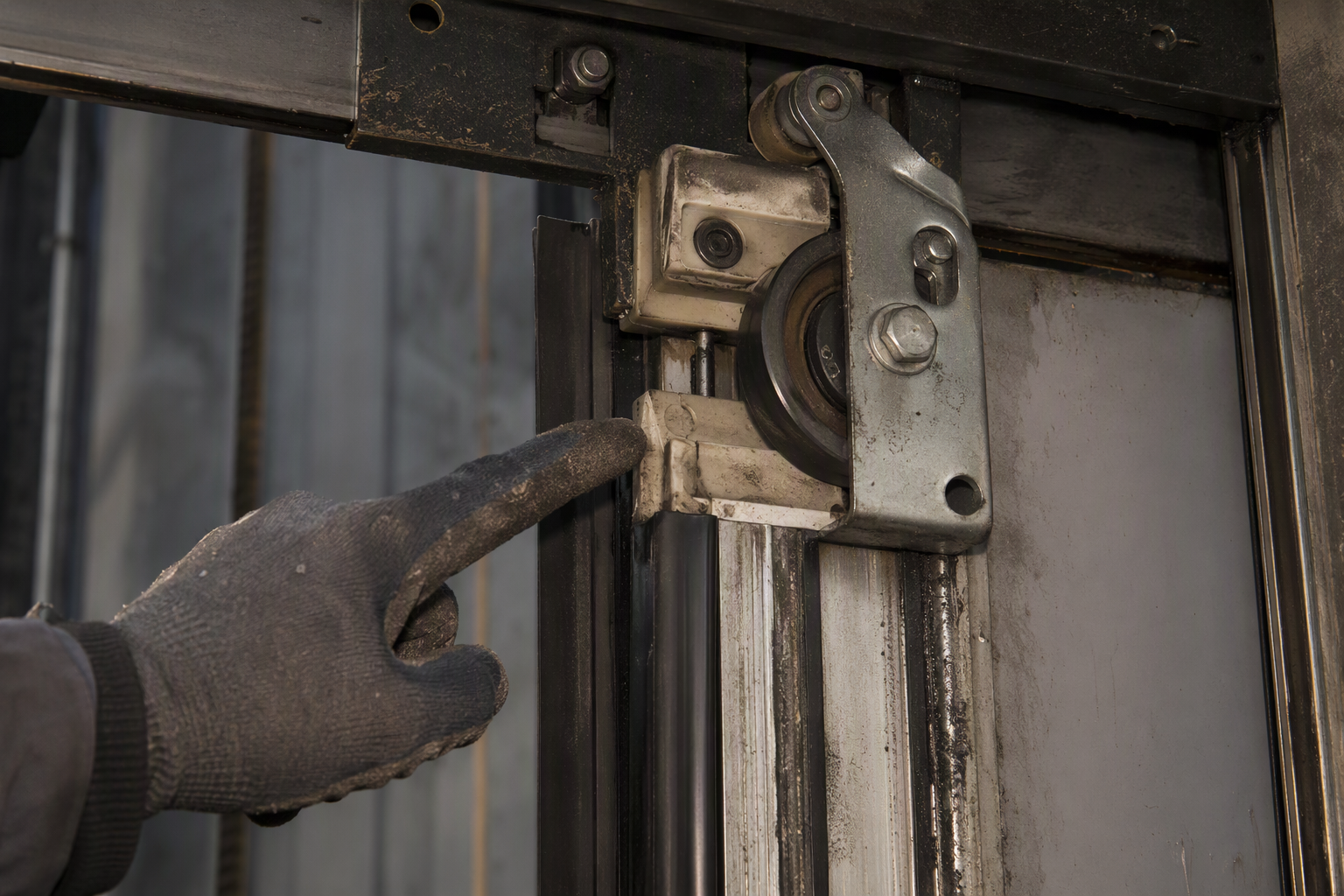
The most reliable early warning signs of elevator failure are unusual mechanical noises, inconsistent leveling at floor landings, erratic door behavior, sudden stops between floors, and frequent tripping of the machine room circuit breaker.
Each symptom points to a specific subsystem under stress. Grinding or squealing sounds typically indicate worn sheaves, frayed hoist ropes, or dry guide rail lubrication. A cab that consistently stops above or below the floor sill — a condition called “misleveling” — points to worn brake linings or encoder drift in a variable-frequency drive (VFD) system. Door strikes, hesitations, or reversals that occur without an obstruction signal worn rollers, a misaligned door track, or a failing door operator motor.
Nuisance tripping of the main line disconnect or control transformer fuses is one of the most underestimated warning signs. It often indicates a ground fault developing in the motor winding or a capacitor nearing end-of-life. Building staff who reset the breaker and move on without logging the event allow the underlying fault to progress until a complete shutdown occurs at the worst possible moment.
Why do elevator doors cause so many service calls and potential failures?
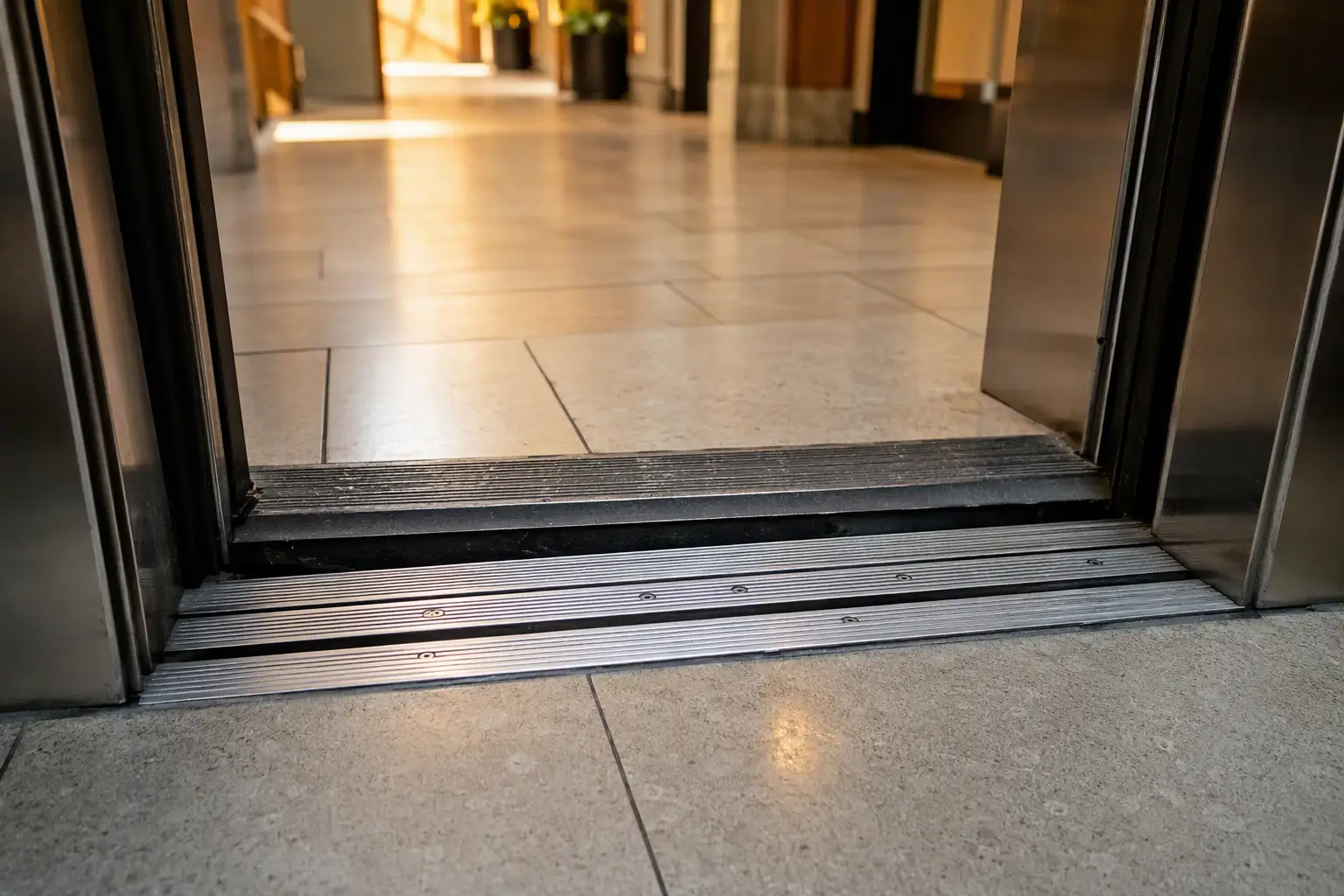
Elevator doors are the single most failure-prone component on most elevator systems because they cycle thousands of times per month, accumulating mechanical wear far faster than any other assembly.
Door operator clutch mechanisms, gibs, and rollers are subject to constant friction. Worn gibs allow the car door to wobble during travel, eventually causing nuisance door-open faults that prevent the elevator from moving. A door that is slow to close, closes with excessive force, or reverses without contact with a person or object should be inspected immediately. Under ASME A17.1, door closing force and reopening device performance are tested during periodic inspections, and a failing door operator that does not meet code thresholds is a cause for the elevator to be taken out of service.
High-traffic buildings in Columbia, SC — including medical offices, hotels, and multi-family residential properties — often require quarterly or more frequent door component inspections rather than relying solely on the annual state inspection cycle.
How does unusual noise indicate elevator mechanical problems?
Every abnormal sound an elevator produces corresponds to a specific component failure mode, making noise one of the most diagnostically valuable early warning indicators available to building operators.
The table below maps common sounds to their most likely mechanical causes and recommended urgency levels:
| Sound Description | Most Likely Cause | Recommended Action | Urgency Level |
|---|---|---|---|
| Grinding or metallic scraping | Dry guide rail or worn guide shoes/rollers | Lubrication service and shoe inspection | High — schedule within days |
| Squealing during travel | Worn or glazed brake lining, dry hoist rope | Brake adjustment or replacement; rope lubrication | High — schedule within days |
| Banging or clunking at landings | Loose counterweight filler, worn buffer spring | Counterweight and buffer inspection | Medium — schedule within 2 weeks |
| Humming from machine room | Capacitor degradation, motor bearing wear | Electrical diagnostic and bearing inspection | Medium — schedule within 2 weeks |
| Rattling during door operation | Loose door panel hardware, worn gibs | Door hardware tightening and gib replacement | Low to medium — monitor and schedule |
| Popping or clicking from controller | Relay contact wear, contactor chatter | Controller inspection and contact replacement | Medium — schedule within 2 weeks |
What causes elevator misleveling and why is it a safety hazard?
Elevator misleveling — when the cab floor does not align accurately with the landing floor — is a safety hazard because it creates a trip-and-fall risk for passengers, particularly those using wheelchairs, walkers, or carrying loads.
Under ADA regulations, elevator floors must be flush with the landing to within a tolerance that allows safe wheelchair ingress and egress. A misleveling condition that exceeds that tolerance is both a safety deficiency and a potential ADA compliance violation. Mechanically, misleveling is most often caused by brake wear on traction elevators — as brake lining thickness decreases, the car drifts after the motor de-energizes. It can also result from encoder faults, worn hoist ropes, or improper VFD parameter settings. Hydraulic elevators can mislevel downward due to seal leakage in the cylinder or valve body.
How often are elevators required to be inspected in South Carolina?
In South Carolina, elevators are regulated under the South Carolina Elevator Safety Act and administered through the South Carolina Department of Labor, Licensing and Regulation (LLR), which requires periodic inspections by a licensed elevator inspector.
The ASME A17.1 Safety Code for Elevators and Escalators and its companion standard ASME A17.3 for existing installations provide the technical benchmarks that South Carolina’s inspection regime references. Building owners are responsible for ensuring their equipment is available for inspection and that any deficiencies identified by the state inspector are corrected within the timeframes specified on the inspection certificate or citation. Operating an elevator after it has been ordered out of service is a violation that can result in civil penalties.
State-mandated inspections establish a minimum frequency. They are not a substitute for a private preventive maintenance program. Carolina Elevator Service recommends that building owners in Columbia, SC treat the state inspection as a compliance floor, not a maintenance ceiling.
What is a preventive maintenance program and how does it prevent emergency shutdowns?
A preventive maintenance (PM) program is a scheduled, documented series of inspections, adjustments, lubrication, cleaning, and component replacements performed at defined intervals to keep elevator equipment operating within design parameters before failures occur.
A well-structured PM program addresses the failure modes that cause most emergency shutdowns: brake wear, rope elongation, door component fatigue, controller contact degradation, and hydraulic fluid contamination. By catching these conditions early — when a brake lining is worn to the inspection threshold, not worn through — technicians can schedule corrective work during low-traffic hours rather than responding to an entrapment call at 2:00 AM.
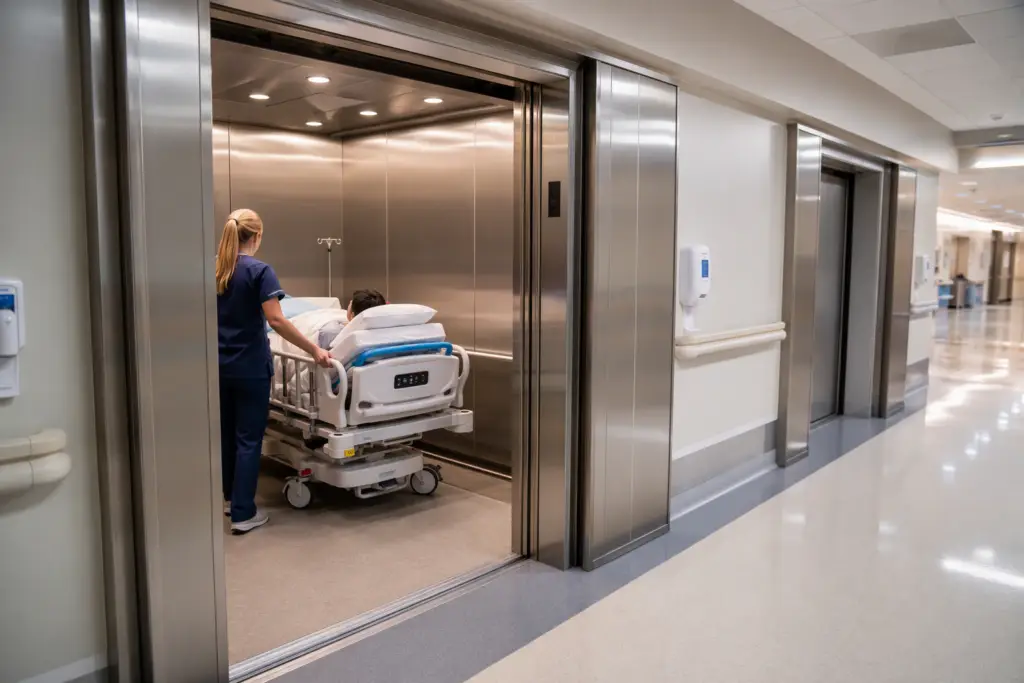
PM programs should be customized to the elevator type (traction versus hydraulic), age, usage intensity, and environment. A hospital elevator operating continuously requires a more aggressive PM interval than a two-story elevator in a low-rise office building used during business hours only. Carolina Elevator Service develops PM schedules tailored to each building’s specific equipment and usage profile throughout the Columbia, SC area.
What specific components should be checked in a routine elevator maintenance visit?
A thorough routine maintenance visit covers mechanical, electrical, hydraulic, and safety device systems across the machine room, hoistway, pit, and car interior.
Key components that should be inspected and serviced at each scheduled visit include:
- Hoist ropes and sheaves: Check for wear patterns, broken wires, elongation, and proper groove alignment.
- Brake assembly: Measure lining thickness, verify adjustment, and confirm proper release and set timing.
- Door operator: Inspect clutch, rollers, gibs, reopening device, and door operator belt or chain.
- Controller and relay logic: Check relay contacts, printed circuit boards, contactor tips, and all safety circuit continuity.
- Guide rails and shoes: Verify lubrication, check shoe clearance, and inspect rail joints.
- Pit and sump: Check pit for water intrusion, confirm pit stop switch function, and inspect buffers.
- Safety devices: Test governor operation, car safeties, overspeed function (per code intervals), and emergency lighting.
- Hydraulic system (if applicable): Check fluid level, inspect cylinder and piping for leaks, verify pressure relief valve setting, and inspect the power unit.
- Communication and lighting: Confirm emergency phone operation, alarm bell function, and cab lighting including battery backup.
What is the role of the elevator pit in preventing failures?
The elevator pit — the space beneath the lowest landing — is a critical diagnostic zone where water intrusion, damaged buffers, and neglected pit switches frequently contribute to service disruptions and unsafe conditions.
Water accumulation in the pit is one of the most common findings during inspections in South Carolina’s humid climate. Standing water corrodes the buffer spring assembly, damages wiring harnesses routed through the pit, and creates an electrical hazard. ASME A17.1 requires the pit to be dry and clean, and a pit stop switch that does not function correctly is a code violation that will result in the elevator being tagged out of service. Building maintenance staff should visually inspect the pit from the pit access door on a monthly basis and report any water, debris, or loose components to their elevator service provider immediately.
How does rope and sheave condition predict elevator failure?
The hoist ropes and sheaves on a traction elevator are the primary load-bearing elements, and their condition directly determines how much service life remains before a safety-critical failure becomes possible.
Hoist ropes wear through a combination of fatigue cycles around the drive sheave, abrasion against the sheave groove, and internal wire corrosion that is not visible on the rope surface. Wire breaks are the most measurable indicator — ASME A17.1 establishes criteria for the maximum allowable number of broken wires per lay length before ropes must be replaced. Sheave groove wear is equally important: worn grooves concentrate load onto a narrower rope cross-section, dramatically accelerating rope fatigue. A rope that appears serviceable based on wire break count alone may still require replacement if sheave groove geometry has deteriorated. Rope and sheave evaluation should be performed by a qualified elevator technician, not general building maintenance staff.
When should a building owner consider elevator modernization versus ongoing repairs?
Building owners should evaluate elevator modernization when repair frequency is increasing, when critical components are no longer manufactured, when the elevator cannot be brought into compliance with current ASME A17.3 requirements cost-effectively, or when energy consumption and reliability no longer meet building needs.
Older relay-logic controllers are a common modernization trigger. Replacement relays for some legacy systems are no longer available, meaning a single failed component can cause an extended outage with no direct replacement path. Converting to a modern solid-state controller typically improves reliability, enables remote diagnostic monitoring, and supports contemporary safety features. Modernization also provides an opportunity to bring the elevator into compliance with current ADA requirements for control button height, Braille markings, audible signals, and door timing. Carolina Elevator Service conducts modernization assessments for property owners in Columbia, SC who are weighing the long-term economics of repair versus upgrade.
What should a building manager do immediately if an elevator shows signs of failure?
When an elevator displays failure warning signs, building managers should follow a specific response sequence to protect occupants and preserve the equipment from further damage.
- Take the elevator out of service immediately by switching it to independent service or placing an “Out of Service” sign at all landings. Do not wait for the elevator to fail completely before removing it from passenger use.
- Log the specific symptoms observed — time of occurrence, floor location, sounds heard, passenger complaints — to provide the service technician with diagnostic information.
- Contact a licensed elevator service provider for a service call. Describe the symptoms accurately rather than attempting to diagnose the cause.
- Do not attempt to reset faults, reset breakers, or bypass safety switches without guidance from a licensed technician. Resetting a tripped safety circuit can mask a condition that caused the trip and may allow the elevator to operate in an unsafe state.
- Notify building occupants and post signage at all landings indicating the elevator is temporarily out of service and directing passengers to the nearest accessible stairway or alternative elevator.
- Document the out-of-service period for your records. If the elevator serves as the only accessible route for people with disabilities, consult your ADA compliance obligations regarding alternative accommodation.
- Retain all service records from the repair visit, including parts replaced, adjustments made, and the technician’s findings. These records support future inspections and maintenance decisions.
What is passenger entrapment and what procedures should building staff follow?
Passenger entrapment occurs when an elevator stops between floors or at a floor with doors that will not open, trapping one or more passengers inside the cab — a situation requiring immediate, calm, and procedurally correct response.
Building staff should first communicate with trapped passengers through the in-cab emergency phone or intercom, confirm that no one is injured, and instruct passengers to remain calm and not attempt to force the doors open or exit through the top of the car. Contacting emergency services is appropriate if passengers report medical distress. A licensed elevator mechanic — not building maintenance staff — must perform the controlled release procedure. Attempting an untrained release can result in the cab moving unexpectedly, creating serious injury risk. Under OSHA standards, maintenance personnel should not perform elevator rescue operations without proper training and authorization.
How do hydraulic elevators fail differently from traction elevators?
Hydraulic elevators have a distinct set of failure modes centered on the hydraulic power unit, cylinder, seals, and fluid system, which differ substantially from the rope, sheave, and machine failures common on traction elevators.
The most common hydraulic elevator failure modes include cylinder seal leakage (causing downward drift and misleveling), pump motor overheating, hydraulic fluid contamination, valve body wear (causing rough starts and stops), and underground cylinder corrosion in older single-bottom cylinder installations. Hydraulic fluid that becomes contaminated with water — a particular concern in South Carolina’s climate — changes viscosity and can cause erratic operation and valve damage. Downward drift in a hydraulic elevator should never be dismissed as a minor nuisance; it indicates either valve leakage or cylinder seal failure and will progress until the elevator cannot maintain floor level.
What role does the machine room environment play in elevator reliability?
The machine room environment — specifically temperature, humidity, cleanliness, and physical security — directly affects the reliability of the motor, controller, and drive components housed there.
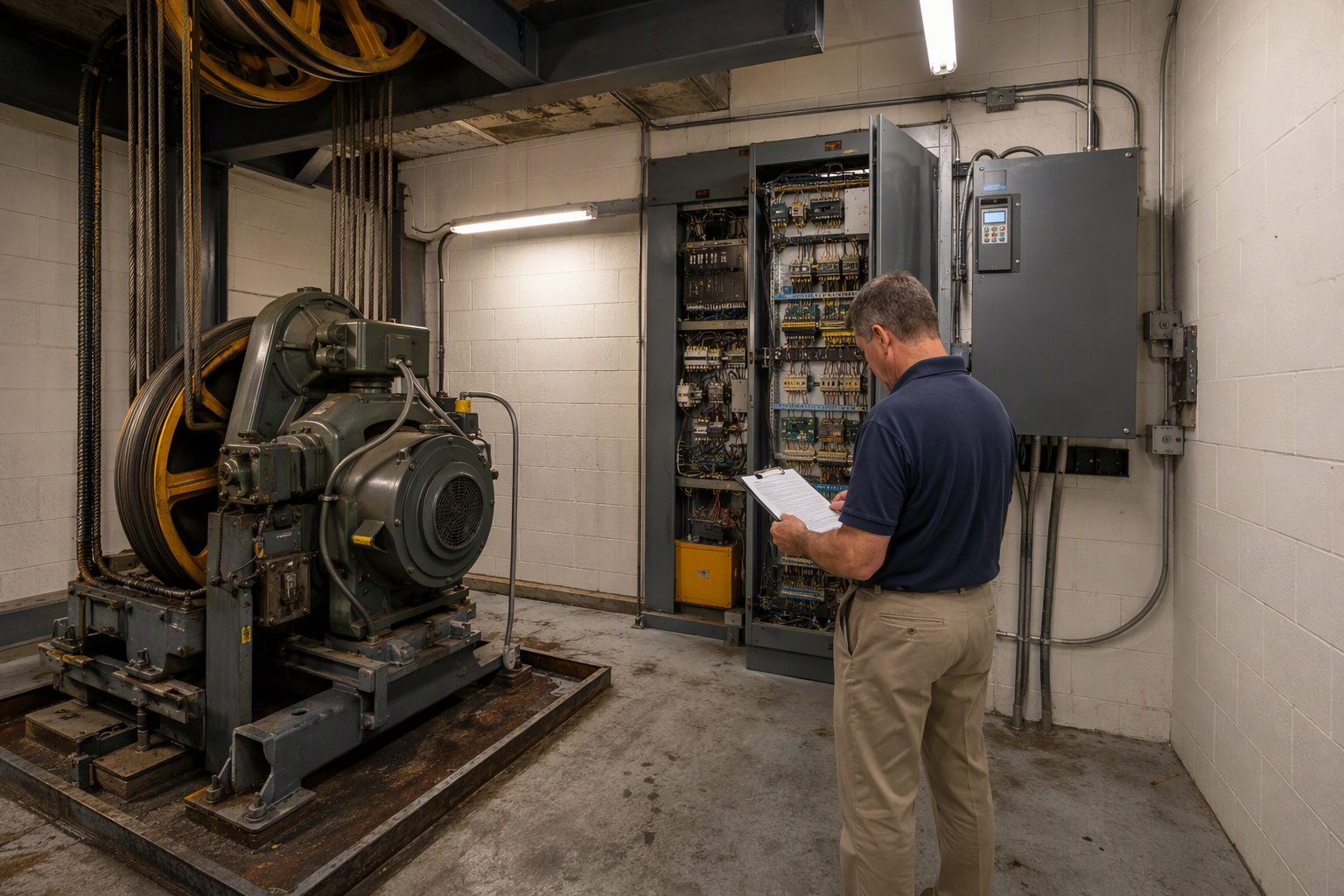
Excessive heat is among the most damaging conditions for elevator electronics. VFDs and solid-state controllers are rated for specific operating temperature ranges, and sustained heat beyond those limits accelerates capacitor aging and causes nuisance fault trips. Machine rooms in South Carolina buildings without adequate HVAC are particularly susceptible during summer months. High humidity promotes corrosion on relay contacts and printed circuit board traces. Building owners should ensure machine rooms are climate-controlled, free of stored materials, secured against unauthorized entry, and accessible to service personnel at all times. Pest intrusion — mice nesting in controller cabinets and chewing wiring insulation — is a documented cause of control system failures that is preventable with basic exclusion measures.
What are the consequences of ignoring elevator warning signs?
Ignoring elevator warning signs exposes building owners and property managers to passenger injury liability, regulatory penalties from South Carolina LLR, forced elevator shutdown by the authority having jurisdiction, ADA accessibility claims, and emergency repair costs that far exceed what a timely preventive repair would have required.
When a warning sign progresses to an in-service failure, the consequences compound rapidly. An entrapment triggers a service call at premium hours, potential involvement of fire rescue personnel, incident documentation that may be reviewed in subsequent insurance or legal proceedings, and an extended outage while parts are sourced for an emergency repair. A well-documented preventive maintenance program, by contrast, provides evidence of due diligence that is valuable in both regulatory and liability contexts. The South Carolina LLR elevator inspection program maintains records of inspection findings, and a history of unaddressed violations is a matter of public record.
How does elevator age affect failure risk and what are the benchmarks?
Elevator failure risk increases as equipment ages, with the rate of increase accelerating once electromechanical components reach the end of their design service life and when original equipment manufacturer (OEM) parts are no longer readily available.
The ASME A17.3 Safety Code for Existing Elevators and Escalators addresses the retrofitting of safety features to older installations and is the applicable standard when jurisdictions require upgrades to existing equipment. Building owners should understand that an elevator that passes its annual state inspection is confirmed compliant with the inspection criteria for that date — it is not a certification that the equipment will remain reliable for another year without maintenance. Older traction elevators with DC motor drives, relay-logic controllers, and non-coated hoist ropes carry meaningfully higher failure risk than modern, modernized, or recently installed systems, and their PM programs should reflect that elevated risk profile.
What questions should a building owner ask when hiring an elevator maintenance company?
Selecting an elevator maintenance provider is a decision that affects passenger safety, regulatory compliance, and long-term equipment cost, so the evaluation process should go well beyond price comparison.
Key questions to ask any prospective elevator service company include:
- Is the company licensed to perform elevator work in South Carolina under the requirements administered by the South Carolina LLR?
- Do the company’s technicians hold relevant industry certifications, such as those issued by the National Elevator Industry Educational Program (NEIEP)?
- Does the company maintain an inventory of common replacement parts, or are parts sourced only after a failure occurs?
- What does the maintenance agreement specify about response time for emergency calls, and what is excluded from the agreement?
- Does the company provide written documentation of every maintenance visit, including findings, adjustments made, and any recommended repairs?
- Can the company provide references from building owners with similar elevator types and usage profiles in the Columbia, SC area?
Carolina Elevator Service serves commercial, residential, and institutional clients throughout the Columbia, SC market and provides transparent, documented maintenance services designed to keep equipment in continuous safe operation.
How does remote monitoring technology help prevent elevator shutdowns?
Remote monitoring systems connect the elevator controller to a networked platform that continuously tracks operational data — door cycle counts, motor current draw, fault codes, leveling accuracy, and ride quality metrics — enabling service providers to identify developing problems before they cause a shutdown.
When a controller logs an intermittent door fault, a remote monitoring system captures the event even if the fault self-clears and the elevator resumes normal operation. A technician reviewing that data can schedule a targeted inspection of the door operator before the fault frequency increases to the point of a service disruption. Modern monitoring systems can also alert building managers and service providers via text or email when specific fault thresholds are crossed. For high-occupancy buildings in Columbia, SC — particularly those where elevator downtime creates significant accessibility or operational impact — remote monitoring is a cost-effective complement to a preventive maintenance program.
What are the ADA compliance requirements most often overlooked during elevator maintenance?
The most frequently overlooked ADA elevator compliance items are call button height and force requirements, Braille and raised character markings on control panels, door reopening device sensitivity, and the requirement that elevators remain operational as the accessible route in buildings where stairs are the only alternative.
Under ADA regulations, elevator call buttons must be operable with one hand and must not require tight grasping, pinching, or twisting. Braille markings must be Grade 2 contracted Braille and must be correctly positioned relative to the raised characters they label. Door reopening devices must remain effective without requiring contact with a person or object — a door that only reopens when physically contacted by a passenger does not meet current requirements. These compliance items can degrade over time as control panels are repaired and components are substituted without attention to ADA specifications. A comprehensive maintenance program should include periodic ADA compliance review, not just mechanical serviceability checks.
What maintenance records should building owners keep to demonstrate compliance?
Building owners should maintain a complete, organized set of elevator records that documents regulatory compliance, maintenance activity, and repair history — records that may be requested by South Carolina LLR inspectors, insurance carriers, or in the event of a liability claim.
Essential records to retain include: the current elevator operating certificate issued by the South Carolina LLR; all previous inspection reports and any deficiency notices with documentation of corrective action taken; a log of every maintenance visit, including date, technician name, work performed, and any recommended follow-up; records of all repairs, including parts replaced and the reason for replacement; modernization or alteration permits and final inspection approvals; and the elevator emergency contact plan required to be posted in the machine room and at the main landing. Records should be retained for a minimum period consistent with applicable state requirements and the building owner’s liability risk management policies.
Schedule a Free Elevator Assessment with Carolina Elevator Service
Elevator warning signs do not resolve on their own — they escalate. Whether a building’s elevator is showing early symptoms of failure, approaching its next state inspection, or has not had a documented preventive maintenance review in the past year, the right time to act is before an emergency shutdown forces the issue.
Carolina Elevator Service provides professional elevator maintenance, inspection preparation, repair, and modernization services throughout Columbia, SC. Building owners and property managers who want an honest, documented assessment of their equipment’s condition and maintenance needs are encouraged to reach out.
Contact Carolina Elevator Service for a free elevator assessment: 803-865-1400
Need elevator service you can rely on? Carolina Elevator Service is ready to help.