Elevator Modernization vs. Repair: How to Know Which One Your Building Needs
Determining whether an elevator needs modernization or repair comes down to three core factors: the age and condition of the control and mechanical systems, the frequency and cost of recurring failures, and whether the unit meets current safety and accessibility codes. If a single component fails on an otherwise sound machine, repair is usually the right call. When failures are frequent, parts are no longer manufactured, or the elevator cannot be brought into compliance without replacing major systems, modernization is the more cost-effective and legally defensible path.
What Is the Difference Between Elevator Repair and Elevator Modernization?
Elevator repair addresses a specific failed or worn component, while modernization replaces entire subsystems — controls, drives, doors, or hydraulic cylinders — to bring an aging elevator to current safety, performance, and accessibility standards.
A repair might involve replacing a door operator, a worn rope, or a faulty relay. Modernization, by contrast, typically involves replacing the controller, drive system, cab interior, door equipment, and safety devices as an integrated package. The distinction matters because modernization triggers a different regulatory pathway: under South Carolina’s elevator statute, S.C. Code Title 41, Chapter 16, any alteration or installation requires a state construction permit from the South Carolina Department of Labor, Licensing and Regulation (LLR), Office of Elevators and Amusement Rides, and a subsequent inspection before the unit can return to service.
How Old Does an Elevator Have to Be Before Modernization Makes Sense?

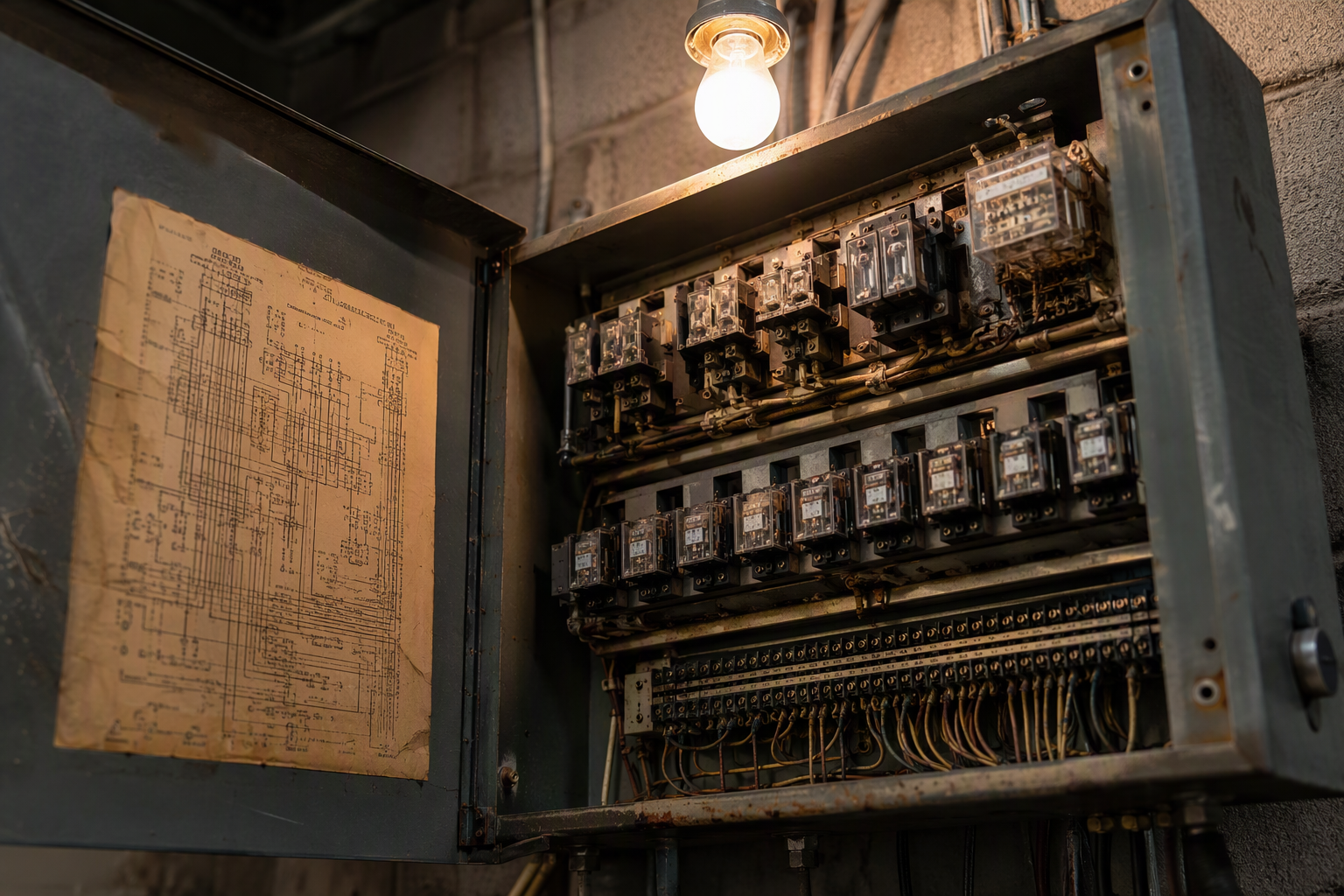
There is no universal age threshold, but elevators with relay-logic controls installed before the mid-1980s, or hydraulic units with unencased cylinders installed before current environmental requirements, are strong candidates for modernization regardless of apparent condition.
Age alone is not the deciding factor — maintenance history and system architecture matter more. However, older relay-logic control systems are increasingly difficult to service because replacement components are no longer in production. When a controller board fails and no replacement exists, a repair becomes a modernization by necessity. South Carolina adds a meaningful benchmark: elevator facilities that were in operation before July 1, 1986 must comply with the 1986 edition of ANSI A17.3, the safety code for existing elevators and escalators. If a pre-1986 unit has not been brought into alignment with those requirements, an owner is already out of compliance, and a comprehensive modernization is often the most efficient path to correcting the deficiencies.
What Are the Most Common Signs That an Elevator Needs Modernization Rather Than Repair?
The clearest signs include: obsolete controls with no available replacement parts, chronic leveling problems, repeated door entrapments, hydraulic fluid leaks from an unprotected underground cylinder, and a pattern of emergency service calls that collectively cost more than a modernization project would.
Additional indicators worth evaluating include:
- Excessive noise or vibration during travel that recurs after repair
- Slow door operation that cannot be resolved with adjustment or a new operator
- Poor ride quality caused by worn guide rails or outdated drive technology
- Repeated tripping of the main line disconnect or overloads
- Inability to pass annual inspection without a growing list of violations
- Cab finishes and lighting that no longer meet tenant expectations or accessibility requirements
- An underground hydraulic cylinder that lacks the plastic outer containment now required by South Carolina regulations for new installations
Carolina Elevator Service recommends that building owners in Columbia, SC document every service call, part replaced, and inspection finding. That record becomes the clearest objective evidence for the repair-vs.-modernization decision.
What Codes Govern Whether an Elevator Must Be Modernized?
In South Carolina, the governing code is ASME A17.1/CSA B44, 2019 edition, adopted by the South Carolina Department of Labor, Licensing and Regulation effective July 23, 2021, which sets the safety requirements for new installations and alterations, while pre-1986 existing elevators are also benchmarked against the 1986 ANSI A17.3 standard.
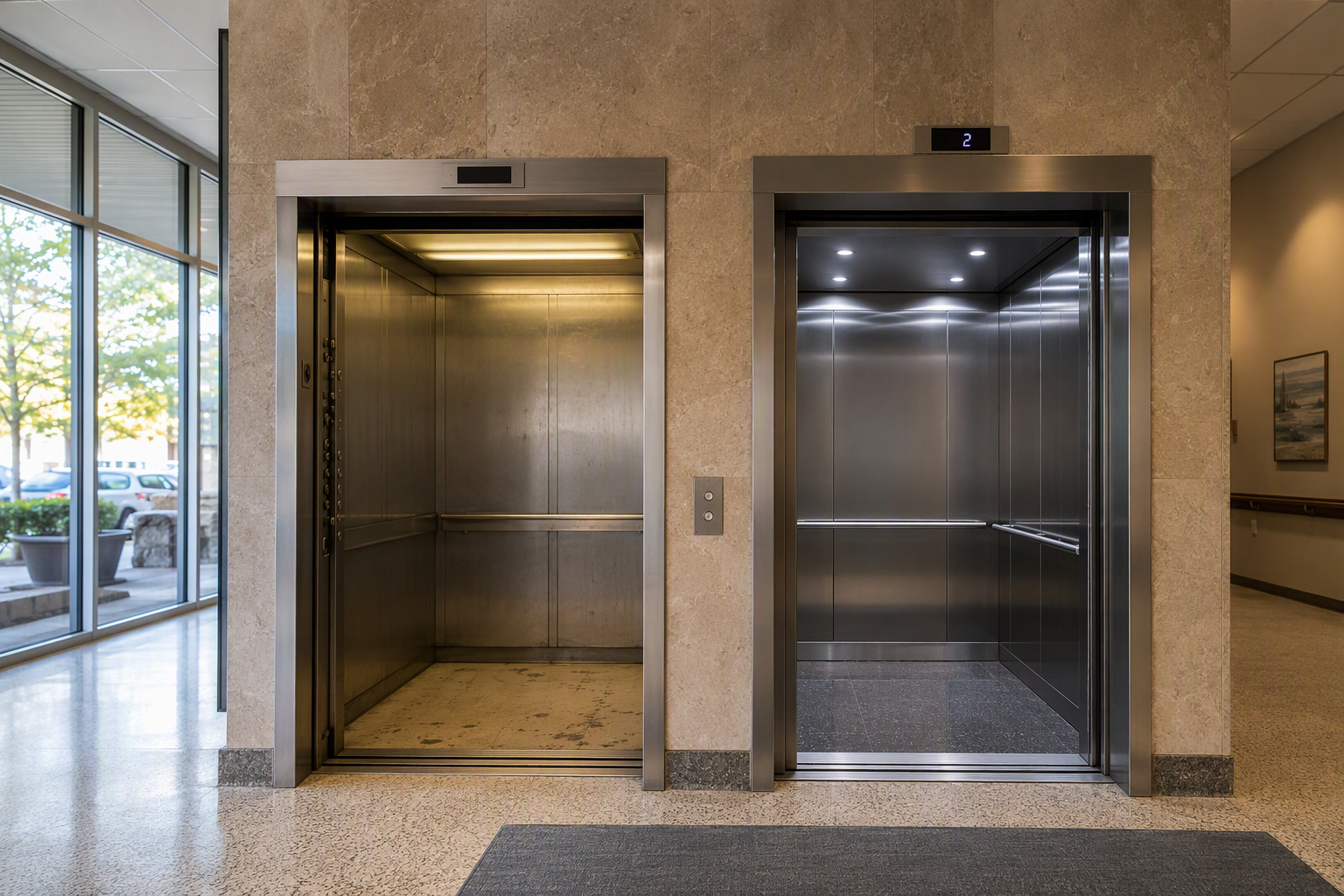
New elevator facilities must comply with the adopted edition of ASME A17.1 in effect at the time the construction permit is issued. When a modernization is classified as an alteration, the upgraded systems must meet that current edition. This is significant: an elevator that was code-compliant when installed in 1990 may not satisfy 2019 ASME A17.1 requirements for emergency lighting, fire service, car enclosure integrity, or door reopening devices. Additionally, ADA accessibility requirements apply to elevators serving the public in commercial buildings, covering cab dimensions, control height, tactile markings, and audible signals. A modernization project is typically the most practical opportunity to bring both safety and accessibility into alignment simultaneously.
How Does South Carolina’s Annual Inspection Requirement Affect the Repair-vs.-Modernization Decision?
South Carolina requires standard passenger elevators to be inspected at least once a year before an operating certificate is renewed, meaning every unresolved deficiency surfaces on a recurring, documented record that the owner cannot ignore.
Under S.C. Code Title 41, Chapter 16 and S.C. Code of Regulations Chapter 71, Article 5, no elevator facility may operate without a current certificate of registration and an operating certificate from the LLR, and that certificate — or a copy — must be displayed conspicuously inside the car. When inspectors from the LLR or a licensed special inspector document deficiencies that a routine repair cannot permanently resolve, the owner faces a choice: repeatedly patch the same problems until the operating certificate is withheld, or invest in modernization that resolves the root cause. The inspection record is also the most credible data point for the financial analysis that supports a modernization proposal to building ownership or a board of directors.
It is worth noting that in South Carolina, required inspections may be made only by state inspectors or licensed special inspectors — and a special inspector may not inspect an elevator on which the inspector or the inspector’s employer has a current service or warranty contract. This conflict-of-interest rule means owners should ensure that whoever performs their modernization work is not also conducting the compliance inspection.
What Is the Repair-vs.-Modernization Decision Process — Step by Step?
A structured evaluation process prevents owners from making a purely reactive decision after an emergency breakdown, and it produces documentation that satisfies the LLR and building management stakeholders.
- Gather the maintenance history. Compile every service ticket, parts invoice, and inspection report for at least the past three to five years. Identify recurring failure categories.
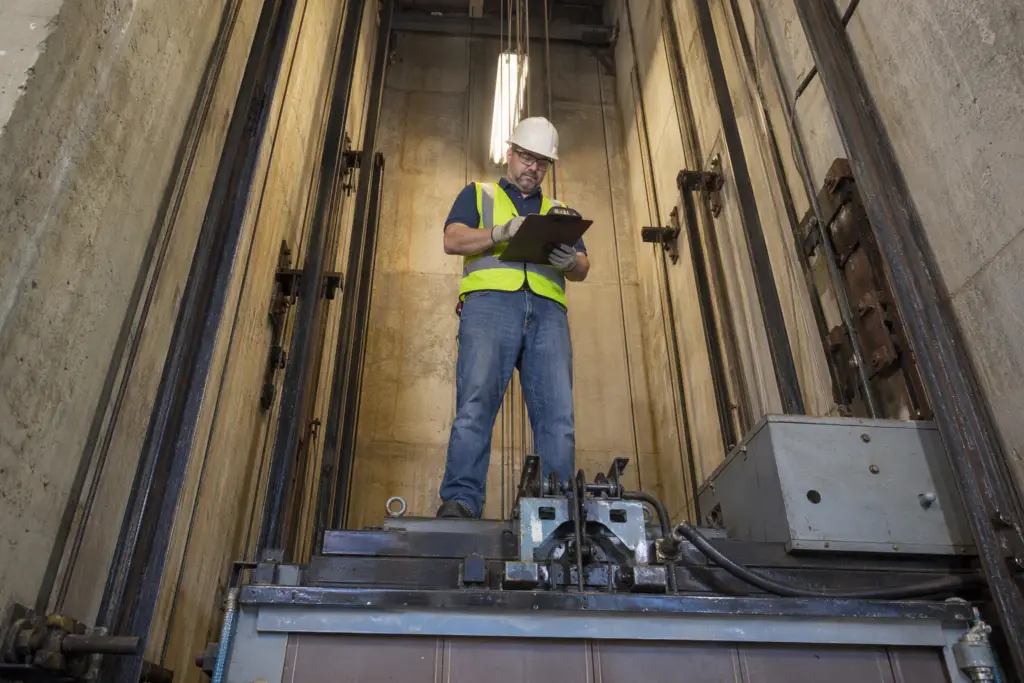
- Request a condition assessment. A qualified elevator service company performs a physical inspection of the controller, motor, drive, ropes or hydraulic system, door equipment, safeties, and cab, comparing findings against the adopted edition of ASME A17.1.
- Identify code compliance gaps. Note every item that does not conform to current South Carolina requirements, including any pre-1986 ANSI A17.3 obligations and ADA requirements under the ADA Standards for Accessible Design.
- Price the repair option honestly. Obtain repair costs for each deficiency, including any parts that must be custom-fabricated or sourced from third-party refurbishers due to obsolescence.
- Price the modernization option. Obtain a scope-based modernization proposal covering controls, drive, door equipment, and any safety devices required to meet current code.
- Compare total cost of ownership. Project repair costs forward over a defined period (commonly five to ten years) and compare against the modernization investment plus reduced service call frequency and energy savings.
- Apply for the construction permit before any alteration work begins. Under South Carolina law, a state construction permit is required before any elevator facility is erected, constructed, altered, or installed. Work that begins without a permit creates compliance exposure for the owner.
- Schedule the post-modernization inspection. South Carolina requires an inspection after any alteration or repair before the unit returns to service.
How Does Obsolete Parts Availability Factor Into the Decision?
When OEM replacement parts are discontinued and no code-compliant substitute exists, a repair that would otherwise be straightforward becomes either impossible or so costly that modernization is economically superior before the first wrench is turned.
Relay-logic controllers manufactured in the 1960s through 1980s, certain solid-state drives from the 1990s, and proprietary microprocessor boards from early computerized systems all face parts availability challenges. When a technician must reverse-engineer a component, source a refurbished board of uncertain reliability, or modify a system in a way that was not contemplated by the original manufacturer, the repair introduces new reliability risk rather than eliminating it. Parts obsolescence also affects the ability to maintain ASME A17.1 compliance, because substituted components must perform to the same safety standard as the original, a burden that is difficult to document and defend during an LLR inspection.
What Role Does Hydraulic System Condition Play in the Modernization Decision?
Hydraulic elevators present unique modernization triggers, particularly older units with single-bottom, unencased underground cylinders that are susceptible to electrolytic corrosion, fluid leaks, and environmental liability.
South Carolina regulations now require that newly installed underground hydraulic elevator cylinders be encased in a plastic outer containment to limit electrolytic corrosion. Buildings with older unencased cylinders face environmental risk from hydraulic fluid migration into the soil, a risk that can result in remediation costs that dwarf the cost of modernization. Additionally, older hydraulic power units with outdated valve technology are less energy-efficient and more prone to unintended movement. A hydraulic modernization that addresses the cylinder, power unit, valves, and controller simultaneously is often the most complete and cost-effective resolution for aging hydraulic elevators in Columbia and surrounding South Carolina communities.
How Do ADA Requirements Influence the Modernization Decision?
When an elevator modernization triggers work on a cab, controls, or doors, it creates an opportunity — and in some contexts an obligation — to address ADA accessibility requirements that may not have existed or been enforced when the unit was originally installed.
ADA requirements for elevators cover cab minimum dimensions, door width and timing, control button height and reach ranges, Braille and raised-character markings, audible floor announcements, and emergency communication systems. Many elevators installed before the 1990s do not meet these standards. A modernization project that replaces the controller, door operator, and cab interior is the natural point to install ADA-compliant controls and cab signage. Doing so avoids a second mobilization cost later and reduces the building owner’s liability exposure under federal civil rights law.
What Is the Difference Between a Major and Minor Alteration Under South Carolina Code?
The scope of alteration determines the extent of code compliance review required — a distinction that directly affects project cost, permit requirements, and inspection obligations under South Carolina’s adopted edition of ASME A17.1-2019.
Under ASME A17.1, alterations are classified by the nature and extent of the work performed. Replacing a controller, adding a new safety device, or changing the drive system are typically treated as alterations requiring a construction permit and inspection. Replacing a worn rope or adjusting door timing may be classified as a repair. The practical implication for building owners is that a project labeled internally as a “repair” may legally constitute an alteration, triggering permit and inspection obligations. South Carolina law is clear: a state construction permit is required before any alteration or installation, and the LLR must inspect the work before the elevator returns to service. Owners who proceed without a permit face potential operating certificate suspension. Carolina Elevator Service advises clients on permit classification before any significant project scope is finalized.
How Does Energy Efficiency Factor Into the Modernization Decision?
Modern variable-voltage, variable-frequency (VVVF) drive systems and LED cab lighting consume substantially less energy than older motor-generator sets or single-speed hydraulic power units, making energy cost reduction a quantifiable component of the modernization return-on-investment analysis.
Older traction elevators with motor-generator sets run continuously regardless of elevator demand, consuming power even when the car is idle. VVVF drives modulate power consumption to match actual load and speed requirements. For hydraulic elevators, modern soft-start power units and low-viscosity fluids reduce electrical demand on every start cycle. While specific energy savings figures vary by building, usage pattern, and equipment configuration — and Carolina Elevator Service does not state generic industry percentages it cannot verify — the directional impact is well-established in elevator engineering practice. Energy efficiency is a legitimate factor to quantify during the modernization assessment, particularly for buildings with high-cycle usage such as hospitals, hotels, and multi-tenant commercial properties in the Columbia, SC market.
What Should a Building Owner Ask a Service Company Before Authorizing Repair or Modernization?
Asking the right questions before authorizing work protects the owner from scope creep, compliance exposure, and repeat failures on the same component.
- Is this repair a permanent resolution, or is the same failure likely to recur within the next one to two years?
- Are the replacement parts OEM components, or refurbished and third-party sourced?
- Will this repair bring the affected system into compliance with the current adopted edition of ASME A17.1?
- Does the scope of this work constitute an alteration requiring a South Carolina LLR construction permit?
- If this is a repair, what other systems are approaching end of useful service life and should be planned for?
- What is the estimated total maintenance cost over the next five years if we repair rather than modernize?
- Will the modernization scope address all outstanding LLR inspection findings?
- Who will perform the post-work inspection, and does that inspector have a conflict of interest under South Carolina’s special inspector rules?
How Long Does an Elevator Modernization Take, and What Downtime Should Owners Expect?
Modernization project duration depends on the scope of work, equipment lead times, and the building’s ability to accommodate elevator downtime — a planning factor that is particularly important for single-elevator buildings in Columbia where no alternative vertical transportation exists.
A controller-only modernization on a straightforward traction elevator may be completed in a matter of days, while a full modernization involving new hoistway equipment, hydraulic cylinder replacement, and cab renovation may span several weeks or longer depending on parts availability. Building owners should request a detailed project schedule before authorizing work, identify any critical service periods during which downtime is unacceptable (lease renewals, medical facility procedure schedules, hotel peak seasons), and confirm that the service company has a plan for obtaining the LLR construction permit and scheduling the post-modernization inspection without unnecessary delay. The operating certificate cannot be renewed until the inspection is passed, meaning schedule slippage that delays the inspection directly extends the period the elevator cannot legally operate.
What Is the Role of the Annual Inspection Report in Planning a Modernization?
The annual inspection report produced by a state or special inspector under South Carolina’s inspection requirements is the most authoritative, third-party document available for building owners evaluating whether repair or modernization is the appropriate path.
Under S.C. Code Title 41, Chapter 16, inspections are required at least once annually before the operating certificate is renewed, and special inspectors must hold qualifications consistent with the 2018 edition of QEI-1, the American National Standard for Qualification of Elevator Inspectors. A multi-year pattern of inspection findings — particularly findings that appear repeatedly across annual cycles — is strong evidence that the underlying system architecture cannot sustain code compliance through repair alone. Building owners should retain all inspection reports and use them as source documentation when presenting a modernization recommendation to building ownership, investors, or a condominium board.
How Does a Traction Elevator Modernization Differ From a Hydraulic Elevator Modernization?
Traction and hydraulic elevators have distinct mechanical architectures, and the modernization scope, permit requirements, and inspection checkpoints differ accordingly — requiring owners to ensure their service company is experienced with both system types.
| Factor | Traction Elevator | Hydraulic Elevator |
|---|---|---|
| Primary systems modernized | Controller, drive (VVVF), ropes, safeties, door equipment | Power unit, valves, cylinder/liner, controller, door equipment |
| Environmental consideration | Machine room heat, oil from hoisting machine | Underground cylinder fluid containment; SC requires plastic outer casing on new cylinders |
| SC permit required? | Yes — for any alteration per S.C. Code Title 41, Chapter 16 | Yes — for any alteration per S.C. Code Title 41, Chapter 16 |
| Post-work inspection required? | Yes — before return to service | Yes — before return to service |
| Applicable safety code | ASME A17.1-2019 (SC adopted edition) | ASME A17.1-2019 (SC adopted edition) |
| Common obsolescence trigger | Relay logic or early microprocessor controller | Unencased single-bottom cylinder; discontinued valve technology |
| Energy efficiency opportunity | Replace motor-generator set with VVVF drive | Replace constant-pressure hydraulic unit with soft-start or variable-speed pump |
| ADA compliance opportunity | New cab, controls, door operator | New cab, controls, door operator |
Can a Building Owner Be Held Liable for Elevator Accidents If the Unit Needed Modernization but Was Only Repaired?
Yes — South Carolina law places the duty of safe operating condition squarely on the owner, meaning a documented pattern of unresolved deficiencies, obsolete equipment, or deferred modernization can establish negligence if a person is injured.
Under South Carolina’s elevator statute, the owner must keep every elevator facility in safe operating condition and in compliance with state regulations. When an accident seriously injures anyone other than an employee, the owner must report it to the state before the end of the next working day. Building owners who have received repeated inspection findings, who have deferred known safety upgrades, or who are operating on an emergency repair strategy rather than a systematic maintenance and modernization plan face heightened legal and regulatory exposure. The inspection record, service call history, and any written recommendations from a qualified elevator service company all become evidence in a liability analysis. Proactive modernization is both a safety and risk-management strategy.
What Happens If an Elevator in Columbia SC Is Operated Without a Valid Operating Certificate?
Operating an elevator without a valid certificate is a violation of South Carolina law and can result in the elevator being ordered out of service, creating immediate disruption for building occupants and tenants.
Under S.C. Code Title 41, Chapter 16, no elevator facility may be operated without both a certificate of registration and a current operating certificate from the South Carolina Department of Labor, Licensing and Regulation. The operating certificate must be displayed conspicuously inside the car. When an elevator fails inspection and the certificate is not renewed, the building owner cannot legally operate the unit until deficiencies are resolved, a follow-up inspection is passed, and the certificate is reissued. For single-elevator commercial buildings, medical offices, or any property where vertical access is essential, an out-of-service elevator can constitute a significant ADA barrier and a breach of lease obligations. This risk underscores why proactive modernization — rather than reactive repair — is the more defensible long-term strategy for Columbia property owners.
How Should a Building Owner Evaluate an Elevator Service Company for a Modernization Project?
The selection criteria for a modernization contractor should go beyond price to include demonstrated familiarity with South Carolina’s permit and inspection process, experience with the specific elevator type in question, and a clear scope of work that addresses code compliance as well as mechanical performance.
Owners should request a written scope that identifies every system being replaced, every code deficiency being corrected, and the permit and inspection timeline. Because South Carolina requires a construction permit before any alteration begins, a contractor who does not address the permitting process in the initial proposal is a red flag. Owners should also confirm that the special inspector who will perform the post-modernization inspection does not have a conflict of interest under South Carolina’s prohibition on inspectors reviewing work for which their employer holds a service contract. Carolina Elevator Service works with building owners in Columbia, SC to prepare accurate scope documents, coordinate the LLR permit process, and sequence the post-modernization inspection so elevator downtime is minimized.
What Maintenance Program Extends the Life of a Modernized Elevator and Reduces Future Repair Costs?
A structured preventive maintenance program performed at regular intervals — covering lubrication, adjustment, safety device testing, and controller diagnostics — is the most reliable way to extend the service life of a modernized elevator and maintain the annual inspection record that South Carolina requires for operating certificate renewal.
After modernization, the new control system, drive, and door equipment all have manufacturer-specified maintenance intervals. Neglecting those intervals after a significant modernization investment undermines the return on that investment and recreates the conditions — unaddressed wear, deferred adjustments, accumulating deficiencies — that made modernization necessary in the first place. Under South Carolina law, the owner bears responsibility for keeping every elevator facility in safe operating condition. A maintenance contract with a qualified elevator service company is the practical mechanism for fulfilling that obligation. Carolina Elevator Service provides ongoing maintenance programs for elevators in the Columbia, SC area, tailored to the specific equipment type, usage cycle, and building occupancy profile.
Are There Any Exemptions to South Carolina’s Elevator Modernization and Inspection Requirements?
South Carolina’s elevator code does not apply to equipment in a single private dwelling, but all commercial, multi-family, and public-access elevators in Columbia are subject to the full requirements of S.C. Code Title 41, Chapter 16 and its implementing regulations.
This exemption is narrow. It covers only equipment used exclusively in a single private residence — not condominiums, not apartment buildings, and not mixed-use properties. Any elevator accessible to the public, tenants, or employees in a commercial or multi-family setting falls within the regulatory framework administered by the South Carolina Department of Labor, Licensing and Regulation. Additionally, local ordinances that conflict with the South Carolina Elevator Code or its regulations are void, meaning municipal rules cannot create exemptions that the state has not authorized. Building owners who believe their equipment may be exempt should verify that determination with the LLR before declining to register or obtain inspection — the consequences of operating an unregistered, uninspected elevator in a non-exempt building are significant.
Get a Professional Elevator Assessment in Columbia, SC
Deciding between elevator repair and modernization requires an honest, code-informed evaluation of the equipment’s current condition, its compliance status under South Carolina’s adopted edition of ASME A17.1-2019, and the realistic cost trajectory of each path forward. A reactive approach — repairing whatever fails at the moment of breakdown — routinely costs more over time than a planned modernization strategy and leaves building owners exposed to regulatory and liability risk.
Carolina Elevator Service provides comprehensive elevator condition assessments for building owners and property managers in Columbia, SC. An assessment covers mechanical system condition, code compliance gaps, obsolete components, and a clear comparison of repair versus modernization options — giving ownership the information needed to make a financially sound and legally defensible decision.
Contact Carolina Elevator Service for a free elevator assessment.
Call us today at 803-865-1400 to schedule your evaluation.
Need elevator service you can rely on? Carolina Elevator Service is ready to help.